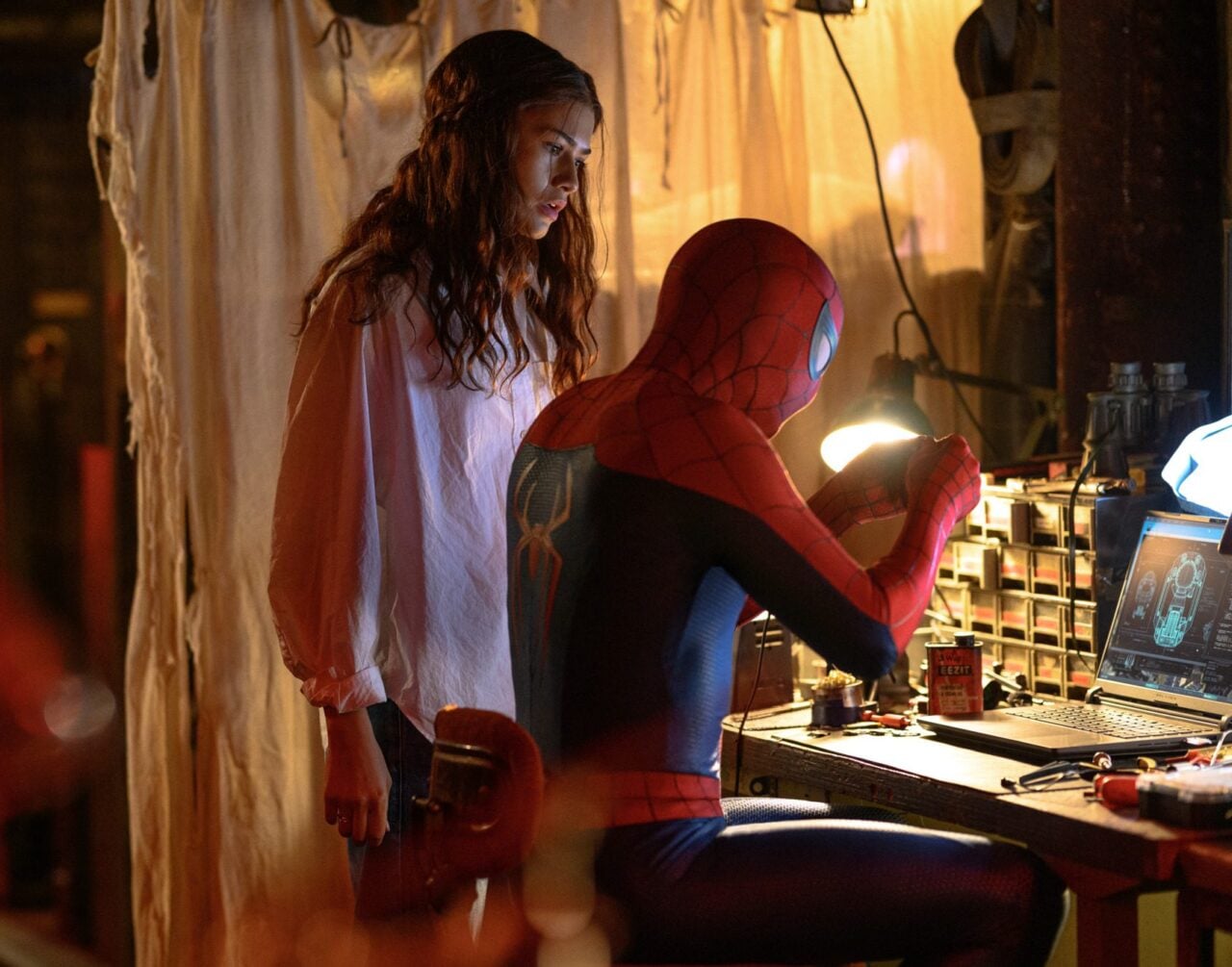



Titled Ándale (”hurry up” or “come on”) Euphoria’s third season arrives with unintentional irony after a four-year delay. The story leaps five years beyond season two’s chaos, most memorably Cassie (Sydney Sweeney) and Maddy’s (Alexa Demie) explosive clash during Lexi’s (Maude Apatow) self-aware, meta-theatrical play.
In that time, Jacob Elordi, Zendaya and Sydney Sweeney have moved into more critically acclaimed territory, with projects like “Wuthering Heights”, The Drama, and The Housemaid. Returning to Euphoria now feels almost anachronistic—as though both cast and audience have outgrown its glossy teenage turmoil.
The characters, too, have aged out of adolescence. Rue is in Mexico, struggling for sobriety in Mexico while working off her debt to Laurie (who appeared in season 2) as a drug mule. Nate (Elordi), now running his father’s construction business after turning him in, is engaged to Cassie, who funds their lavish wedding through an OnlyFans persona. Elsewhere, Maddy works at a Hollywood talent agency, while Lexi finds her footing on a nighttime soap under industry veteran Patty Lance (Sharon Stone). Jules (Hunter Schafer), notably, is absent from the premiere.
Beyond the plot, anticipation is tempered by controversy—following the divisive reception to The Idol and scrutiny surrounding creator Sam Levinson. The question remains: can Euphoria still capture its former cultural grip, or has its sheen begun to fade? Either way, all that remains is to return to the screen. Let’s step into episode one of the long-awaited season three premiere.
1. Using the border merely as a backdrop feels… questionable

The season opens with Rue attempting to cross the U.S.-Mexico border, smuggling fentanyl in a desperate bid to repay her mounting debt. It’s a stark departure visually. Gone is the neon-soaked haze that once defined Euphoria, replaced instead by something more austere, almost Western in tone. Sam Levinson reportedly attempted to film at the real border, a request that was ultimately denied, yet the scene still carries a raw tension. The choice feels pointed, echoing real debates around drug trafficking and border enforcement, and blurring the line between Rue’s desperation and the broader political climate. But ultimately the politics remain more backdrop than substance, serving as borrowed symbolism rather than genuine engagement.
2. Rue’s body is a battleground, and the battleground is deeply uncomfortable

As a drug mule, Rue’s role extends to body-packing fentanyl—swallowing lubricated balloons and later expelling them once across the border. It’s one of the season’s most visceral sequences, pushing Euphoria’s already high threshold for discomfort into something far more confrontational. Chloe Cherry, who plays Faye and assists Rue, revealed that Sam Levinson was intent on making the scene as grotesque as possible. Sorry but that’s not bold, it’s exhausting. Instead of illuminating Rue’s struggle, the scene reduces her body to shock value, grit for grit’s sake, with little room left for nuance.
3. Cassie Howard as a fetish, not a character
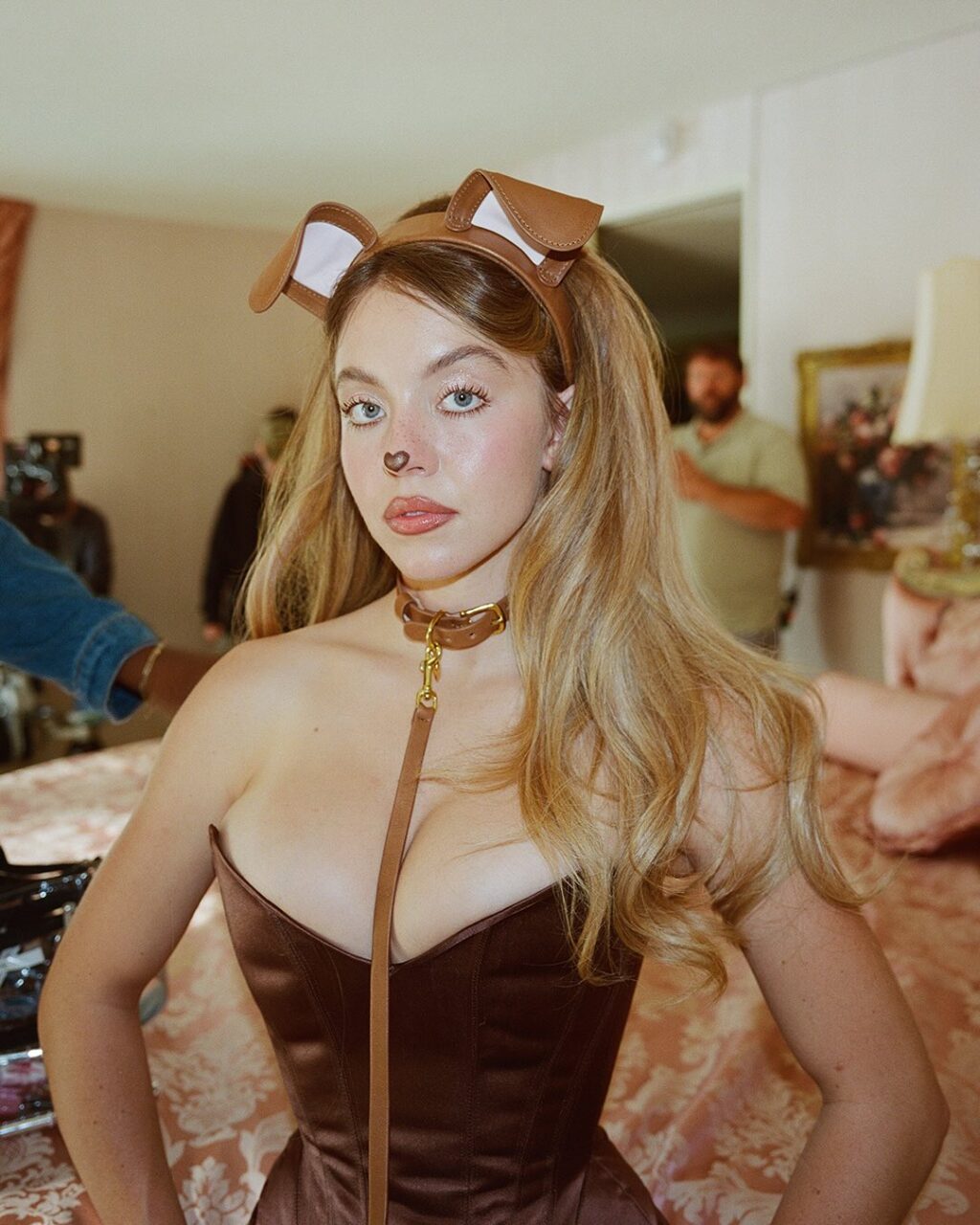
In a bid for relevance, Cassie reinvents herself as an OnlyFans influencer—most jarringly in a scene where she dons a full puppy costume, barking at the camera to fund her wedding. Euphoria has never shielded away from explicitness, but this veers into something more unsettling, bordering on fetishistic. In a cultural moment increasingly critical of the objectification of women, the show’s gaze here feels regressive rather than provocative.
4. Jacob Elordi, leash in hand—again?

For the second time this year, Jacob Elordi appears on screen holding a woman on a leash: control repackaged as aesthetic. Wuthering Heights, anyone? What once might have read as character-specific now feels curiously repetitive, if not indulgent.
5. Who is this soft character that is Nate Jacobs?

Nate Jacobs has long been defined by control and violence—his blackmail of Jules, his abuse of Maddy—traits that made him one of the show’s most disturbing figures. So his sudden softness, indulging Cassie’s OnlyFans ambitions without resistance, feels less like growth and more like narrative convenience. What’s framed as a redemption arc instead reads as a dilution of character, stripping Nate of the very menace that made him compelling.
6. What’s going on with Elordi’s accent?
At times, Jacob Elordi’s performance feels oddly unmoored as his accent drifts far from the clipped, all-American menace that once defined Nate Jacobs. Instead, there’s a noticeable drawl creeping in, eerily reminiscent of his turn as Elvis in Priscilla. Whether intentional or not, it creates a disconnect: Nate no longer sounds like the same character, but rather an actor carrying remnants of a previous role.
7. Cassie doomscrolling through Maddy’s Instagram is painfully relatable
View this post on Instagram
In a bid for reassurance, Cassie doomscrolls through Maddy’s Instagram in a way that feels less like curios investigation and more like quiet obsession, similar to stalking an ex you aren’t quite over. The detail that lingers is its blurring of fiction and reality: the images, featuring Donatella Versace and Hailey Bieber, are lifted directly from Alexa Demie’s real-life orbit. It’s a self-aware, almost intrusive touch; Euphoria collapses the boundary between character and actor to unsettling effect.
8. Fez’s fate feels more cruel than closure

Following the death of Angus Cloud in 2023 (which Levinson addressed ahead of the season three premiere) Fez’s storyline takes a stark turn: a 30-year prison sentence. Intended perhaps as closure, it instead lands as uncomfortably bleak. It is an ending that feels more punitive than poignant, especially in light of Cloud’s real-life struggles.
9. Jules feels like she’s orbiting a different show entirely

Once central to Euphoria’s emotional and cultural core, Jules is now relegated to the margins, her rumoured life as a “sugar baby” replacing the artistic ambitions that once defined her. The shift feels not only underwritten but emblematic of a broader issue—echoing how Barbie Ferreira’s character was gradually diminished before her exit. Jules, too, seems to have been reduced to an afterthought.
10. Could they have given Rue more?
Euphoria has always thrived in a world where drugs feel omnipresent, flowing freely through house parties and dimly lit bedrooms, never far from reach. Which makes Rue’s regression feel strangely redundant. In season two, she pivoted to dealing to sustain her addiction; now, she’s reduced to a mule, literally carrying the weight of it.
There’s a sense of narrative stagnation here with Rue circling the same orbit, just at a lower rung. A more compelling turn might have seen her step into something darker and more strategic, perhaps even partnering with Laurie to build a small empire. After all this time, is the best they can imagine for Rue just carrying balloons? Surely, Rue’s arc could have evolved beyond mule work.
11. Where do these storylines even meet?
Once anchored by the shared geography of East Highland’s hallways, Euphoria now feels strikingly fragmented. Beyond pairings like Rue and Lexi or Nate and Cassie, the characters no longer collide in messy, combustible ways but instead drift through isolated arcs, intersecting only occasionally—if at all. Missing are the volatile love triangles, the chaotic confrontations—the very elements that once gave Euphoria its pulse.
12. Rue’s faith arc feels forced
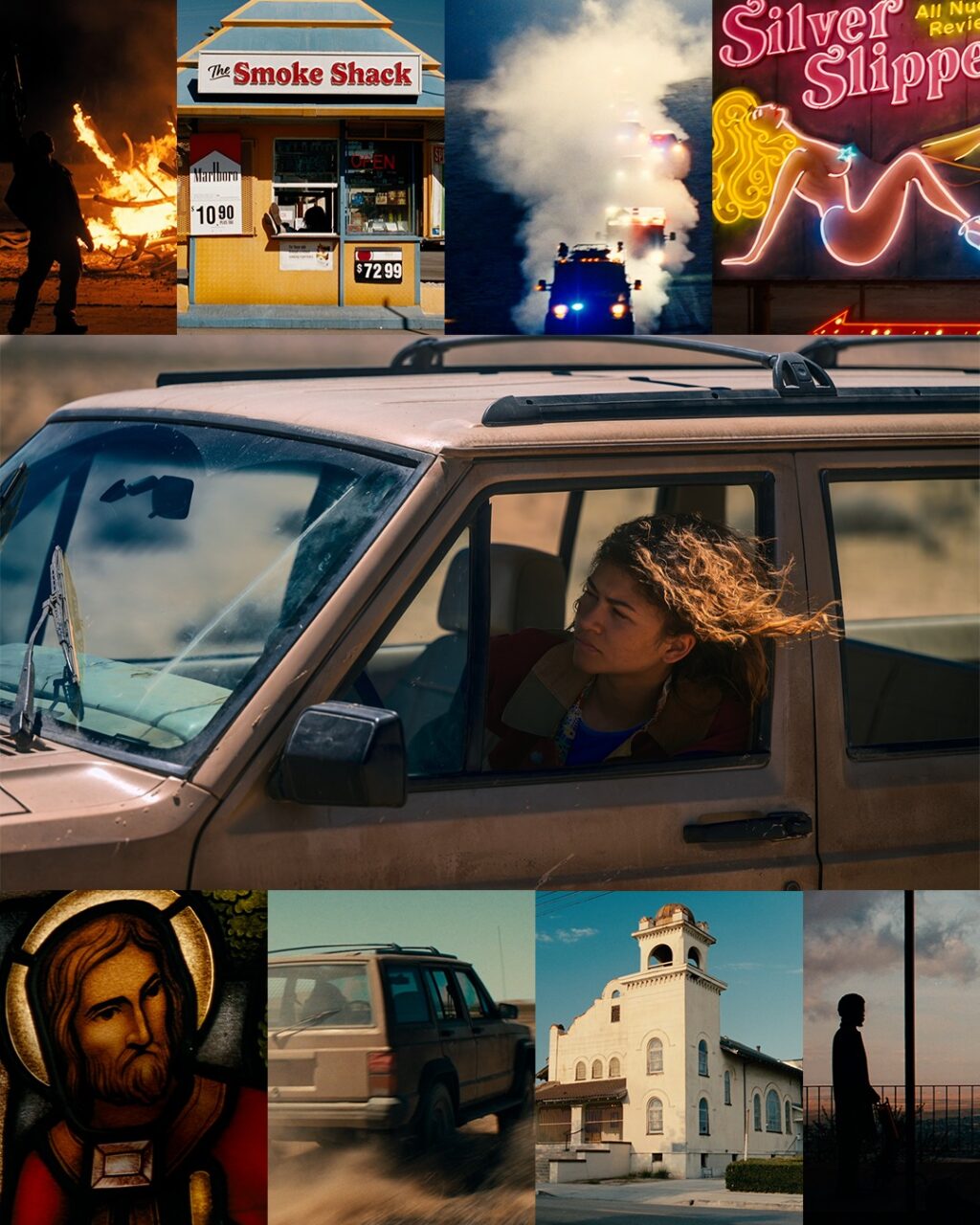
Rue’s introduction to the ultra-Christian Miller family marks an unexpected thematic shift. In Texas, she’s immersed in a sheltered household cut off from the outside world, where even the younger daughter has never been online. In a striking pivot, Rue tells Ali (Colman Domingo) she wants to explore faith, taking scripture as absolute truth—later even listening to Genesis on audio while working as an Uber driver. It’s a jarring turn, reframing her search for stability through religion rather than addiction.
13. Zendaya is the only thing holding this together

Perhaps inevitably, the premiere leans heavily on Rue, reinforcing Zendaya as the gravitational force of the series. Her performance remains raw and controlled, but the episode’s structure—fragmented, episodic, and restrained in scope—makes it feel less like an ensemble return and more like a singular character study.
14. Has Euphoria lost its glow?

Visually and tonally, the show continues its departure from the hazy neon-drenched identity that defined its early seasons. Instead, there’s a shift toward something starker, more desaturated and almost Western in sensibility. While this may signal a broader exploration of faith and ideology, it also distances the series from the dreamlike aesthetic that once made it instantly recognisable.
Editor
Tanya ParmanandCredit
Lead Image: @hbo via Instagram