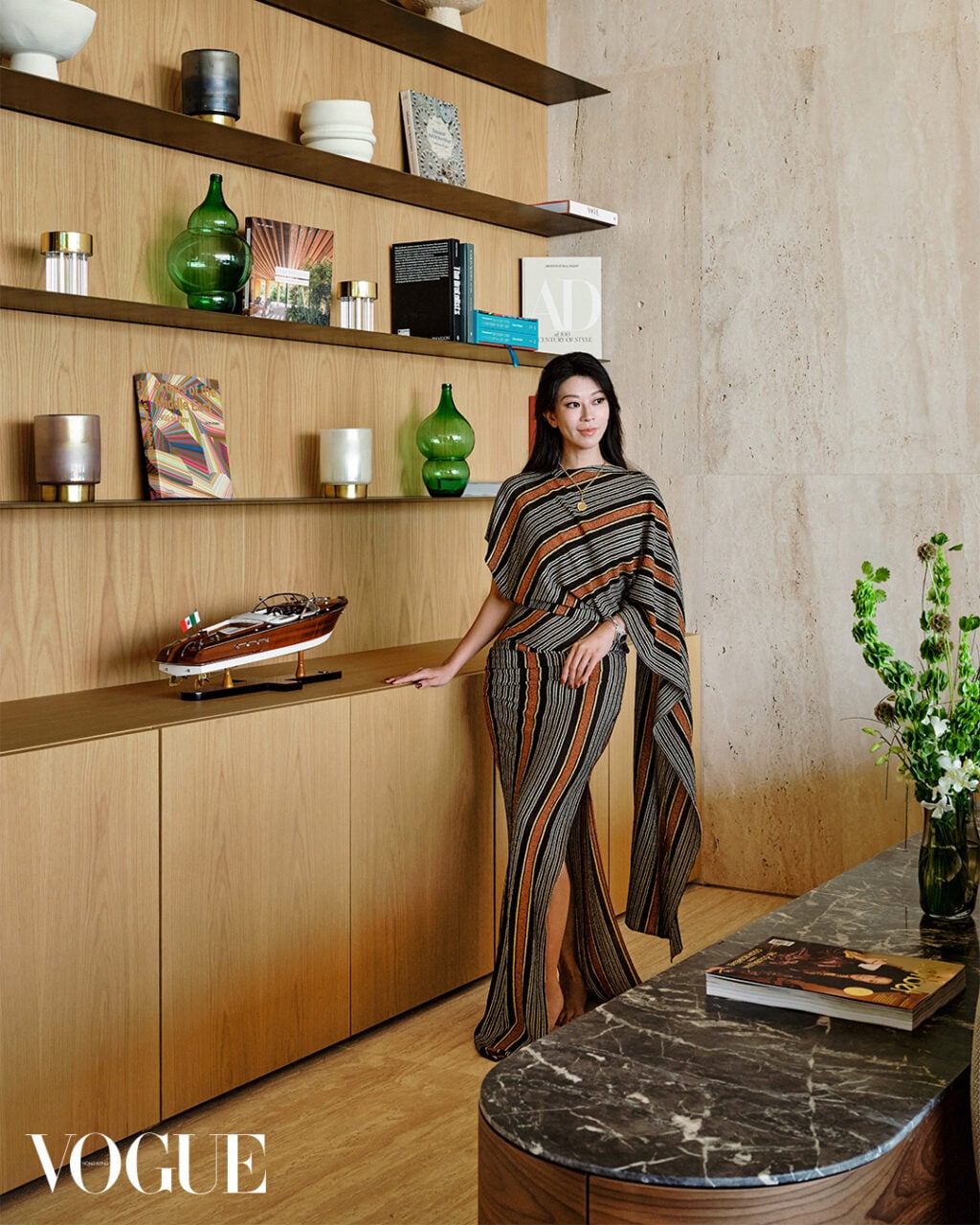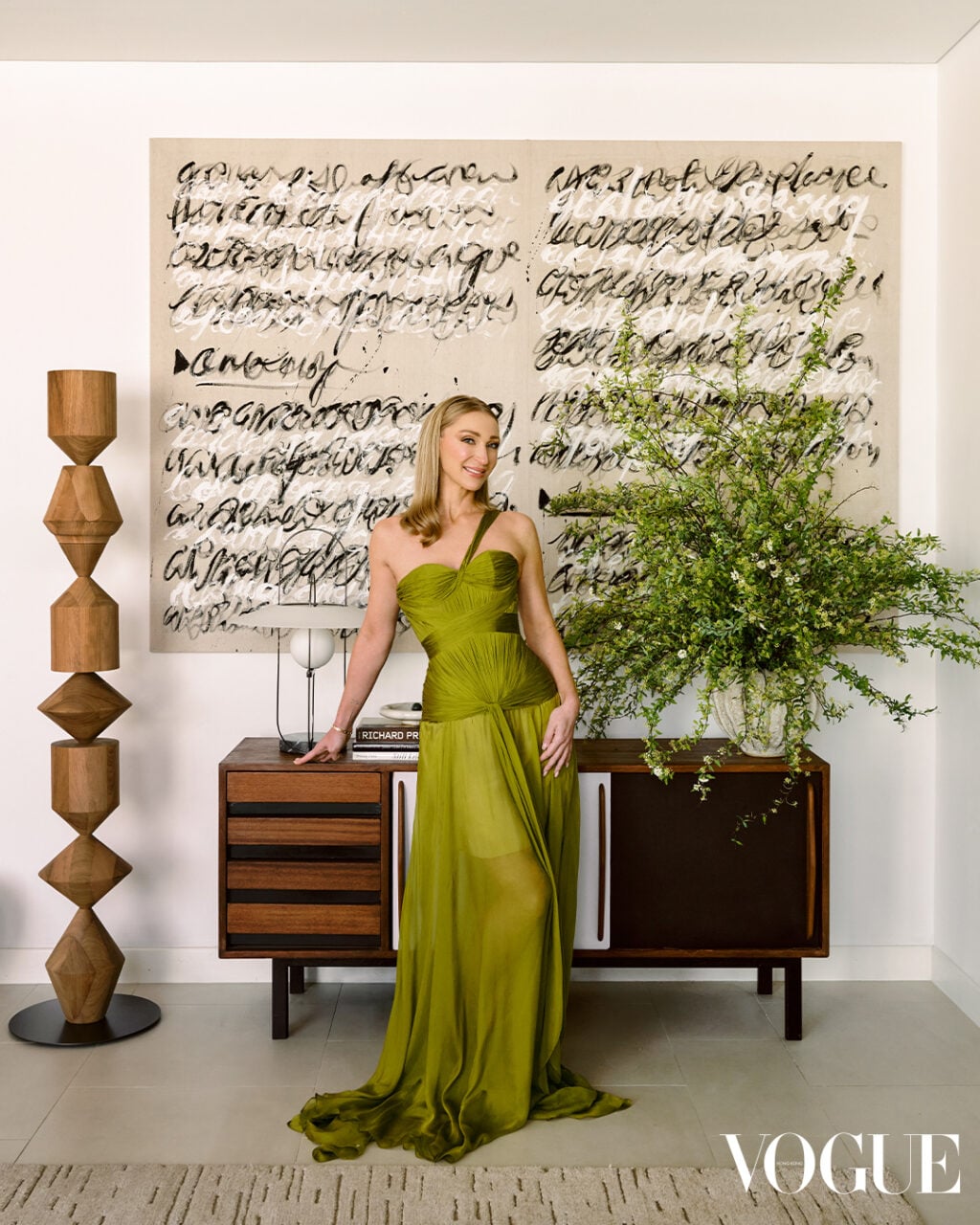


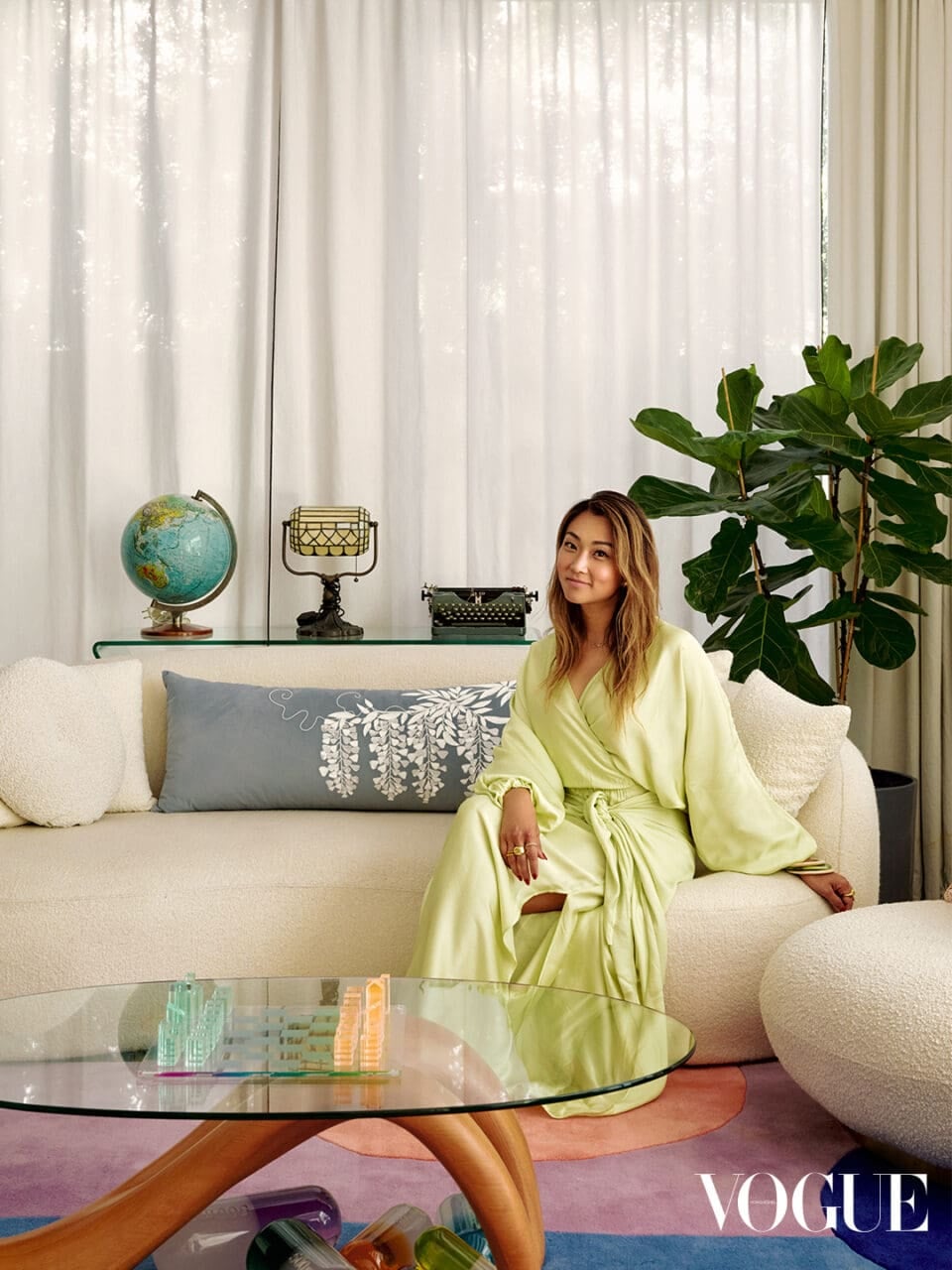
Veronica Chou chose this house for the trees. Not for the square footage or the finishes, but for the canopy that surrounds it and the birds that greet her each morning. For a sustainable fashion investor and low-tox lifestyle advocate, this comes as no surprise. “I believe people should be outdoors and living in harmony with nature,” she says—and that principle shapes everything here in Chou’s home.

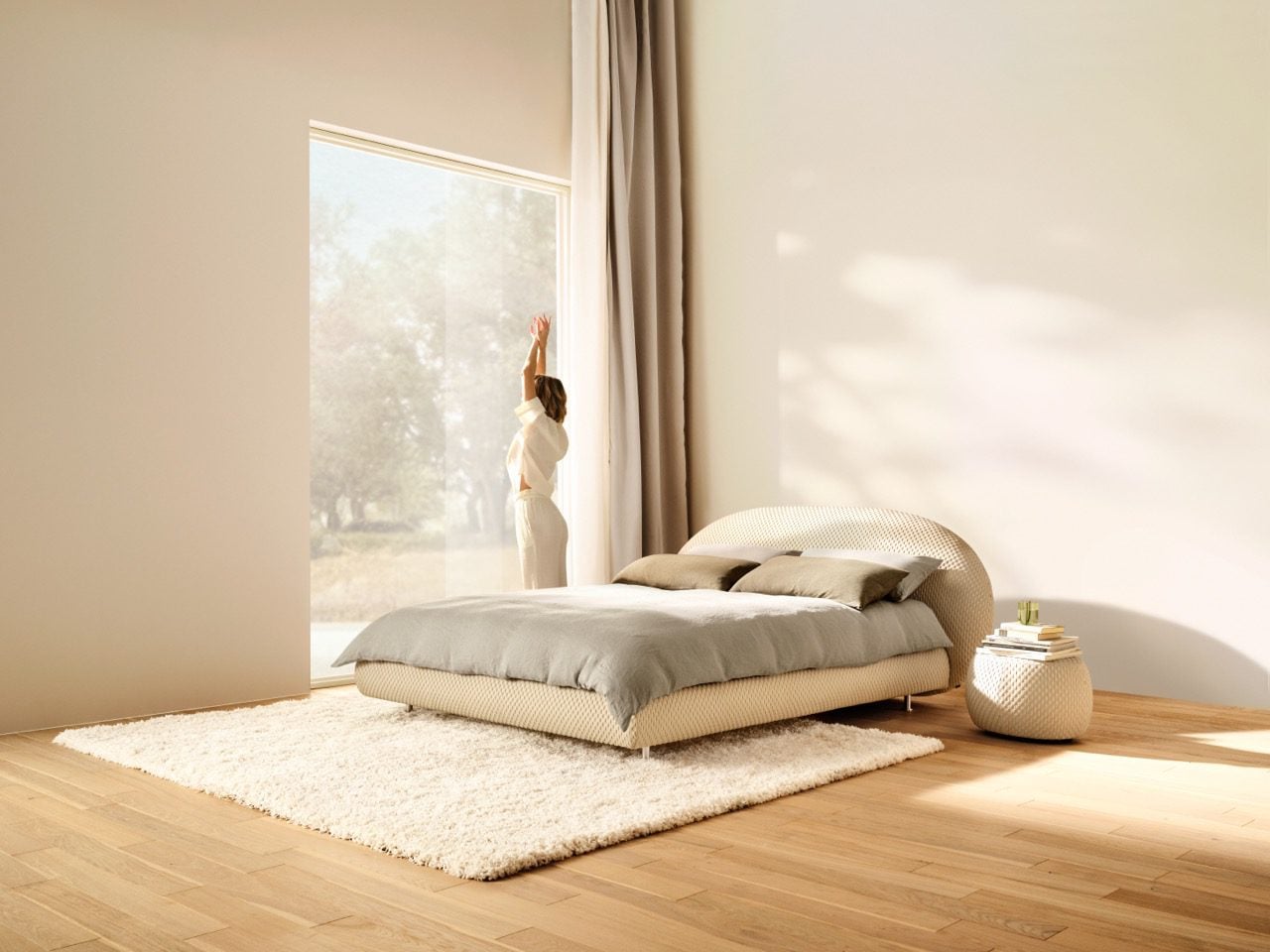
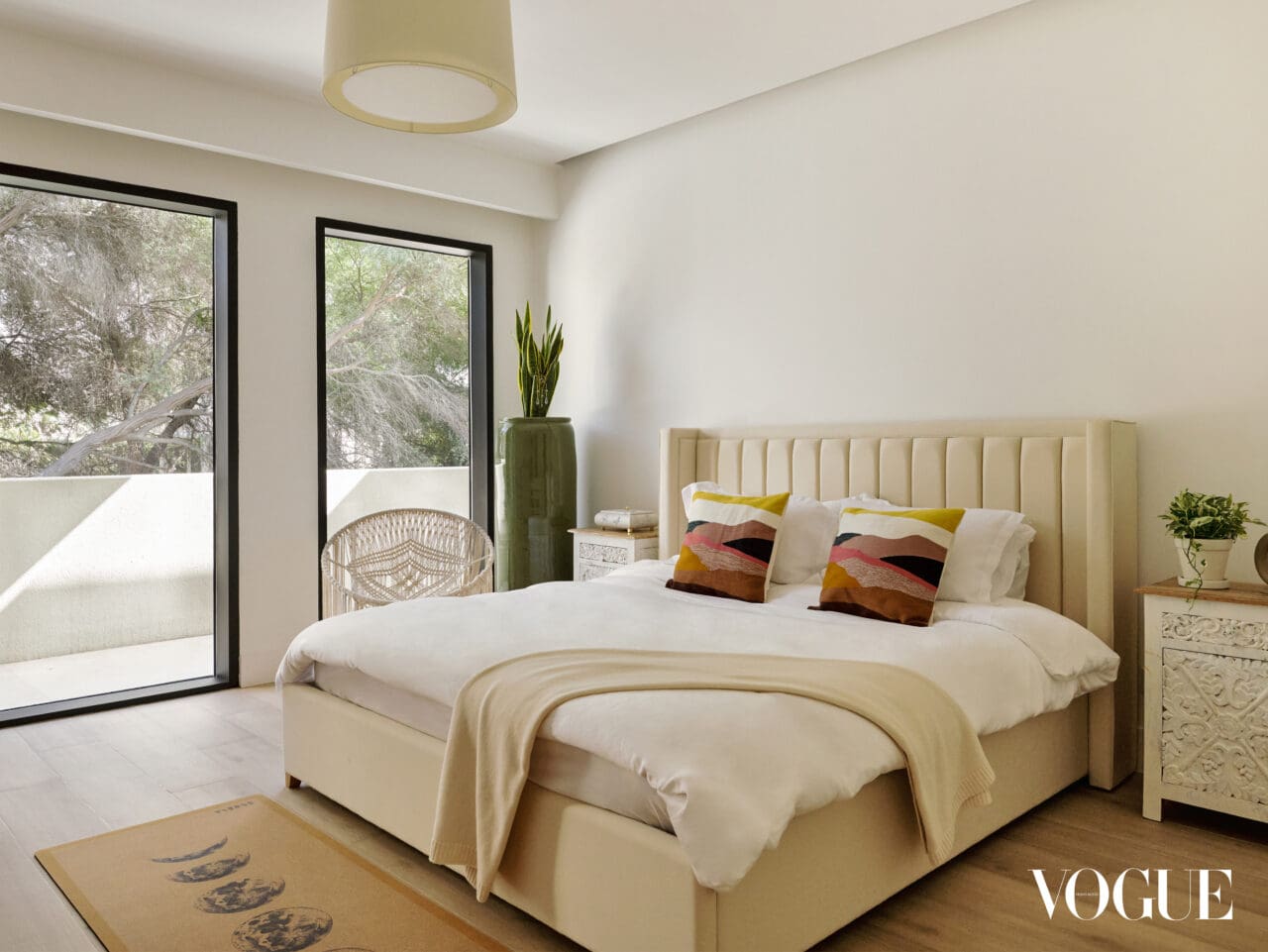
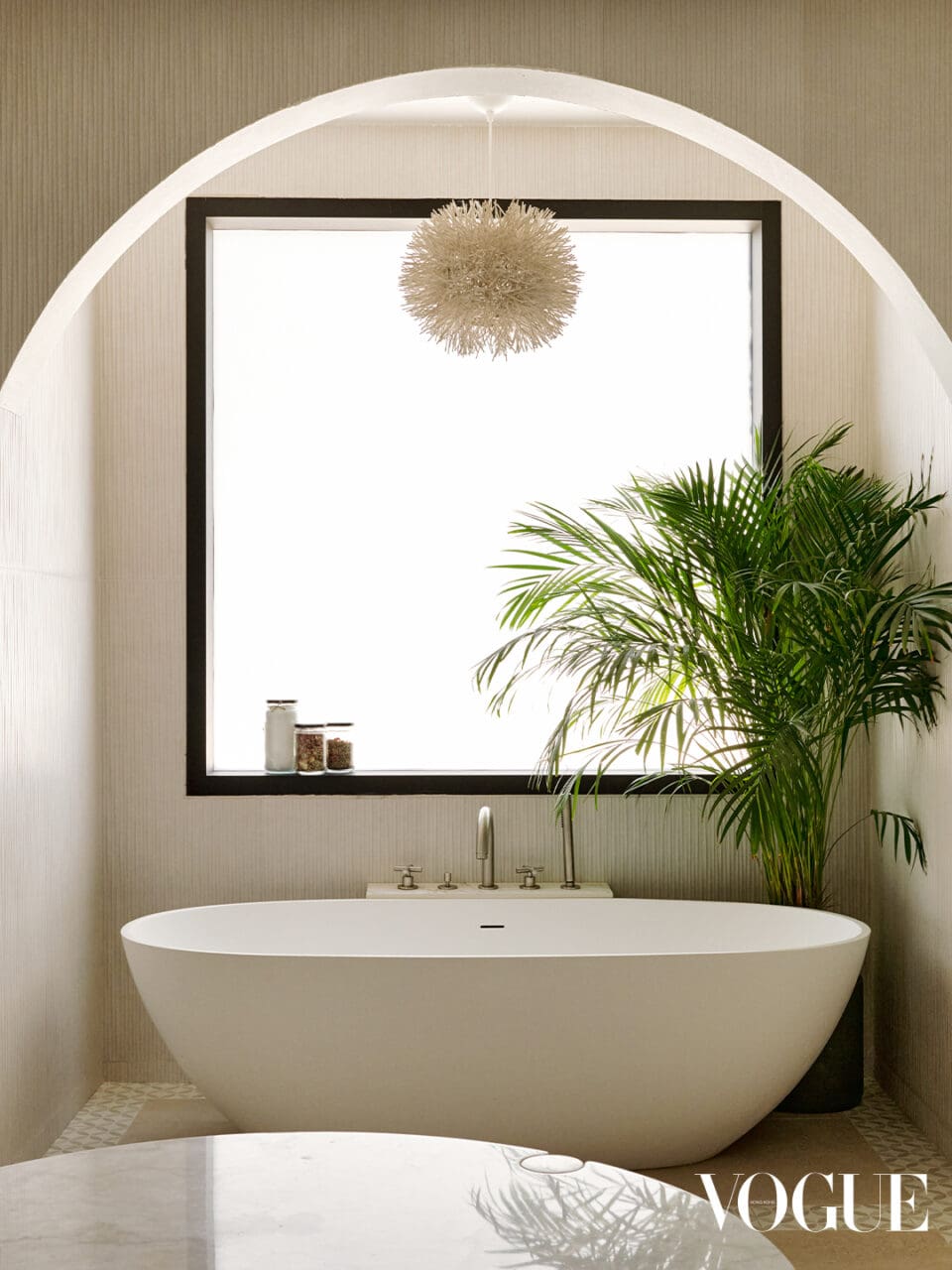
A perfect day within these walls begins in a clean, white bedroom dressed in certified organic linen. Every object has earned its place: the bed frame and furniture are solid wood, finished with organic, non-toxic paint. From there, Chou’s morning begins. “I step out onto my balcony to do my morning stretches and exercises under the sun,” she shares, finishing with ten minutes on her rebounder. Breakfast is a considered affair—a cup of third-party, lab-tested organic coffee, free from mycotoxins and mould, taken alongside her NSF-certified supplements, “which only ever come in glass bottles.” Even her shower water is filtered. And in a detail that speaks volumes about her relationship with the modern world: “I also switch on the whole-house Wi-Fi in the morning, which I always turn off again before I go to sleep.”
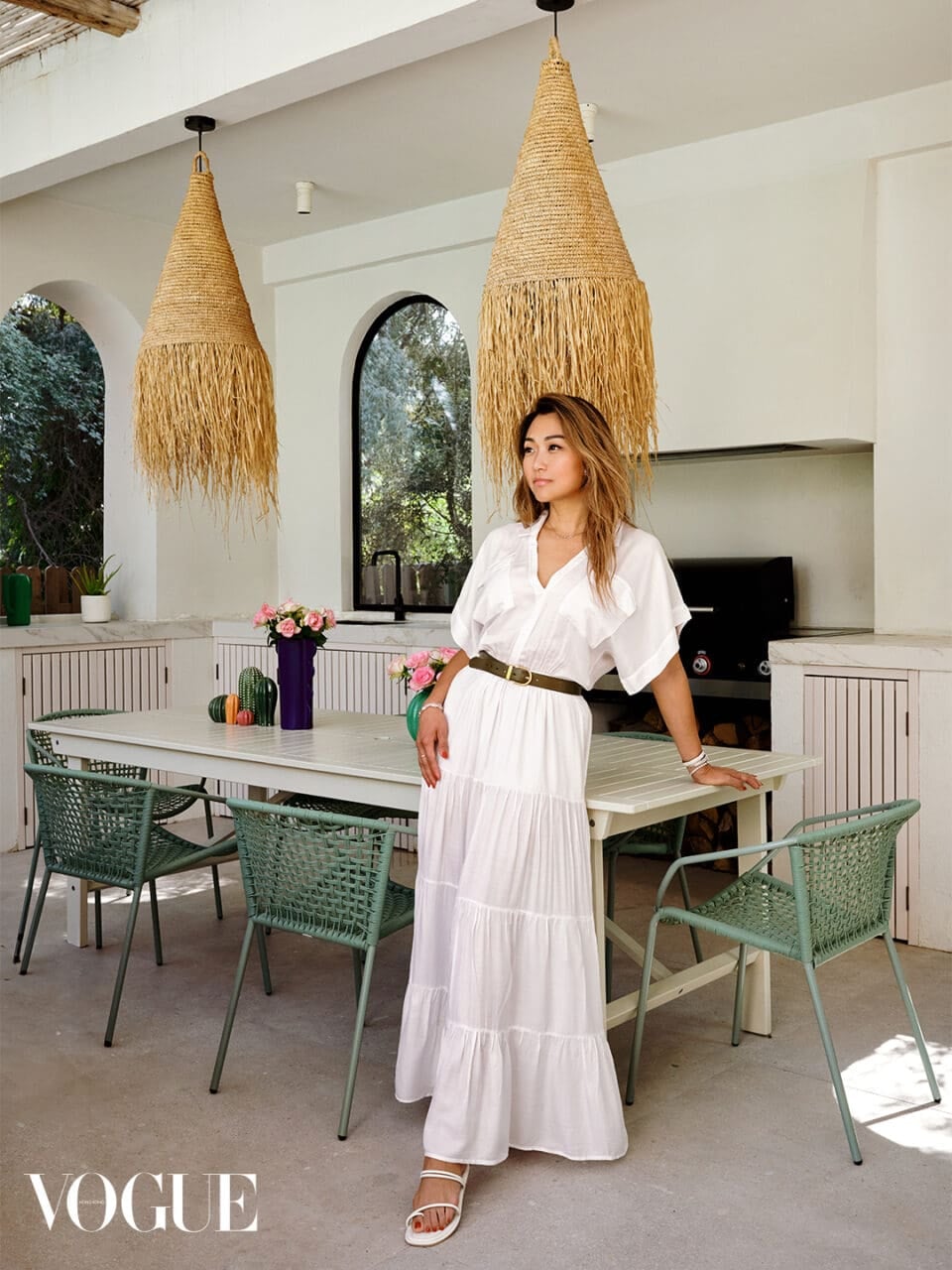
The love of nature carries outdoors, to her favourite space of all. It’s comfortable and colourful, and my whimsical furniture out there makes me happy every single time I see it,” she says. Even the swimming pool reflects her convictions: “a saltwater pool, not a toxic chlorine one.”


Her devotion to purity extends most tenderly to the beds. They are custom-made with solid wood frames that use no glues, wrapped in certified organic cotton fabric with no formaldehyde and no VOCs. The mattresses are one hundred per cent wool, and the bedding is either organic linen or cleanbamboo®—a distinction she is quick to make, “because not all bamboo is clean.” It is this attention to nuance, the refusal to accept a label at face value, that defines her whole approach to living.
If the bedroom is her sanctuary, the kitchen is her proving ground. The kitchen contains no plastic, only glass, wood and stainless steel. Glass food containers line the shelves, wooden and stainless utensils fill the drawers, and her pots and pans are all PFAS-free.
“Keeping my kitchen toxin-free is one of my highest priorities,” she says, and she is refreshingly candid about her approach. “I don’t cook, but I put a great deal of effort into sourcing only organic foods, so that everything is glyphosate-free.” That effort spans organic pasture-raised eggs, grass-fed organic beef and organic vegetables, with glass packaging chosen over plastic wherever possible. “I’m Chinese, after all, so I simply must have my rice!” she shares — but even this is imported specially to ensure it is free from arsenic and heavy metals, then cooked in a PFAS-free rice cooker.
For those inspired to embrace a lower-tox life but unsure where to start, Chou has some advice to offer. “The most important step is to remove as much plastic from your kitchen as possible,” she says. From there, “the easiest things to change are your bedding, towels and loungewear.” For high impact, she recommends switching laundry detergents, soaps, shampoos and skincare to options that are toxin-free and fragrance-free. And she has one final, emphatic piece of advice: “a non-stick cooking pan is one of the most toxic items of all, so that’s well worth replacing.”

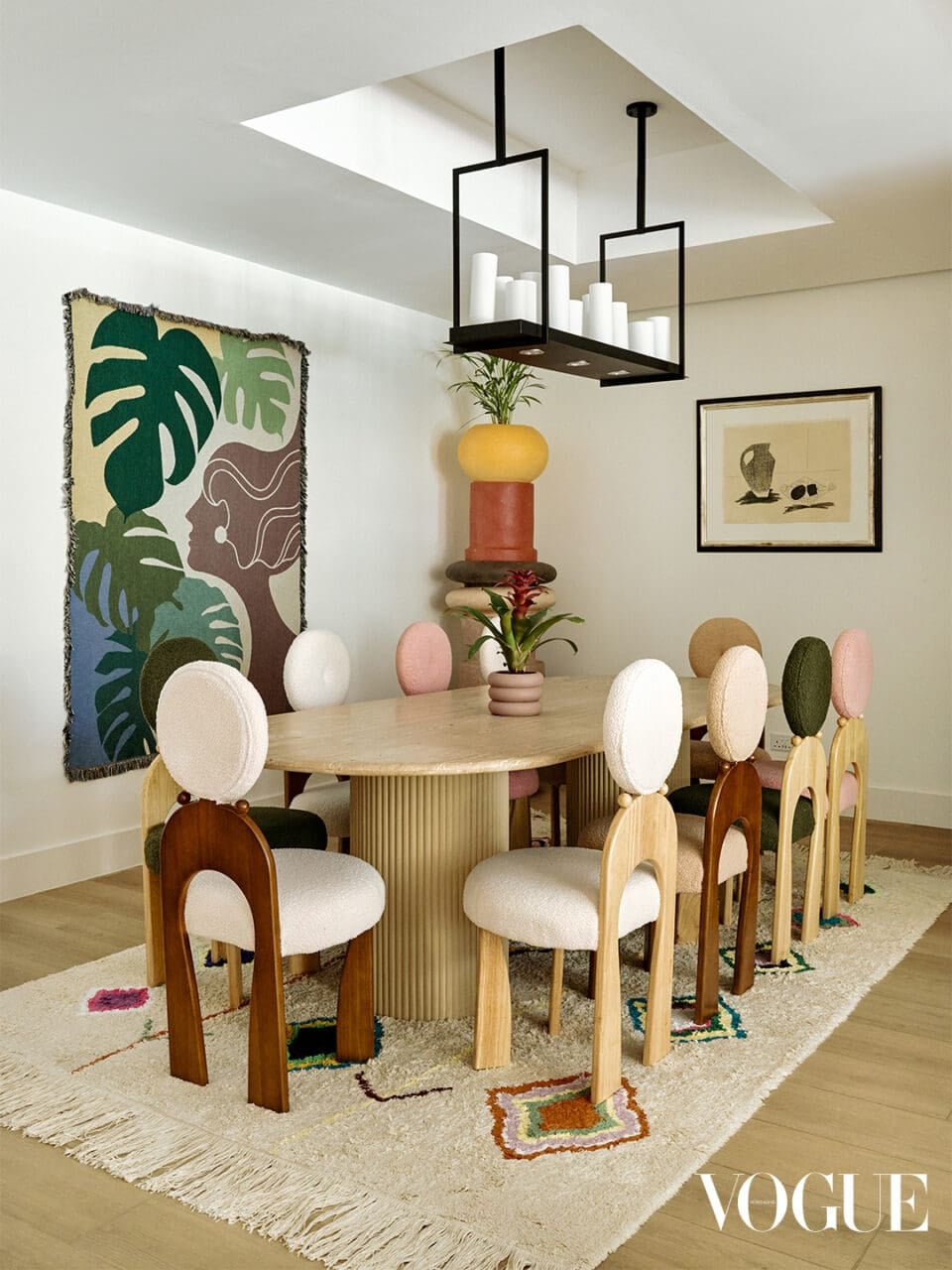

For all its careful curation, this is unmistakably a home that is lived in. Chou lights up when recalling the children and guests who have filled these rooms over the years. But her most cherished memory is a hands-on one: “building a full wooden skateboarding ramp with my children in the garage. It was our very first time doing any woodwork together!” It’s proof that a non-toxic home need not be precious. It can be sawdust and laughter and the satisfaction of building something real, side by side.
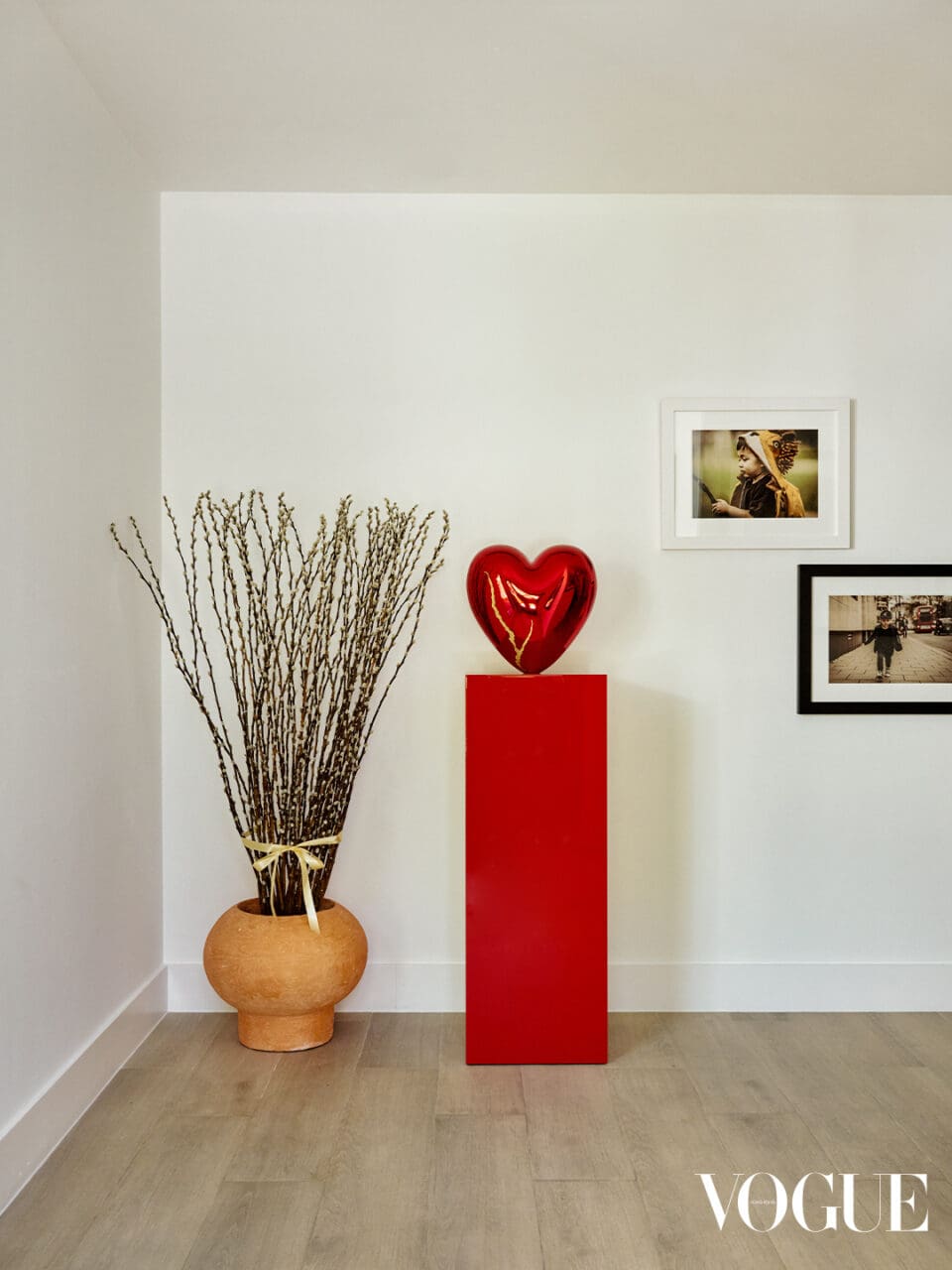
That same spirit lives in the pieces she holds closest. Among them is a red heart, an artwork by her good friend Roksana Ciurysek. Supporting the people she loves is instinctive for Chou, but this piece carries a resonance beyond friendship. “To me, this piece is about living and growth,” she explains. “It speaks to facing hardship or heartbreak and then filling those broken places with things that are golden and better than before.” It’s a fitting emblem for a home that has been so deliberately shaped around renewal.
Ask Veronica Chou what home truly means, and her answer distils an entire way of living into a single thought. “Home is a safe haven—a place where I can relax about all the little things so that I can focus on my purpose,” she says. It is somewhere everything exists in harmony: “a non-toxic sanctuary that, to my mind, represents the very definition of new luxury.” Not luxury measured in excess or ornament, but in purity, intention, and peace of mind.
Photography: Natalie Dunn
Editor
Kaitlyn Lai