

Christopher Nolan’s The Odyssey has Matt Damon, Zendaya, Anne Hathaway and a $250 million budget behind a poem most of us last opened in secondary school, which means half the internet is arguing about Cyclops and cattle-of-the-sun-god curses like they’re fresh gossip. Before you sit through three hours of IMAX, here’s your crash course on who’s who and what’s about to eat, seduce, or shipwreck Odysseus. Fair warning: spoilers ahead, though at 3000 years old, the statute of limitations may have passed.
The Olympians
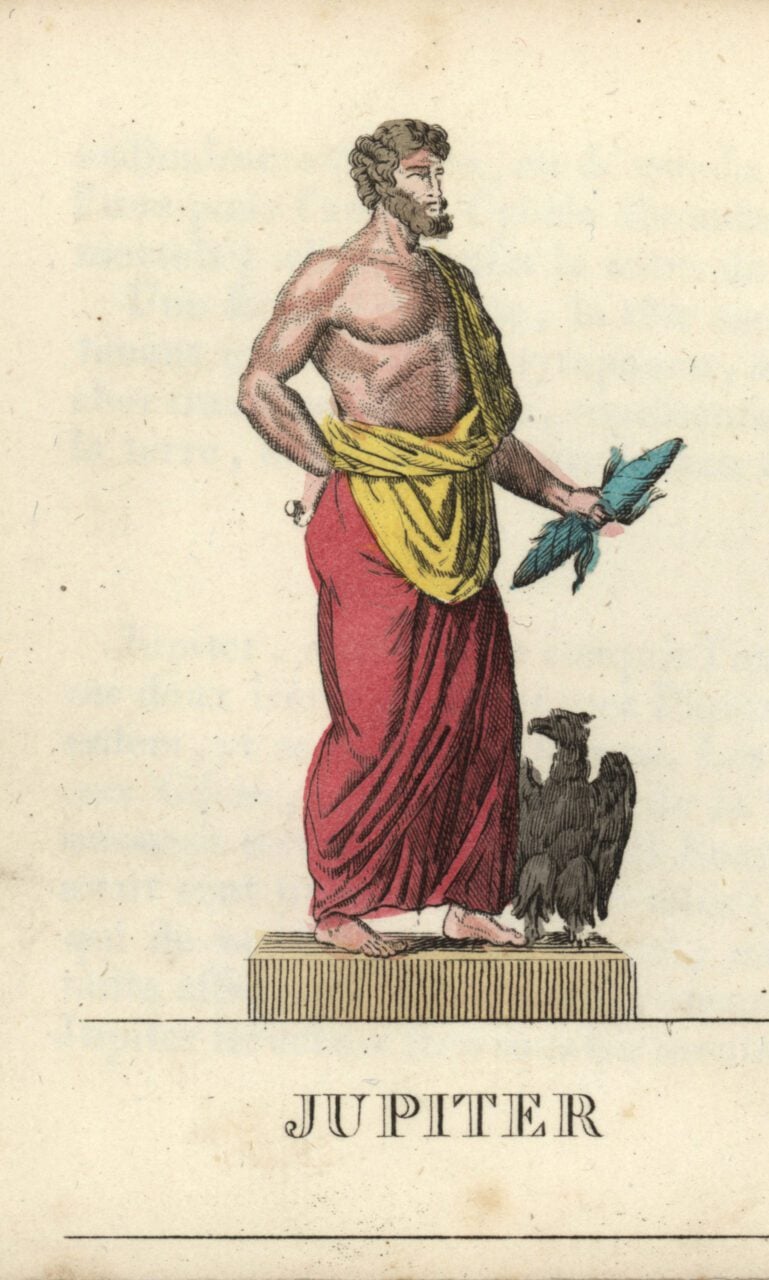
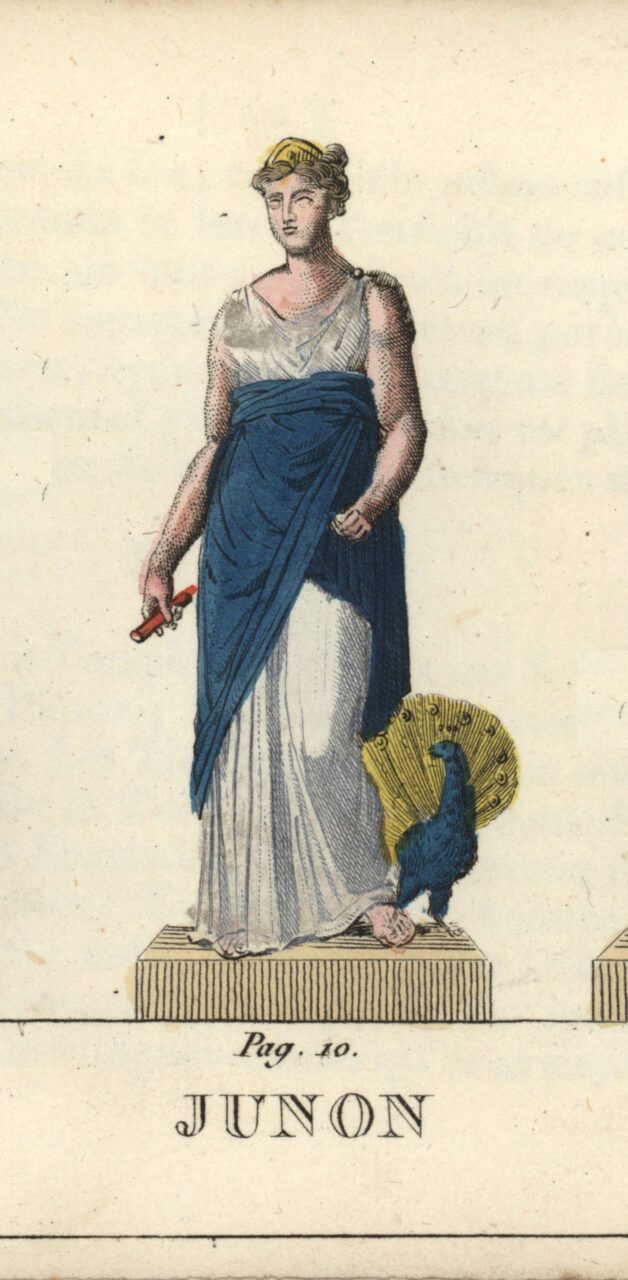
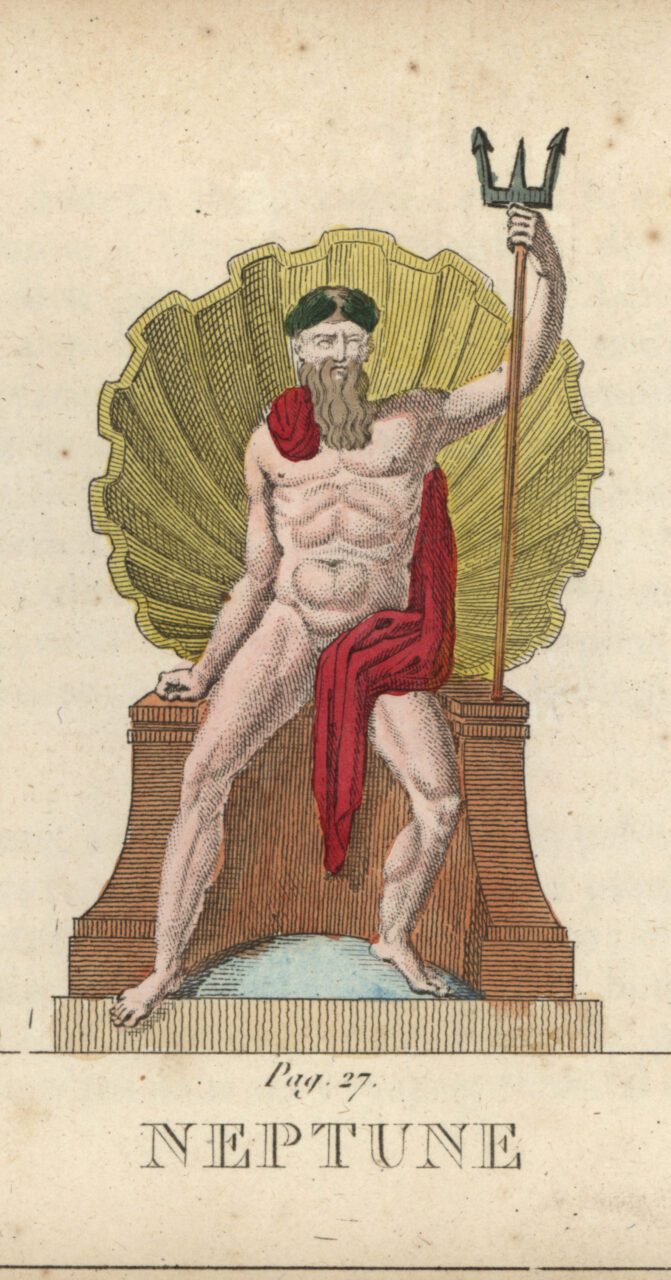
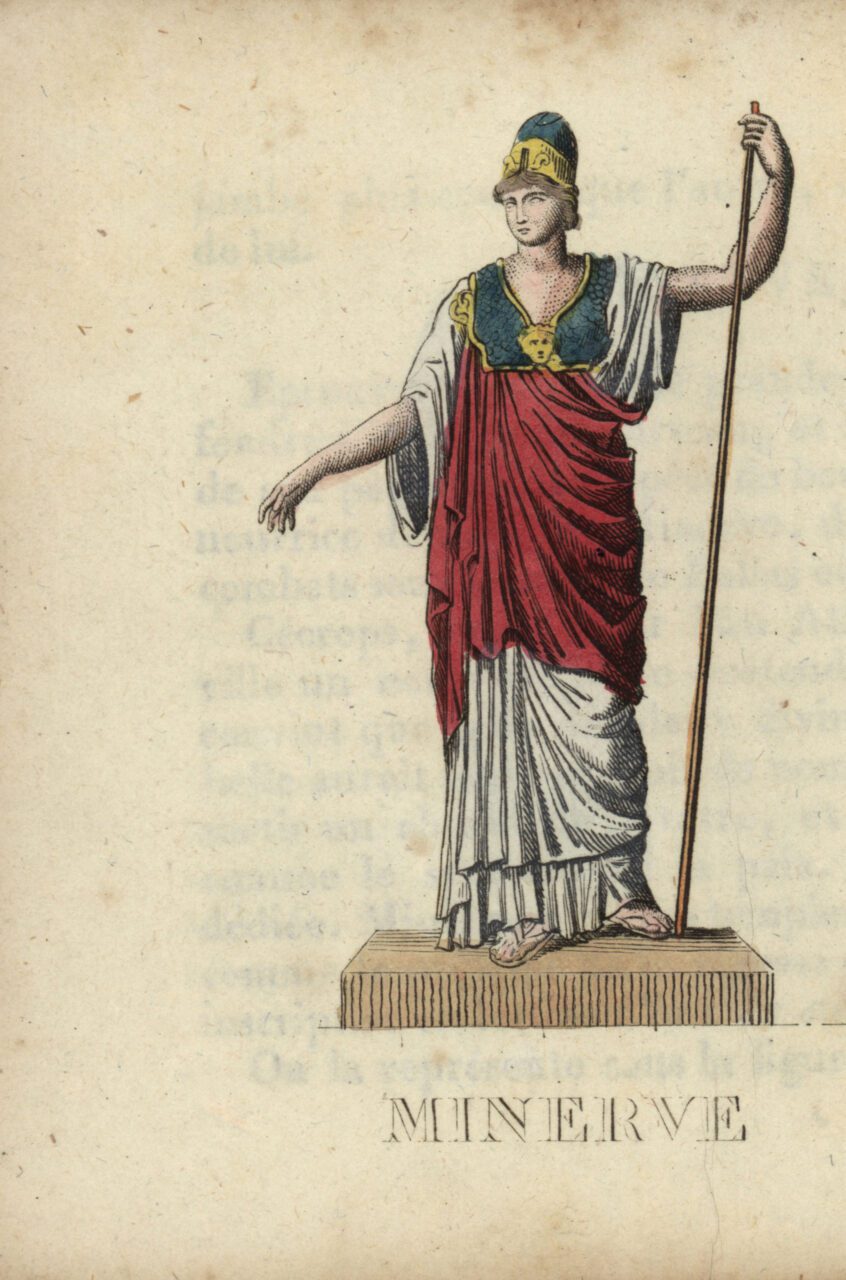
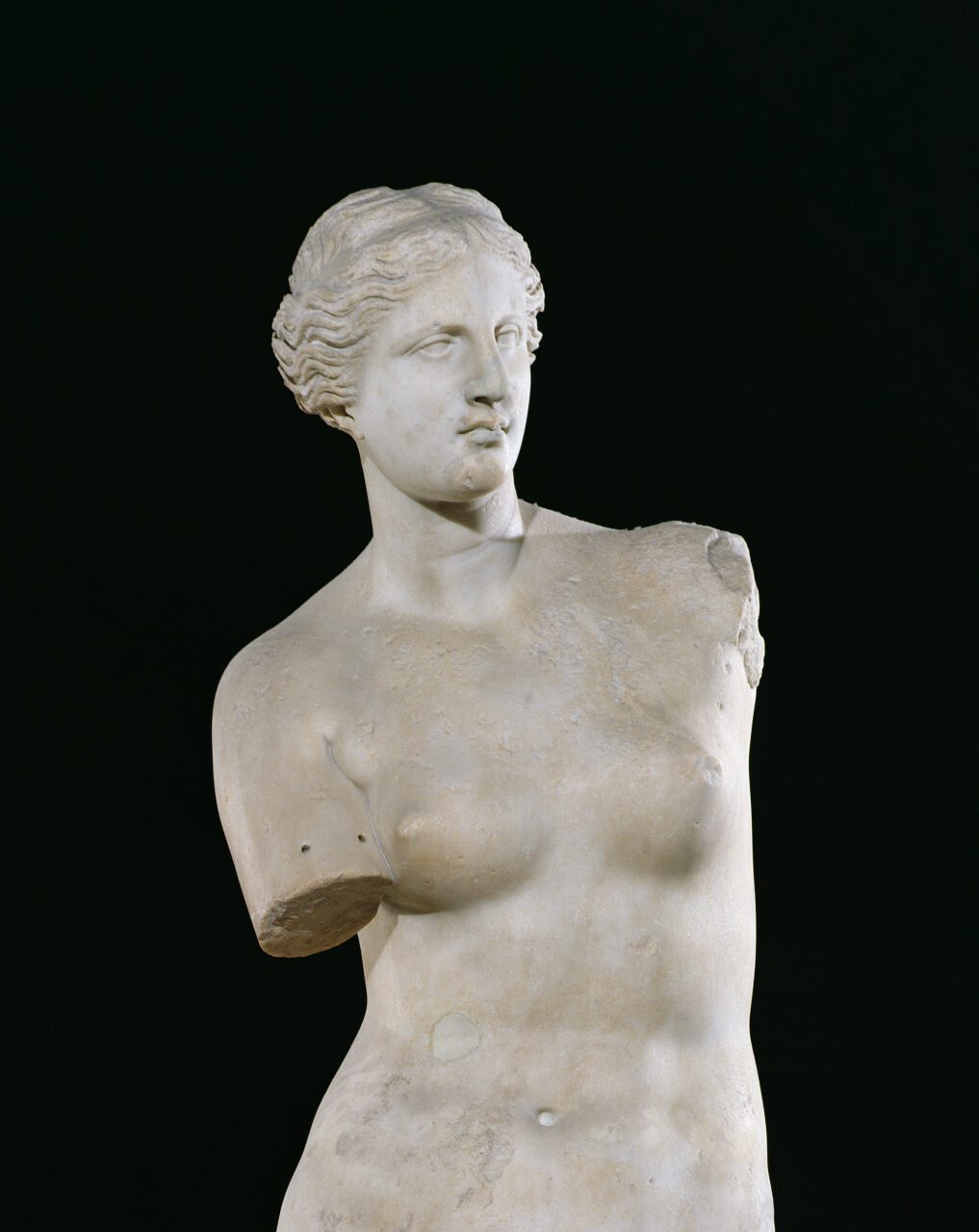
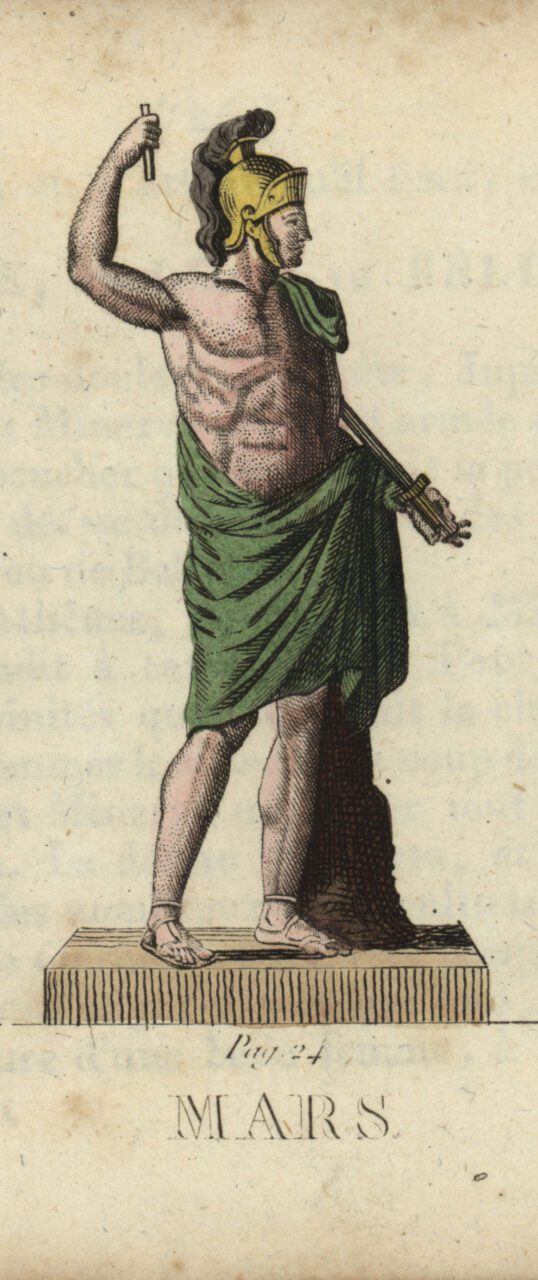
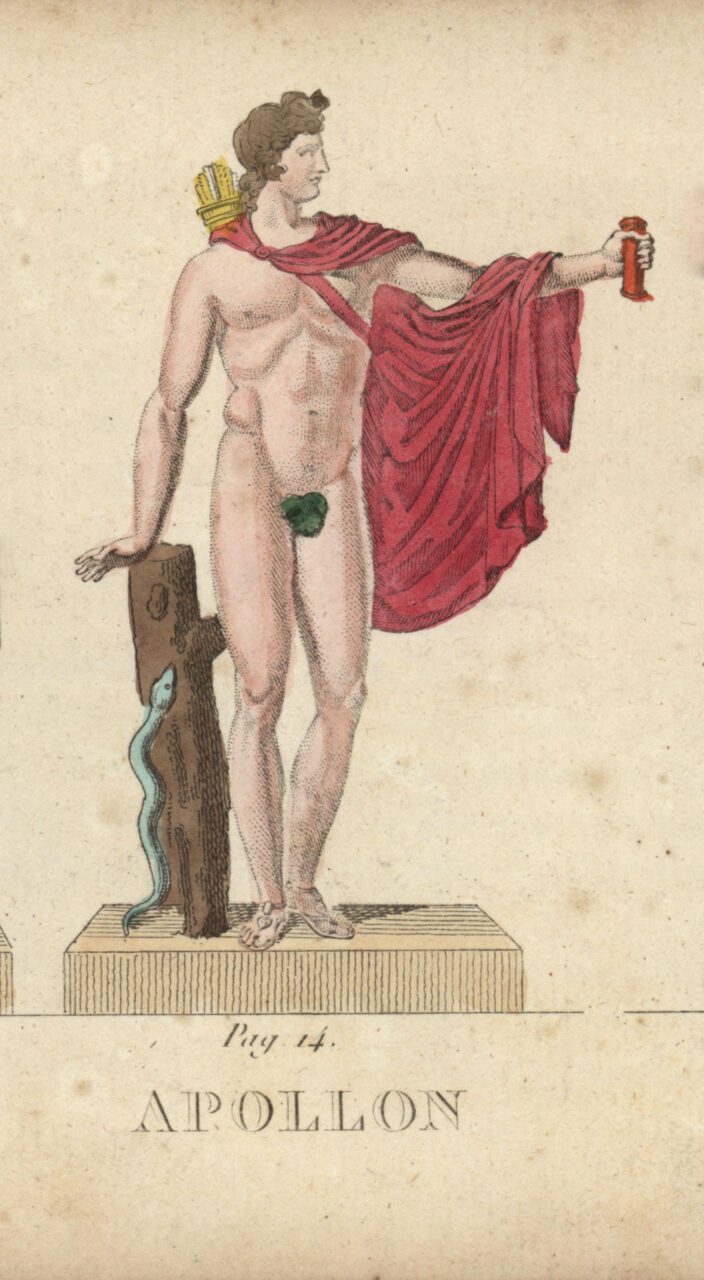
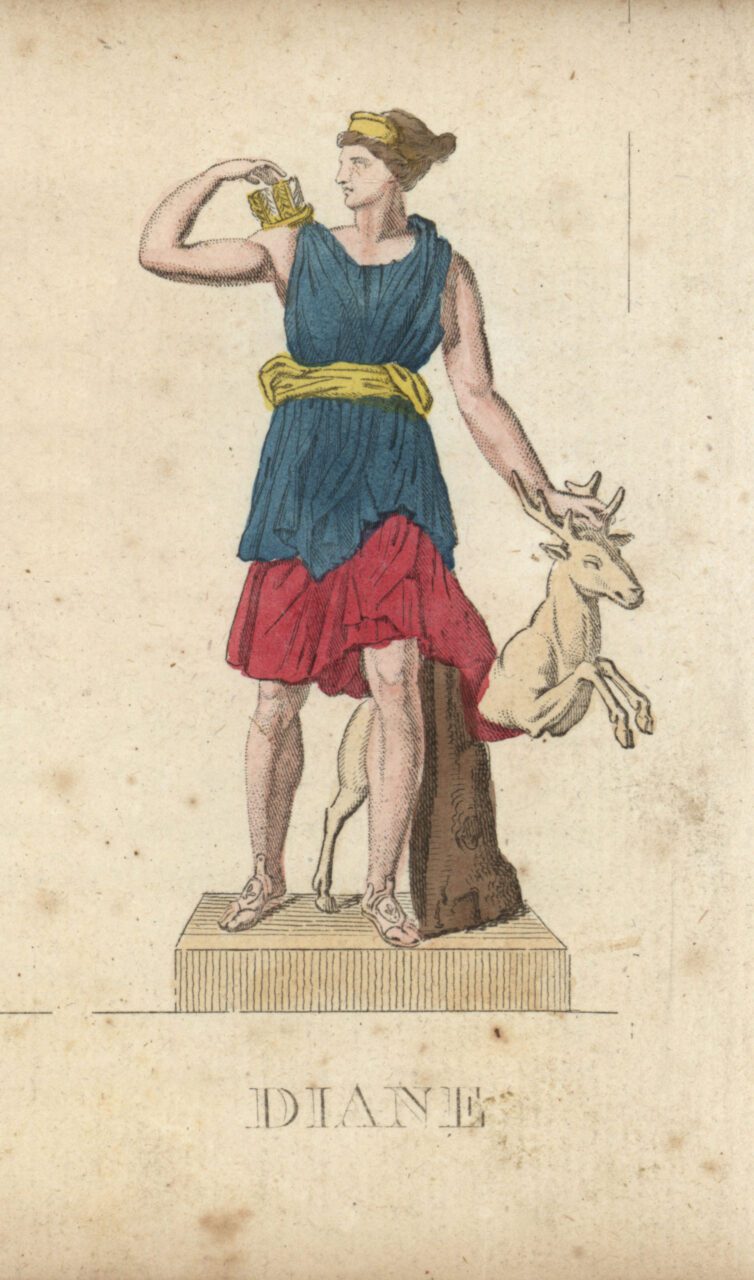
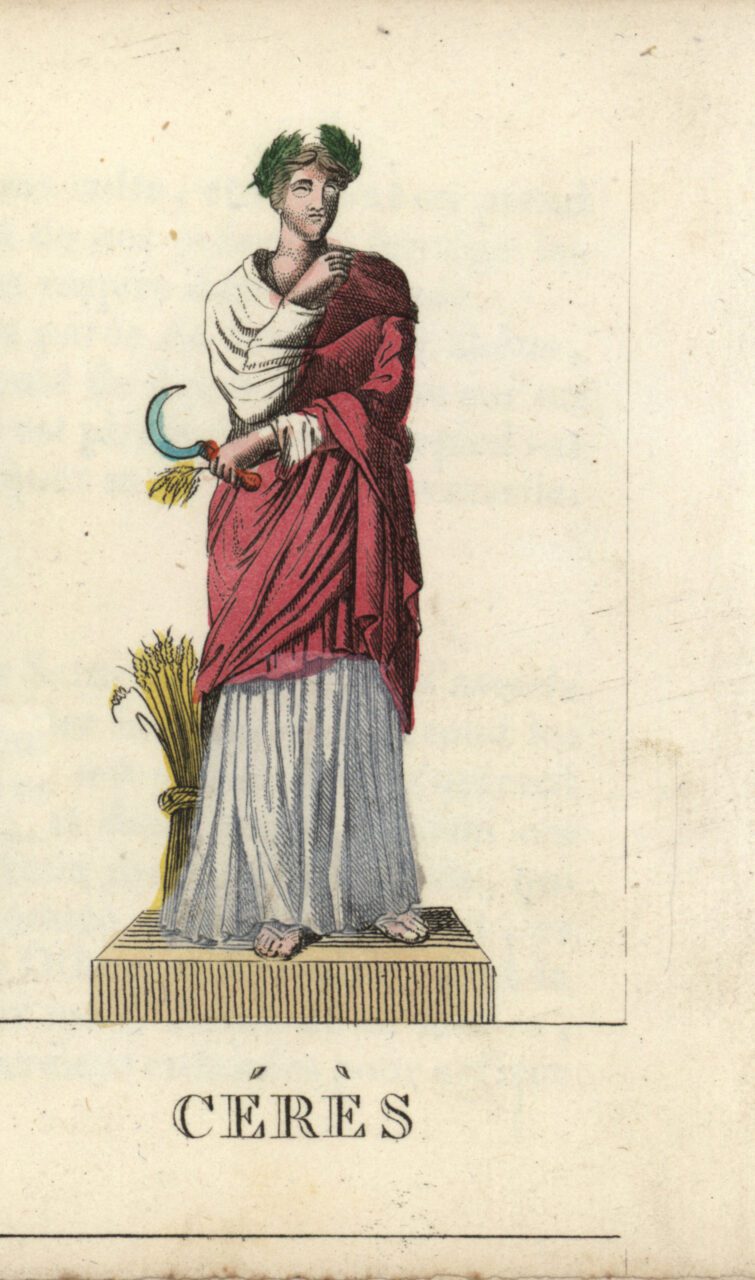
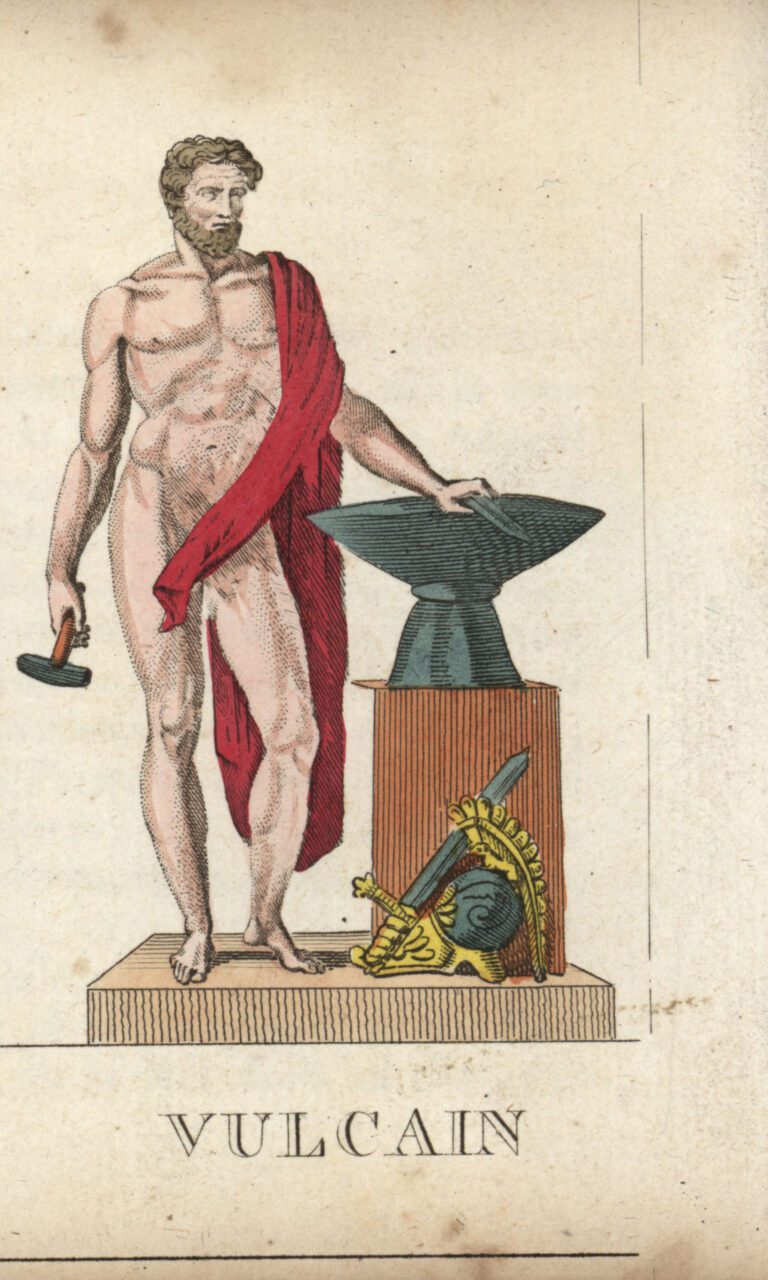
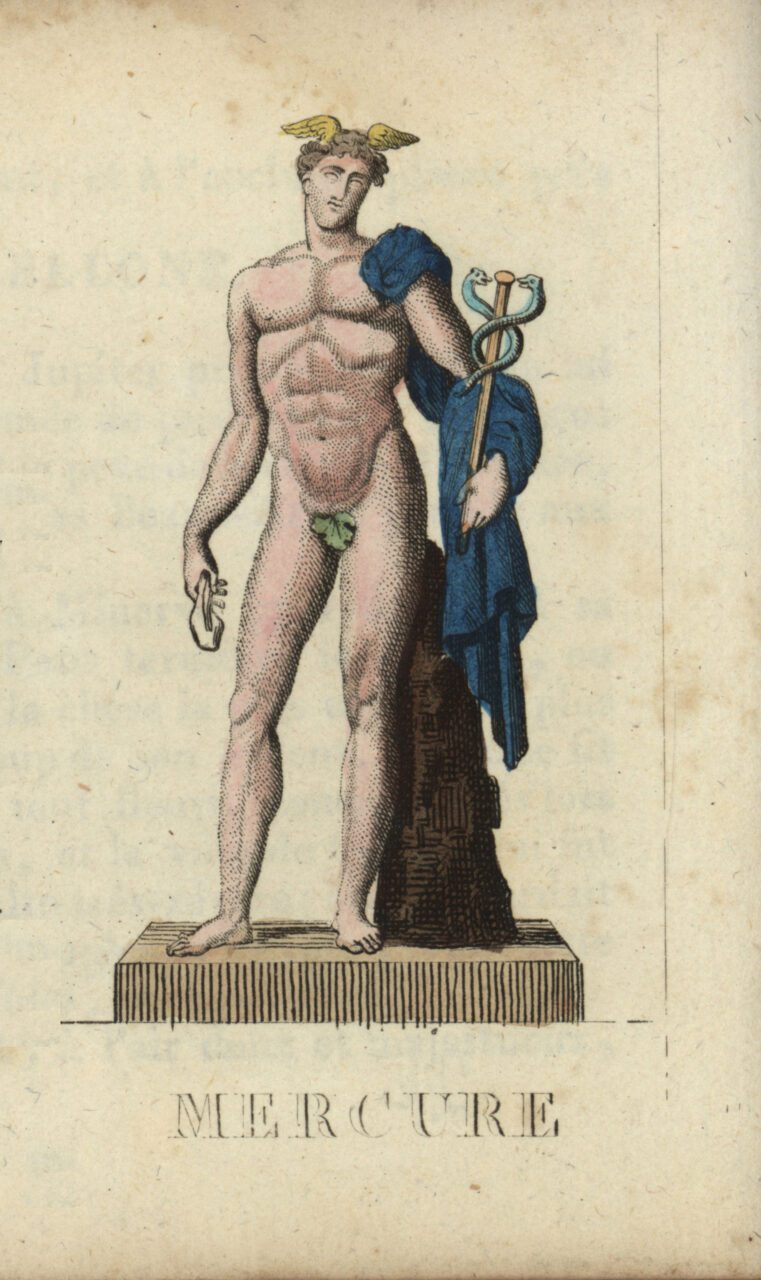
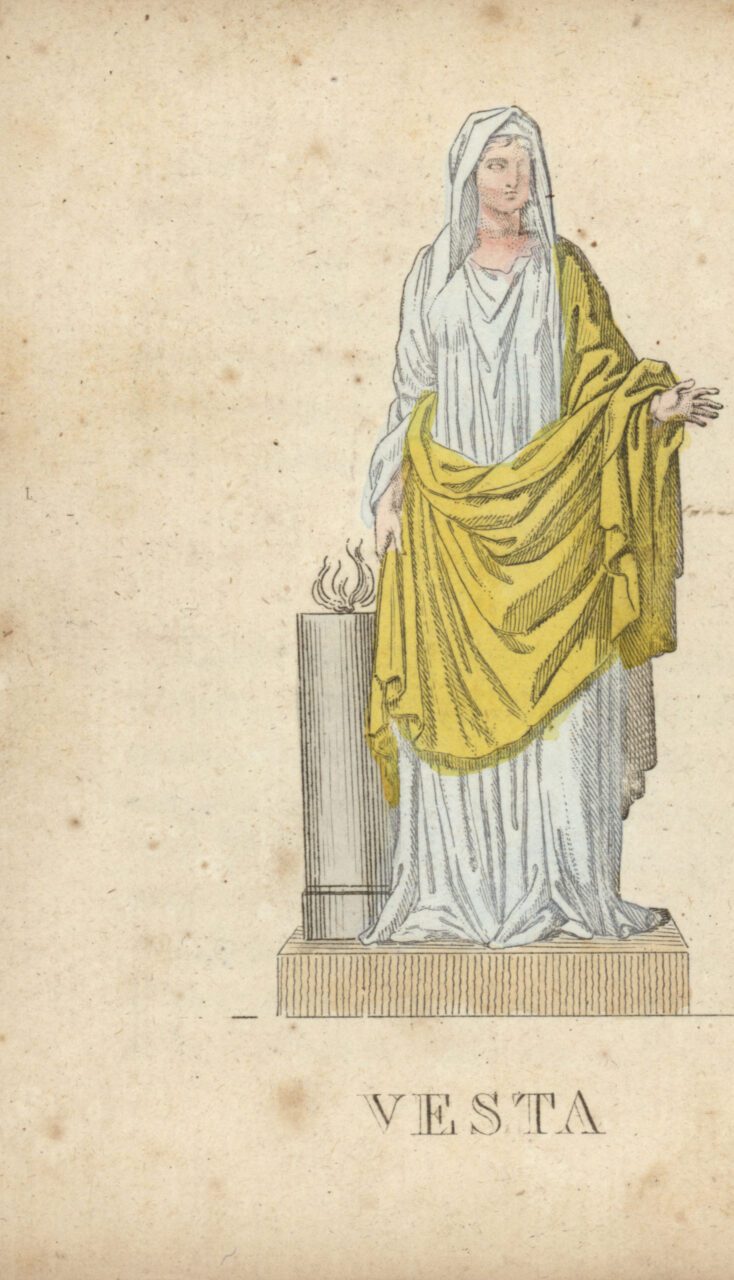
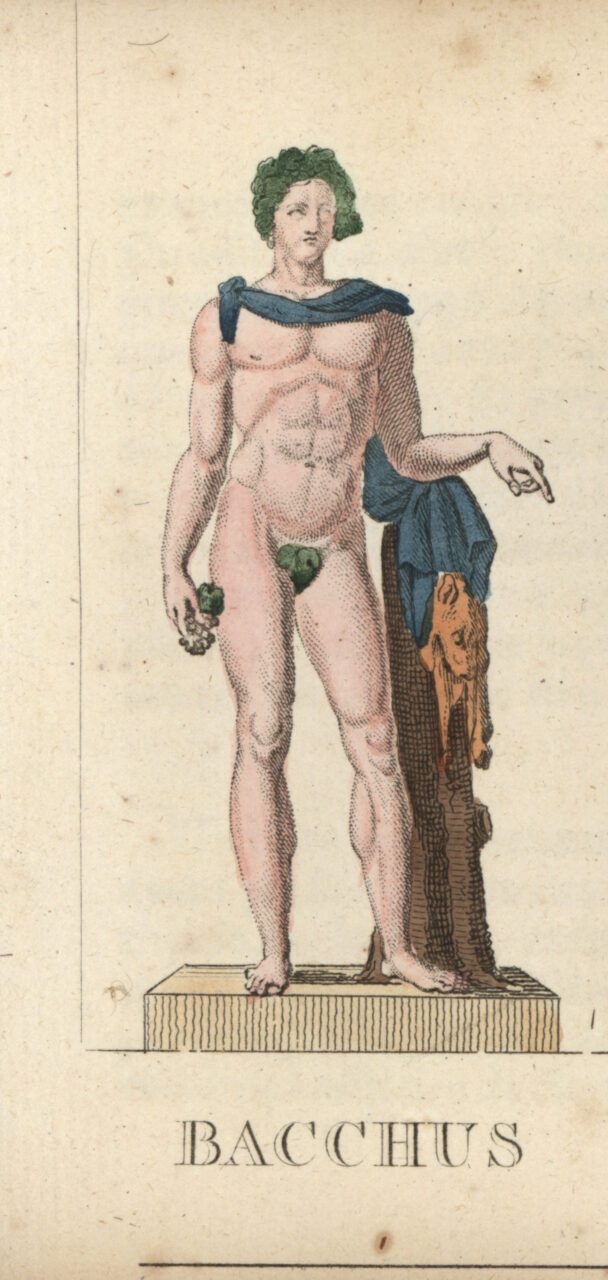
Arguably the most well-known figures in Greek Mythology, the 12 Olympians are the gods in the Greek Pantheon who reside on Mount Olympus. The dozen consists of Zeus, Hera, Poseidon, Athena, Aphrodite, Ares, Apollo, Artemis, Demeter, Hephaestus, Hermes, and Hestia/Dionysus.
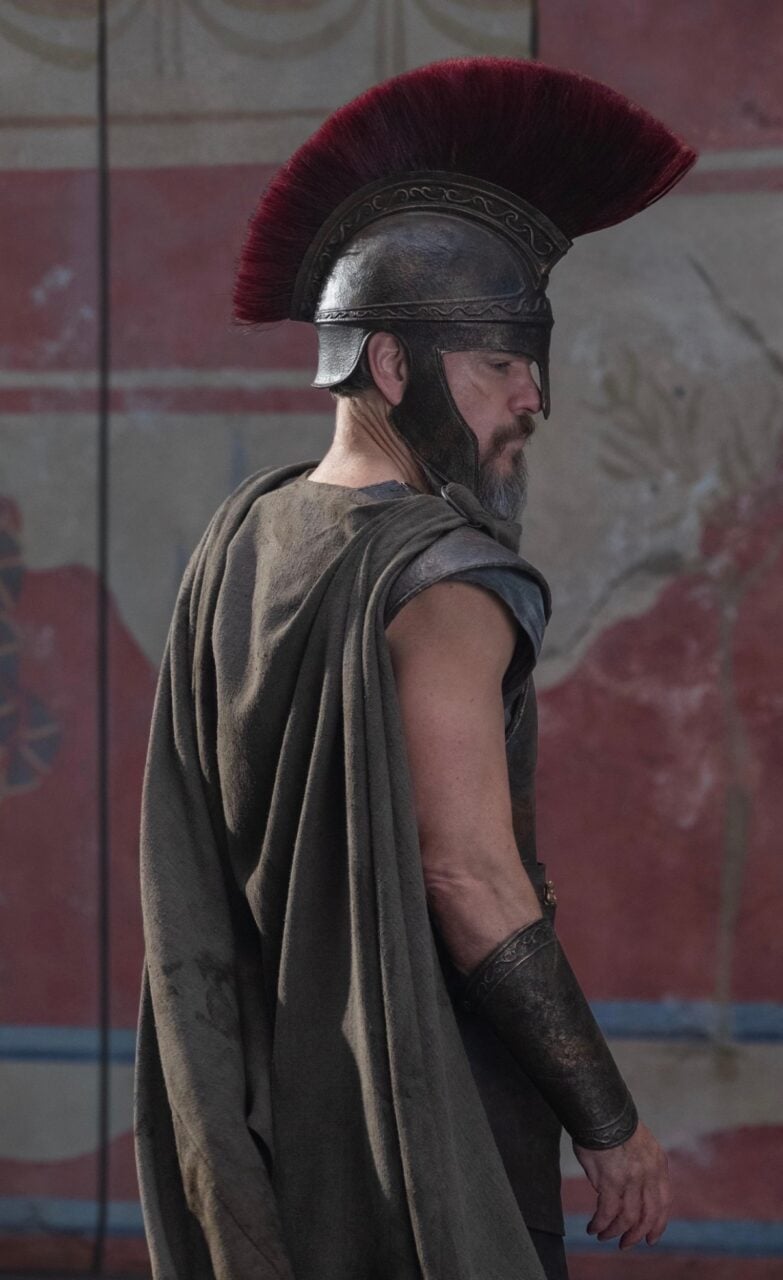
Two of them matter more than the rest here. Zeus, king of the gods, is technically the one holding the whole plot together — not through direct intervention, but through the law he’s meant to enforce: xenia, the sacred duty of hospitality between host and guest, and just as sacred an obligation for guests to behave themselves in return. Nearly every disaster in this story traces back to someone breaking that rule, whether it’s suitors overstaying their welcome in Ithaca, or a Cyclops treating visitors as dinner. Poseidon, meanwhile, plays villain-by-proxy for most of the journey. He rarely appears directly, but as Polyphemus’ father, he’s the reason Odysseus can’t simply sail home after blinding the Cyclops — the storms, the detours, the decade of bad luck, all of it is Poseidon making sure the punishment fits the crime, one shipwreck at a time.
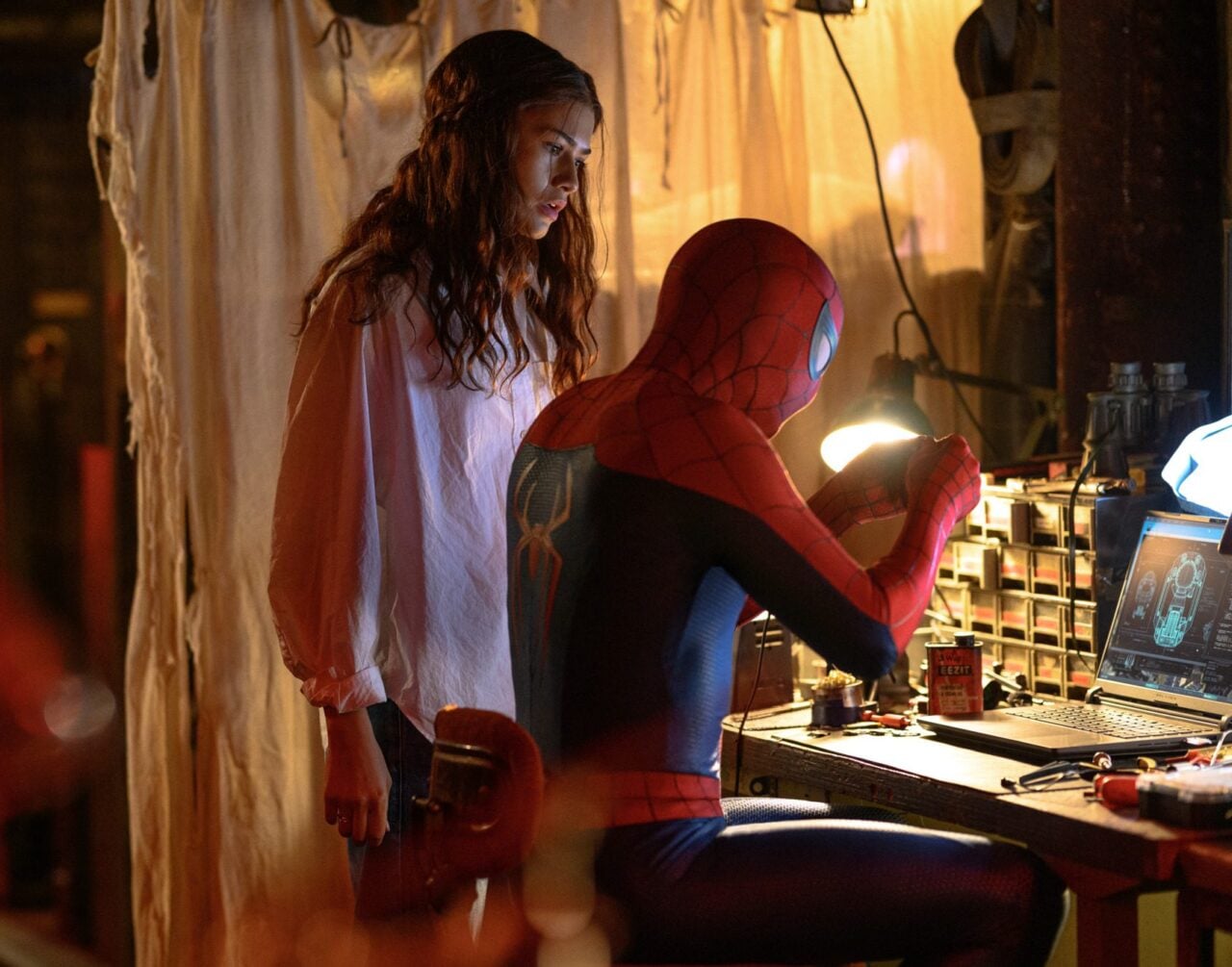
The most prominent Olympian in this movie is Athena (Zendaya), the goddess of war and wisdom, who acts less as a warrior at Odysseus’ (Matt Damon) side than as the one who sees what he can’t — appearing to guide him toward the choices that eventually get him home. That watchfulness is baked into her most famous epithet, glaukōpis, often translated as “grey-eyed” or “bright-eyed”, though the Greek is closer to “flashing” or “gleaming-eyed”.
Zendaya has leaned into that all-seeing, otherworldly quality off-screen too, treating the entire press tour like a slow-build entrance as a goddess: a Schiaparelli breastplate in one city, a custom Louis Vuitton bolero in another, before arriving at the New York premiere in a winged, all-white Matieres Fécales gown, styled by Law Roach, who reportedly asked the design house to hold the look for her nearly two years before the film was even finished. If Athena spent the entire epic seeing three steps ahead of everyone else, her stylist clearly took notes.
Polyphemus (Bill Irwin)
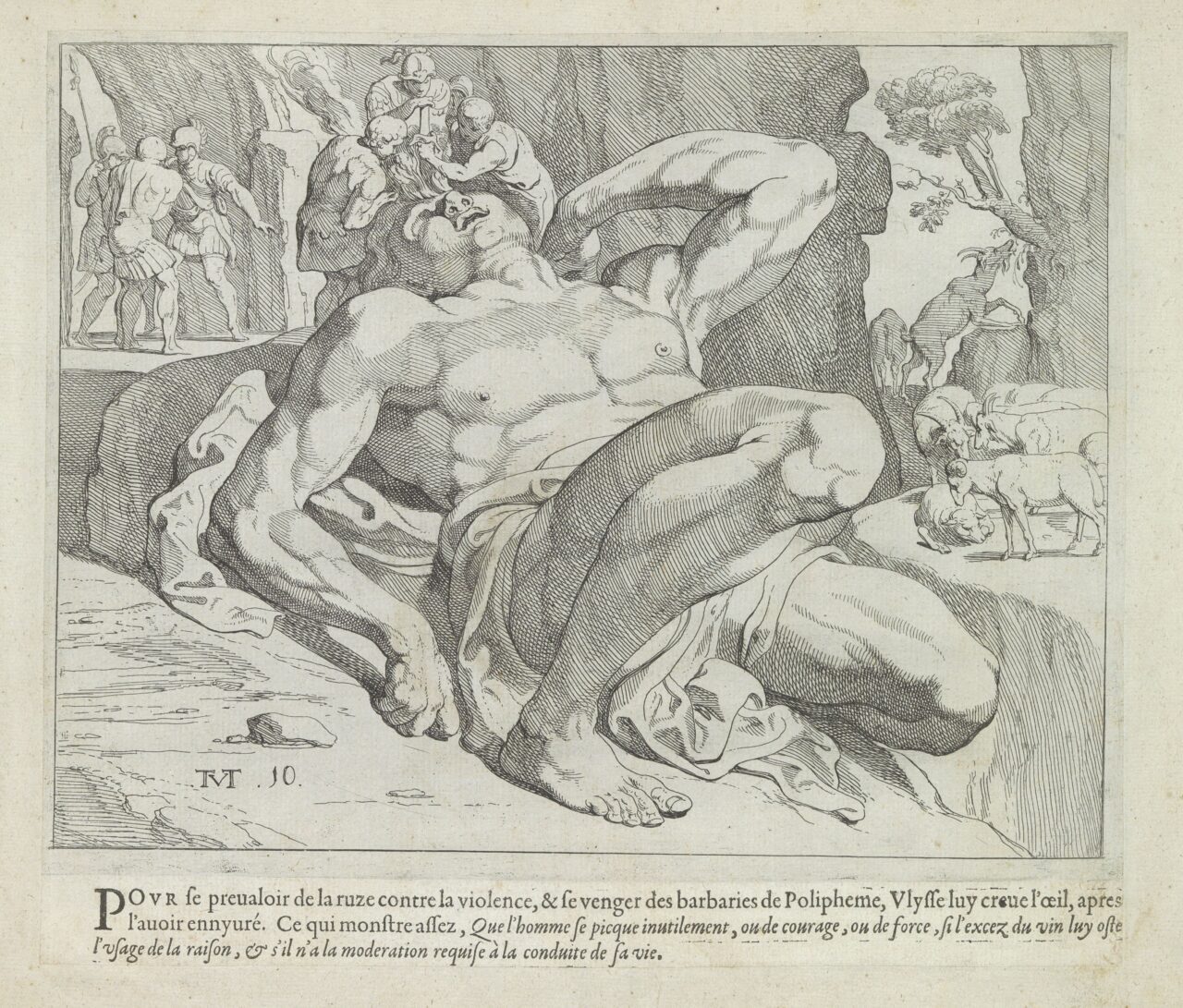
Polyphemus, the one-eyed Cyclops who traps Odysseus and his crew in his cave, is played by Bill Irwin — a Tony-winning physical performer whose last collaboration with Nolan was voicing and operating TARS, the robot in Interstellar. This time, Irwin brought Polyphemus to life through full-body prosthetics and a 60-foot practical puppet, filmed inside a real cave in Greece rather than built entirely in CGI.
In Homer’s telling, Odysseus escapes through cunning rather than force, giving his name as “Nobody” so that when the blinded Cyclops later screams for help, his cries make no sense to the other Cyclops nearby. Only after escaping does Odysseus boast his real name — a moment of pride that cost him dearly, as Polyphemus, son of Poseidon, prays to his father for vengeance, turning the rest of the voyage home into a decade-long ordeal. Pride, it turns out, is the real villain of the Odyssey.
The Laestrygonians
Fresh off escaping one furious, one-eyed giant, Odysseus and his men sail straight into an entire tribe of them. The Laestrygonians are cannibal giants (later tradition traces their line back to Poseidon, which would make them cousins of Polyphemus). Odysseus, wary after the Cyclops, moors his own ship just outside of the harbour while the rest of his fleet sails in. The harbour turns out to be a trap, ringed by cliffs the giants use to pelt the fleet with boulders before spearing the survivors “like fish”. Eleven of his twelve ships are destroyed; only Odysseus’ own, kept prudently outside, survives. That’s Homer’s version specifically, which is worth flagging since the film handles the scale differently. By this point in Nolan’s adaptation, the fleet has already been reduced to just three ships, and all three are shown moored safely along the shore rather than sailing into the harbour, which changes the shape of the ambush considerably from the poem’s version.
True to Nolan’s practical-effects-first approach, the giants weren’t built in a computer. Matt Damon has described the sequence being shot with real seven–foot-tall stunt performers alongside a stunt double under 5 feet, using forced perspective and camera trickery to sell a scale gap CGI usually handles — a striking departure from Homer’s version, where the poem describes the Laestrygonians as towering and mountainous, closer to feral giants than a civilisation. Nolan, characteristically, gives them body armour instead.
Circe (Samantha Morton)
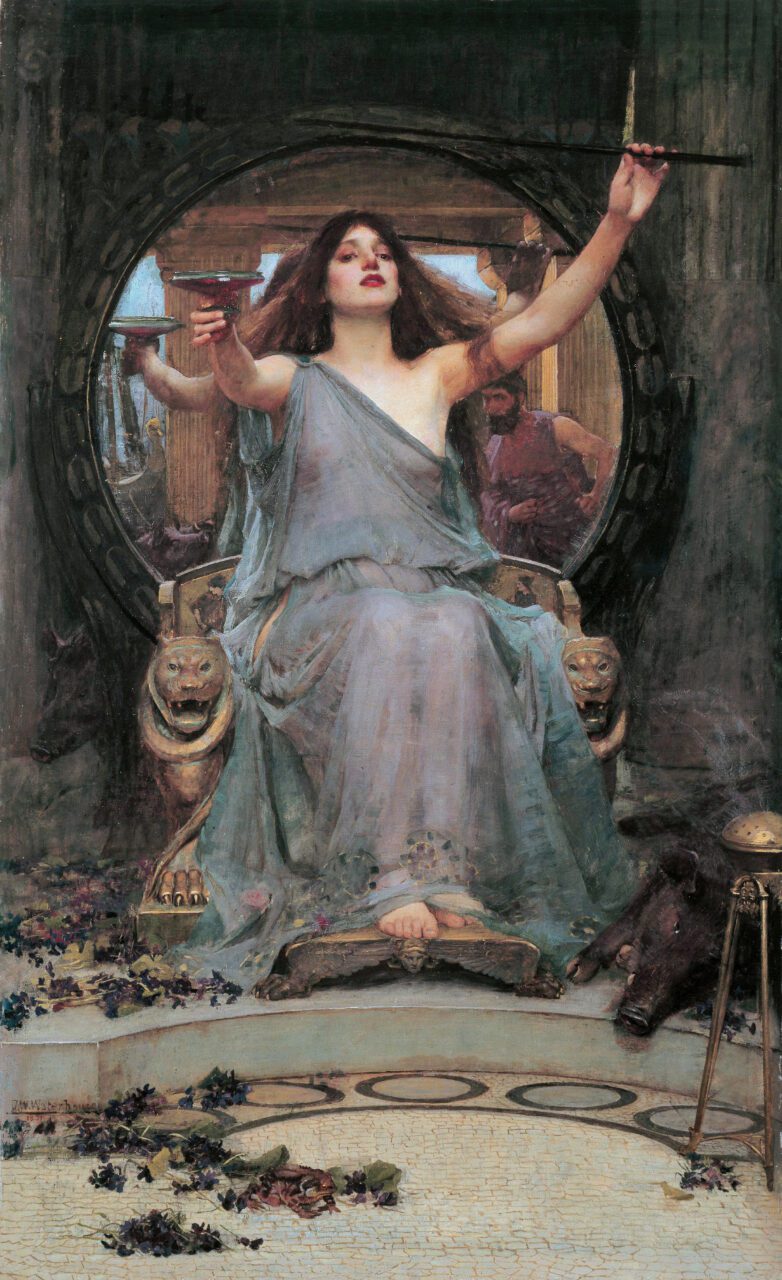
Circe Offering the Cup to Odysseus
Photo: Buyenlarge/Getty Images
Often described with the epithets “trickster” and “enchantress”, Circe (Samantha Morton) is one of the more layered figures in The Odyssey. As the daughter of Helios, the sun god, and the Oceanid Perse, she carries something of both parents in her: her father’s radiance and unnerving allure, her mother’s pull toward transformation and the sea’s older, stranger kinds of magic.
That gift for transformation gets put to dark use before Odysseus ever enters the picture. Circe was in love with Glaucus, a minor sea god who only had eyes for a beautiful maiden named Scylla, so Circe poisoned the waters Scylla bathed in and turned her into the six-headed horror who’d go on to terrorise sailors alongside Charybdis.
Aeaea is where Odysseus and his men land after their run-ins with Polyphemus and the Laestrygonians, hoping for a quiet refuge. They don’t get one. Odysseus’ men stumble into Circe’s home and eat her food, which would later turn them into pigs — a fate which only Odysseus was able to avoid. The two later become lovers and Circe turns the men back and Odysseus’ crew spends a year living in what amounts to paradise on her island. That romance is Homer’s addition, not the film’s — Nolan’s adaptation keeps Circe’s arc focused on the transformation and its undoing, and leaves the year-long love affair on the page. When it is finally time to leave, Circe helps him go, telling him how to reach the Underworld to consult the prophet Tiresias, and later, once he returns to her island, what he’ll need to survive the Sirens and the strait between Scylla and Charybdis.
On screen, Circe’s transformation has become one of the film’s most talked about moments, and in classic Nolan fashion, there is no CGI involved. Samantha Morton physically moulded animatronic pig heads with her own hands while the camera rolled, “sculpting” the crew into swine live on set. Method acting has never looked so literal.
The Sirens
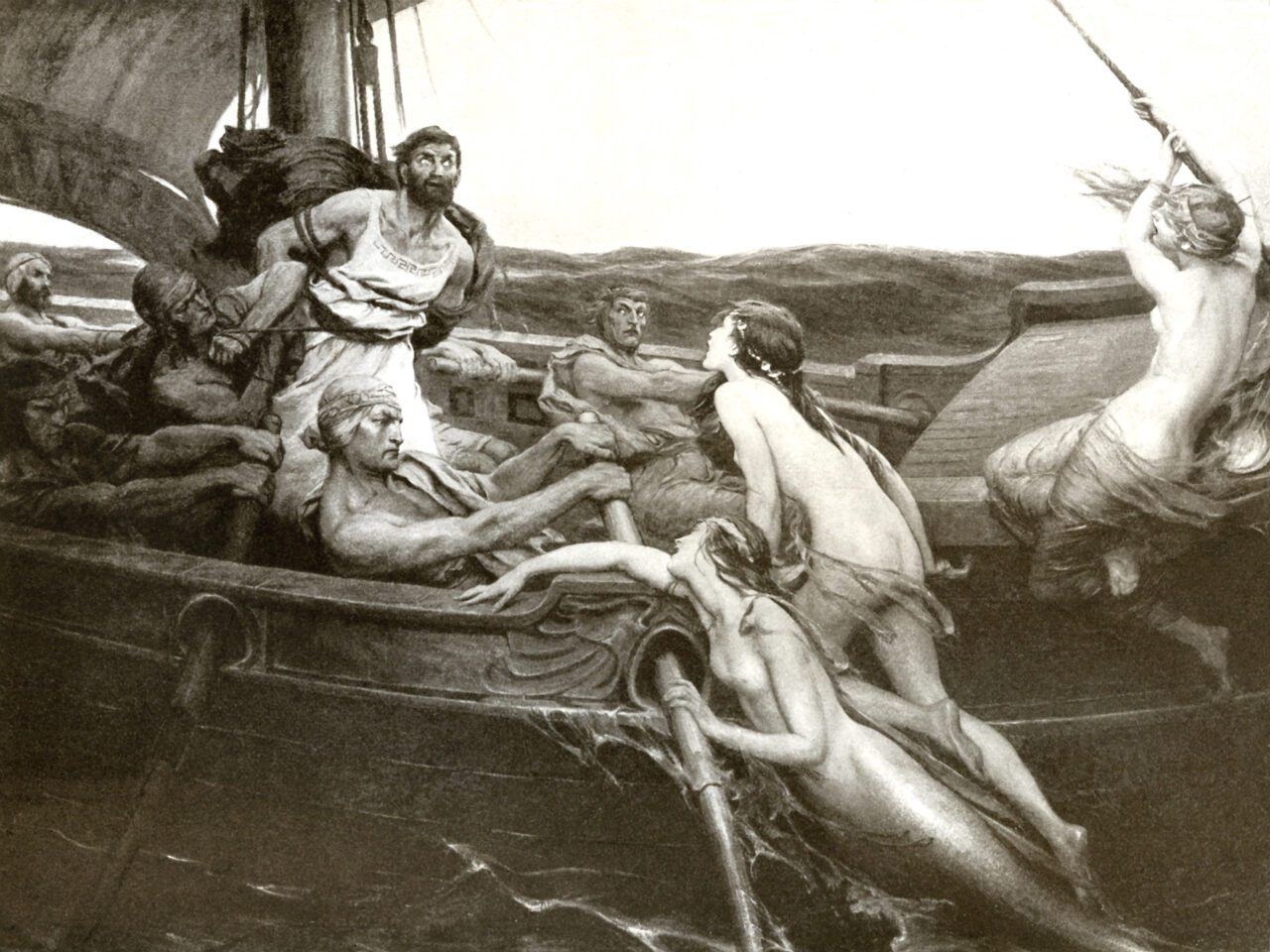
Odysseus and the Sirens
Photo: Ivy Close Images/Universal Images Group via Getty Images
Forget the fully aquatic, half-fish look pop culture usually gives sirens. In Greek mythology, they’re half-bird, half-woman creatures who lure sailors to their deaths with the sheer sweetness of their song. Homer keeps things simple. In his telling, there are only two Sirens, stationed on an island somewhere between Circe’s home and the rocks of Scylla. Later, writers expanded the lineup: the number grew to three (or eight, according to Plato), and their island was relocated to the west coast of Italy. Odysseus survives them on Circe’s advice. He has his crew plug their ears with wax so they’re deaf to the song, and has himself tied to the mast so he can hear it without being able to steer the ship towards the rocks.
In the film, the scene was shot with about as much realism as the story allows. Matt Damon was genuinely strapped to the mast of a real boat on open water, and the Sirens themselves were played by stunt performers positioned on actual rocks.
Scylla and Charybdis
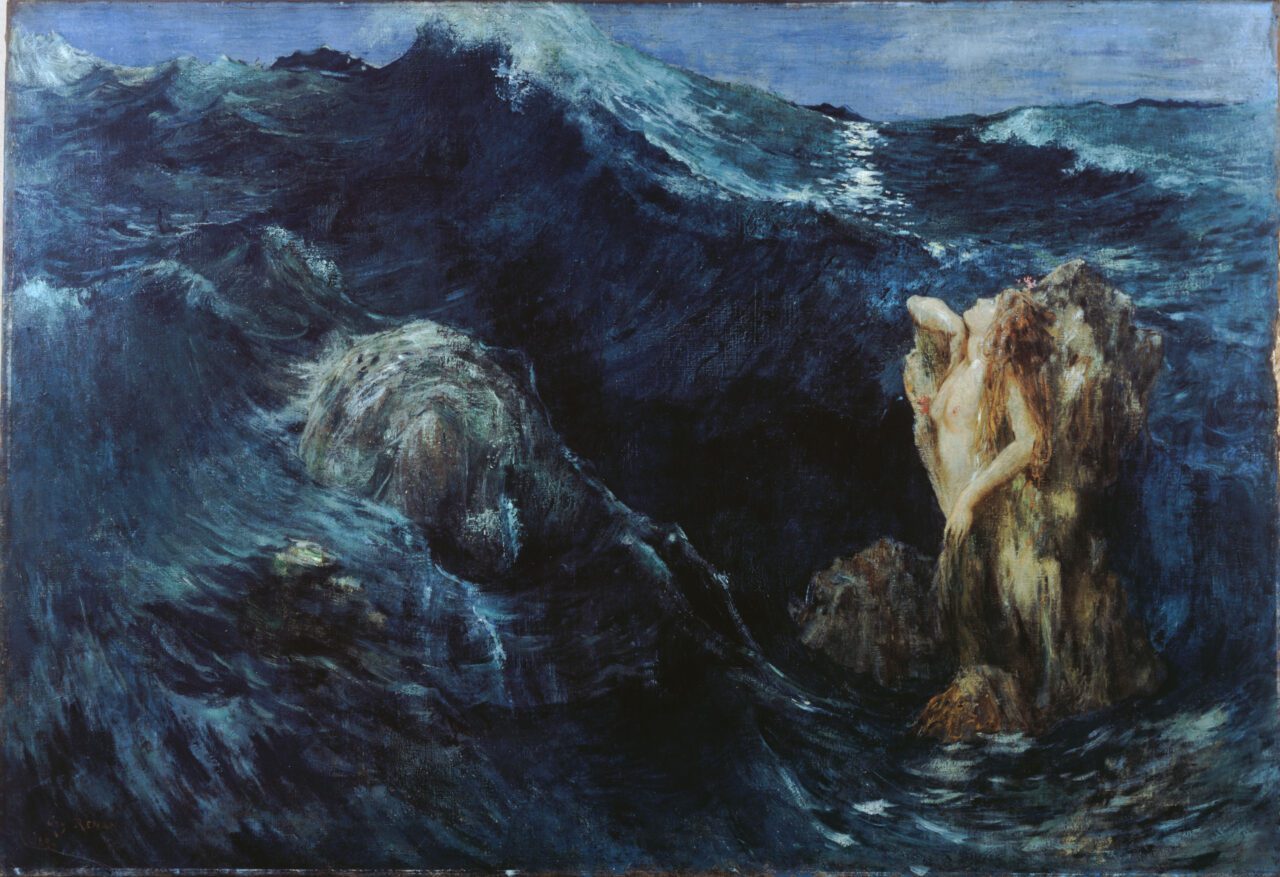
Scylla and Charybdis
Photo: Fine Art Images/Heritage Images via Getty Images
Despite Scylla sounding like a sweet, innocent name, there’s a far more monstrous creature behind the sugarcoated disguise: a six-headed monster that resides in a cliffside cave and reaches down with her long, scaled necks to snatch men straight off passing ships, one for each head. Opposite her lies Charybdis, a whirlpool violent enough to swallow an entire vessel whole.
Circe warns Odysseus that there’s no route that avoids both, and that Charybdis is by far the greater danger. Her advice is to hug the cliff, accept that Scylla will take six men, and save the ship. Odysseus follows it without telling his crew, so they won’t panic and stop rowing, which leads to him watching six of his men get torn from the deck regardless.
Nolan’s production apparently took Homer’s “impossible choice” quite literally: Matt Damon has described the crew rigging the boat with six separate ratchets into the air in one take, simulating Scylla’s grab — built and shot in a single afternoon.
Calypso (Charlize Theron) and Ogygia
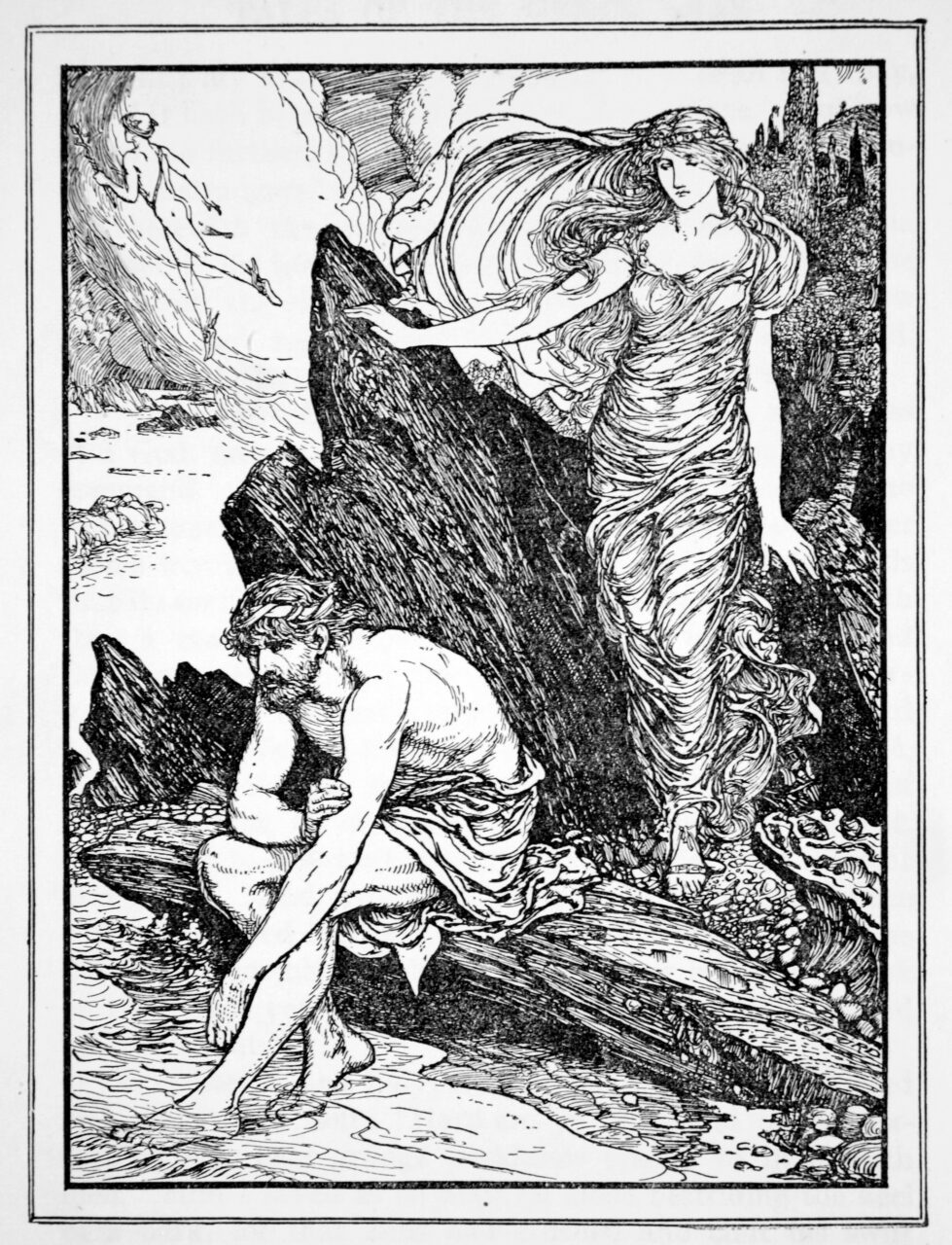
Calypso Takes Pity on Odysseus
Photo: Historica Graphica Collection/Heritage Images/Getty Images
Calypso is, without a doubt, a beautiful and enchanting goddess, and she arguably deserved more screen time in Nolan’s adaptation. She’s also a more complicated host than her hospitality first suggests. When Odysseus finally leaves her island of Ogygia, she bathes him, dresses him in fragrant clothing, and sends him off with wine, provisions, and a fair wind — the kind of exceptional xenia (the same guest-host code we mentioned earlier: the ancient Greek principle that hosts are sacredly bound to protect and provide for travellers, and guests, in turn, know when it’s time to leave) that puts the Laestrygonians to shame. But real xenia means letting your guest go when he wants to, and Calypso doesn’t, she keeps Odysseus on Ogygia for seven years, offering him immortality and her hand in marriage, and only lets him leave when Zeus himself orders her to. Seven years, an offer for eternal life, and Odysseus still chose the commute home.

Editor
Bianca LoCredit
Lead Image: IMDb