

A glaring stage light is positioned between the JC Contemporary exhibition space and the staircase landing, its blinding rays causing a flicker of disorientation for viewers—just enough to set the tone of the performance about to unfold.
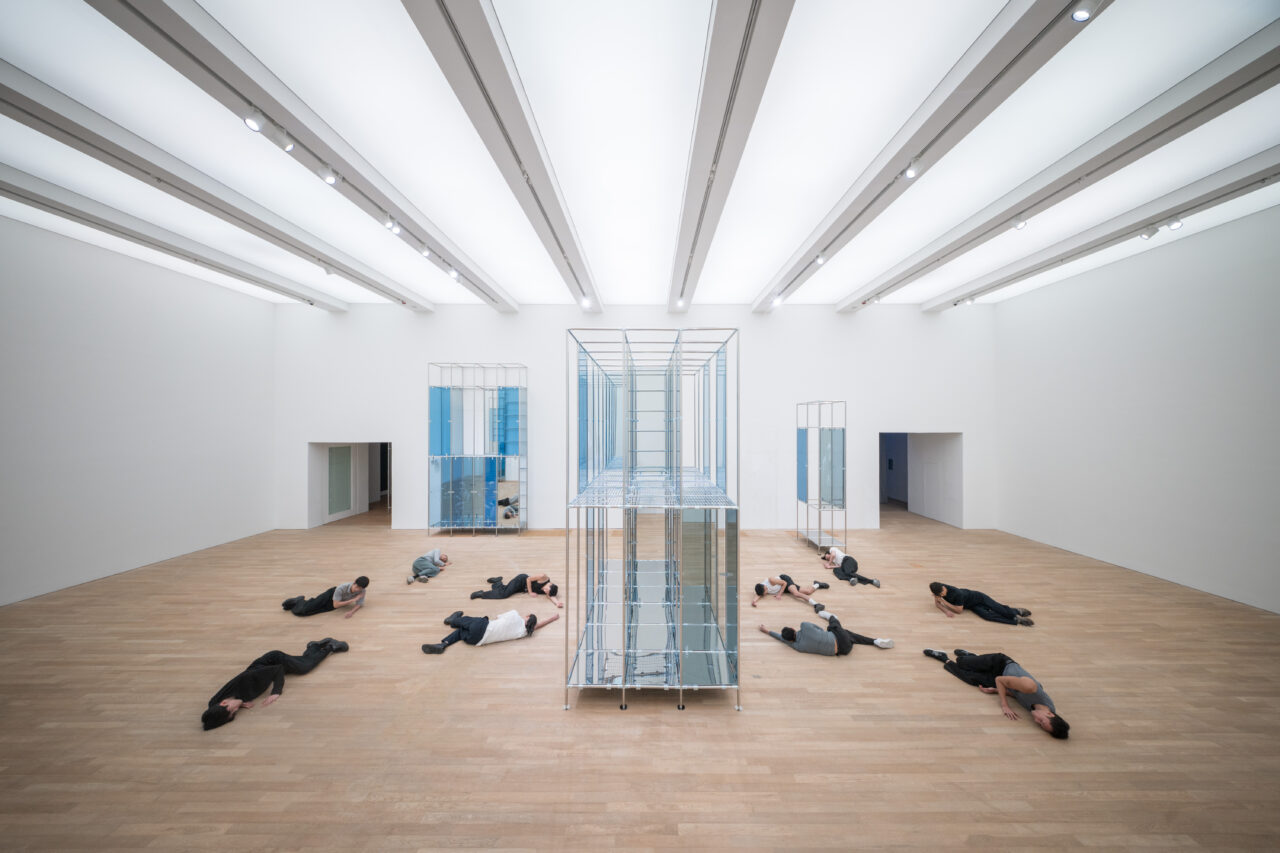
Isaac Chong Wai: An Intimate Surrender is a newly commissioned work created by the Berlin-based Hong Kong artist Isaac Chong Wai (b.1990), and curated by Tai Kwun’s Associate Curator Louiza Ho. Staged across the 3/F galleries, it comprises two sets of monumental installations and choreographed live performances. The first gallery resembles the stage and film set, while the second gallery mirrors a rehearsal room. In these spaces, everything unfolds around the conceptual frameworks of “gender performativity” and “queer temporality”.
As this marks the artist’s first solo live art exhibition in Hong Kong, Chong finds the experience to be like “coming home”. At the same time, as he returns to this familiar place, he questions the social systems that grip the city.
“I remember growing up in Hong Kong as a child,” Chong shares candidly. “If a boy made an orchid hand gesture, other children would often laugh and call him ‘laa ying’ (乸型)—a derogatory phrase suggesting that he was not masculine enough, that he was too feminine.” With An Intimate Surrender, he reclaims this gesture entirely, using it as one of the ways to interrogate Asian masculinity and other entrenched perceptions of identity.
Performance of identity inspired by Farewell My Concubine
Farewell My Concubine (1993), the epic historical film starring Leslie Cheung, is Chong’s departure point for this work. Three decades since its release, the seminal film remains affective and resonant. The late Cheung’s legendary performance as Cheng Dieyi/Douzi is still profoundly influential— his character’s identity blurred the lines of performance and reality. (To quote the movie, “I’m just a fake king. You really are Concubine Yu.”)
“For me, the film is ultimately about performance itself. It raises questions that still resonate today: Can performance become a form of freedom? Or does it imprison us within roles we are expected to play?” Chong questions.
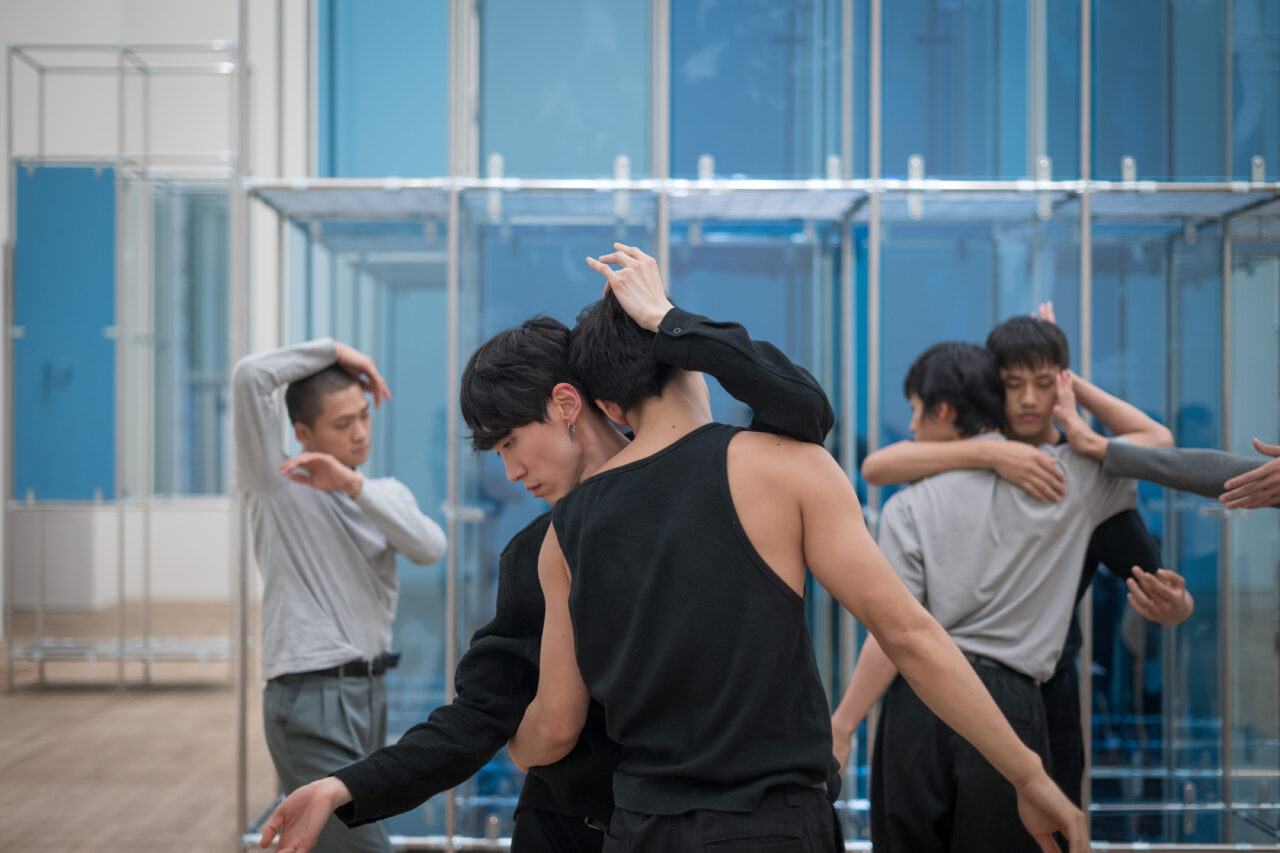
Peking Opera gestures from the film are evoked in the choreography of the live performance. The group of performers engage in sustained and repetitive movements with the orchid hand as key. Chong was particularly interested in how a simple gesture immediately shapes our perception of gender through association with femininity. Through the dance, performers subvert the violent constructs around the orchid hand, turning it into a propellant for connection.
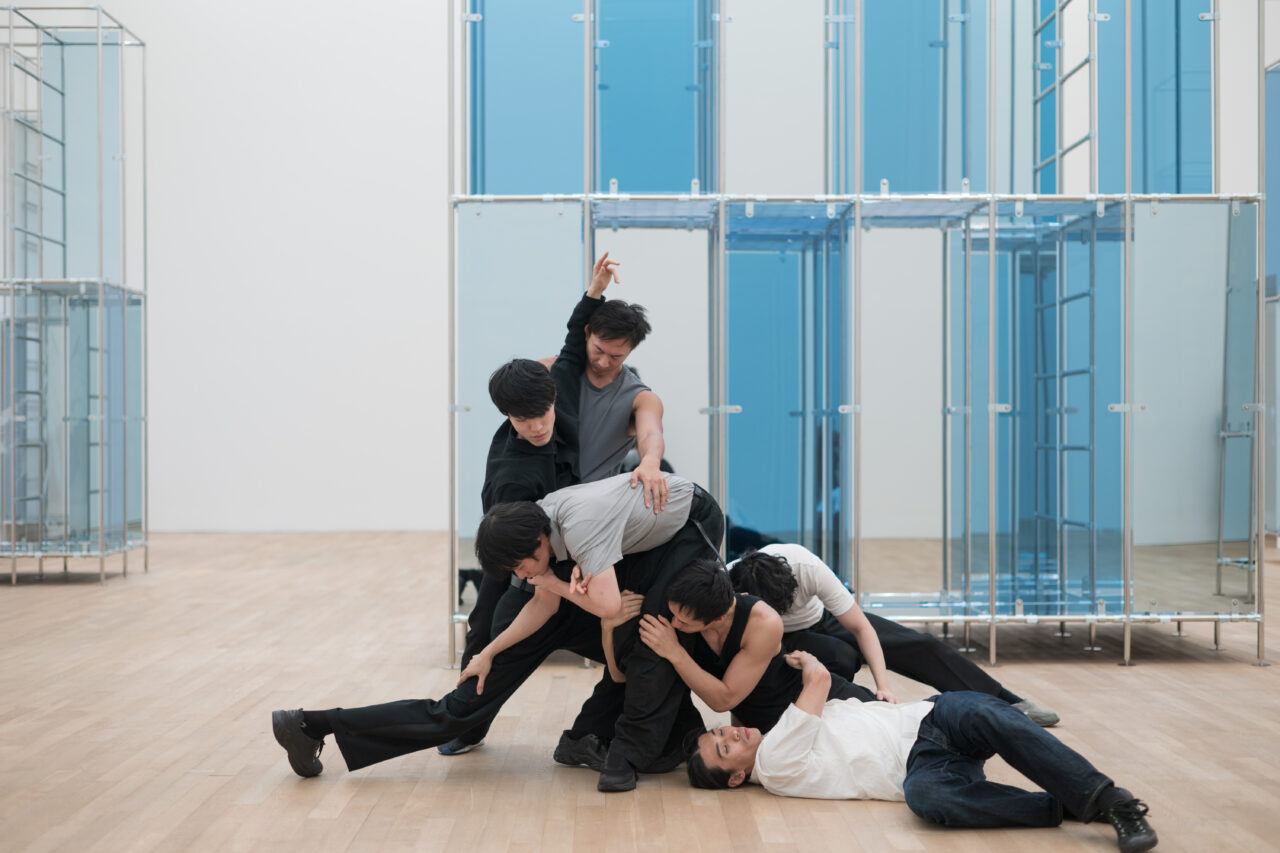
“What was once mocked becomes one of the core movements of the choreography. It transforms into a dance vocabulary that connects bodies rather than separates them,” Chong explains. As dancers rise and collapse, folding into each other, or touching with simple gestures, they engage in an active, tender and emotional act of yielding, letting go of rigid social codes and expectations, especially those around gender roles.
In conceptualising the performance, Chong avoided assigning any fixed roles or gendered identities to the performers. Instead, the focus is on their shifting relationships— leading and following, supporting and being supported—honing in on the central idea of the fluidity of identity itself.
Visitors’ corporeal engagement
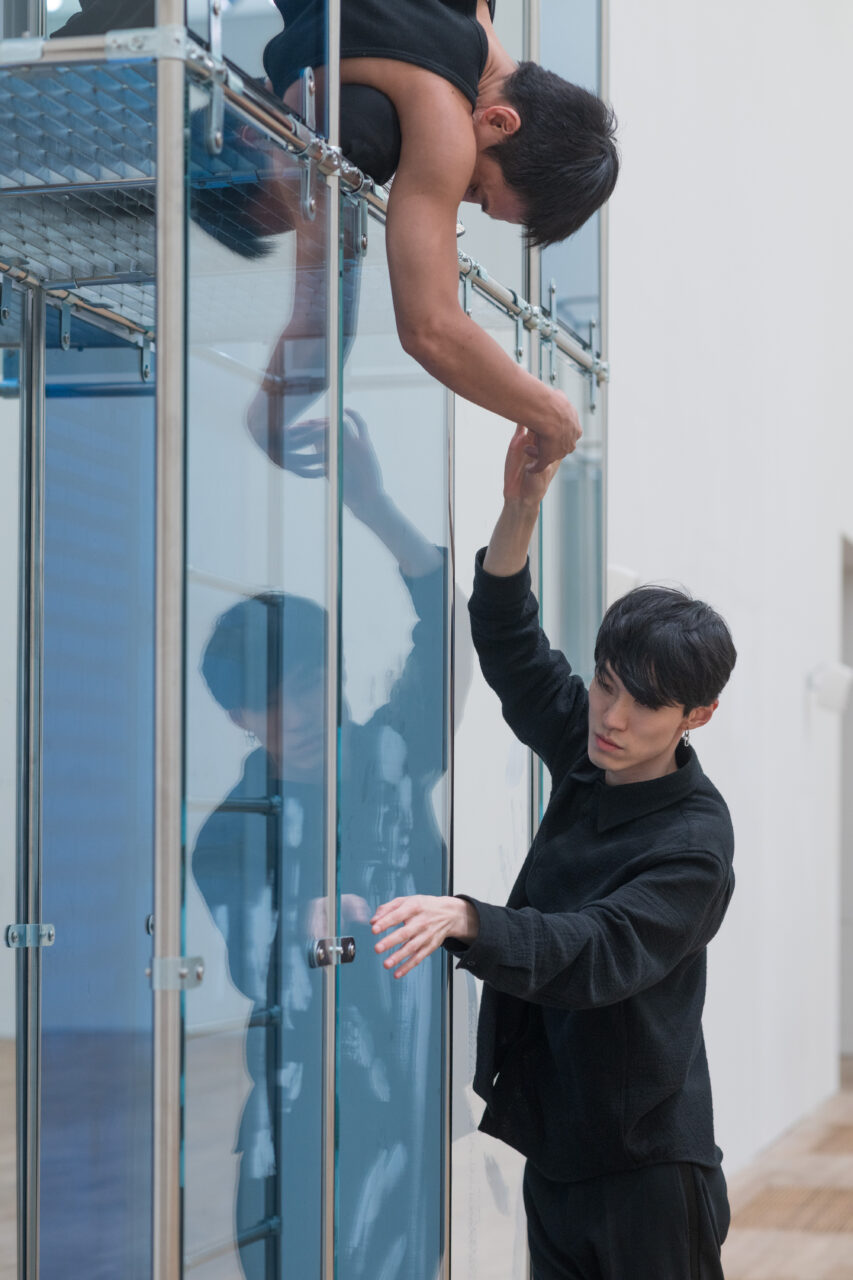
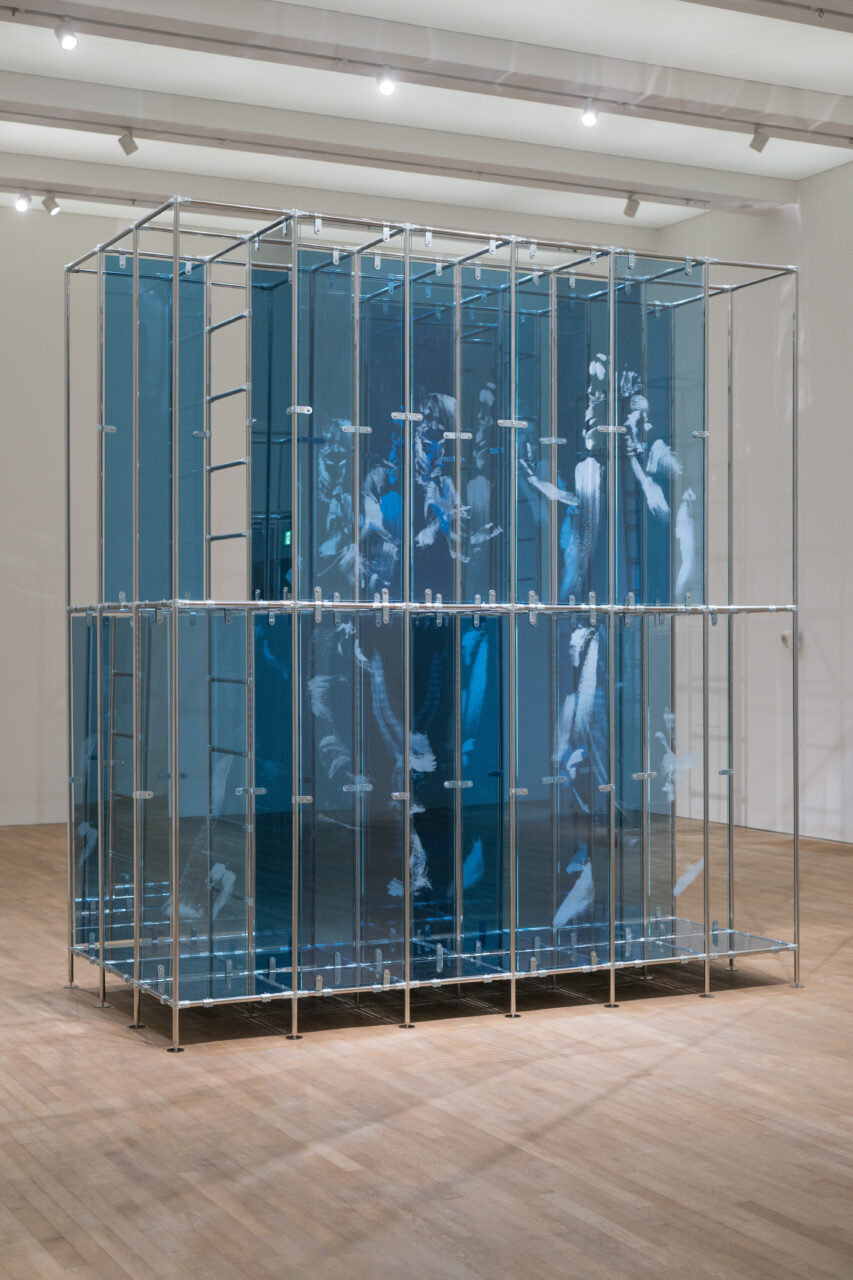
From the moment viewers traverse the blinding lights, they become part of the choreography. In the main gallery, viewers encounter the large-scale installation Touched, comprising tall metal structures with etched glass and mirror panels. Chong’s body is imprinted onto the mirrors, drawn from still images in Farewell My Concubine. As performers scale the structures and viewers engage with these works, viewers’ reflections inevitably overlap with the imprints on the mirrors and the performers’ silhouettes. Not only does the line between self and other blur, but viewers’ images also become “inseparable from these cultural memories”, as Chong notes. Through the mirror, Chong draws viewers from detached contemplation to active participation—the audience becomes part of the unfolding.
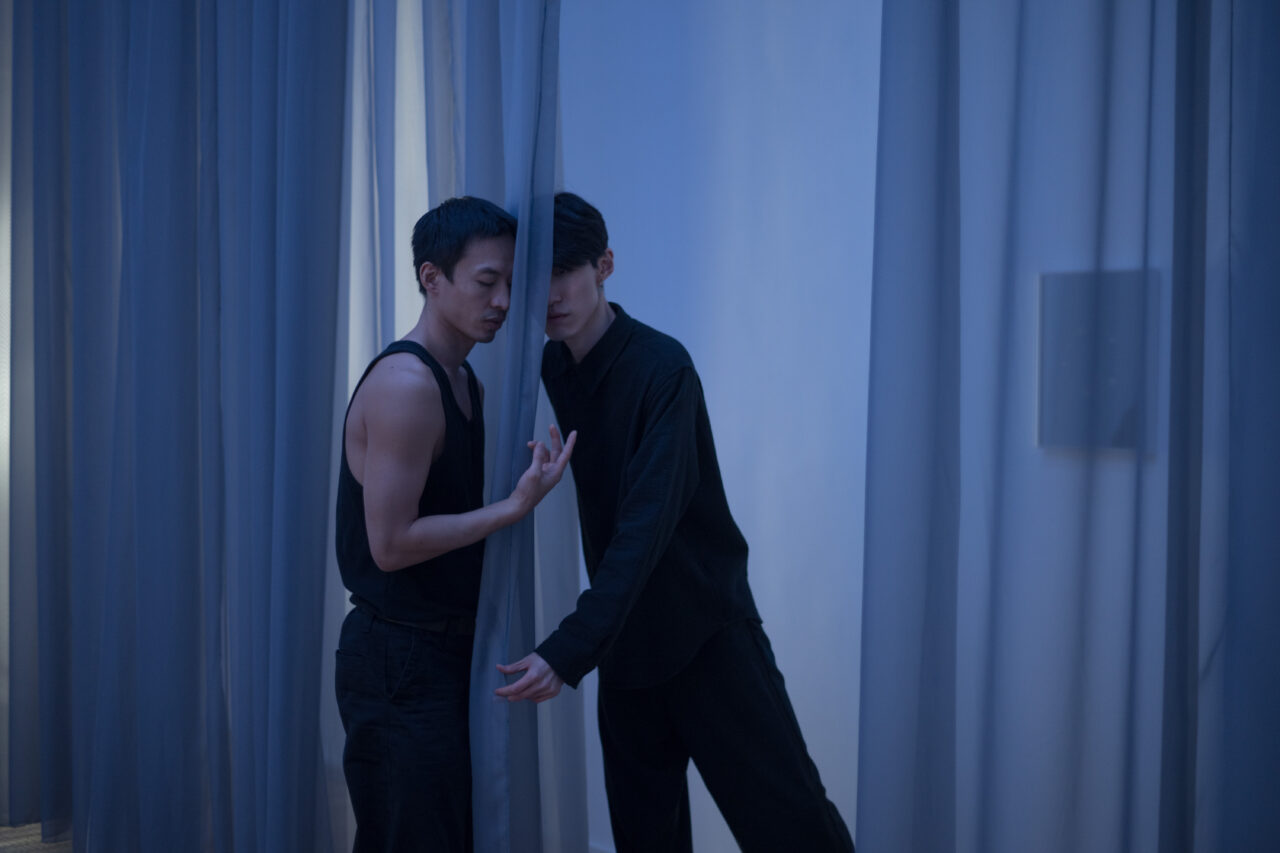
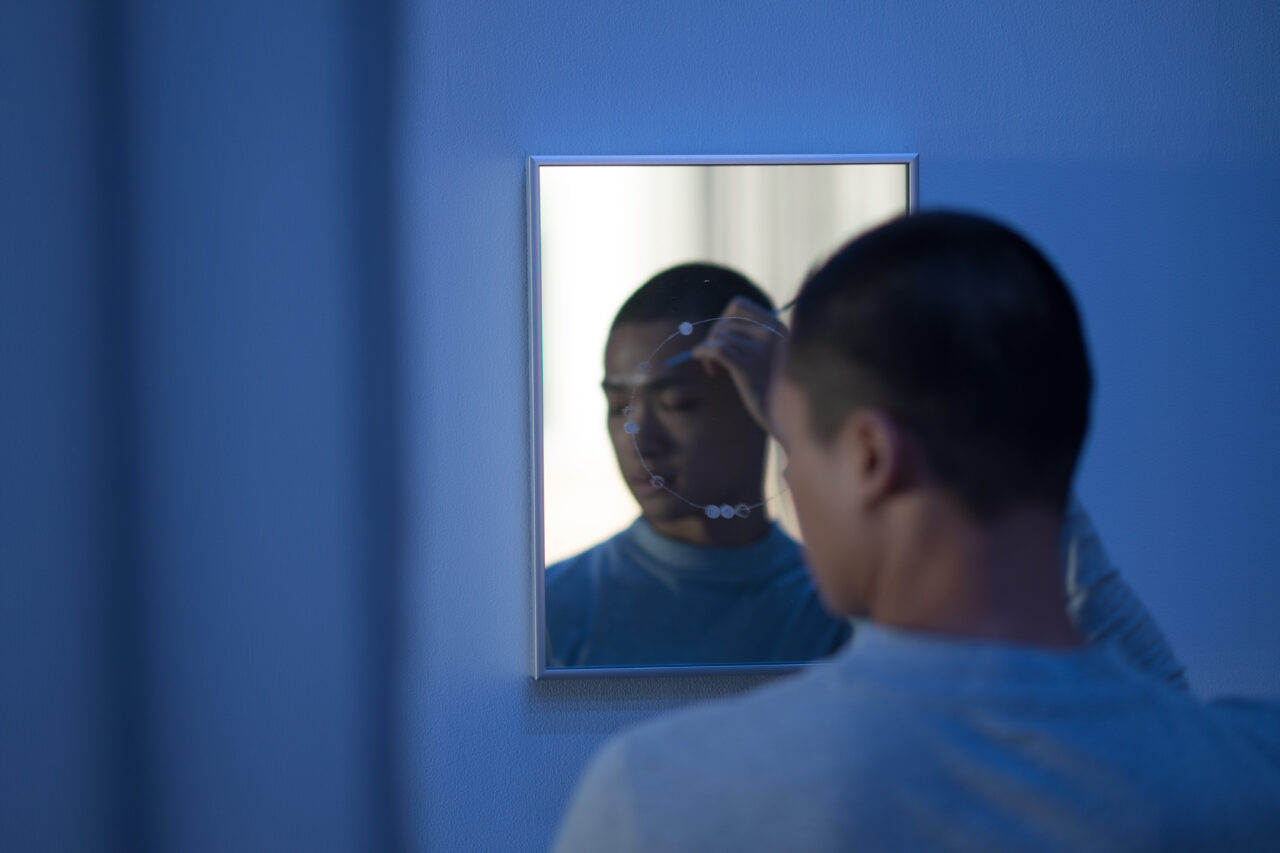
The second gallery creates the atmosphere of a rehearsal room with dim blue lights, semi-transparent curtains, hanging silk drapes, mirrored surfaces and deconstructed phoenix coronets. As performers roam the room, their Peking Opera makeup leaves traces of their bodies on the soft curtains, using a corporeal language to mark a temporal state of being. For visitors, the coronets overlap with their reflections, suggesting that identity is continuously rehearsed, constructed, dismantled, and reassembled. As visitors leave the exhibition, they pass through a tower of spotlights once again. Chong frames the visitor journey through sensorial experiences, fostering deeper engagement.
Tai Kwun interpellation
While An Intimate Surrender does not directly reference Tai Kwun’s history, it speaks to the themes underlined by this historical site. Tai Kwun is a colonial police station and prison compound. As Chong points out, it embodies “histories of discipline, surveillance, confinement, and control over the human body.” By staging An Intimate Surrender at this public site that embodies dominant understandings of masculinity, an ideological interpellation is generated, bringing to the fore different possibilities and understandings of gender that exceed dominant ideologies.
“An Intimate Surrender questions the rules imposed upon bodies and identities, while proposing intimacy, closeness, and mutual support as alternatives to systems built on division,” Chong says.
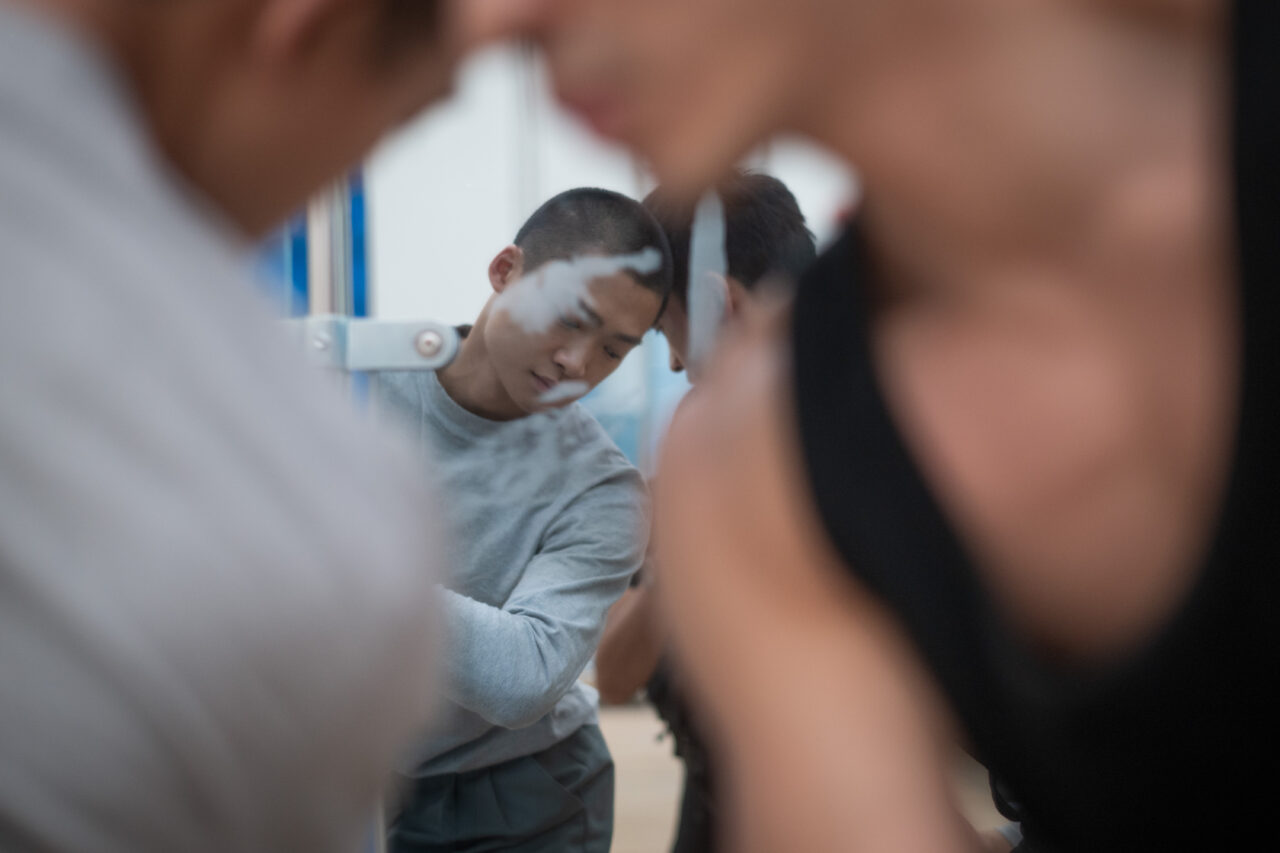
Isaac Chong Wai, An Intimate Surrender , 2026, live performance, Tai Kwun Contemporary
Photo: Tai Ngai Lung
While decades have passed since the release of Farewell My Concubine, non-dominant expressions of gender and identity are still frowned upon. As Chong puts it, “social norms often treat both gender and time as fixed scripts—prescribing how we should perform our identities and how our lives should unfold.”
“Through the efforts of queer communities, we have moved towards a more inclusive world,” he continues. “Yet this progress remains fragile. It requires continual care, collective effort, and a refusal to forget the struggles that made it possible.”
Isaac Chong Wai: An Intimate Surrender
When: July 10 – August 9, 2026
(Performances: Tue – Thu: 3pm – 3:45pm, Fri – Sun: 2:30pm – 3:15pm; 4:30pm – 5:15pm)
Where: 3/F, JC Contemporary, Tai Kwun