

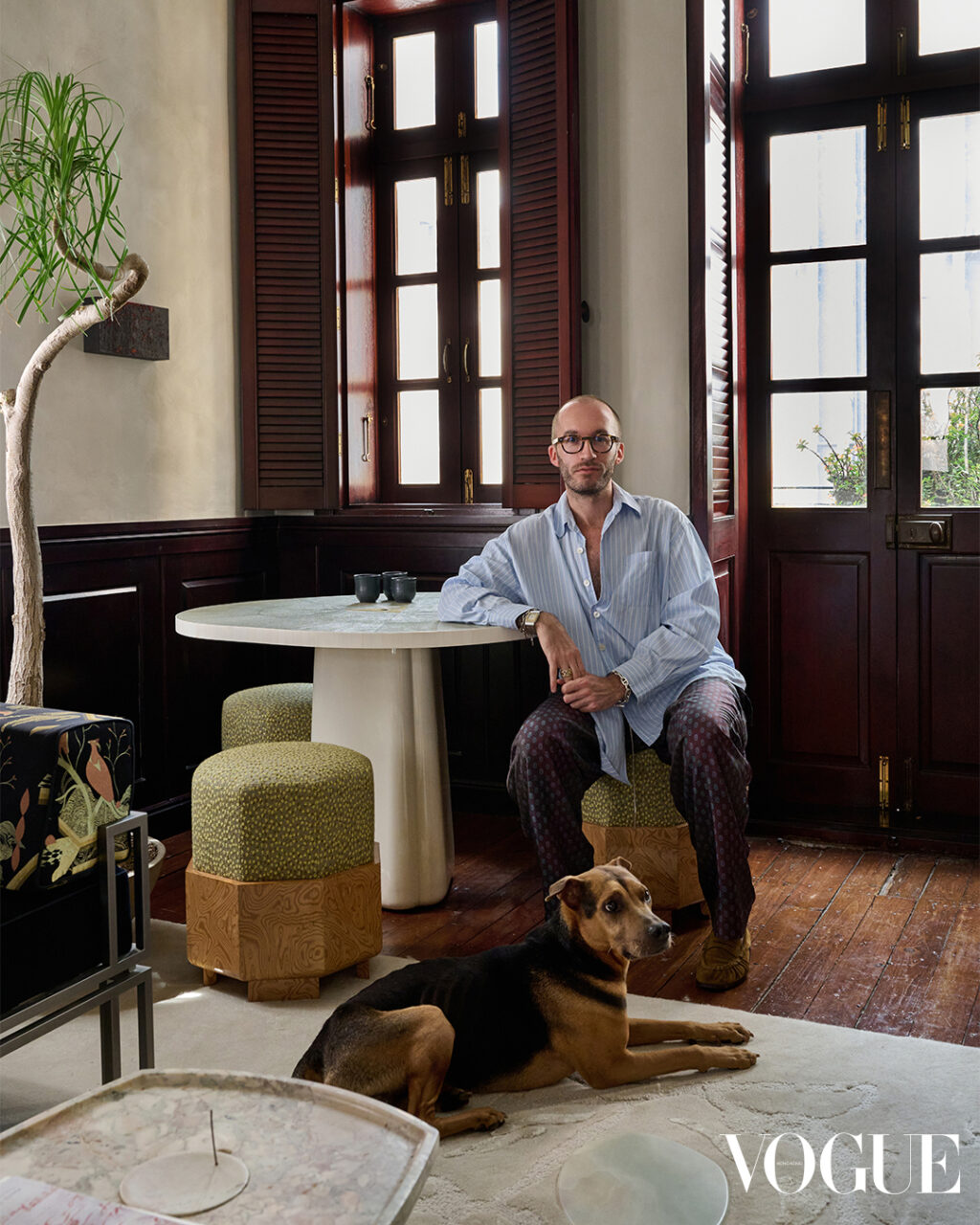
For most, home is about having a space to wind down in solitude, or the feeling of sinking into the covers after a long day. For French interior architect Alexis Dupont, home is the world he has built within Maison Ming, a colonial shophouse nestled in Tai Hang that he has transformed into the official address of his namesake design studio, and his bespoke furniture and home decor brand. But to use the word transform is not entirely correct.
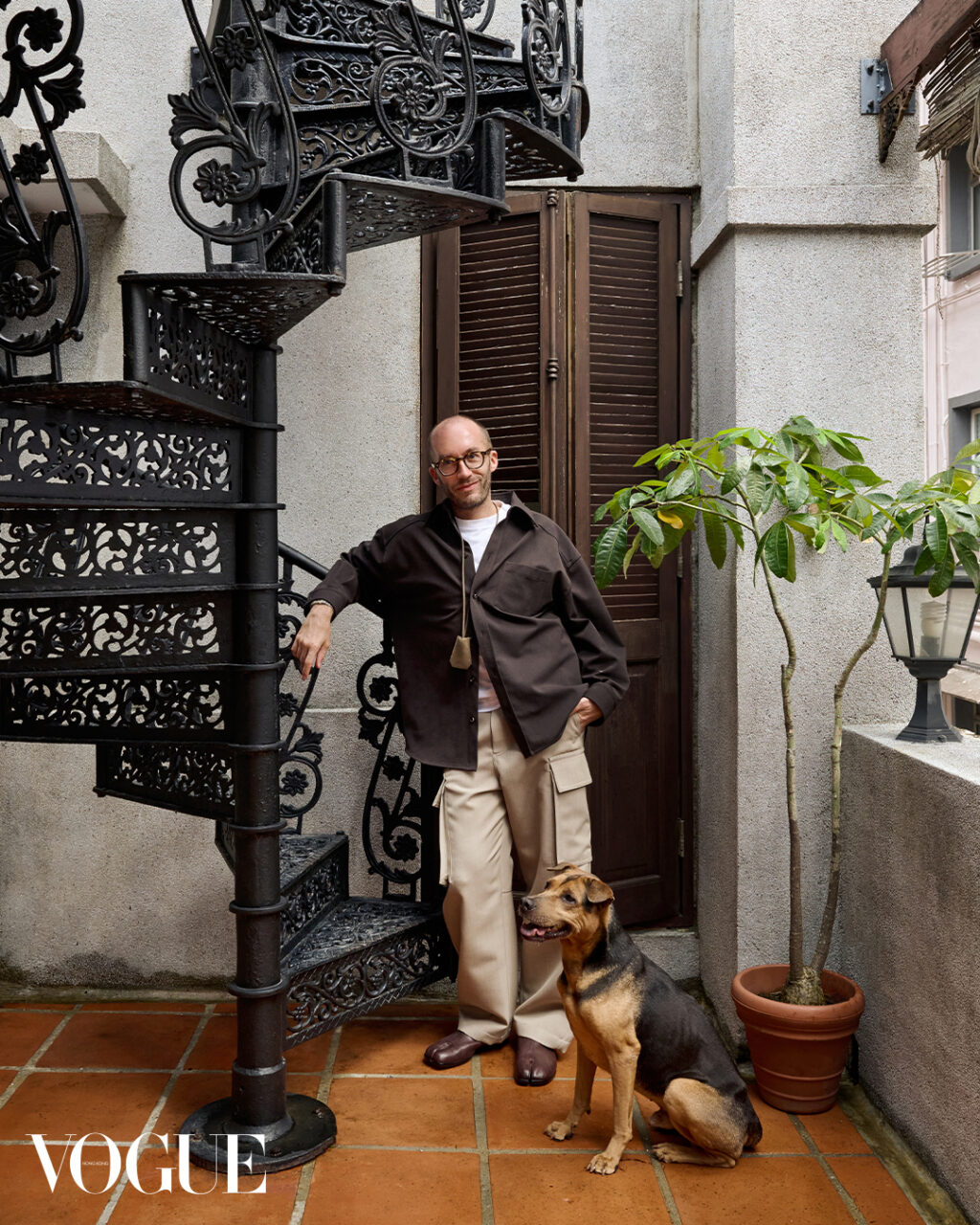
Alexis and his 10-year-old dog, Albert, pose alongside a majestic cast iron spiral staircase on the rear terrace of the house.
Unlike most shophouses in Hong Kong, this building had never been used for commercial purposes. Built in 1943, the four-storey house was lived in and loved by five generations of a single family until an Australian expat purchased it in the early 2000s. Recognising the rich cultural and personal heritage of this property, he spent the over 20 years that he lived there pouring his heart into restoring and preserving its original structure and design—all of which can still be discerned today. With its vintage fixtures, floorings and exposed wooden beams, the home’s distinctive 20th century character is precisely what Alexis was drawn to and what inspired the conception of Maison Ming.
“Before we were in this very commercial, industrial office, which was cool but not really us. It had baby pink floors.” Alexis sets the scene of his previous studio in Sheung Wan, explaining a disconnect between the workplace environment and the design language of his brand. “The thing is, we’ve always [designed] furniture for our clients, and people were starting to say ‘You need to launch your brand, why don’t you?’ At the time, it was very difficult to see that because I didn’t have the right space or concept.”
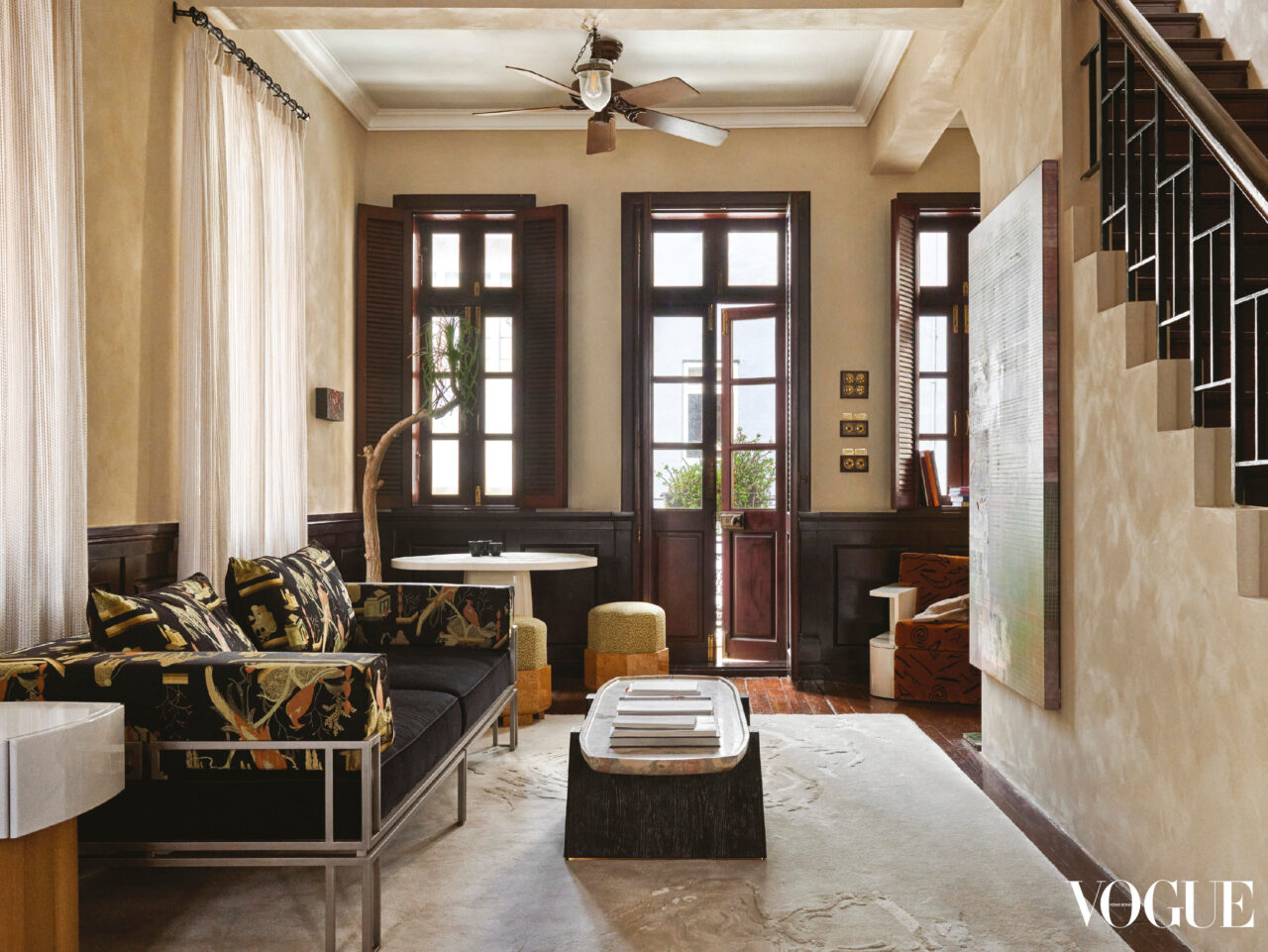
The living room is a poetic snapshot into a bygone area.
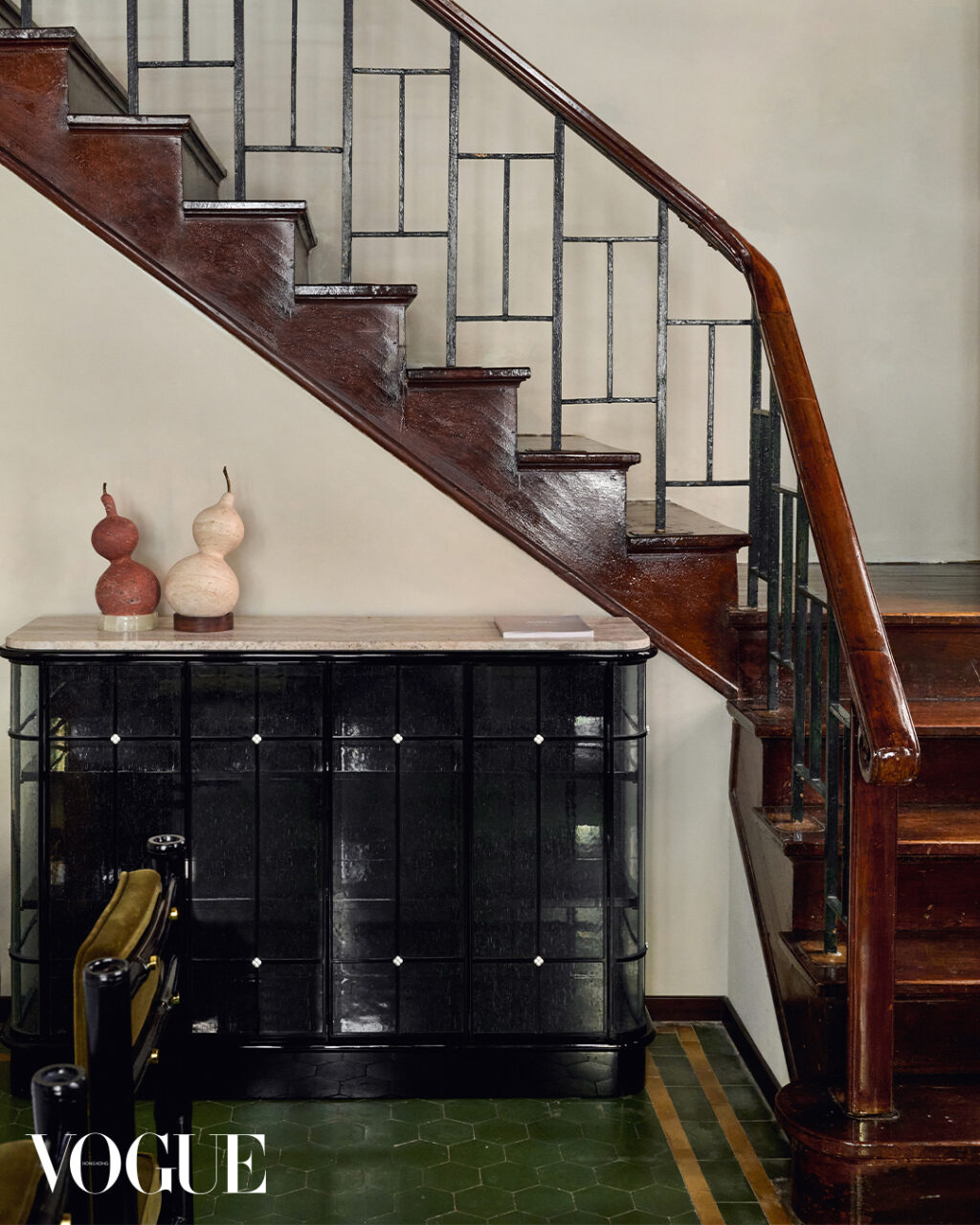
A pair of travertine wulu sculptures sit atop a sideboard made of glass, lacquered steel, and silver travertine.
This all changed after Alexis took off on a post-dinner stroll in Tai Hang one evening, and caught a glance of a small ‘House for Rent’ sign pasted on the side of a building on School Street. He contacted the accompanying phone number and toured the property the very next morning. To call it love at first sight would be undermining the miraculous serendipity at play in Alexis’ encounter with the shophouse. “I love Hong Kong, I love the heritage, and I always thought it would be great to do something related with the city somehow, but I didn’t want to do something gimmicky,” he shares.
“When I found this space I thought, ‘Should I live here?’ It was either [going to be] my full home or my workplace, but I couldn’t do half-half, it would be too complicated. Then when I was envisioning if I would actually live here, I realised I wouldn’t be able to share the house with people, and I think for me, [I felt] this almost mission of being able to share this because it’s such a gem. l initially thought of creating a vintage furniture gallery but then thought that I could actually have my studio here, furnish the house with our designs and present the pieces to our clients. I’m happy to open the door to others.”
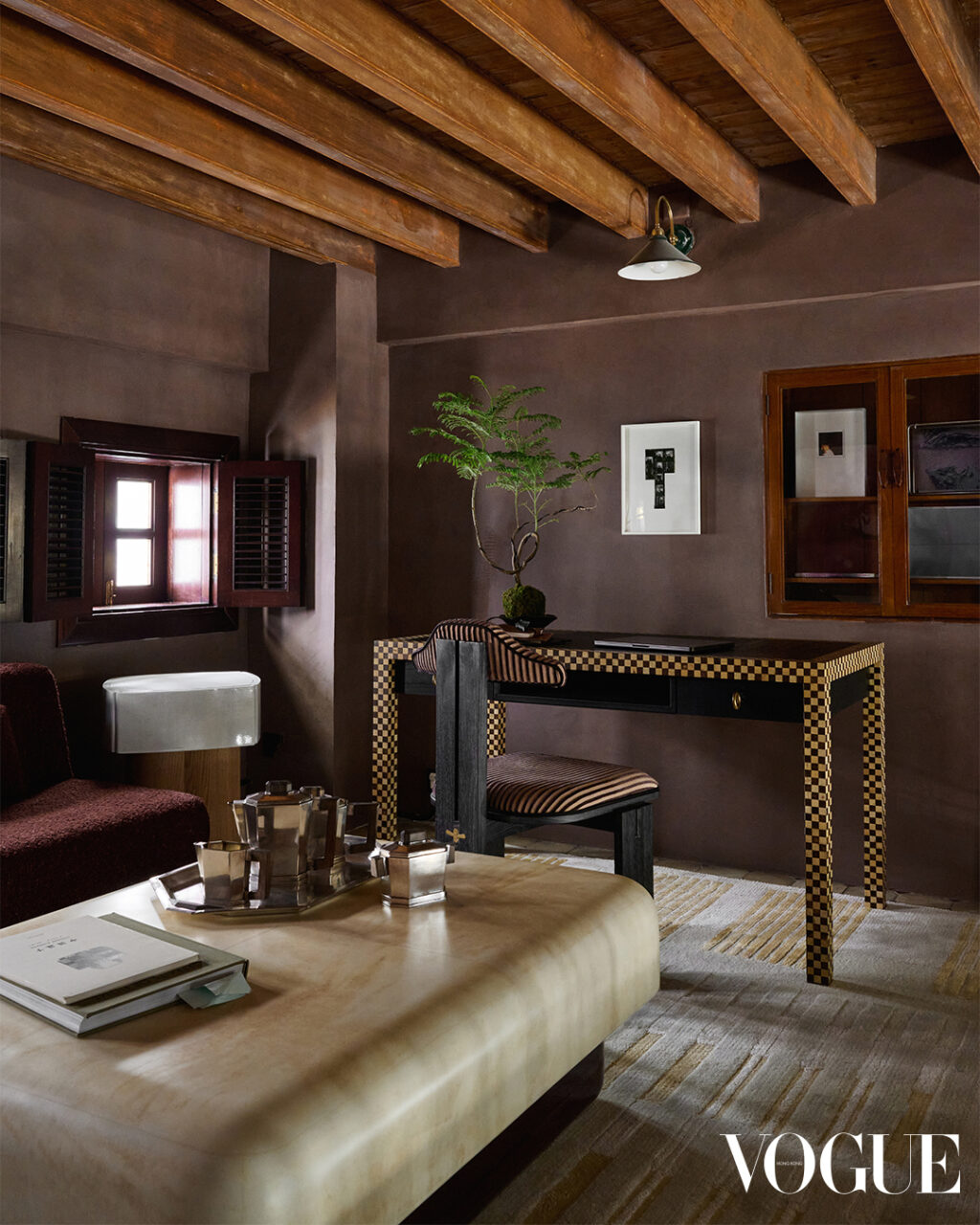
Exposed beams, small square windows, and walls covered in St Leo burgundy plaster lend a moody atmosphere to the mezzanine floor. A goat skin and lacquer coffee table with a parchment finish catches the eye, balancing an Art Deco coffee service sourced from Permanent Resident.
The name Maison Ming—of which the Chinese word ming (明) is comprised of the characters for sun and moon—captures the interplay of light and shadow throughout the home. On the ground floor and third floor bathroom, natural sunlight filters into the space through the slits of Mahogany wood shutters and louvers, creating cinematic streaks of radiance that disperse across hexagonal green tiles that decorate the floor. Otherwise, the home is enveloped by a slight, but very welcome darkness, or illuminated by original mid-century wall lamps that lend only a warm, atmospheric glow to its immediate surroundings. Coincidentally, this moody feeling lies at the crux of many of Alexis’ own interior projects, and thus no additional light fixtures were added to the home. If anything, Alexis brought more texture to the walls with rustic layers of a warm neutral shade, hoping to dramatise what little light hit its surface.

The daybed is crafted with Fischbacher mohair and velvet, and adorned with yellow jade and silk tassels. Bamboo and velvet chairs are tucked underneath an enameled volcanic stone and oak table, where a pile of vintage Roger Capron plates are placed.
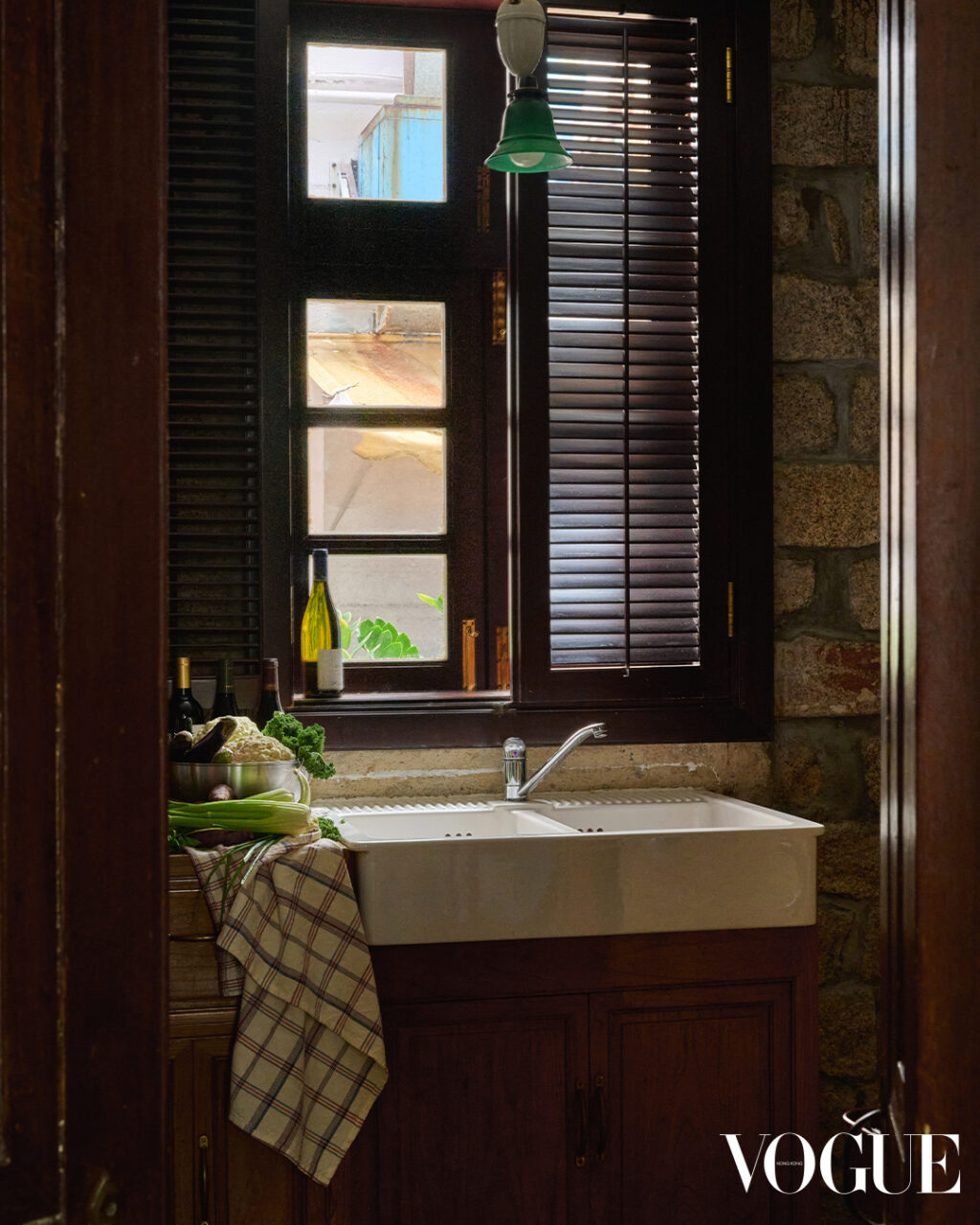
The kitchen showcases the home’s original stone walls from its foundations in a Hakka village.
Simultaneously, Maisong Ming also conveys the distinct creative language of Alexis’ furniture brand. “There’s this conversation between French and Chinese. The concept of a ‘Maison’ comes from everything being bespoke; just like with couture, everything is made to order. And ‘Ming’ refers to Ming Dynasty furniture, which is quite iconic. When you think about Chinese furniture, it is the style that most people have in mind because it’s very clean, quite minimal, and in a way, very contemporary.”
This dialogue between the East and the West, old and new, is a constant throughout the home. In the kitchen, the colonial style window frame is embedded into stone walls dating back to the house’s existing foundations in a Hakka village. Upstairs, the master bathroom boasts the original homeowners’ clawfoot bathtub like a domestic monument of pampering and self-care, separated only from the bedroom-turned-studio and material library by Siamese-style wooden panels embellished with squares of coloured glass. On every floor, a panel of brass dome dolly switches control the lights, ceiling fans, and air conditioning.
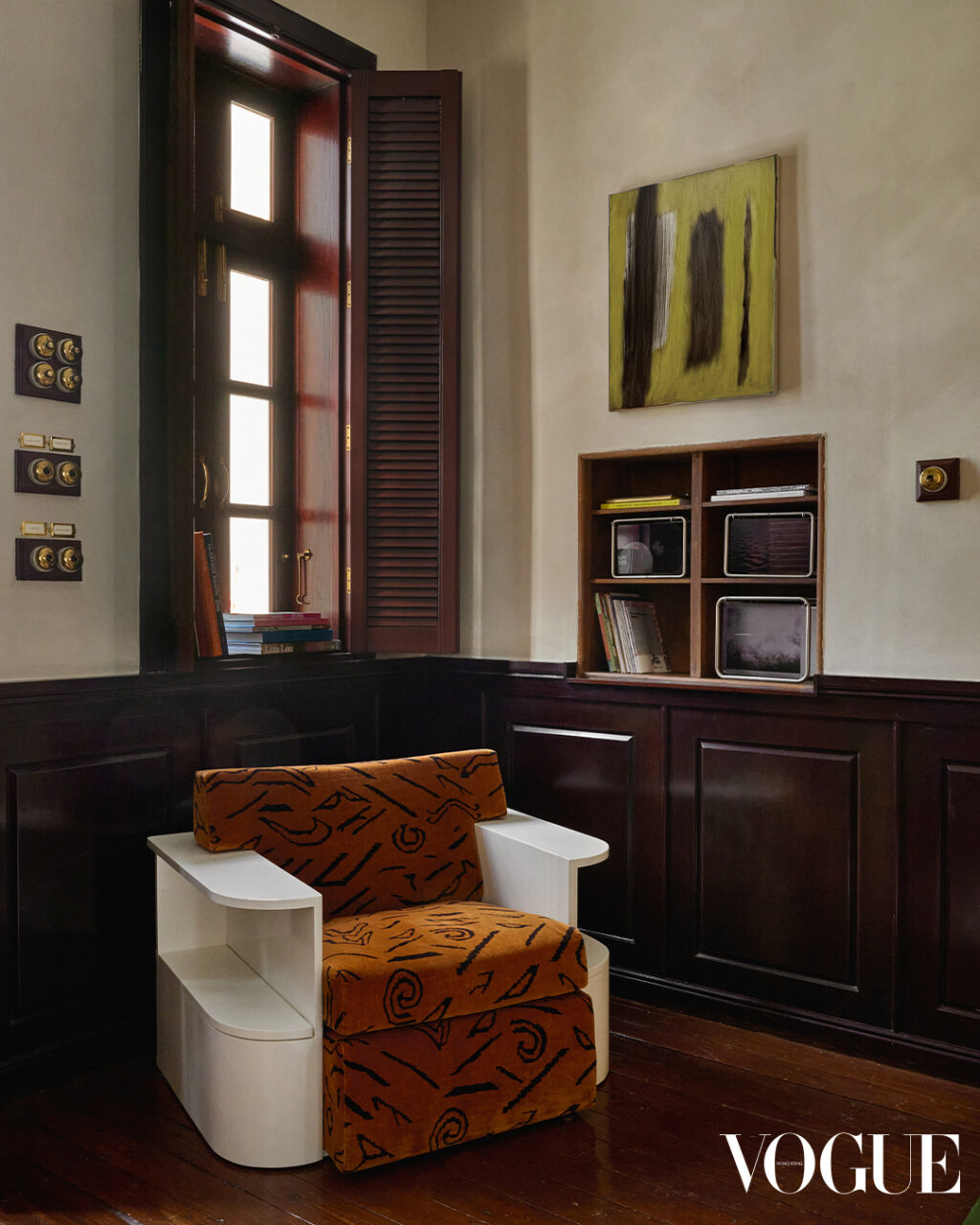
A cosy nook on the first floor features a club armchair made from ivory lacquer and Dedar fabric.
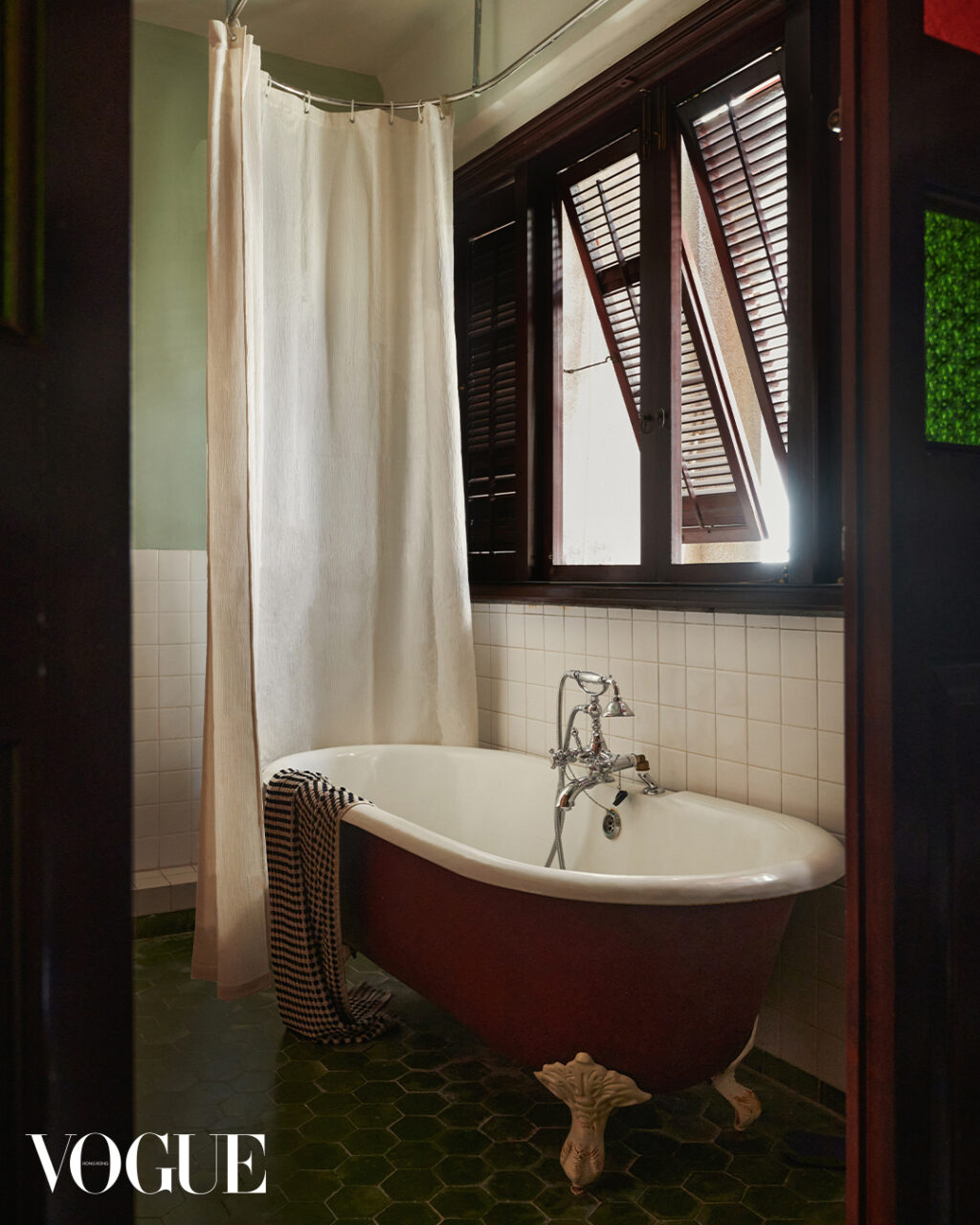
The bathroom features the original floor tiles, coloured glass panels, wooden louvers, and clawfoot bathtub of the home.
There is a palpable synergy between the unique personality and historic charm of the house, and Alexis’ taste and design sensibilities, as much of the home resonates with his own experiences. “What I really loved was this little balcony on the first floor with the double French doors. I really felt like I was in my childhood watching these movies about Indochina, those French films featuring apartments in Cambodia, Vietnam et cetera that were all very colonial.” He references some of his favourites like “Indochine”, “The Lover”, and “The World of Suzie Wong”—all stories of romance stories during a bygone era. Alexis’ childhood was also unintentionally one filled with vibrancy and creativity, something he credits to his “not overly creative, but very open-minded” parents.
“They really pushed us to be involved in music and art,” he says. “We had a big countryside house and my parents actually loved flea markets and antique furniture, so we were always going to antique markets to buy furniture. My dad collected books too, so books were everywhere.”
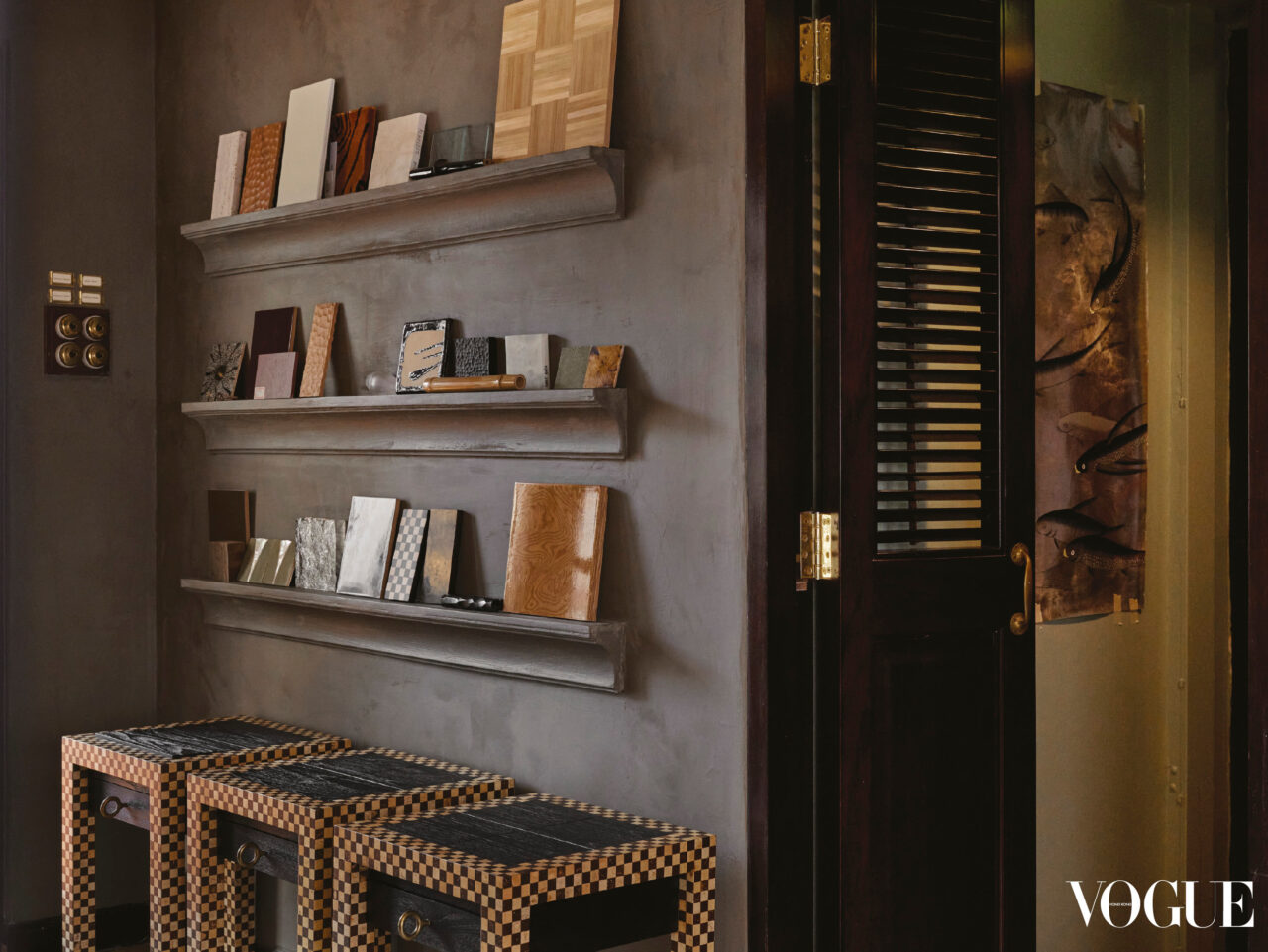
Alexis’ design studio is at the uppermost floor of the home, where a wall of material samples and side tables of solid teak and coconut marquetry can be found.
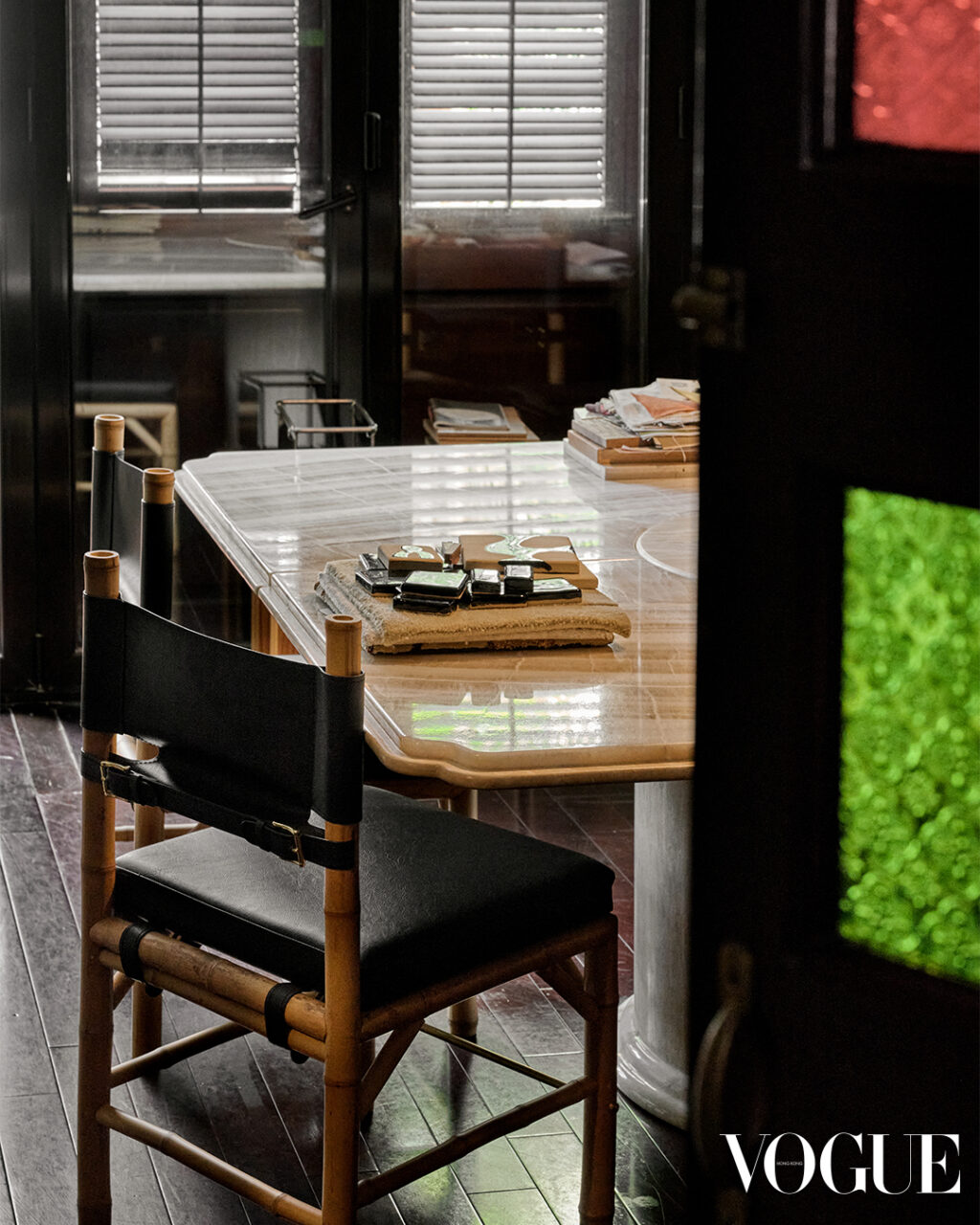
A large square table in travertine and onyx marble dominates the bedroom-turned-design studio, while seats are crafted from leather and bamboo.
Alexis’ creative inspirations are best conveyed in the living room, which is a haven of standout designs from his brand. To one corner stands a triangular games table with soft curved edges instead of points, a piece created for more delicate moments, like having tea or playing cards. Its strikingly elegant surface is crafted from shagreen that has been dyed a light jade colour, showcasing a masterful reimagination of a material that is not only synonymous with the Art Deco period, but that can be found in small decorative objects across China, Japan, and the rest of the world. Adjacent to the games table is a steel-framed sofa with three raised sides made from embroidered chinoiserie fabric, a tasteful nod to Chinese opium beds. Beneath it lies a sprawling wool rug designed in collaboration with French carpet and tapestry manufacturer, Pinton, boasting hypnotic ripples and pools of onyx marble that evoke the minimalist composition and tranquil essence of zen gardens.
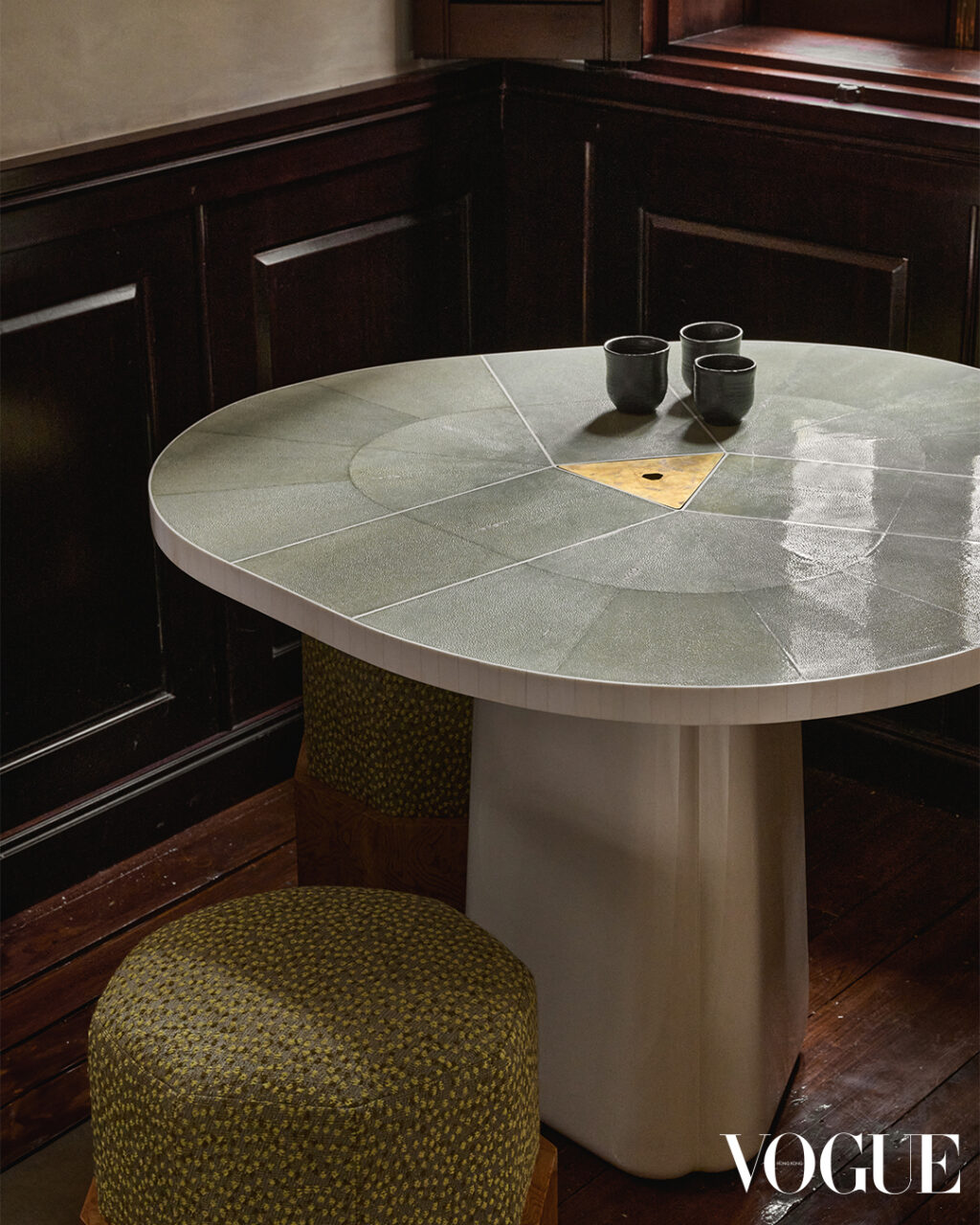
Burl wood stools made with Raf Simons fabric flank a games table featuring a naturally-dyed shagreen top, a secret built-in compartment, bone inlay, and an ivory lacquer base.
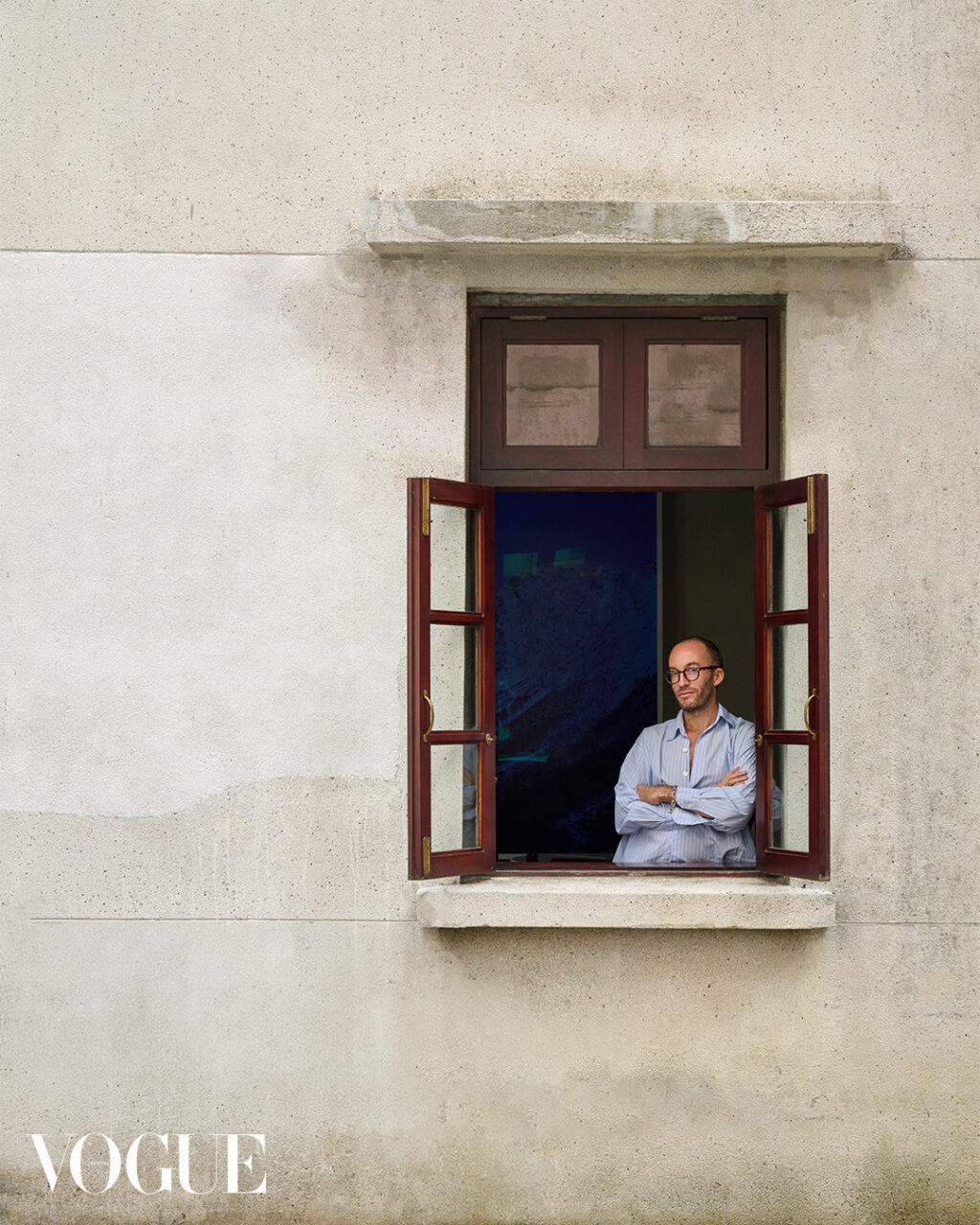
Alexis finds a sense of purpose in sharing this historical gem with others.
Filled with Alexis’ designs, Maison Ming narrates a story that transcends boundaries of time and culture—a characteristic that remains central to his brand. Currently, his studio is working on a luxury showroom along Duddell Street, several high-end residential projects, and a grand opening set for early next year. In 2026, the realm of Maison Ming will expand across the border as Alexis unveils a new location in Shanghai. Located in the romantic Former French Concession, Maison Ming Shanghai will also take shape within the confines of a private house, this time marrying furniture with antique jewellery.
“What I love [about Maison Ming] is that you don’t know if it’s old or new, if it’s Asian or French. It could be from the ‘70s, but it could be super contemporary. The lines are blurry, and you’re a bit lost.” And oh, what a world to be lost in.
Photography: Natalie Dunn
Editor
Alyanna Raissa J. Payos