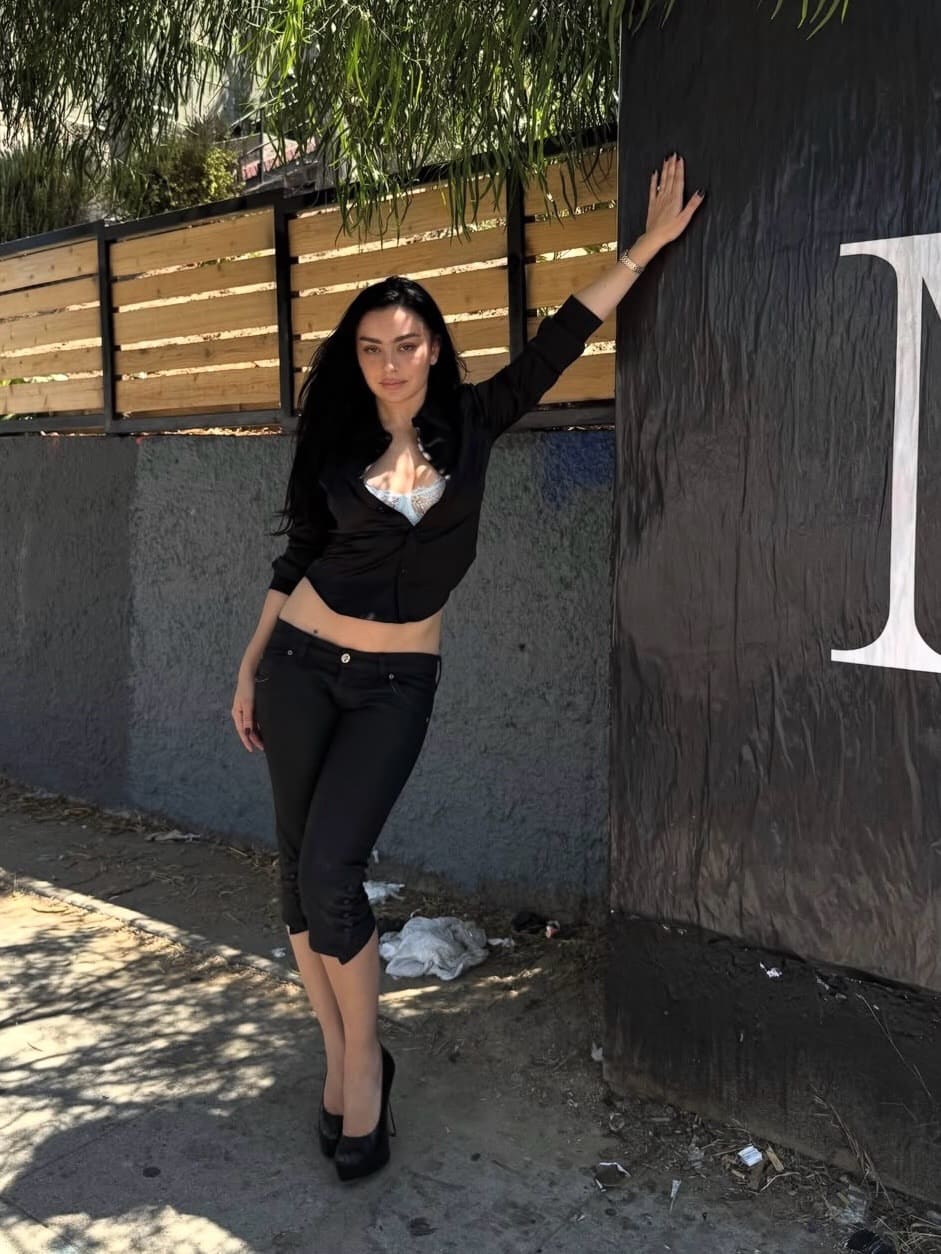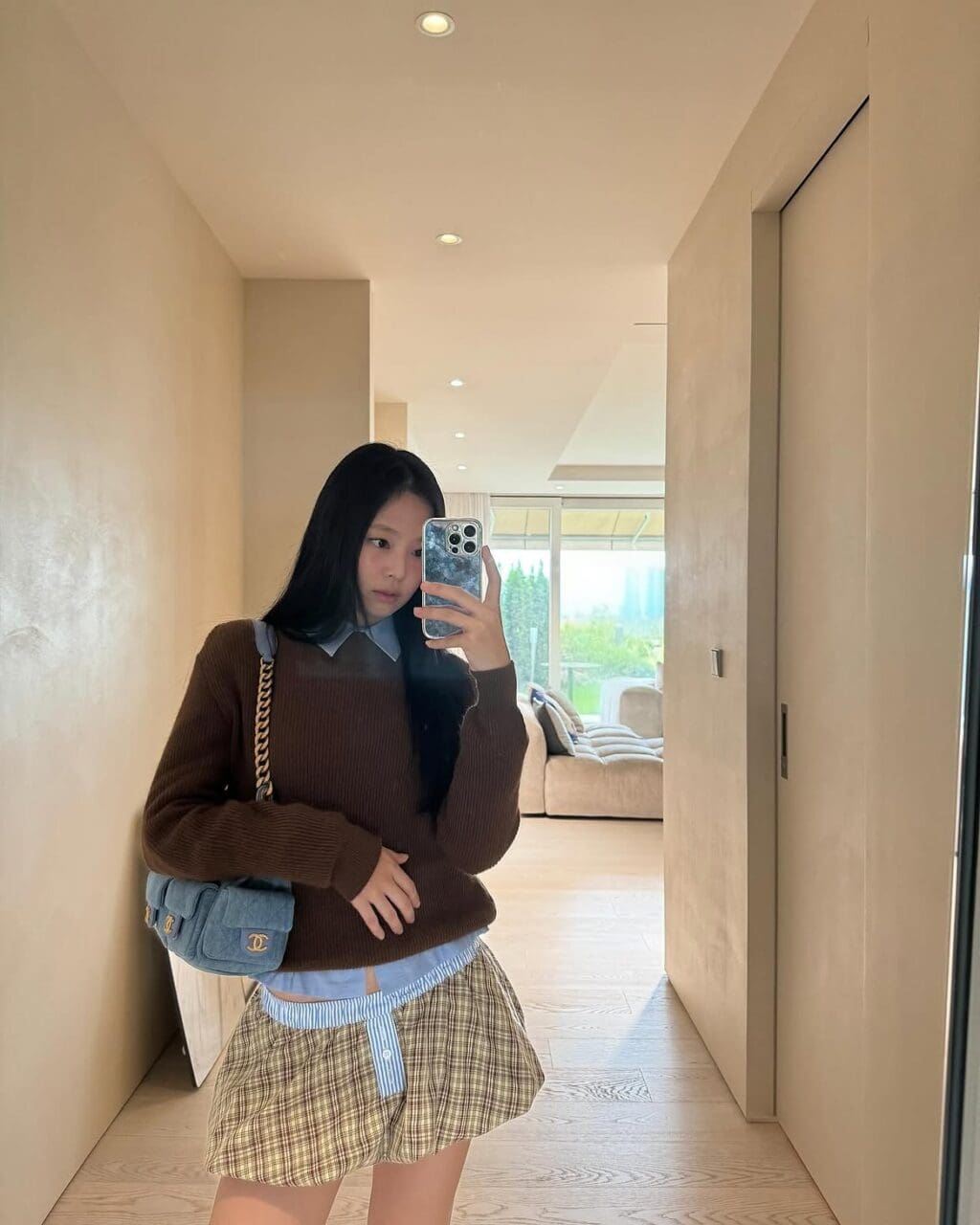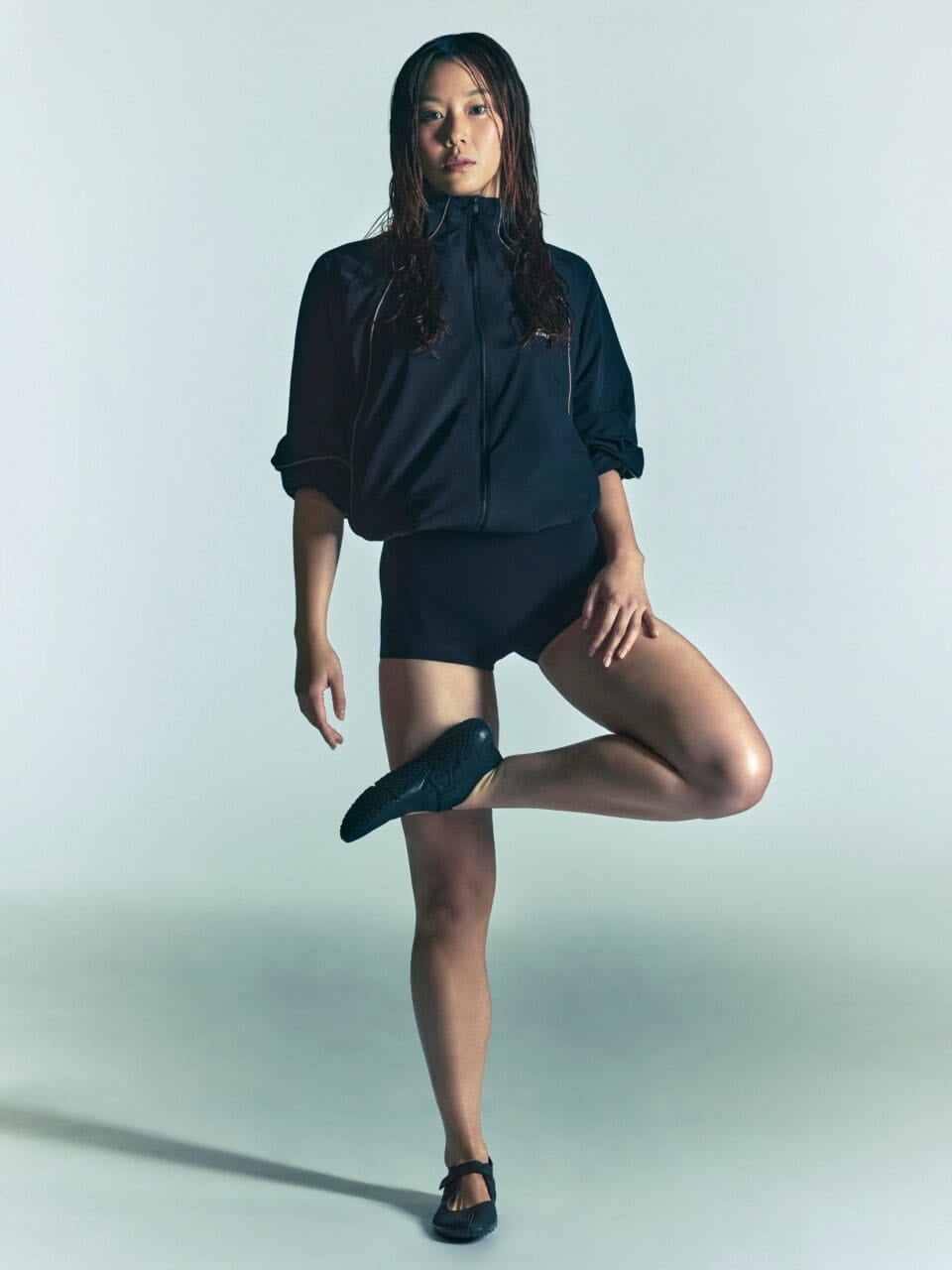


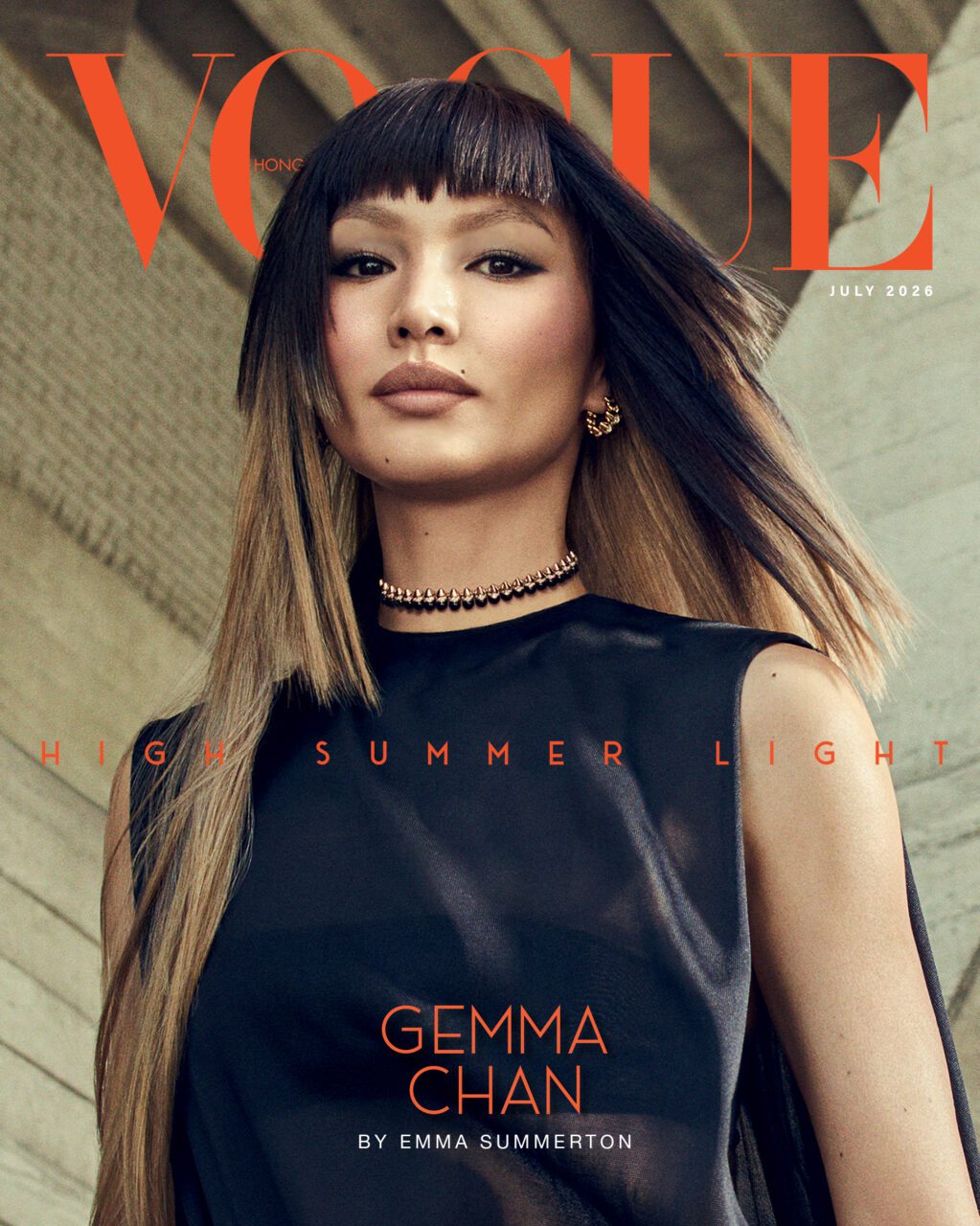

“Cantonese is so colourful. In my mind, the slang is kind of unmatched,” Gemma Chan is tickled by her parents’ mother tongue, which she admittedly doesn’t speak nearly enough. Every time she tries to practise, her dad quickly loses his patience and switches back to English. “You’re too slow,” he would say.
“I can understand pretty fluently, but I understand much more than I feel confident speaking,” she shares during our video call, dialling in from chilly Gold Coast wearing a black long-sleeve top and her wavy long hair swept to one side, poised and at ease.
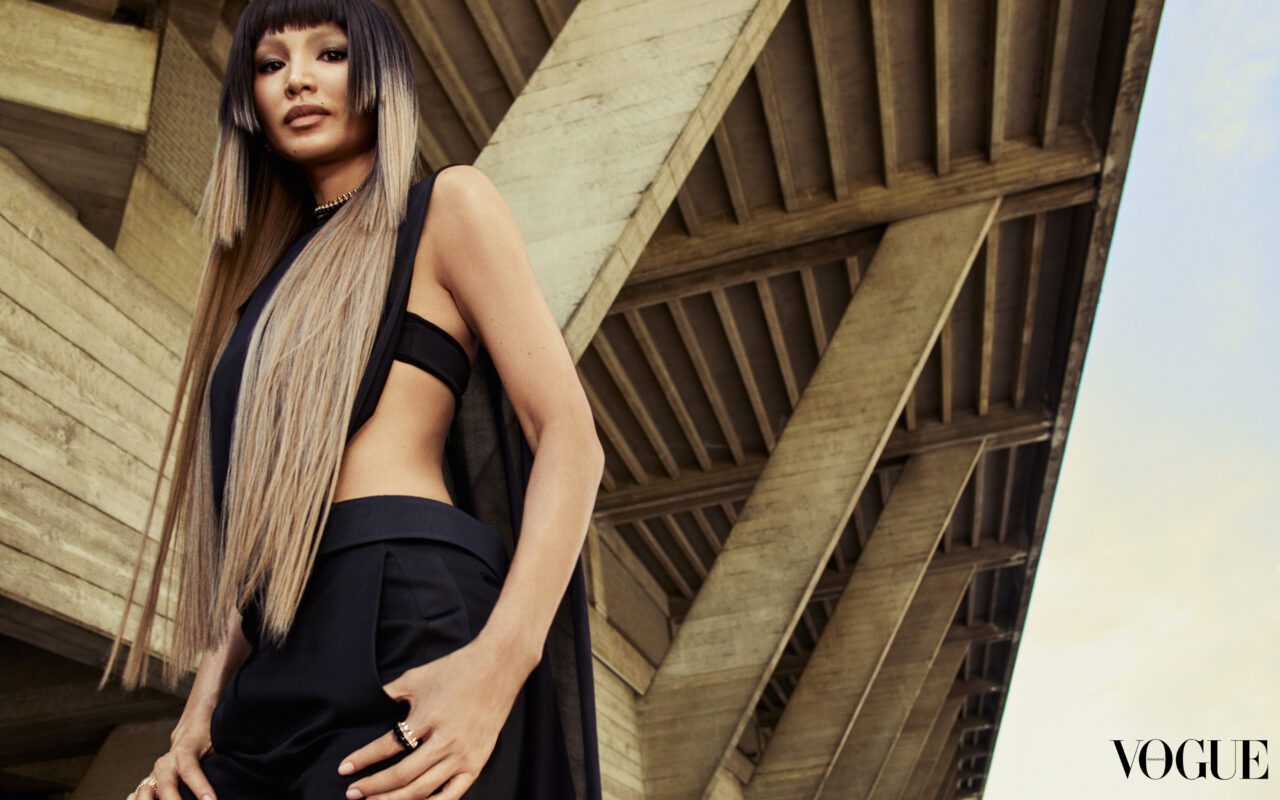
Top, bandeau and pants, all Fendi. Clash de Cartier necklace and ring in pink gold with diamonds and onyx and Clash de Cartier ring in pink gold with diamonds, all Cartier.
Both her parents grew up in Hong Kong—her father by way of Macau when he was seven, and her mother briefly called Hong Kong her childhood home before moving to Scotland. The two met when both were there and raised Chan and her younger sister in Bromley.
Even though the language hasn’t fully stuck, what has is the quintessence of being Cantonese and her strong dedication to her craft. With an “industrious” work ethic inherited from her grandmother, Chan graduated from Oxford University with a law degree and secured a training contract at the prestigious international law firm Slaughter and May. After completing her degree, she realised that practising law was not what she wanted for the rest of her life. The overachieving eldest daughter was then admitted to the highly competitive Drama Centre London, a since-shuttered drama school renowned for its rigorous training.
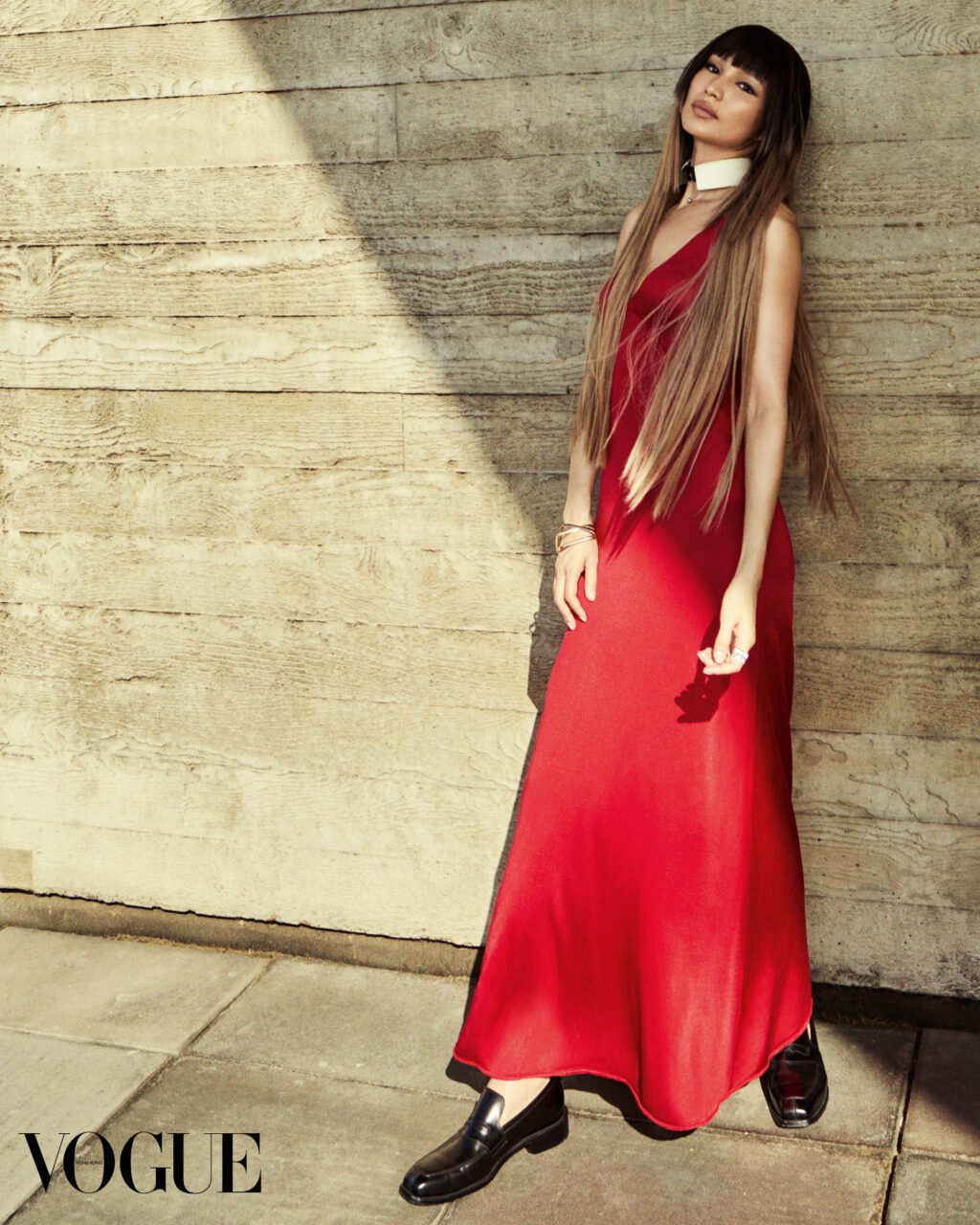
Dress, collar and shoes, all Fendi. Trinity bracelet in pink gold, yellow gold and white gold, Clash de Cartier ring in white gold and LOVE Unlimited ring in white gold, all Cartier.
The following decade, she worked in British television, independent films, and theatre. In 2018, she became a household name. Her major international breakout role as the compassionate Astrid Leong in the 2018 film Crazy Rich Asians catapulted Chan to global stardom. It became the highest-grossing romantic comedy of the 2010s and the first major Hollywood movie in 25 years to feature an all-Asian cast (the last being The Joy Luck Club).
As her filmography continues to expand, Chan has added “producer” to the list of credits, leading with stories that spotlight Asian creativity. “I think it all starts with empathy,” Chan muses, contemplating the power of films. “If you can get people to empathise, then you have a chance of maybe changing their minds, changing their hearts.”
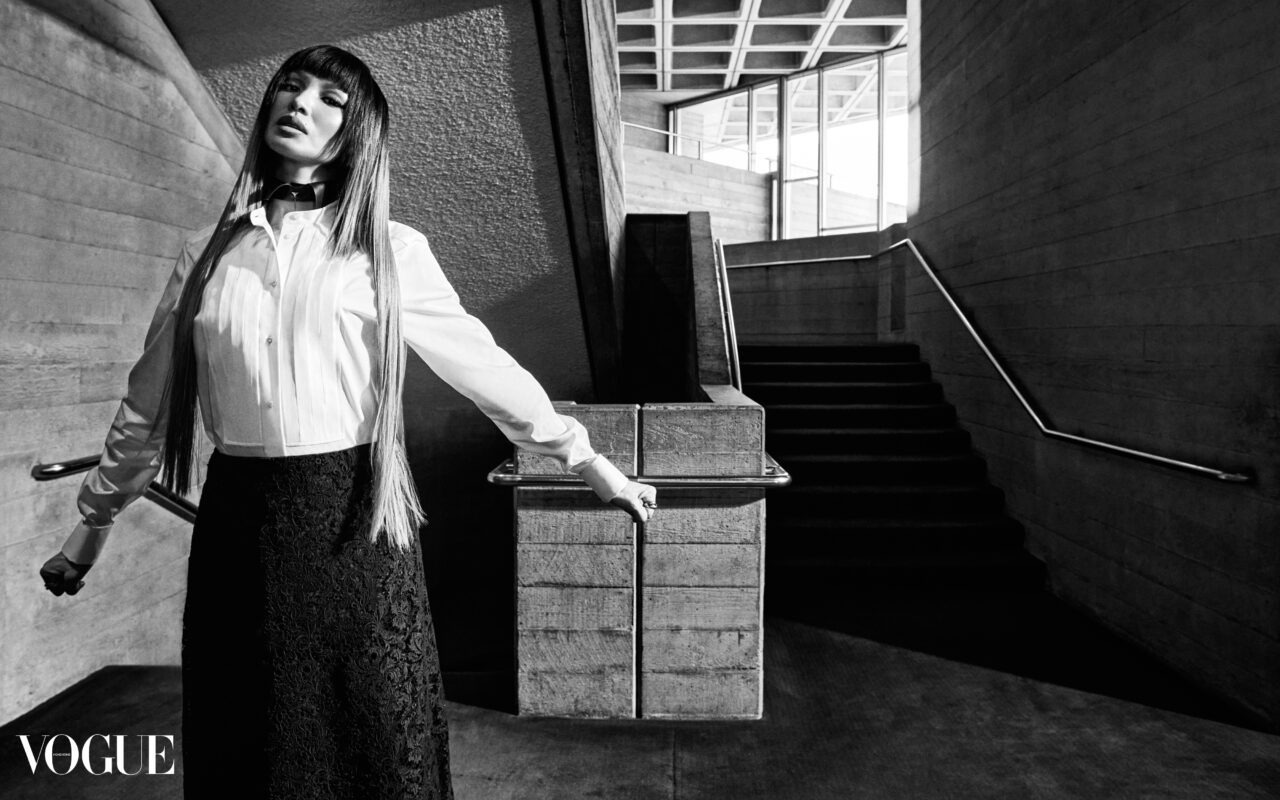
Shirt, skirt and collar, all Fendi. Trinity ring in pink gold, yellow gold and white gold, Cartier.
I’d love to hear about your connection with Hong Kong and if there are any particularly precious moments that you could share with us.
I have very strong links to the city. I went there for the first time at the age of two, I believe, although I don’t remember it. The first trip that I really remember was when I was 10 years old. We had a huge family reunion in Hong Kong, and all my cousins were there, everybody travelled in, and I just remember it being the most amazing experience. My dormant Cantonese kind of came to the fore. Apparently, I was chatting away after being there for a few weeks. It was unlike anywhere that I had been before, and just the energy of the city— the sights, the smells, and the hustle of the city really struck me.
What do you look forward to the most when you’re in Hong Kong? Is there a taste, a sound, or maybe a smell that reminds you instantly of the city?
I mean, it has the best dim sum and the landscape is incredible. When you’re arriving and you see the island, it’s so distinctive.
Can you recall an exact moment when you realised acting was your calling?
I wouldn’t say there was one particular moment. I had always done a lot of drama and music growing up, but it was something that I just did for fun. I never thought it was something that you could pursue as a career at all. It just didn’t really enter my mind. It was actually much later on, when I was already studying for my law degree, and I was having a few second thoughts: ‘Is this really what I want to do with the rest of my life?’
I really loved the intellectual challenge of what I studied; that was the kind of appealing part of it. But as they say, a lot of barristers are frustrated actors. I didn’t want the stakes of someone’s life to be on whether or not I performed well, so actually it kind of made sense. Then I trained at drama school after my law degree. It was a gradual kind of recognition. I’d always loved storytelling; that had always been something that was a huge part of my life, and getting to do it as my job is just the biggest, biggest privilege.
Are there traditions or values from your Hong Kong heritage that have maybe influenced your artistry or your career in any way, even subconsciously?
I think there’s a work ethic that has come through my family, through my grandmothers and through my parents: That you have to work hard, you have to hustle, and you have to be industrious. That definitely comes through; I really feel that.
You’re very outspoken about social justice, and it translates to the projects you’ve taken on, from I am Hannah (2019) to Extrapolations (2023) to The Actor (2025) to Josephine (2026). From your experience, do you think movies are a good avenue to drive conversations about social issues?
I think they can be. Whether it’s film or television or theater, there is the opportunity to make people feel something, to make their hearts open up a little bit. I think that a film doesn’t necessarily have to hit people over the head with a political idea or theme, but at its best, I think it kind of sneaks in there and just opens people’s eyes to maybe a slightly different way of looking at things, and I think it all starts with empathy. If you can get people to empathise, then you have a chance of maybe changing their minds, changing their hearts.
Josephine (2026), your latest movie, seems to really tap into that empathy, and it’s opened to extremely positive reviews. How does it feel when a movie that you’ve worked on for so long, especially one that addresses a serious topic, is well received by critics?
Well, you never know how something’s going to be received at all. You go into a project, hopefully for the right reasons; you find a group of people that you really want to work with and a story that you believe in, but you never know if it’s going to work out. To be honest, the first thing I hope for on a job is to have a good experience and to be working with good people, which thankfully, on Josephine, we really had. Because it was such a challenging subject matter, we really had to feel that we all trusted each other to be able to tell this story, and obviously it’s a very personal story for our director, so I think we felt a lot of responsibility towards her, but she also really took care of everyone and made sure everyone felt safe, and it was a really beautiful thing.
Even though we were dealing with something that was really dark, I can honestly say that it was a really great experience to get to explore some of these themes in an atmosphere of real trust with a director who had such a strong vision that she really made sure everyone felt seen and valued, and it was a true collaboration.
I felt such relief for her when it was finally out there in the world. And the fact that it’s such a personal story for her, I was a little nervous, to be honest, you just never know how people are going to respond, but the fact that people have understood what she was trying to do and really appreciate that, and have also had really emotional responses towards the film. It’s more than you could ever hope for. So I’m so happy, I’m so proud to be a part of it, and really, really thankful for it.
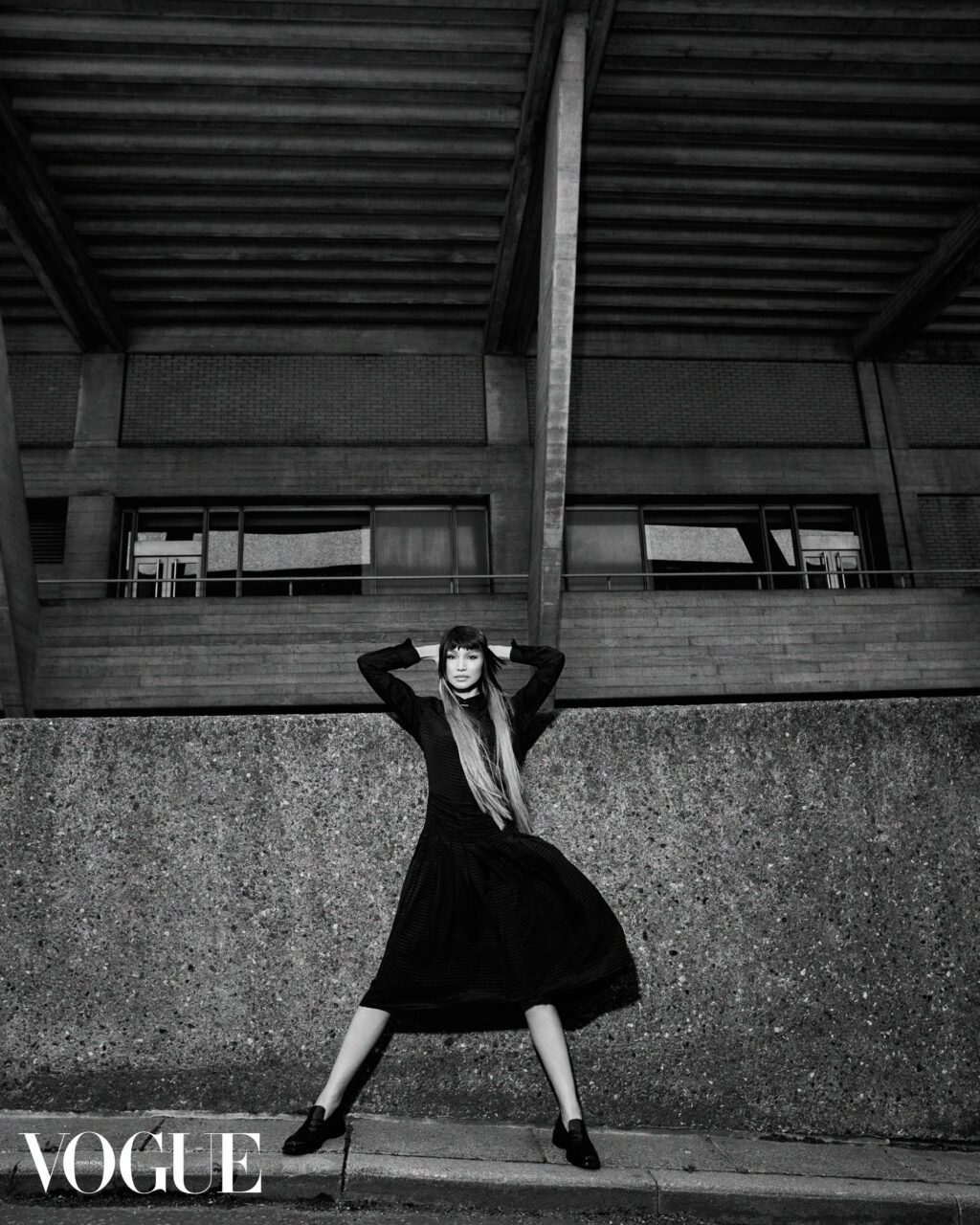
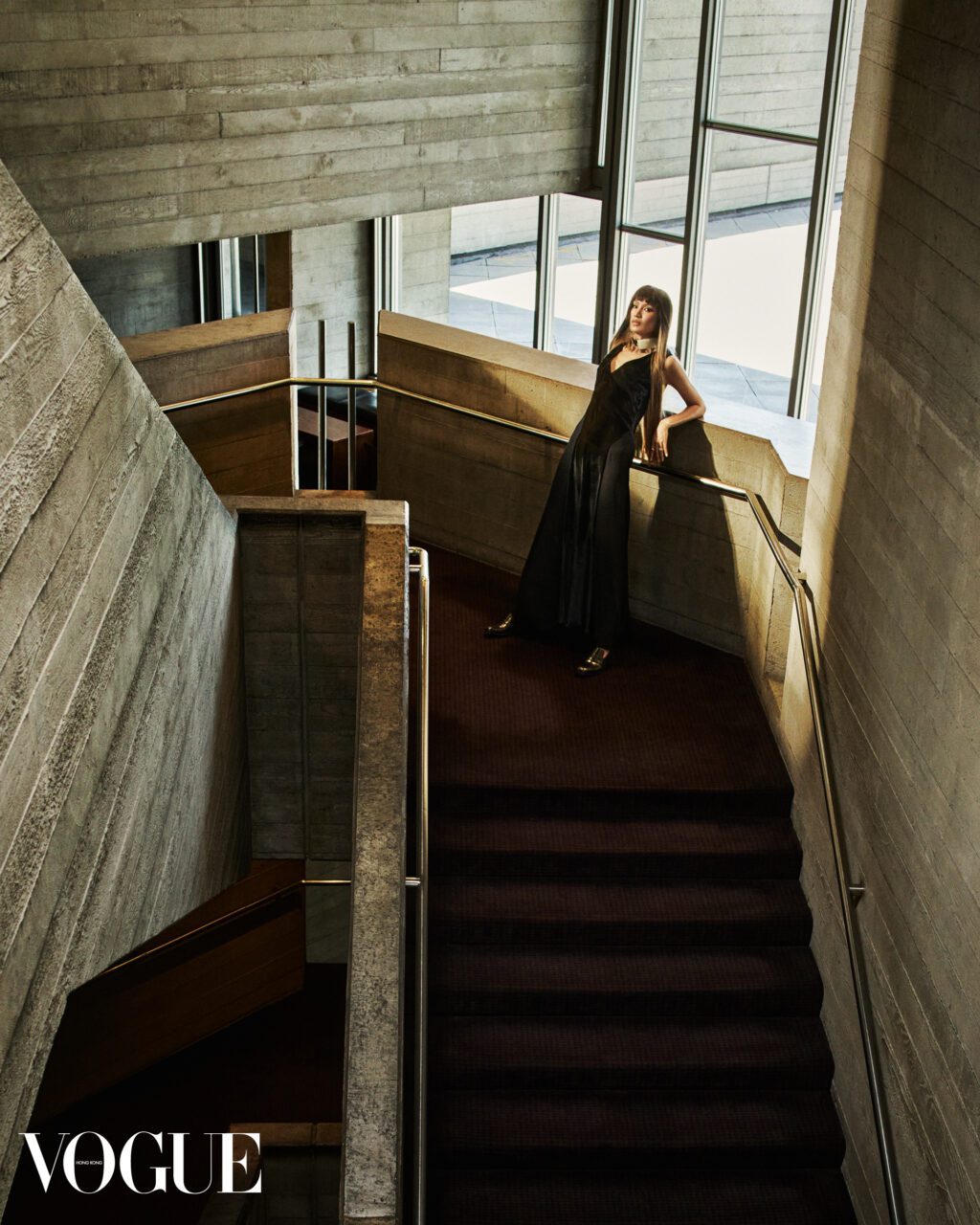
Dress, collar and shoes, all Fendi. Clash de Cartier necklace in pink gold with onyx and diamonds, Cartier.
You’ll be developing a feature film about Anna May Wong and starring as her as well. In 2021, you were already paying tribute to the actress at the Met Gala by wearing a custom Prabal Gurung gown. Can you tell us why this film is important to you?
Anna May Wong was such an incredible woman ahead of her time, truly a trailblazer working at a time when there should never have been a place for her. She really had to fight for it. There’s a personal side of her story, her struggles in the industry, her fight. She really was outspoken against stereotyping; she really fought against the injustices that she felt, and was very vocal about it.
But then in her personal life, she was just someone who was trying to be a good daughter and look after her family, and there were tensions within her family. In a wider sense, I feel that her story is about who gets to be American. She was a third-generation Angelino, but it was a continual fight for her to be able to be seen as an American, an Asian American, and I think that is what makes the story really resonate for me today. I think that’s still the question: who gets to call a country home? Who gets to be considered American these days?
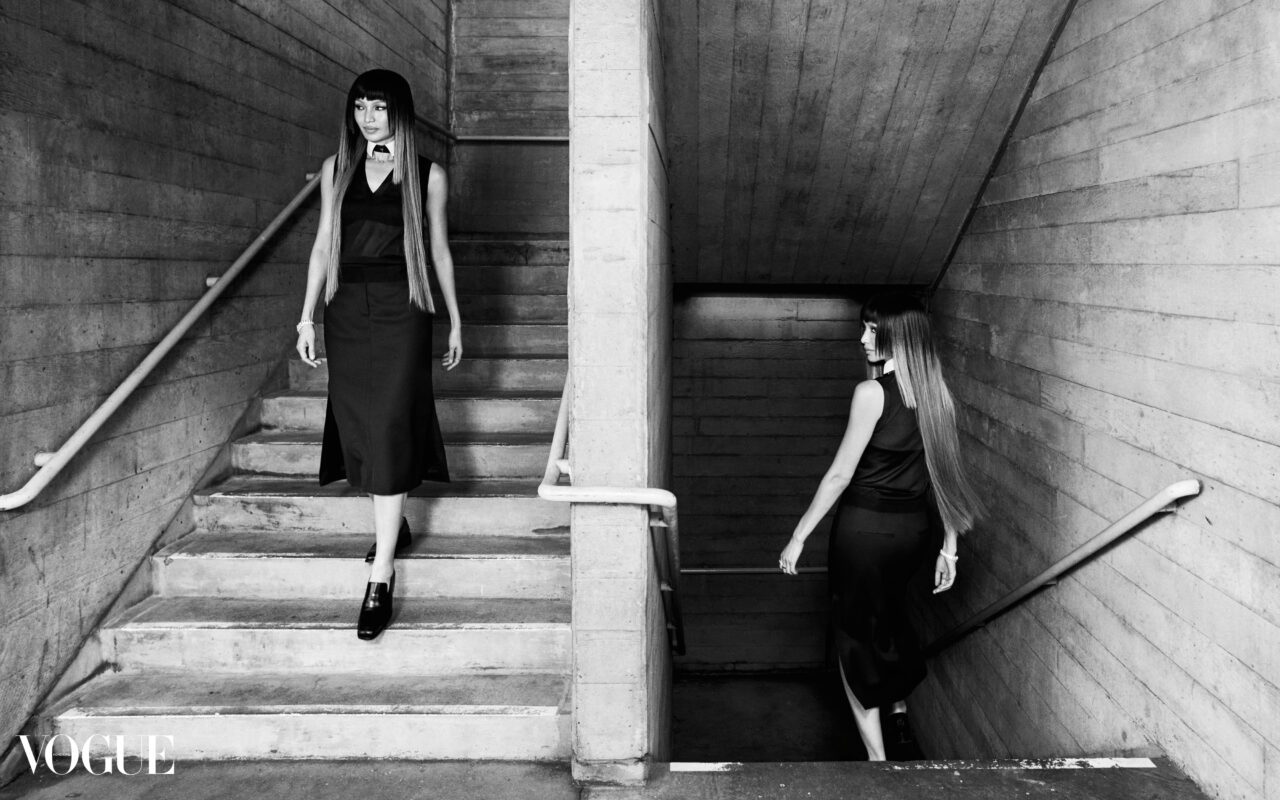
Top, skirt, collar, bandeau and shoes, all Fendi. Le Voyage Recommencé bracelet in white gold with emerald and diamonds and Trinity rings in white gold, yellow gold and pink gold, all Cartier.
Producing often means solving invisible problems, I imagine. Are there challenges that you’ve overcome as a producer that you think the audience would never guess?
Gosh, that’s absolutely right. I mean, there are so many things that go on before something can make it to the screen for people to see. At every single stage of development, and it can be years and years of work. I love being part of the process from an early stage and gathering the right team, but I’ve also realised recently it’s quite enjoyable to just get to do a job and just be an actor. Because you just get to be like, ‘nothing else is my problem, and I can just go home at the end of the day and not be dealing with things at three in the morning,’ because when you’re a producer, everything is your problem.
You’re also an avid reader who’s taken on a lot of novel adaptations, including executive producing The Moon Represents My Heart and The Rise of the Empress. From a producer’s point of view, what makes a novel one that’s suitable for the screen?
That’s a good question. I think it’s the bones of the story and the characters that speak to me. Sometimes when you’re reading a book, you can just see it in your mind cinematically, and some things just speak to you like that. And that may be something in the author’s language, the way that they’re painting the pictures with their words already, but then, of course, doing an adaptation, you’re taking something from one form, and then you have to reinvent it in a way to make it make sense in the new form. It’s an interesting process, and to be able to find a way to do adaptation whilst retaining the spirit of the original form—but you obviously have to make those changes, and you know certain things have to be simplified, other things have to be maybe kind of melded together— that’s the process that I really do enjoy working with a writer and going through that, but yeah, it’s really the characters that speak to you and the potential that they have to come alive on screen.
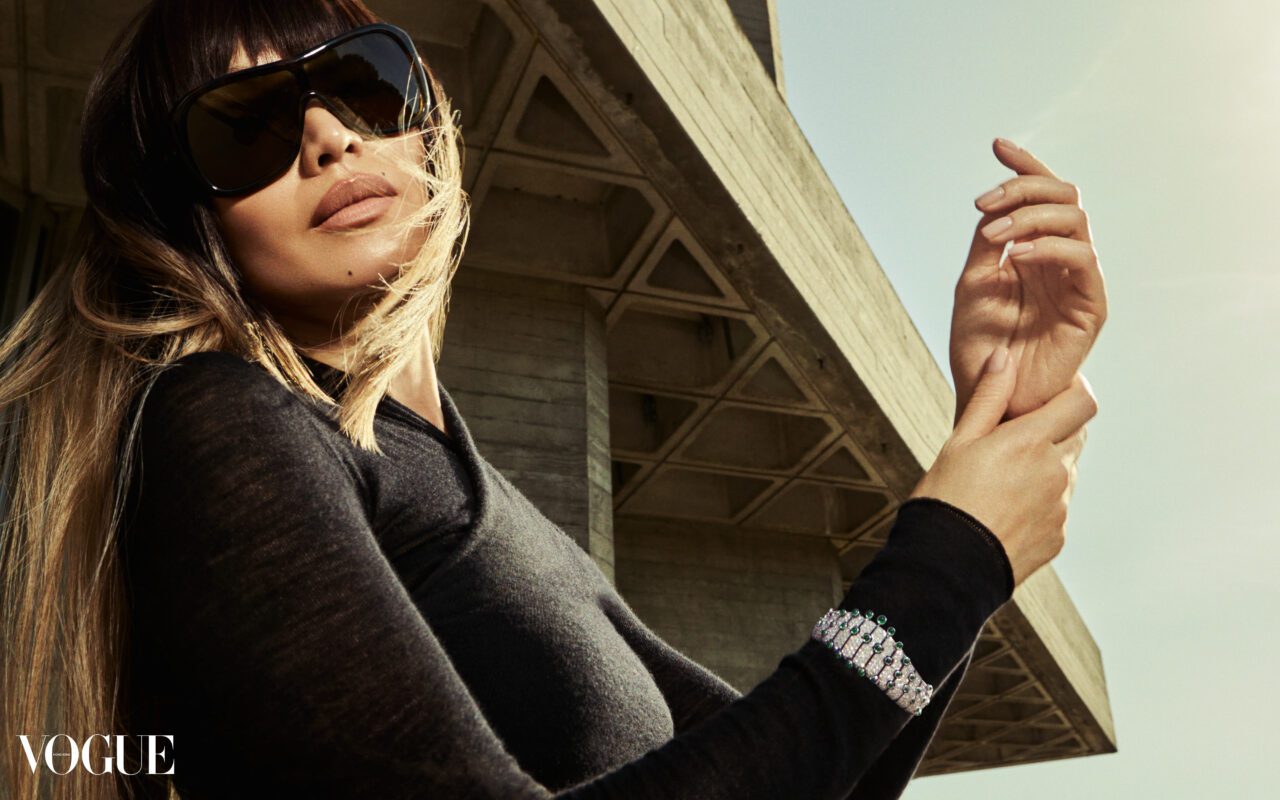
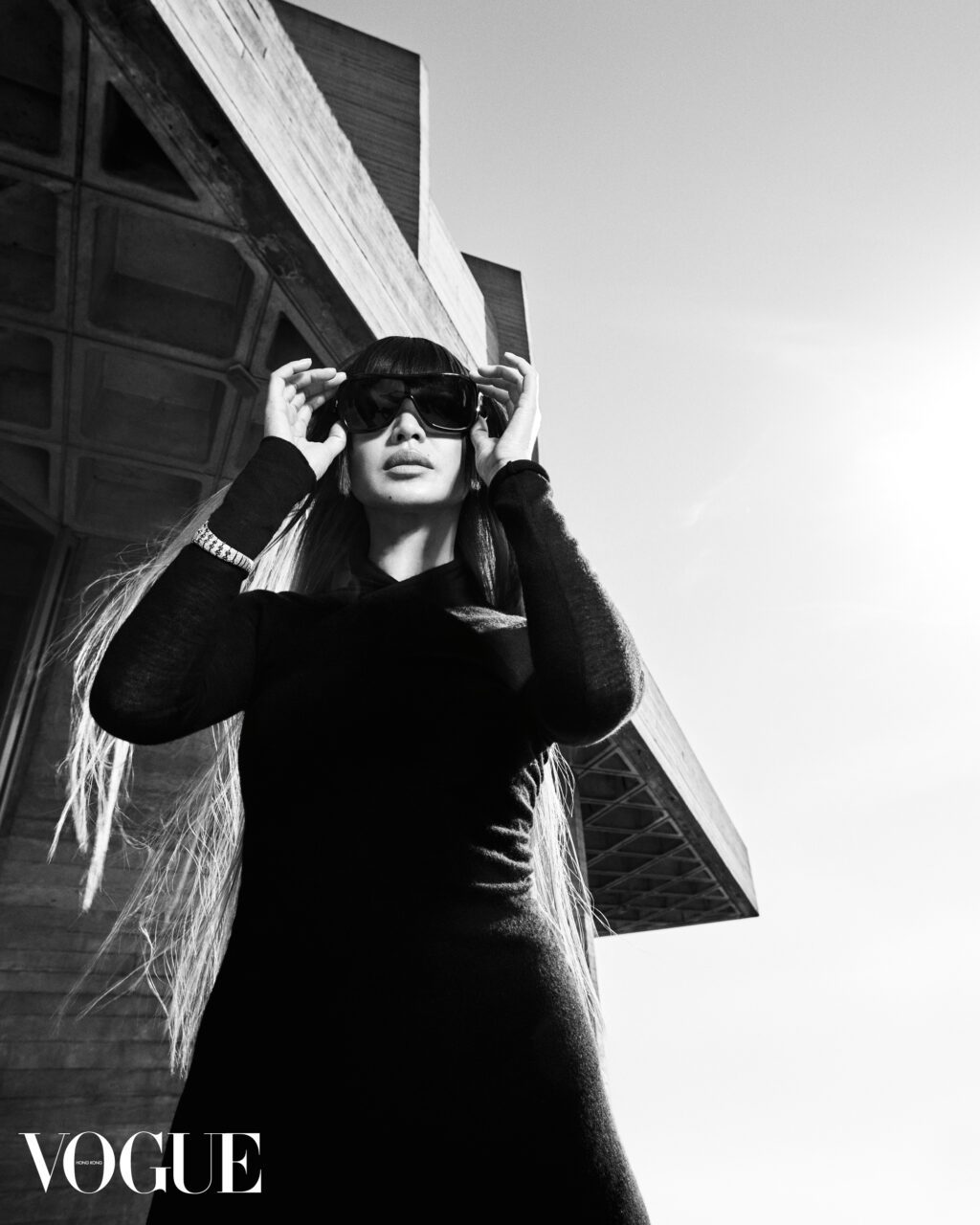
Dress and sunglasses, all Fendi. Le Voyage Recommencé bracelet in white gold with emerald and diamonds, Cartier.
How was it working on The Five-Star Weekend (2026) alongside such a stellar cast? Are there any particularly memorable moments you can share?
It was such a wonderful job to be working with these women, and none of us had worked together before. You never know how it’s going to go when you get a group of people together, but we just very organically became friends, and I just feel very lucky to be part of that amazing ensemble. We shot quite a bit of it in LA in the studio, and then we also shot on location on Nantucket, which was very special. Even though things have been set there before, they’ve not permitted people to film there, but we got to film there for almost a month, and we all really bonded and got to eat amazing food. We did a boat trip around the island, which was really fun. It’s like being at summer camp.
As a UNICEF ambassador, what have you learned about the power of community in driving substantial change?
I’ve worked with UNICEF now for quite a long time, and getting to witness what they have managed to do in so many places around the world, it actually gives me so much hope, especially when I get to meet communities, particularly of young people, and see the work that they’re doing. Really, what these young people are doing for themselves to help their communities is really inspiring. You know, the world can seem so bleak, the multiple crises that we’re dealing with at the moment, but I really do believe that the next generation of kids are the ones that give me hope, and they are finding ways to help themselves, help their families. I think that’s the way forward.
You made headlines by only wearing Asian designers during the Crazy Rich Asians (2018) press tour. What excites you about wearing or working with Asian designers?
I was so fortunate on that press tour that I got to work with incredible Asian designers. I just think because of the breadth of the diaspora and the references that can be drawn from so many different aspects of Asian culture, it really is a beautiful thing. I’m excited for what’s next, but also just to be able to support them was something that I really felt was important at the time, because there’s so much talent there.
What are you most looking forward to at the moment?
In life, I’ve been doing a lot of travelling over the last few months, and I’m looking forward to getting home, seeing my cat, spending time with my nephews, my family and my loved ones. I think the older that I get, the more I appreciate just having that time and trying to find that balance between work and family life.
How’s your cat? Mr Kitty?
He’s great. He’s doing the best out of everyone.
Photography: Emma Summerton @A Creative Partner
Fashion & Style Direction: Dena Giannini @A Creative Partner
Casting Director: Jill Demling
Hair Stylist: Anna Cofone @R3-MGMT
Makeup Artist: Alex Babsky @The Visionaries
Manicurist: Michelle Class @LMC Worldwide
Production: Shiny Projects
Post Production: Silhouette Studio
Location: The National Theatre (London, UK)
Editor
Karrie Lam