

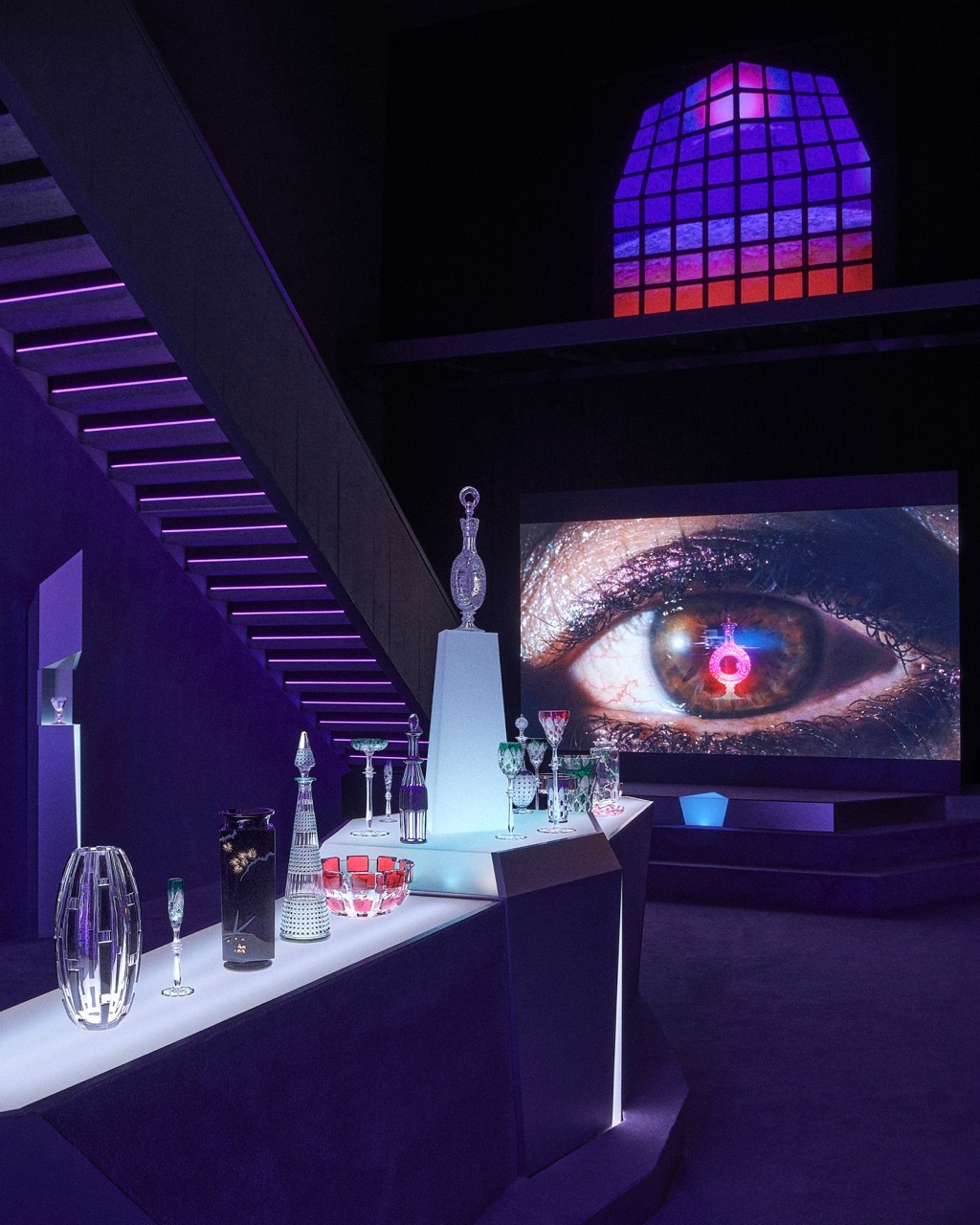
In the heart of Milan’s Brera district this April, luxury crystal house Baccarat unveiled an extraordinary departure from traditional design presentations. Crystal Crypt, conceived by artist and scenographer Emmanuelle Luciani, transformed the venerable French manufacturer’s heritage into an immersive science fiction odyssey that challenged perceptions of luxury craftsmanship.
“I looked at this Manufacture as a temporal bubble, a vessel-cathedral of unique craftsmanship inhabited by dancer-artisans,” Luciani explains of her radical vision. The result is a complete artwork that merges film, choreography, sound, and scenography to project Baccarat’s 262-year legacy into the year 5300.

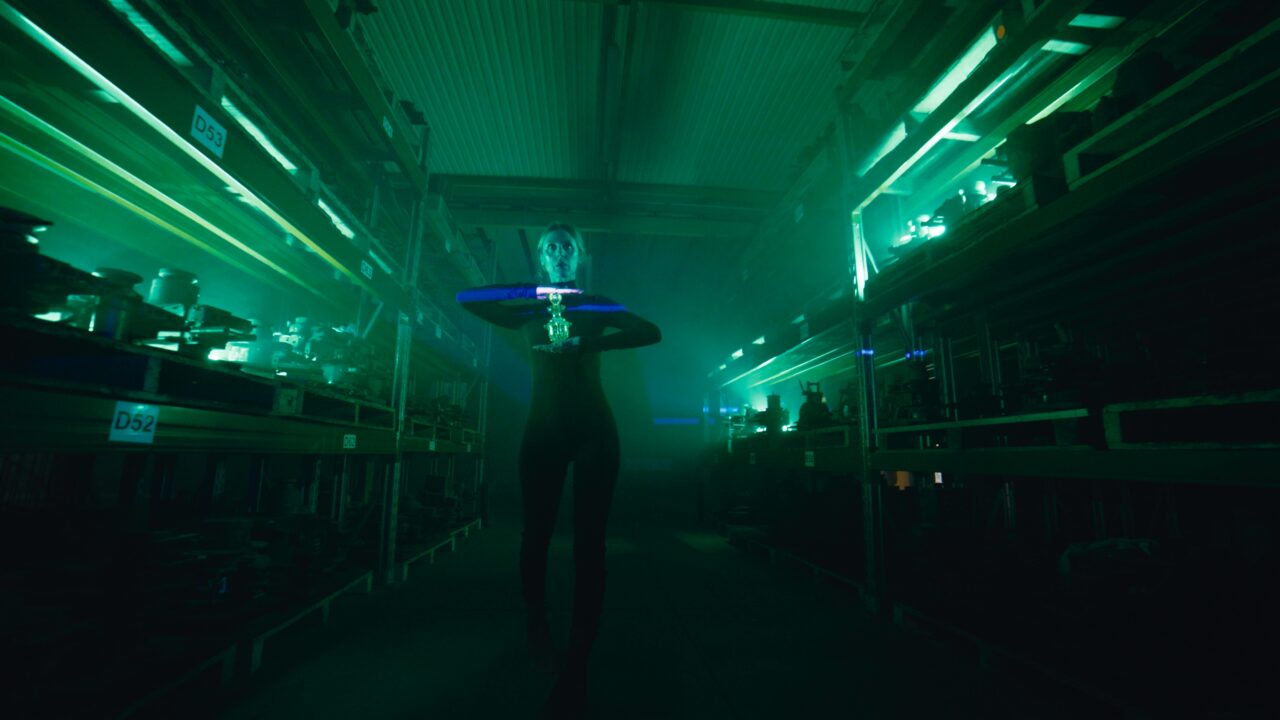
Drawing inspiration from Philip K. Dick’s literary universe, Crystal Crypt presents a dystopian narrative where crystal has become a lost art, its mastery preserved only by hidden artisans at the galaxy’s edge. This speculative fiction framework allows Luciani to explore Baccarat as both ancient tradition and futuristic possibility — a “cosmodrome” where immutable craftsmanship coexists with radical innovation.
The installation bathes visitors in violet light, a colour that spans imperial purple to cyberpunk aesthetics, creating what Luciani describes as “a mysterious twilight iridescence.” Bringing together an original film, a sound piece, scenography, and choreography, the project places Baccarat in an altered time, shaping a mythology in which eras overlap.
Within this space, Baccarat’s collections transcend their historical context, becoming artefacts that survive beyond human time. The choreography, conceived as homage to glassmaking gestures, transforms industrial craft into ritualistic dance, while custom art objects inspired by glassmakers’ tools populate a visual universe drawing from science-fiction manga, space opera, and Gothic Revival.

Anchoring this fantastical narrative are tangible innovations in crystal craft. British designer Bethan Laura Wood’s Mille Fleurs collection reimagines Baccarat’s iconic Zénith chandelier through a contemporary lens. Wood deconstructs the traditional form into modular rings that can be arranged horizontally or stacked vertically, creating what she calls “a vision suspended somewhere between a science-fiction wormhole and the interlacing of Elizabethan garters.”
The collection’s chromatic palette – incorporating olivine, lavender, amber, and turquoise alongside clear crystal – intensifies this sense of organic extravagance. Wood enriches the Zénith’s emblematic elements with floral motifs from Baccarat’s archives, creating pieces that oscillate between baroque ornamentation and architectural precision.

The Zénith chandelier reimagined into modular, stacked crystal rings and floral abstractions by Bethan Laura Wood
Complementing these contemporary interpretations, Baccarat’s Haute Cristallerie showcases the Manufacture’s technical virtuosity through limited re-editions of historic pieces. The Pierreries decanter from 1909, with its emerald double-cased crystal and diamond-cut patterns, demonstrates the irreversible precision required in luxury crystal work. The Trocadéro bowl, originally presented at the 1925 International Exhibition of Modern Decorative Arts, exemplifies Georges Chevalier’s radical modernist vision for Baccarat, where geometric tension replaced ornamental excess.

Perhaps most compelling is how Crystal Crypt positions traditional craft within contemporary discourse. Rather than presenting heritage as static history, Luciani and Wood demonstrate how centuries-old techniques can generate genuinely futuristic aesthetics. The installation suggests that in an era of digital reproduction and AI-generated design, the human hand’s irreplaceable gesture – the master glassblower’s breath, the cutter’s irreversible incision – becomes increasingly precious and strange.
This temporal collapse, in which 18th-century craft techniques produce 53rd-century artefacts, offers a provocative model for luxury’s future. Crystal Crypt argues that true innovation doesn’t abandon tradition but rather projects it through unexpected imaginative frameworks, revealing new dimensions within ancient mastery. In Luciani’s galactic cathedral, Baccarat’s crystal becomes a medium for time travel, each piece a portal between the Manufacture’s historical foundations and its speculative futures.
Editor
Kaitlyn LaiCredit
Lead Image: Courtesy of Baccarat