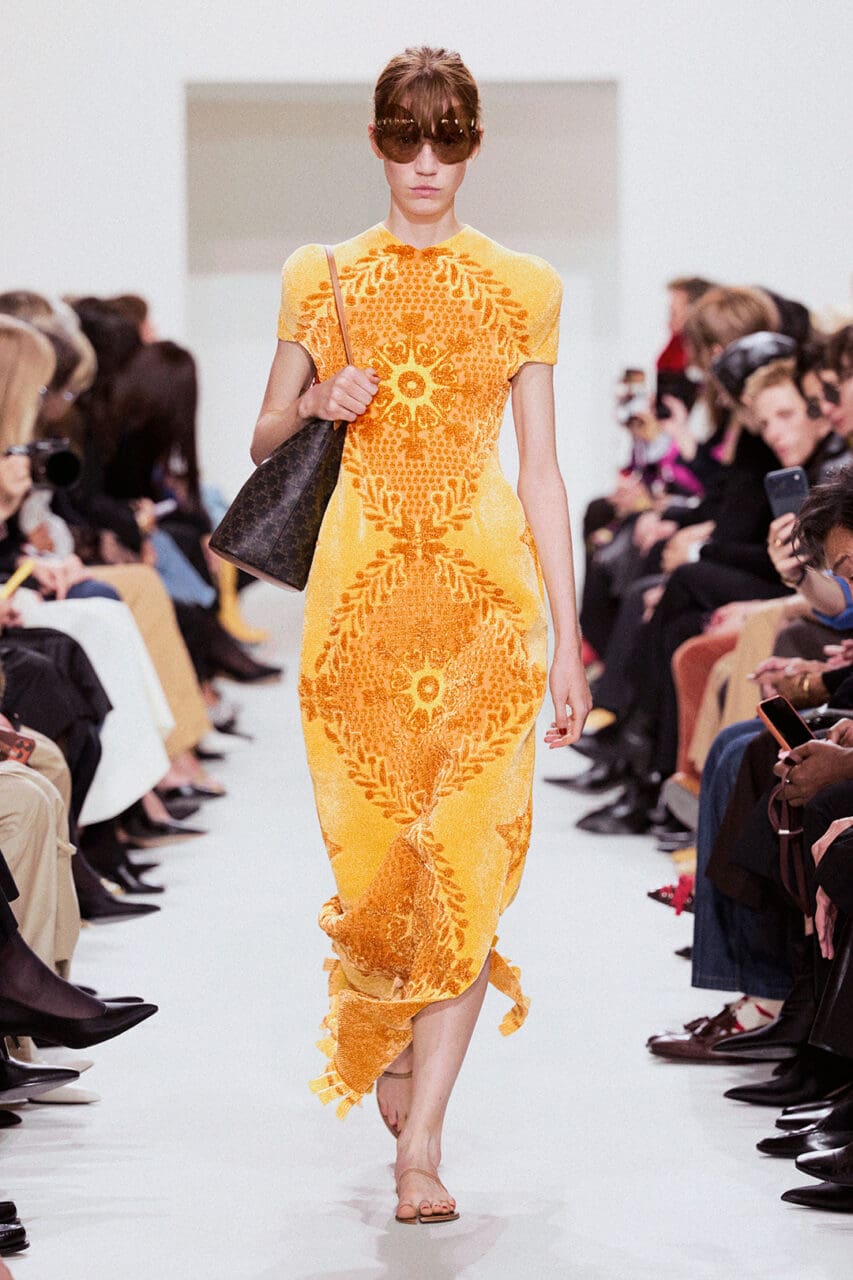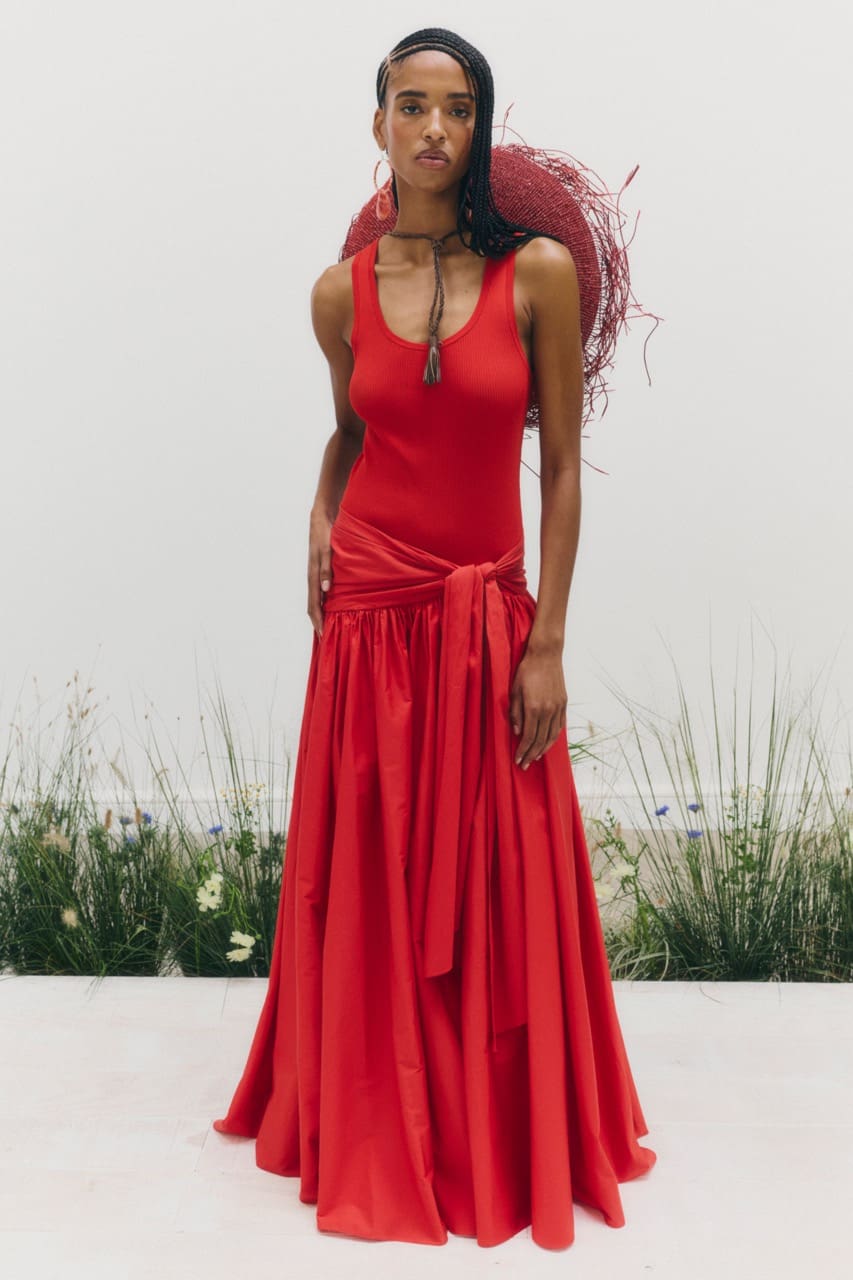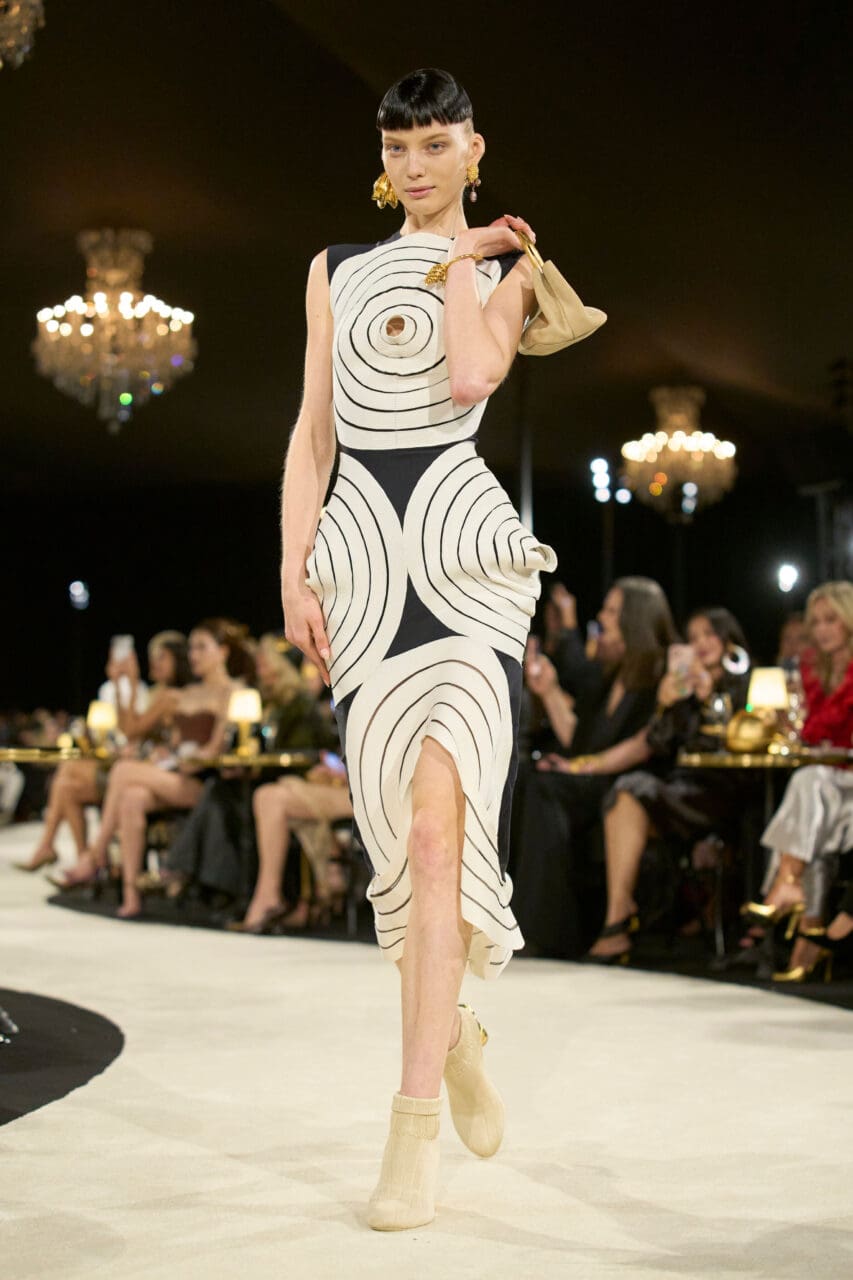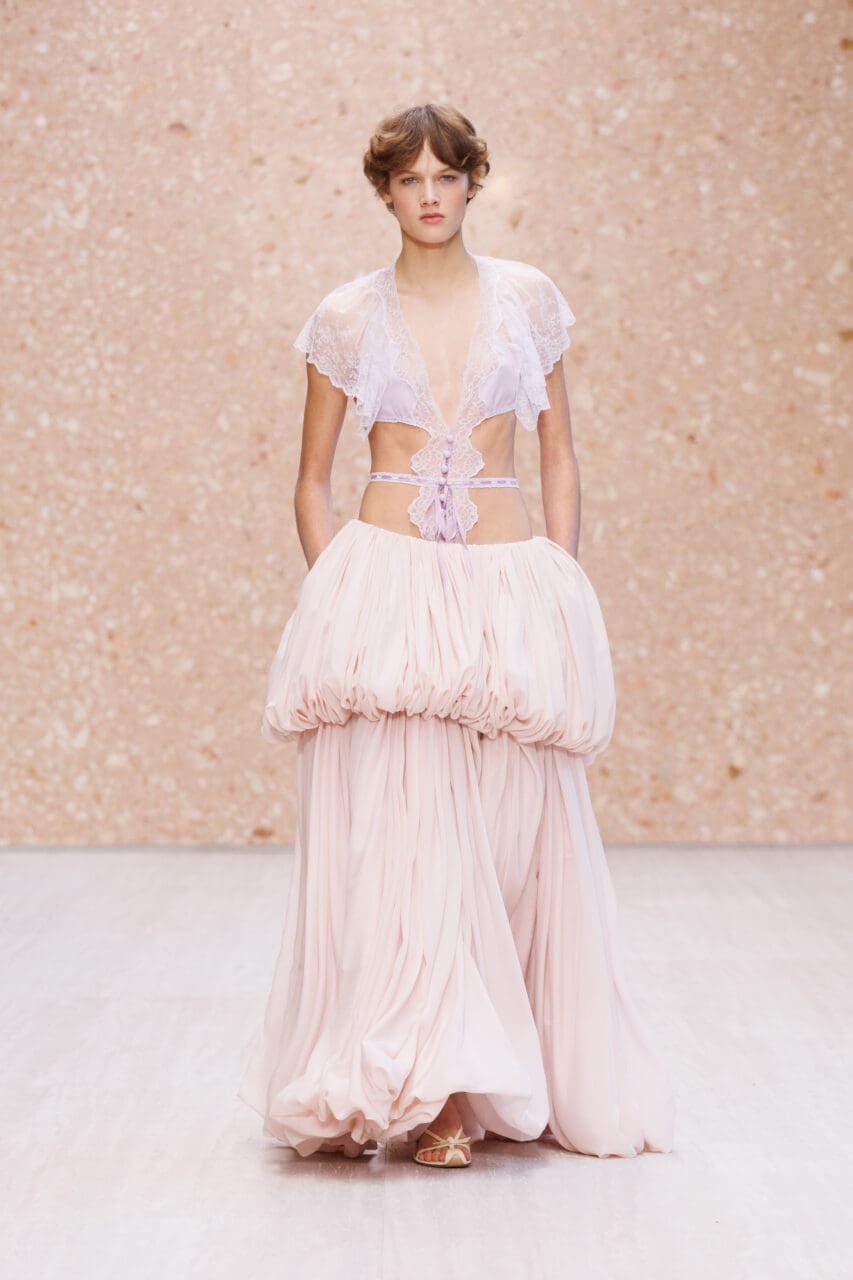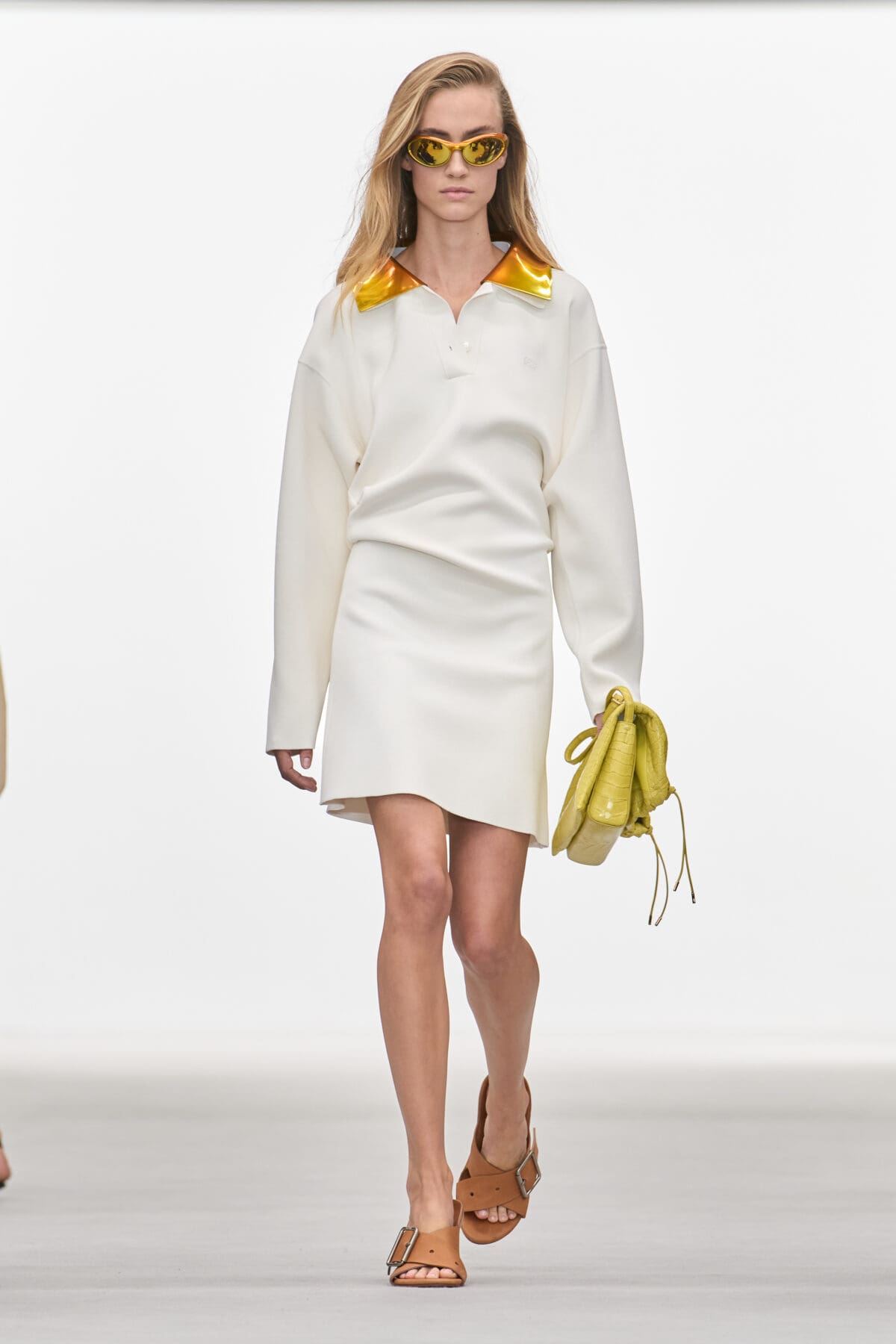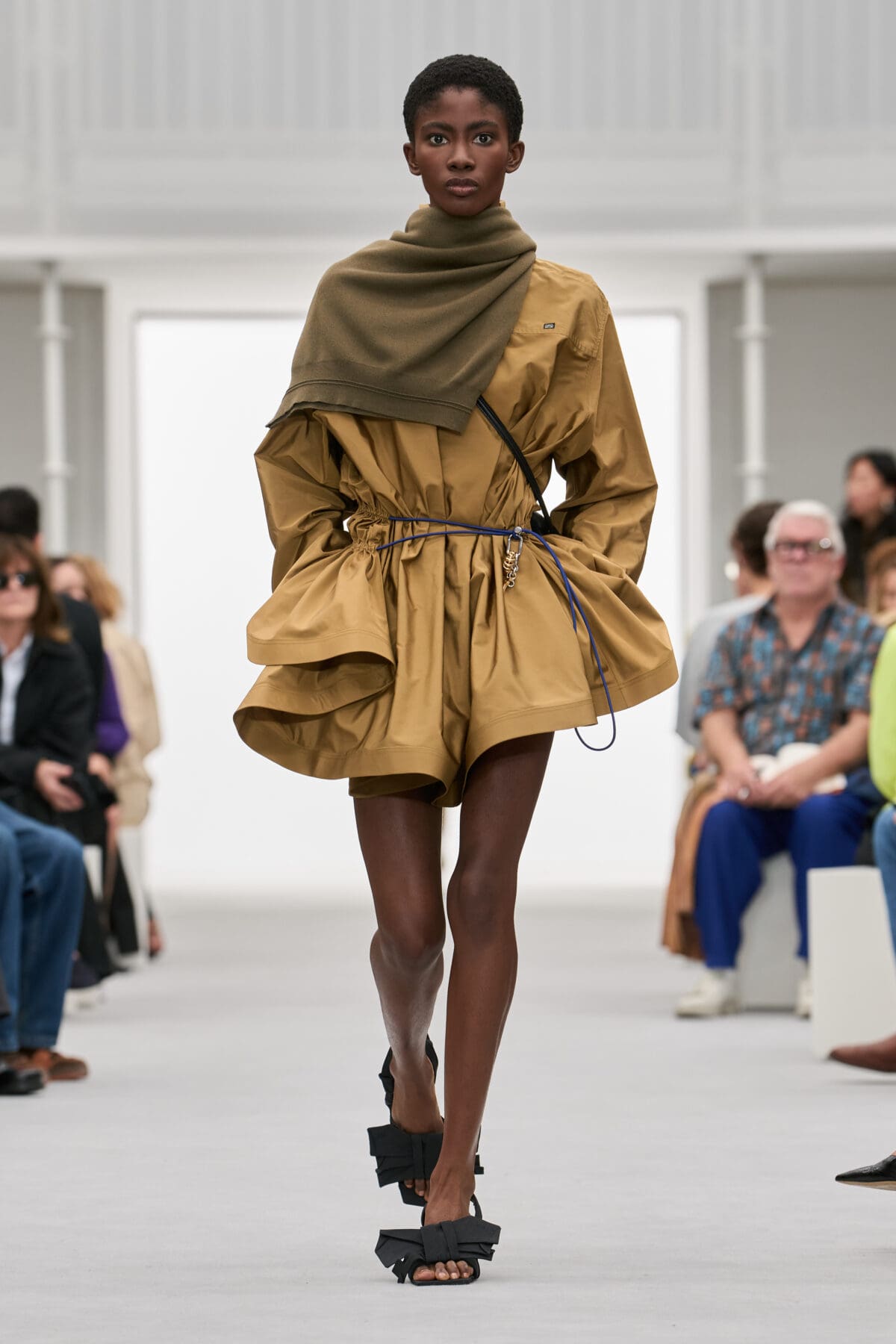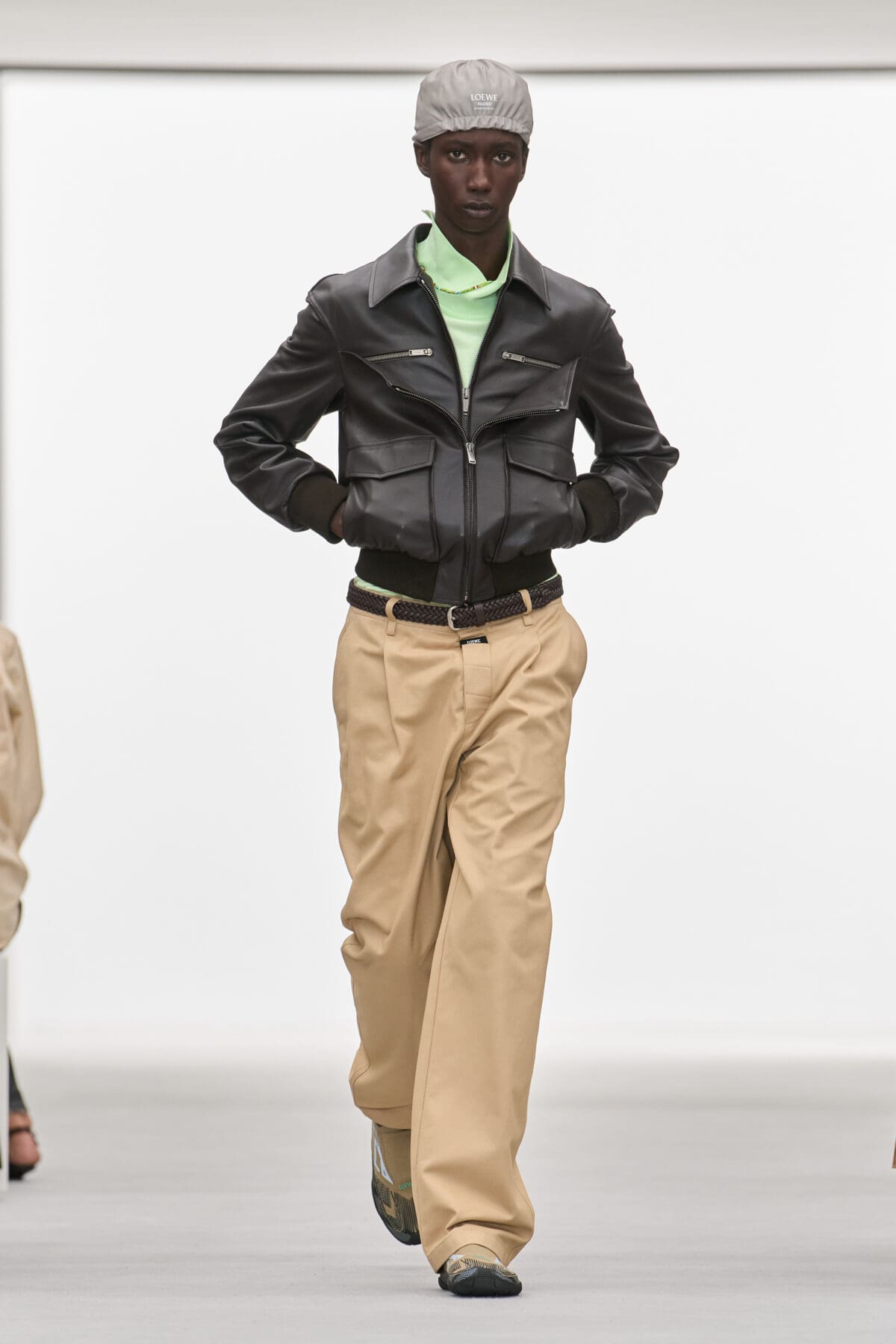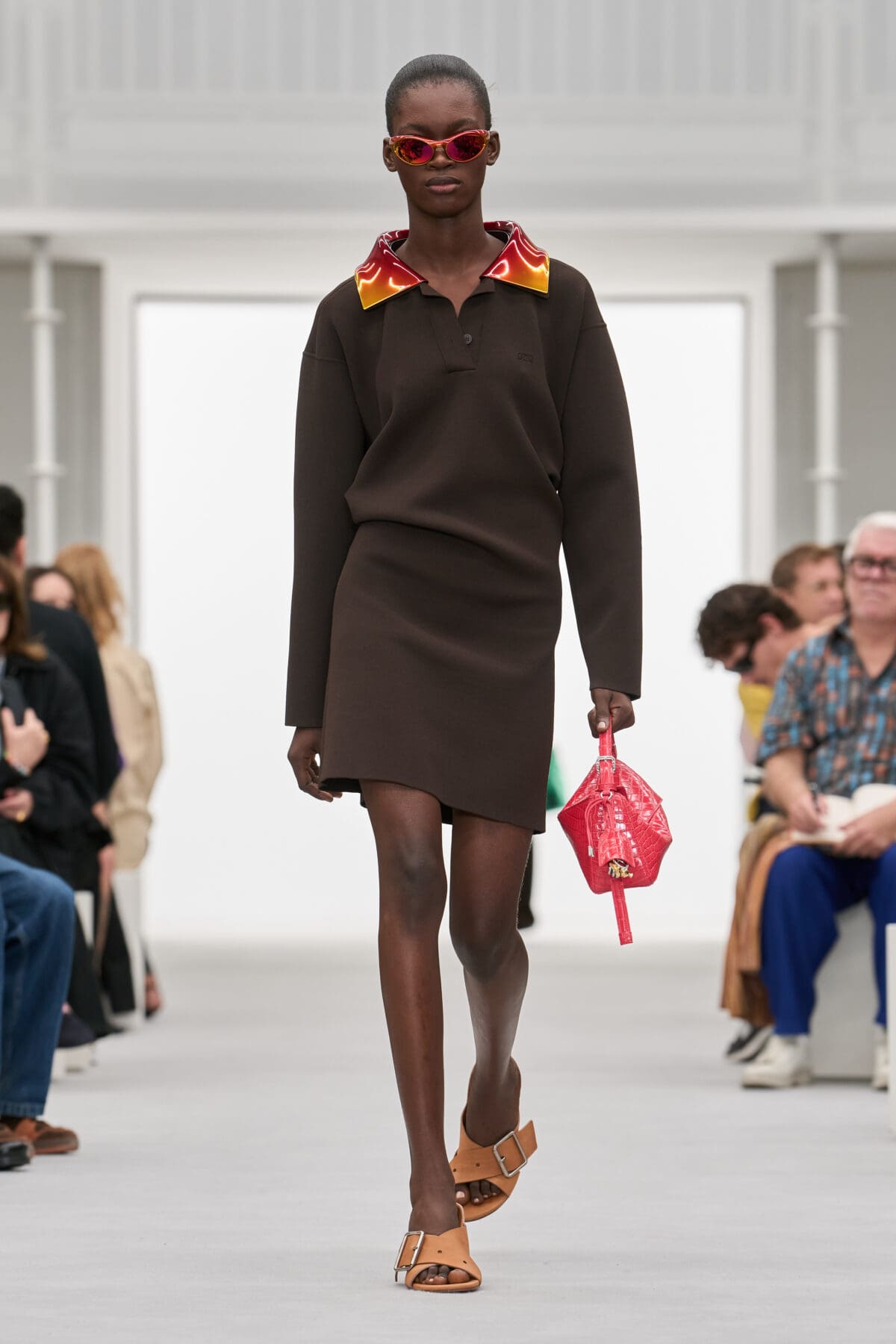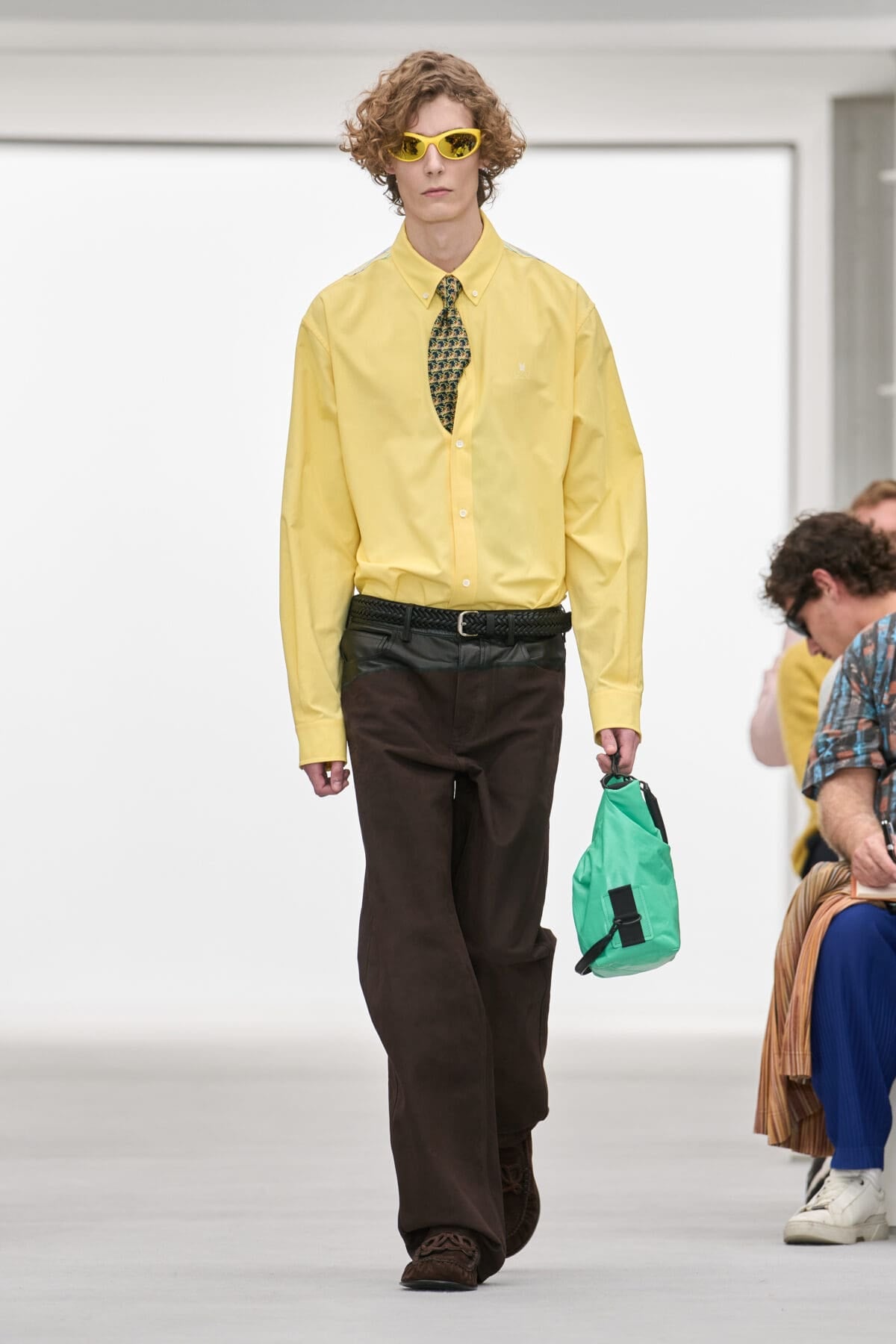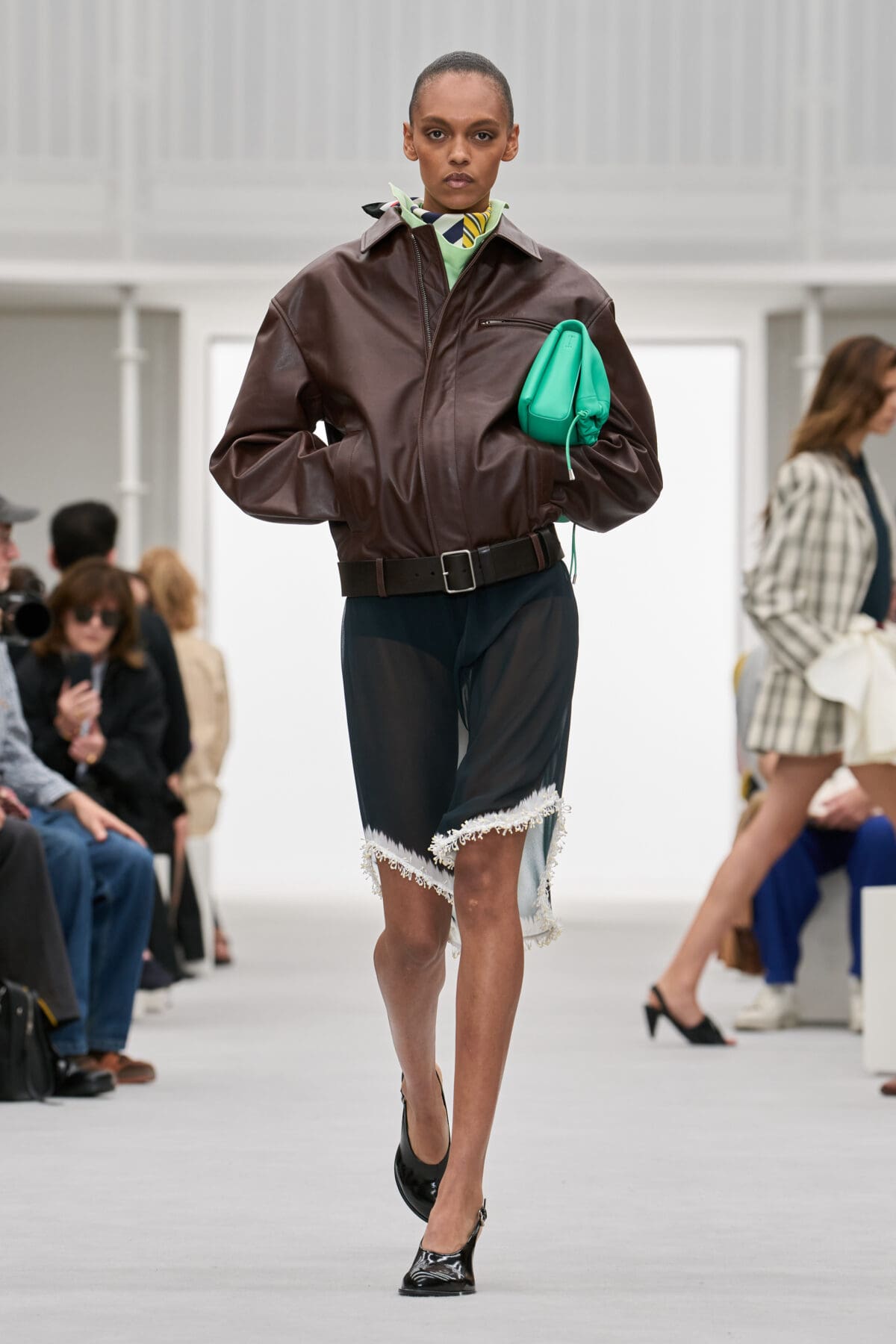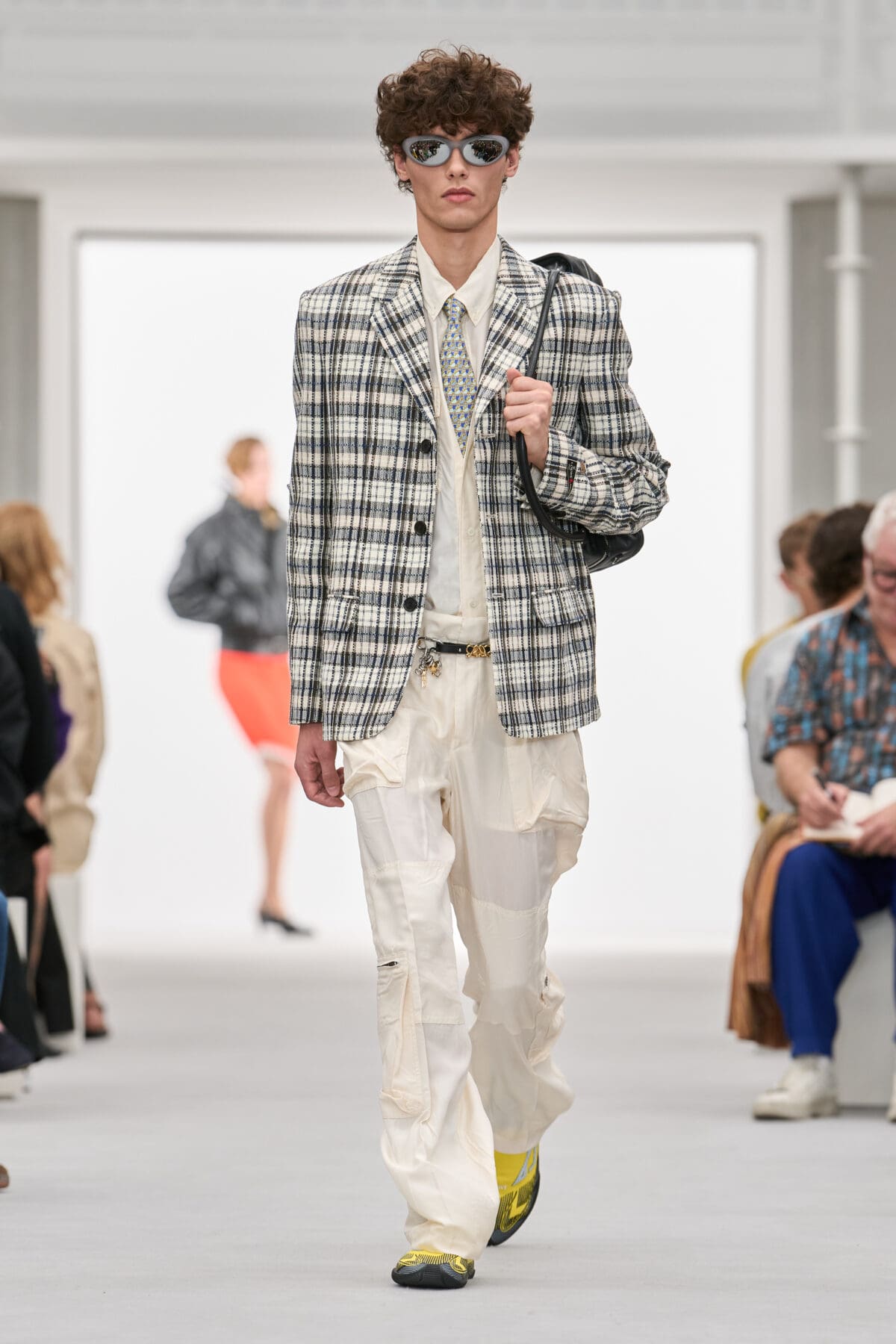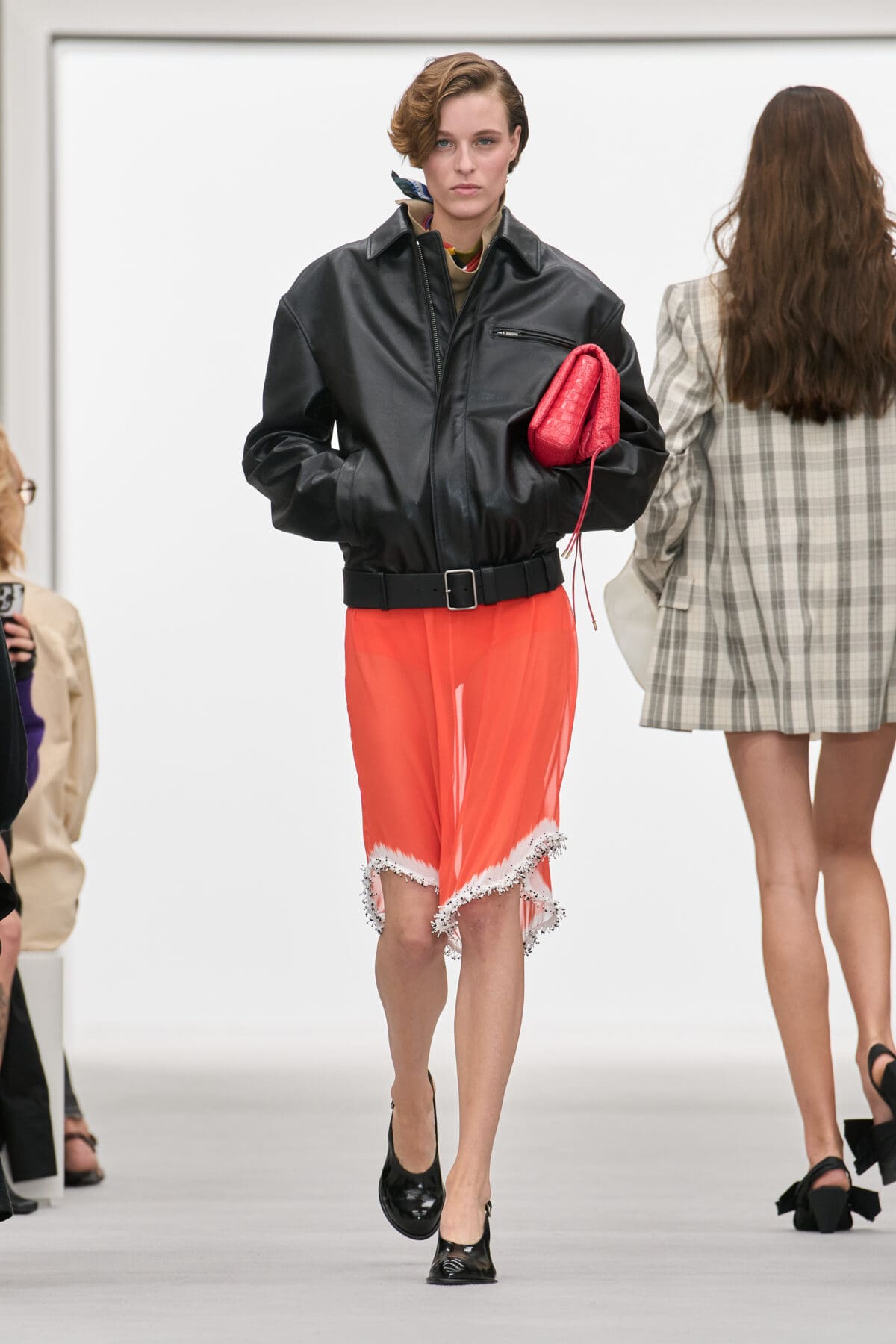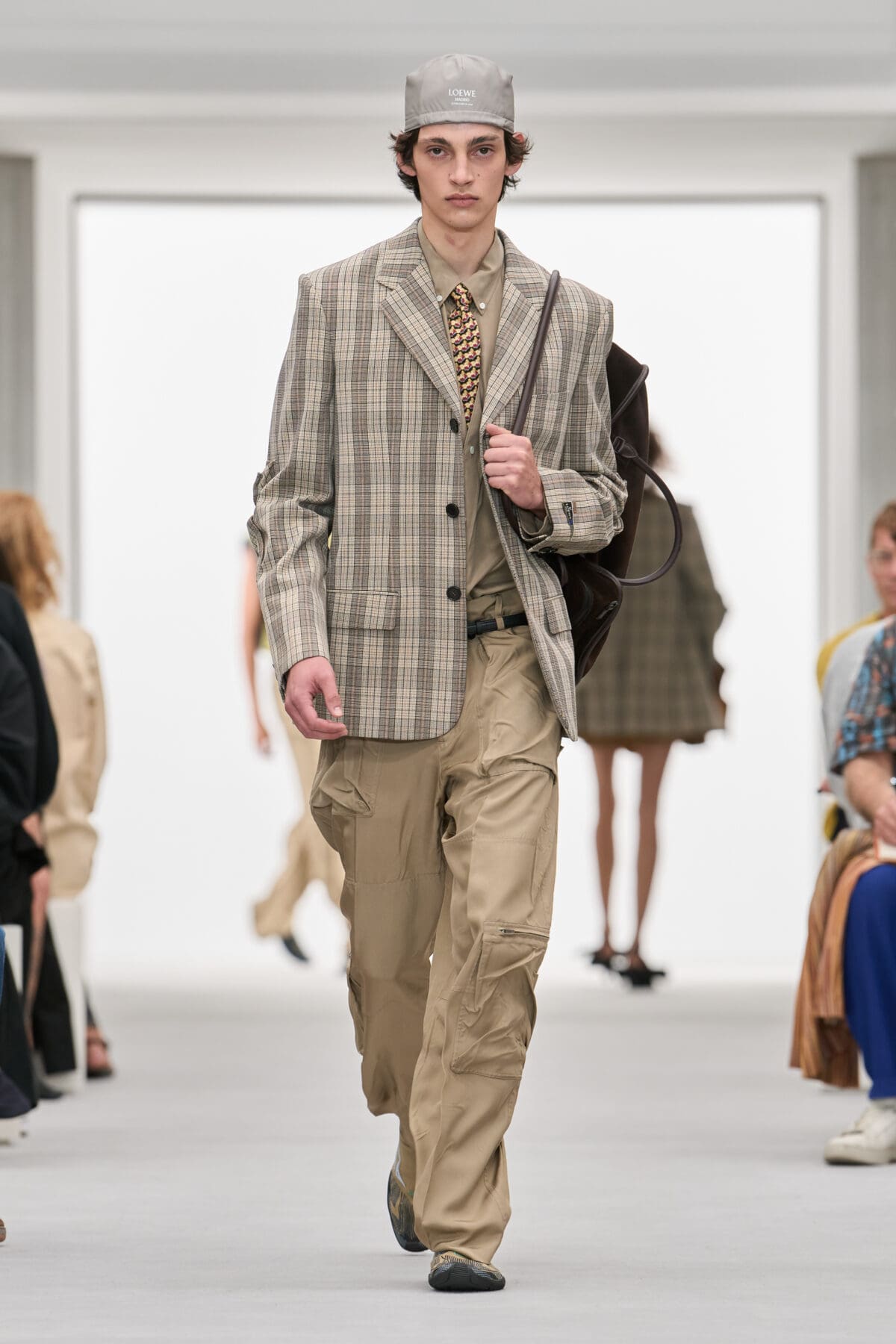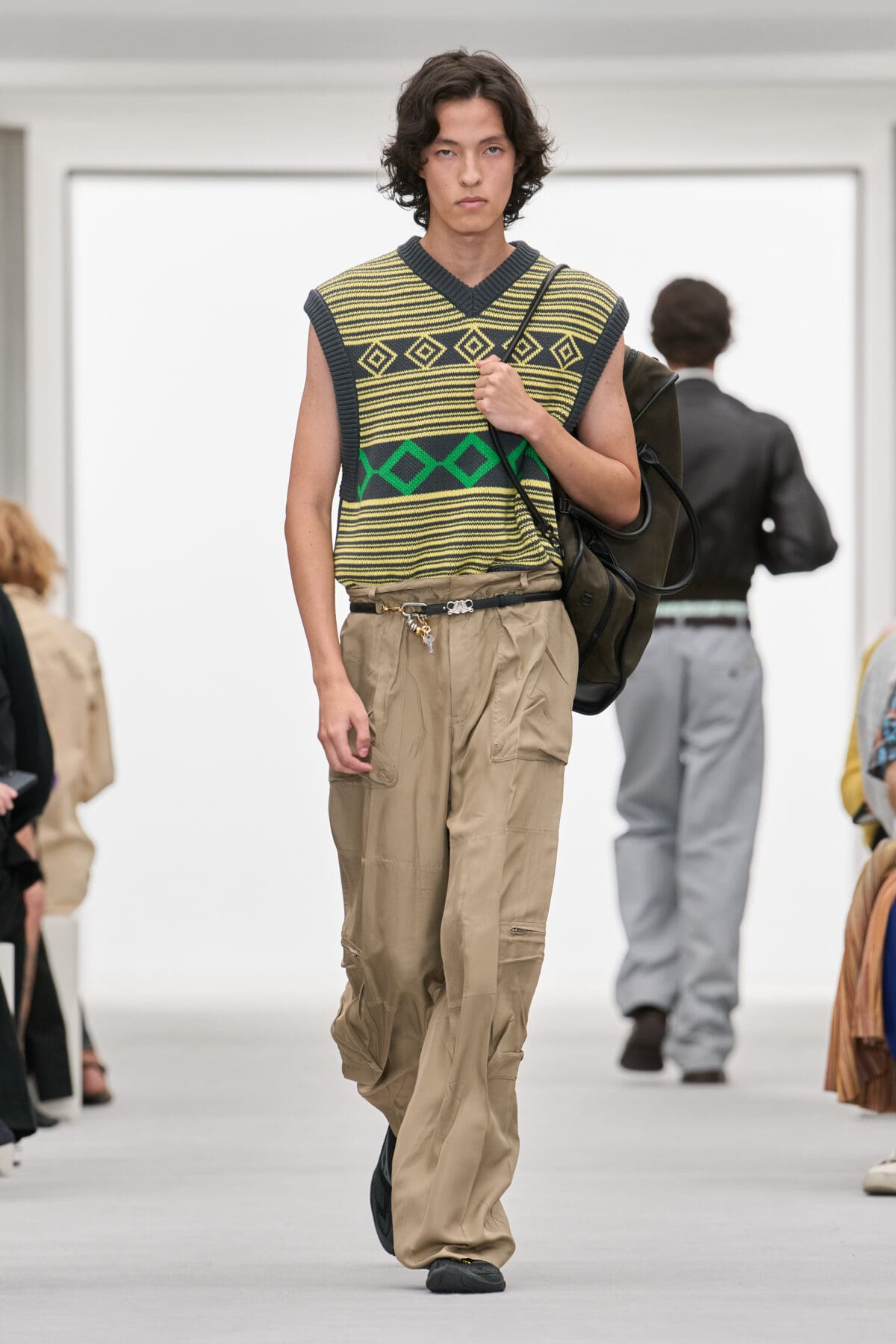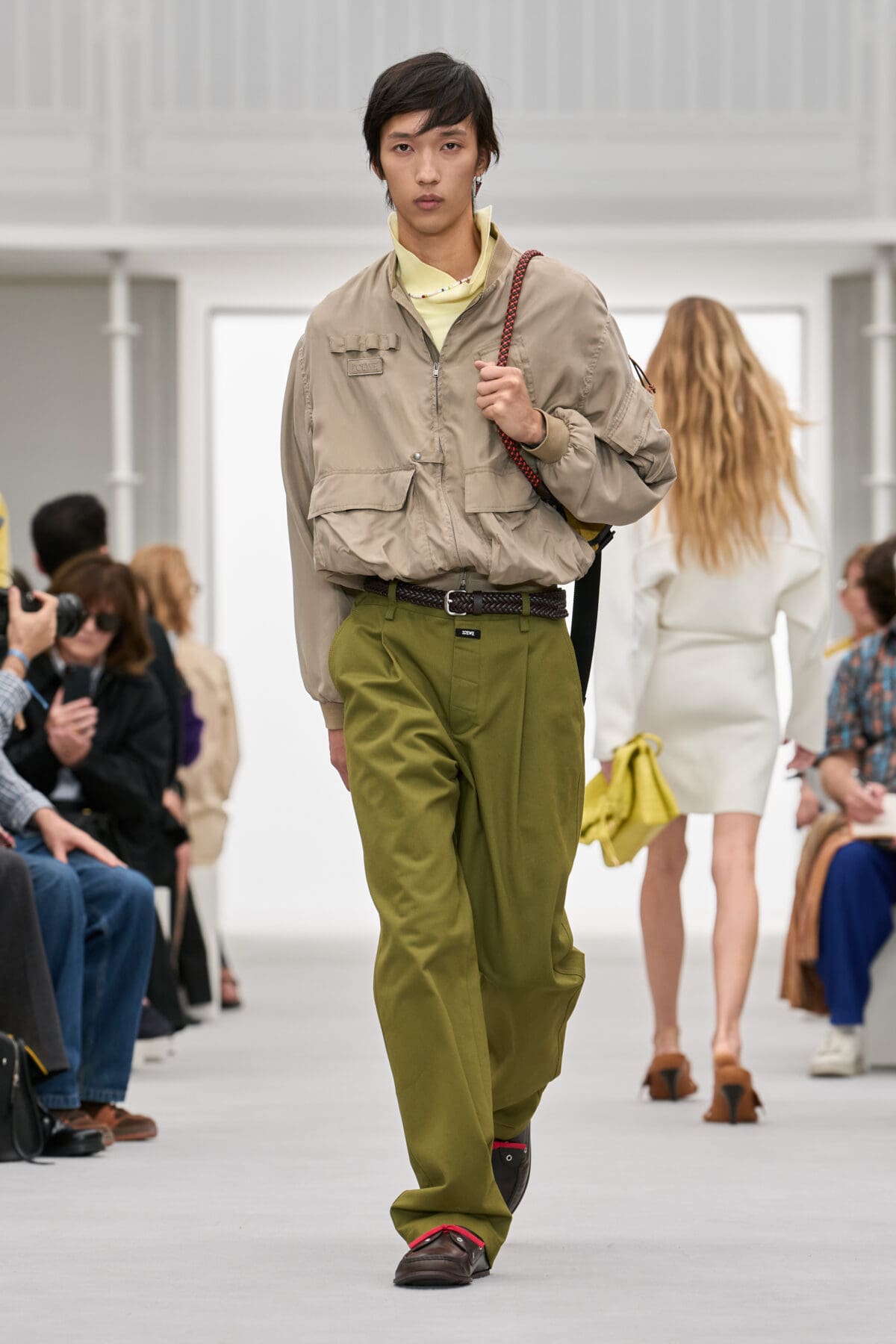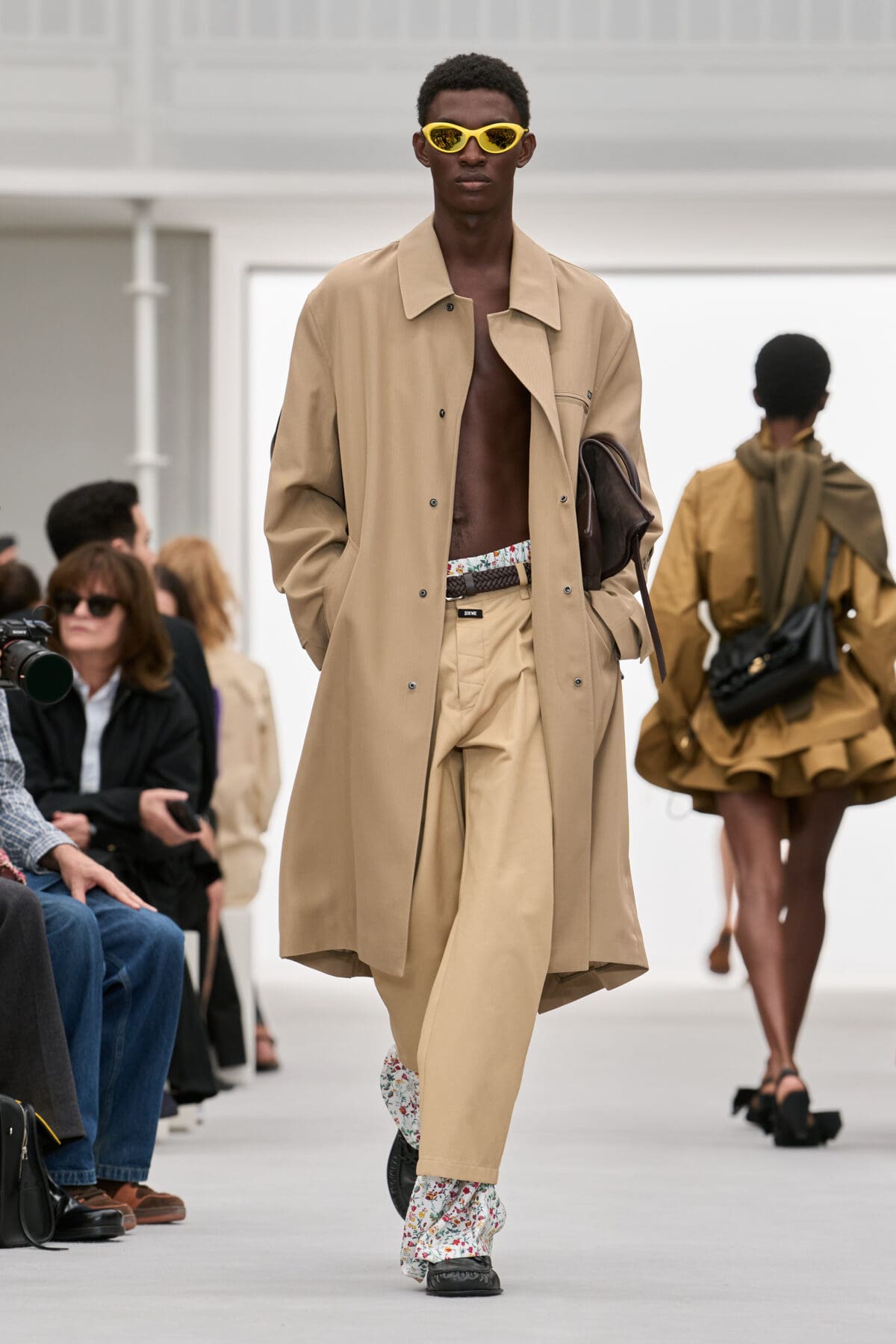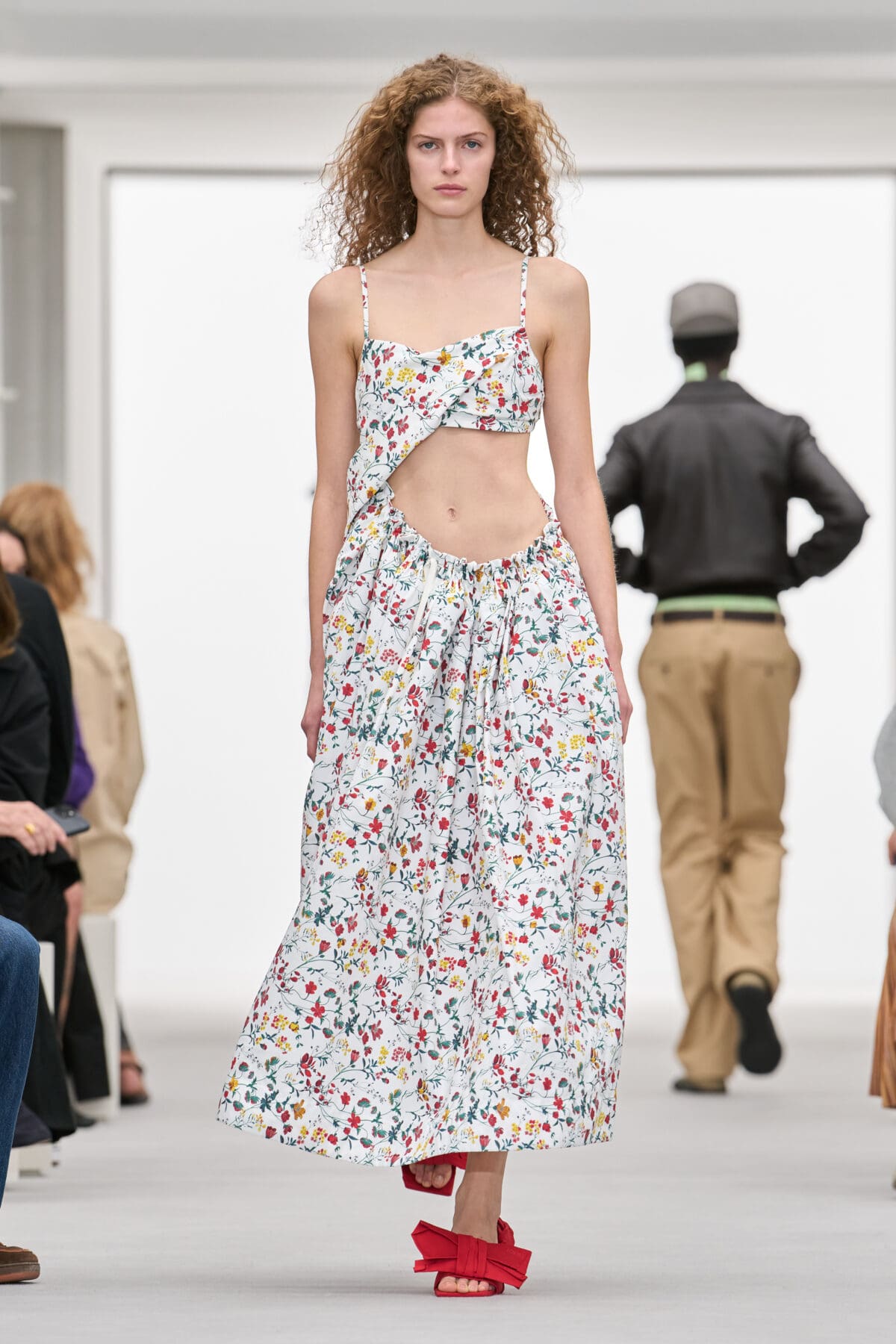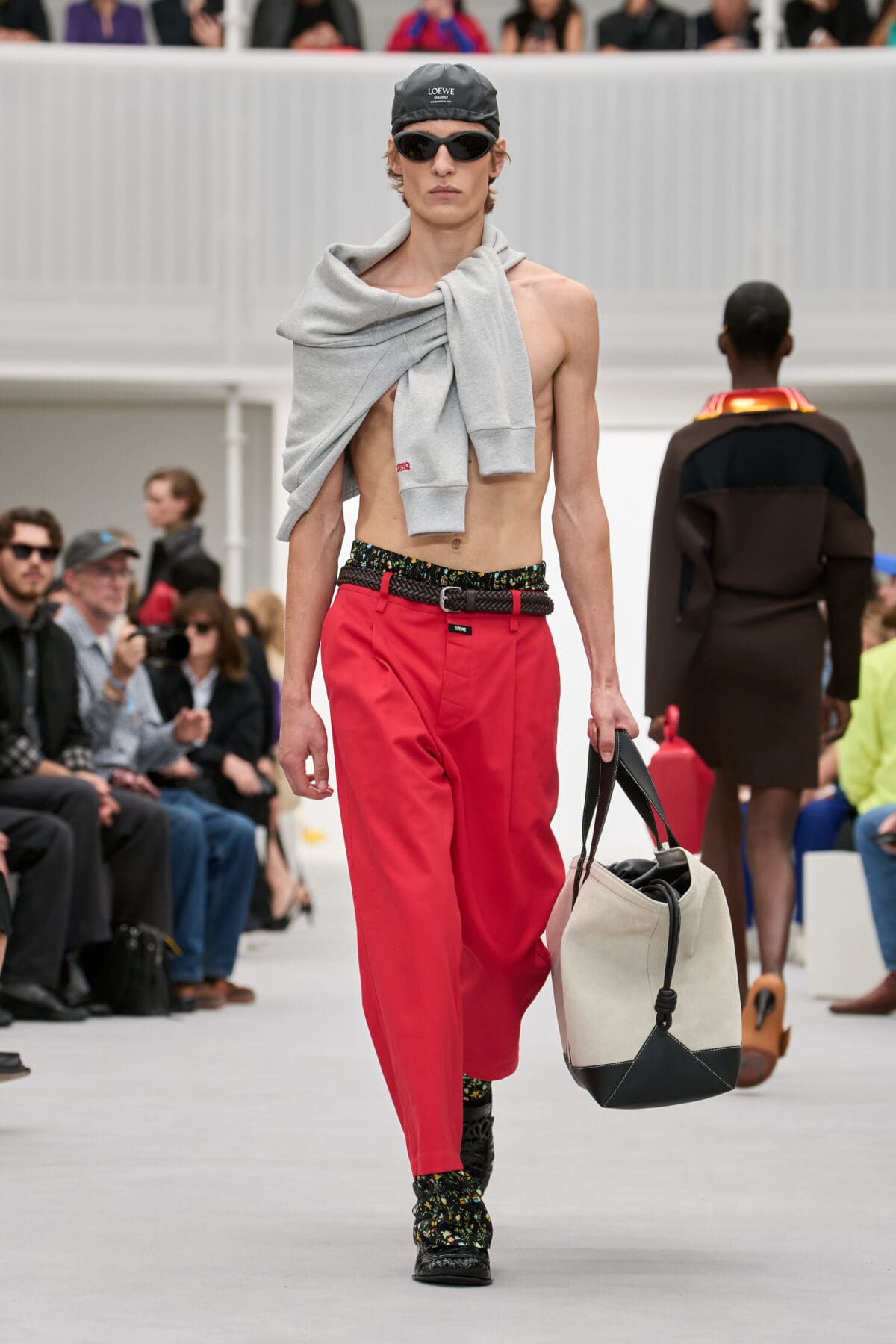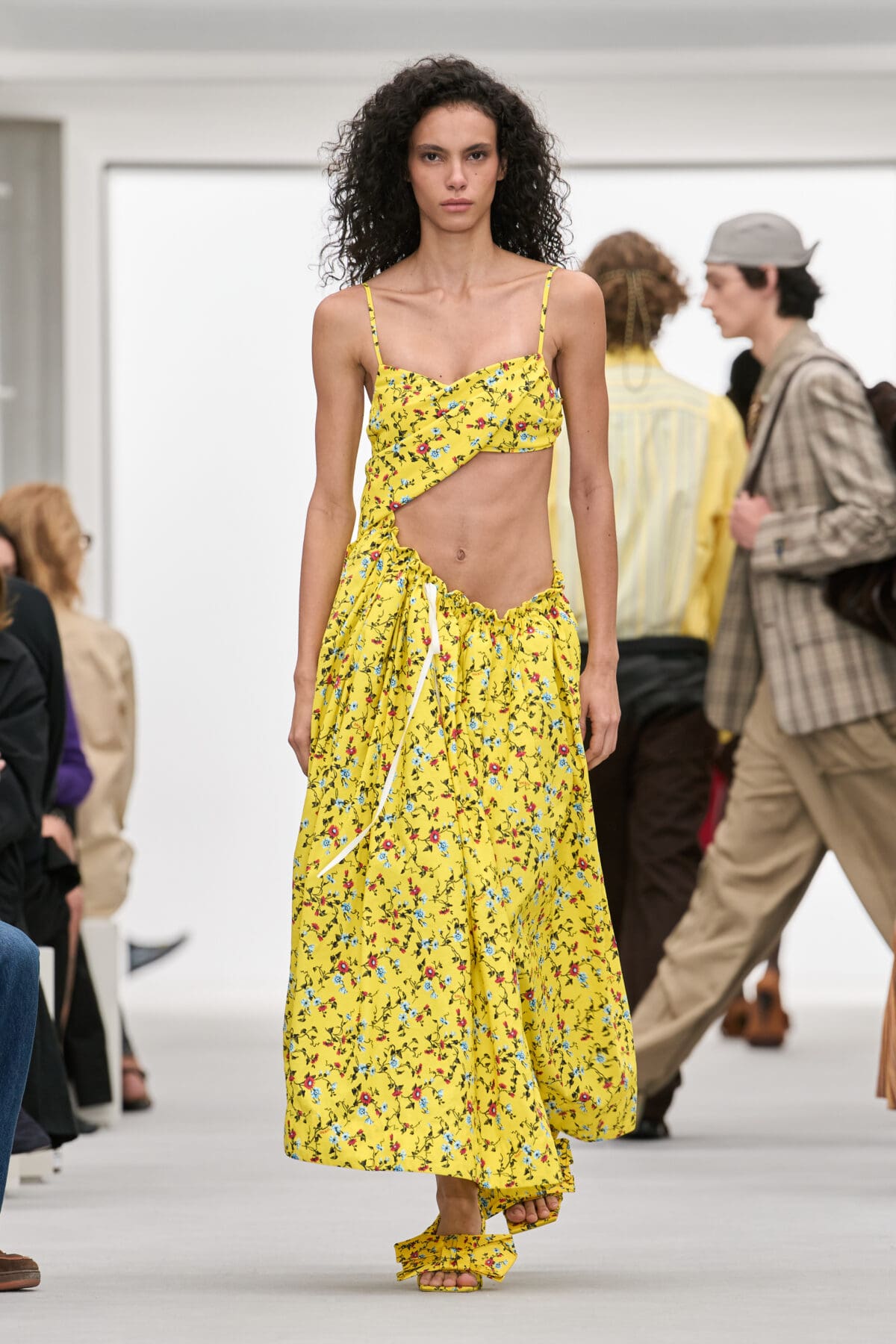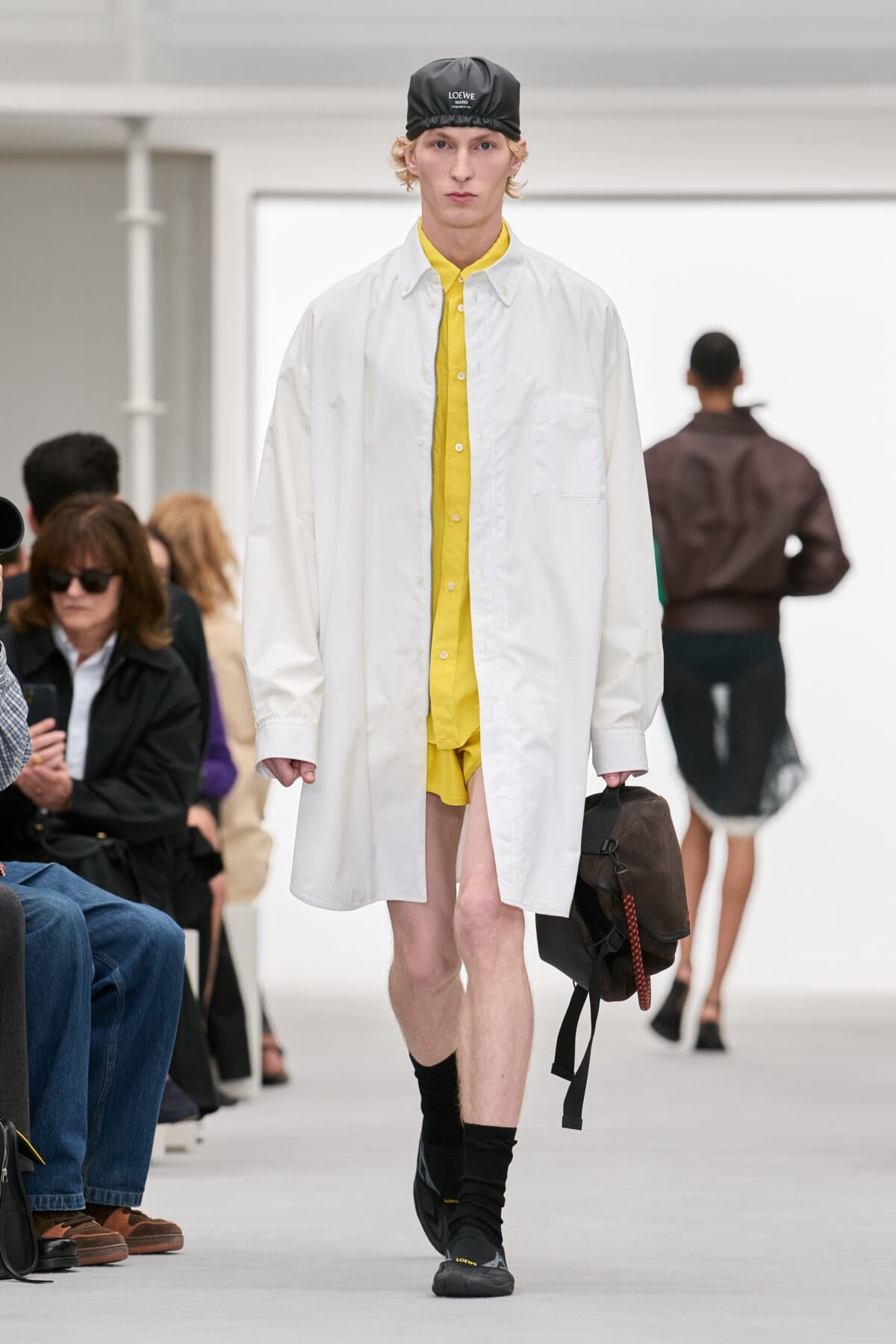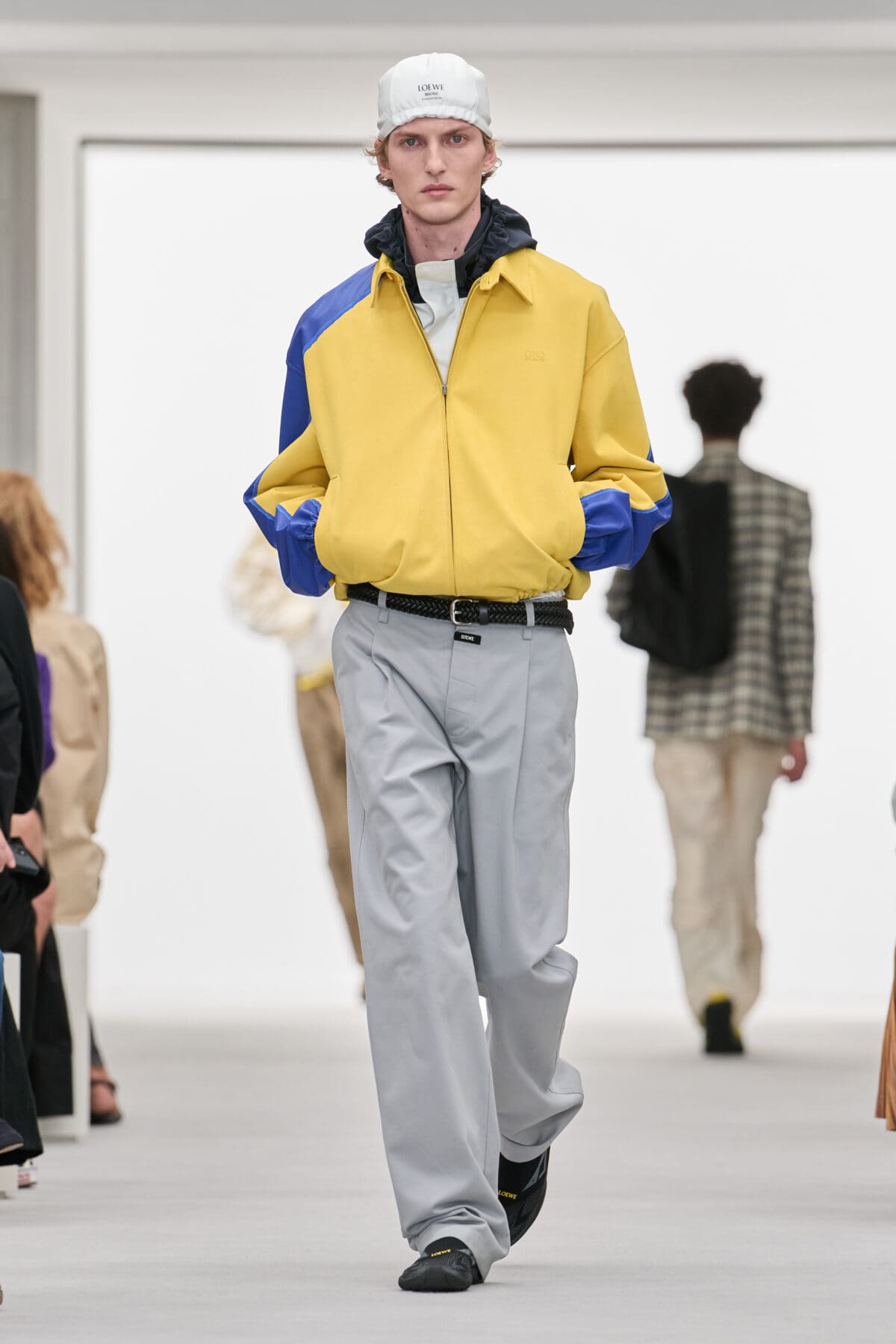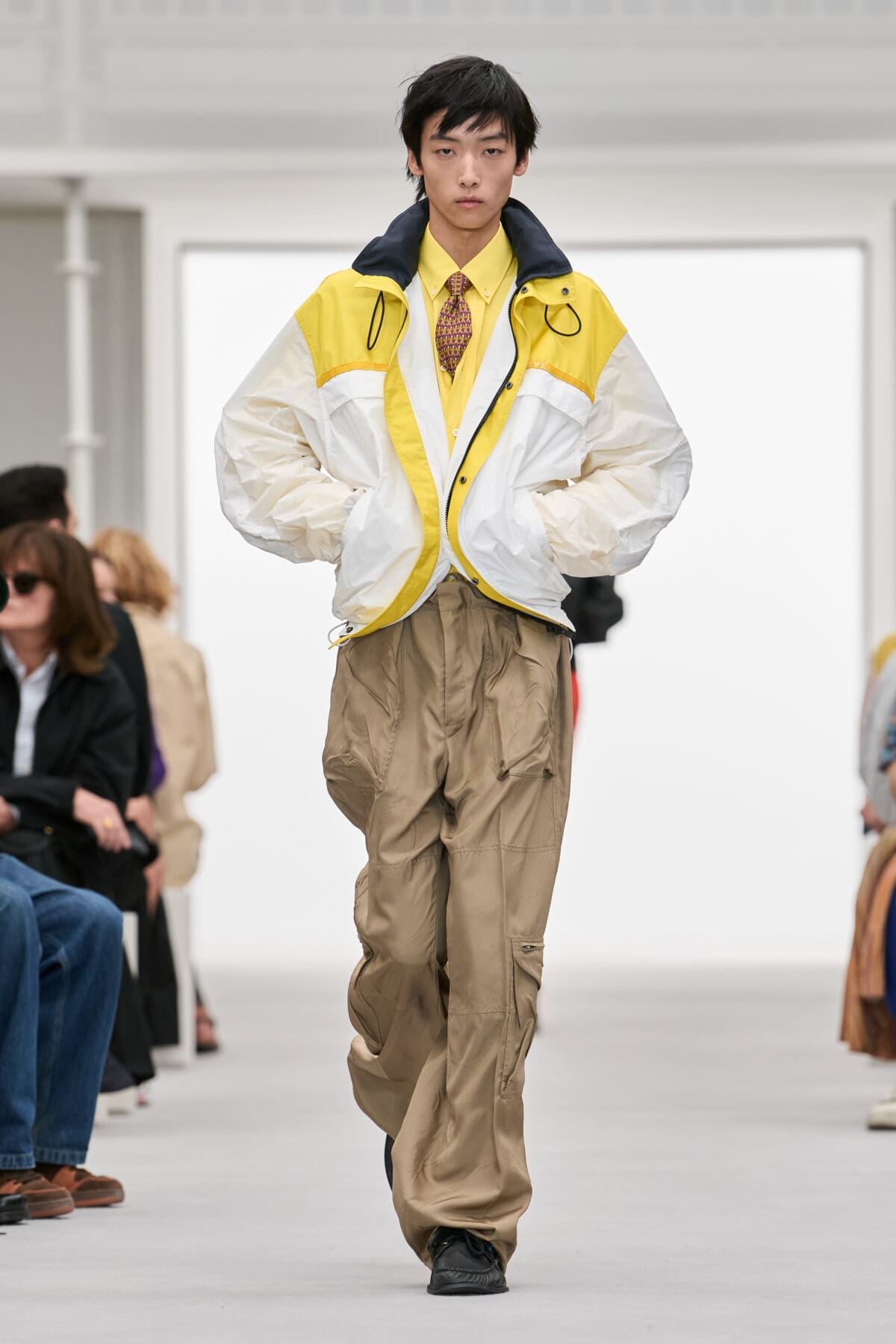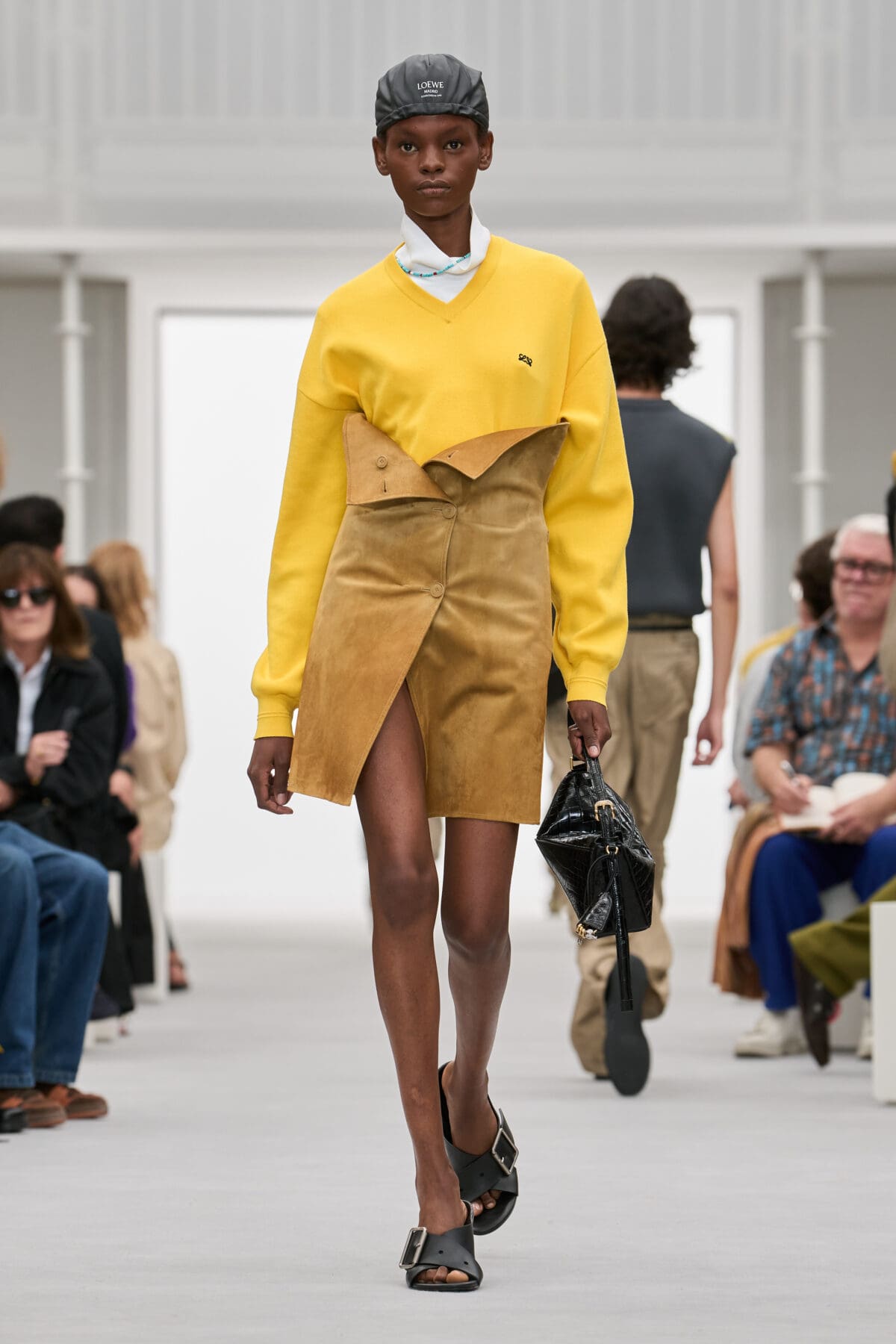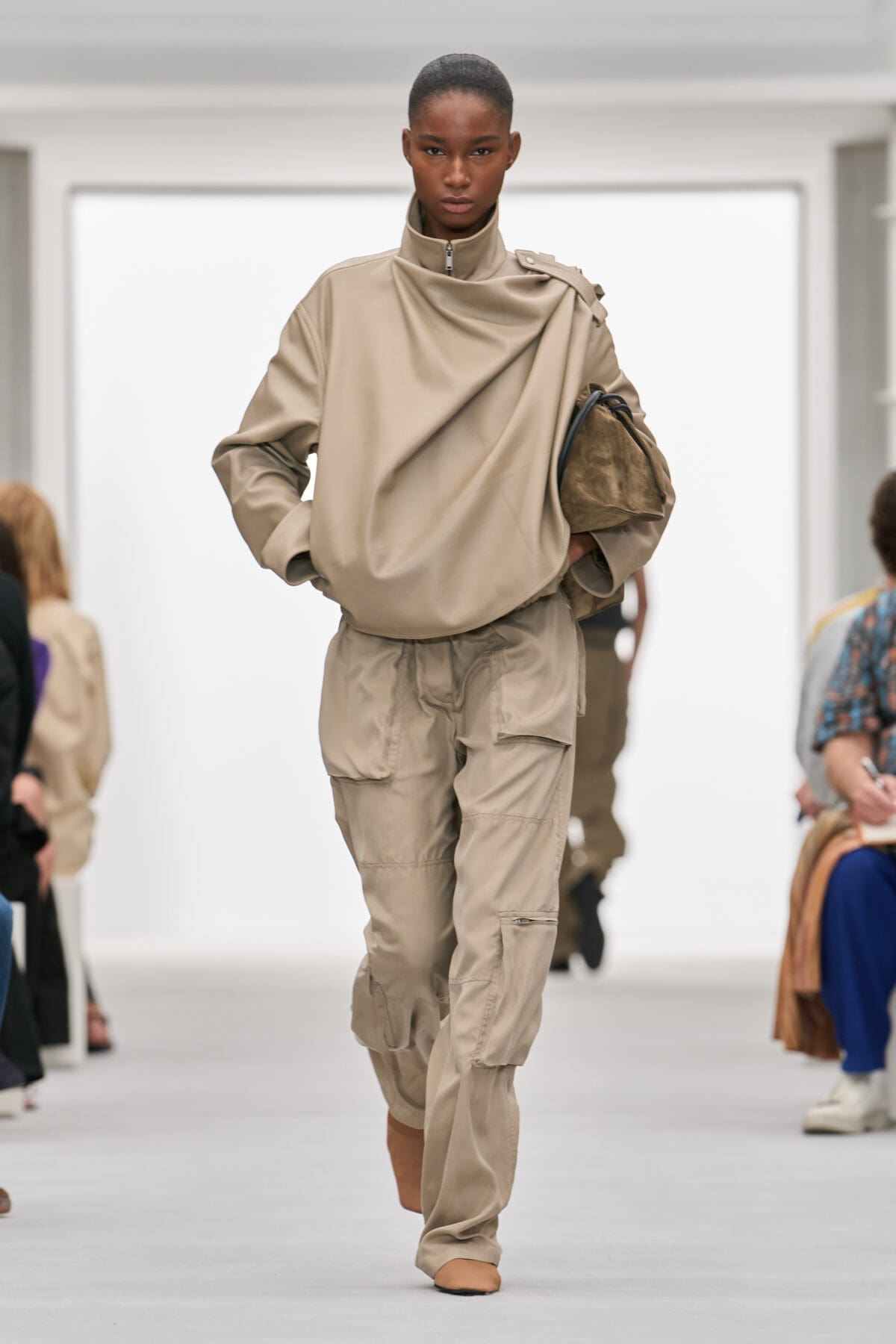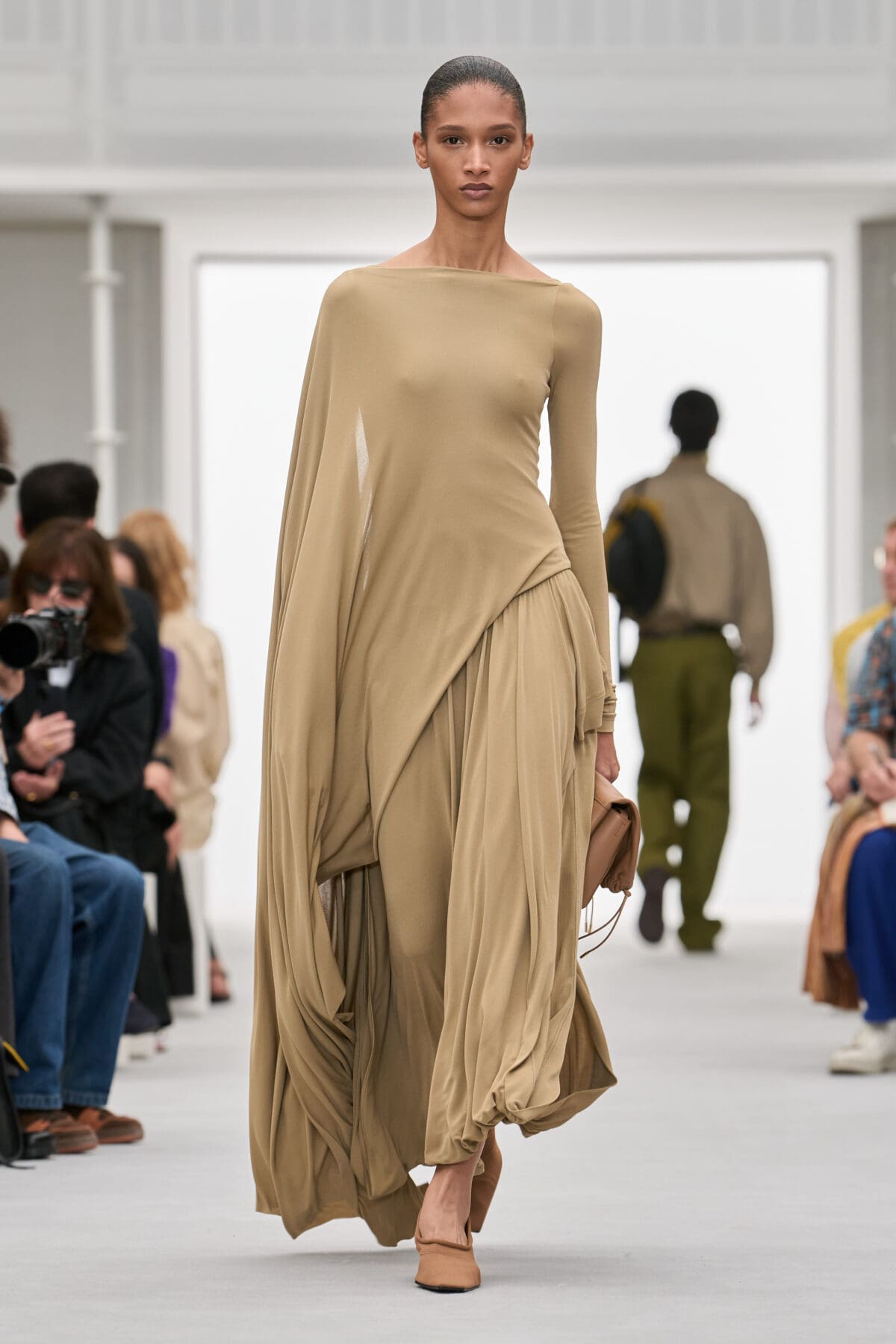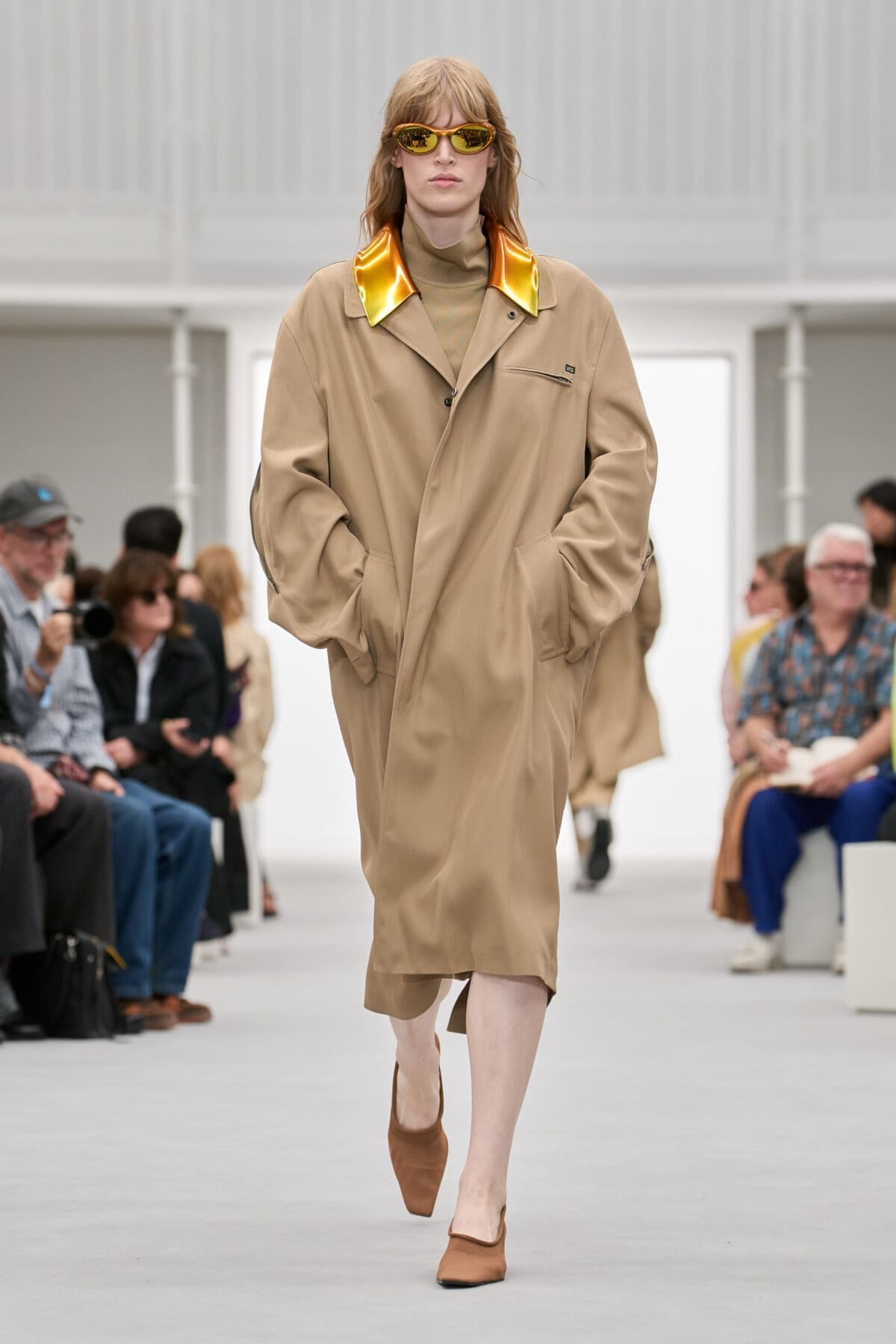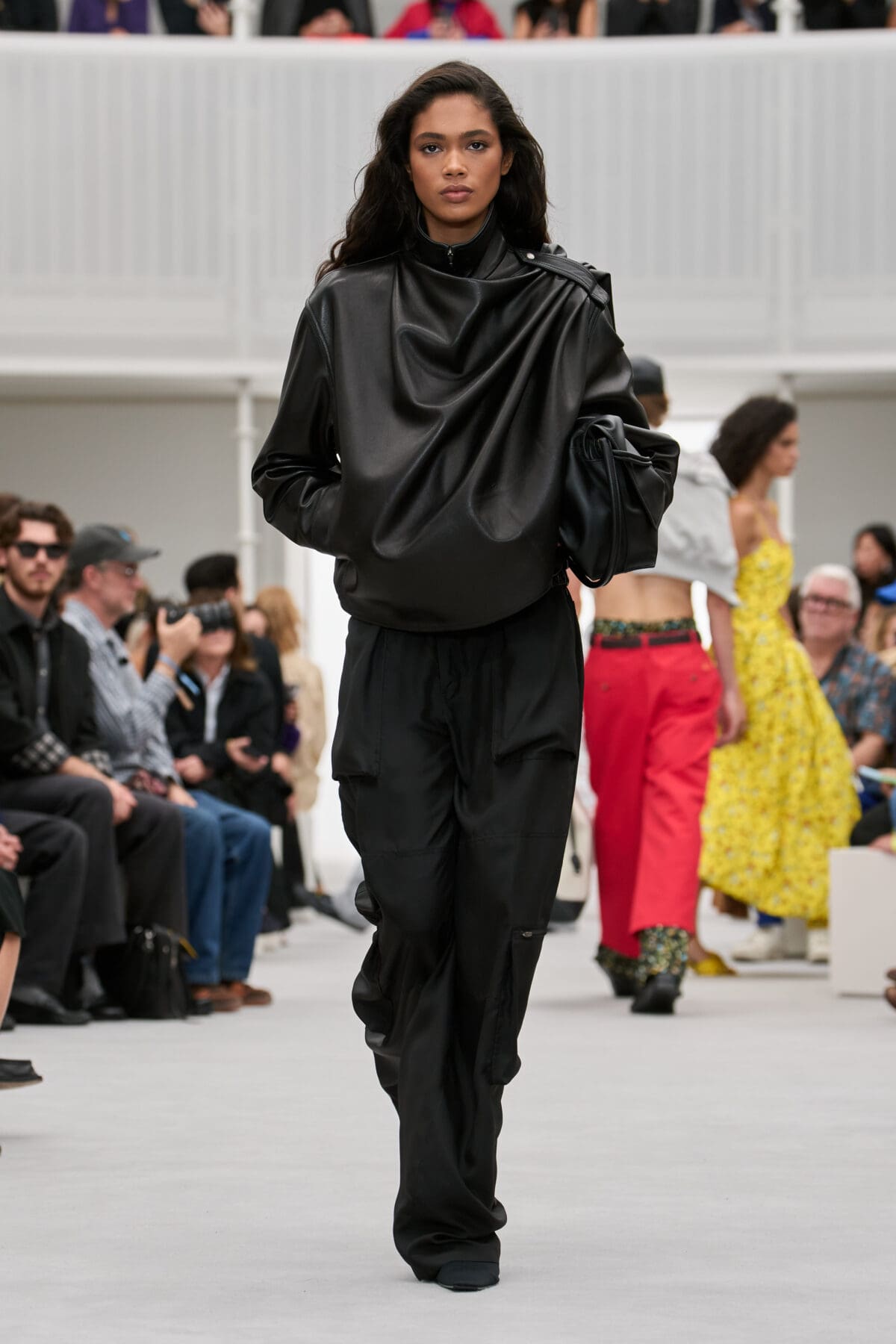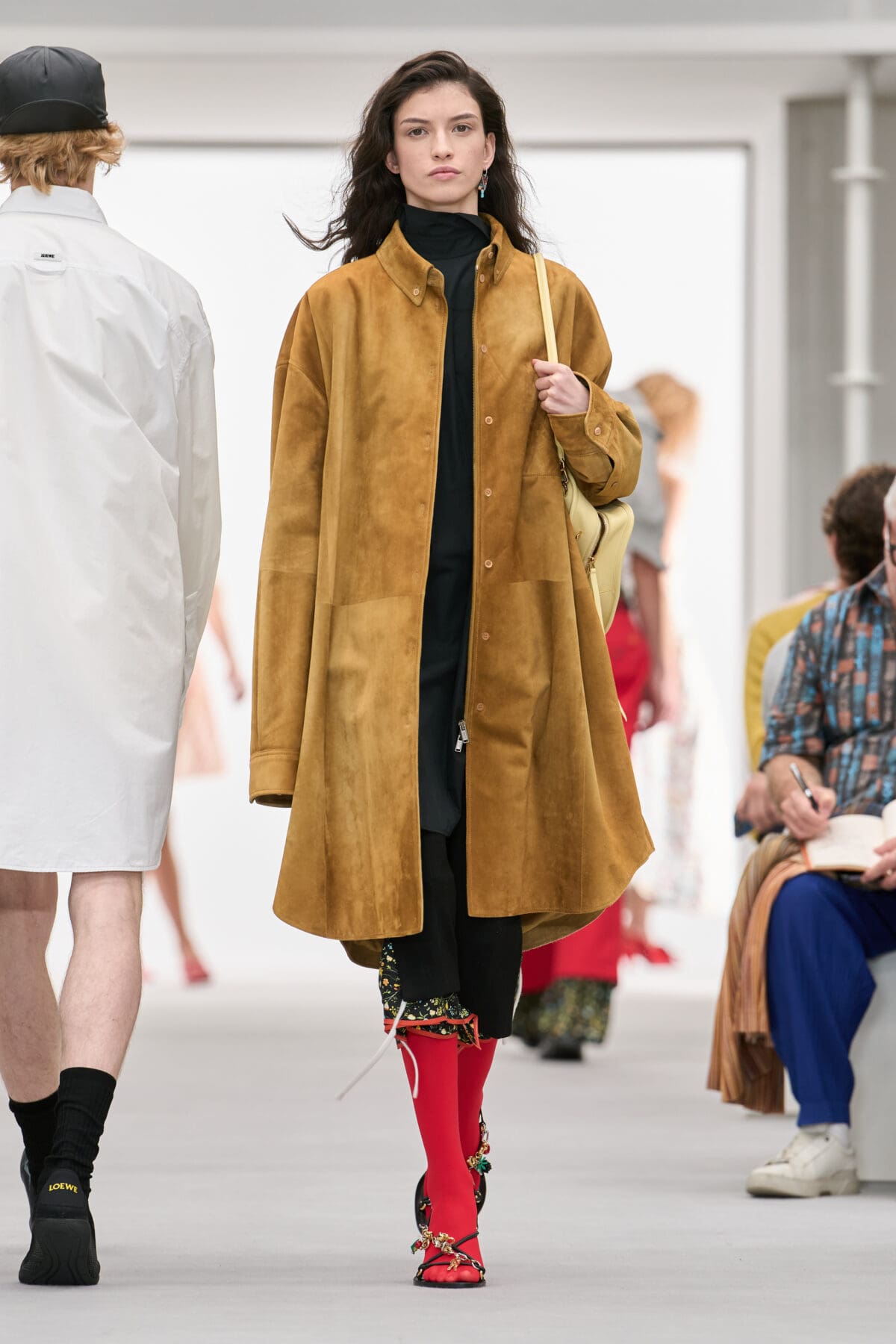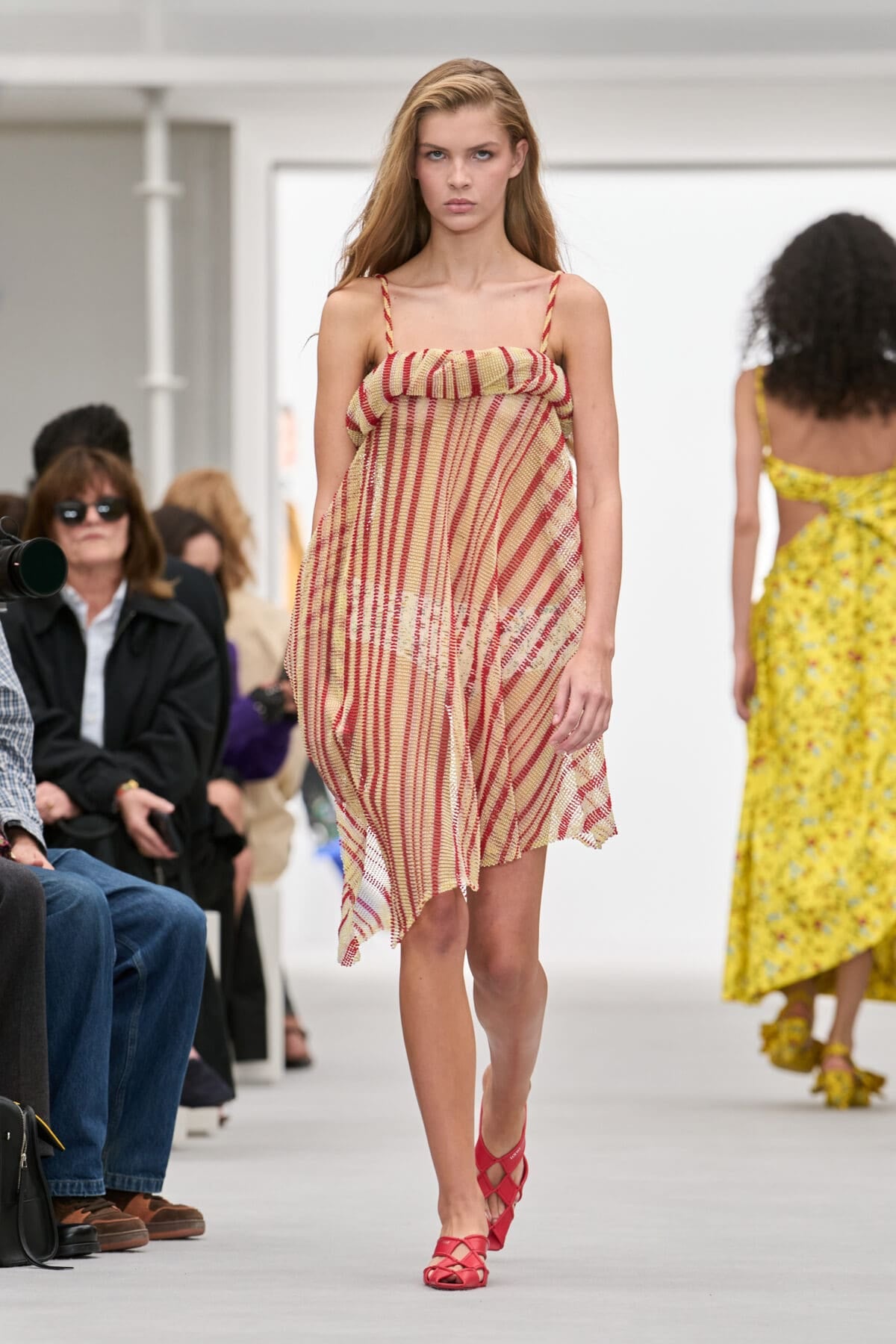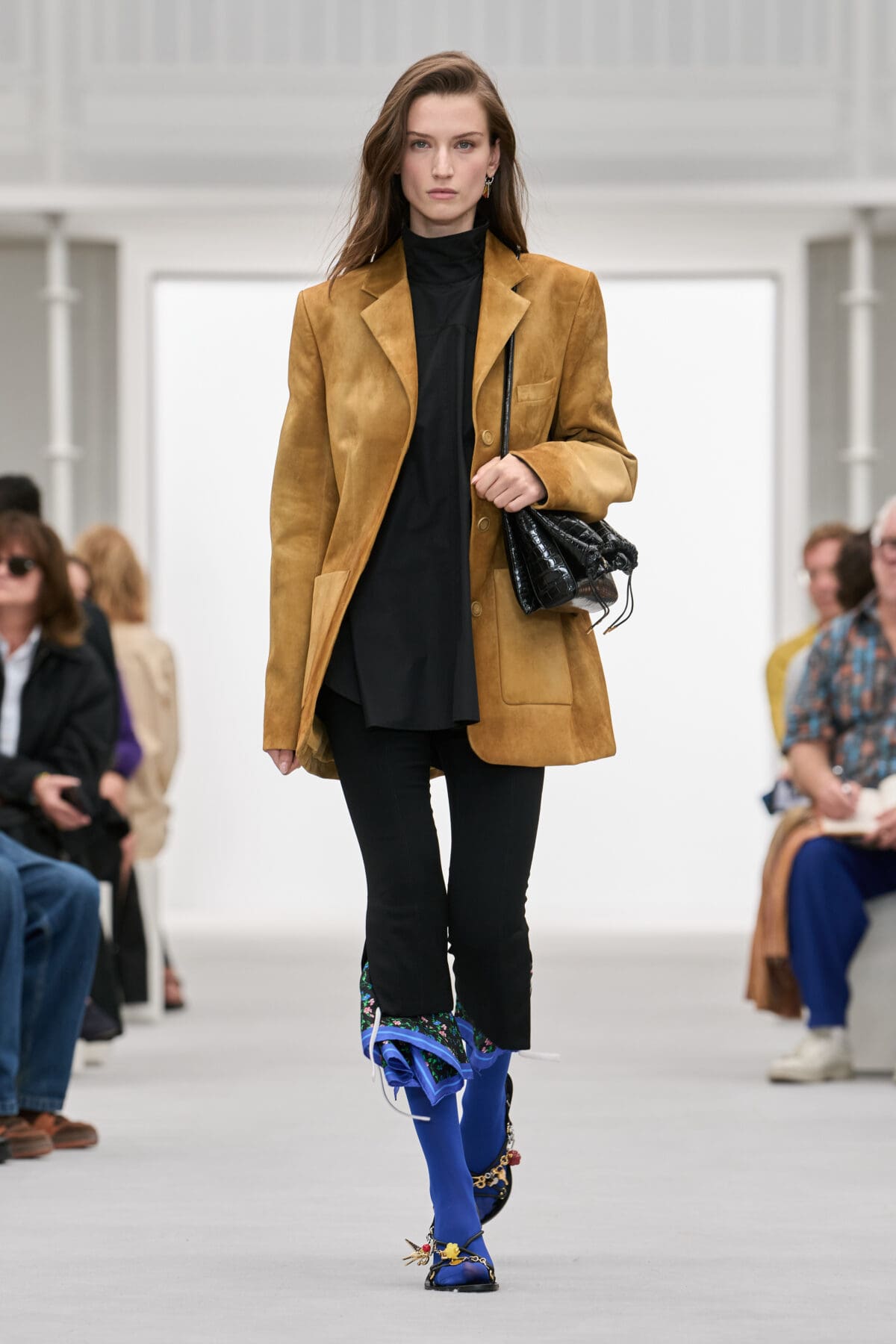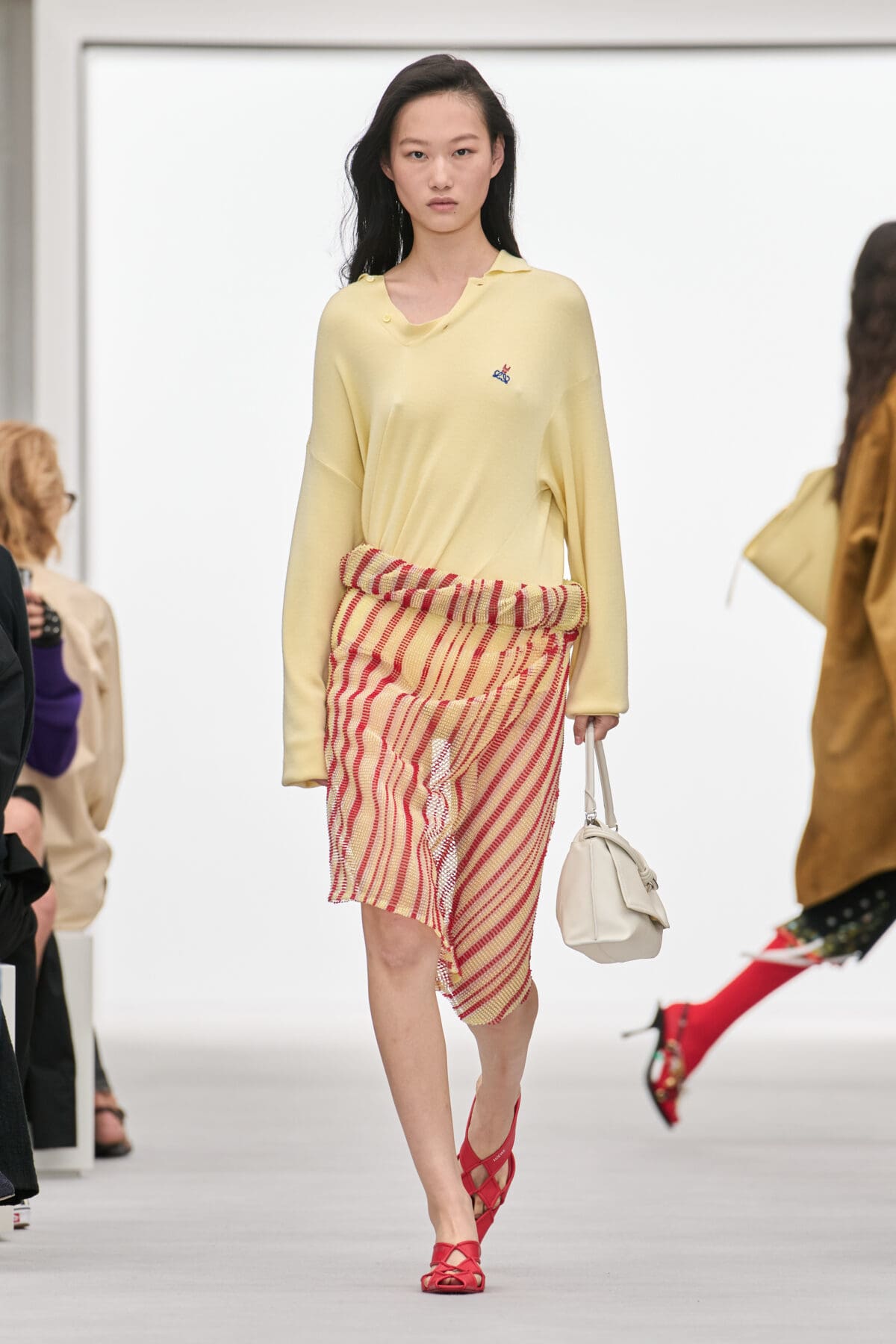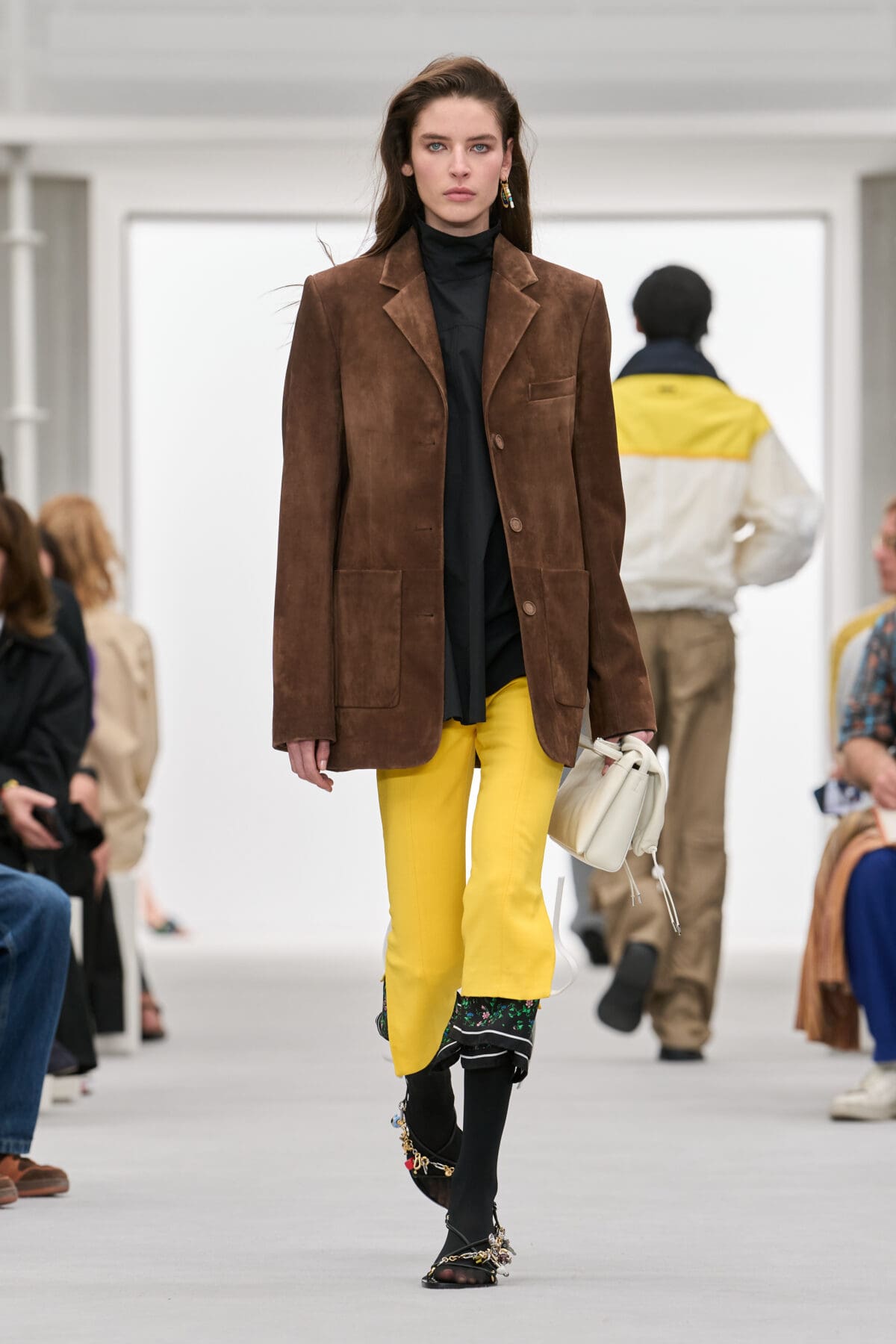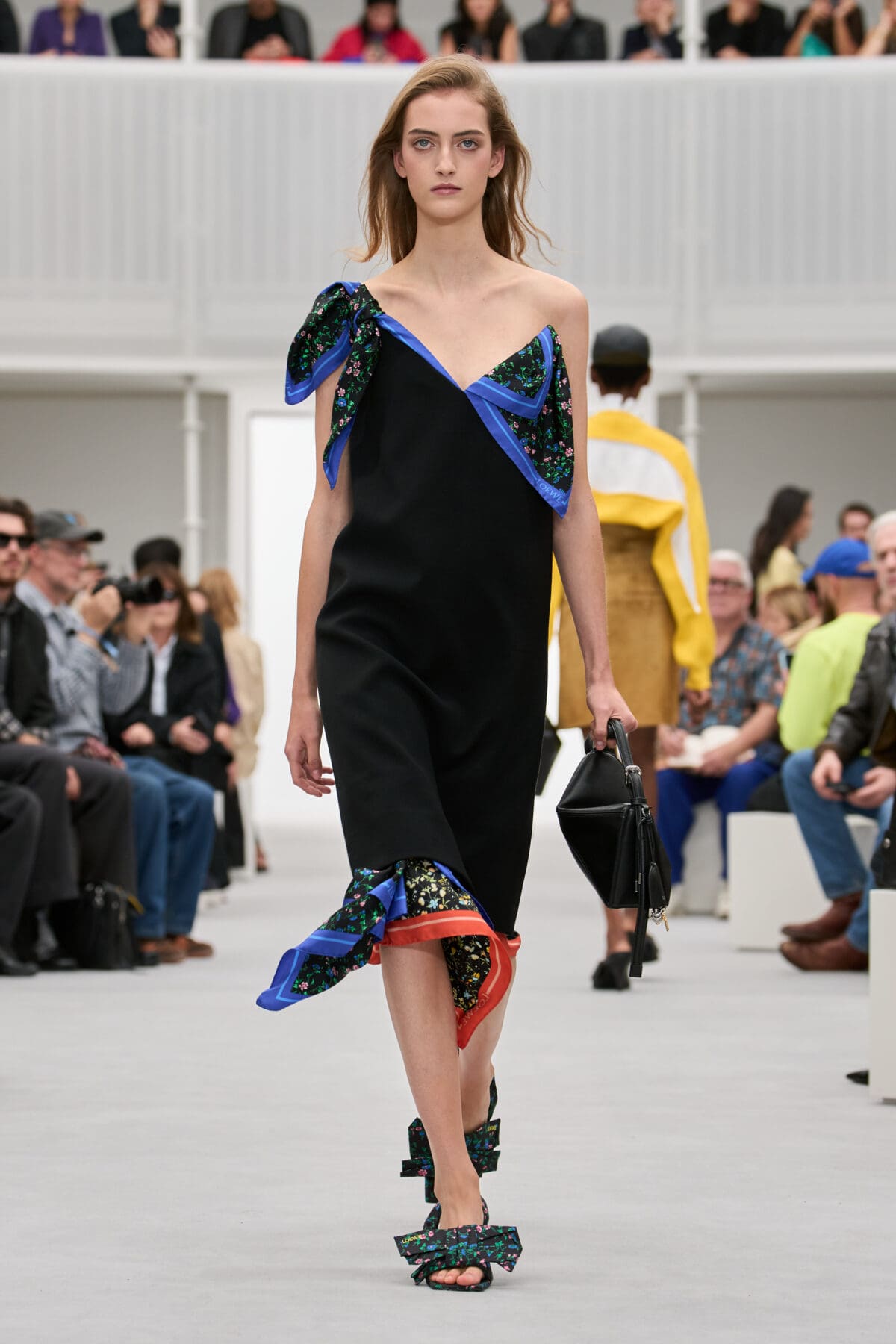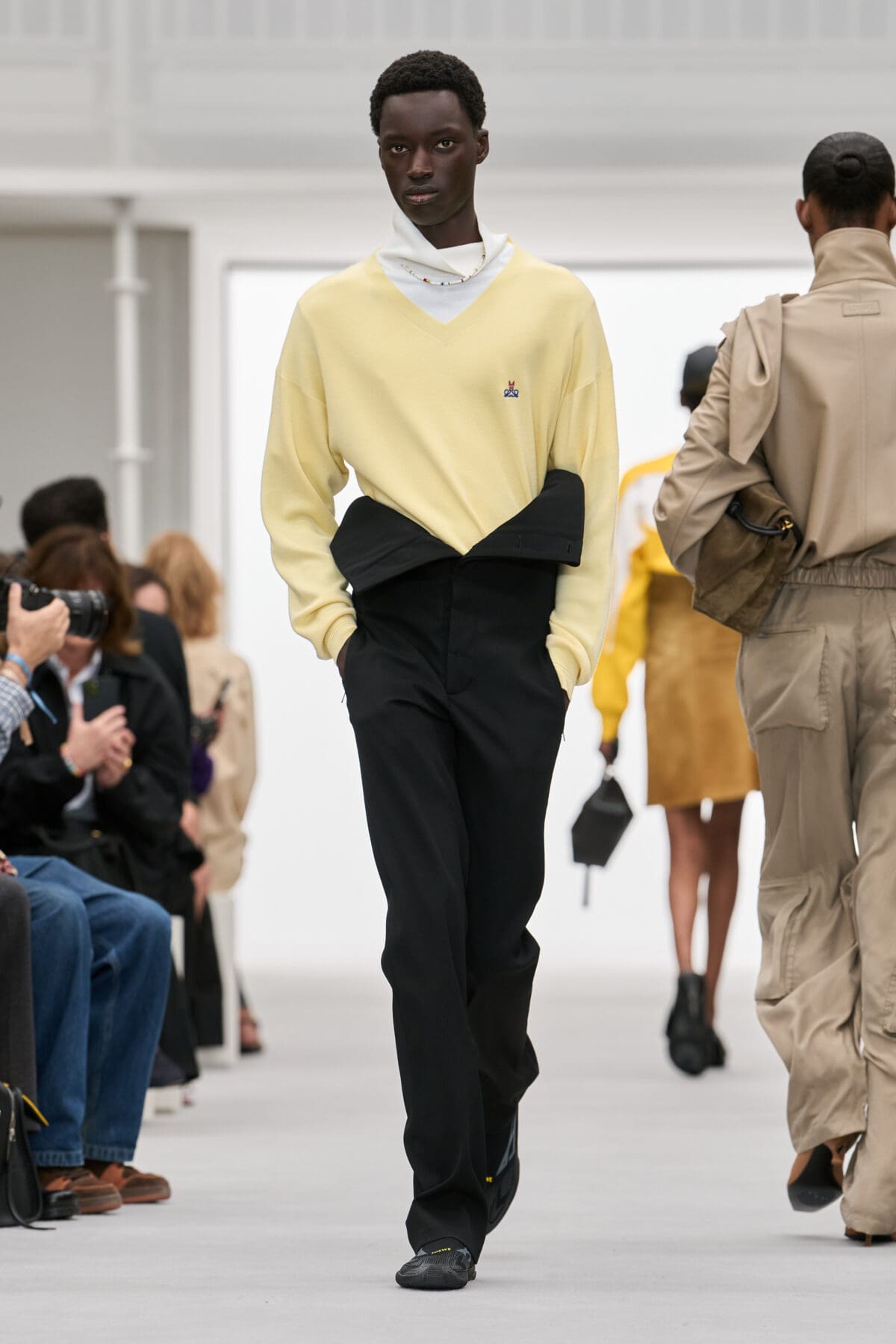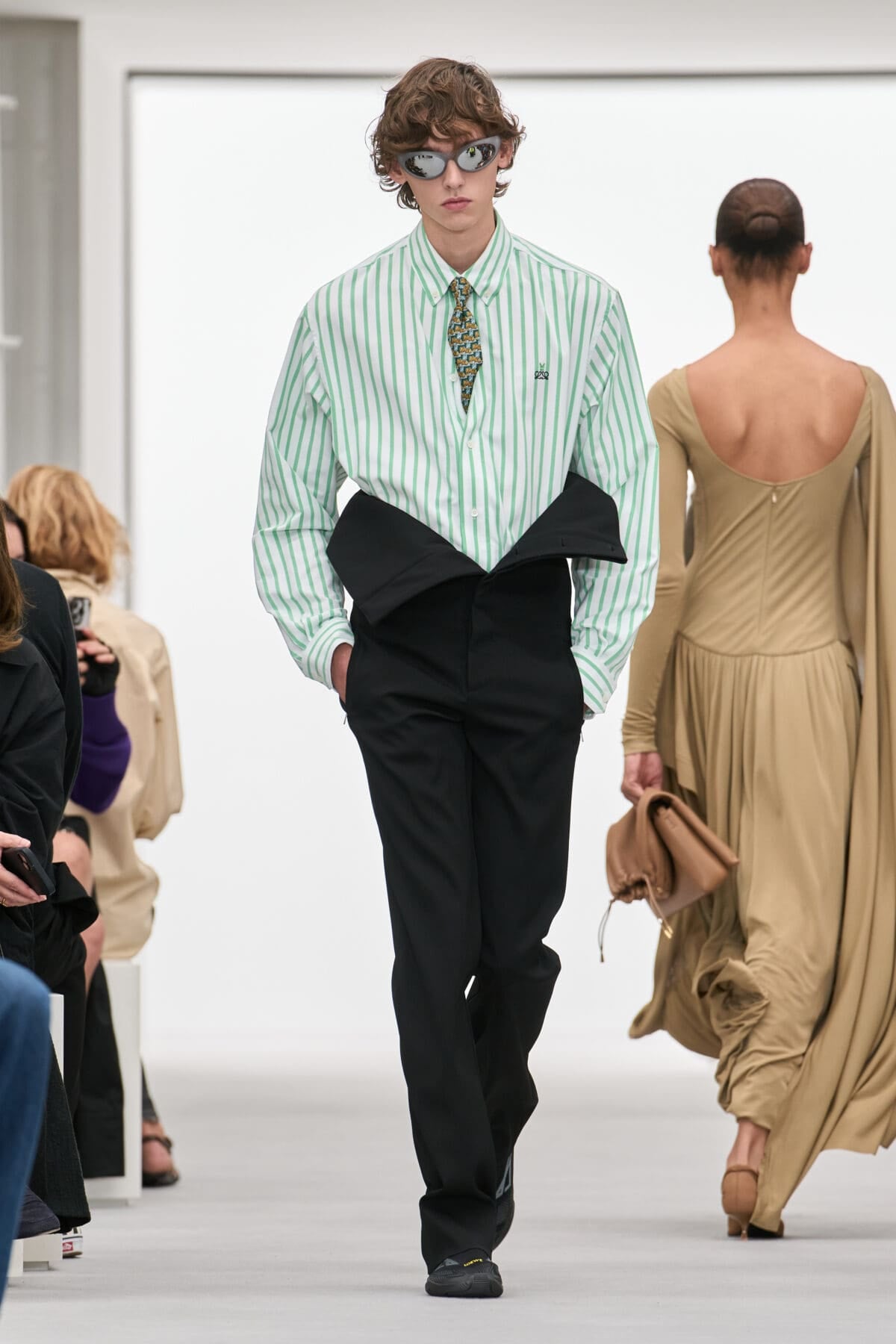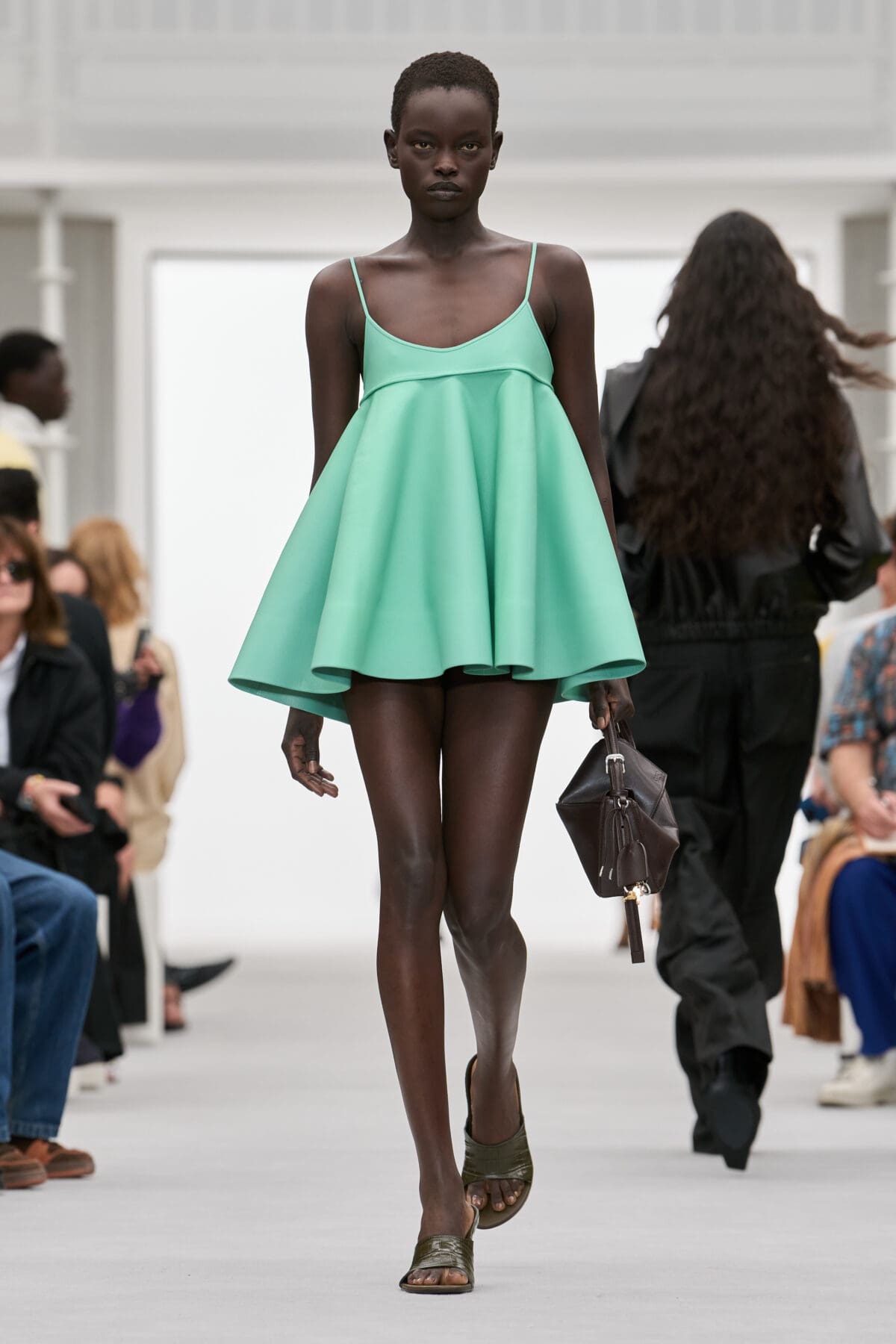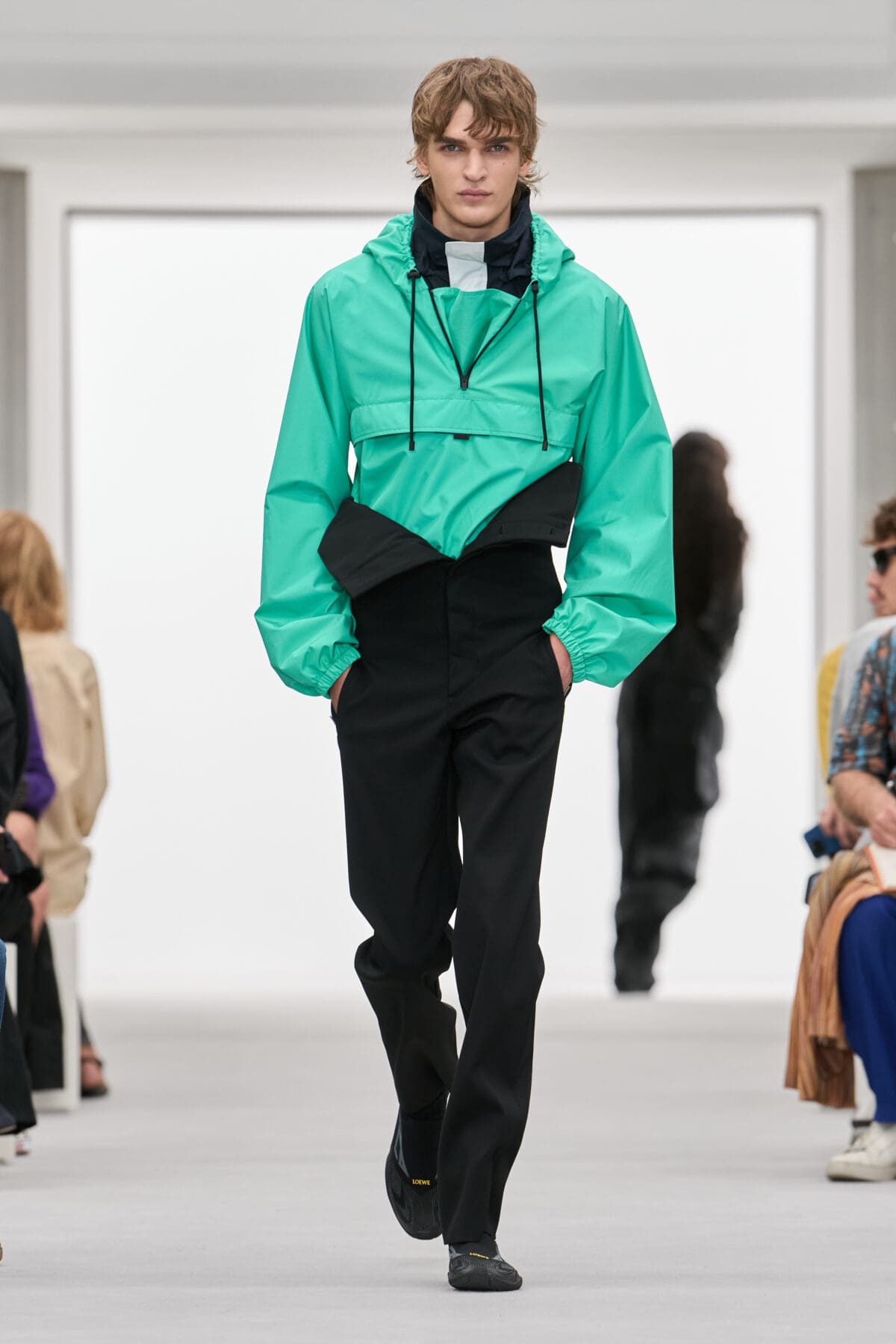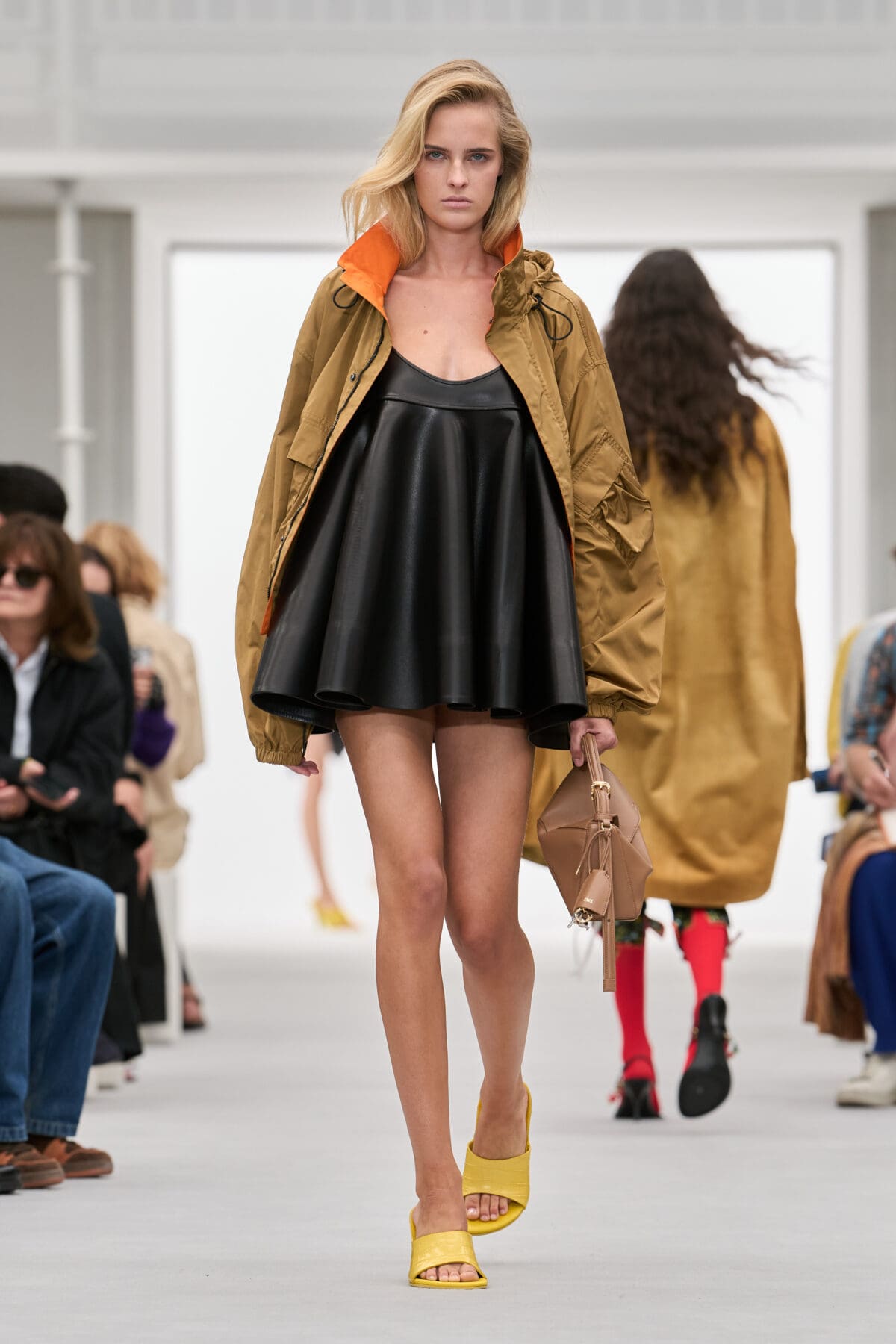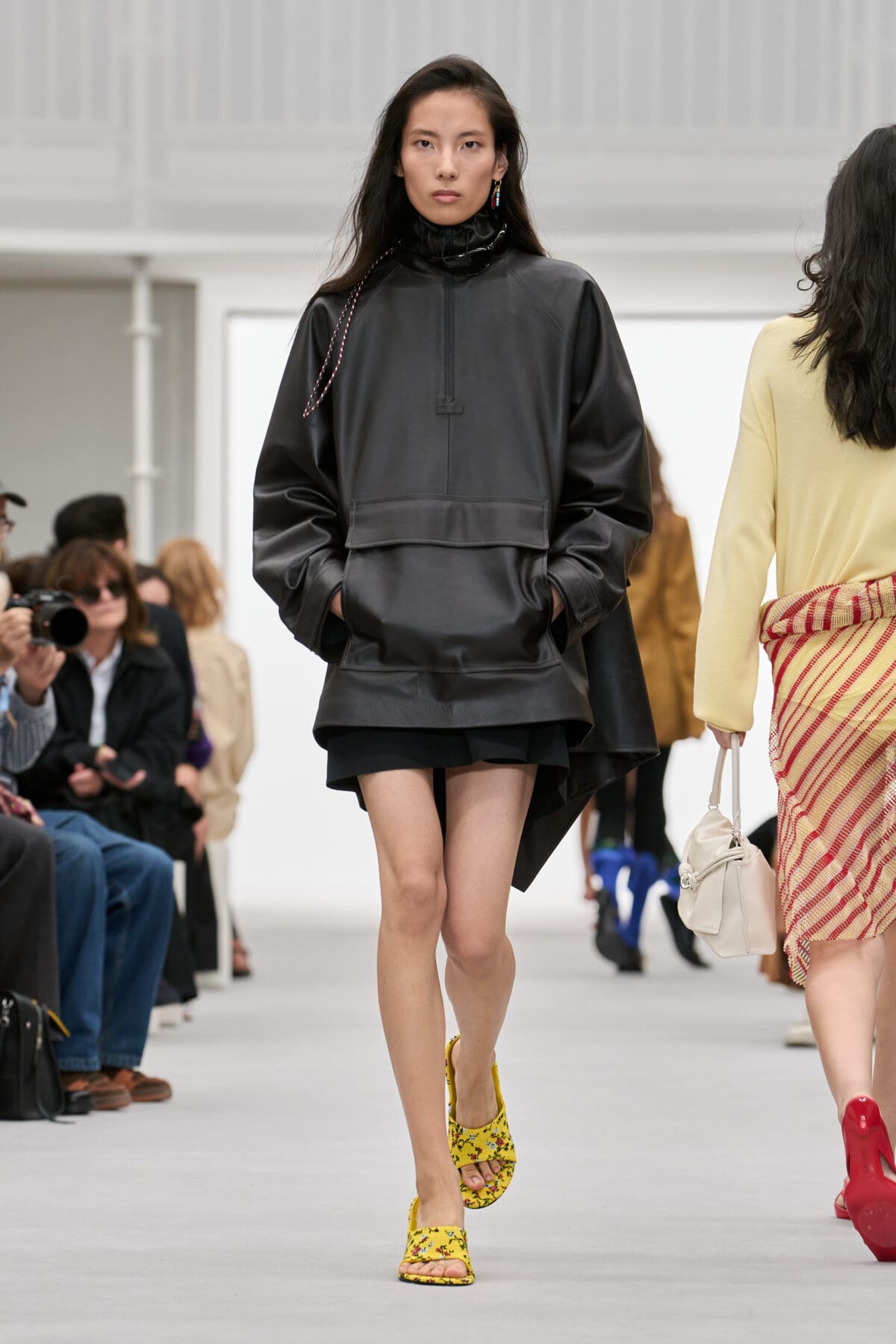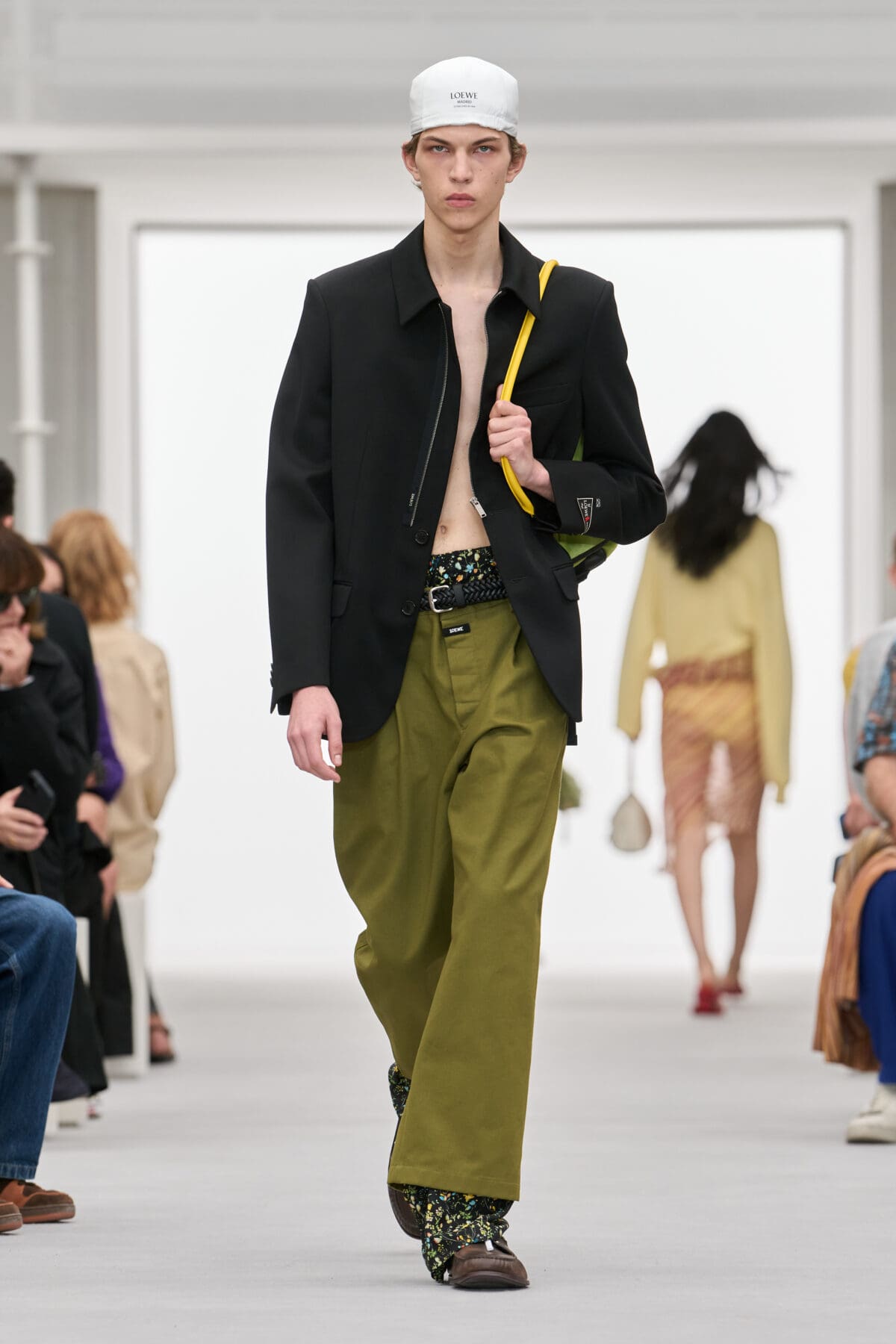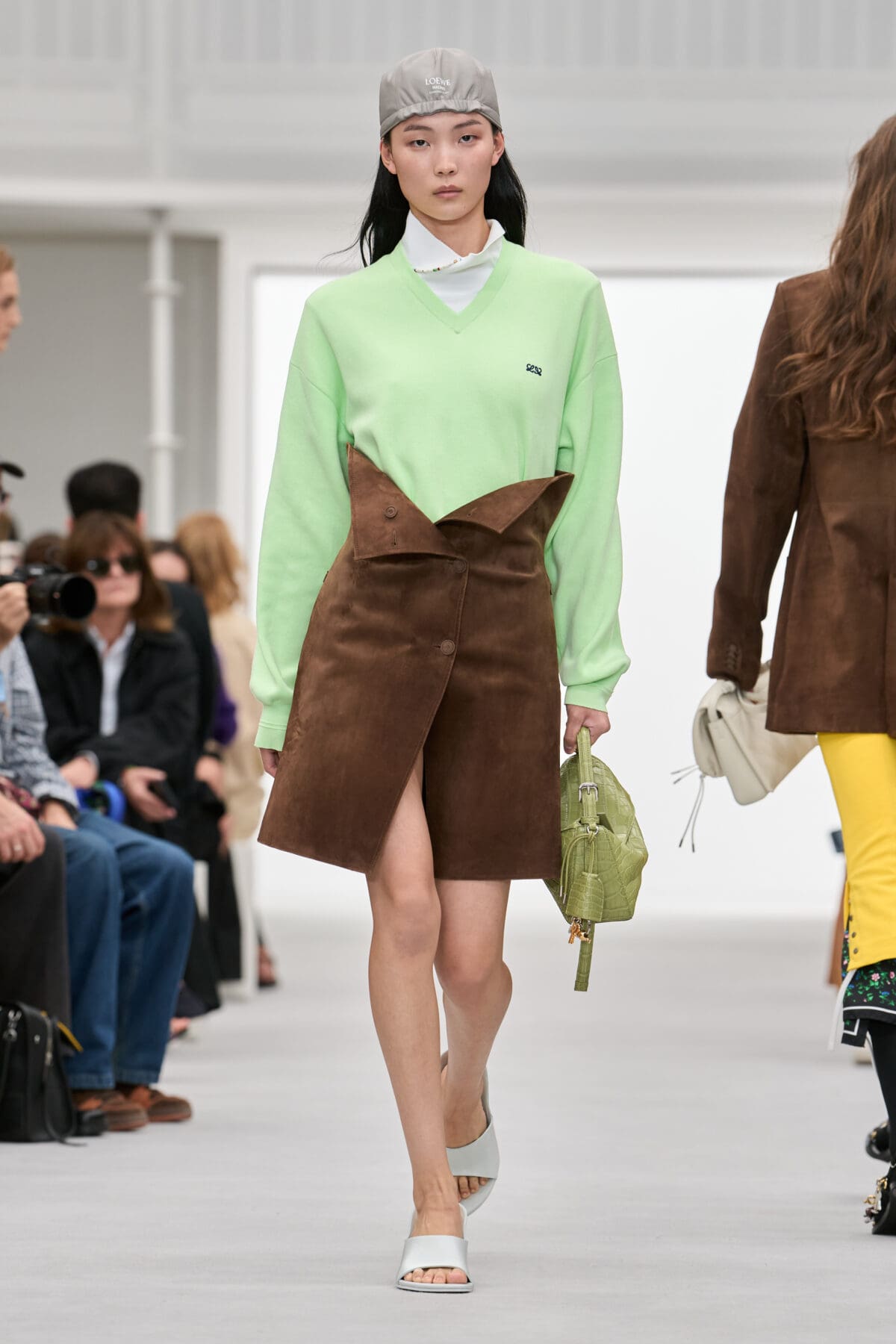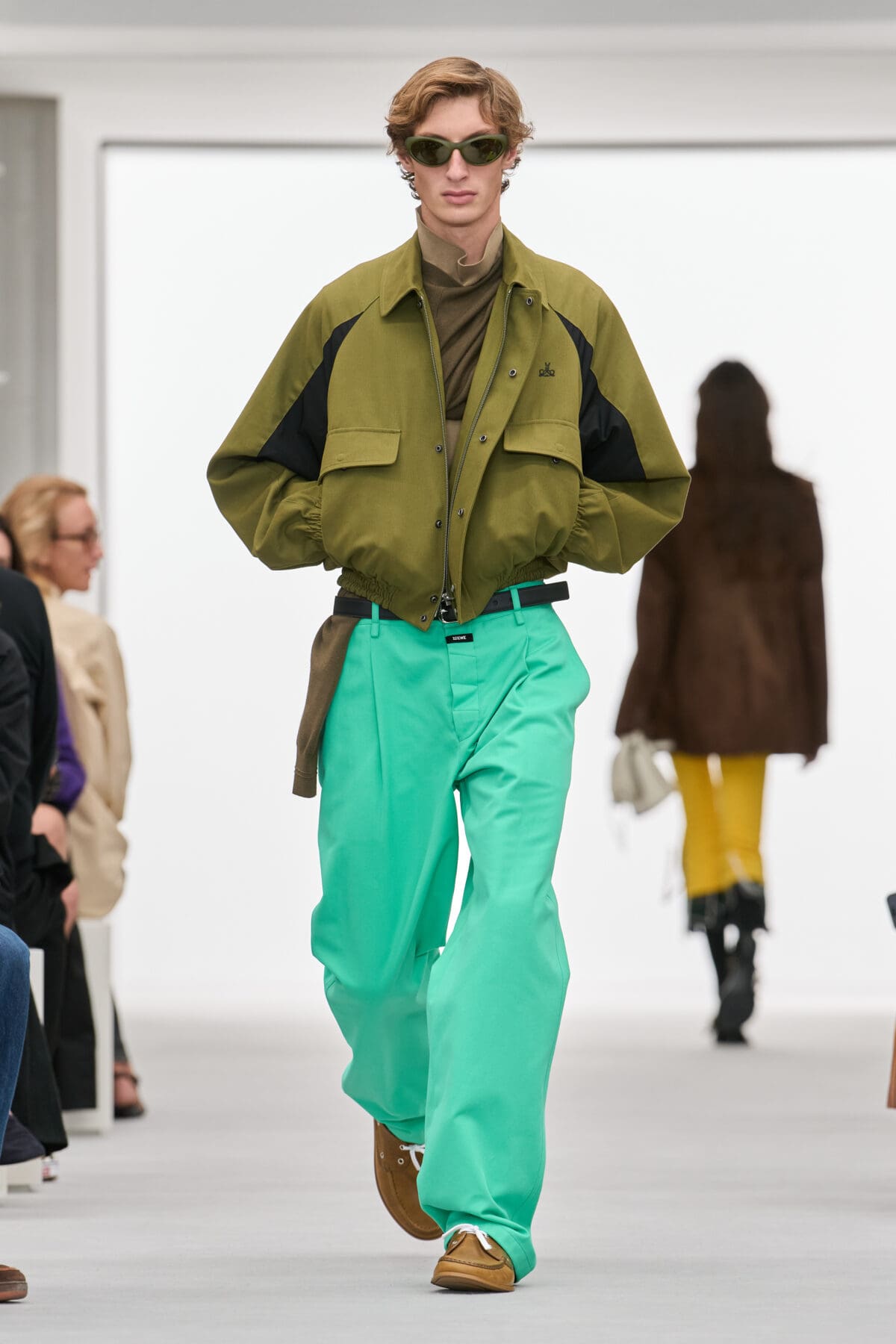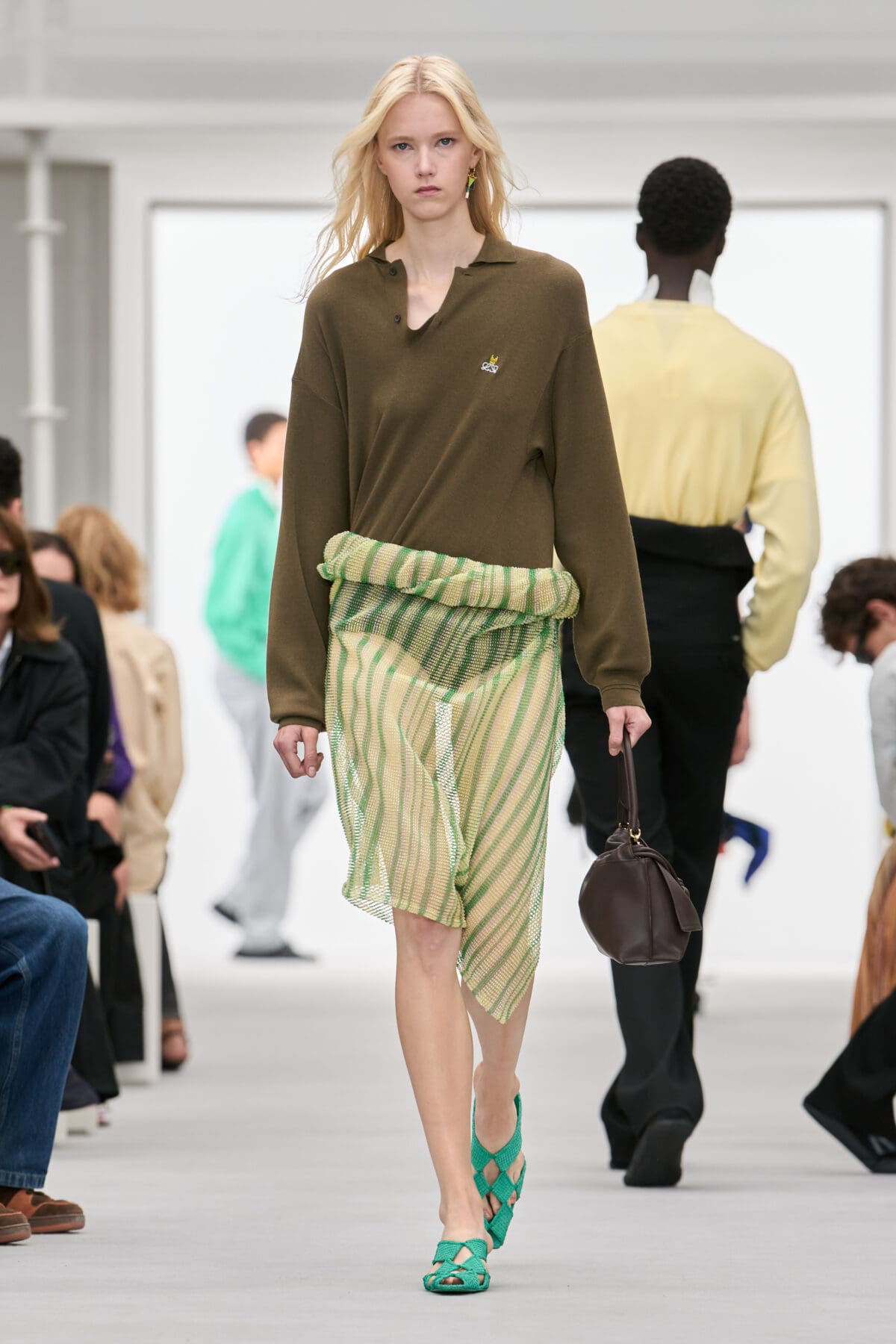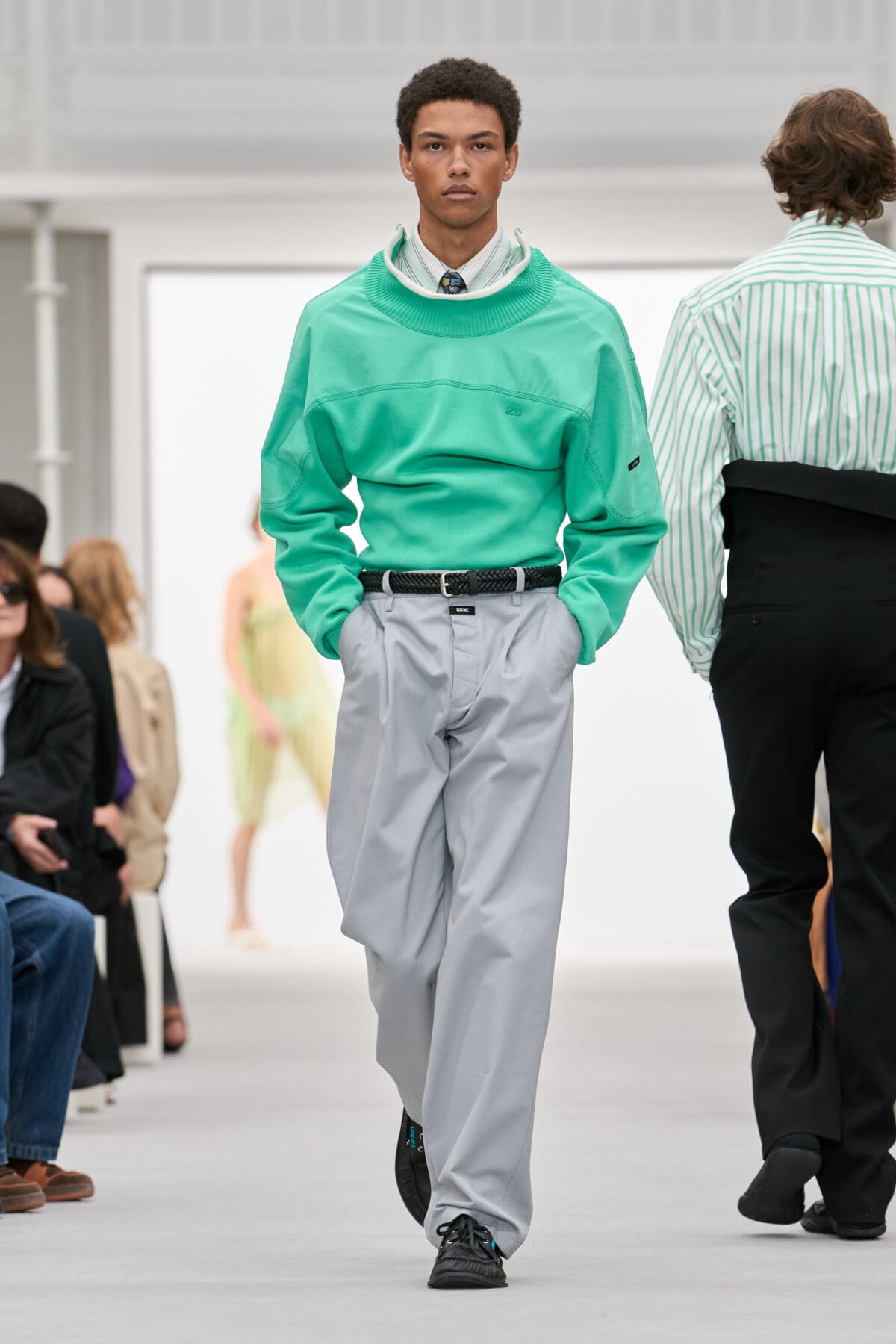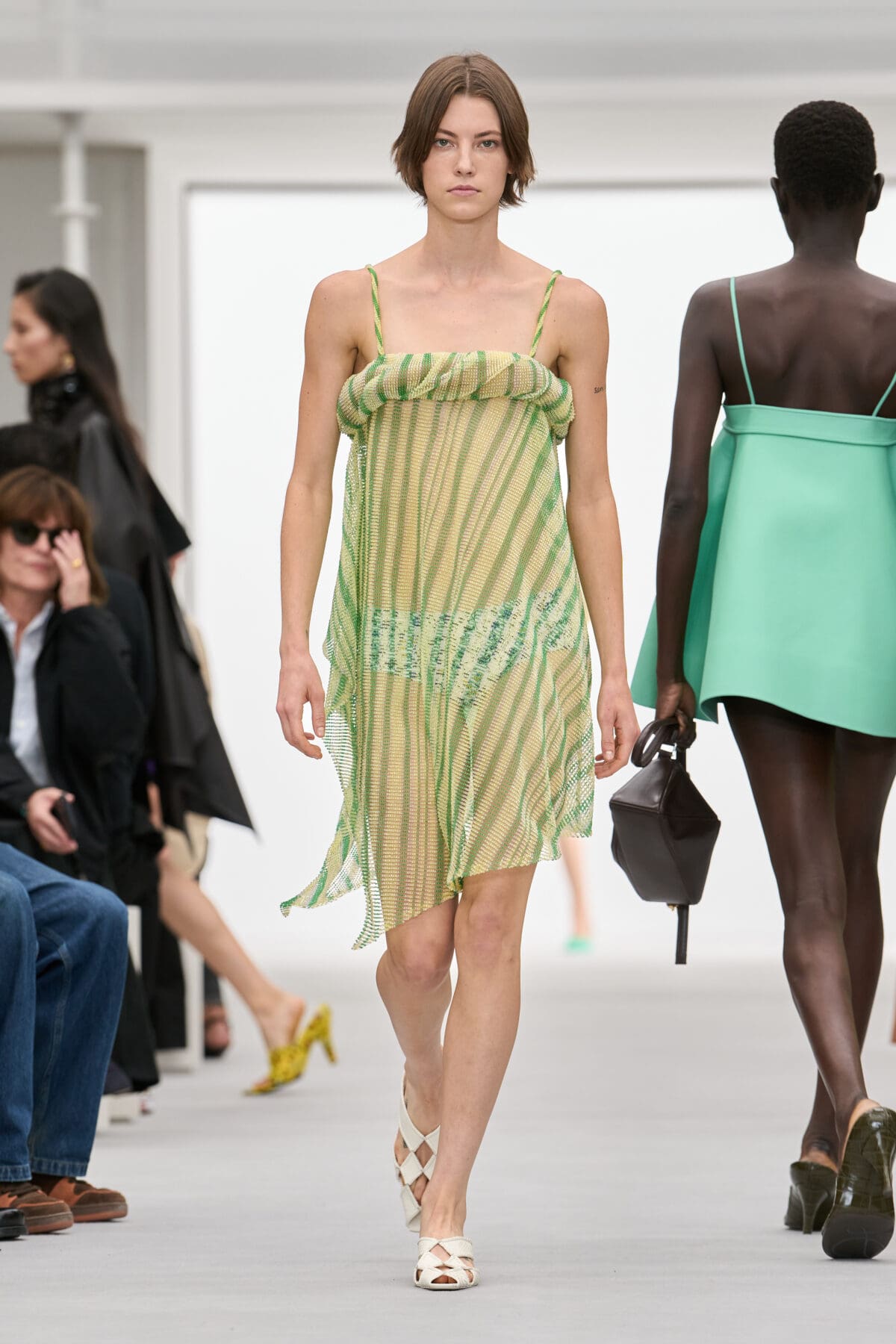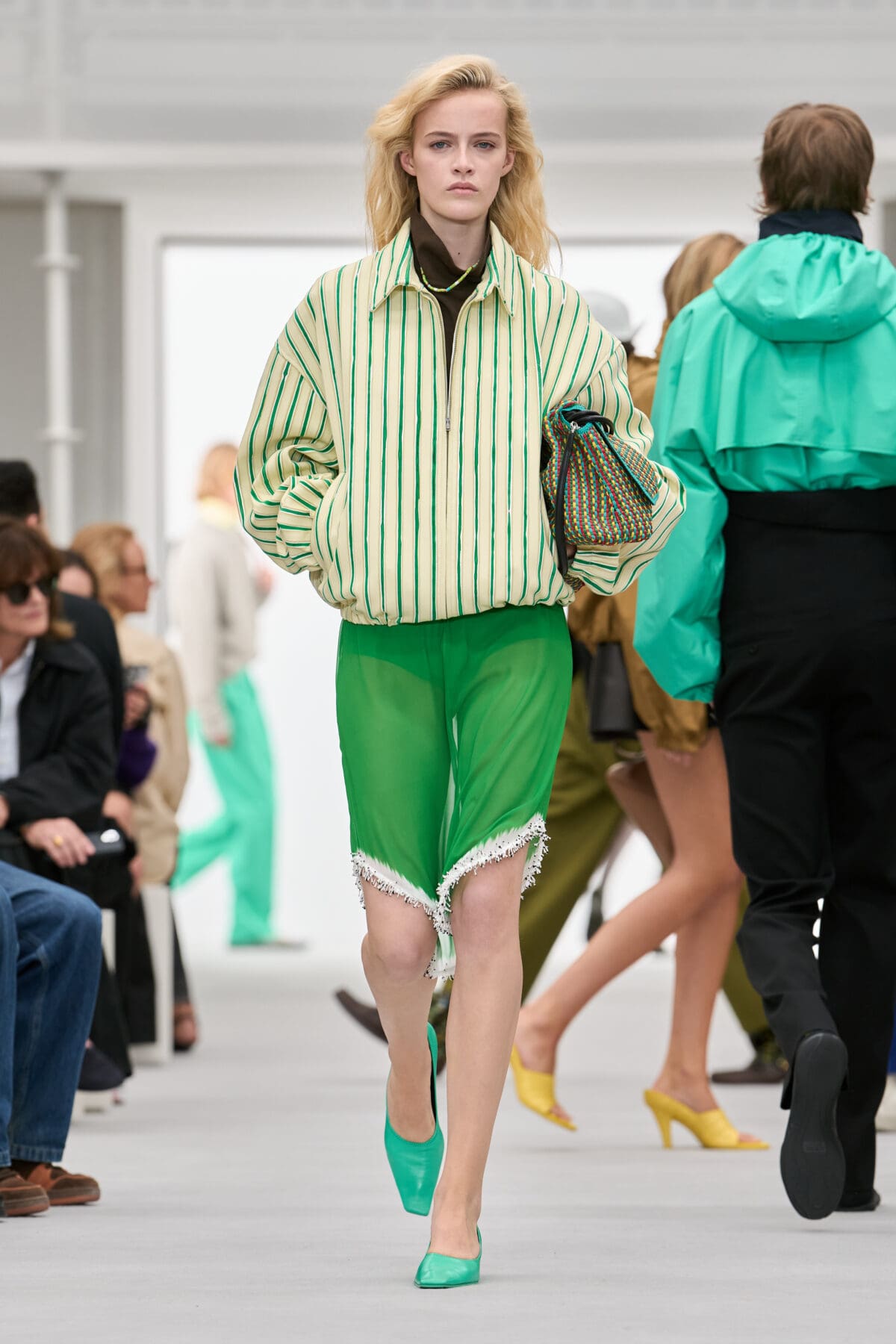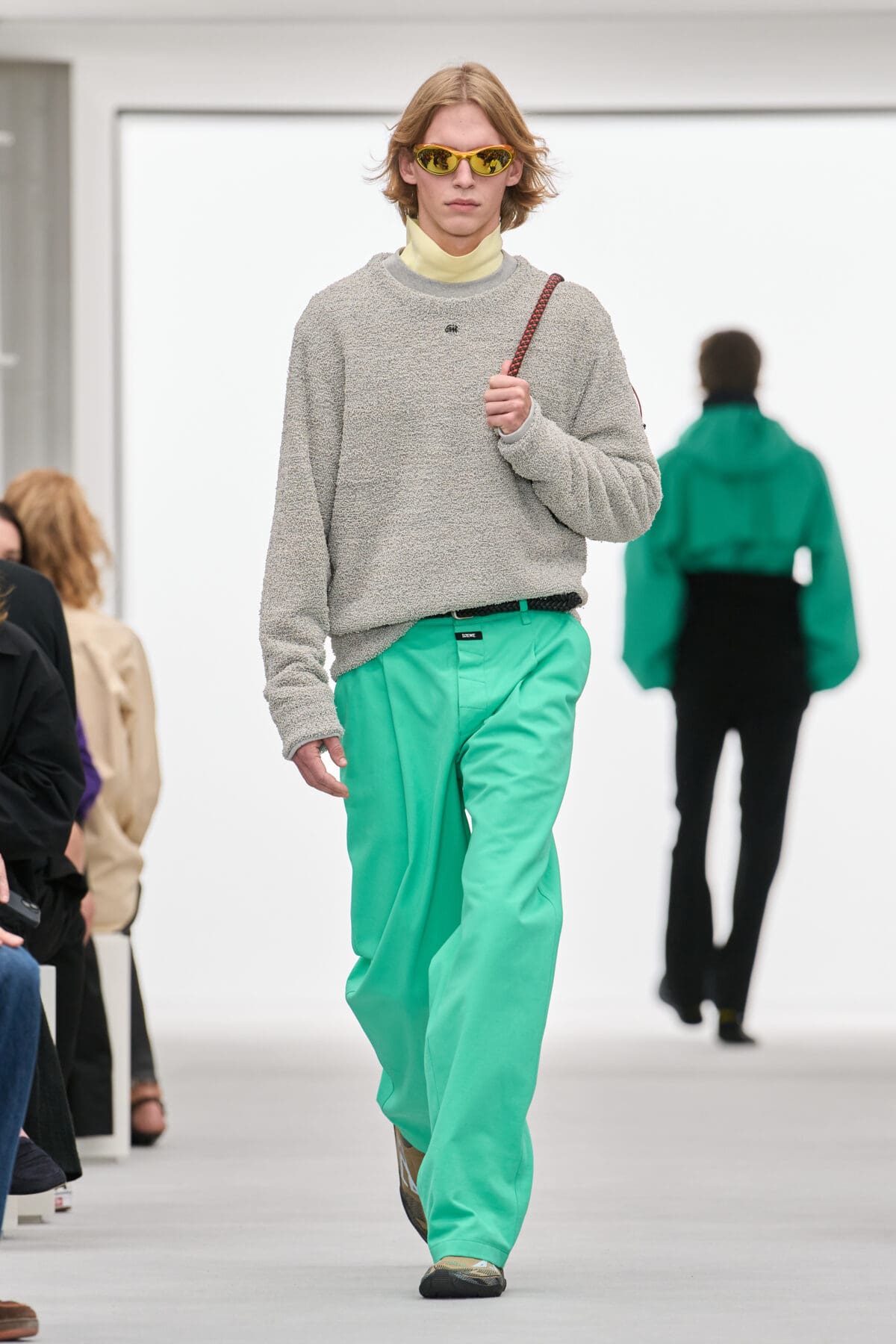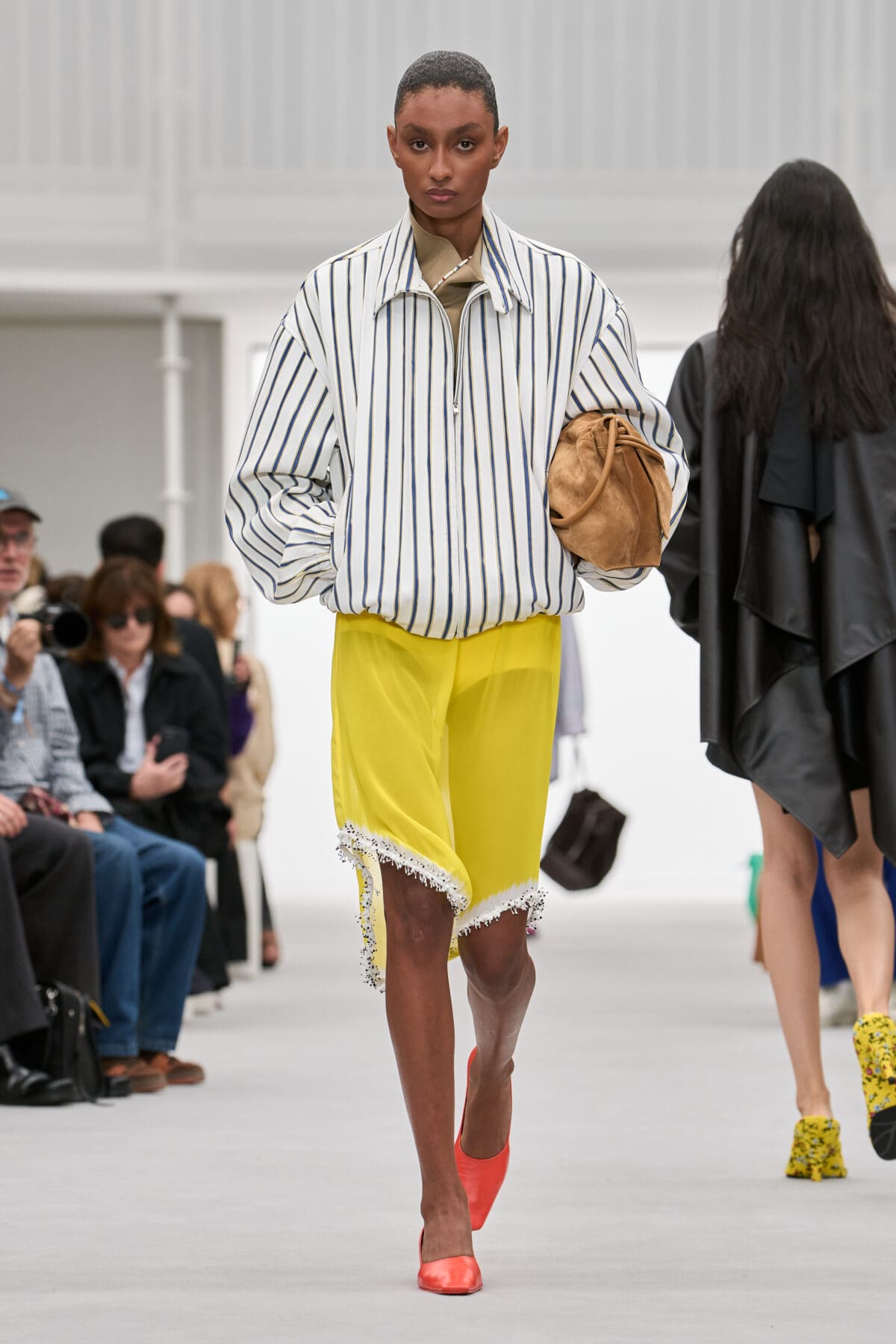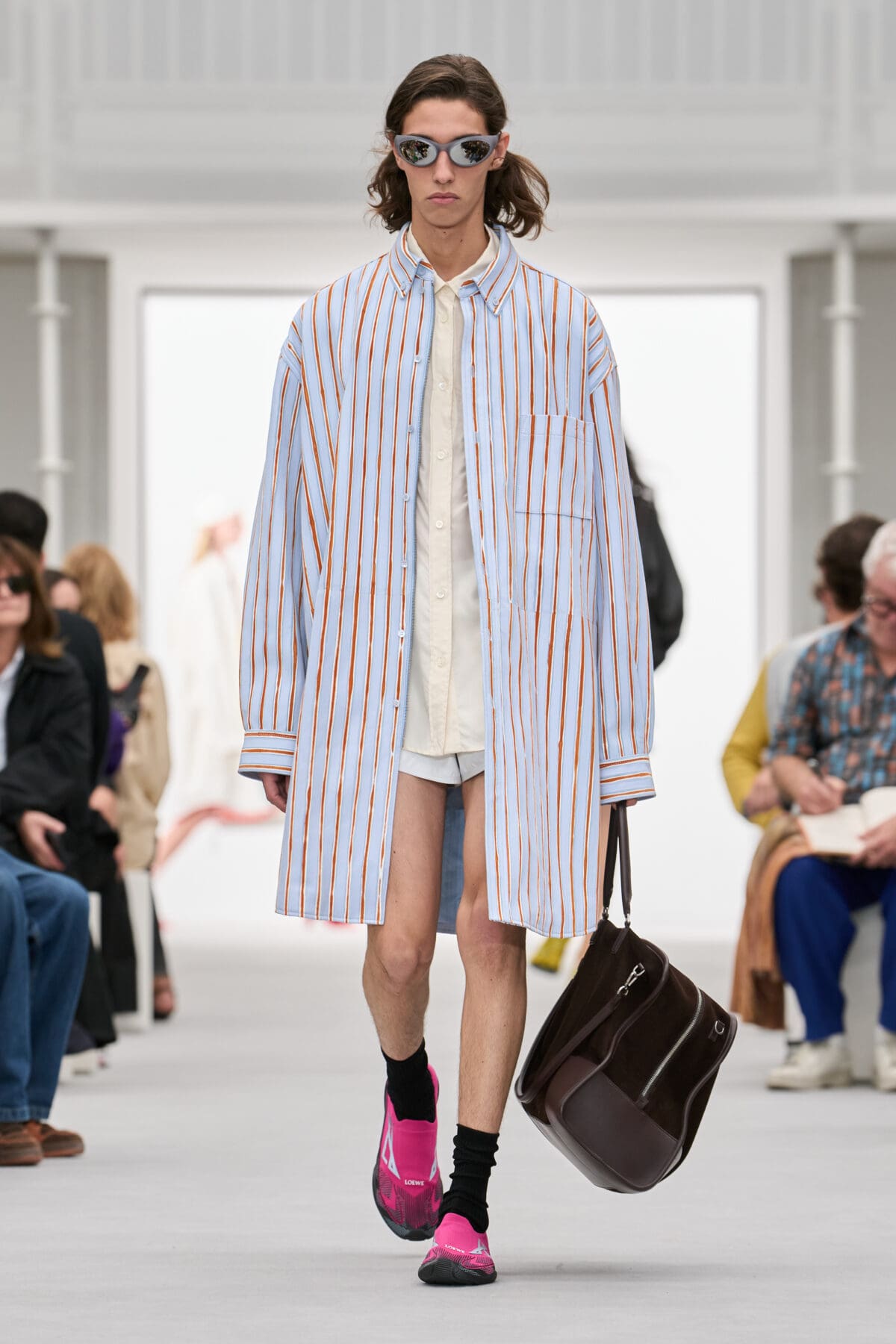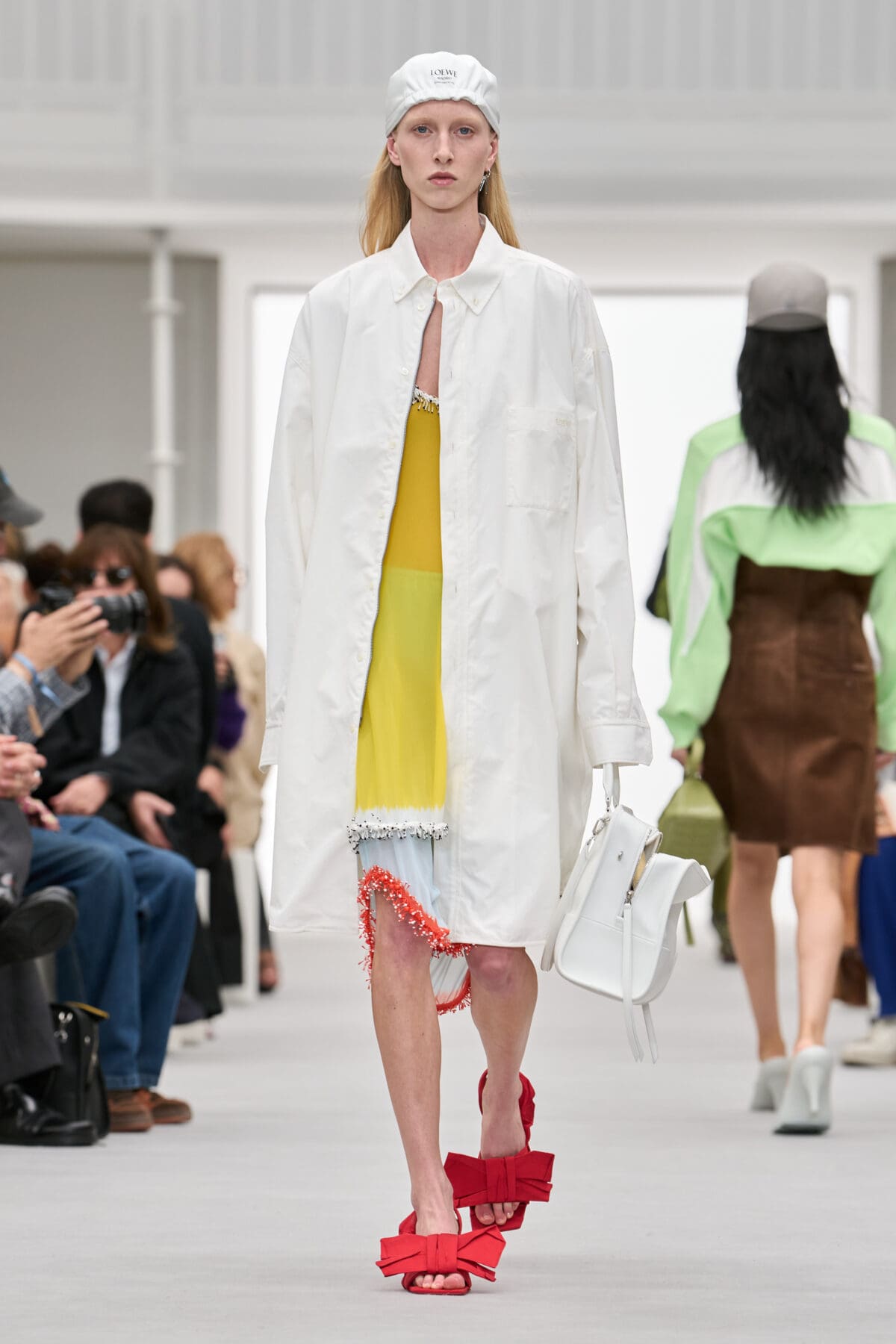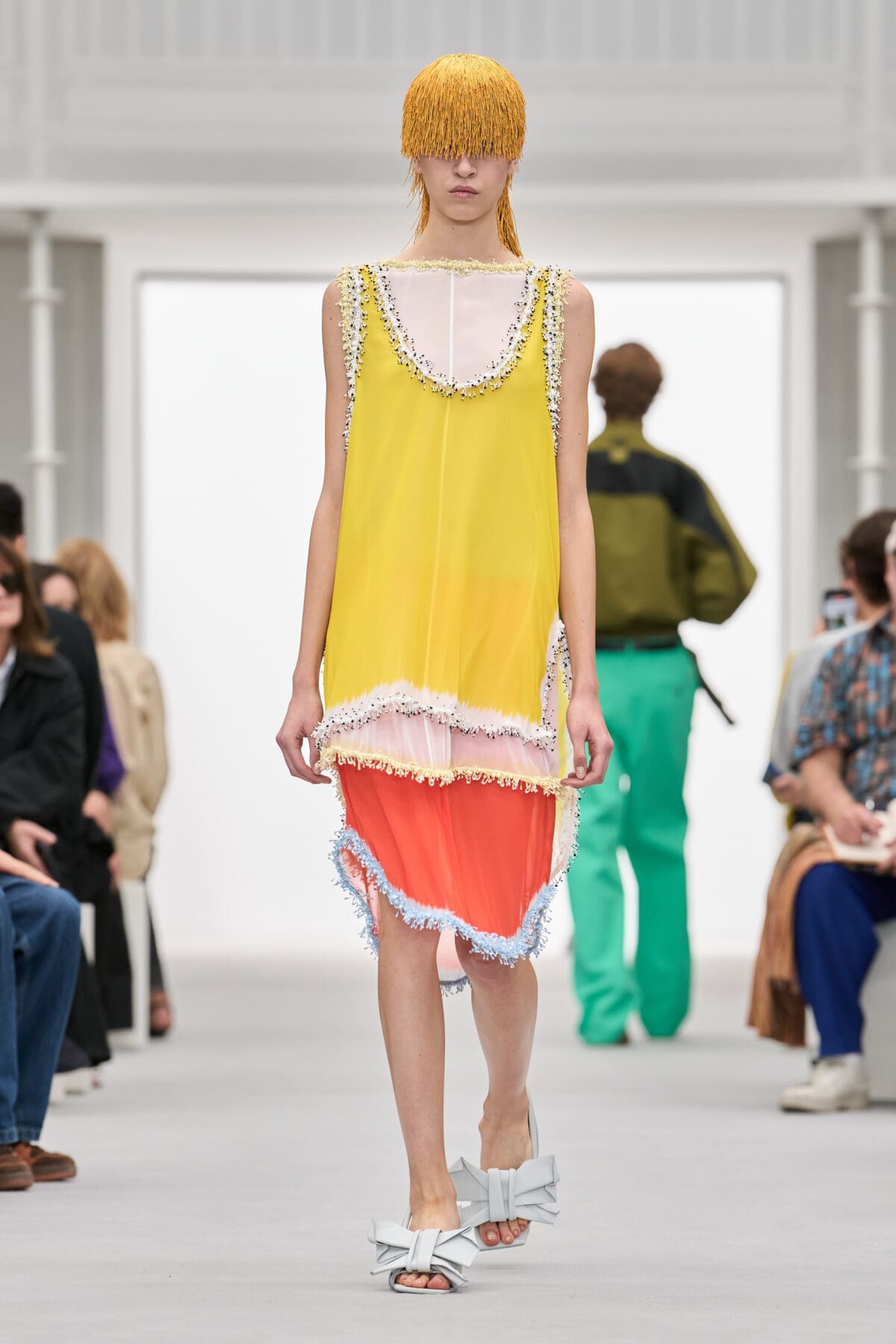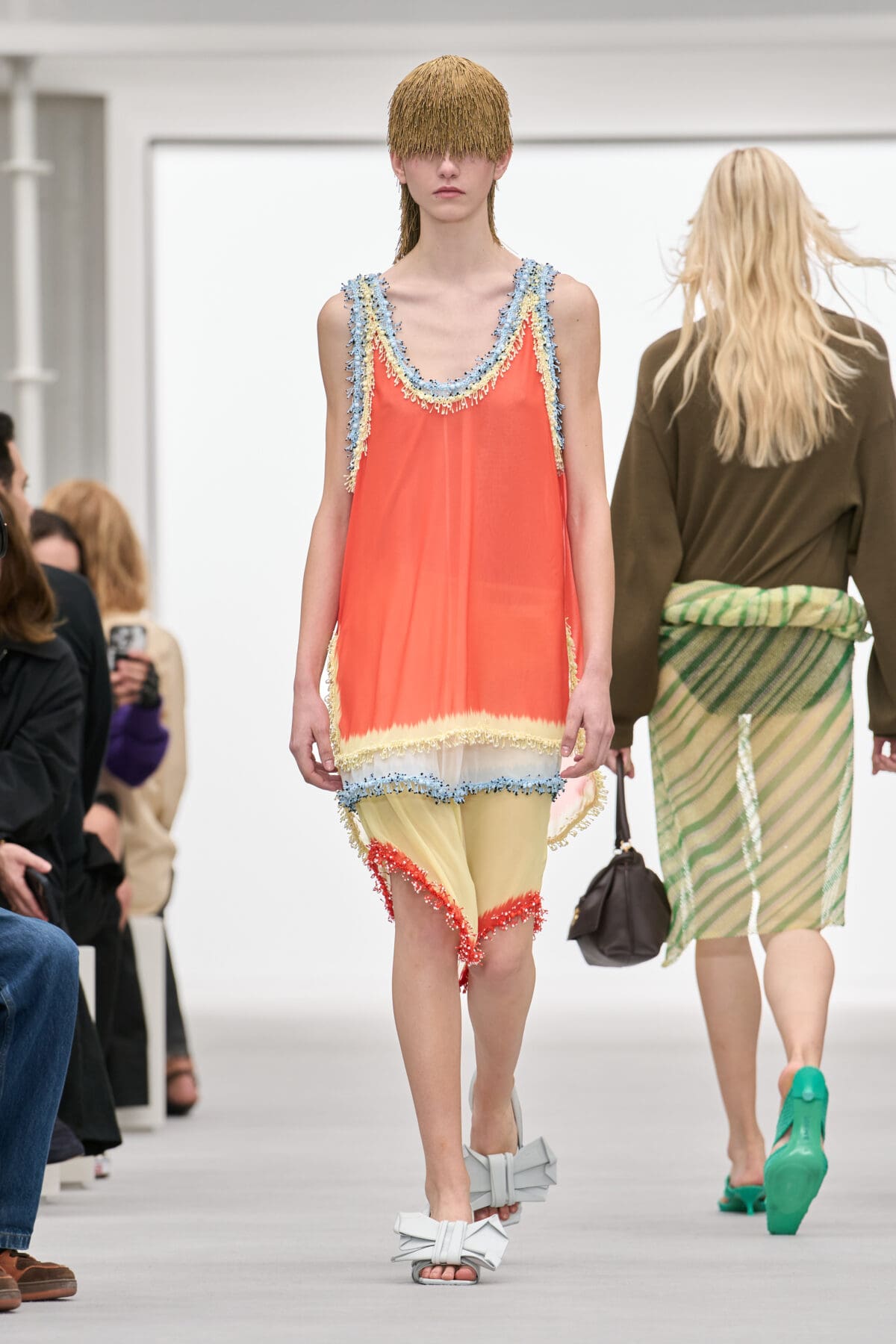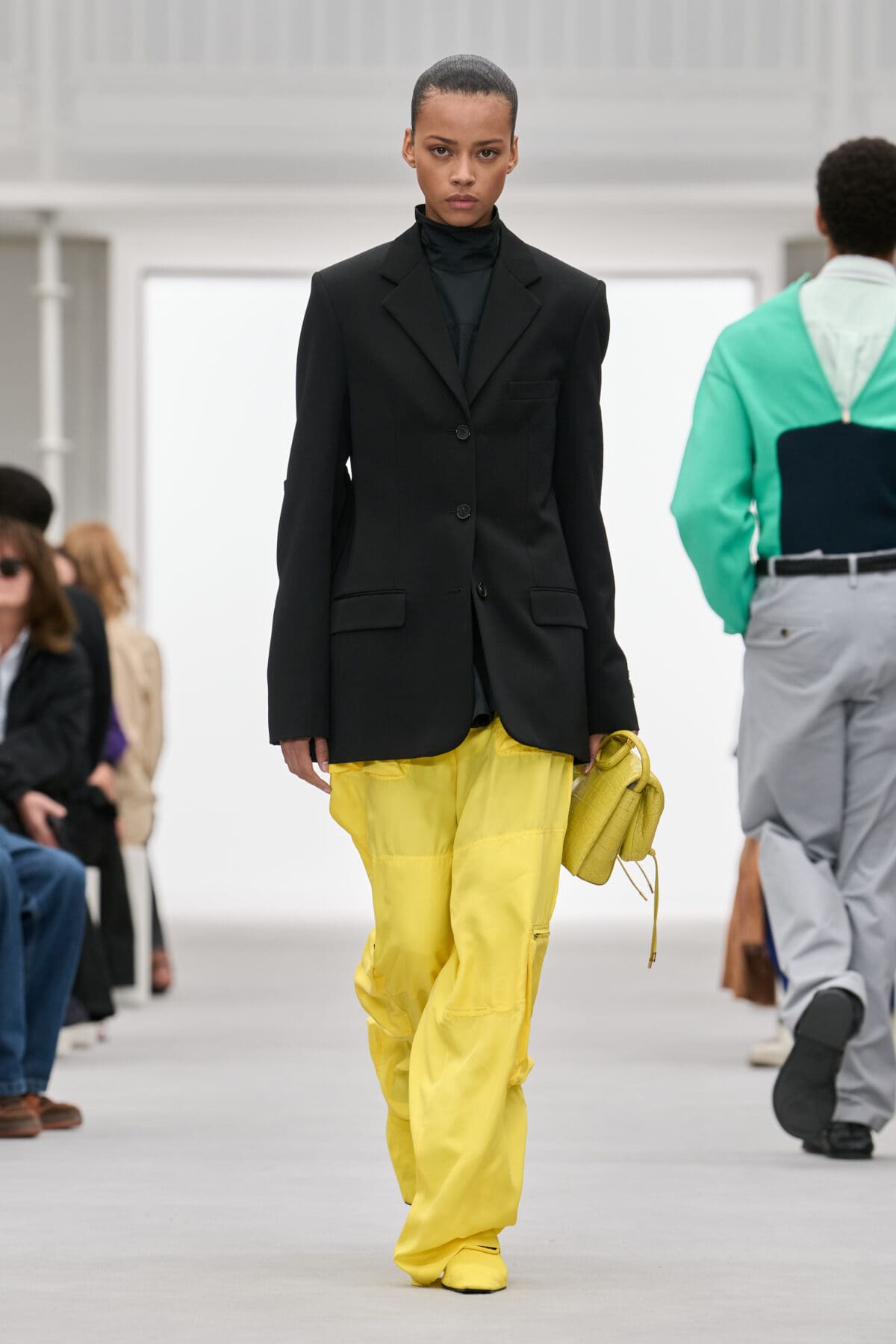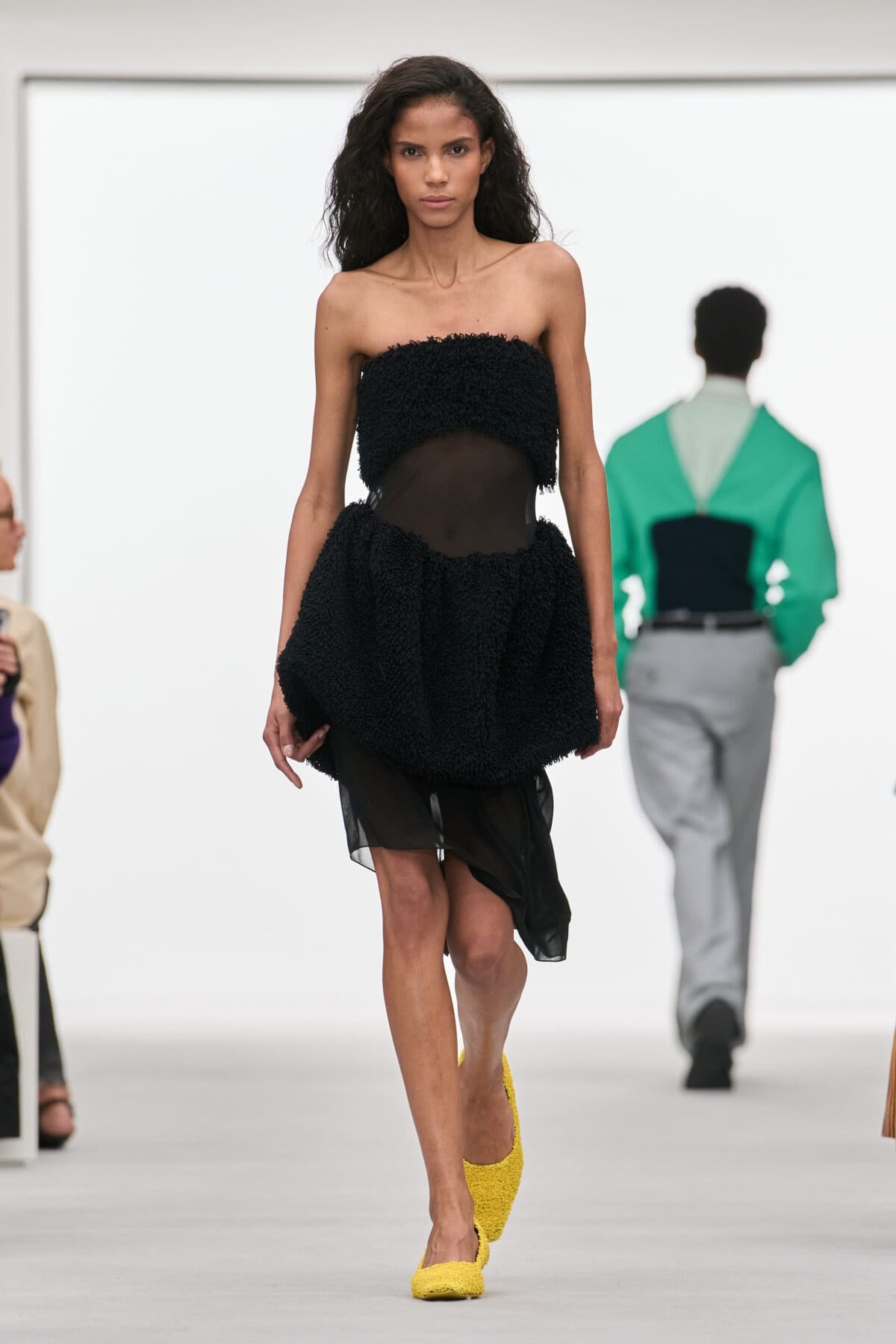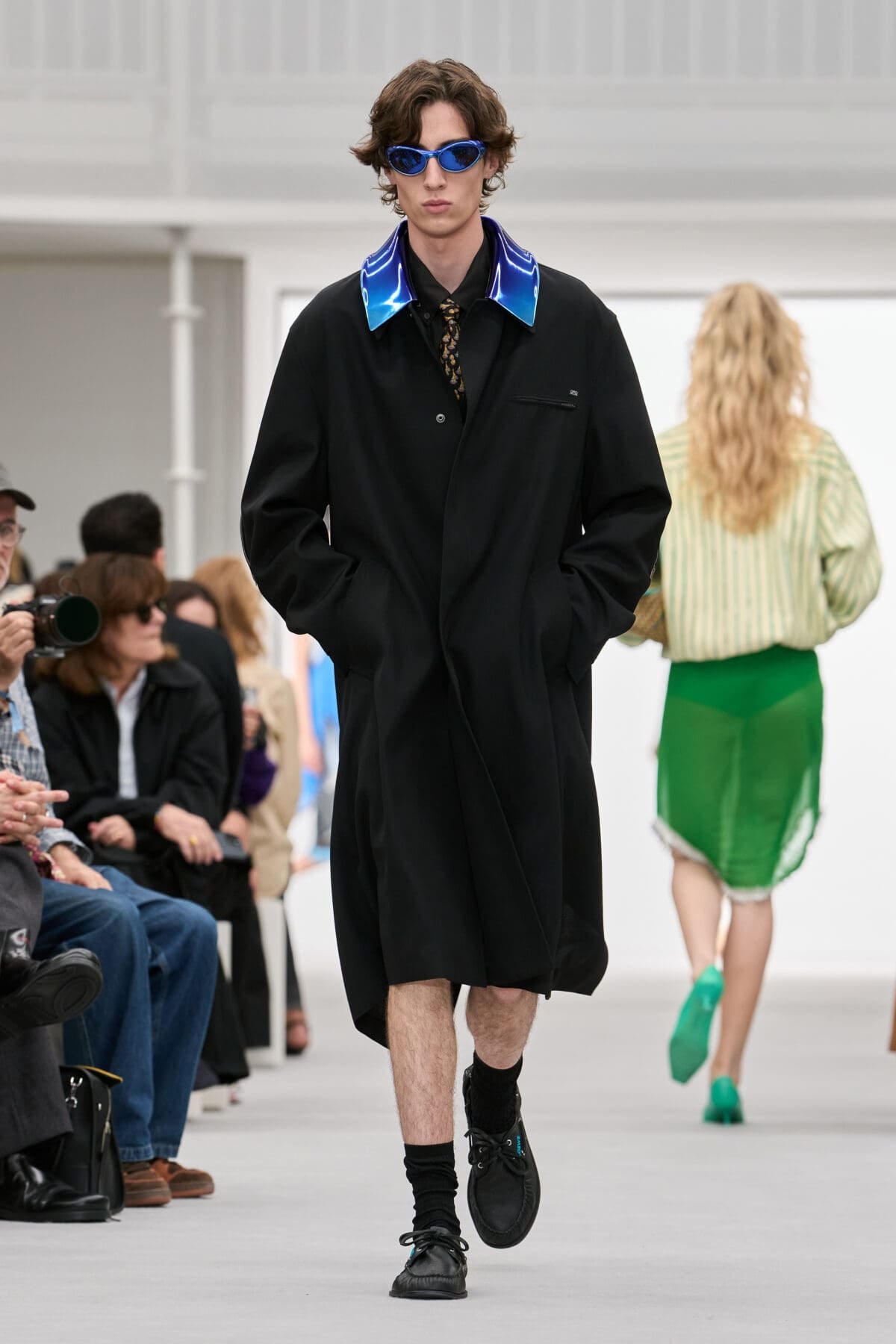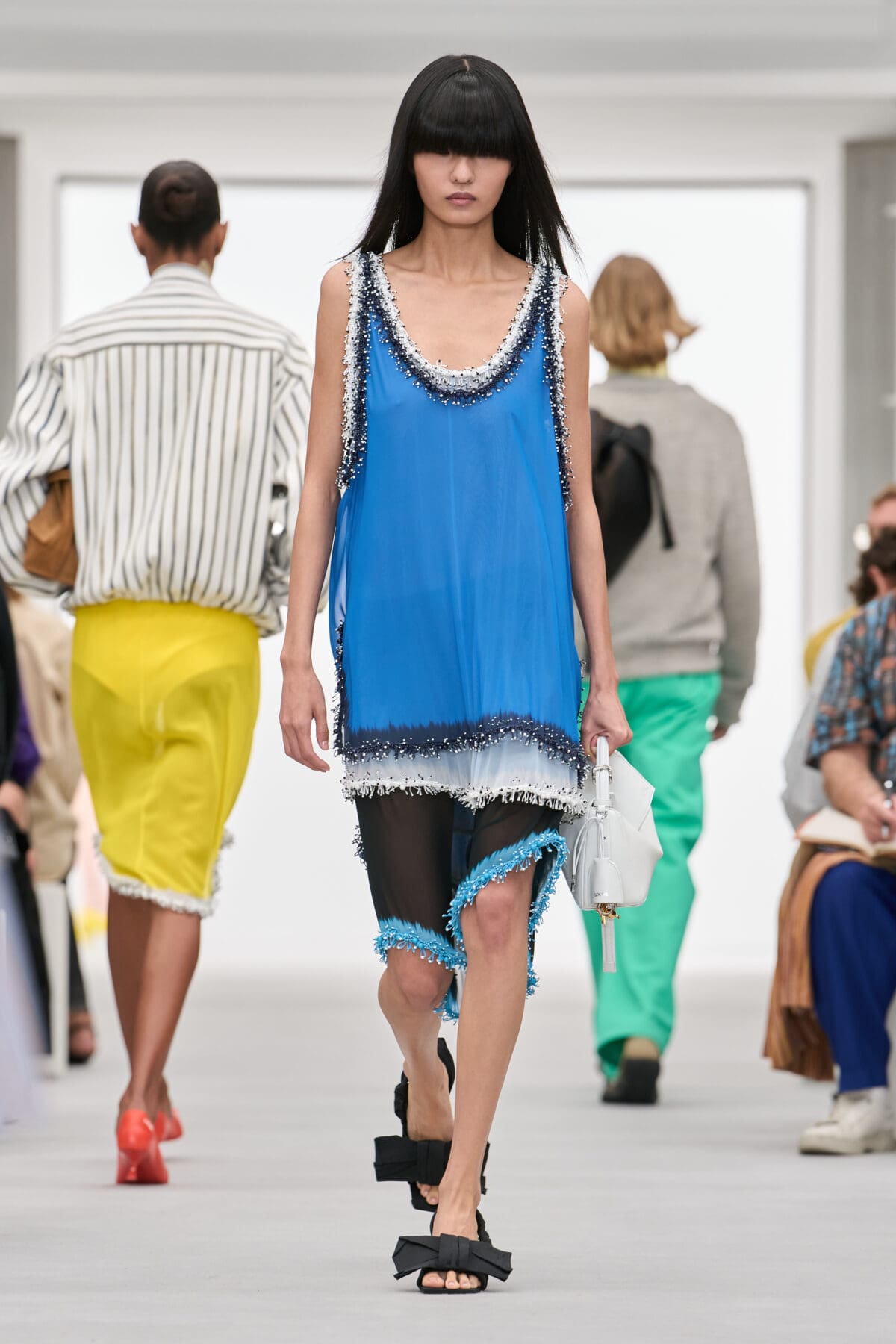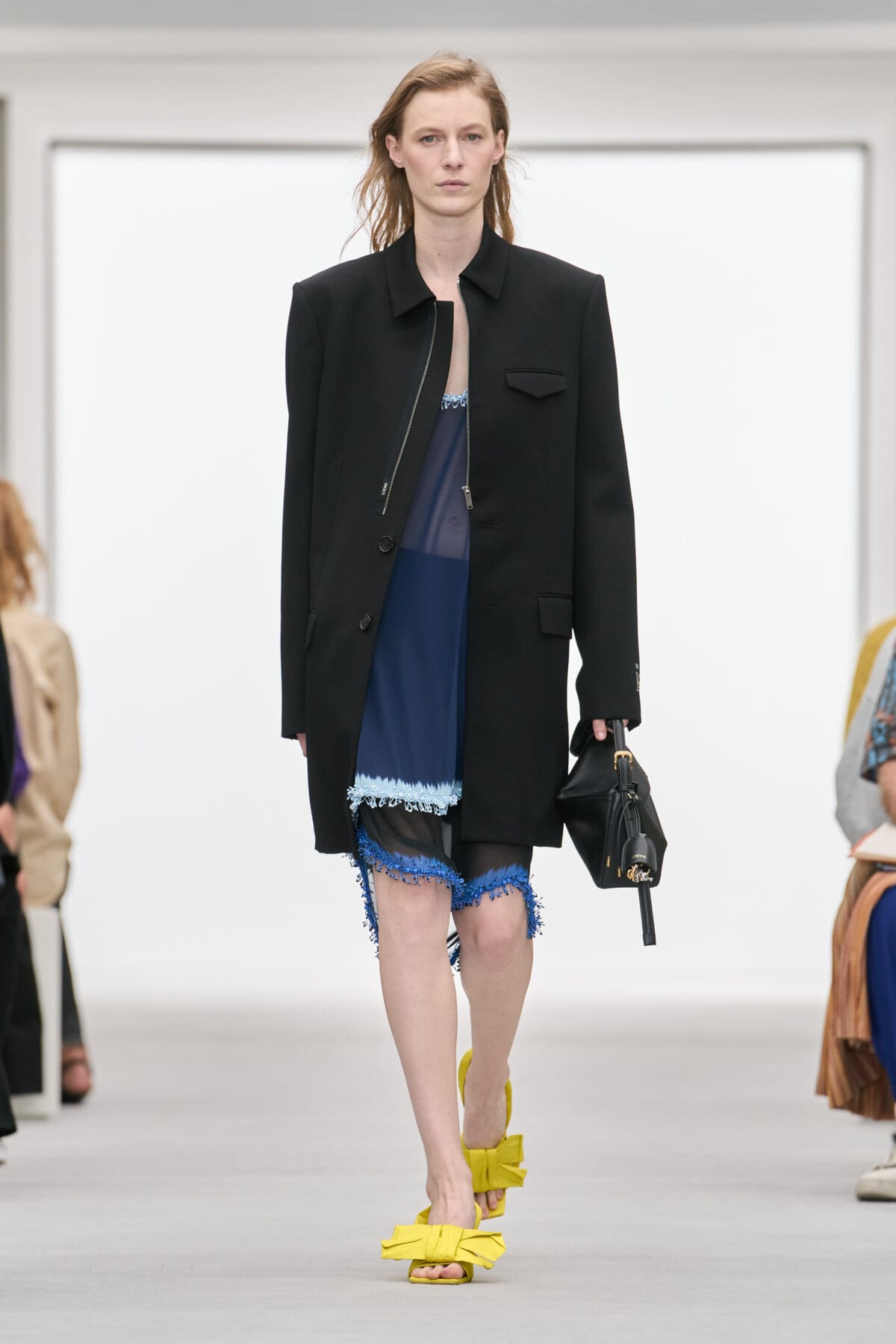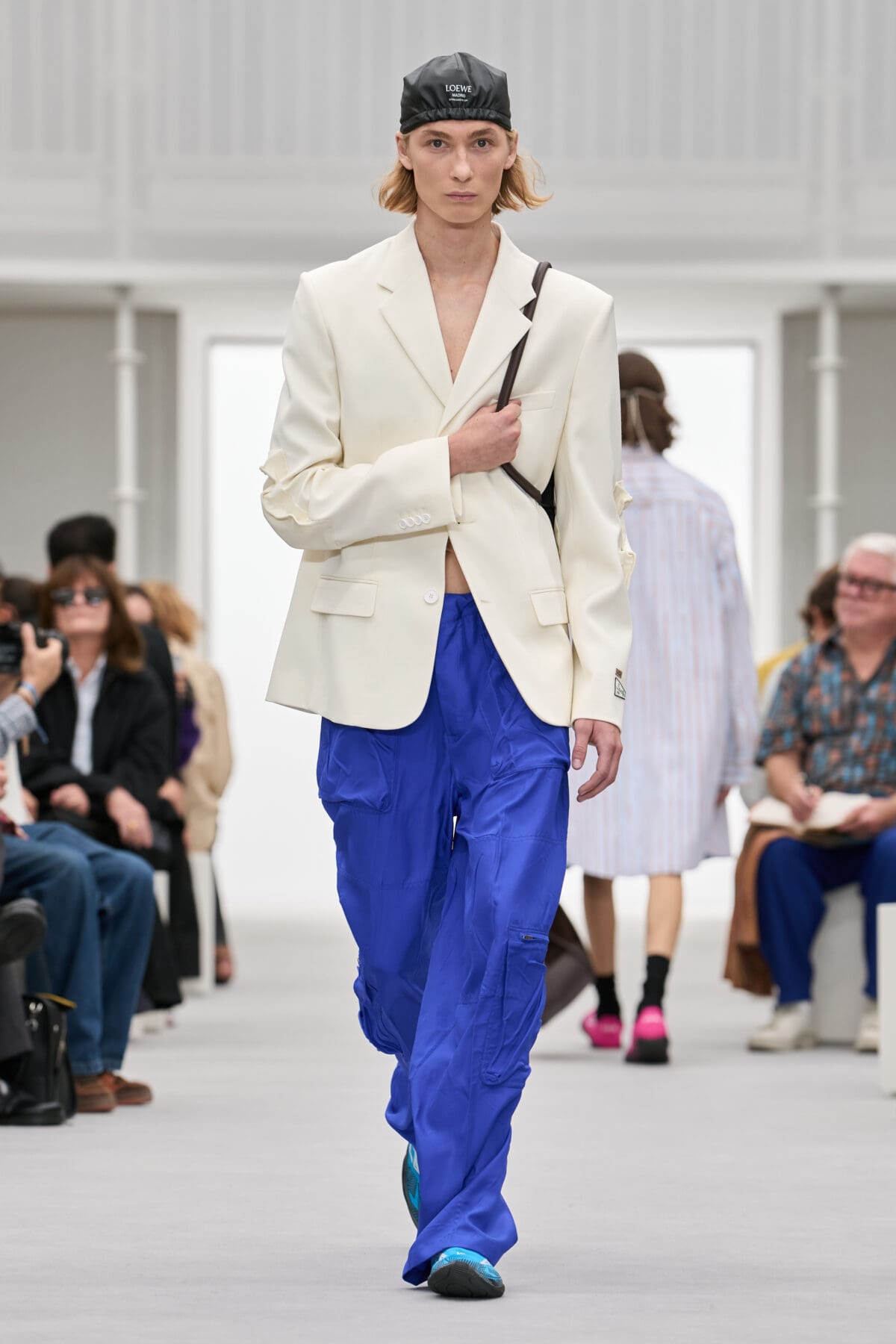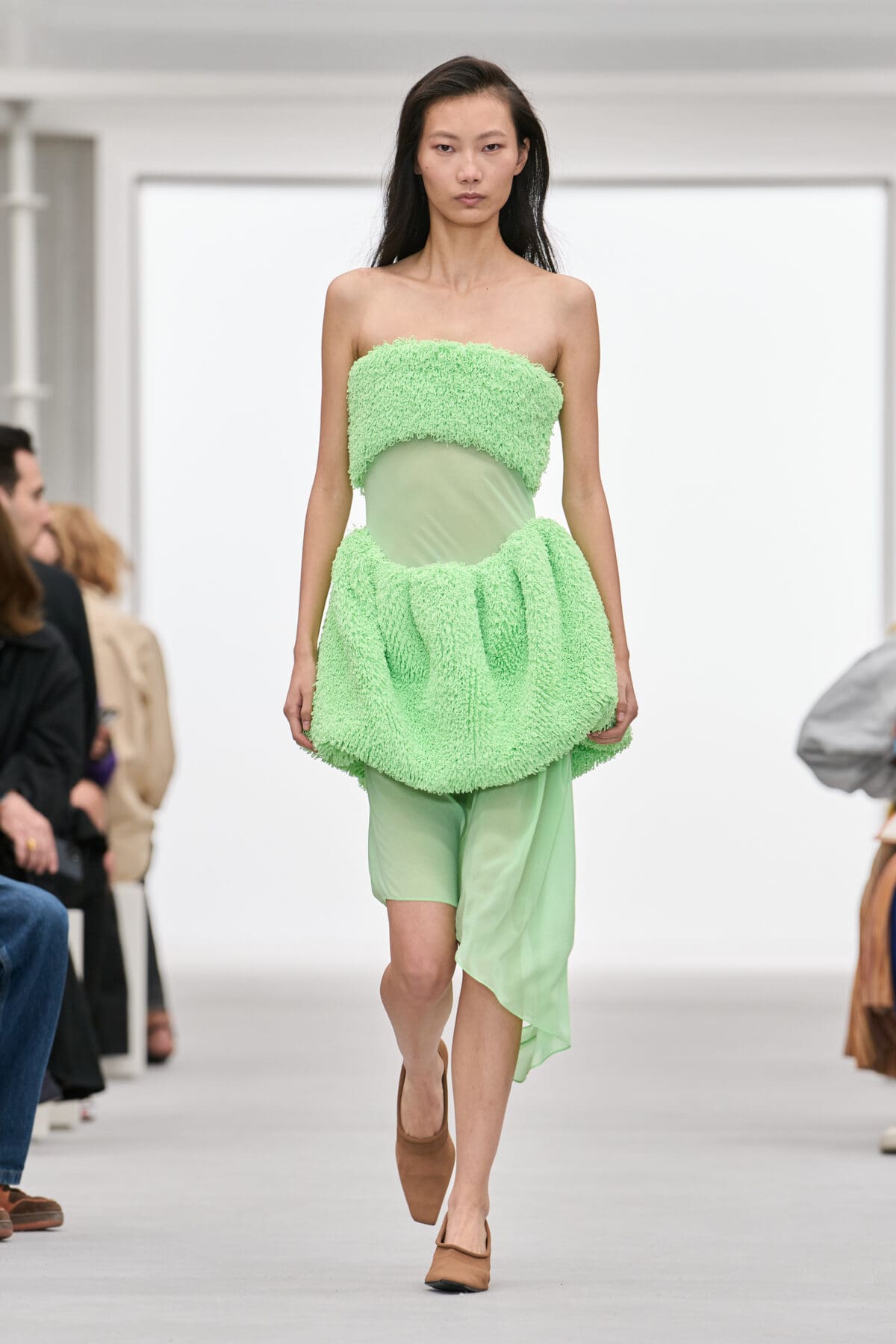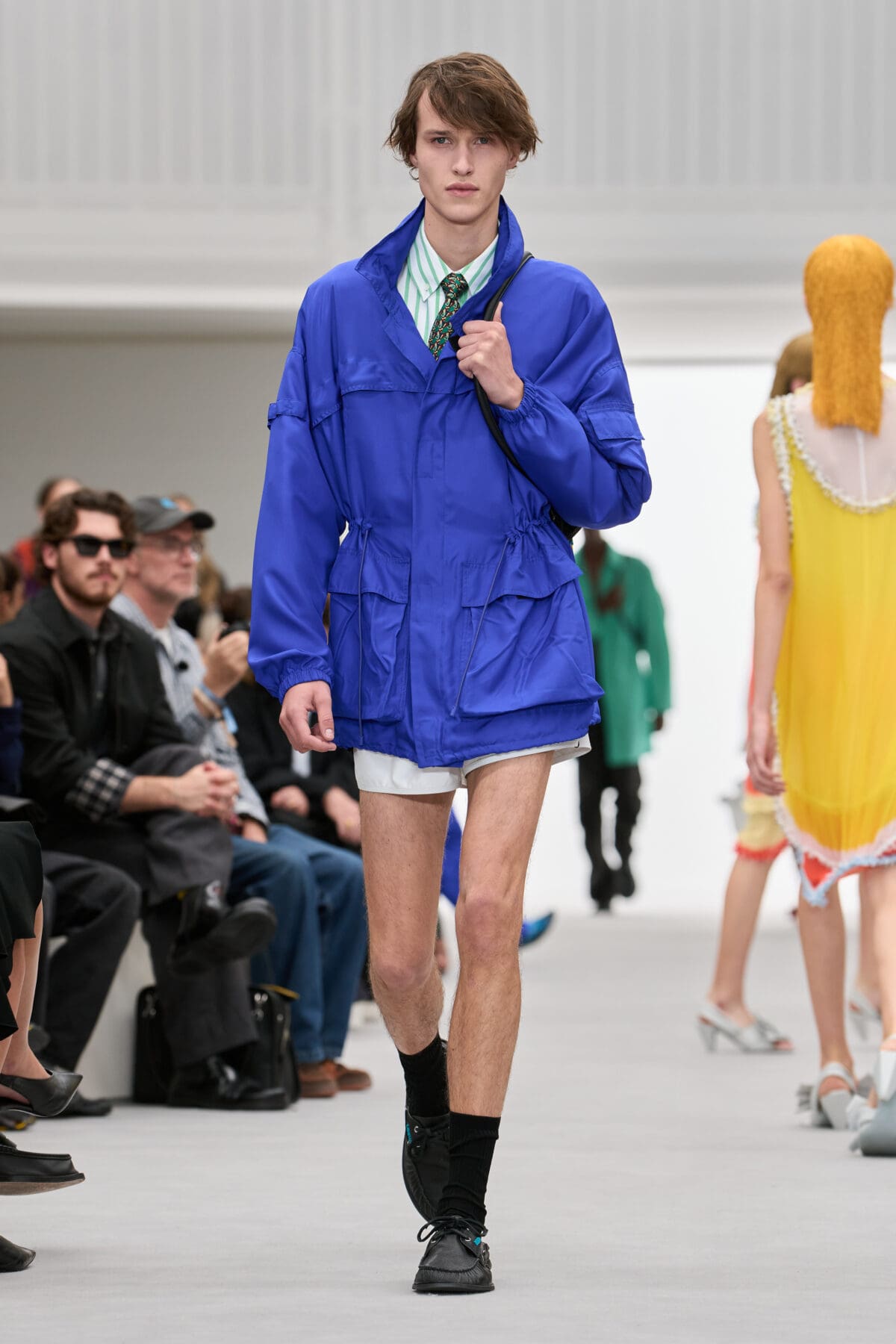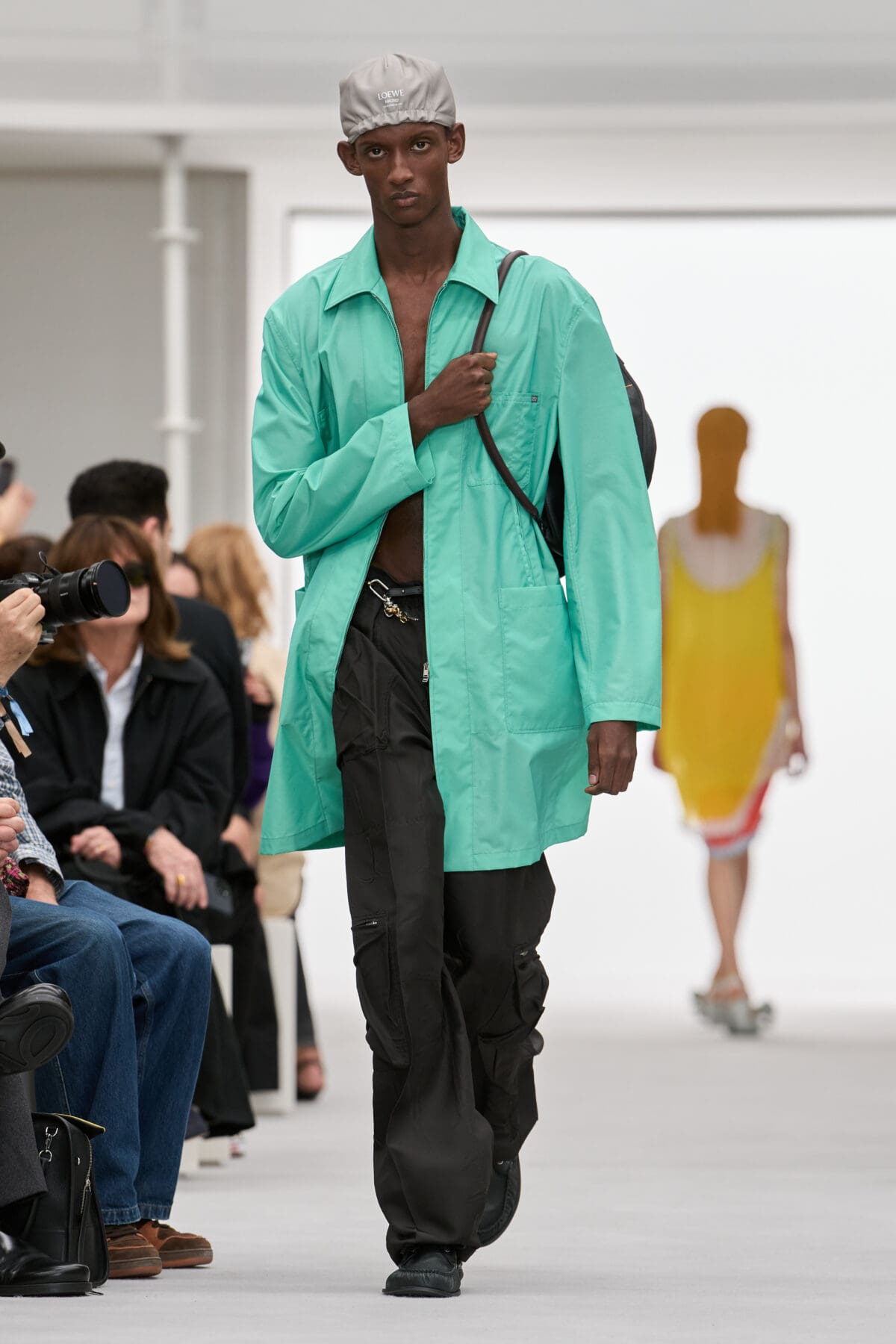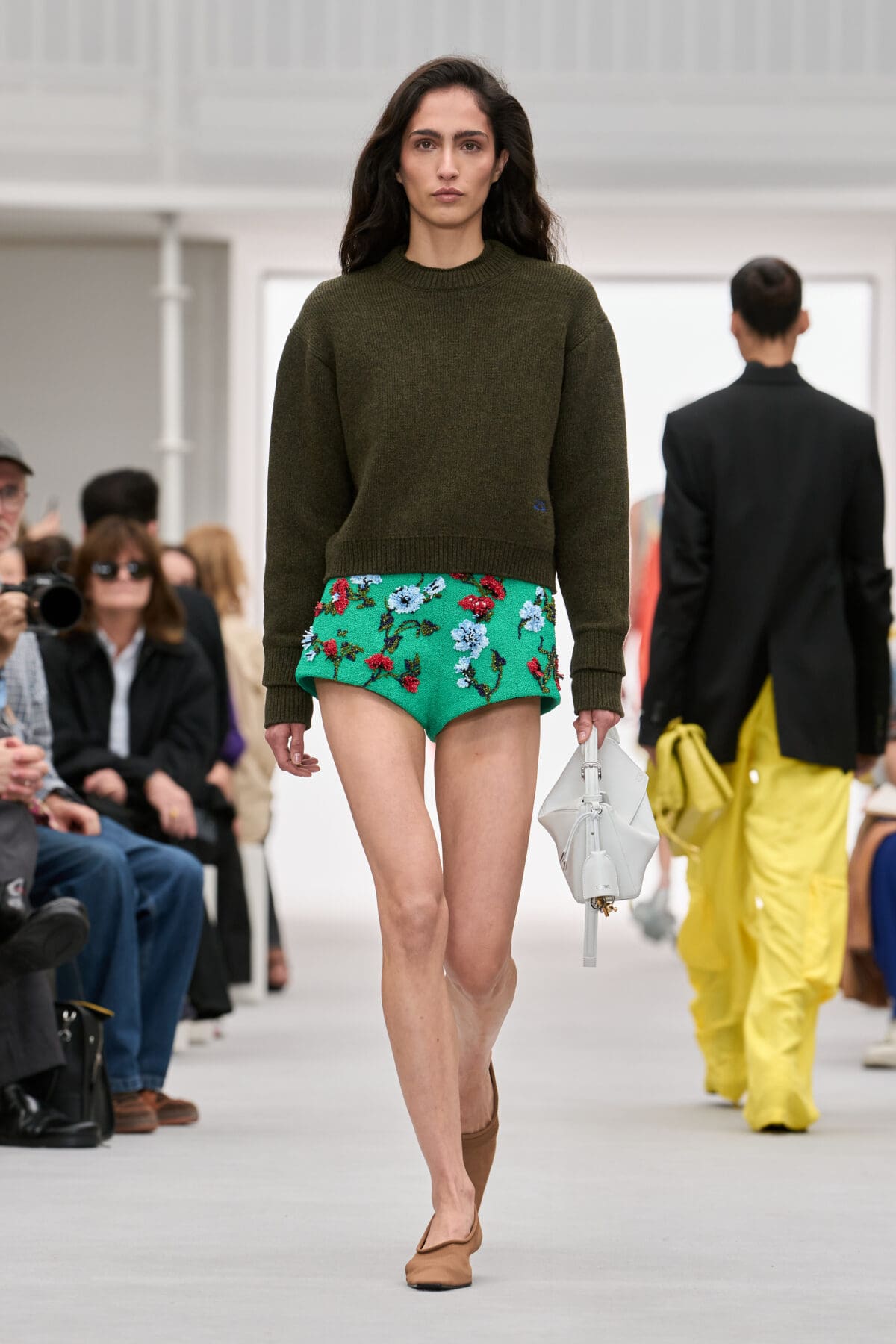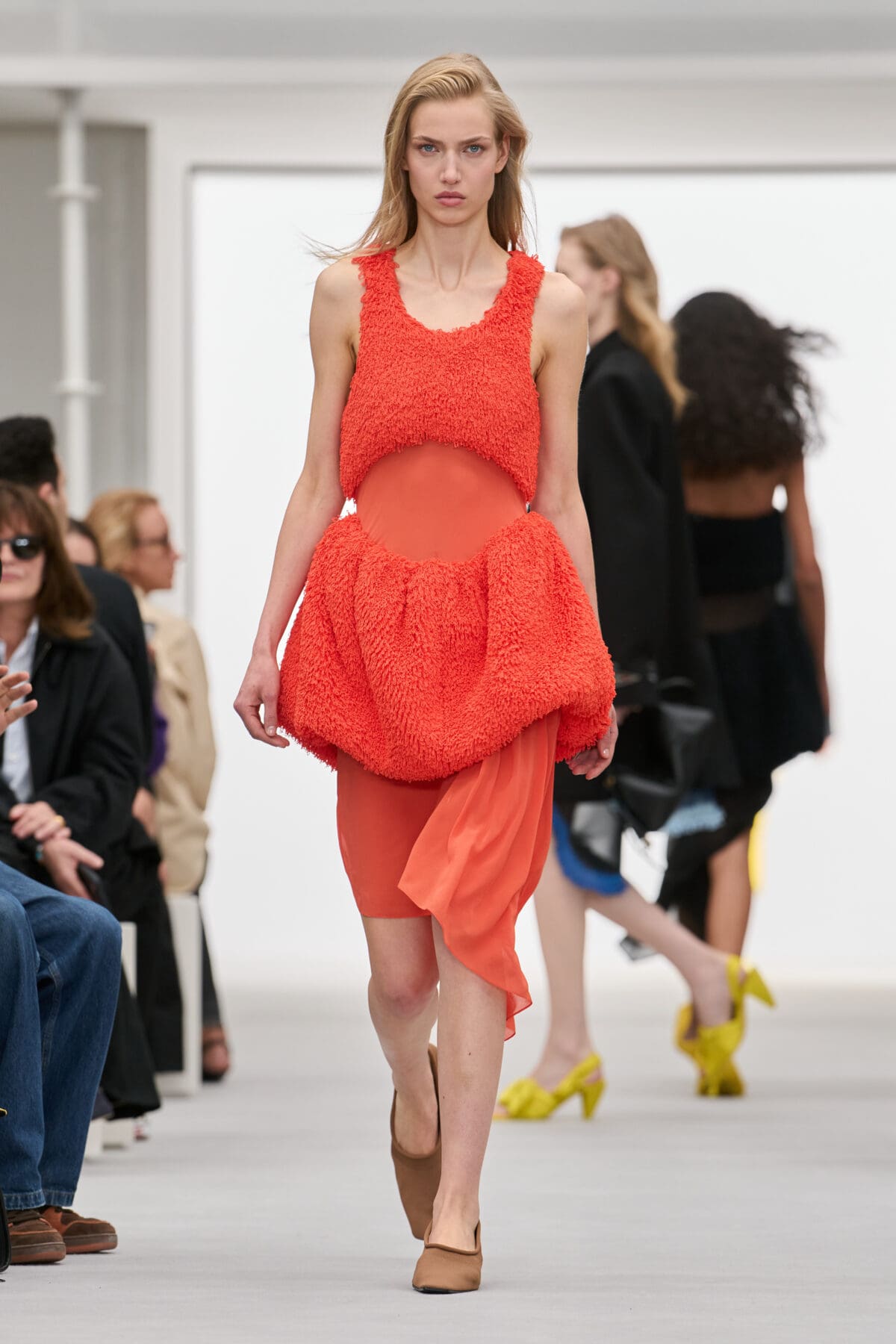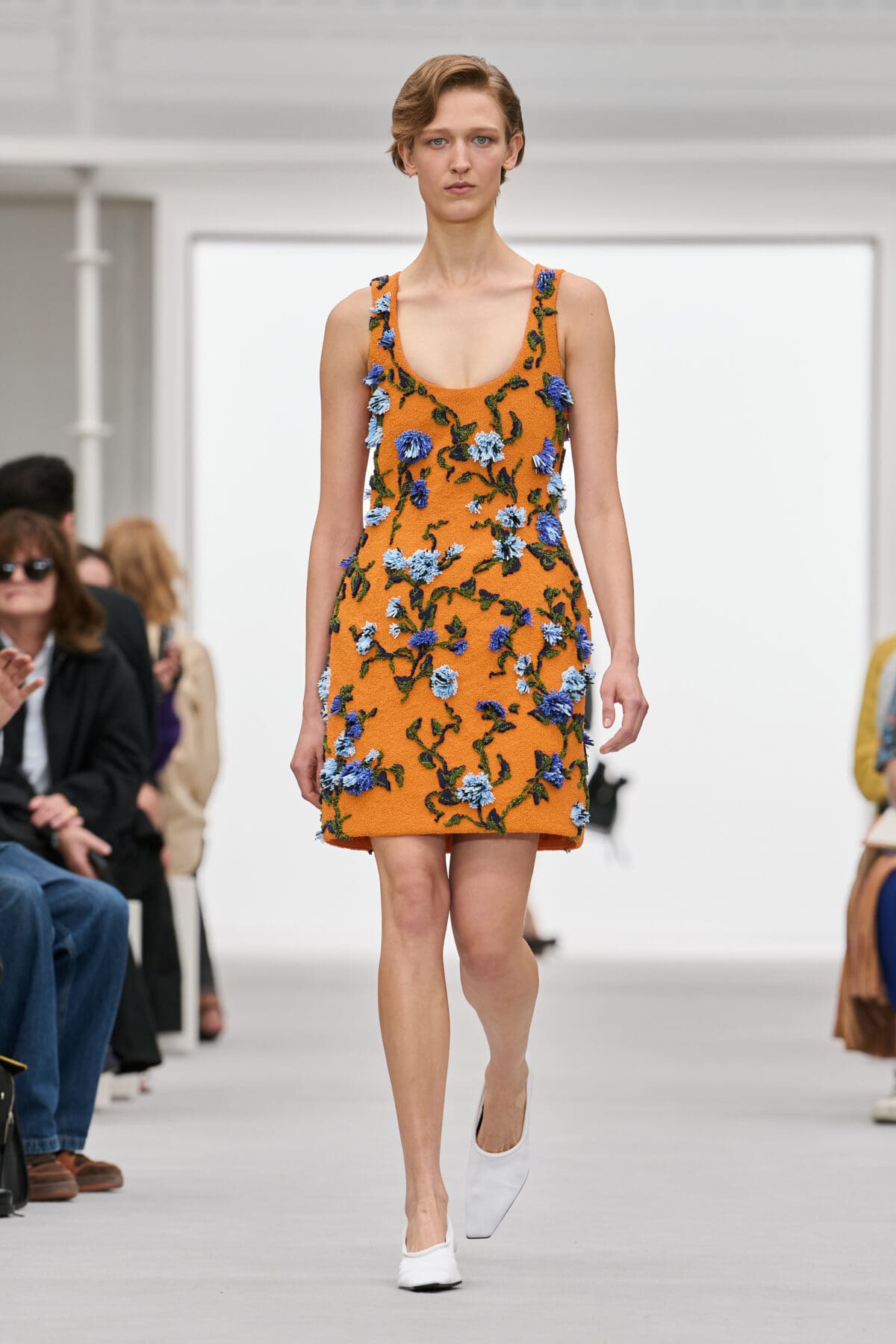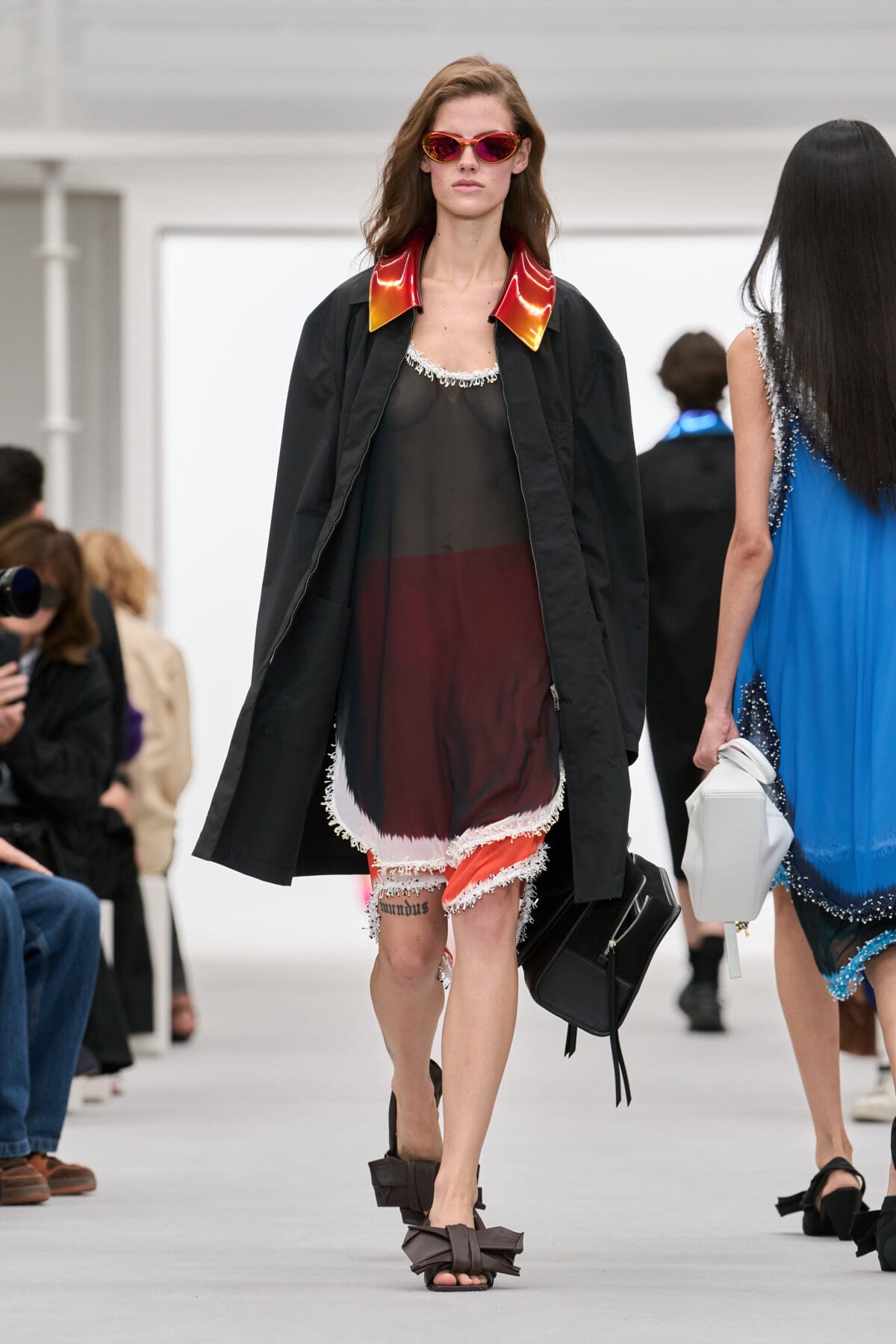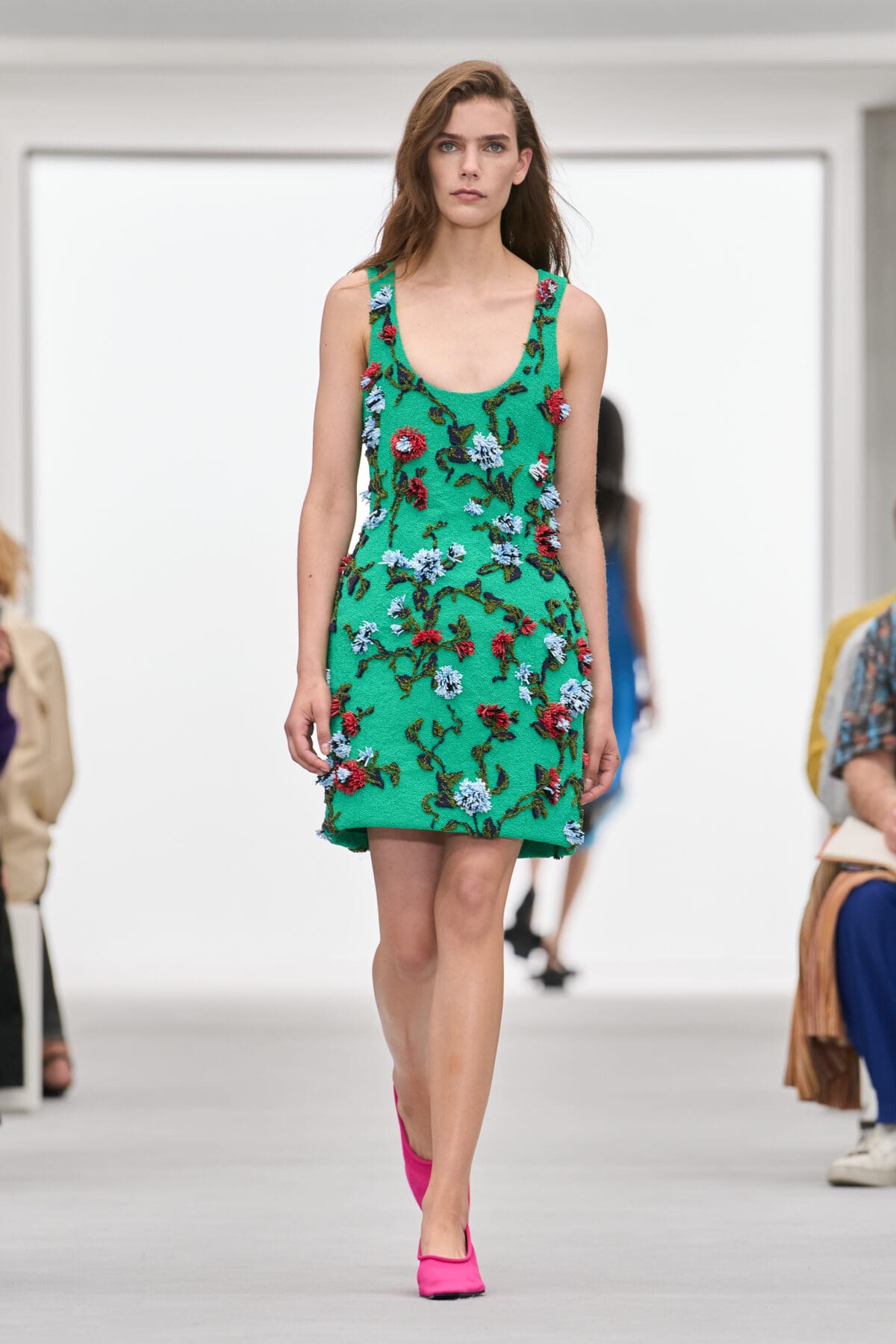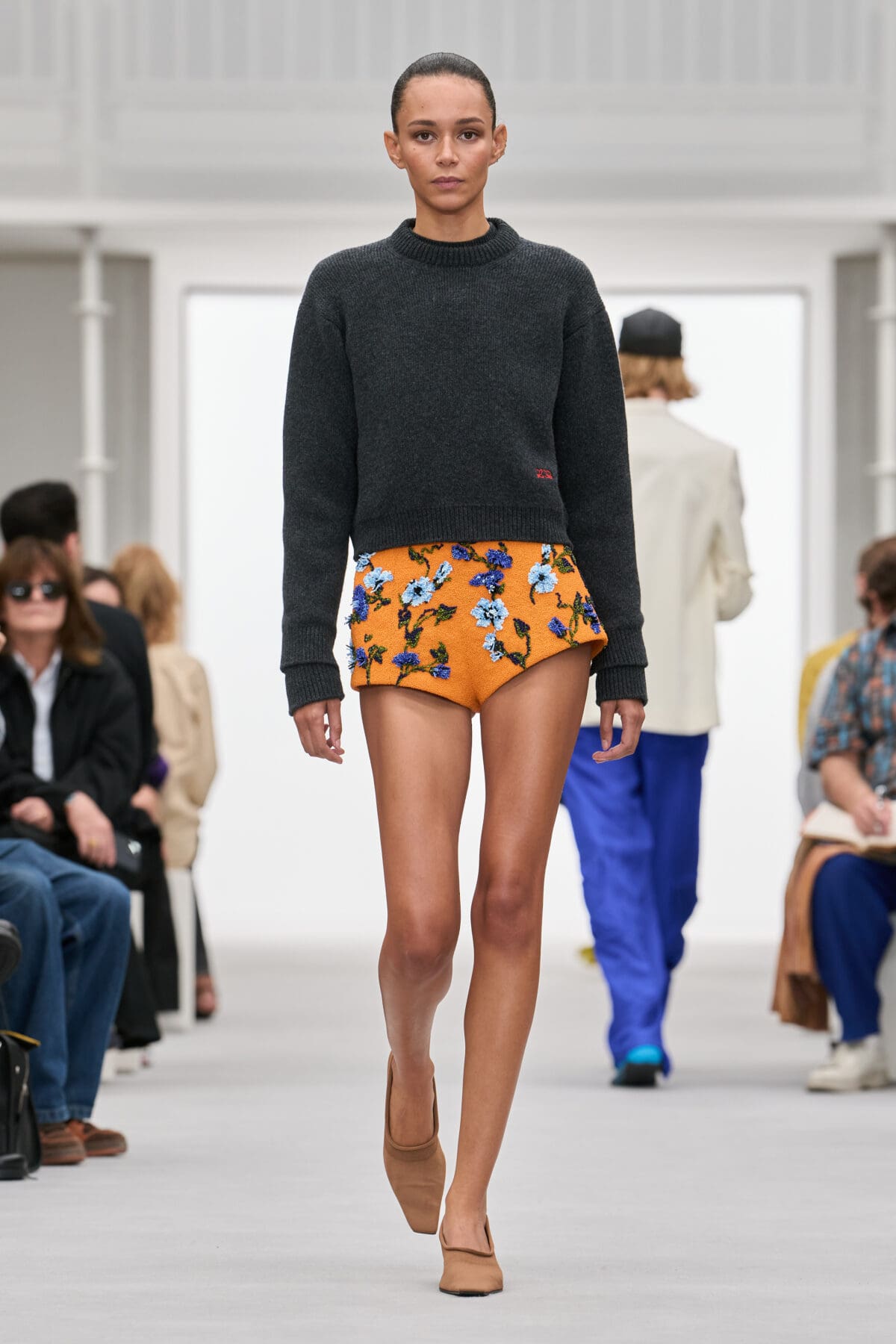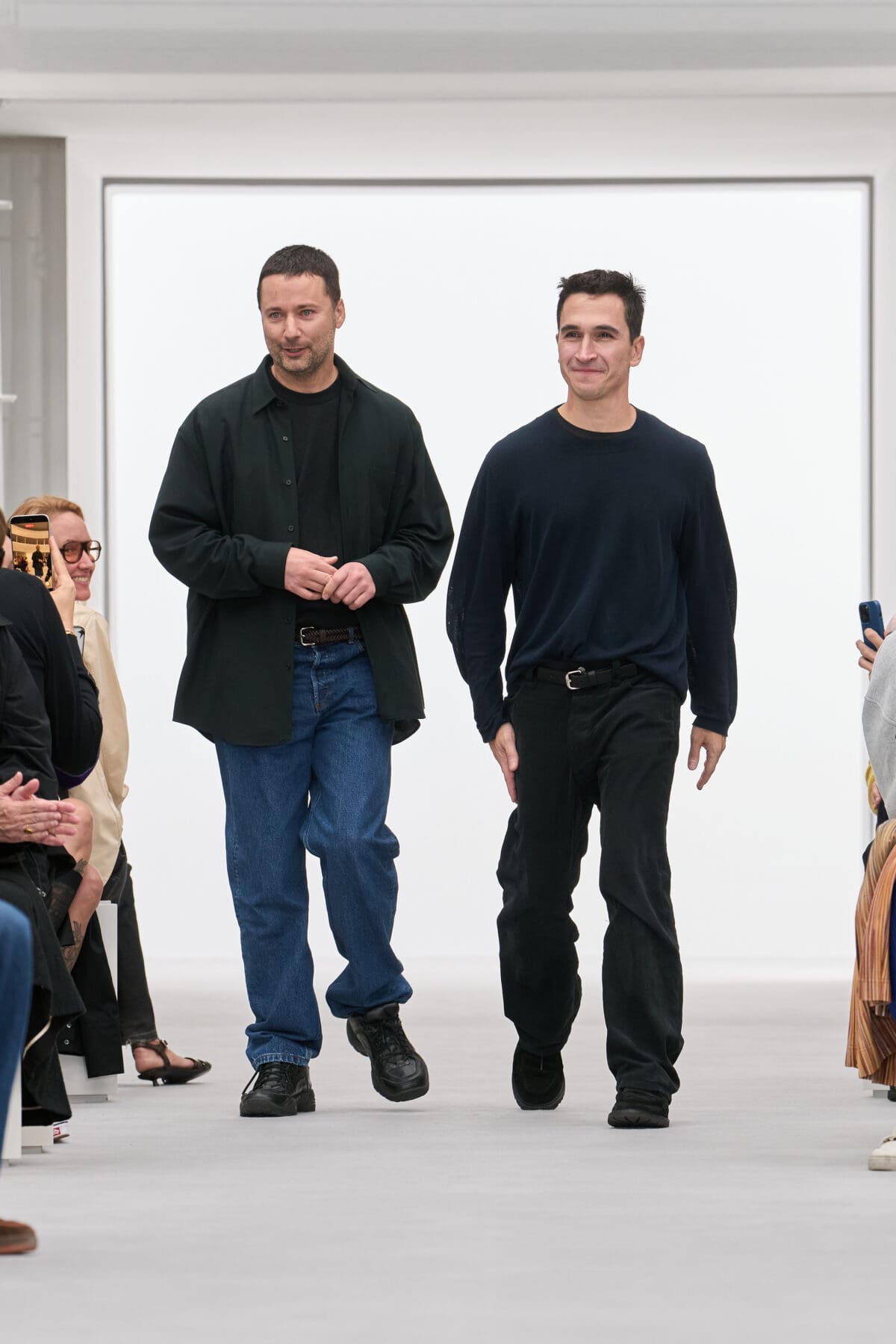



Inside the Château de Vincennes, the Loewe set was built in the round, and the mazelike runway meant the models were an arm’s reach away. At a preview, Jack McCollough said, “We’re really looking at how to translate all these ideas we’ve been having into a bit more reality and a way of dressing.” Lazaro Hernandez finished the thought: It’s about “creating a style. We’ve been brand building for the last two seasons, creating a new universe that’s resonating… Now how do you bring clothes into that conversation?”
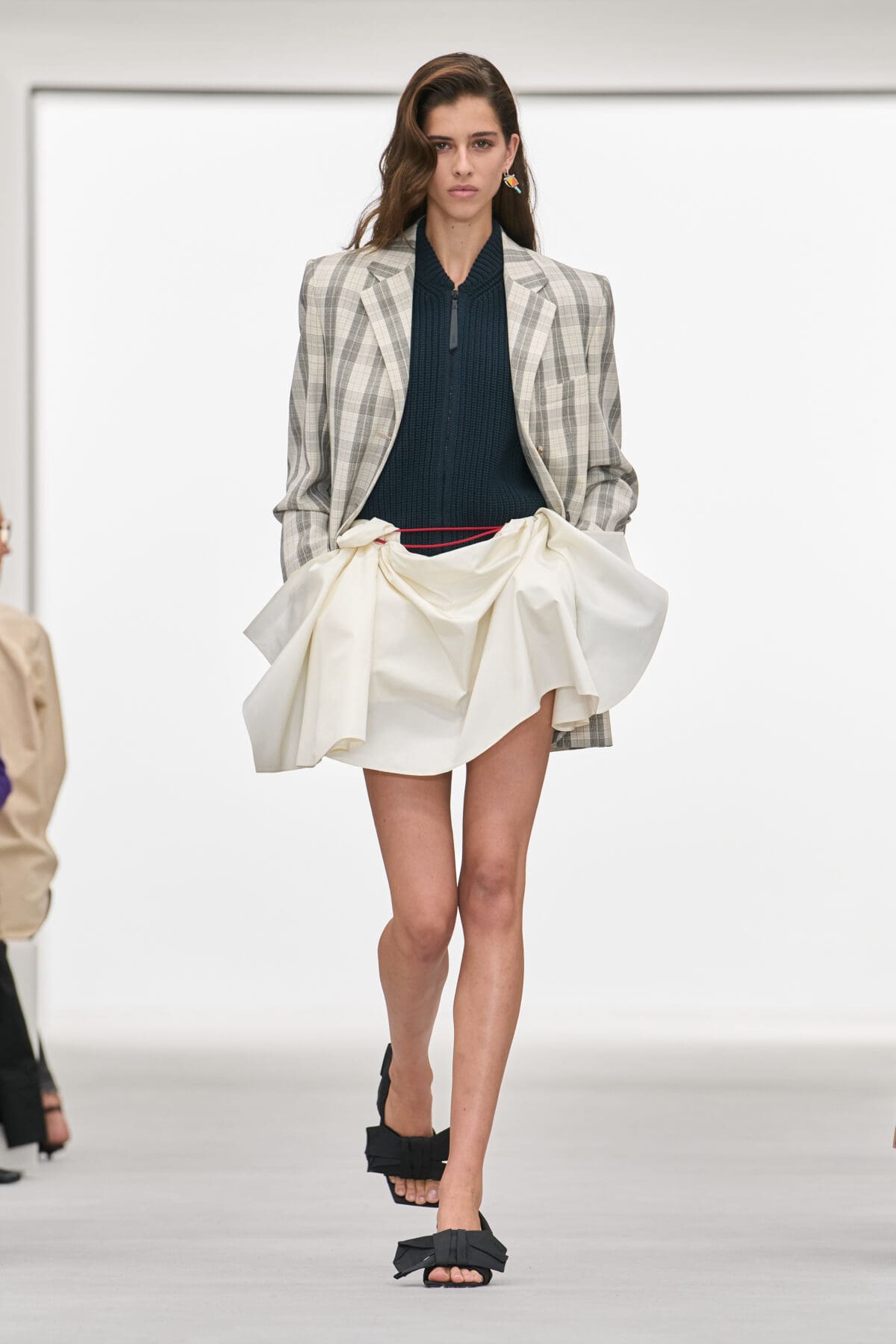
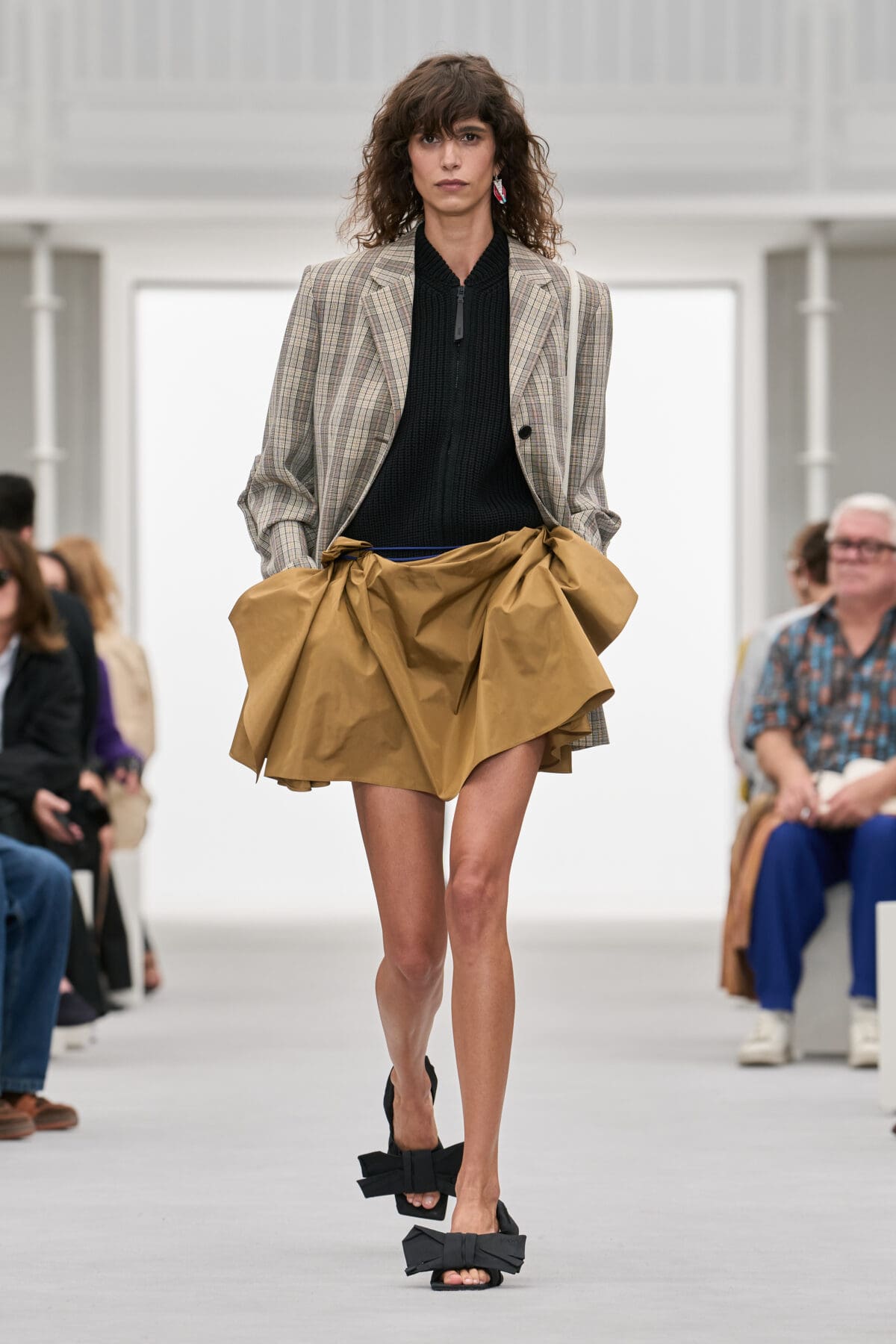
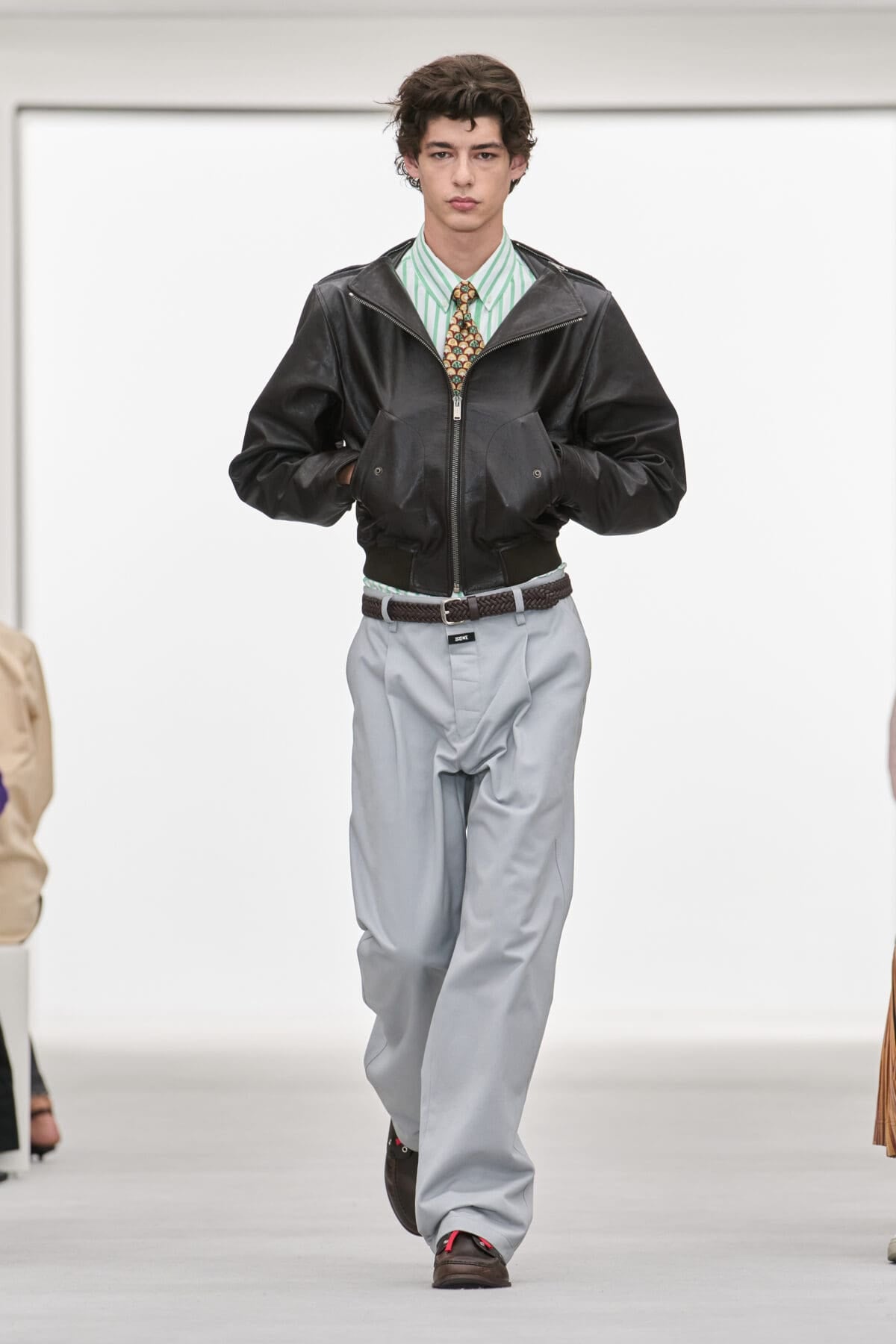
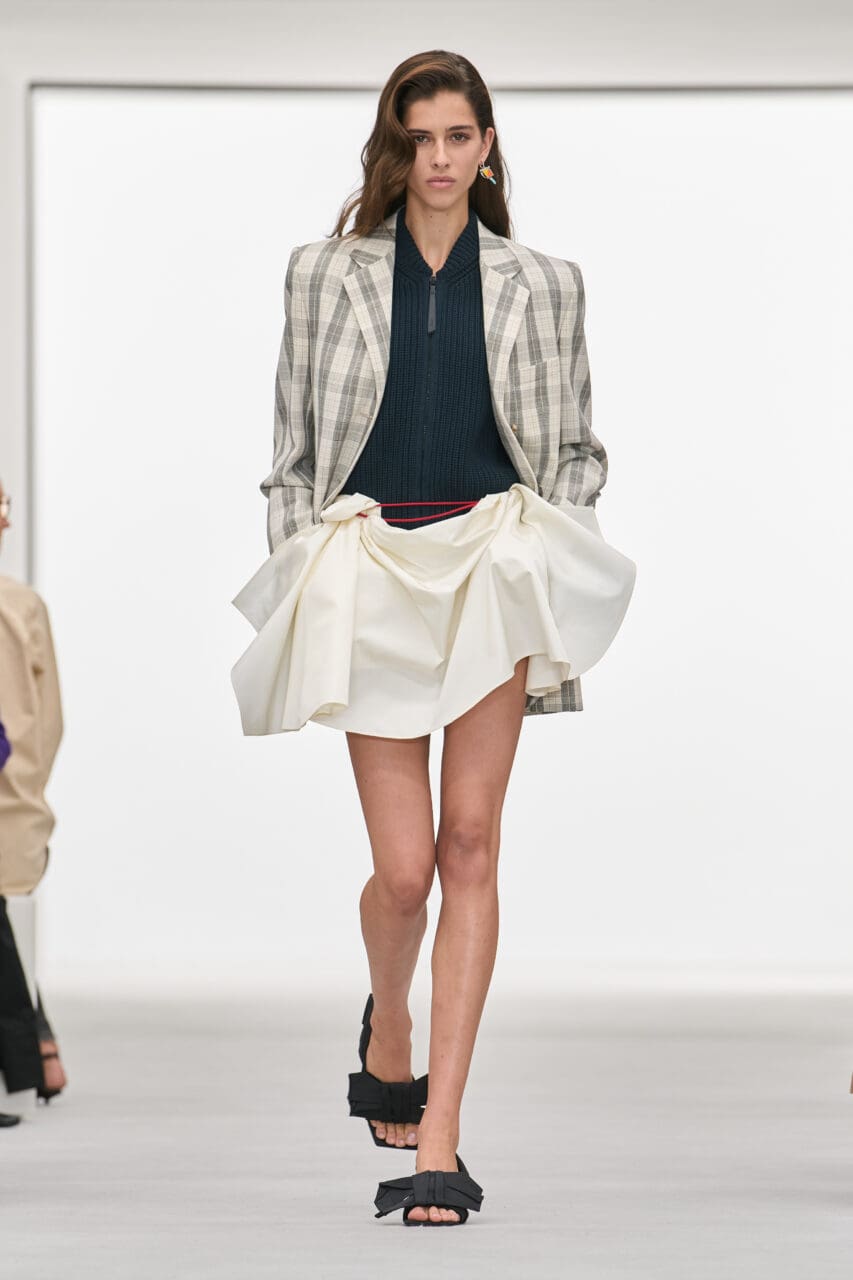
Designers up and down the market have been finding ways to romance the relatability of their offers this season; the Loewe designers have plenty of company in this regard. As former New Yorkers, their tactic was to highlight a certain can-do, almost casual Americanness. It meant they mixed normcore-ish pieces like a checked sport coat and a zip-front ribbed knit with a crumpled cloth napkin of a miniskirt that was modeled after Francisco de Zurbarán and Diego Velázquez paintings they saw at the Prado in Madrid and held in place with bungee cord twisted around the waist. Or polo-neck sweaters paired with micro beaded knit skirts made by an artisan they came across at the Loewe Craft Prize. Or, for the boys, crisp striped shirts and sporty anoraks stuffed into toreador-ish pants that buttoned up past the navel. A lot of the more sportswear-y pieces and accessories (backward caps, barefoot running shoes, and the like) were accented with the double-L logo they recently developed or the more familiar block-letters version. They depended on them a little too much; true luxury shouldn’t announce itself.
On the flip side, they showed a pair of understated suede jackets modeled on the first piece of clothing that Loewe, fashion’s second-oldest house after Hermès, ever made. These guys can do the classics too. But the charge in this moment of change for McCollough and Hernandez—for them and for us—is the license to experiment and explore that it’s granted them.
Other normcore-y pieces weren’t really normal at all, though they retained their laid-back spirit. McCollough and Hernandez took up the humble marled gray sweatshirt and made it into a trophy piece in allover seed-bead embroidery. What looked like striped cotton Harrington jackets were actually made from scythed leather. The French may have coined the term dégagé, but as Michael Kors, a long-ago mentor to Hernandez (who interned at his New York brand), once said, “It’s what we invented… Everywhere you go in the world, people want a sense of ease.” It’s what these two Americans are bringing to Loewe—ease and fun.
Editor
Nicole Phelps