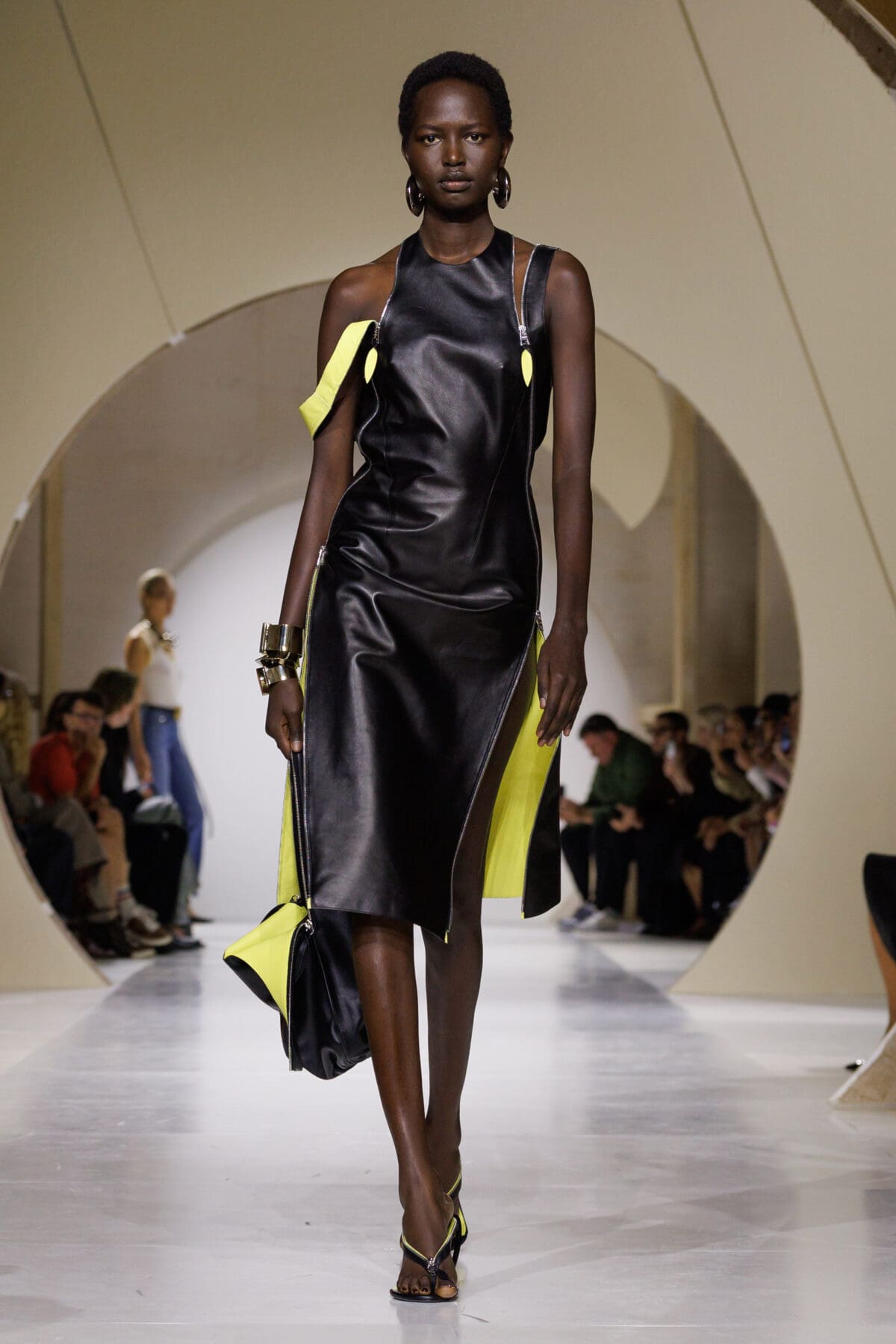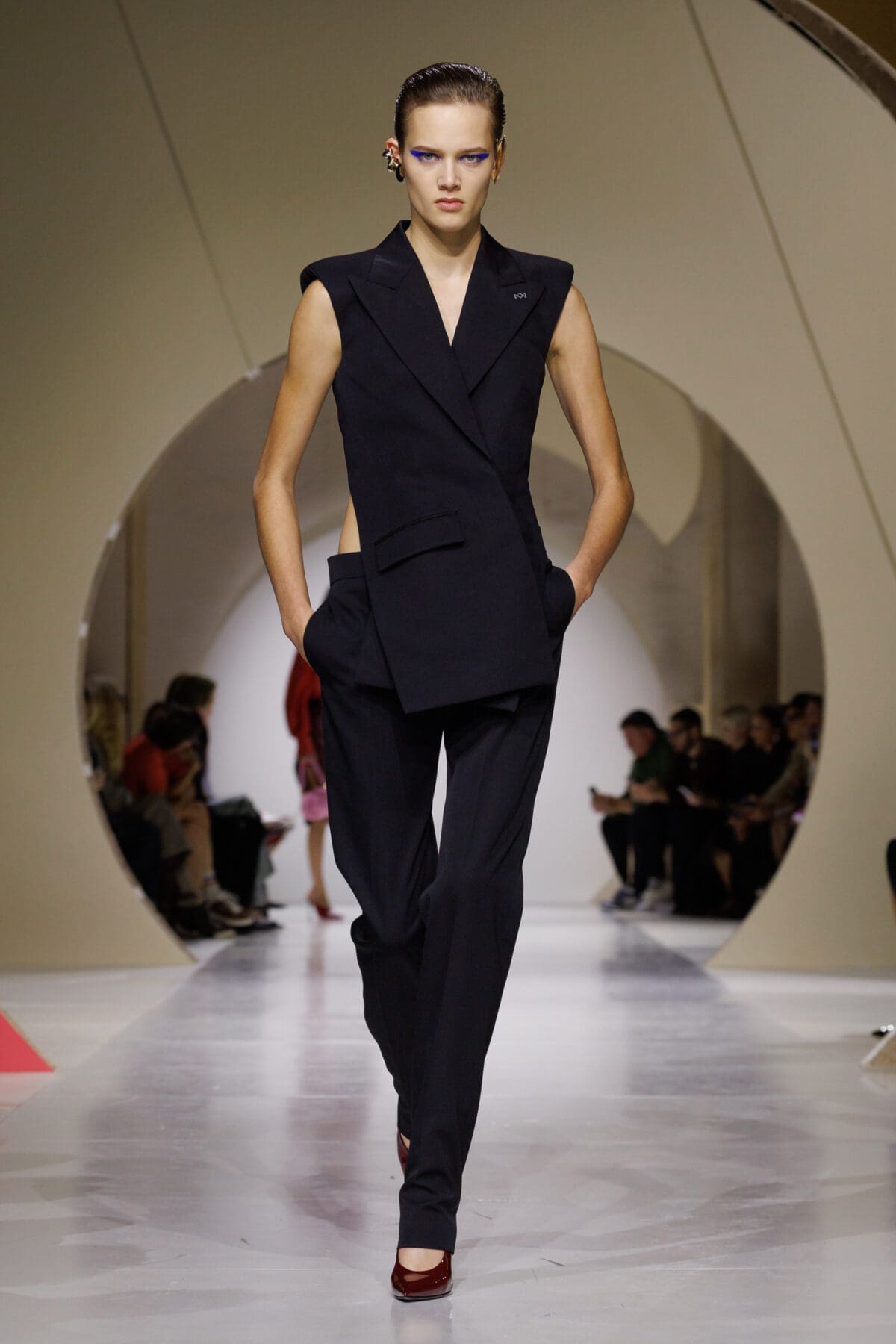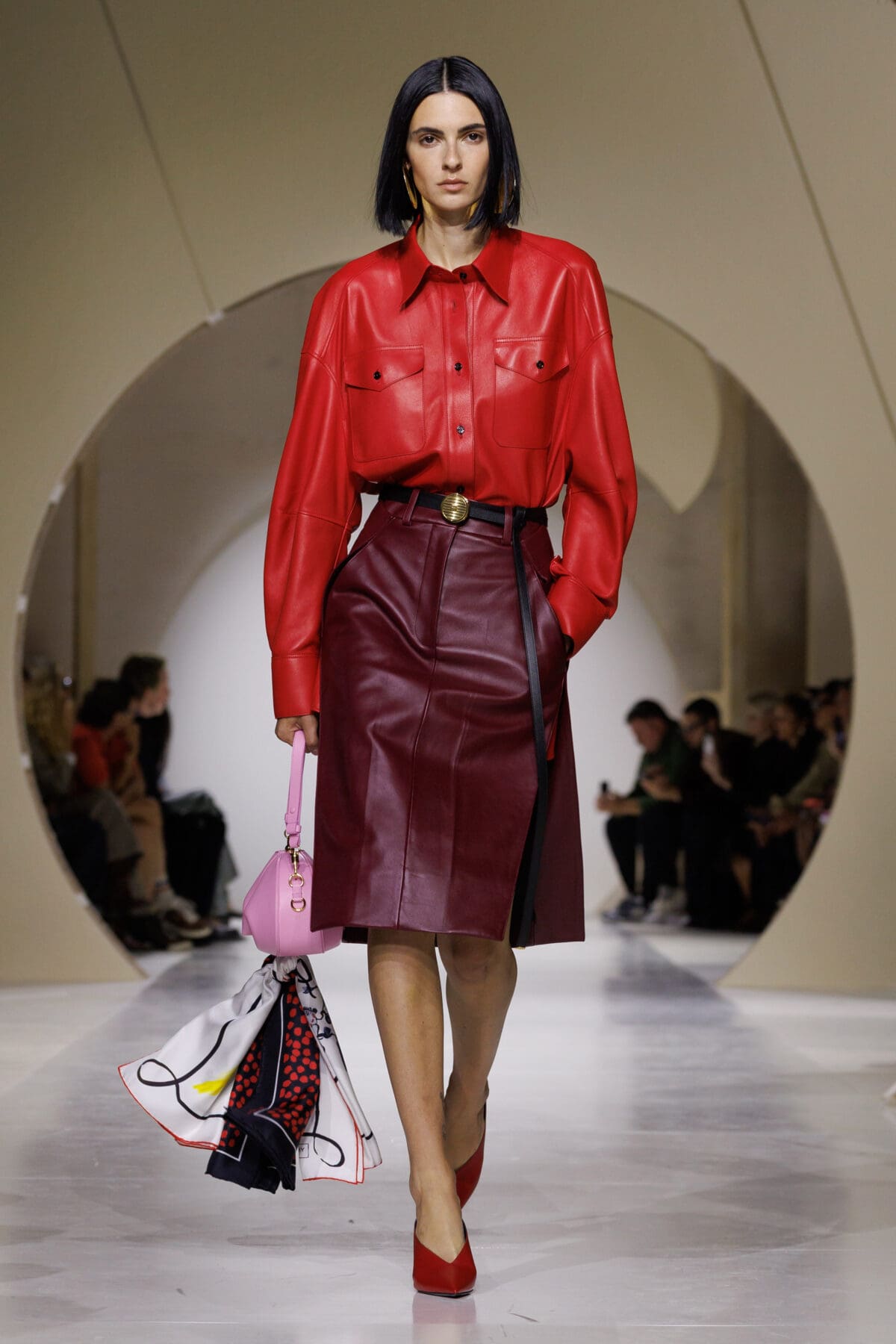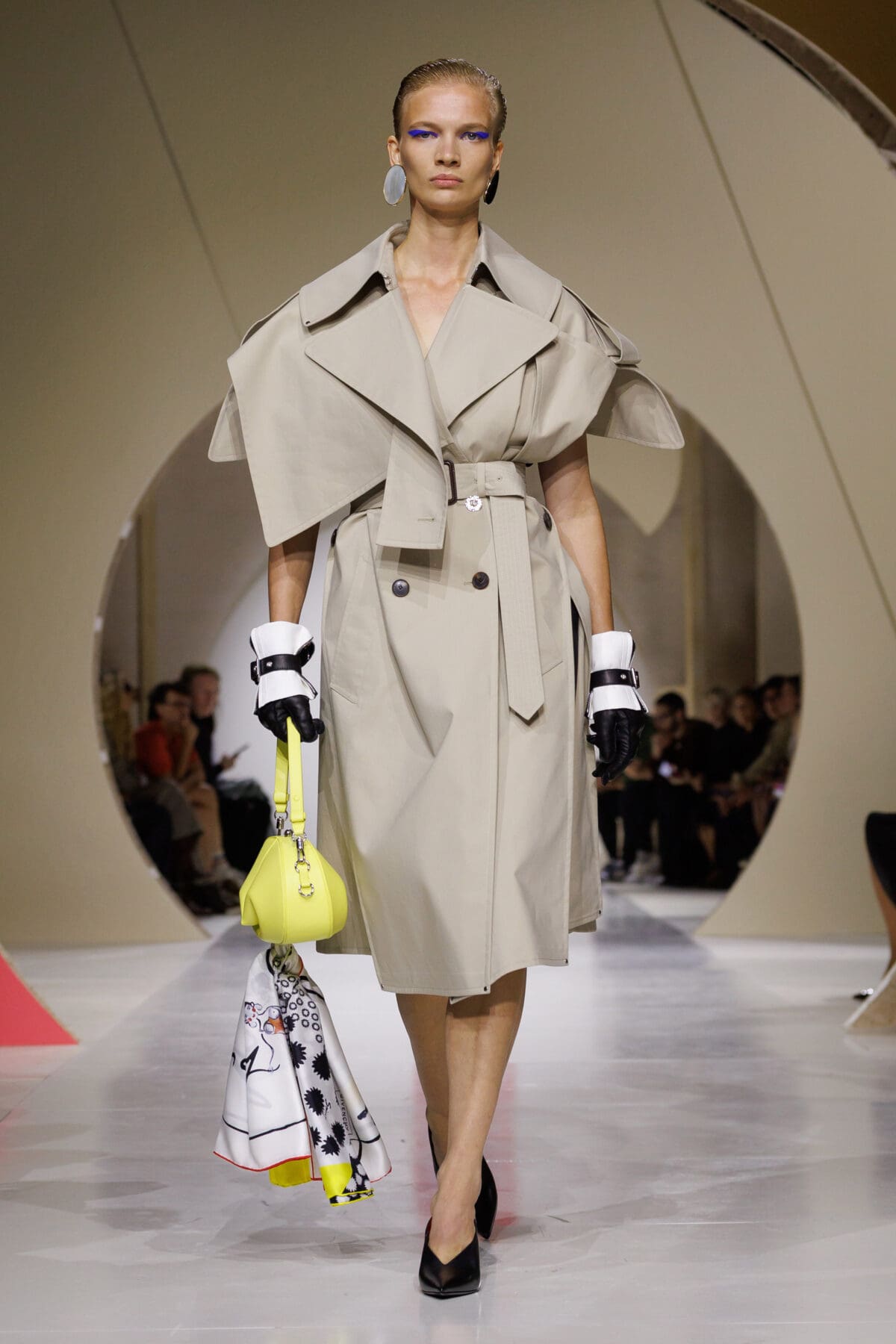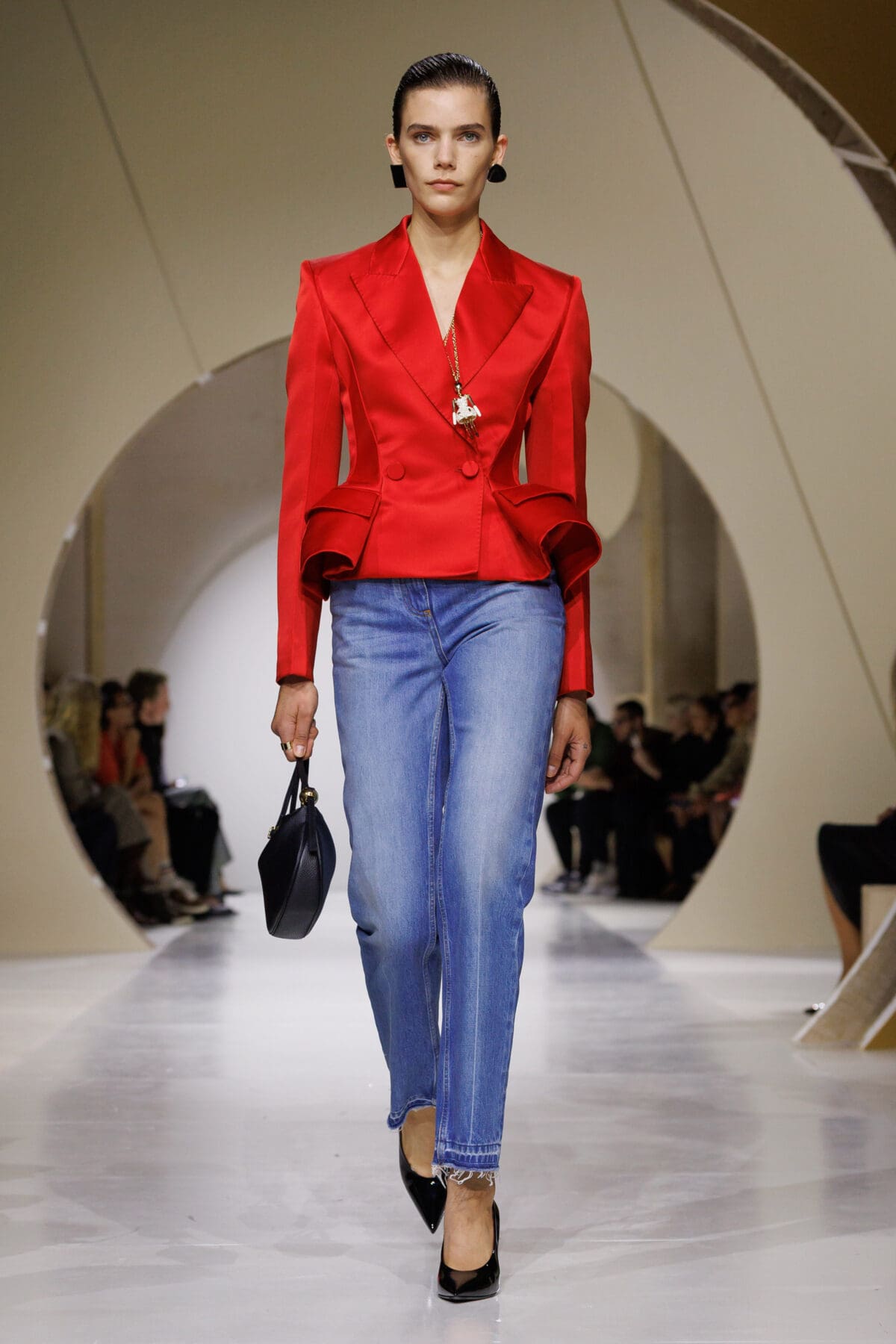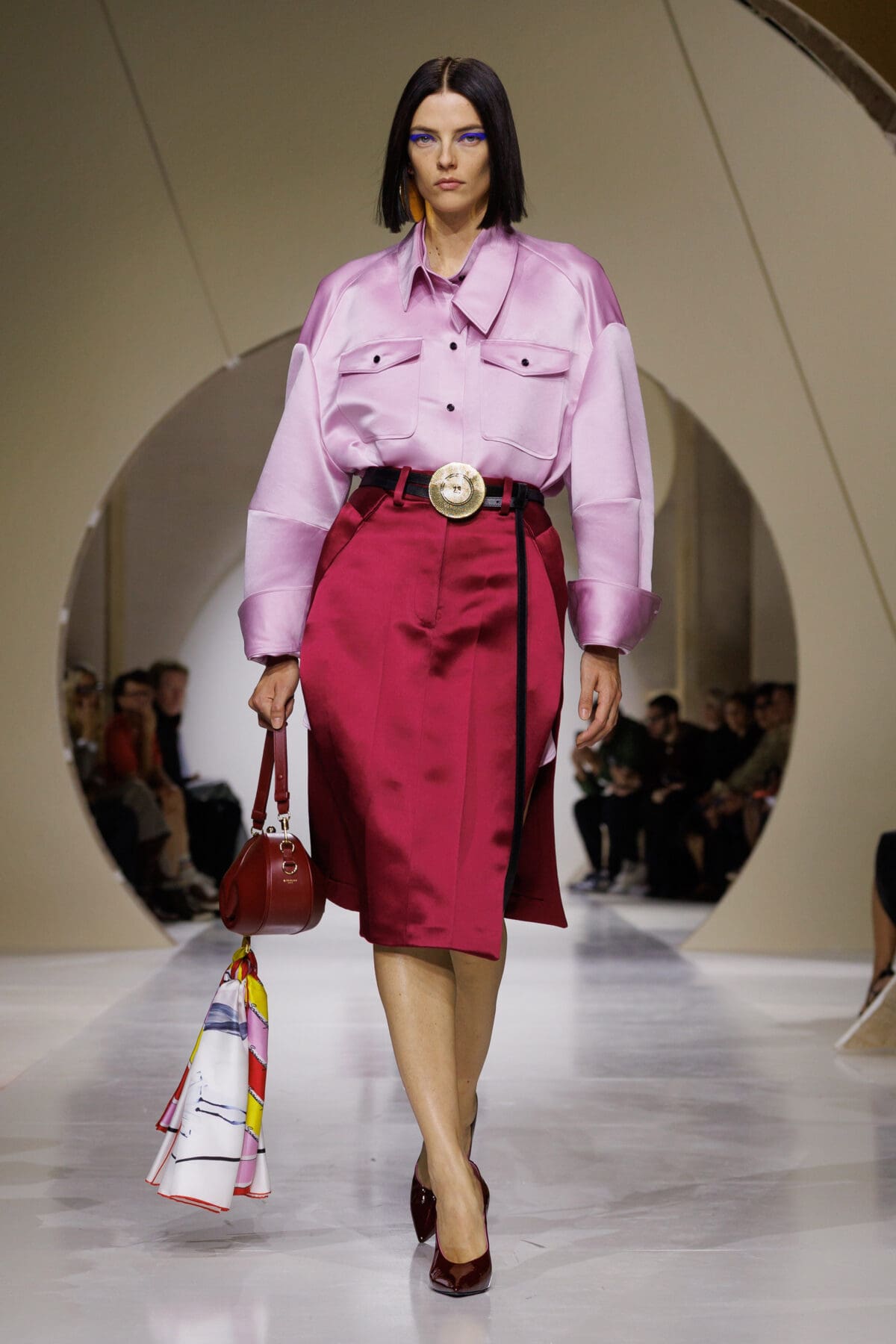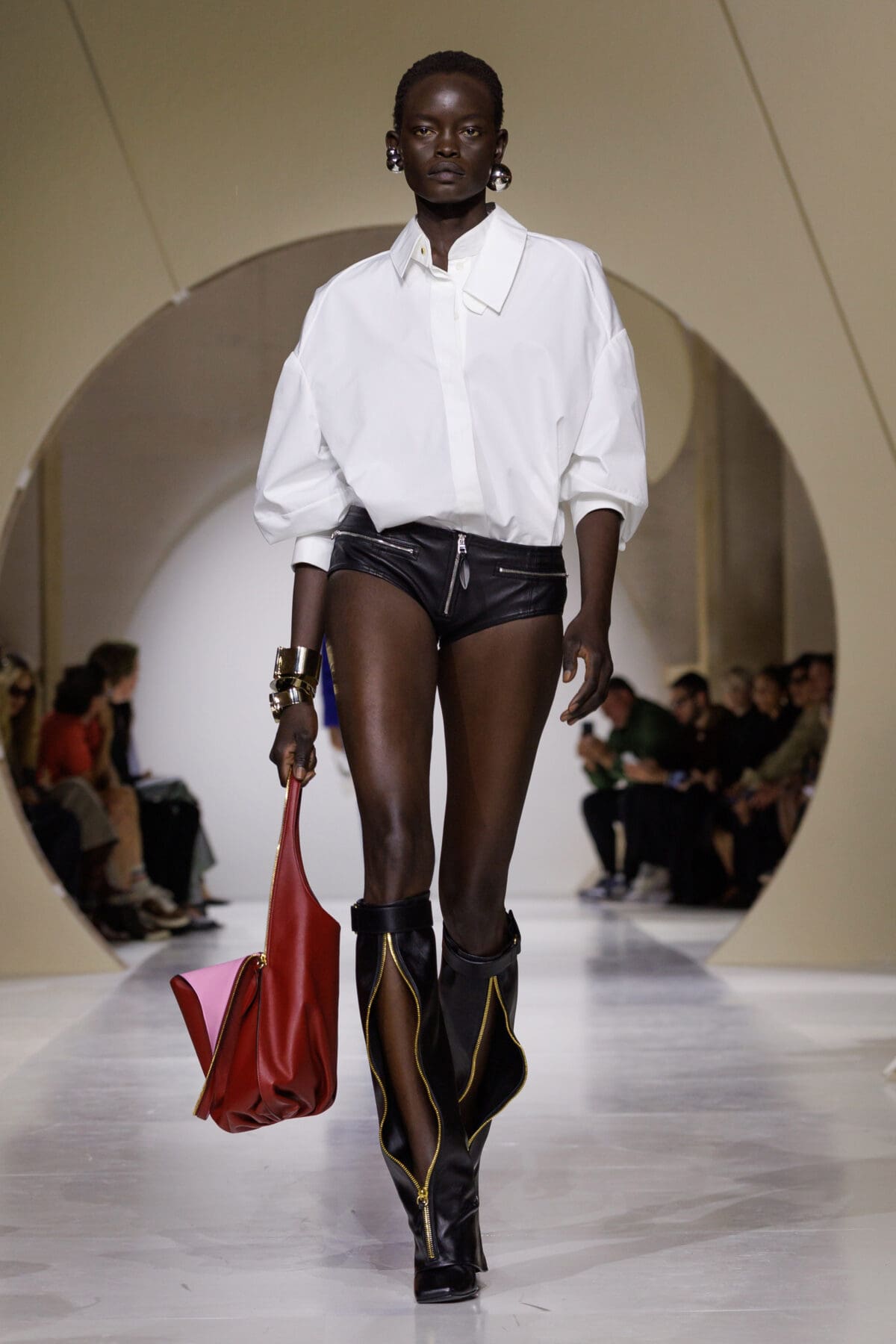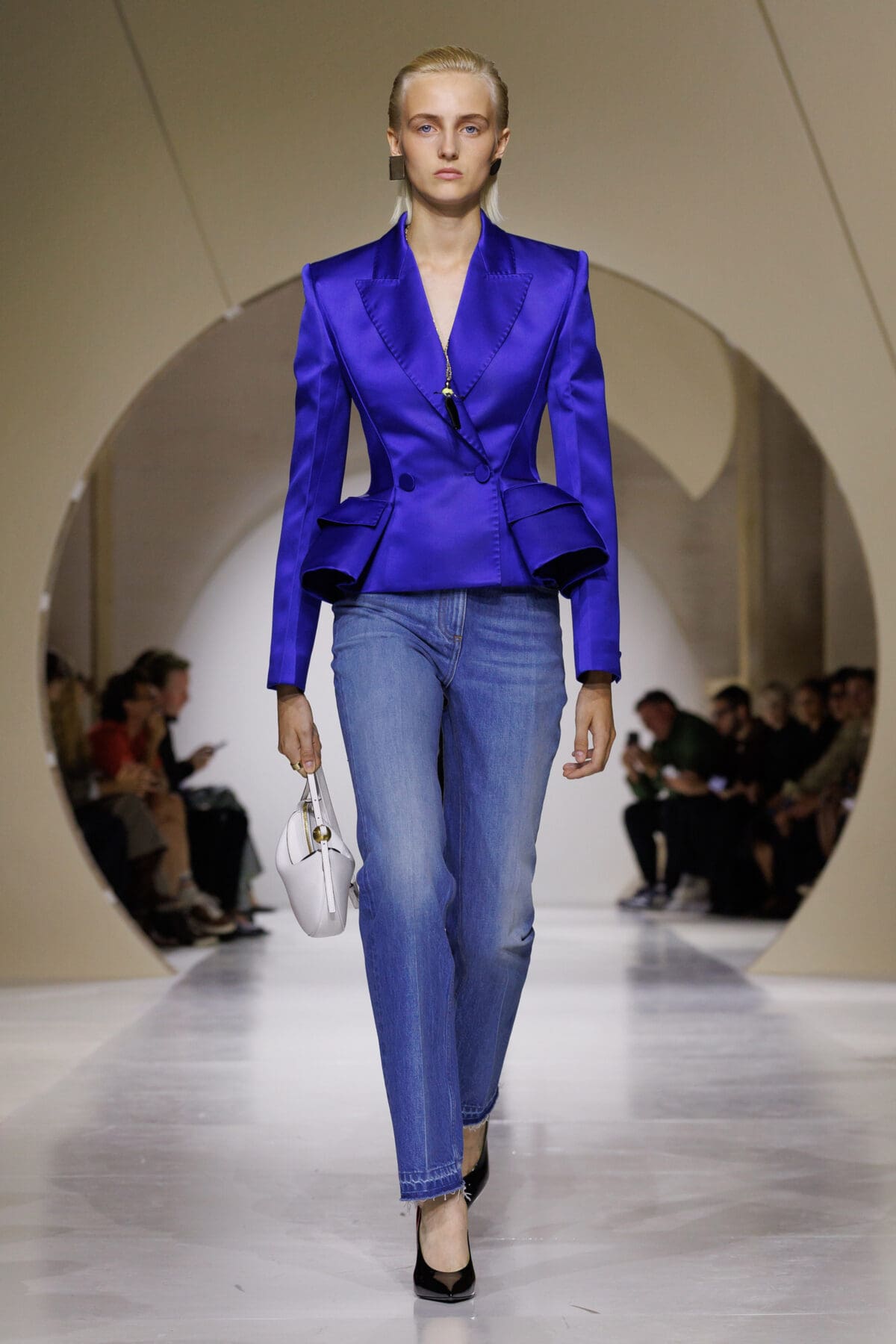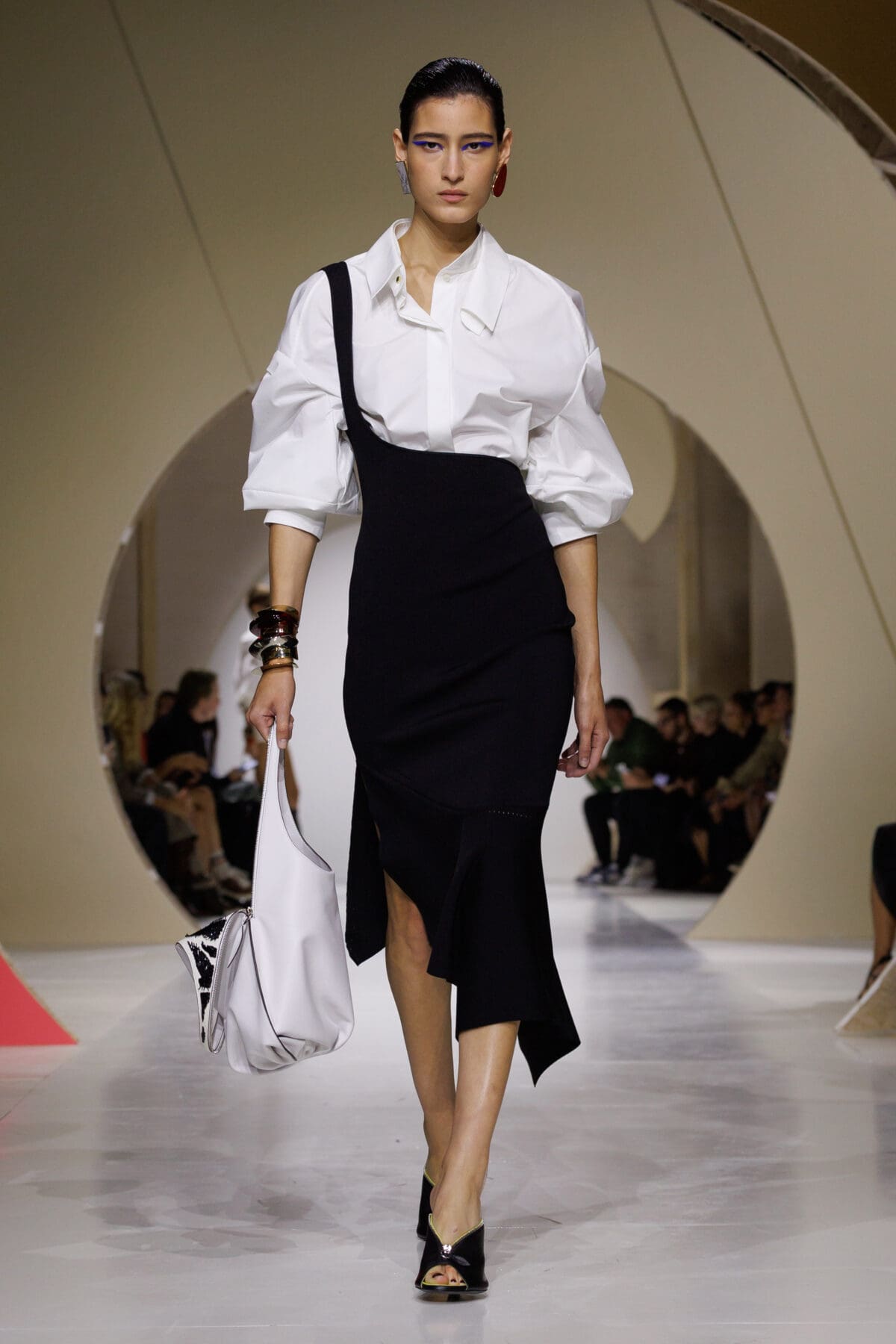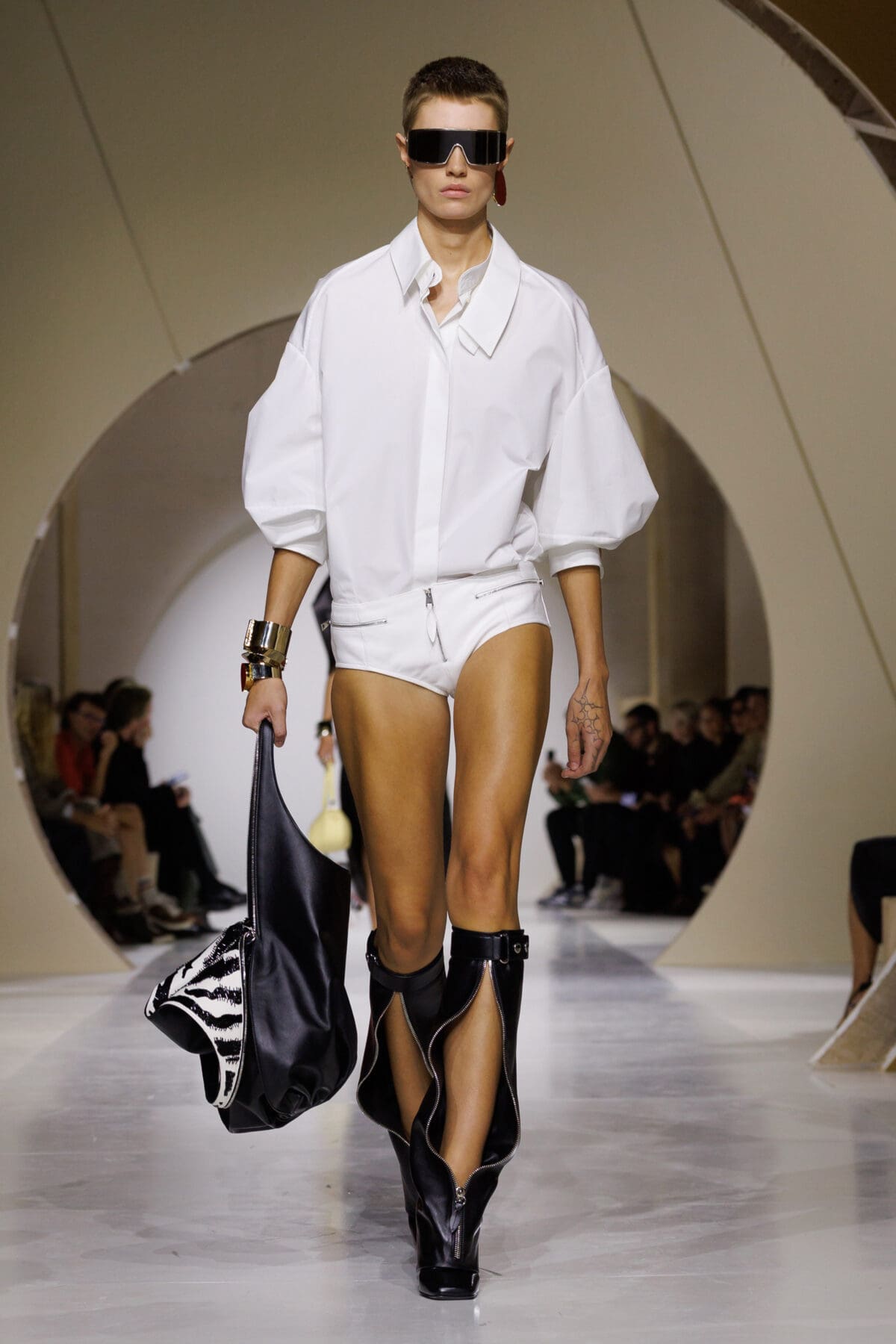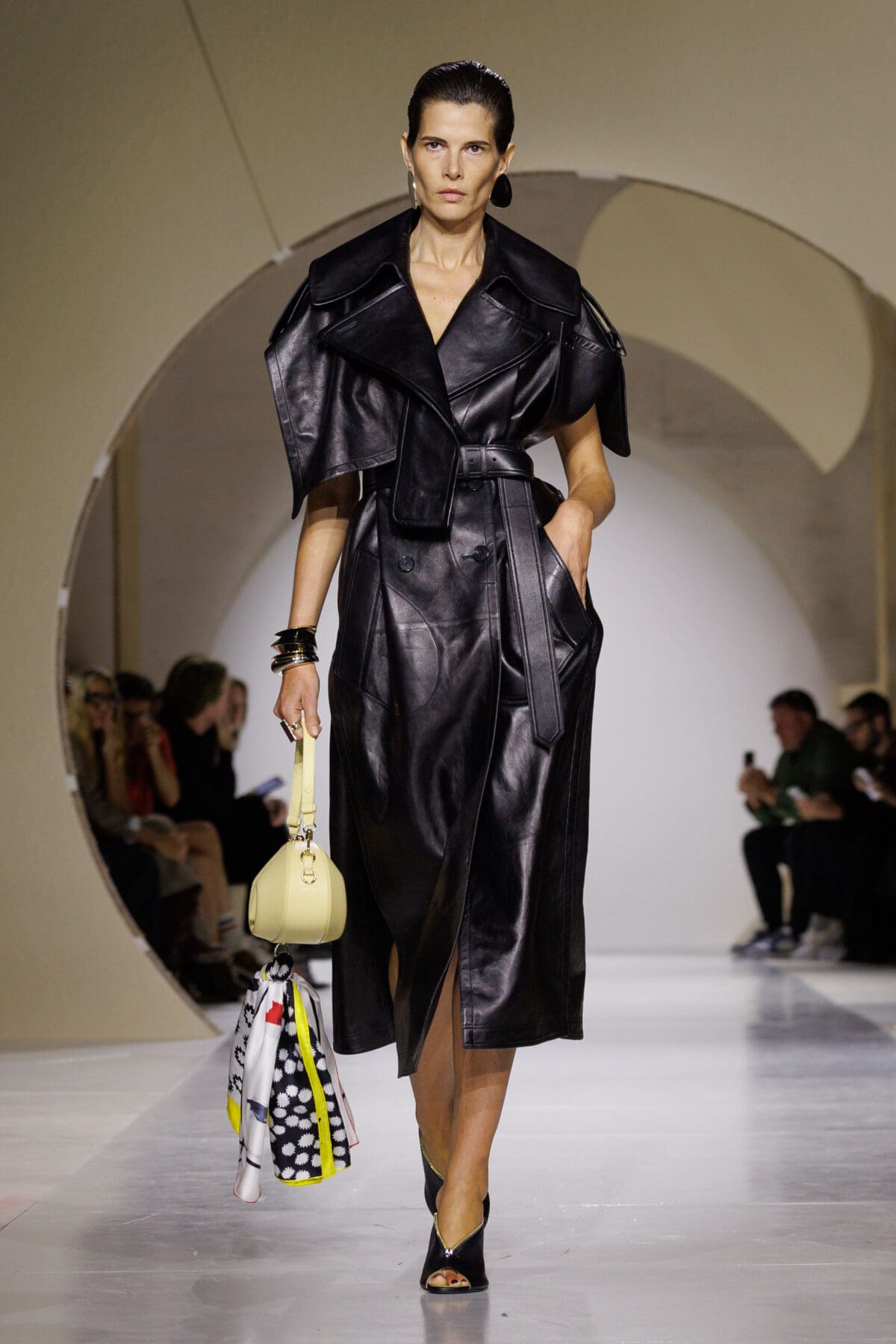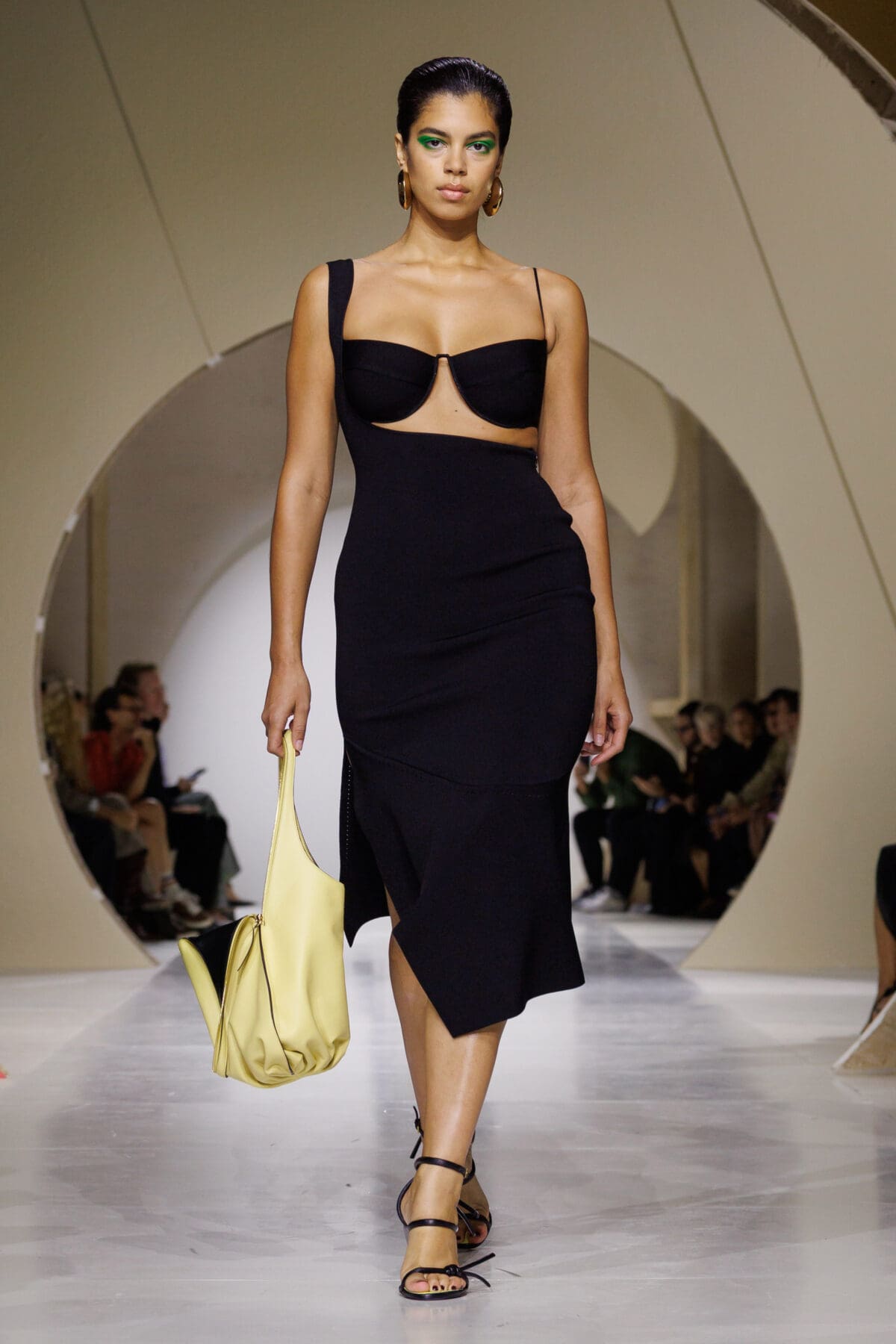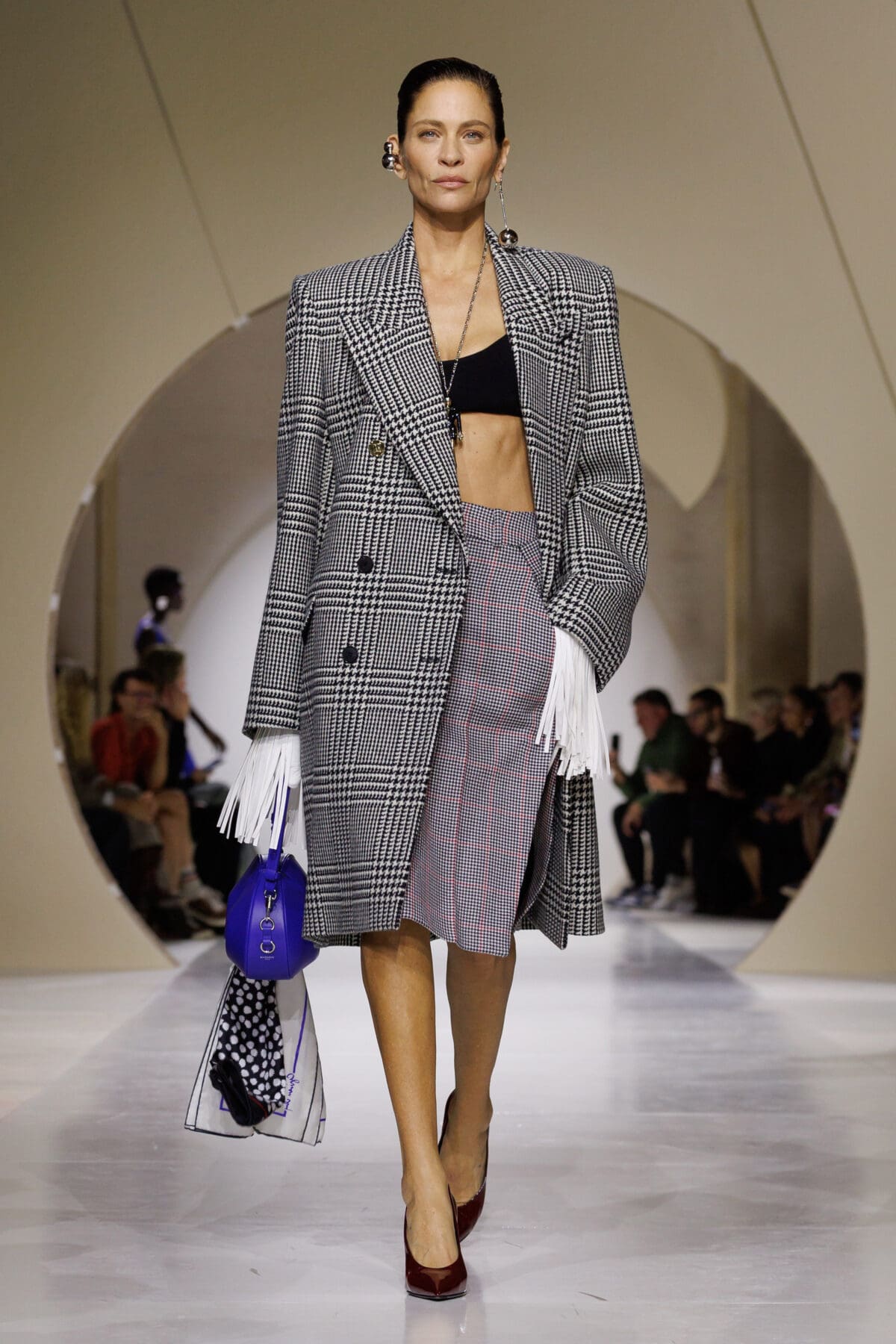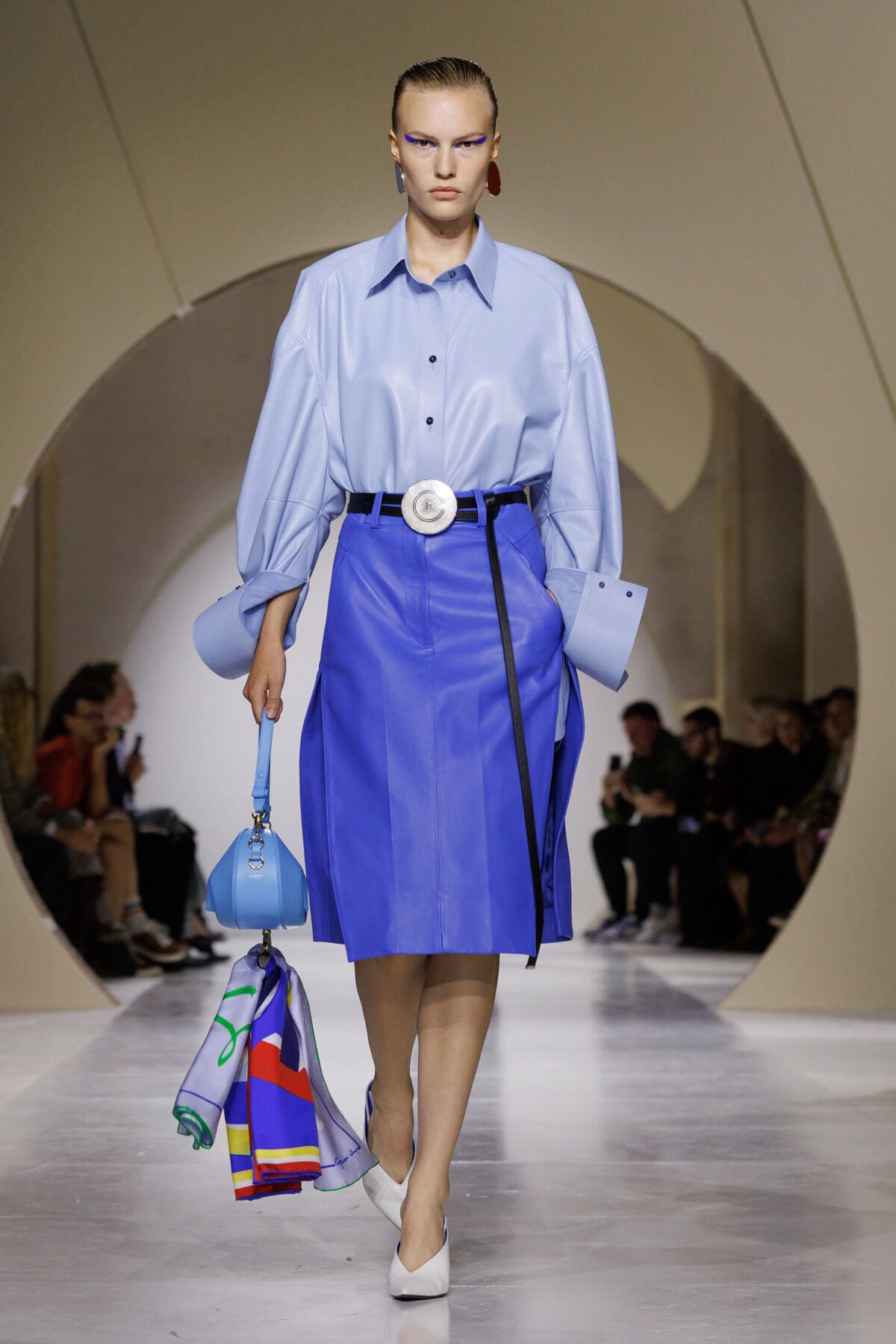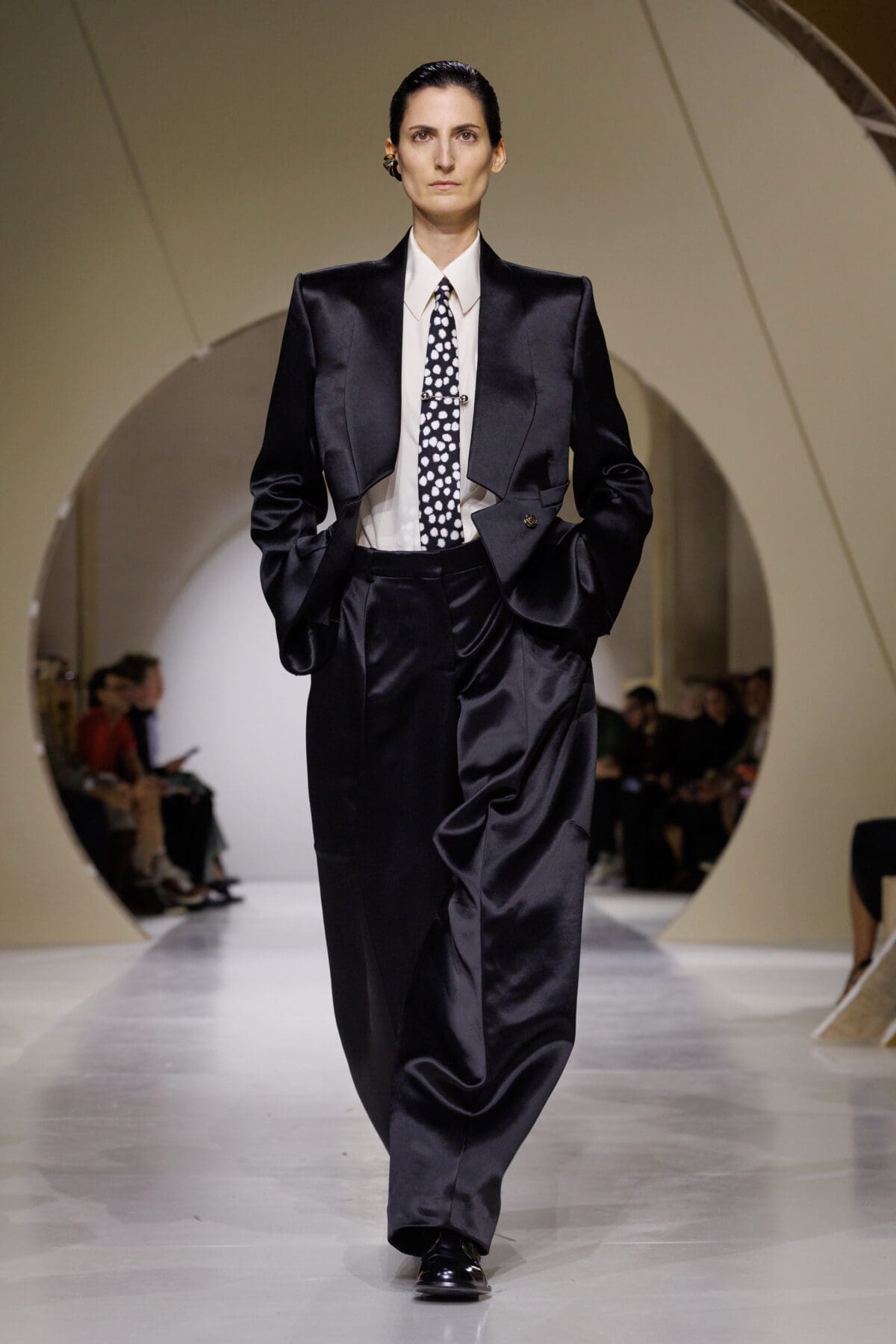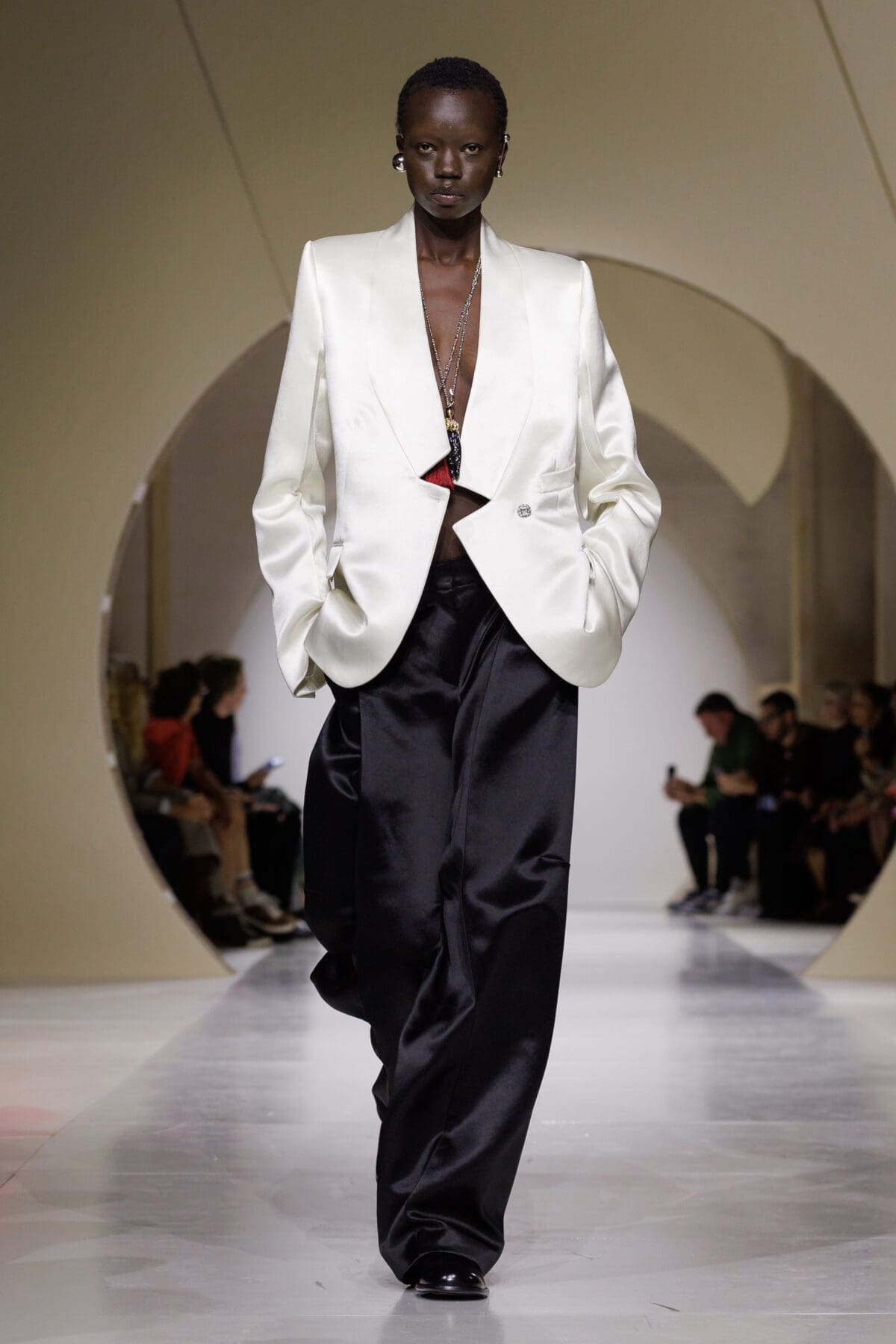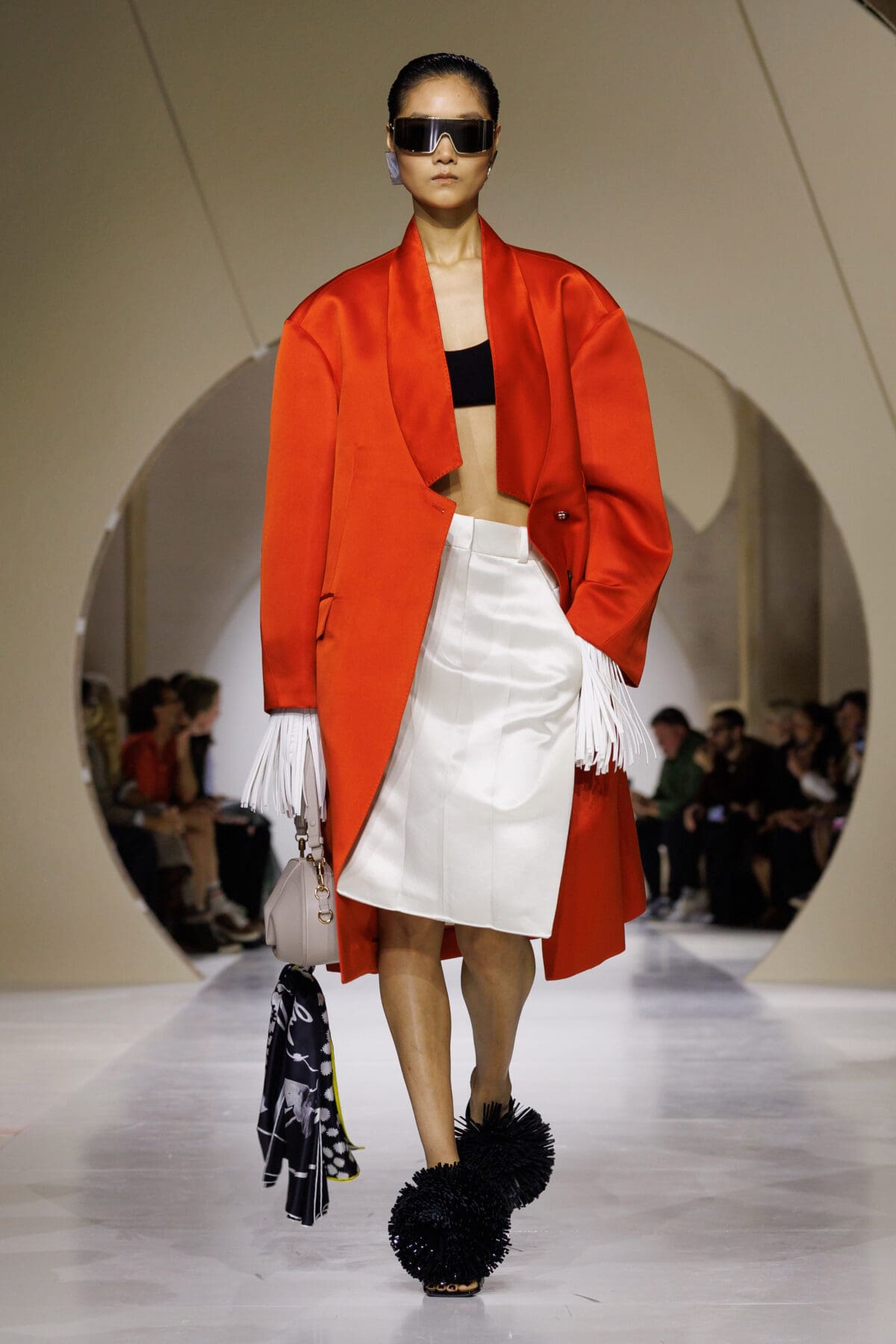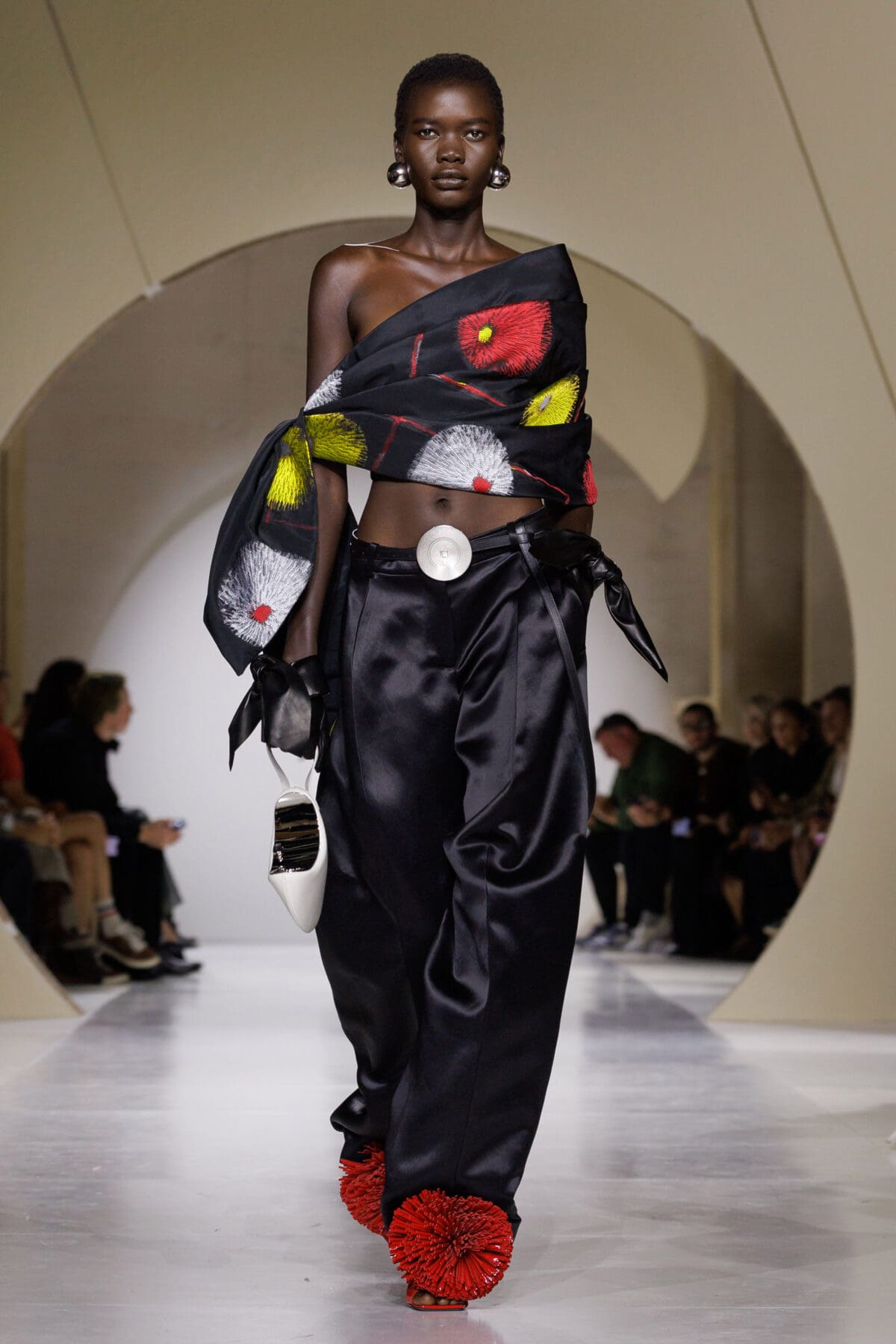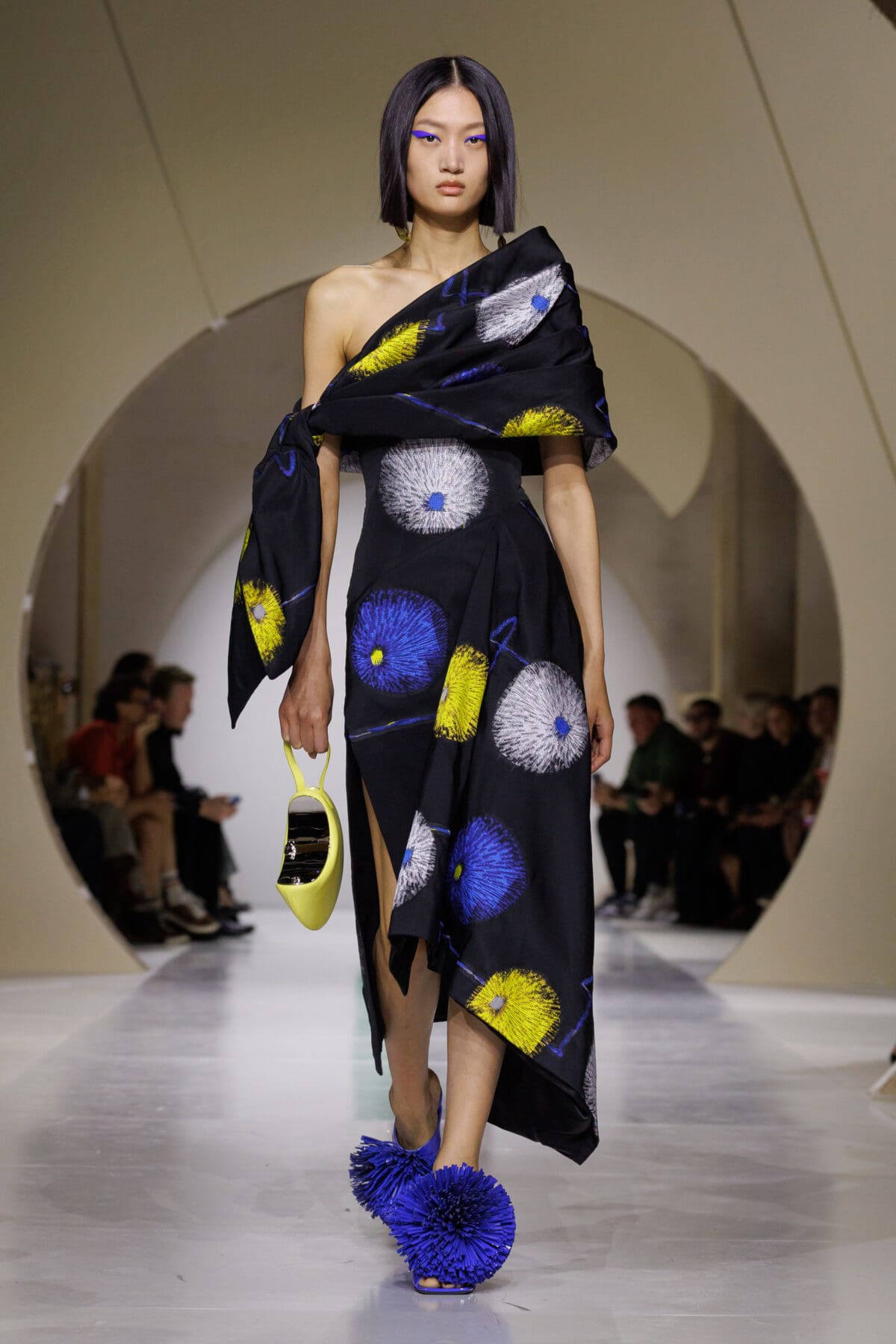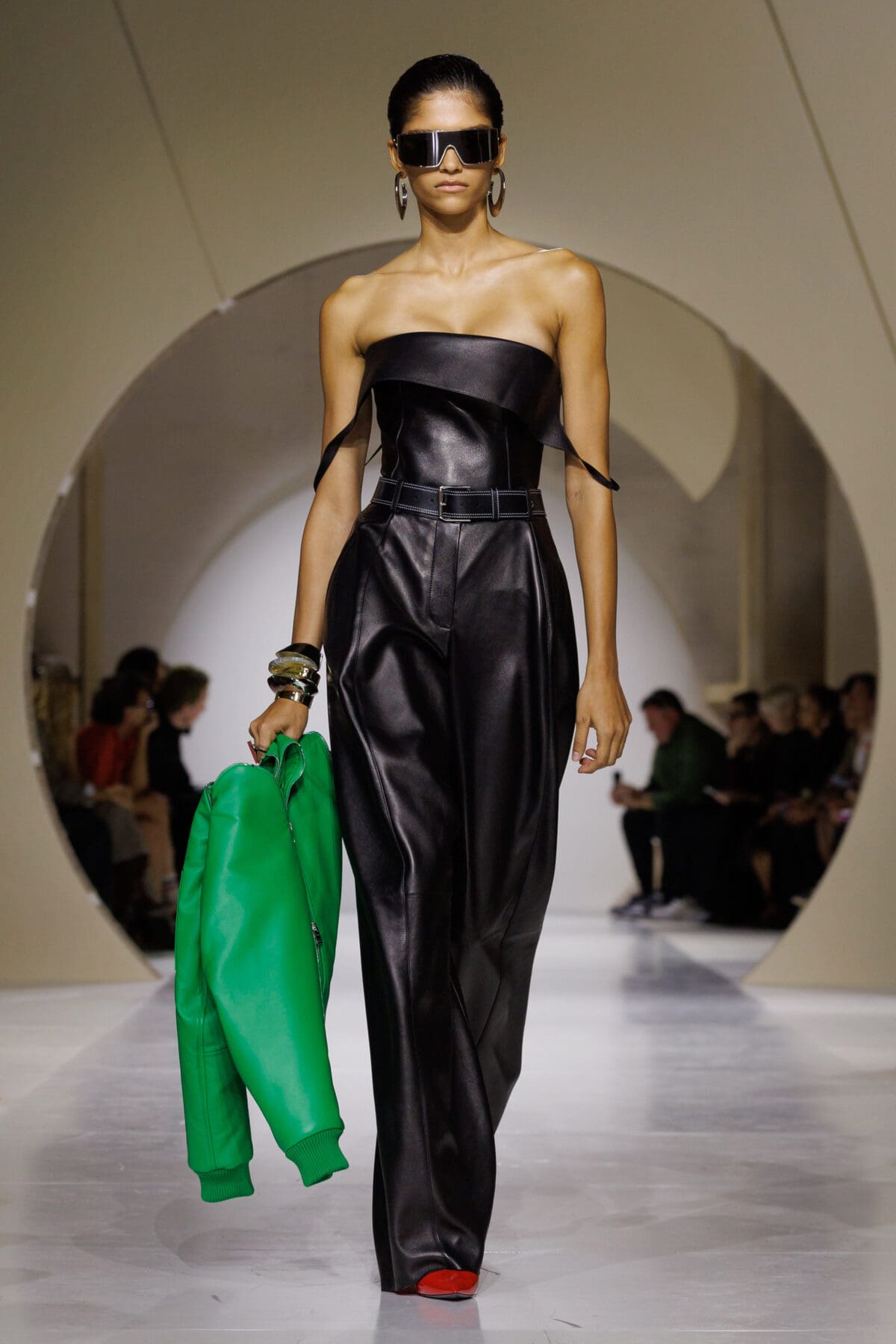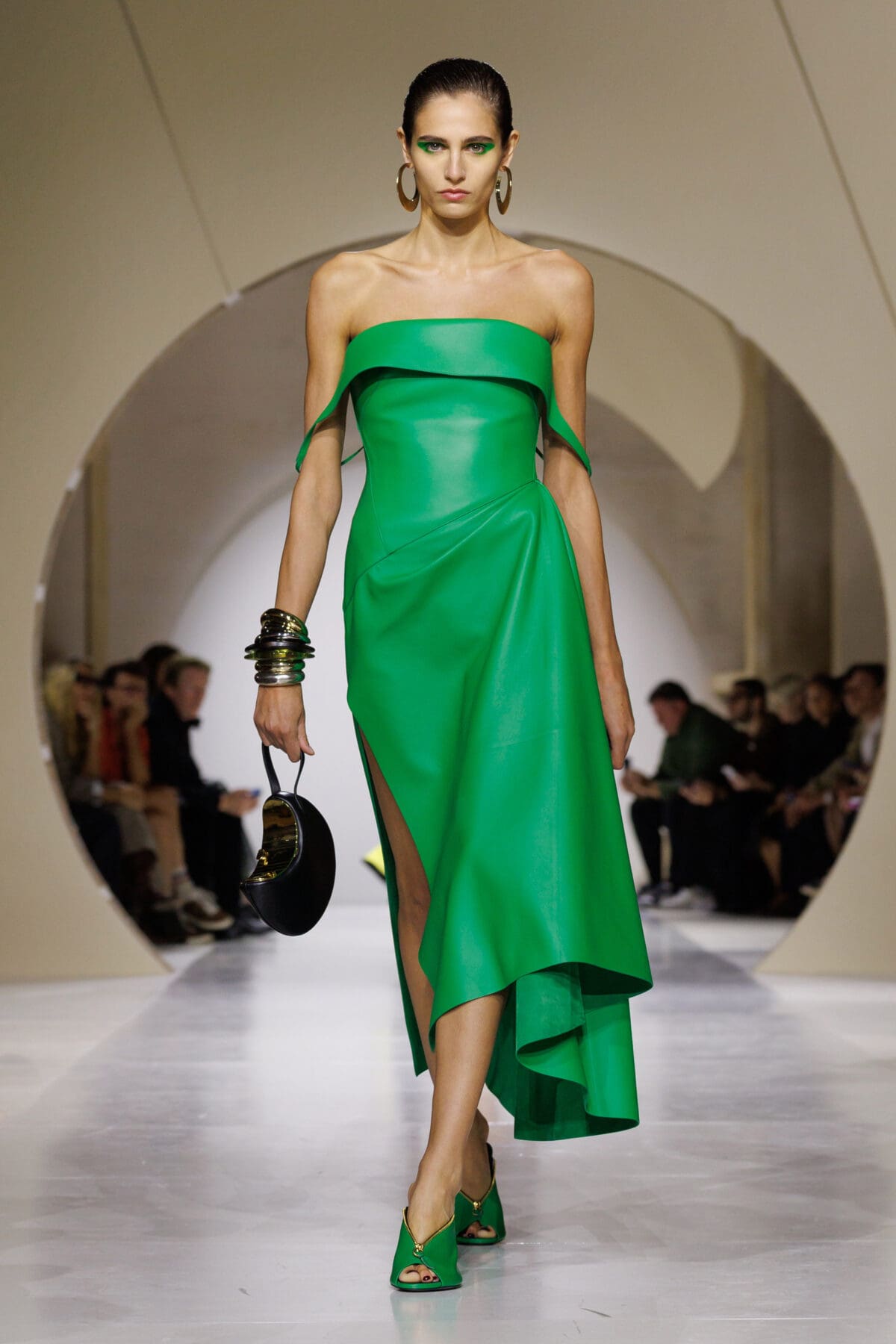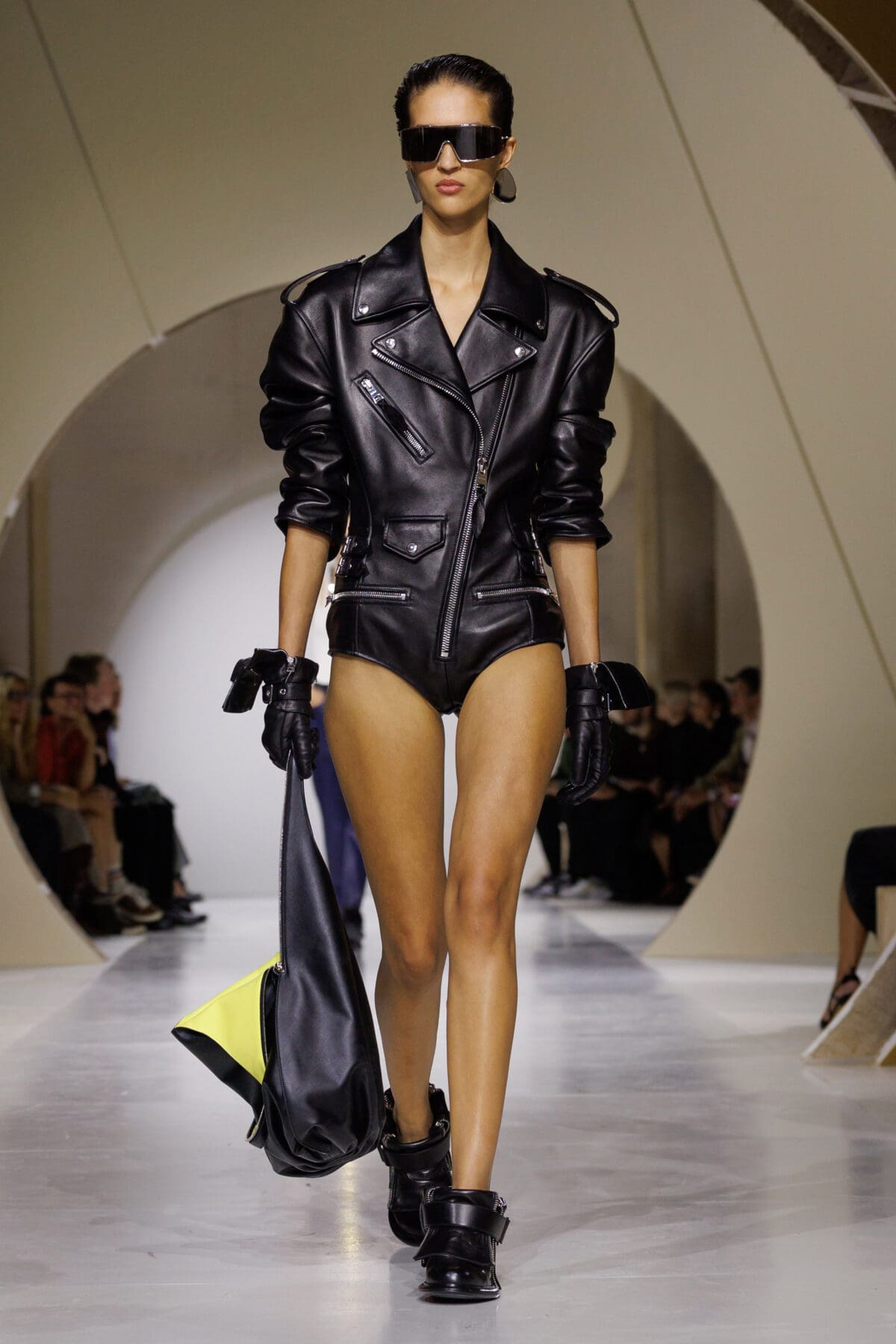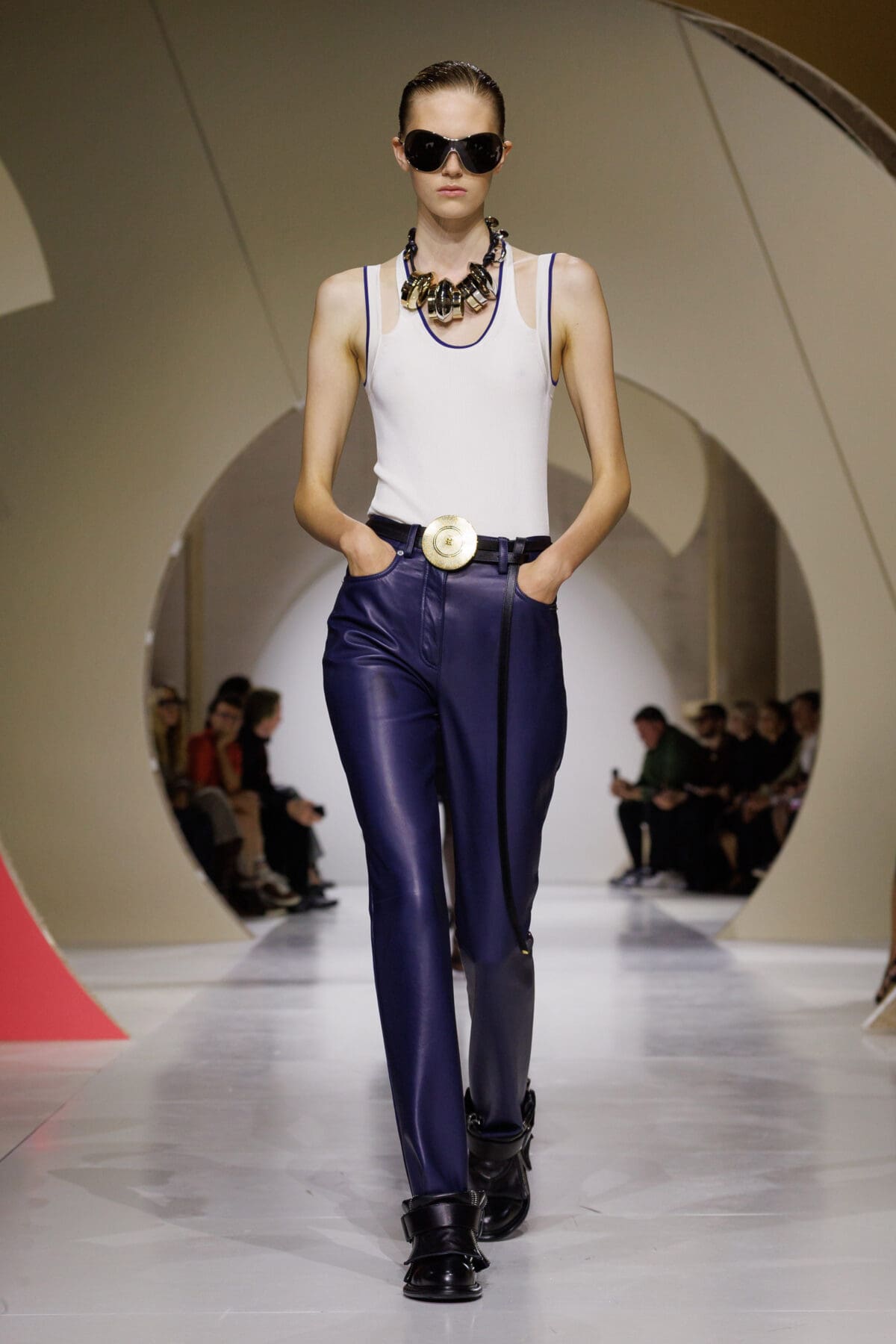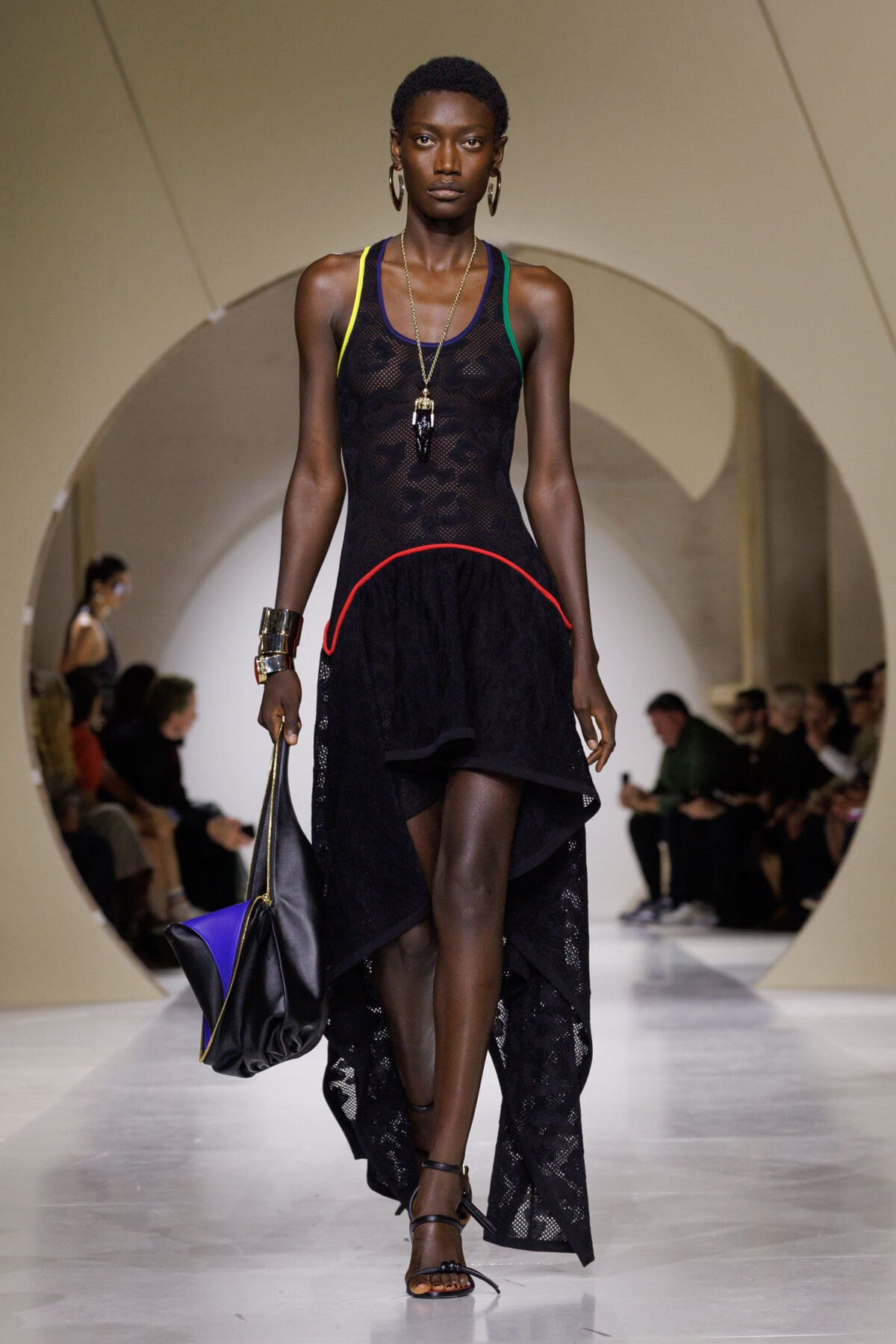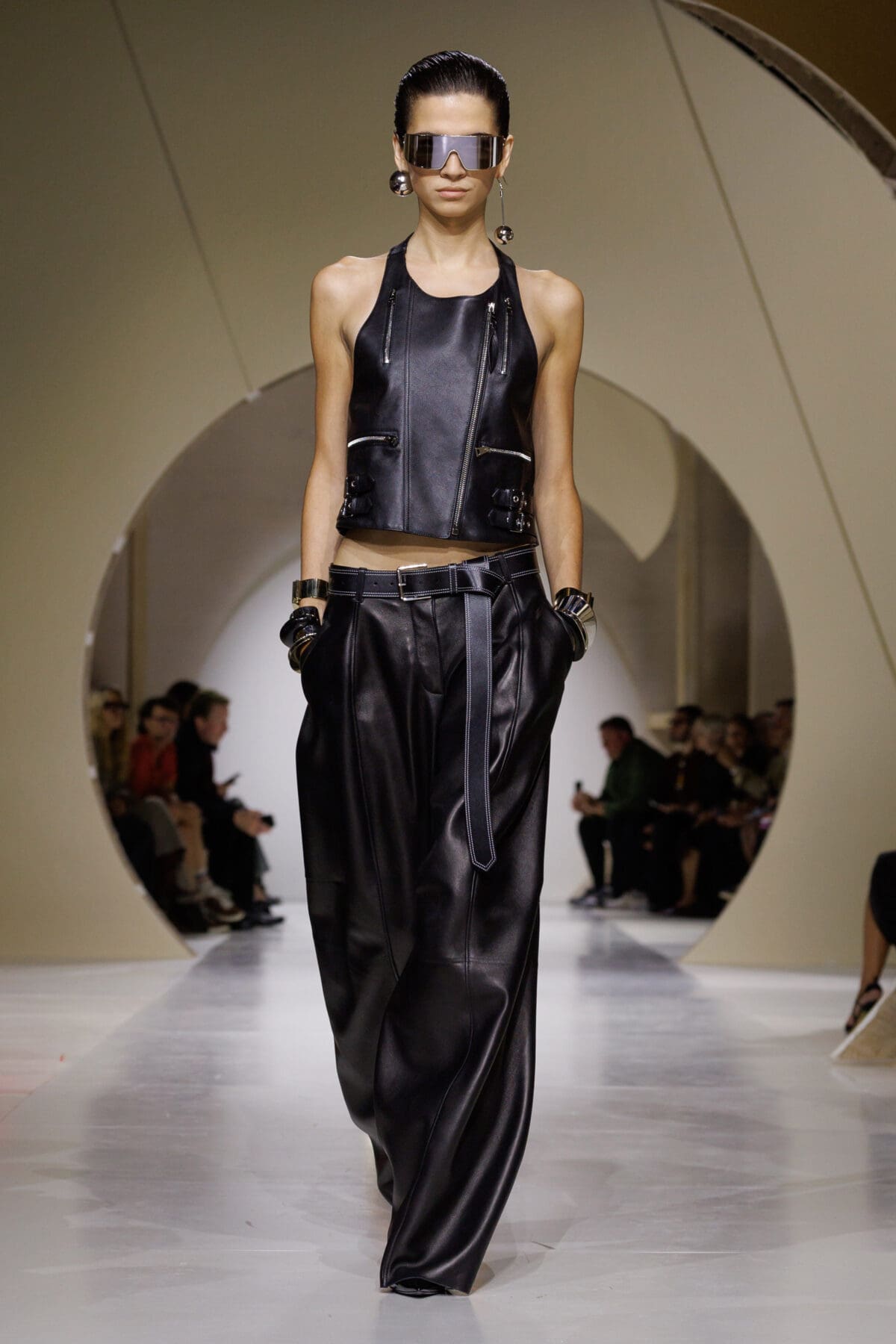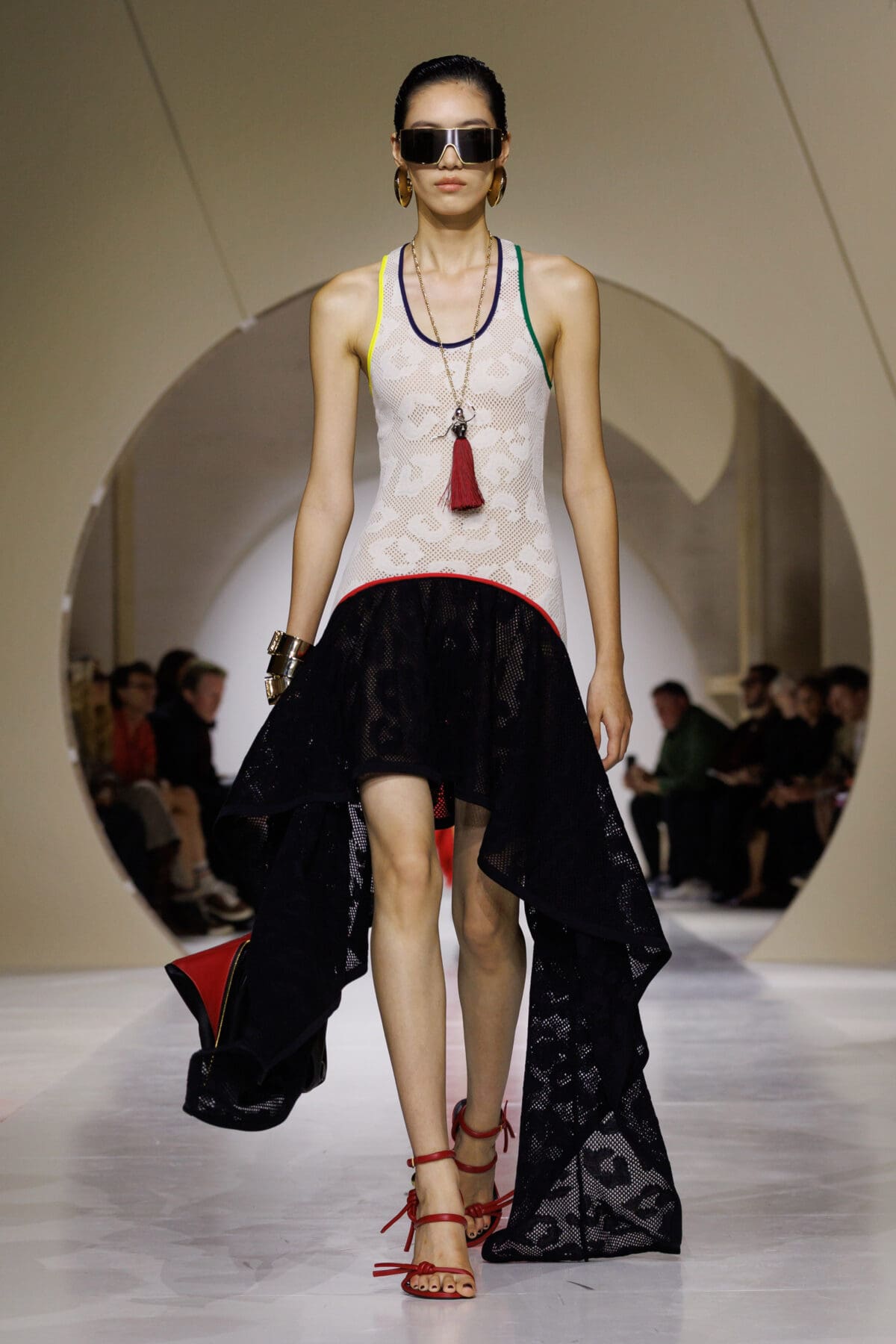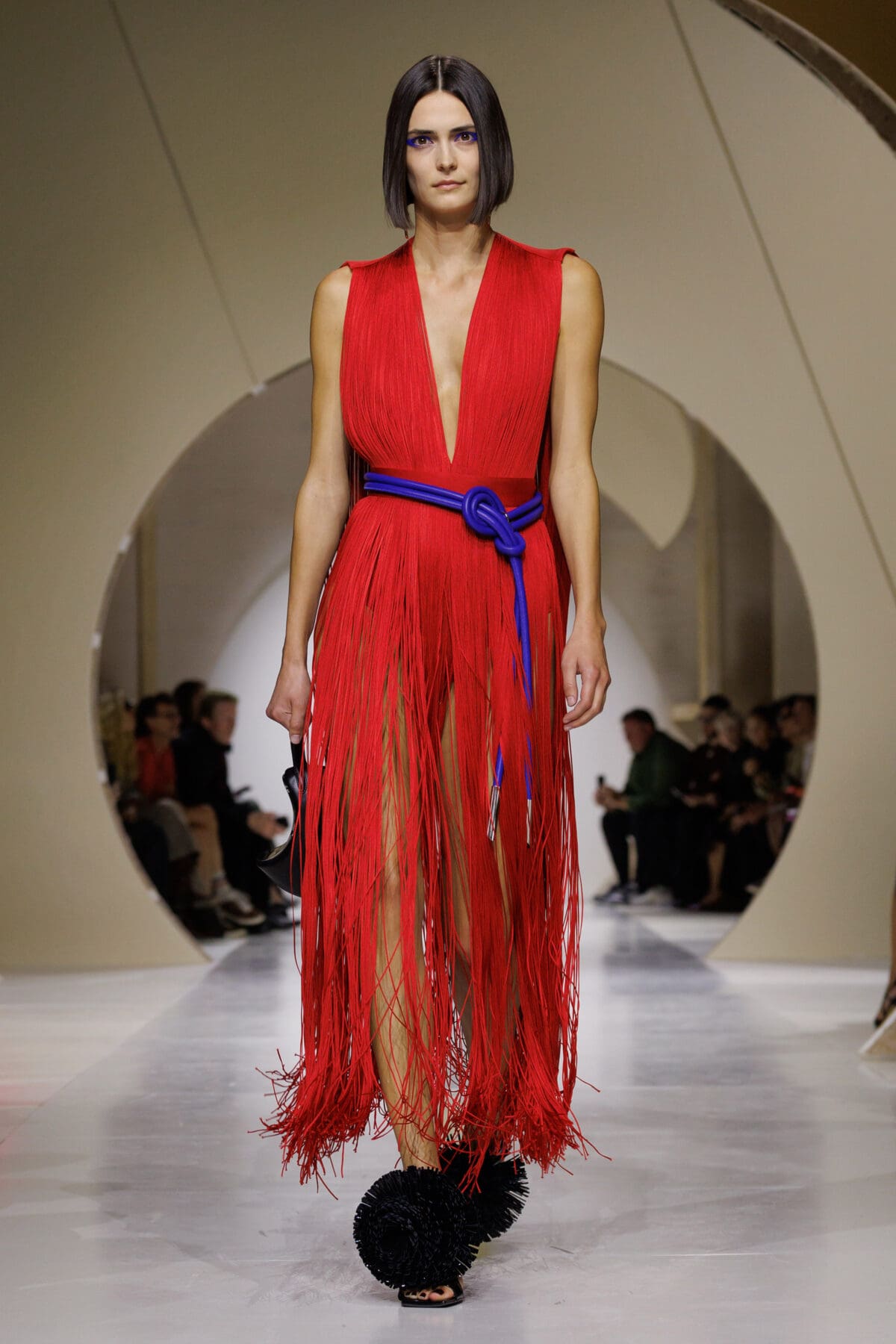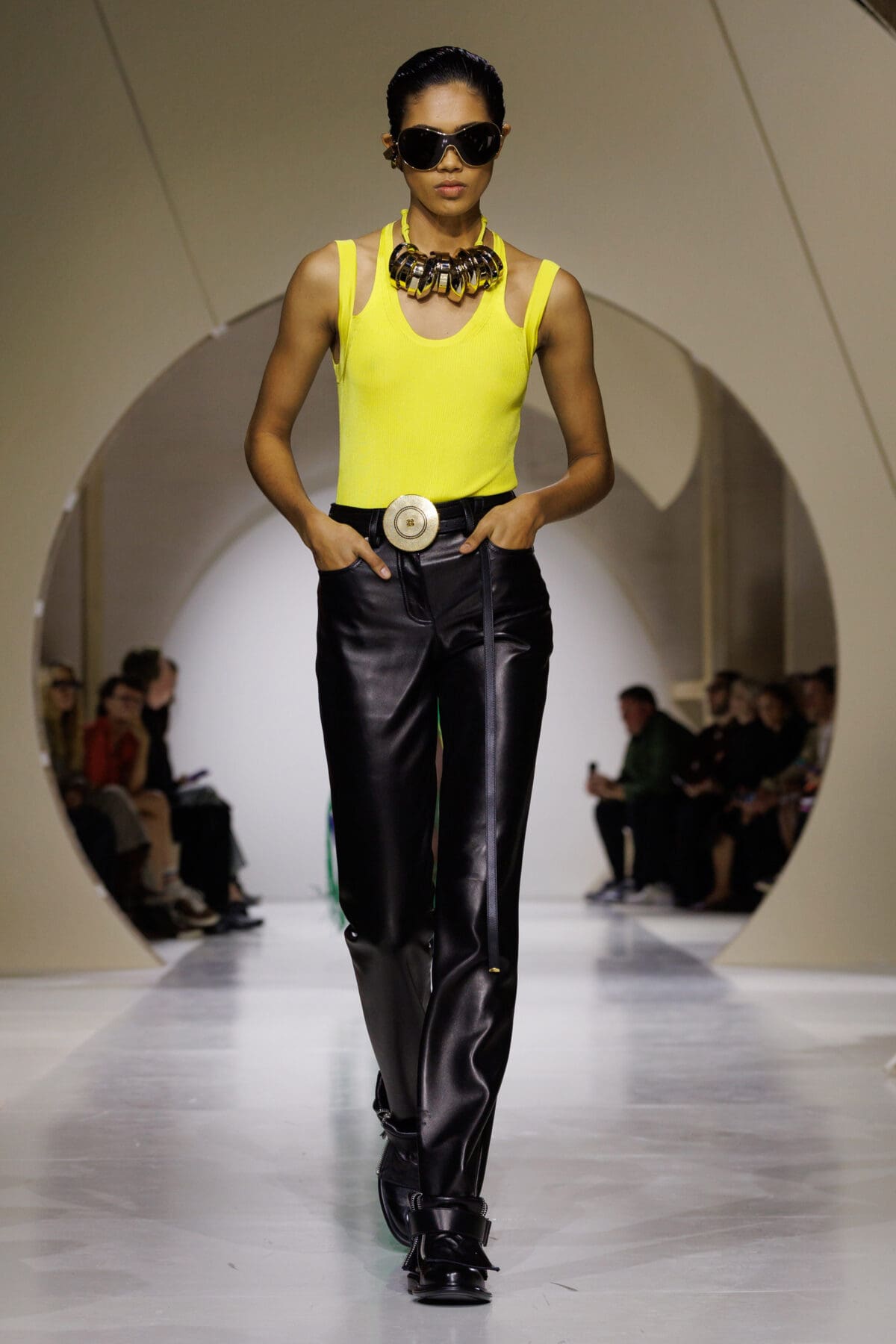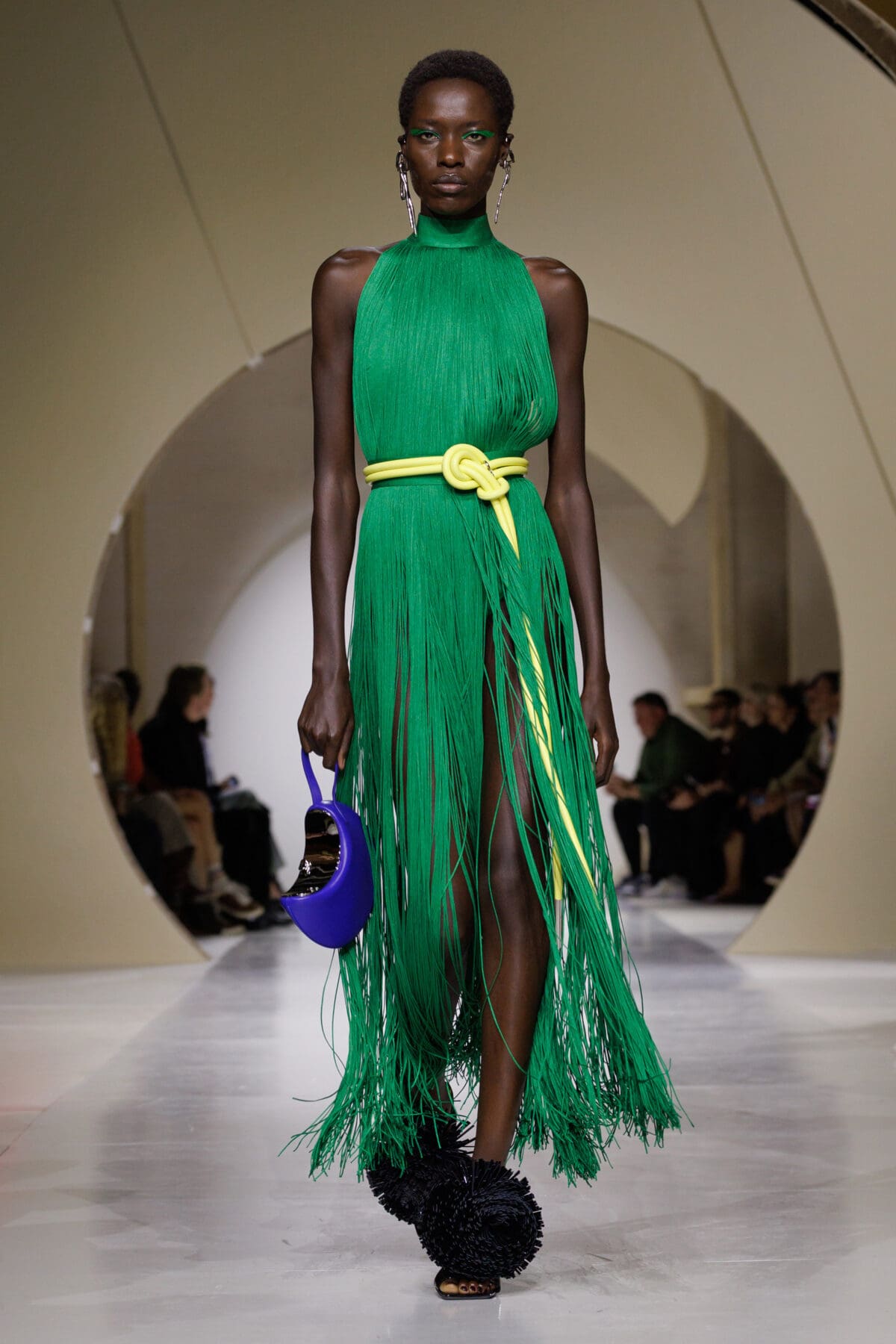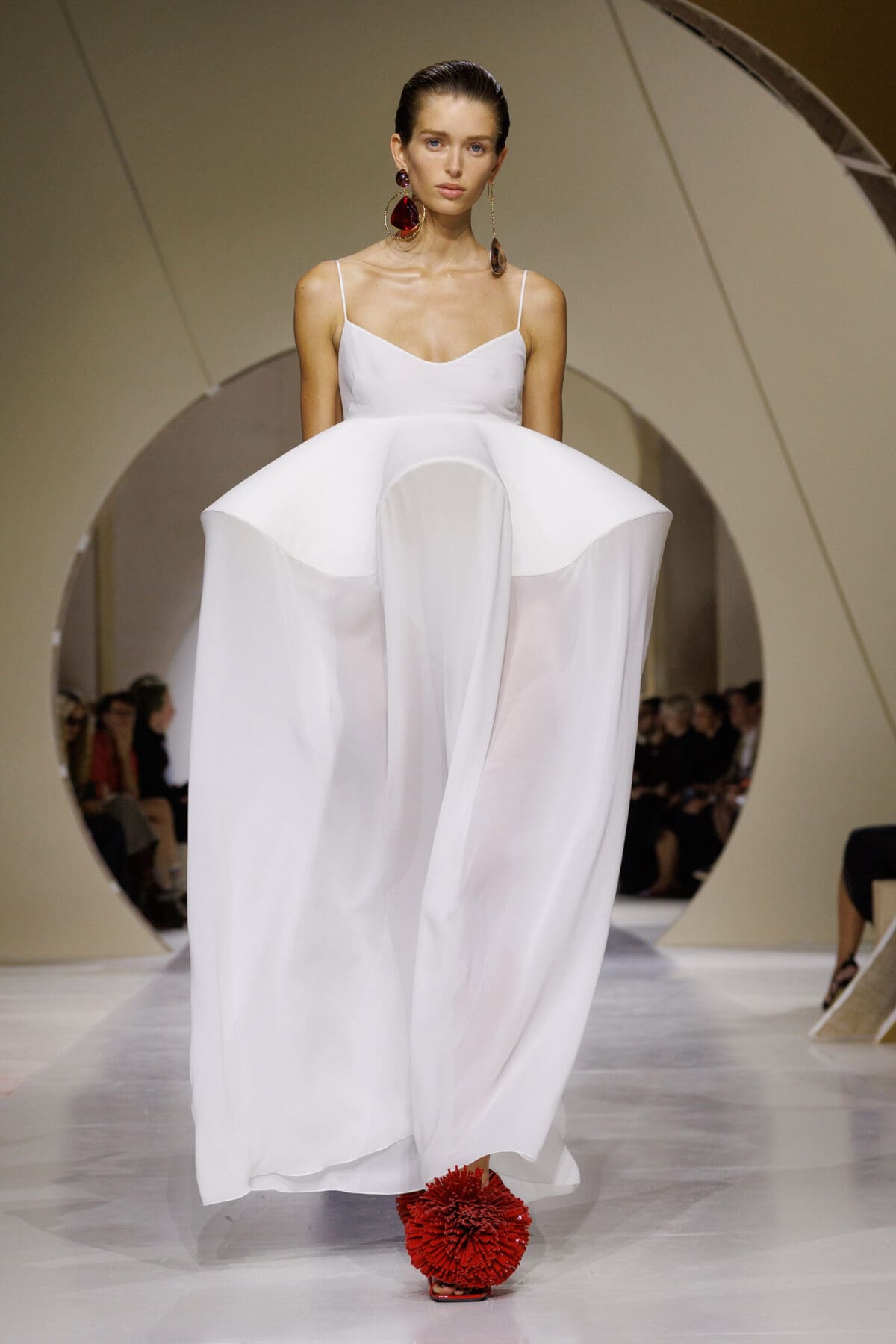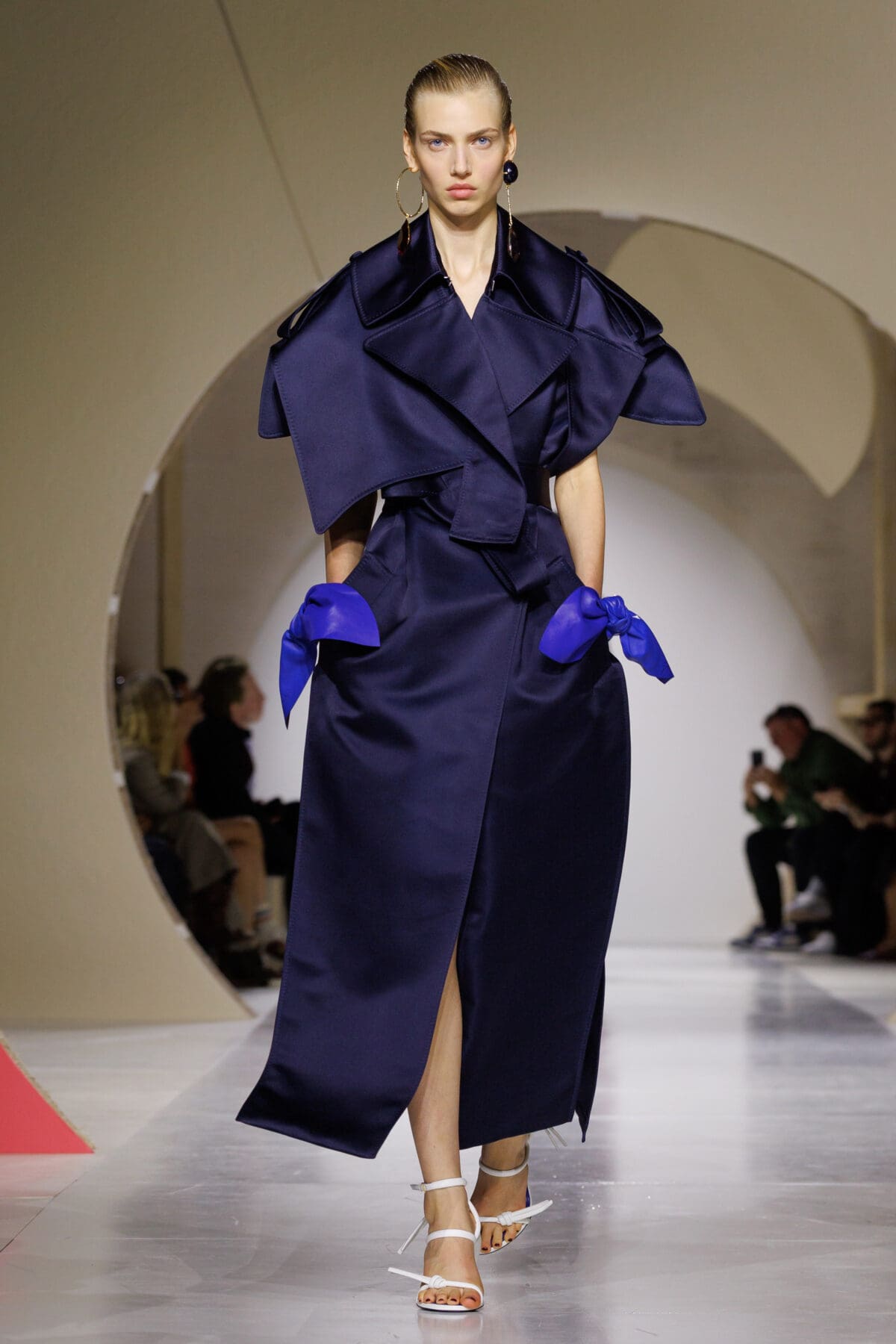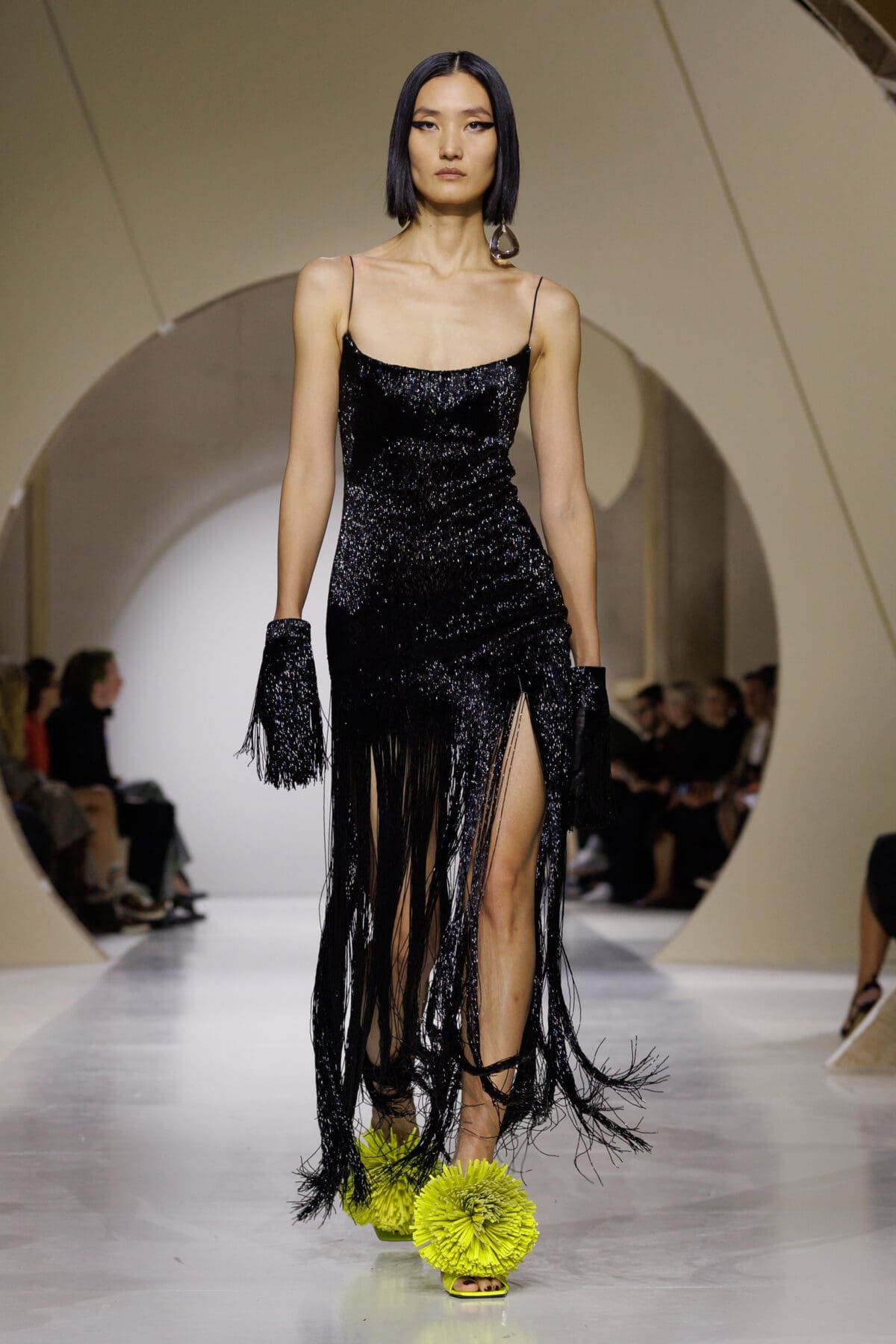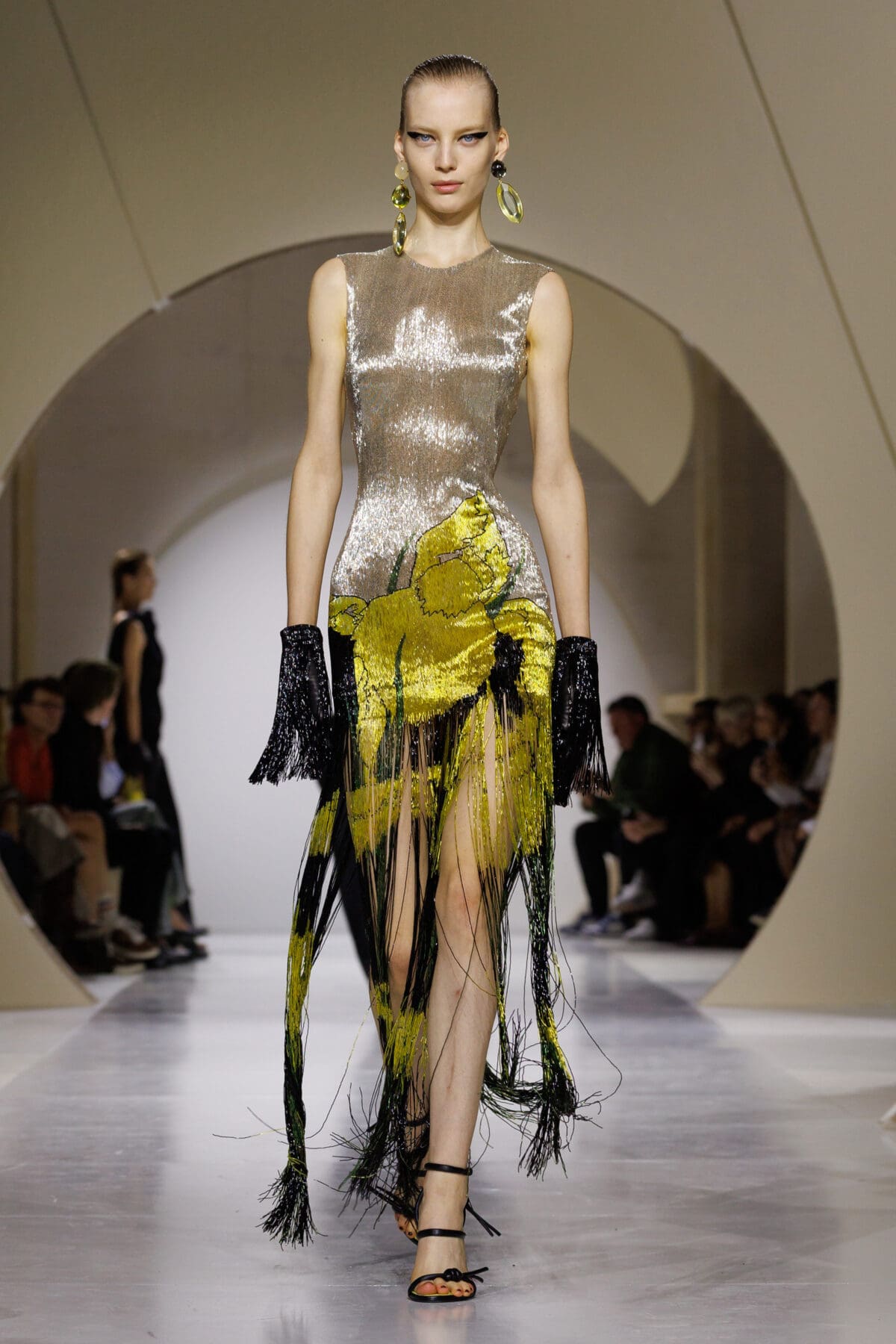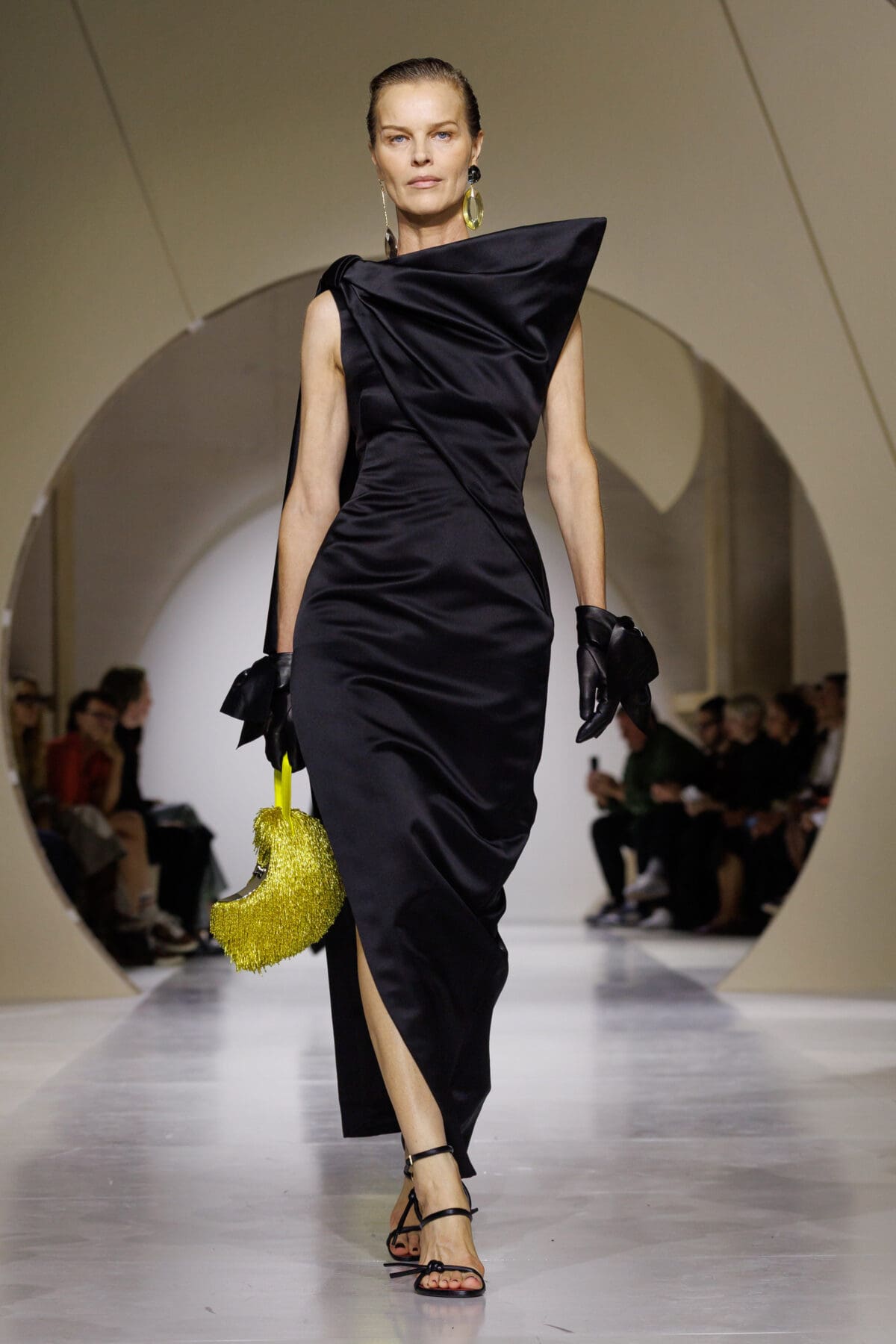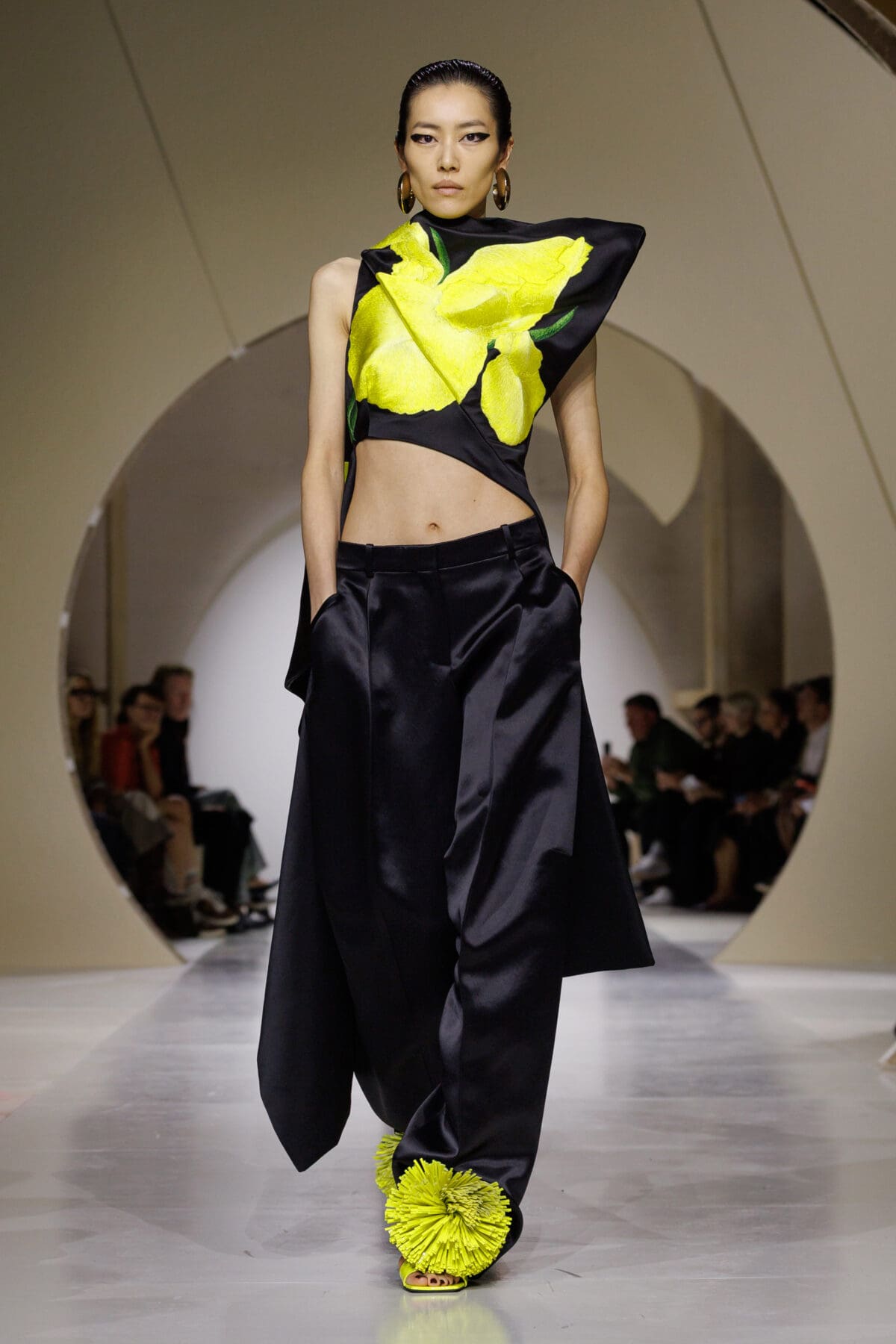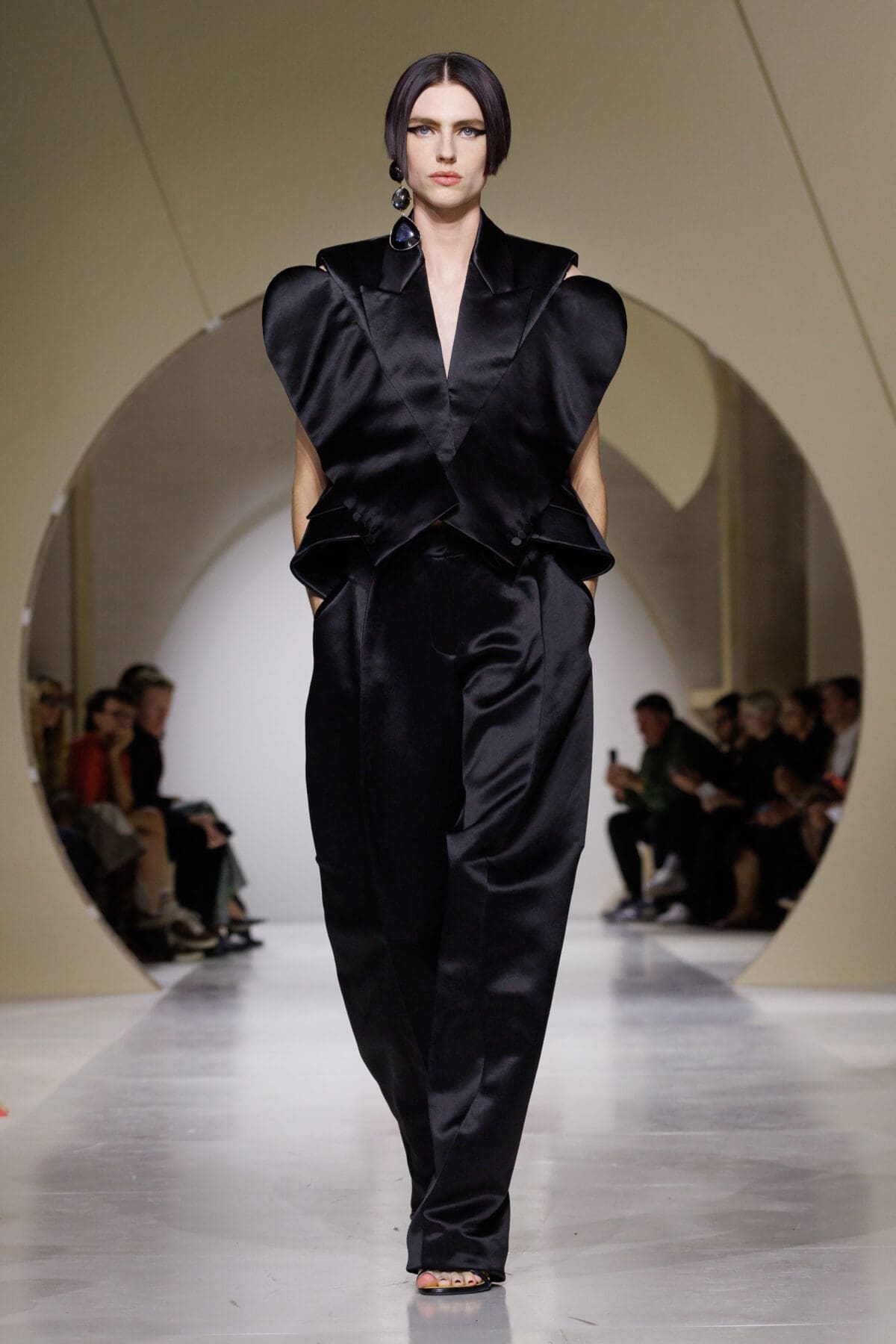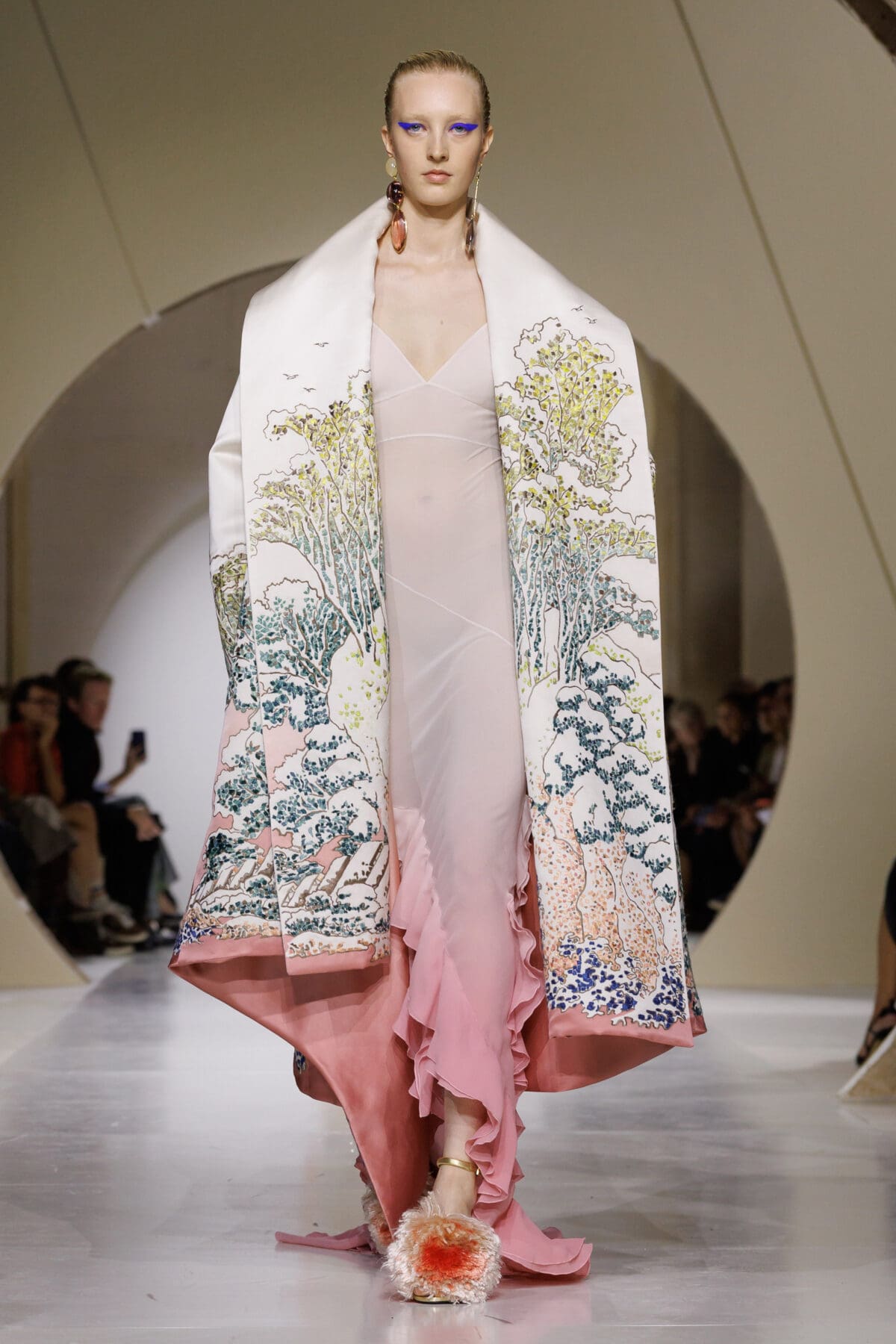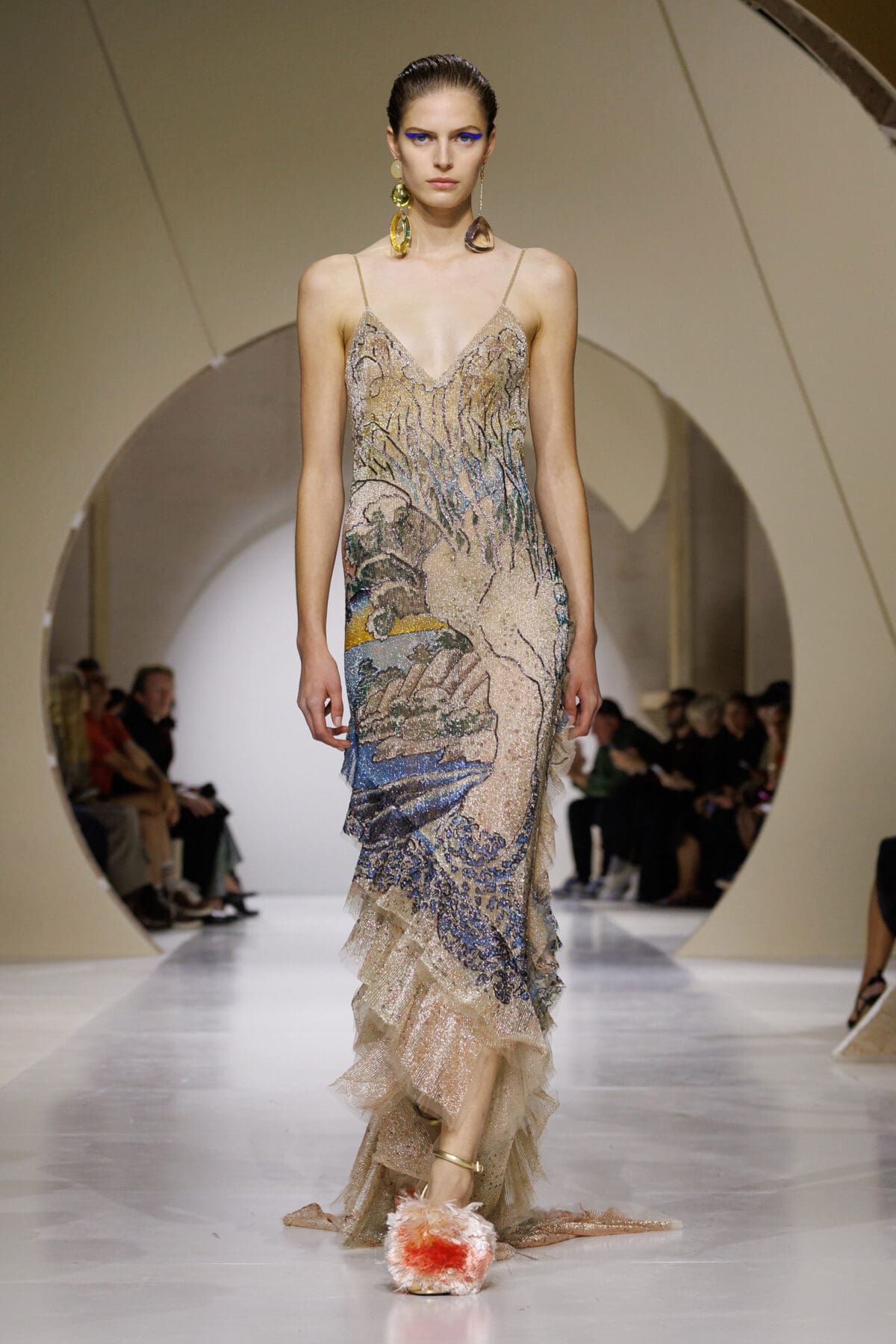


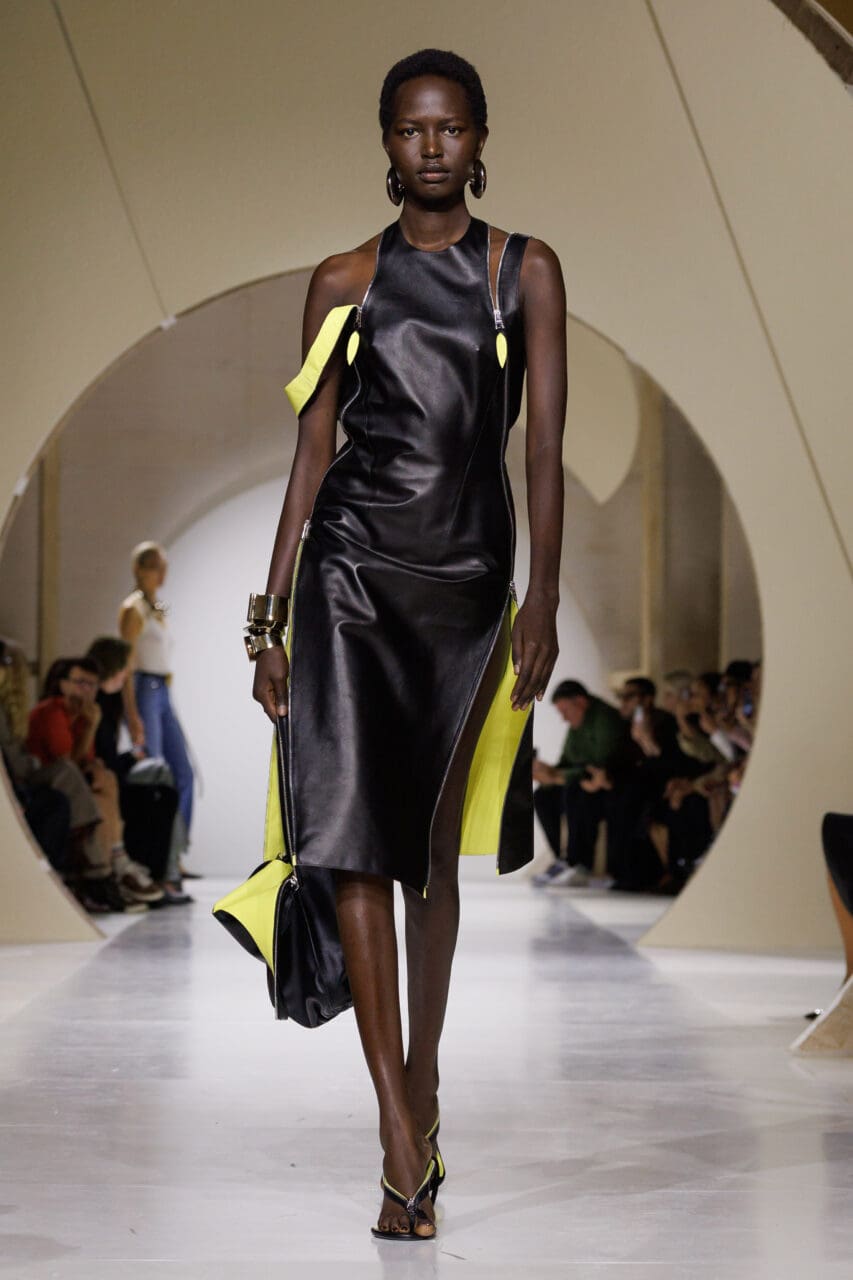

“In a world that’s very precarious I wanted to find a balance in it.” That was Sarah Burton’s mission statement for spring. As usual, she set about finding it by making cut her founding principal. “Everything is cut in a very engineered way,” she said backstage, “very clean, almost to cut through the noise of everything.”
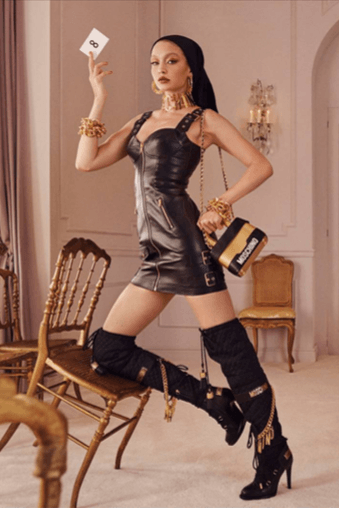
There surely is a lot of noise. Our Instagram feeds this week have been clogged with news too grim to bring up here, much of it about the horrendous ways women are mistreated in a misogynist society. What we choose to wear or not wear can’t protect us from those larger forces, but arming ourselves in the black leather dress that opened the show, with zippers curving down the sides to reveal its bumblebee yellow underside, might make us feel stronger or better prepared.
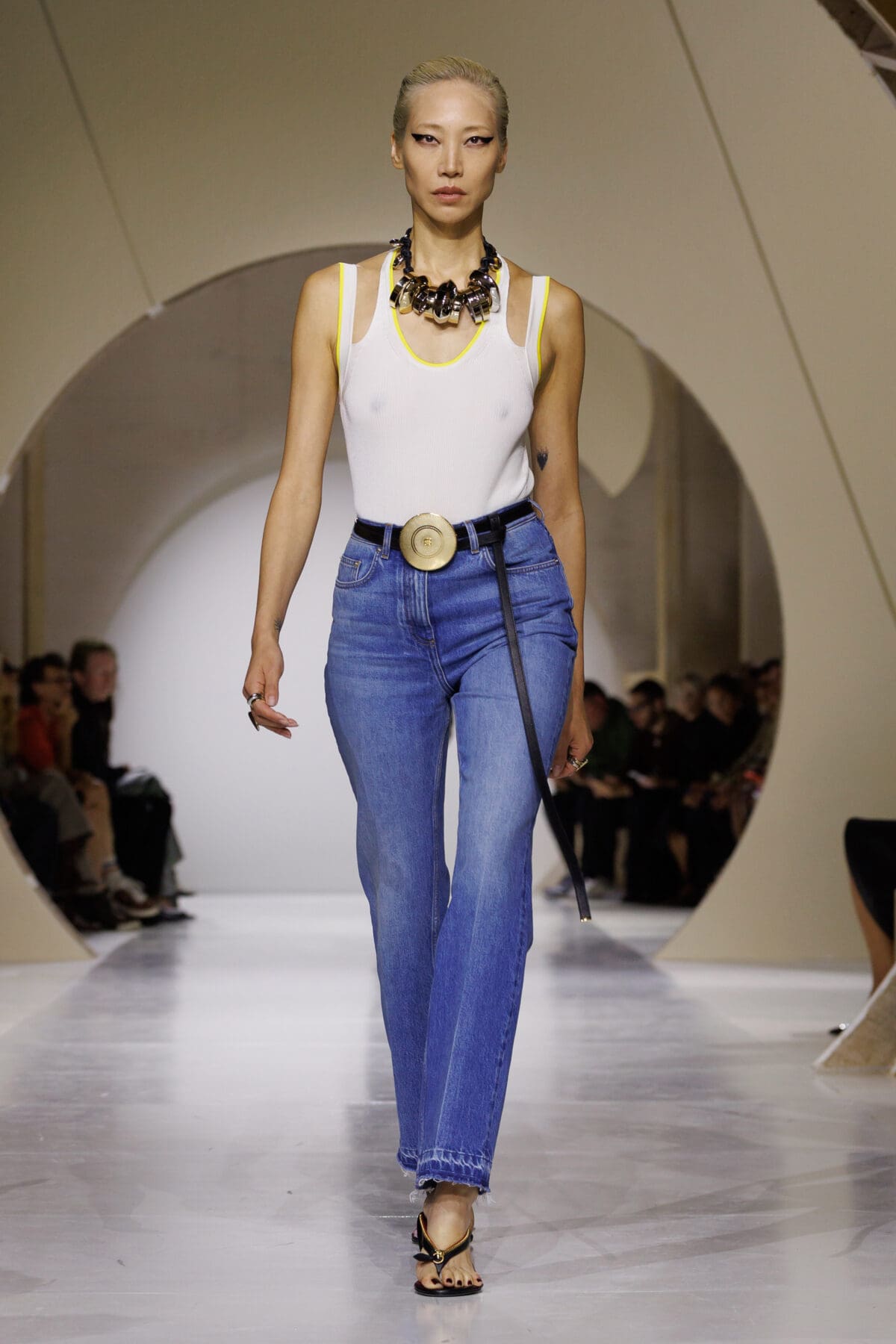
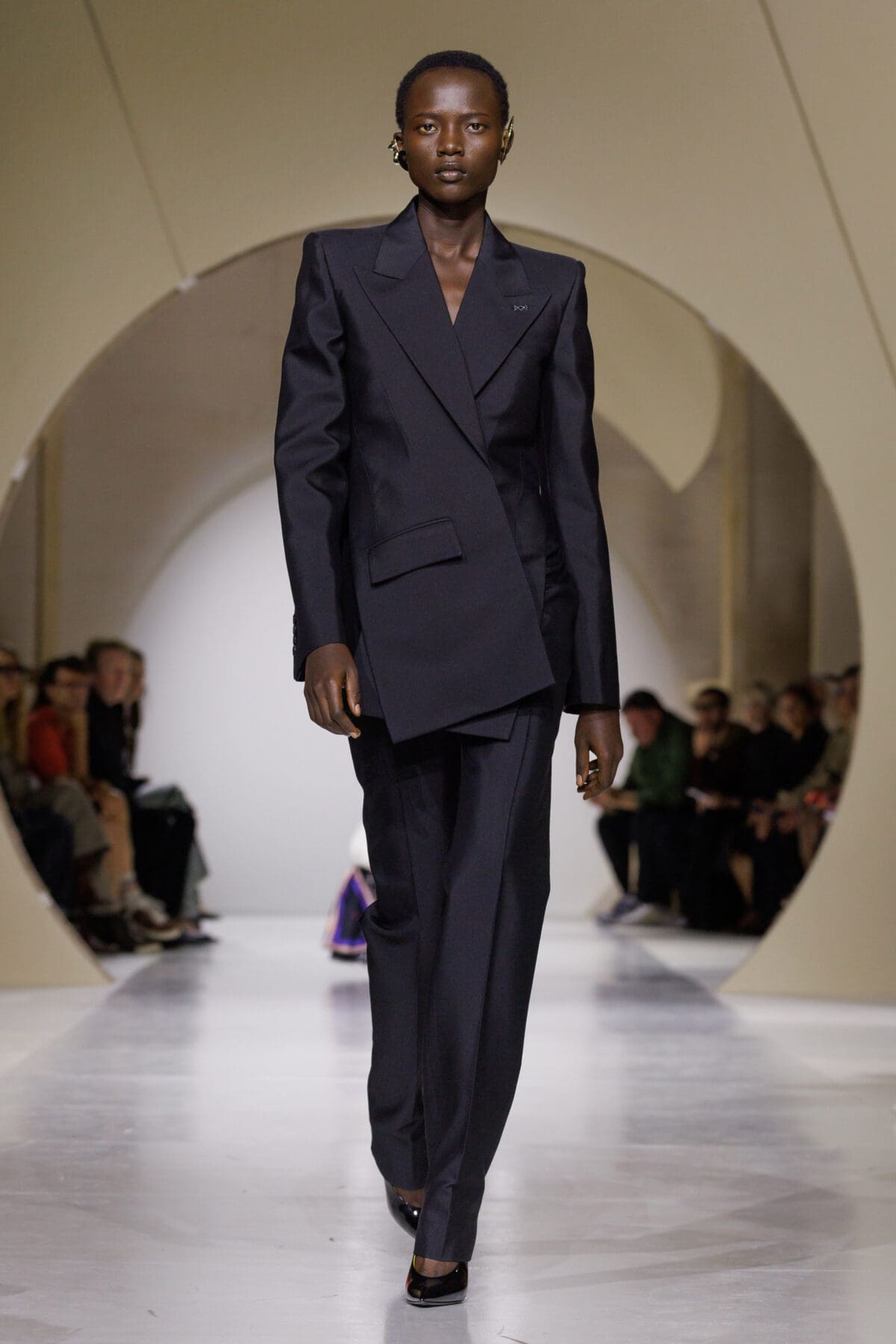
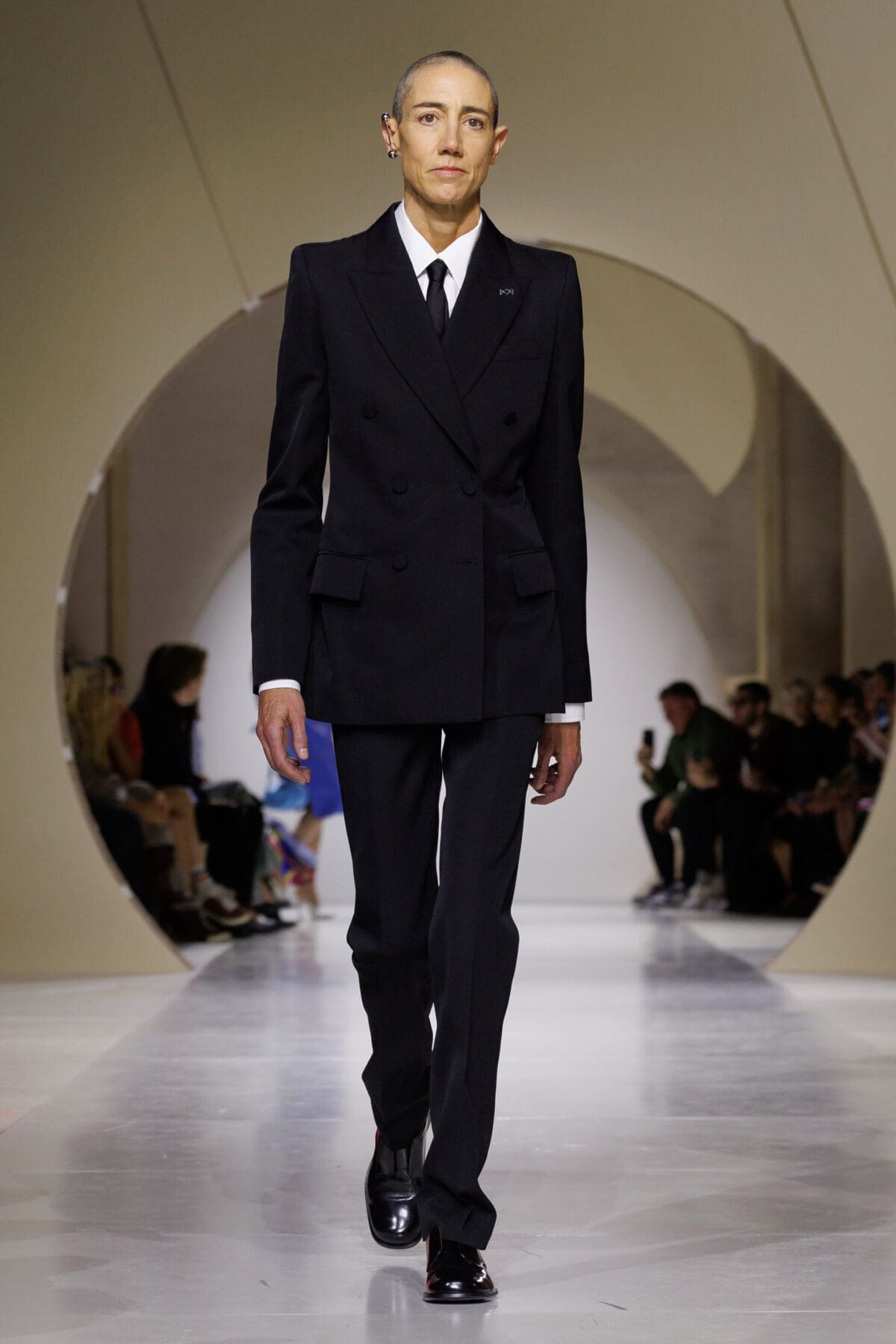
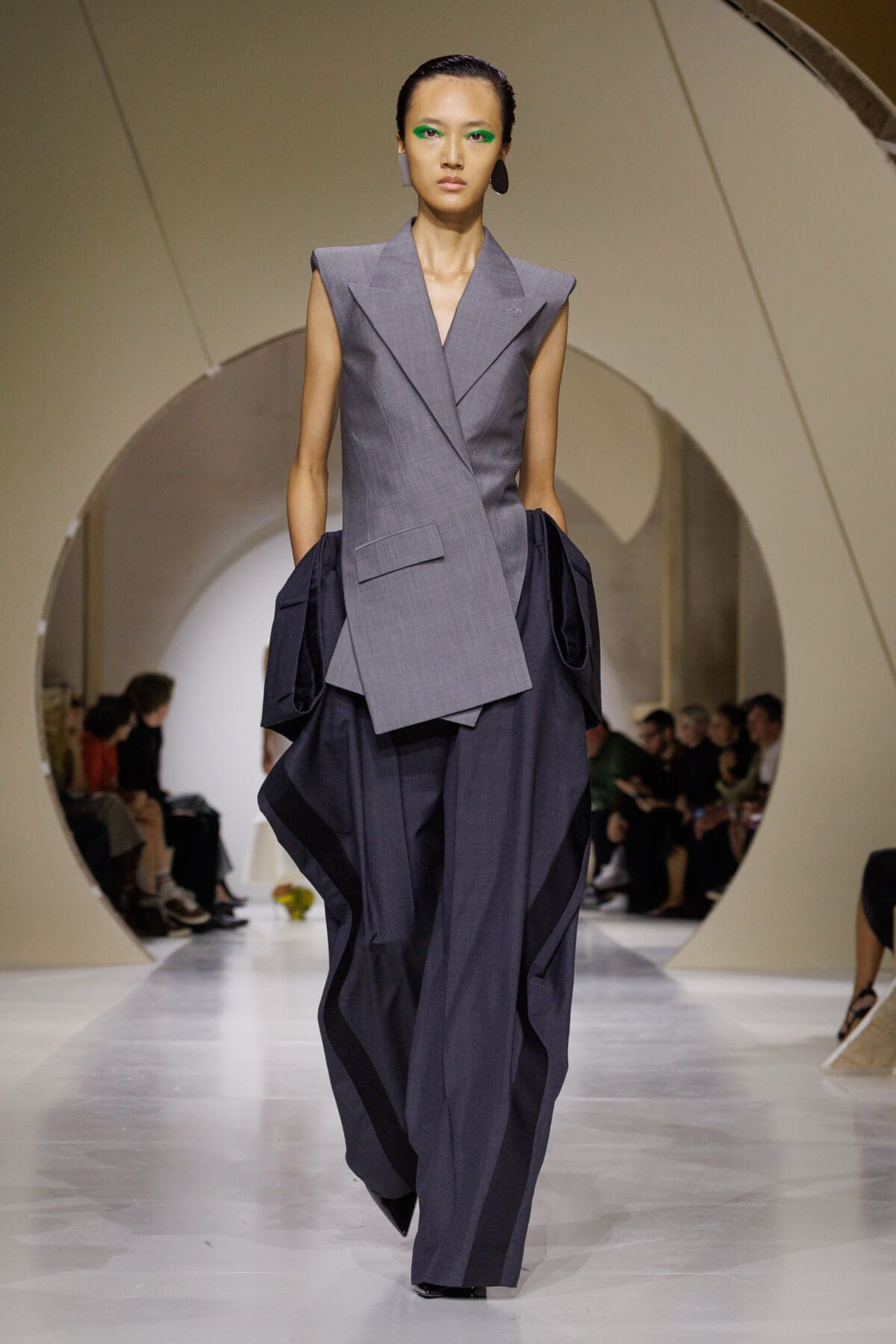
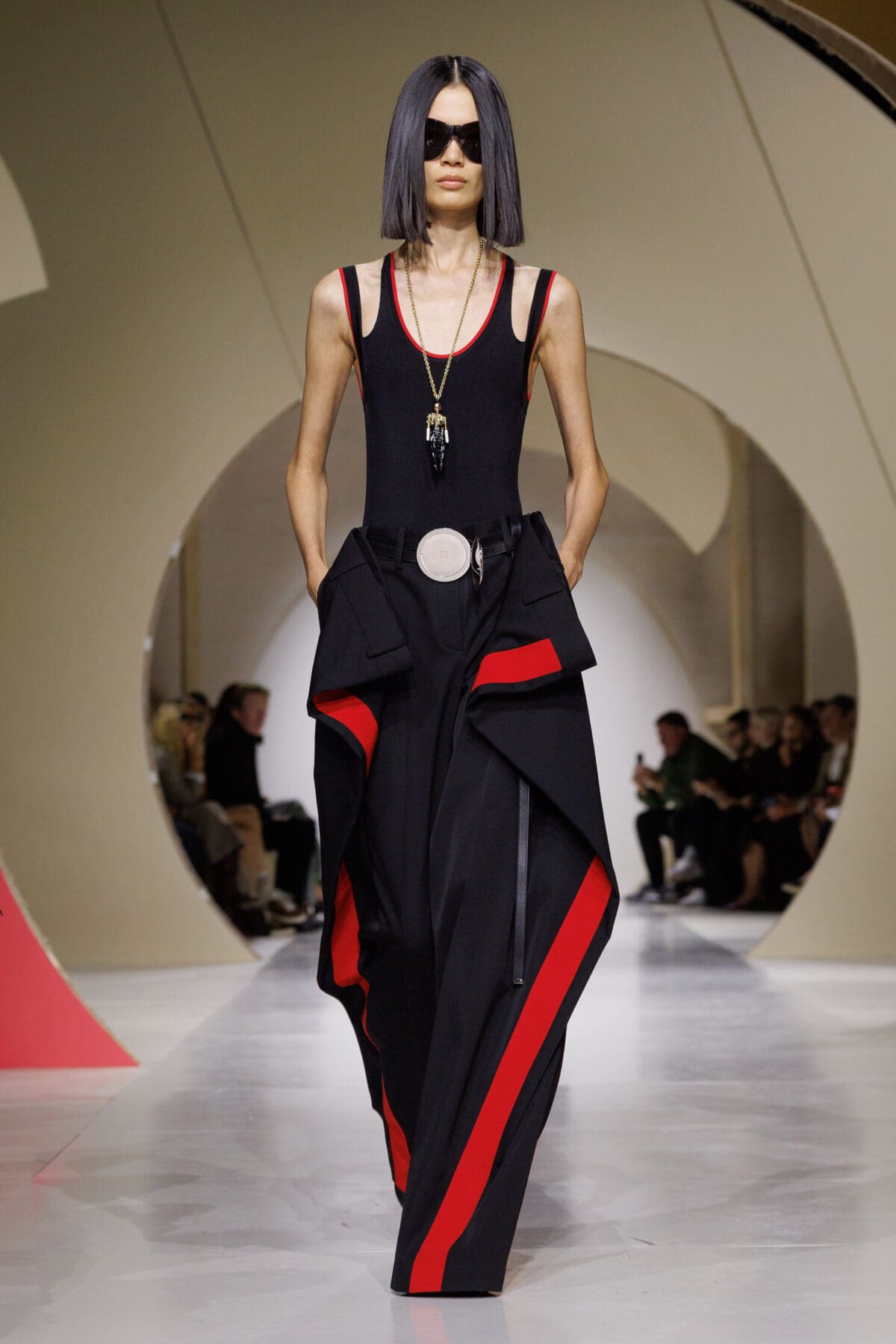
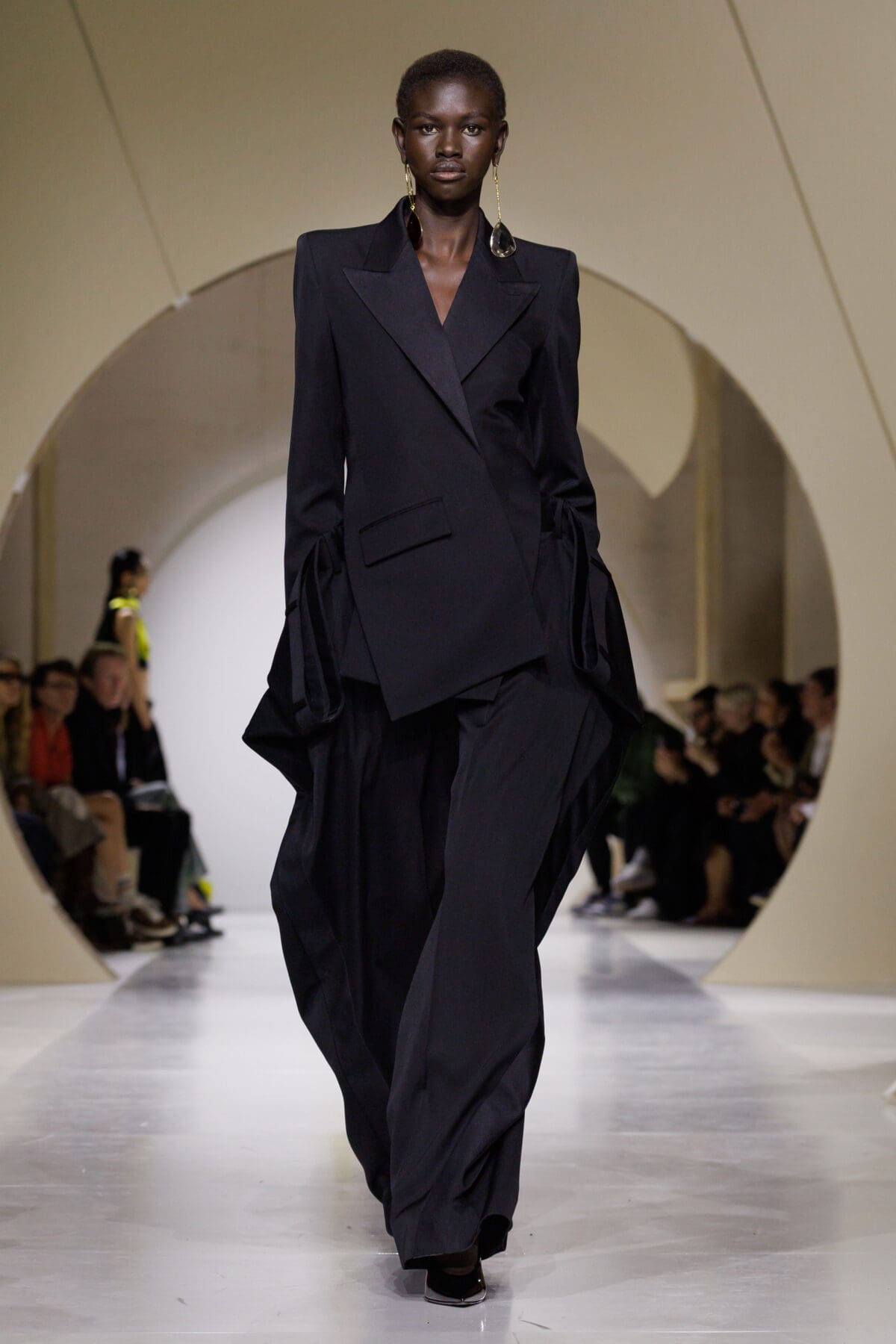
Burton, unlike many of her peers who seem oddly unperturbed about how a woman feels in their clothes, is laser-focused on precisely that. Givenchy show fittings, she made a point of saying, are two-way conversations, ones in which the models have an equal say about what they like and what they don’t, and which clothes speak to them. It could be a poured-on leather dress like the show opener, or one of her expertly tailored pant suits, or a butch tank top tucked into perfect jeans punctuated by a belt buckle made from a mirrored makeup compact.
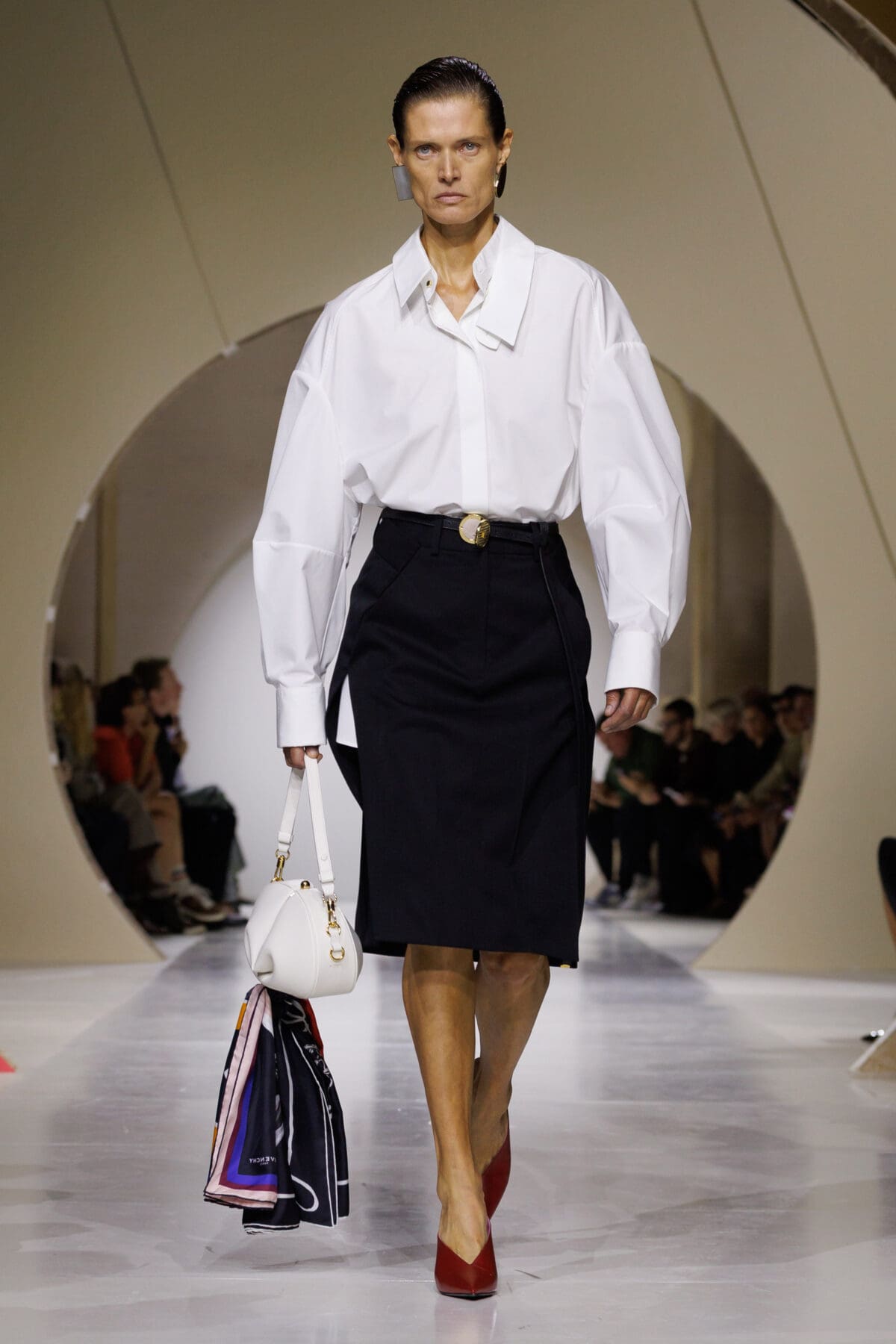
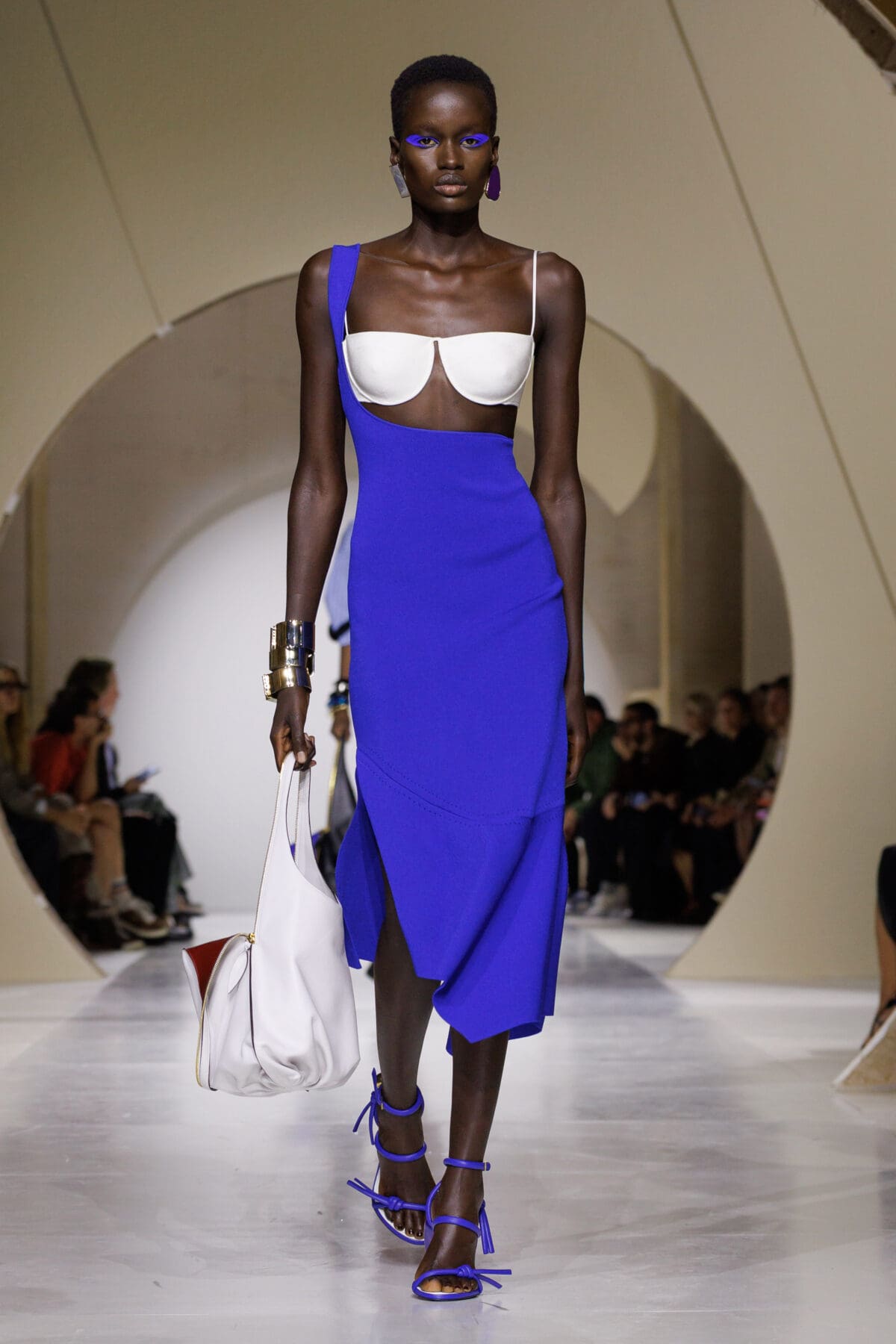
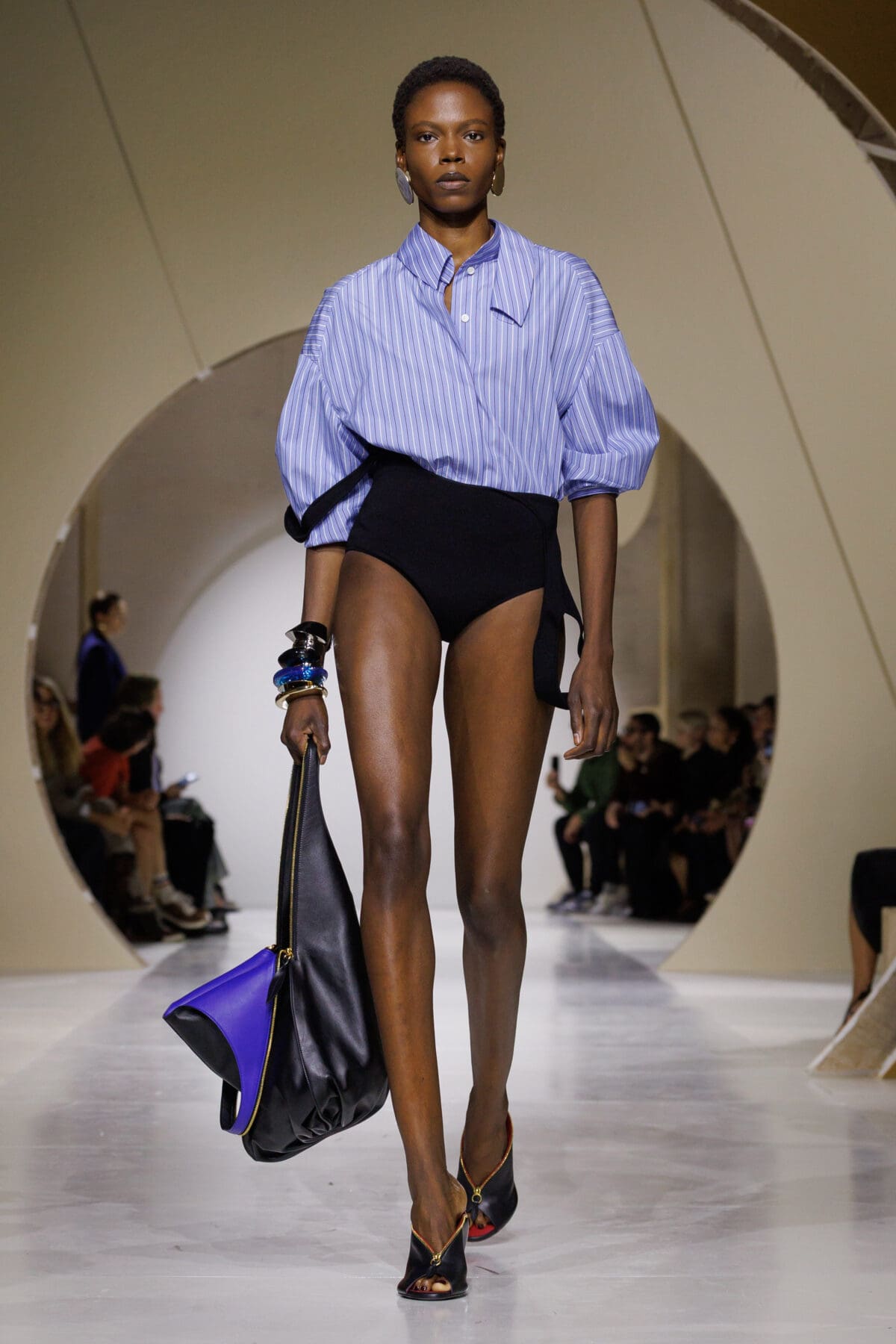
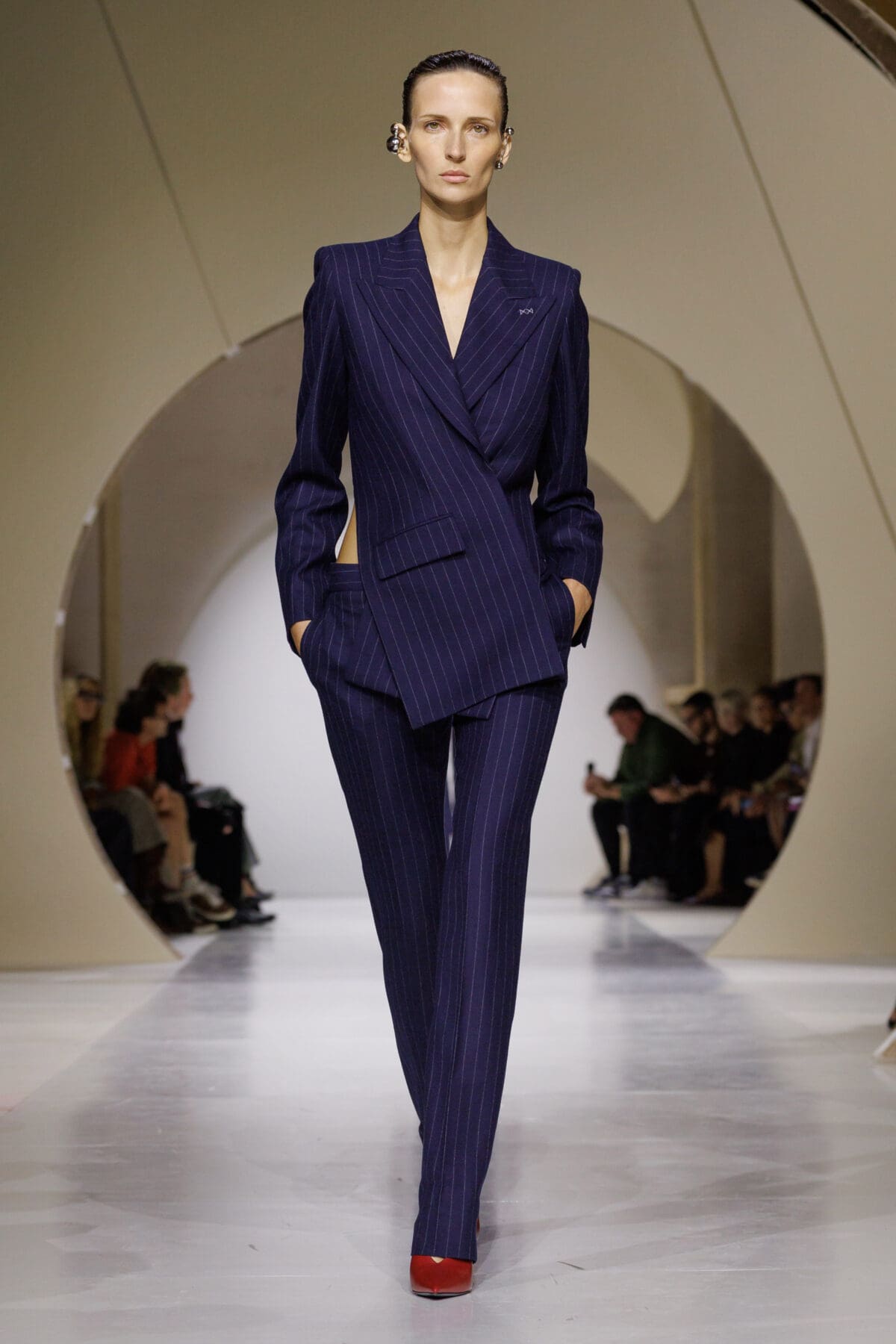
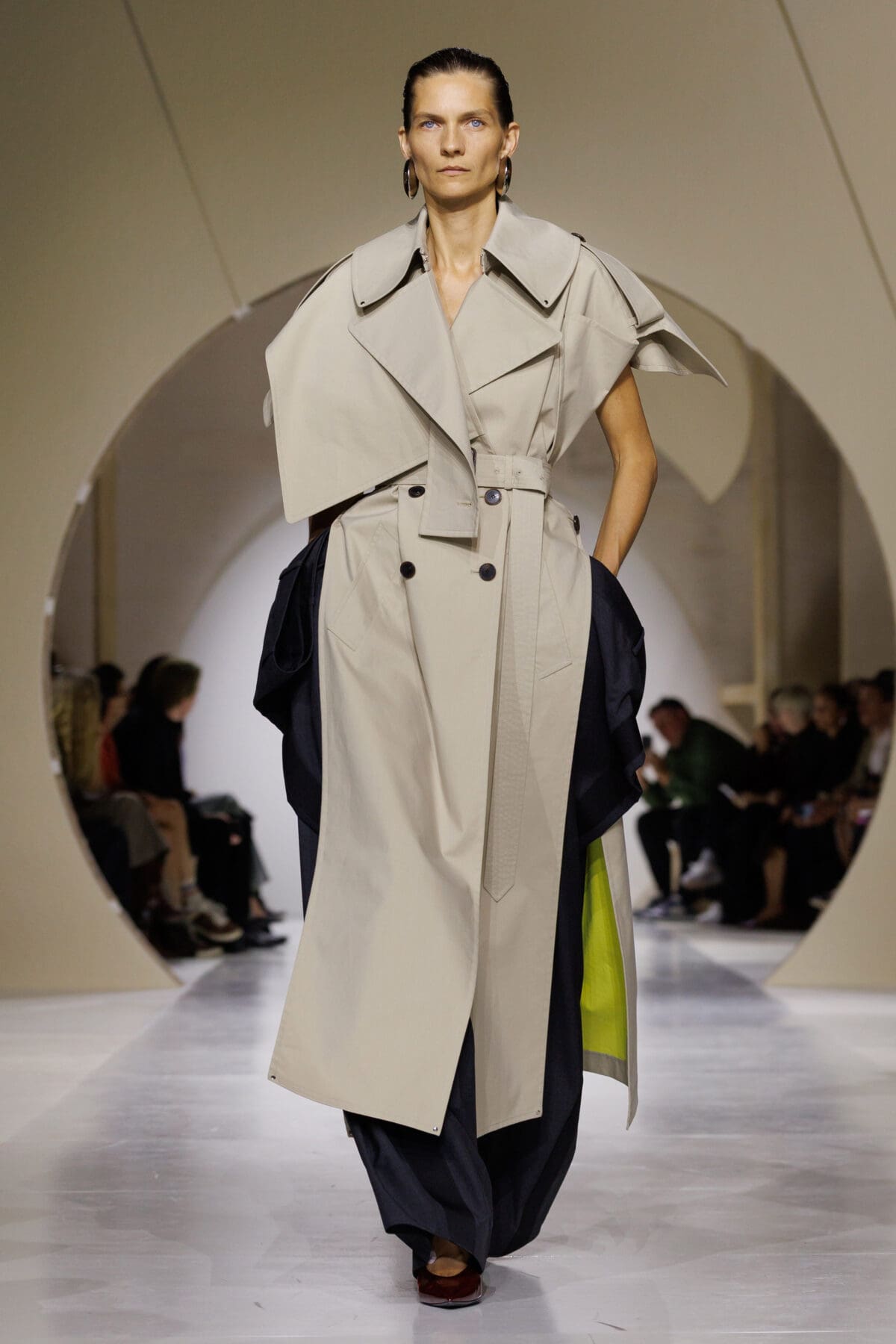
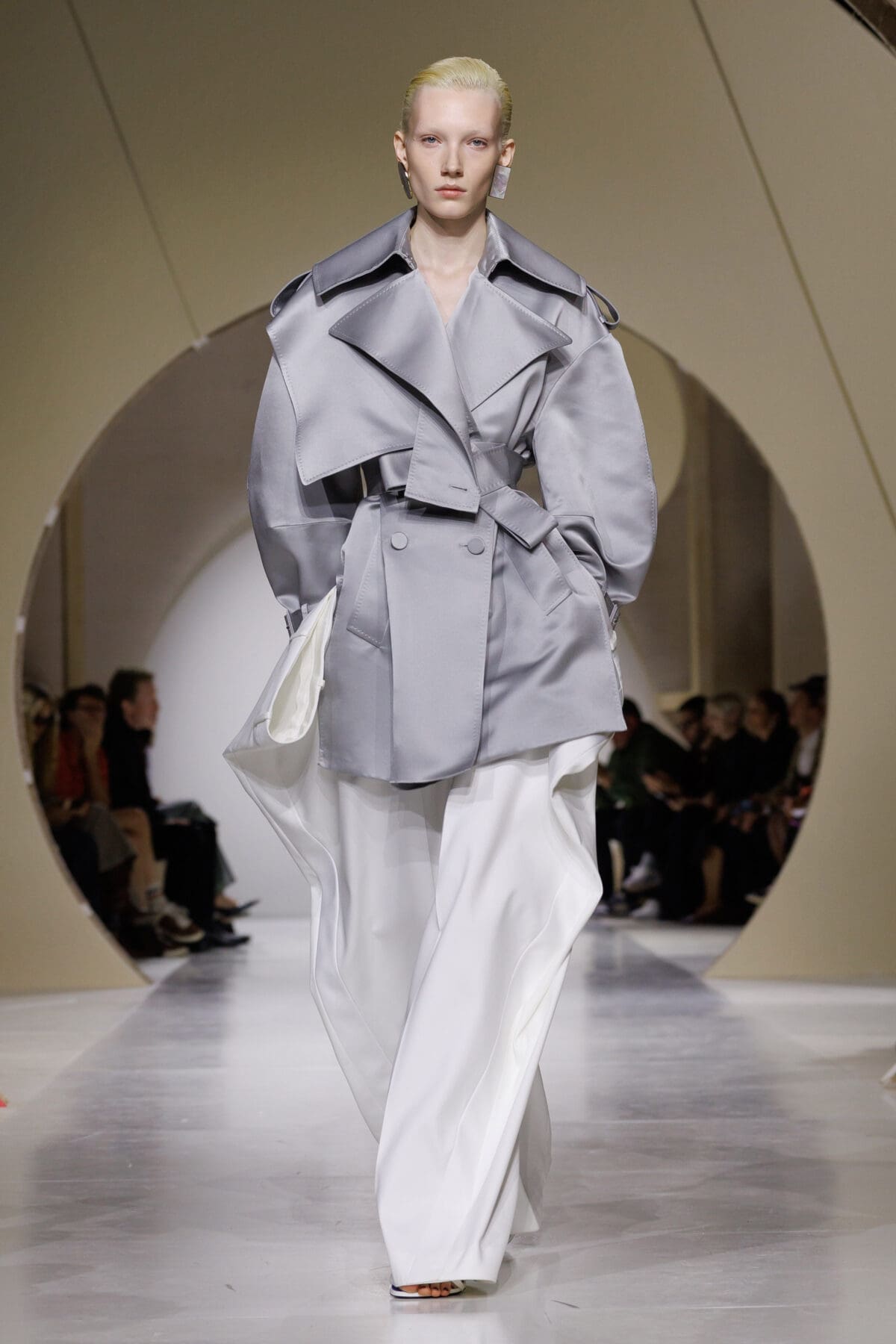
In her first collections for the house, Burton thought a lot about finding softness and roundness in her suiting. They blossomed voluptuously at the hips. This season’s suits have evolved, with front panels that pitch forward and overlap at the hems the way a woman crosses her legs. Still feminine but razor sharp. Asymmetry featured in other ways: In the form of a knit dress with a single strap that curves around a demi-cup bra or a clean white blouse (an important and growing category at Givenchy, she said), or trench dresses with storm flaps flying off in askew directions.
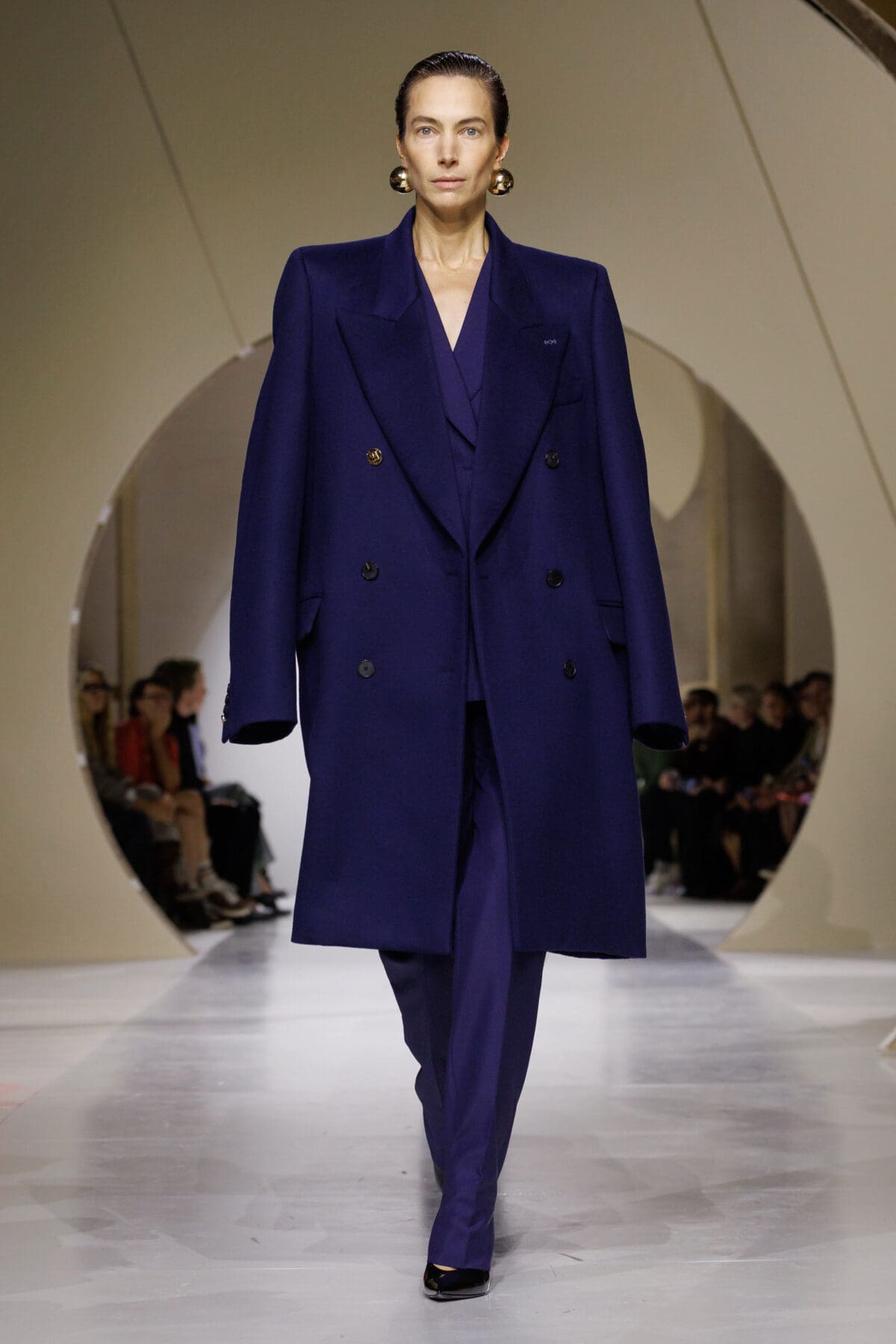
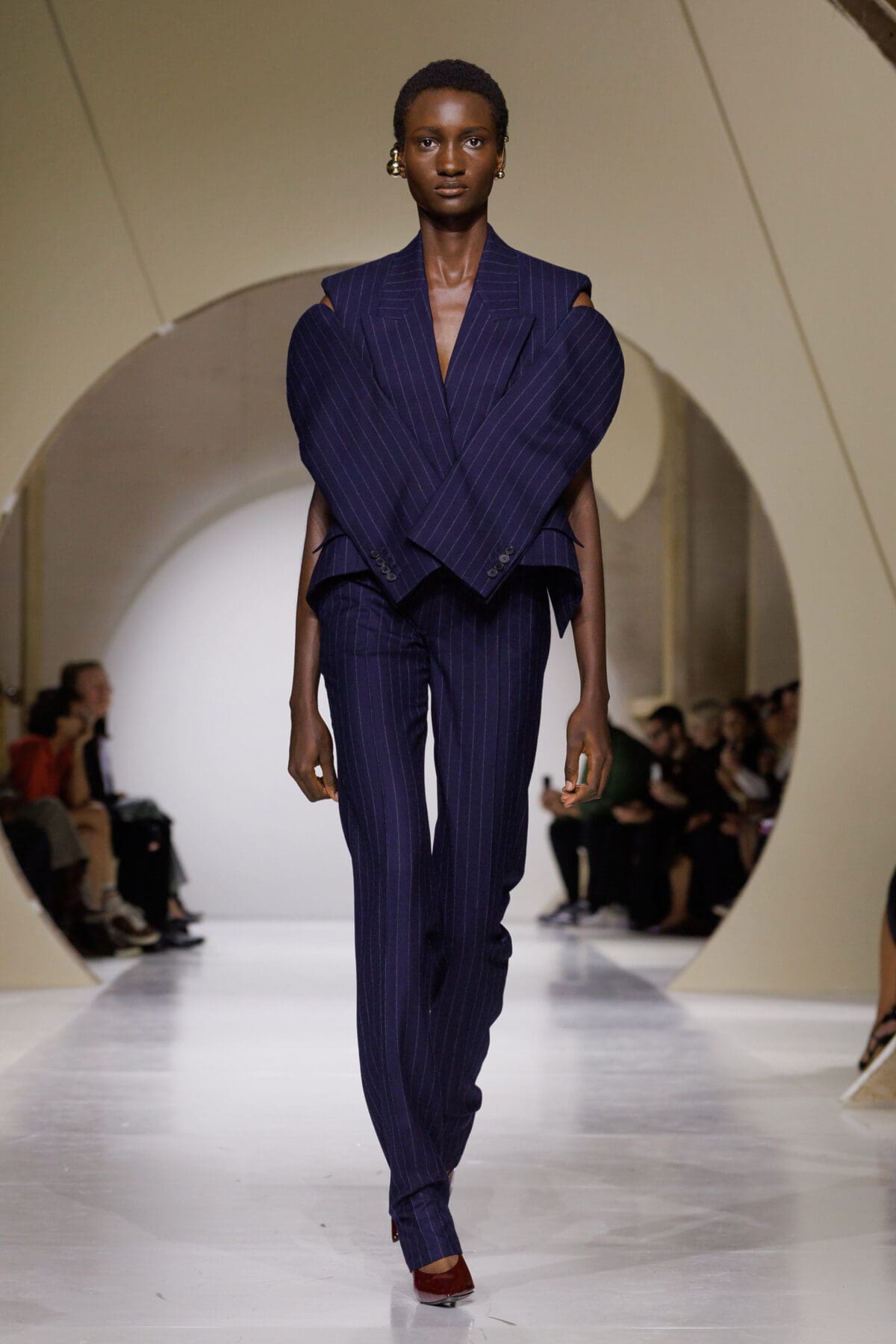
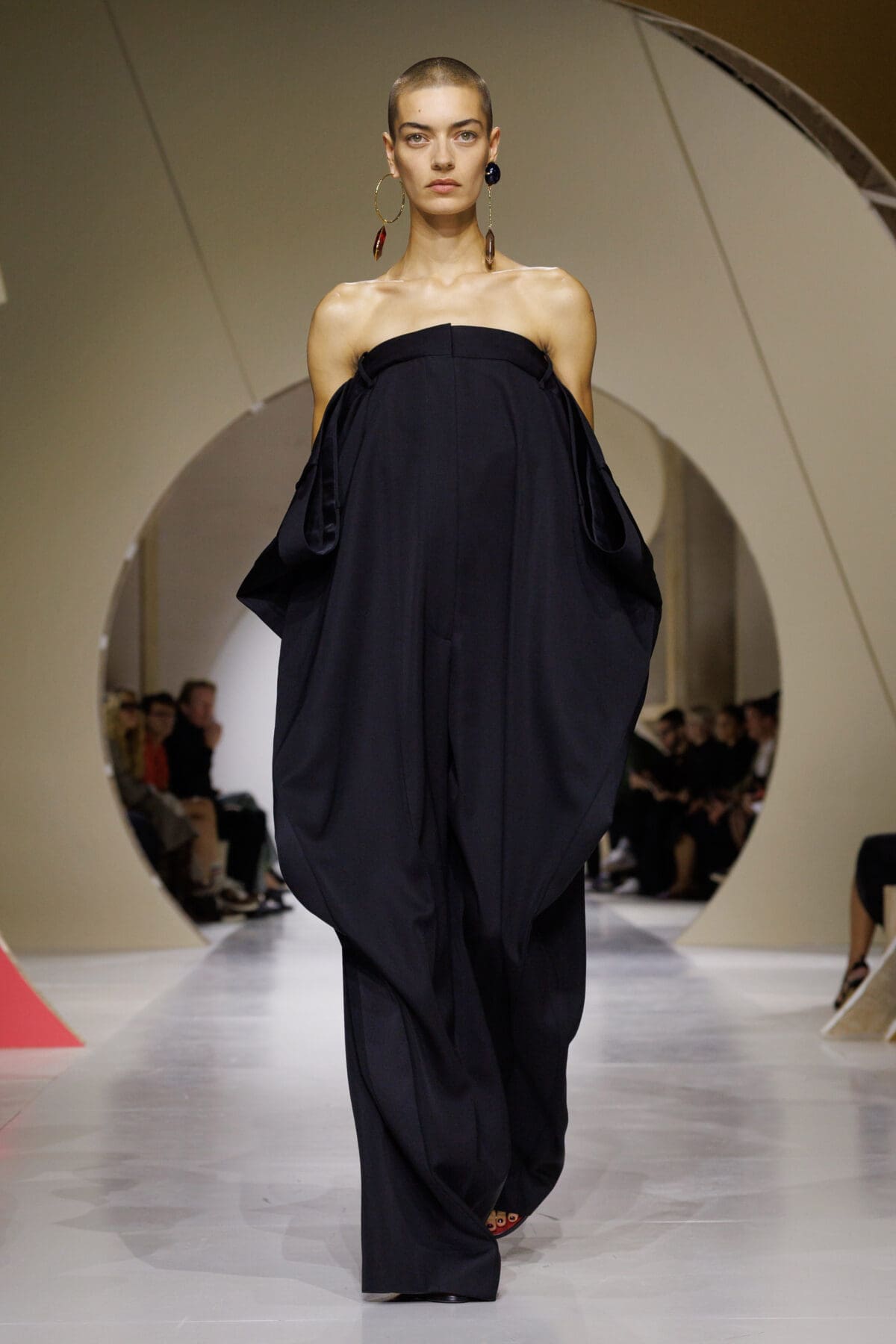
Jackets with sleeves sliced from shoulders and pressed flat against the torso, and pants whose extended waistbands draped down at the sides weren’t as relatable, but her instinct to test tradition reverberated in an audience full of women who are questioning what the dominant culture has taught us to accept as normal. Meanwhile, a couple of rigorously tailored double-breasted coats, one in Prince of Wales check and another in a deep navy blue, would prove indispensable in any culture.
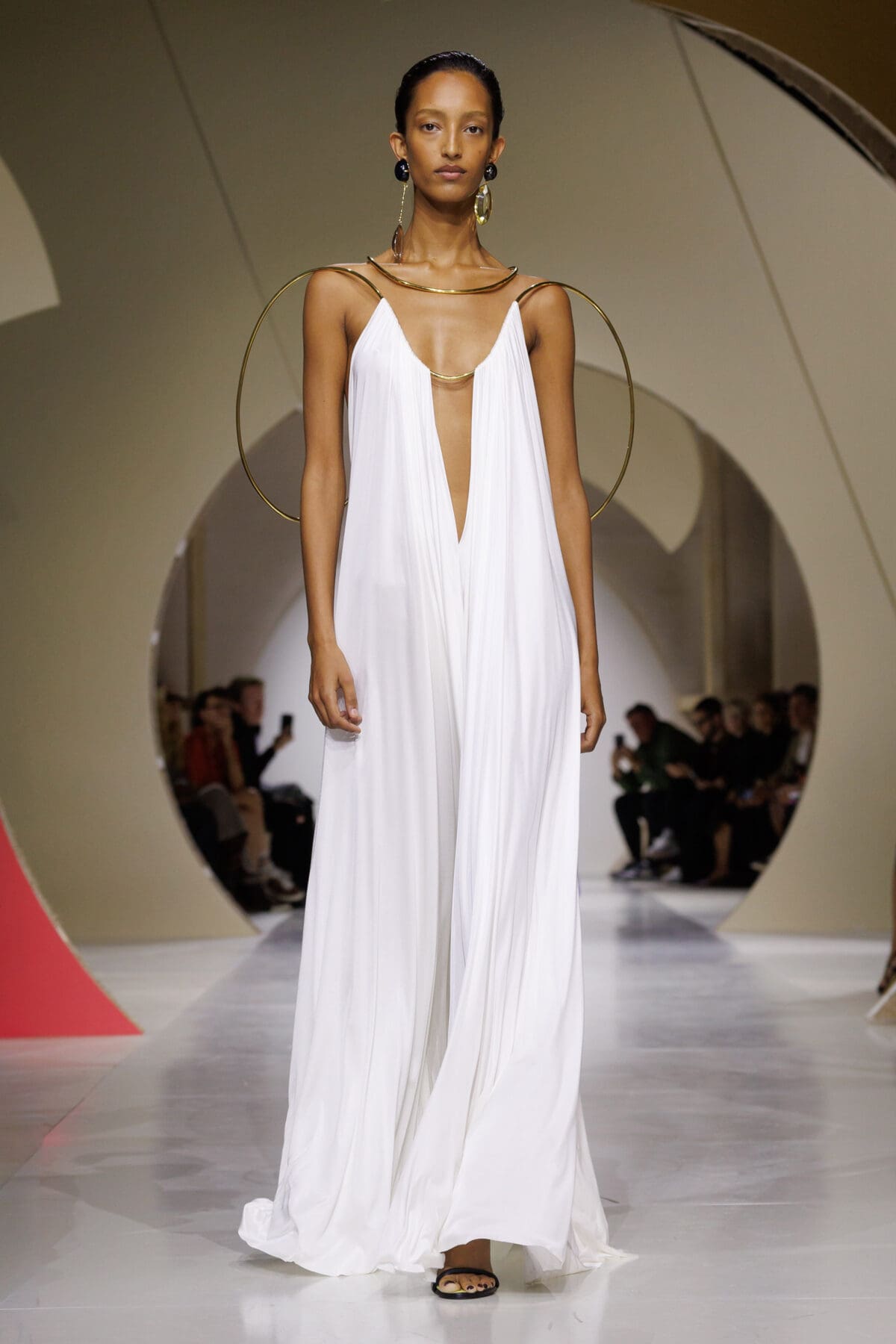
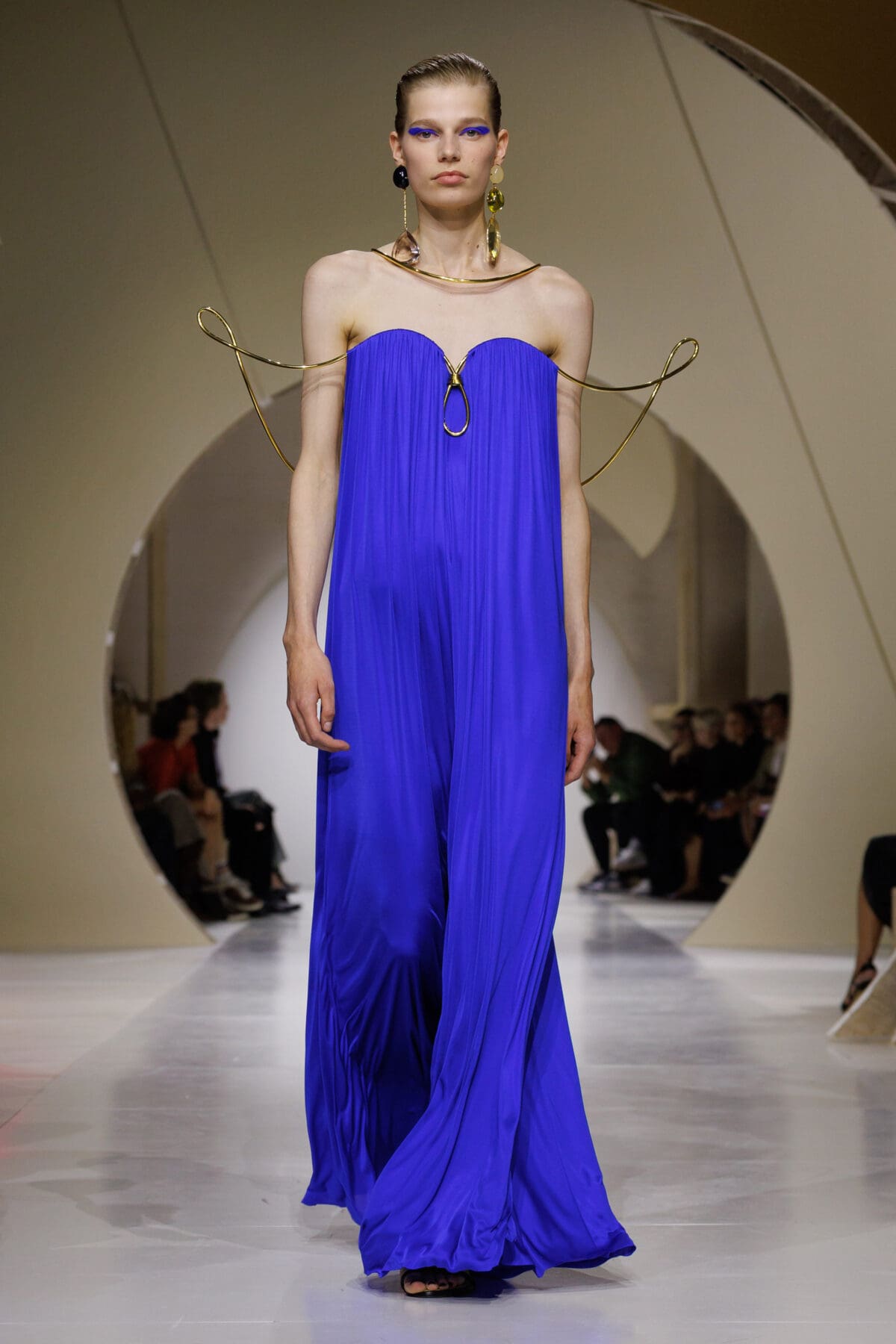
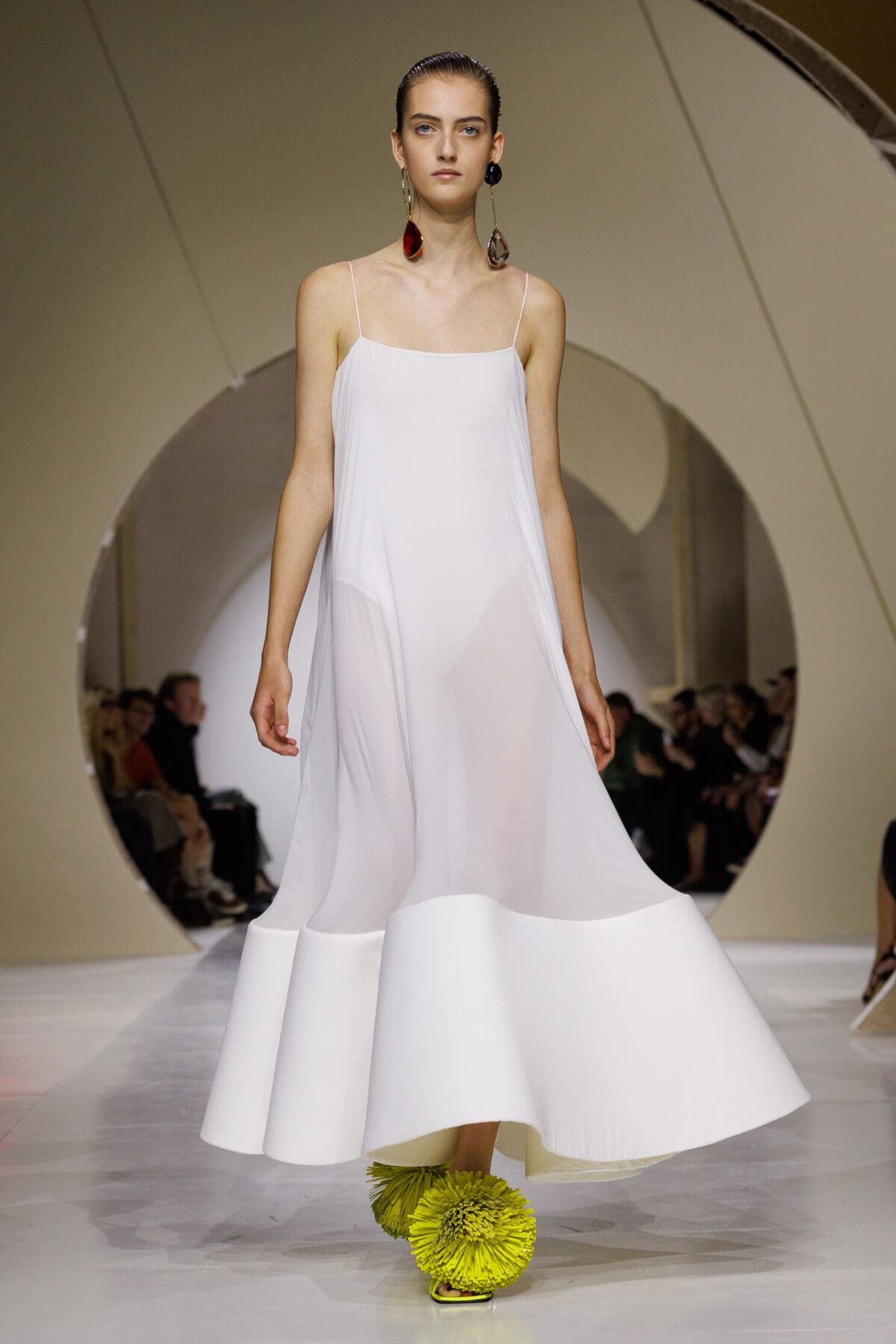
Her boldest experiments were with a pair of evening dresses in fine jersey draped from wing-like arabesques of brass wire. “It was just this idea of suspension, and sensuality, and fluidity,” she said. Alexander Calder’s 1926 Cirque Calder was a reference. The great American artist used to put on performances in which he played ringleader, manipulating the little figures and telling stories about them. The difference here is that Burton and the clients she’s cultivating are very much their own women.
Editor
Nicole Phelps