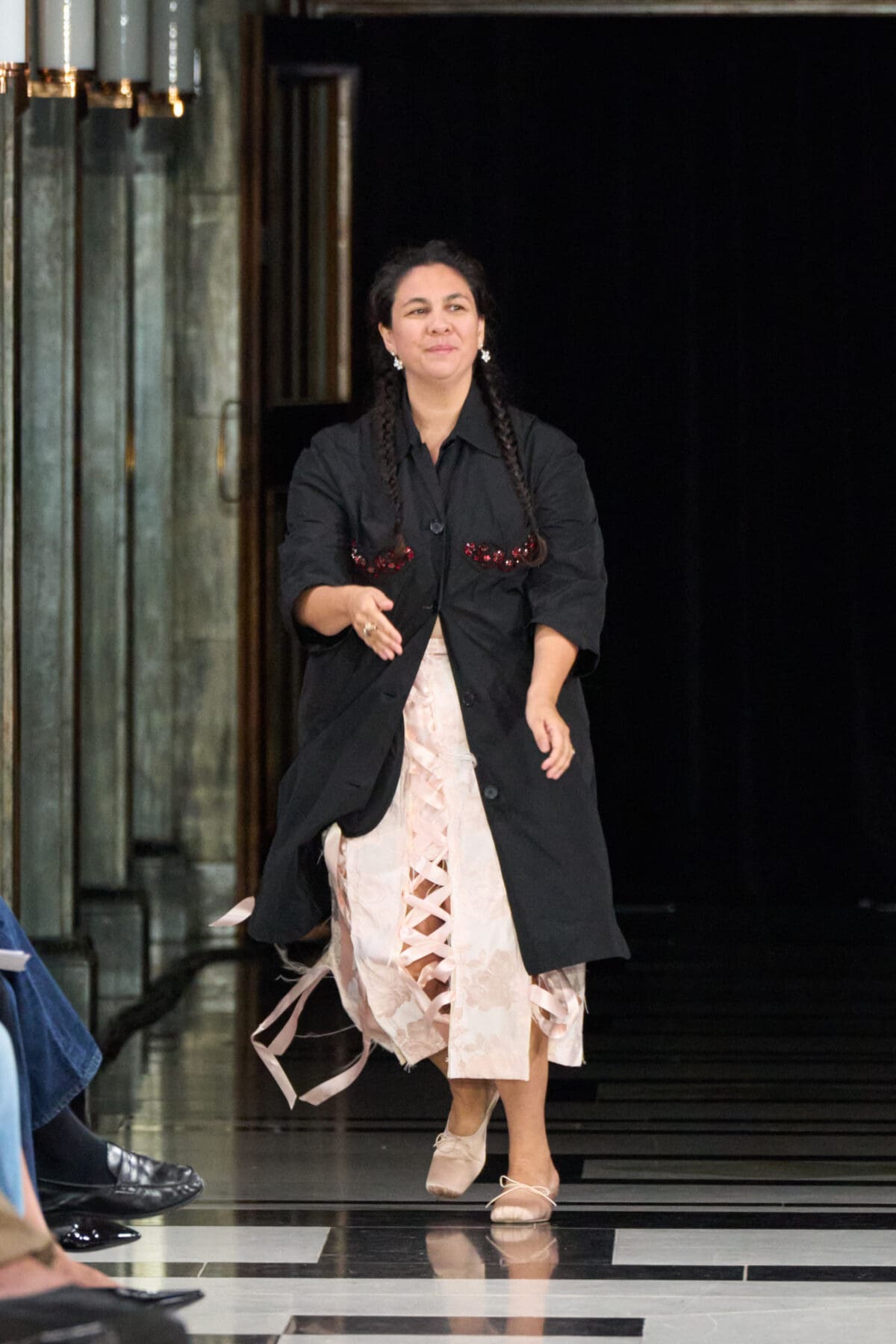



Simone Rocha was back in court this morning. The serial thriller returned to the Old Bailey—London’s central criminal court—to present her third biennial spring collection there. Said Rocha, “I want it to be a very pure show, very focused, and for each character to look like the best version of themselves.”
With menswear now in its own lane, Rocha was free to apply that focus to womenswear alone. She further stripped back her process by cutting out the red tape, explaining, “I was less focused on narrative, because sometimes I can get bogged down in story.” Instead, she built the collection out from a single extraordinary episode: the 1990 rediscovery of Caravaggio’s long-lost The Taking of Christ, which had hung, misattributed, in the dining room of a Dublin Jesuit house for more than 50 years.
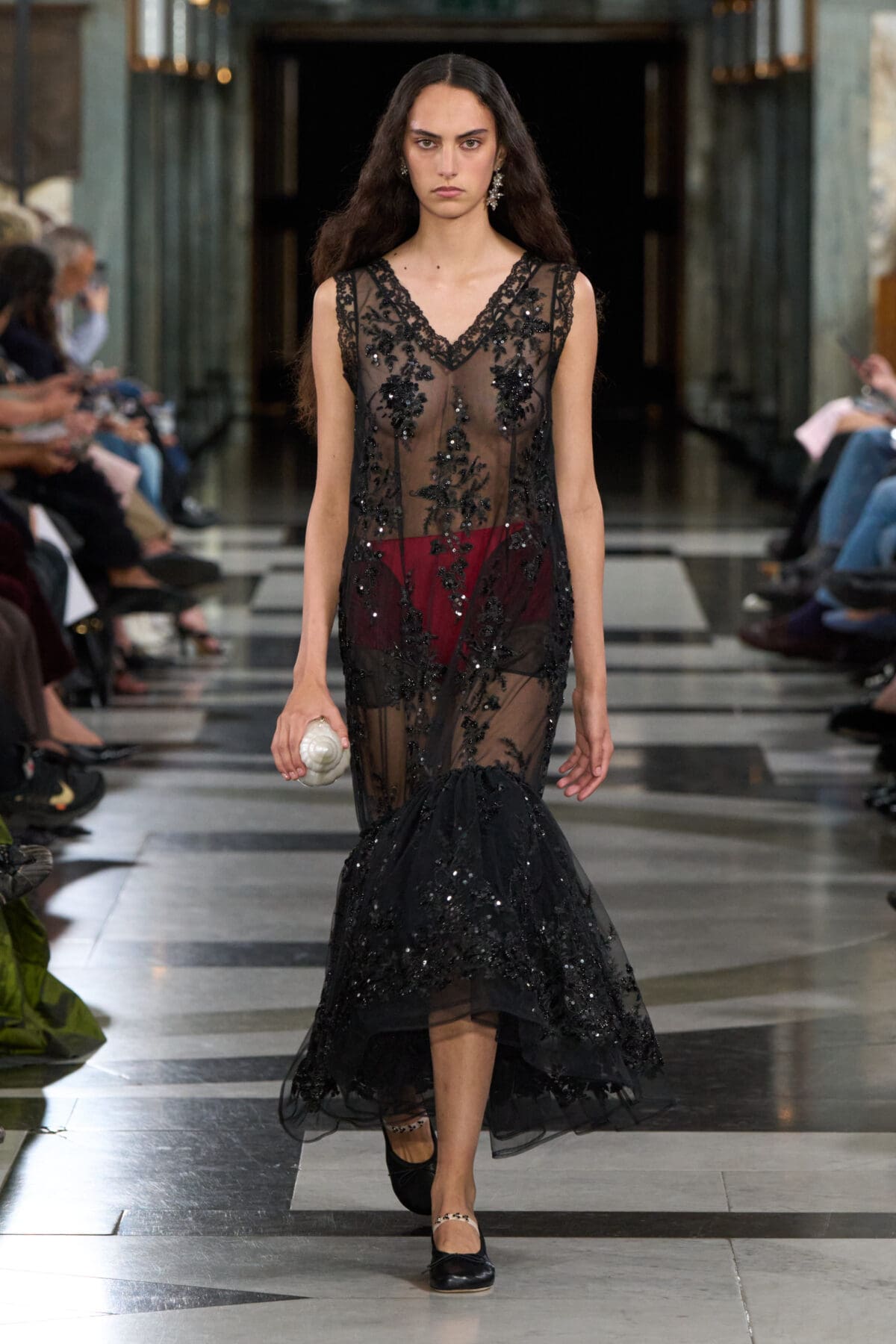
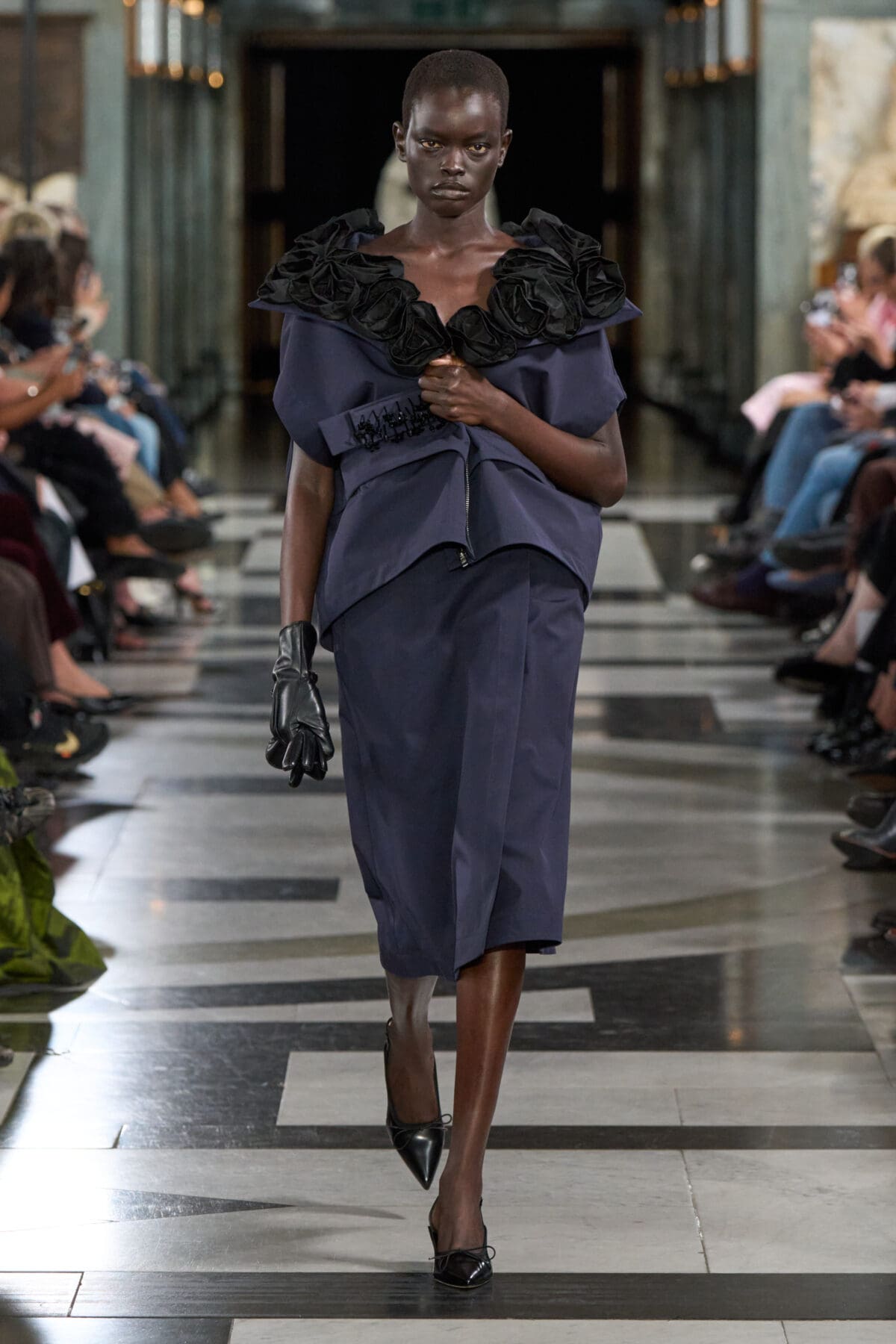
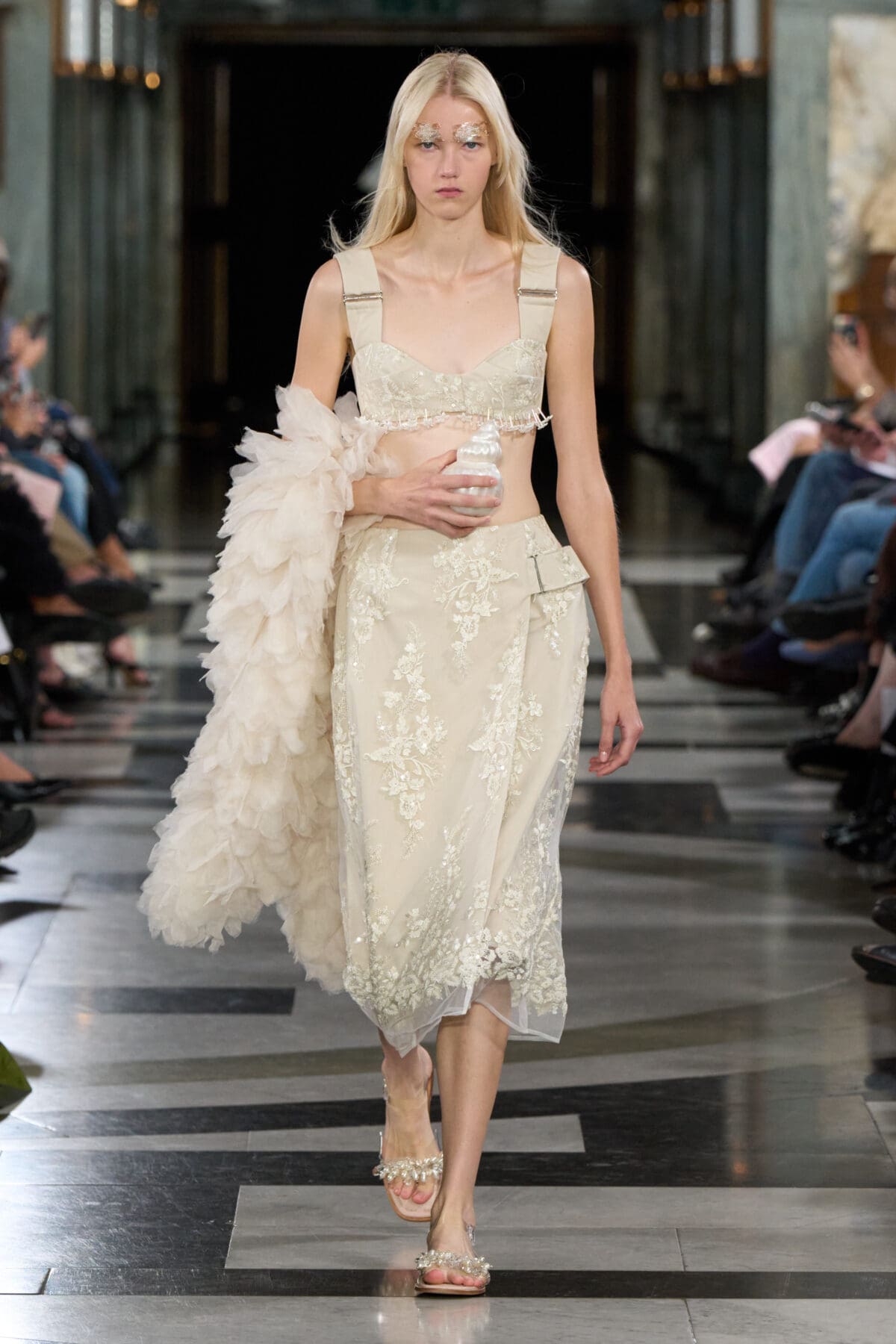
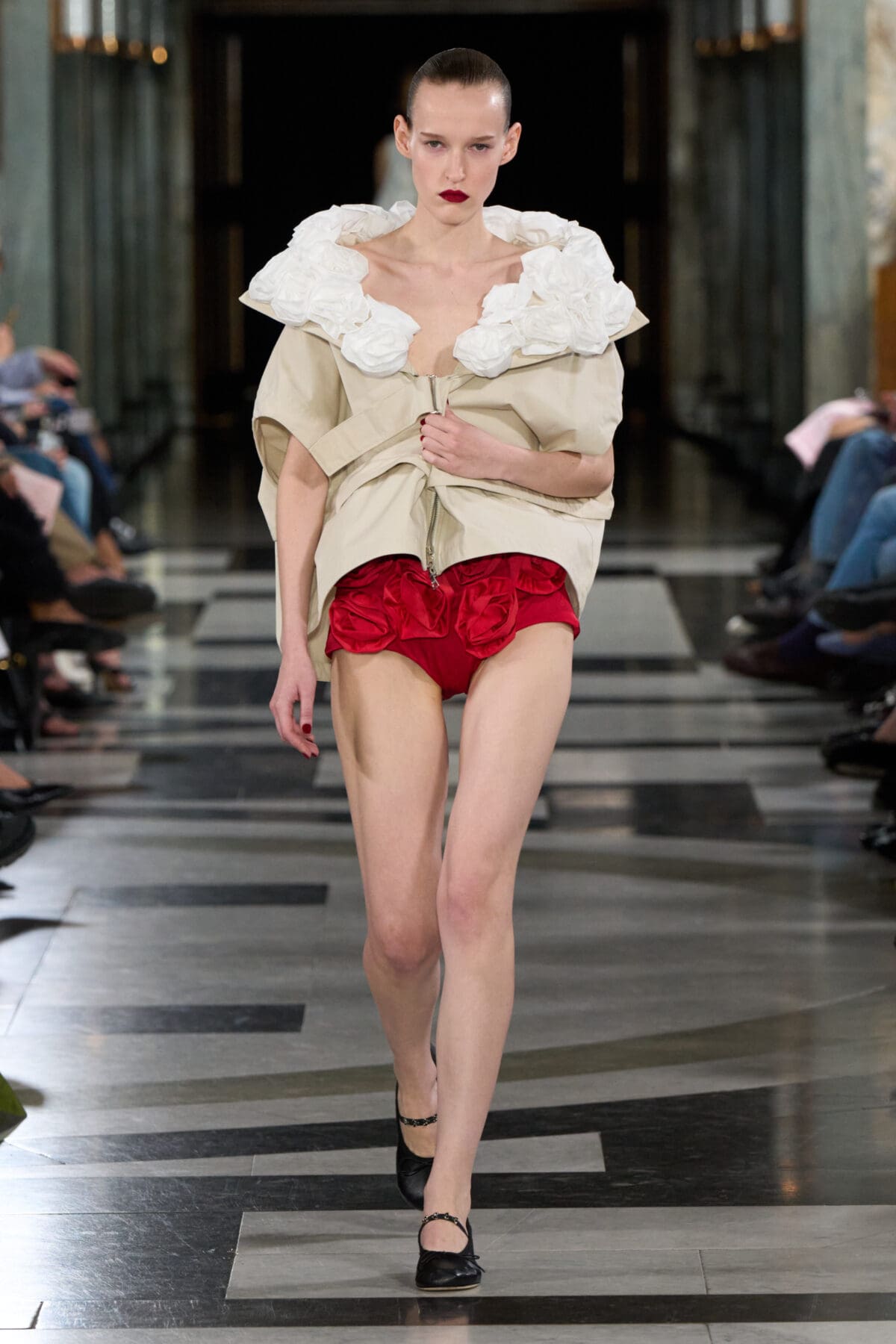
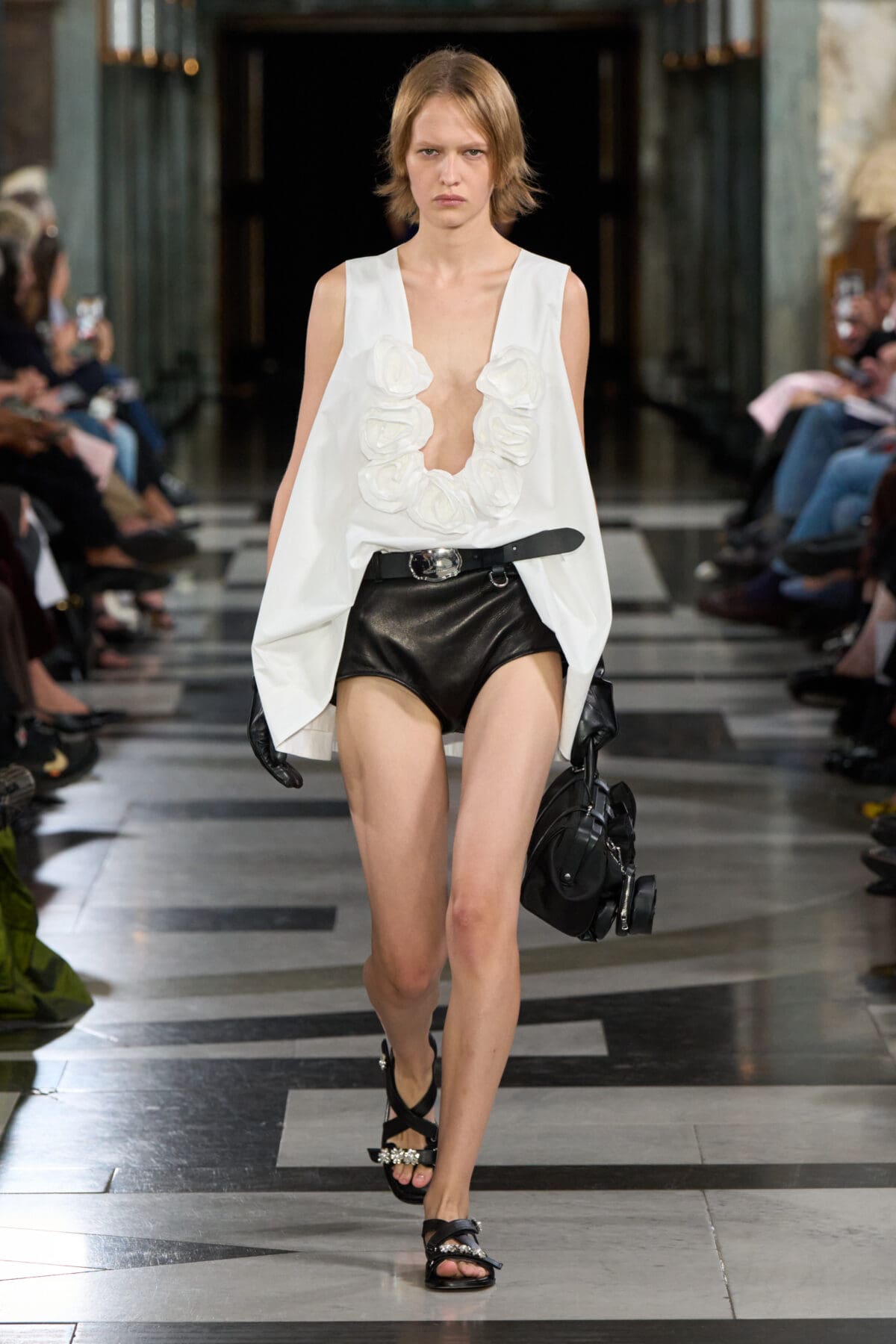
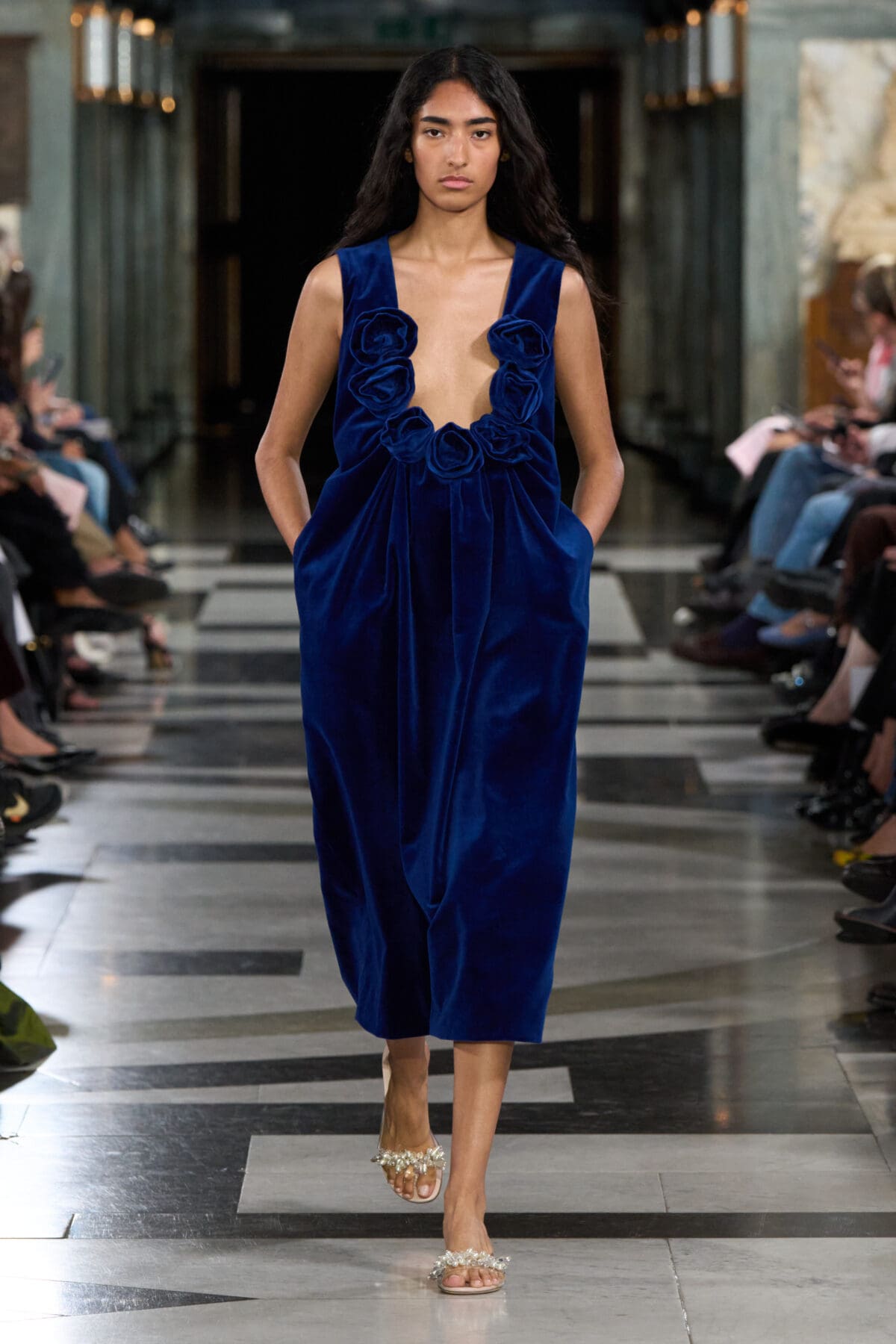
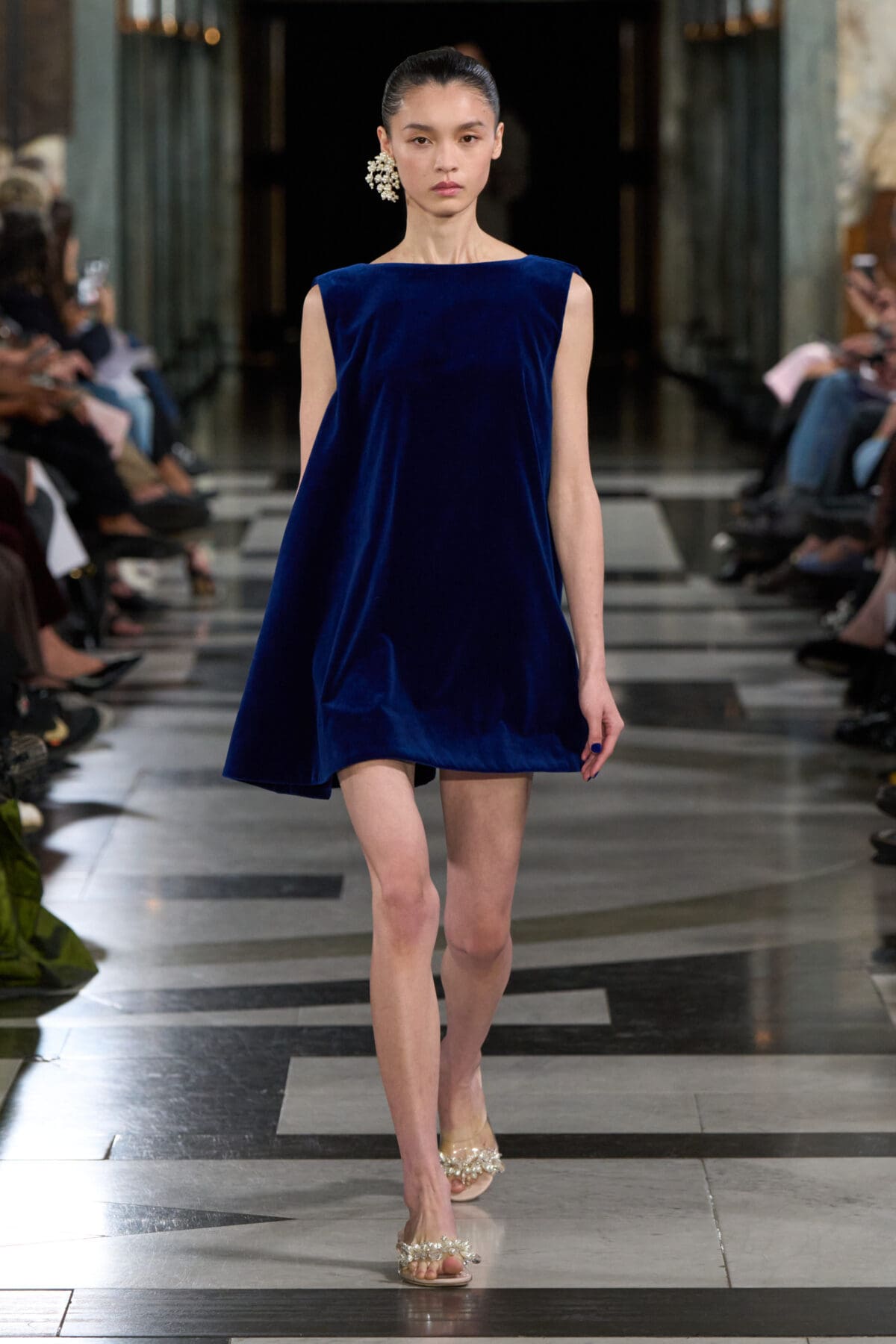
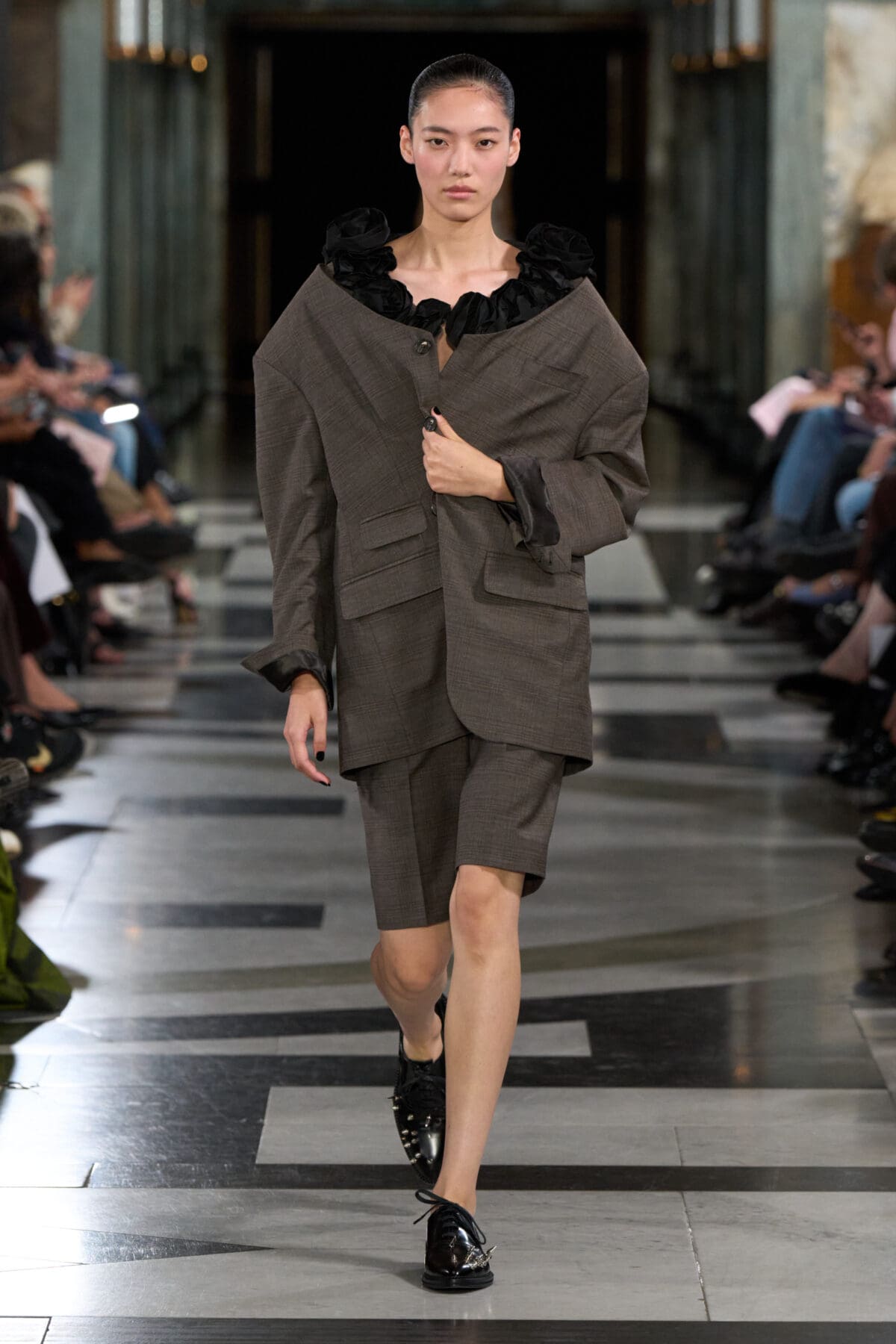
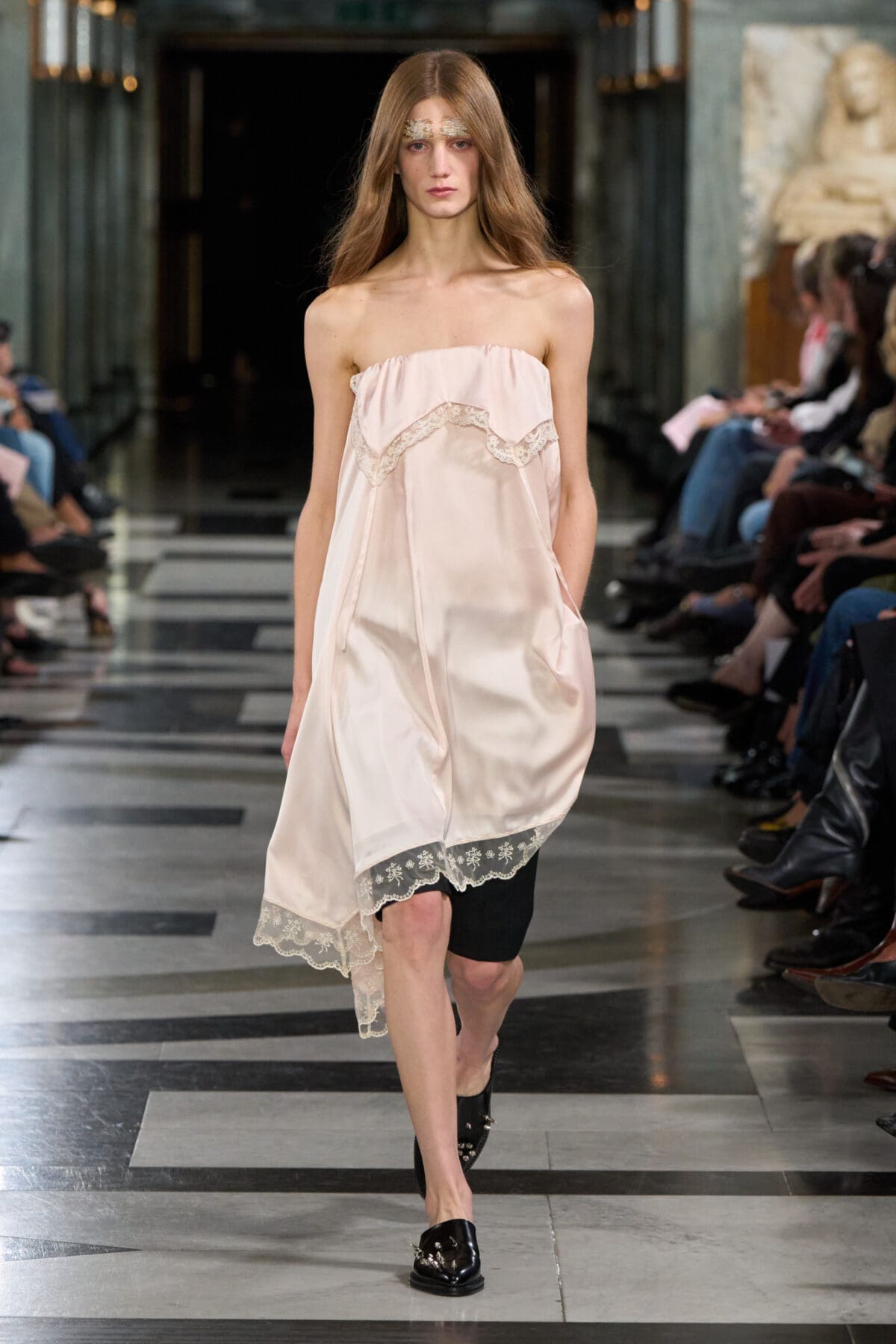
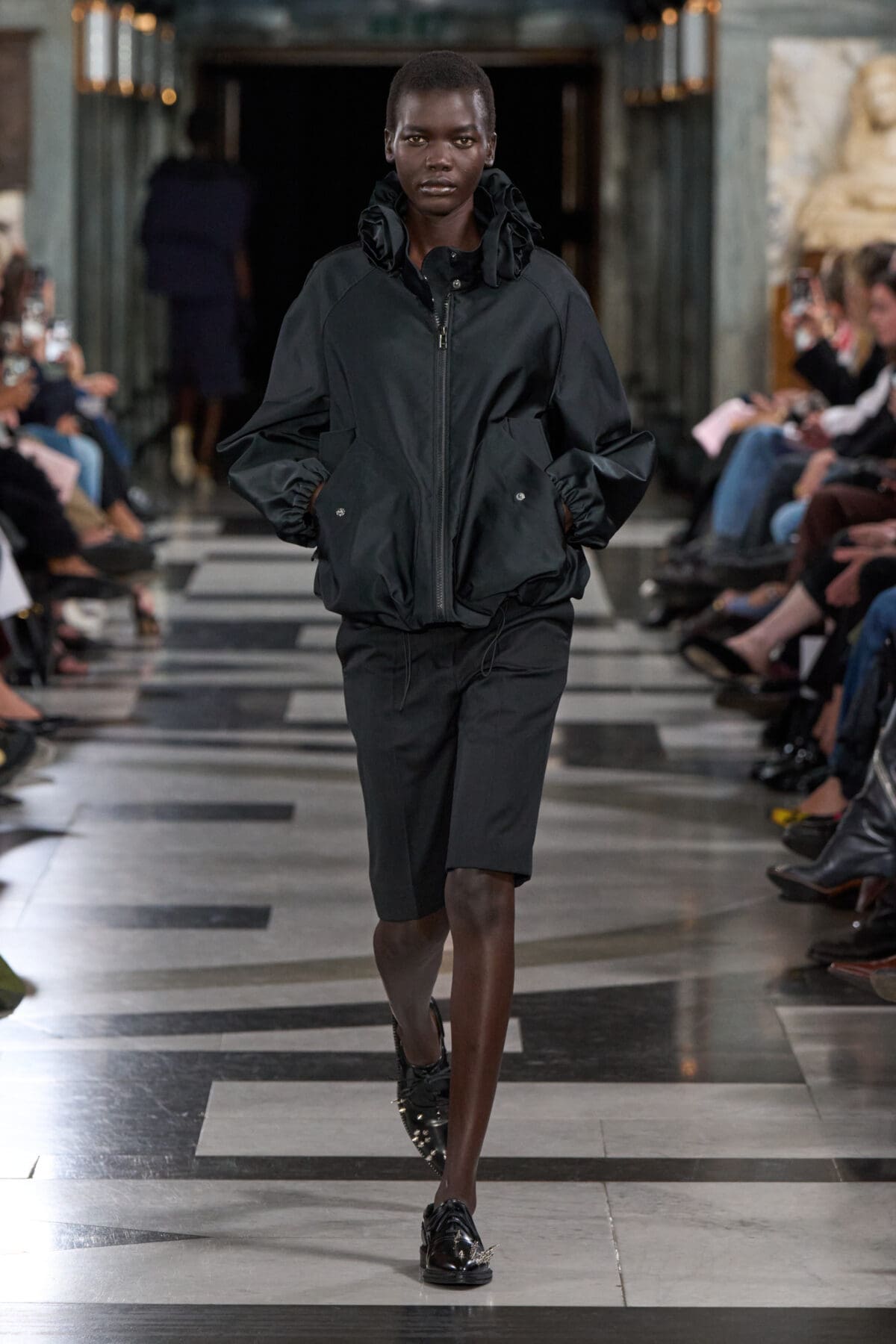
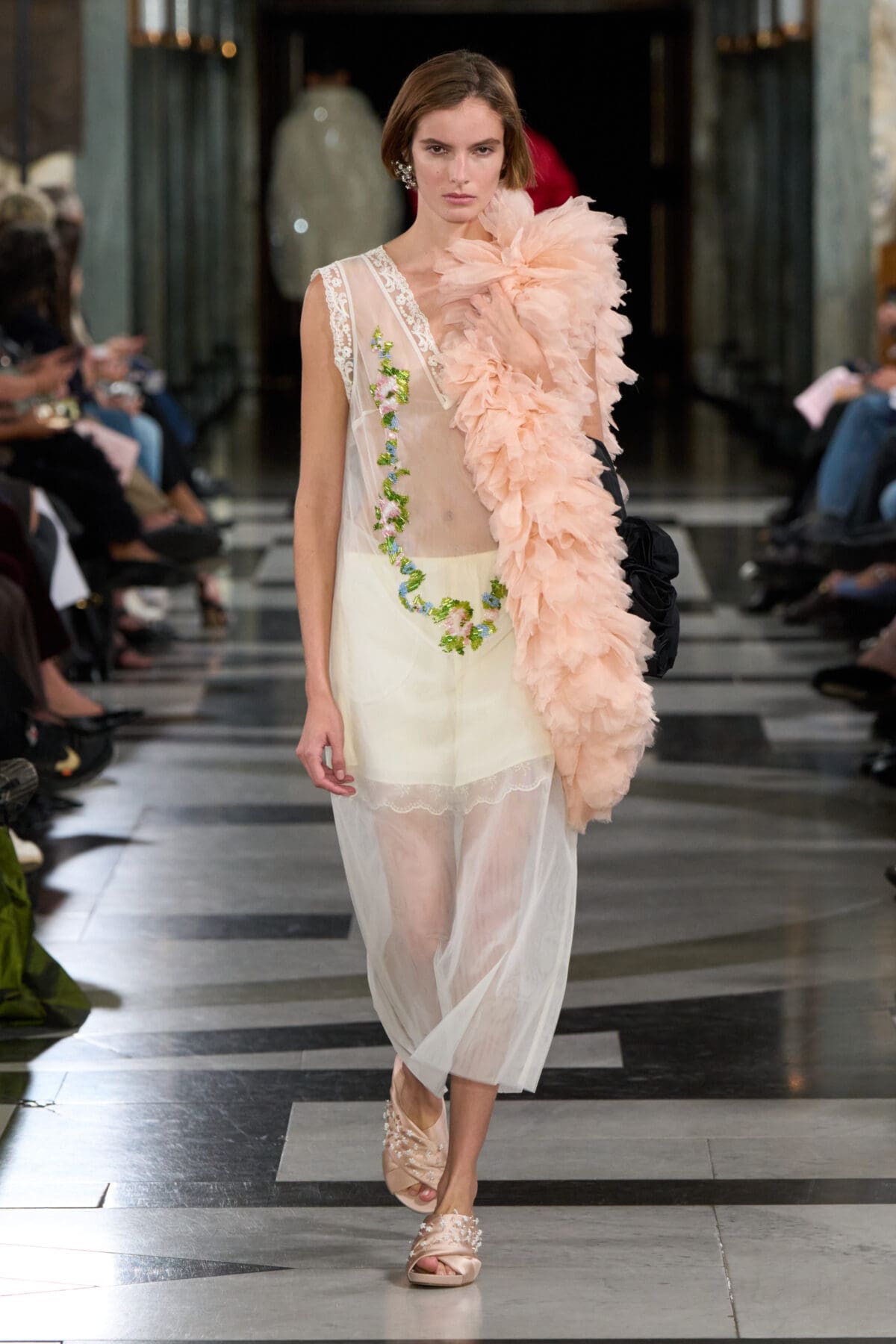
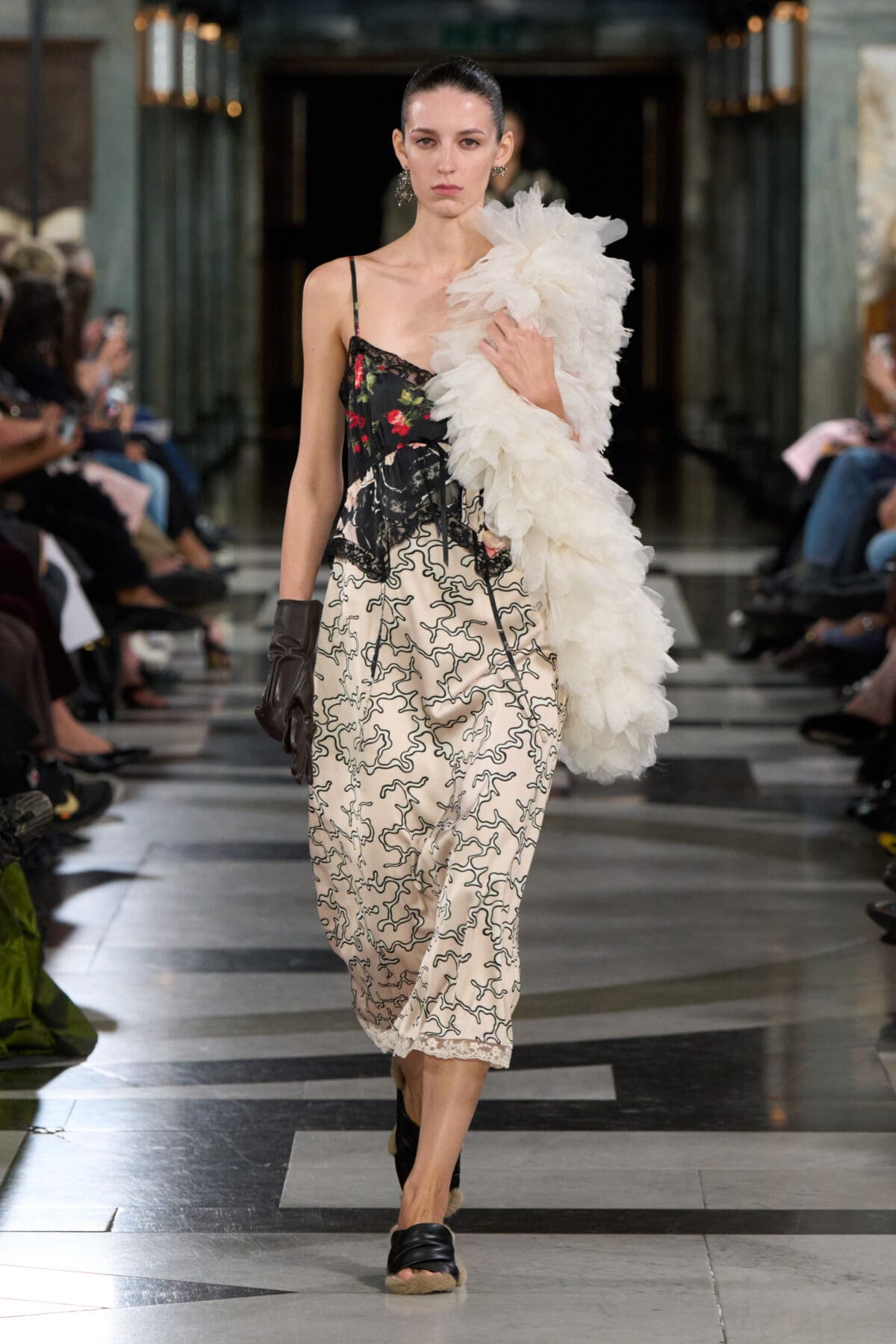
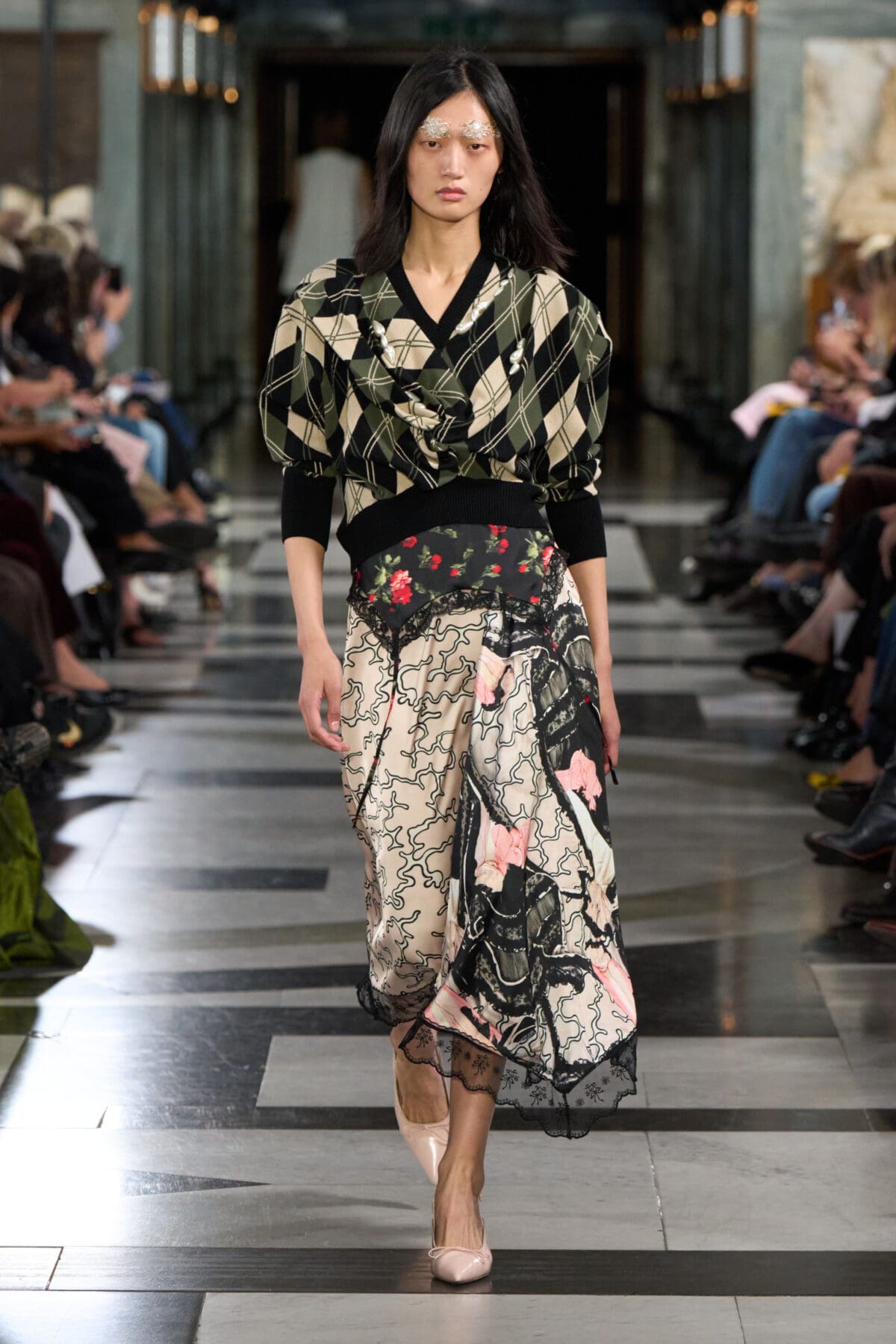
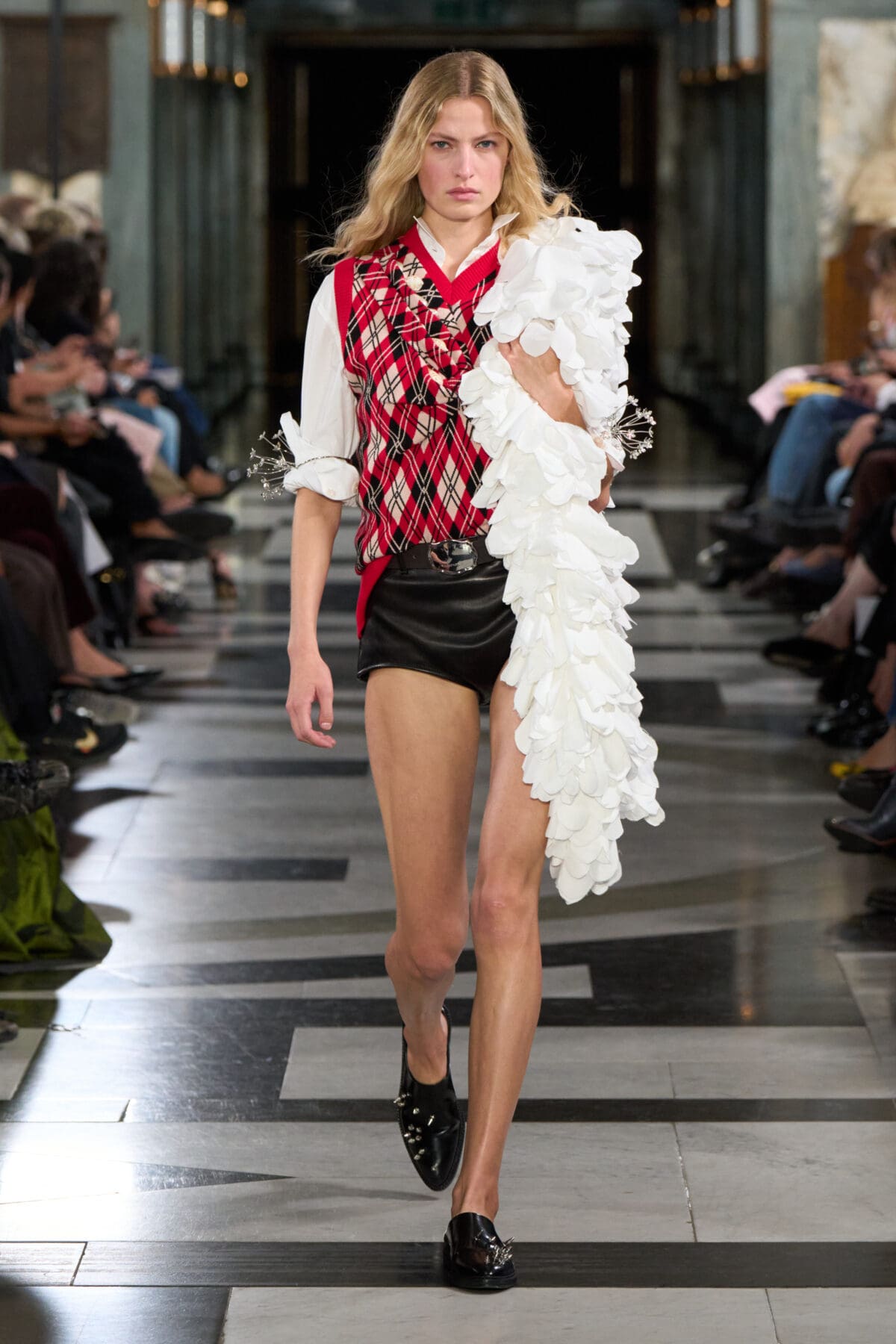
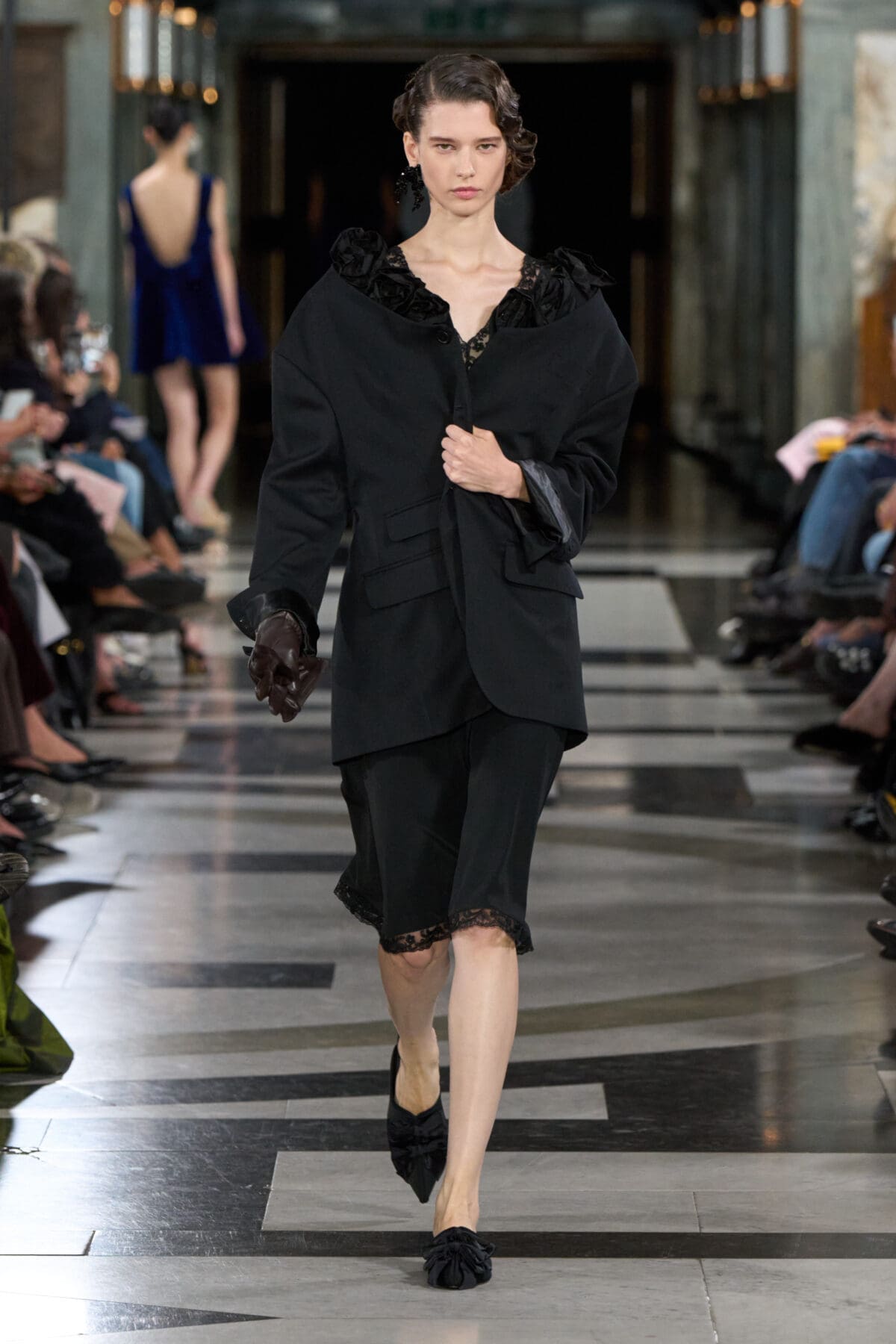
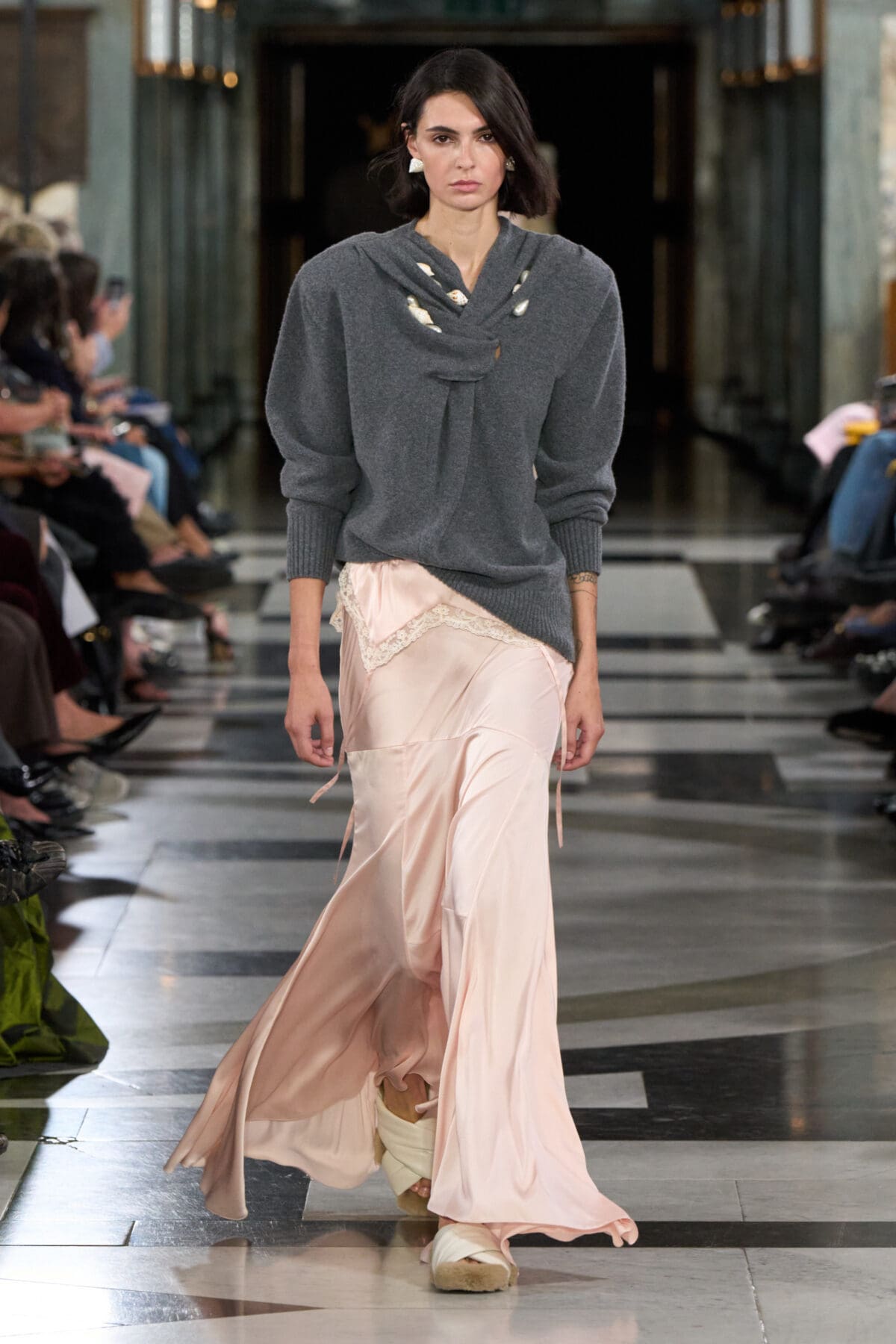
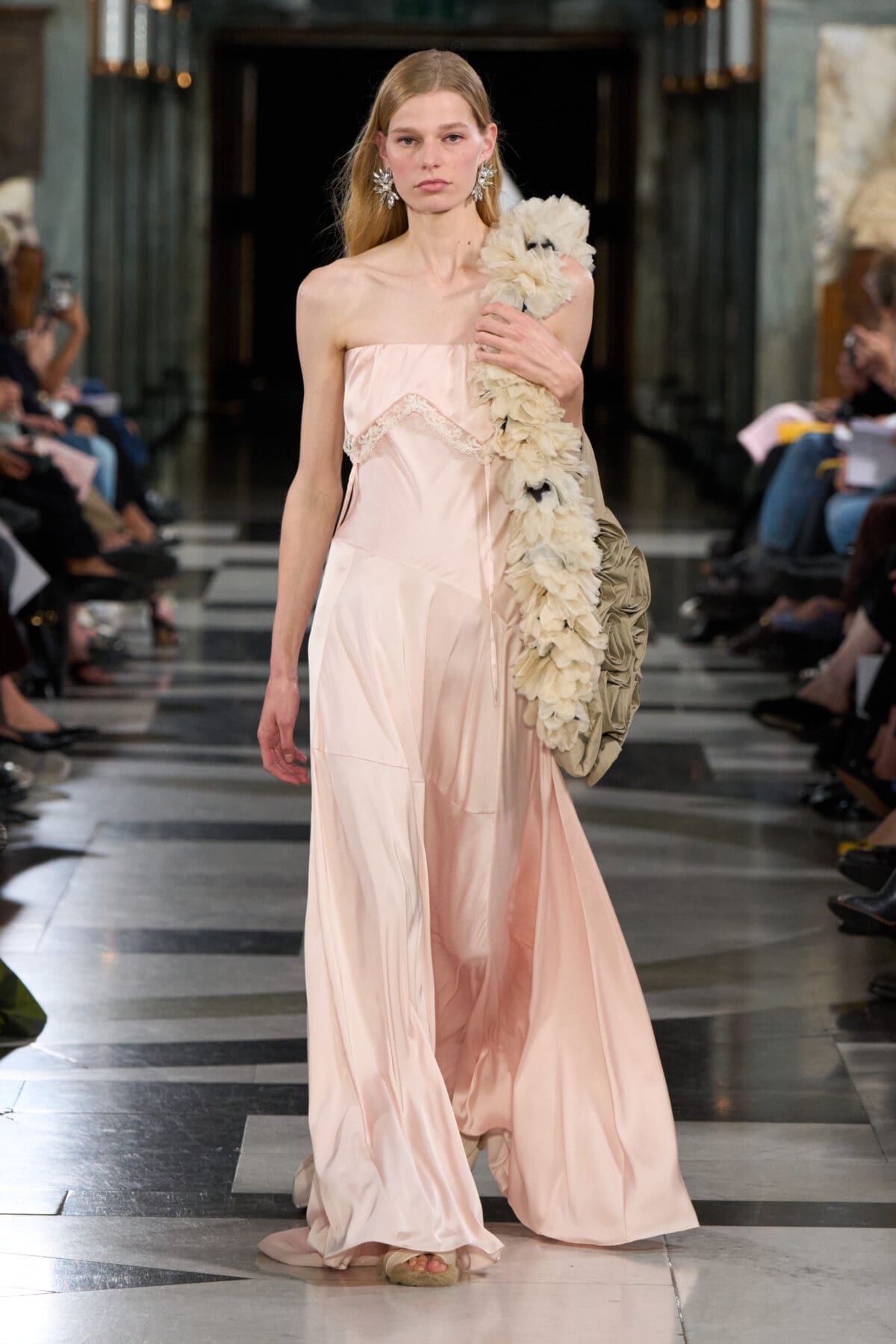
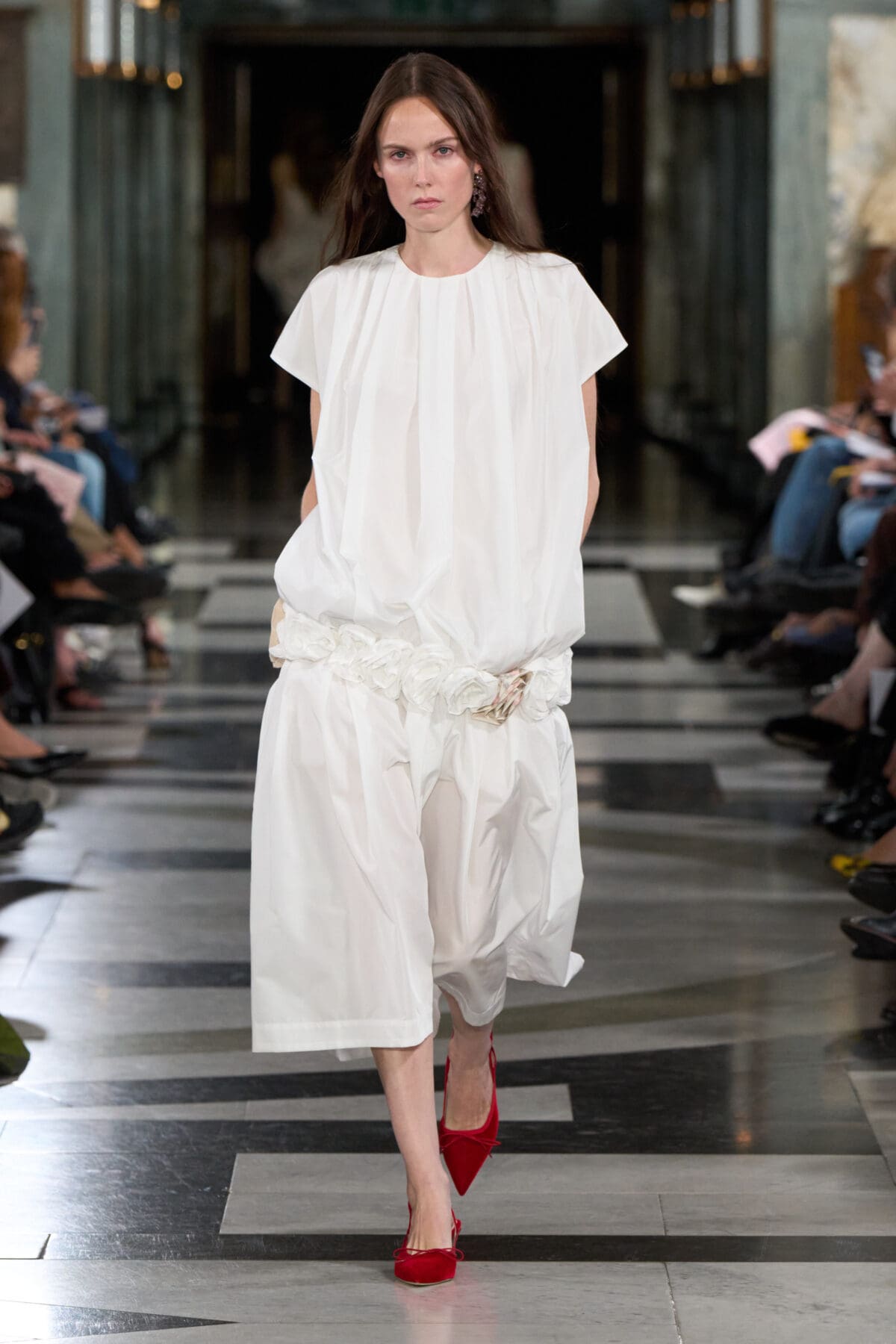
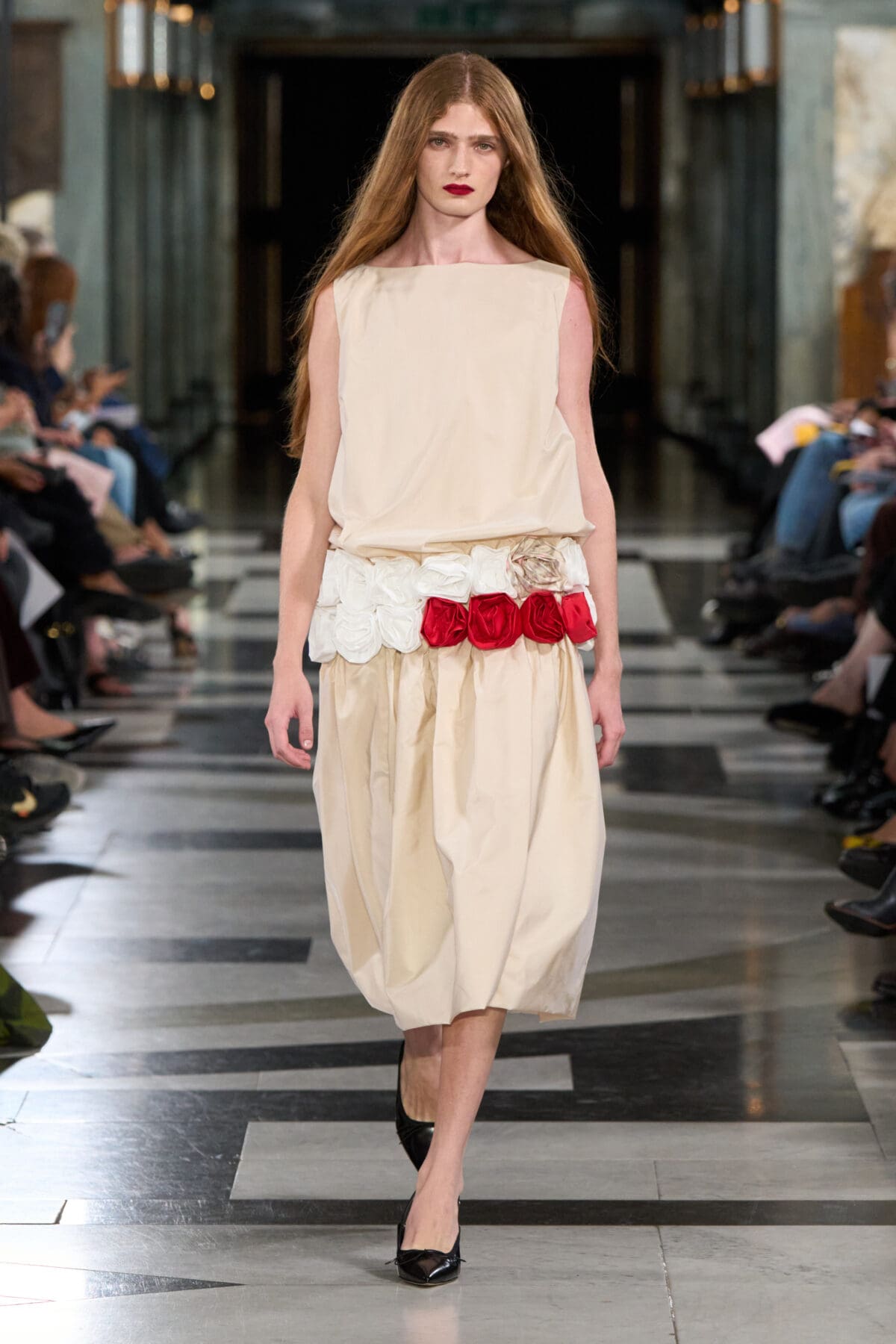
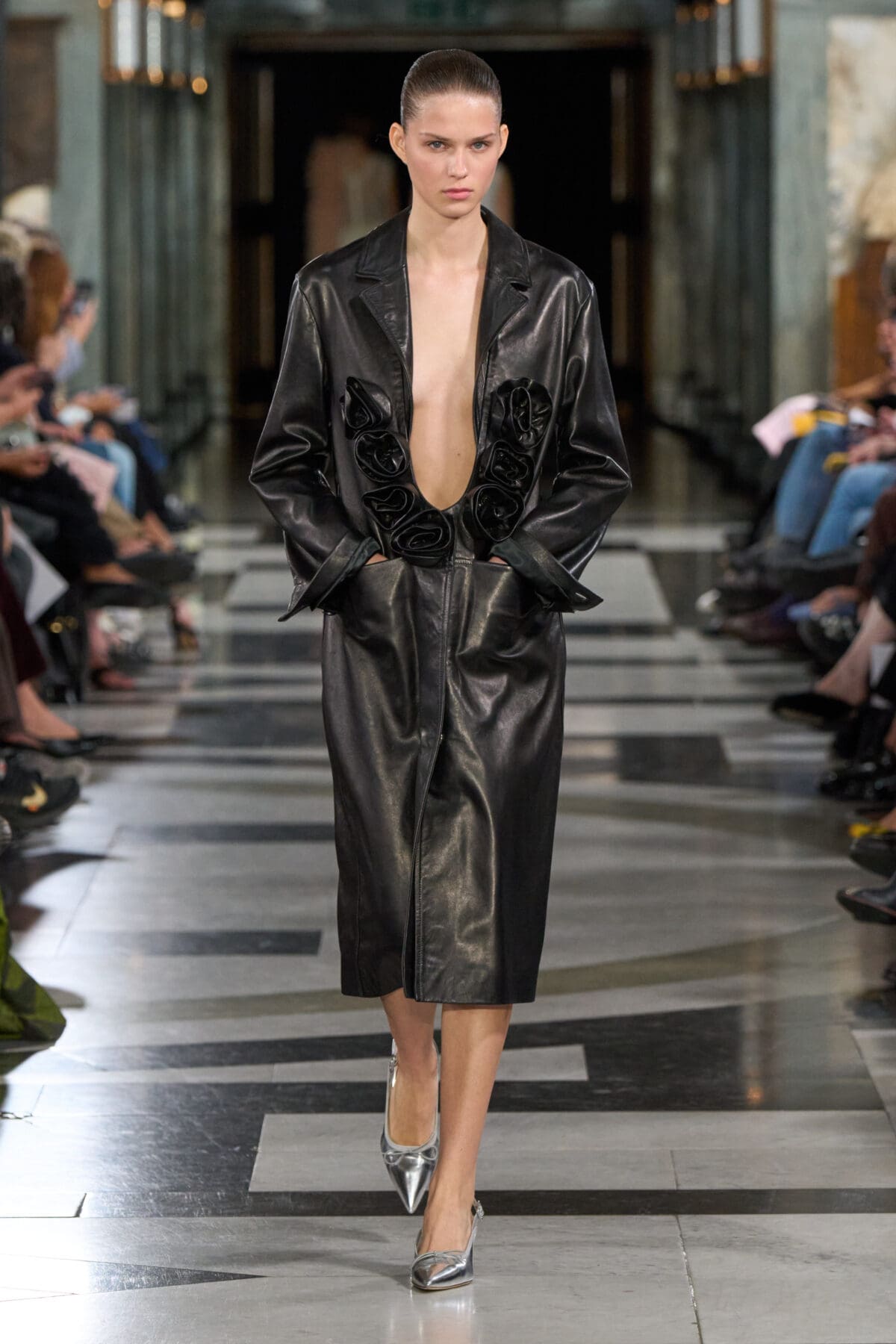
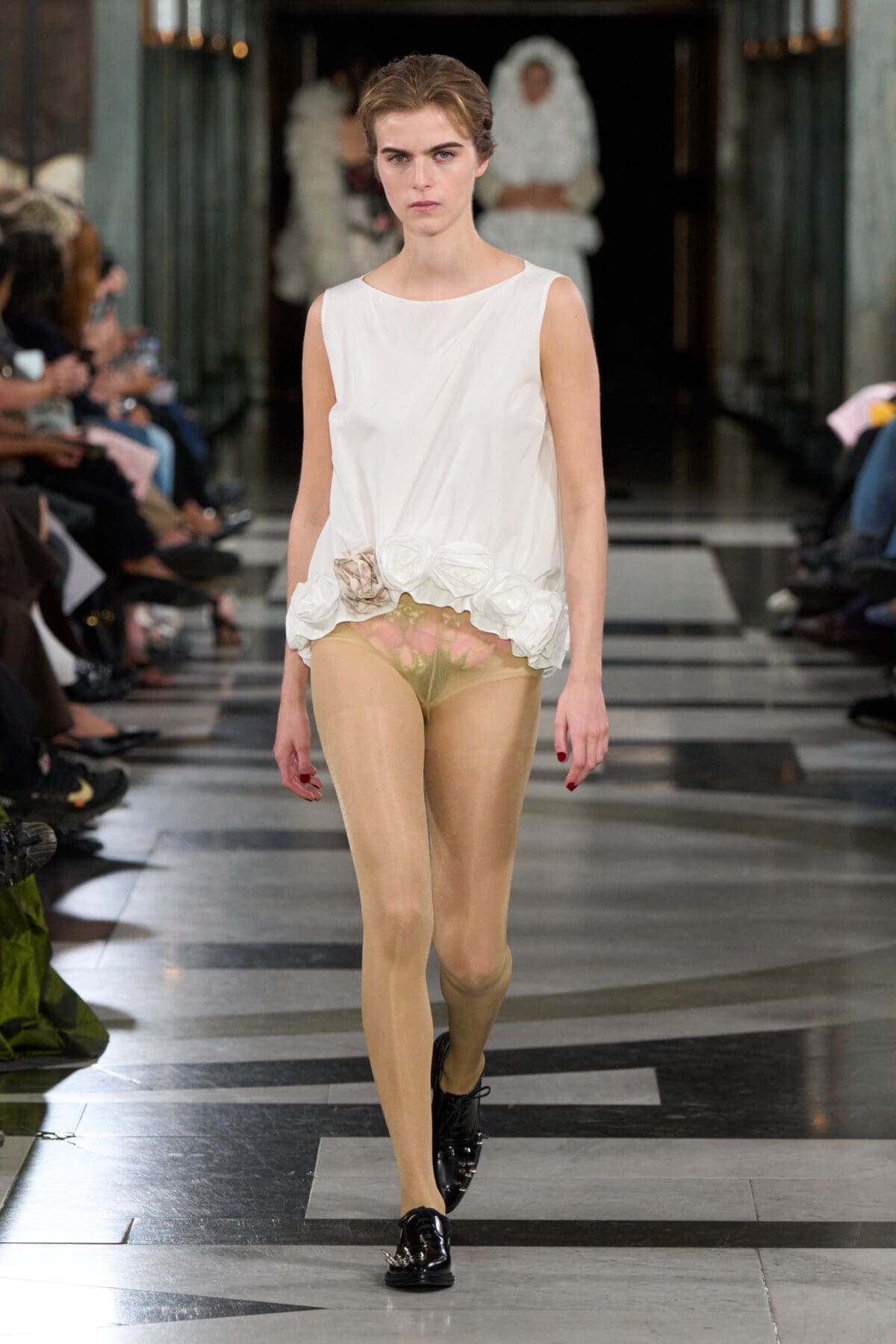
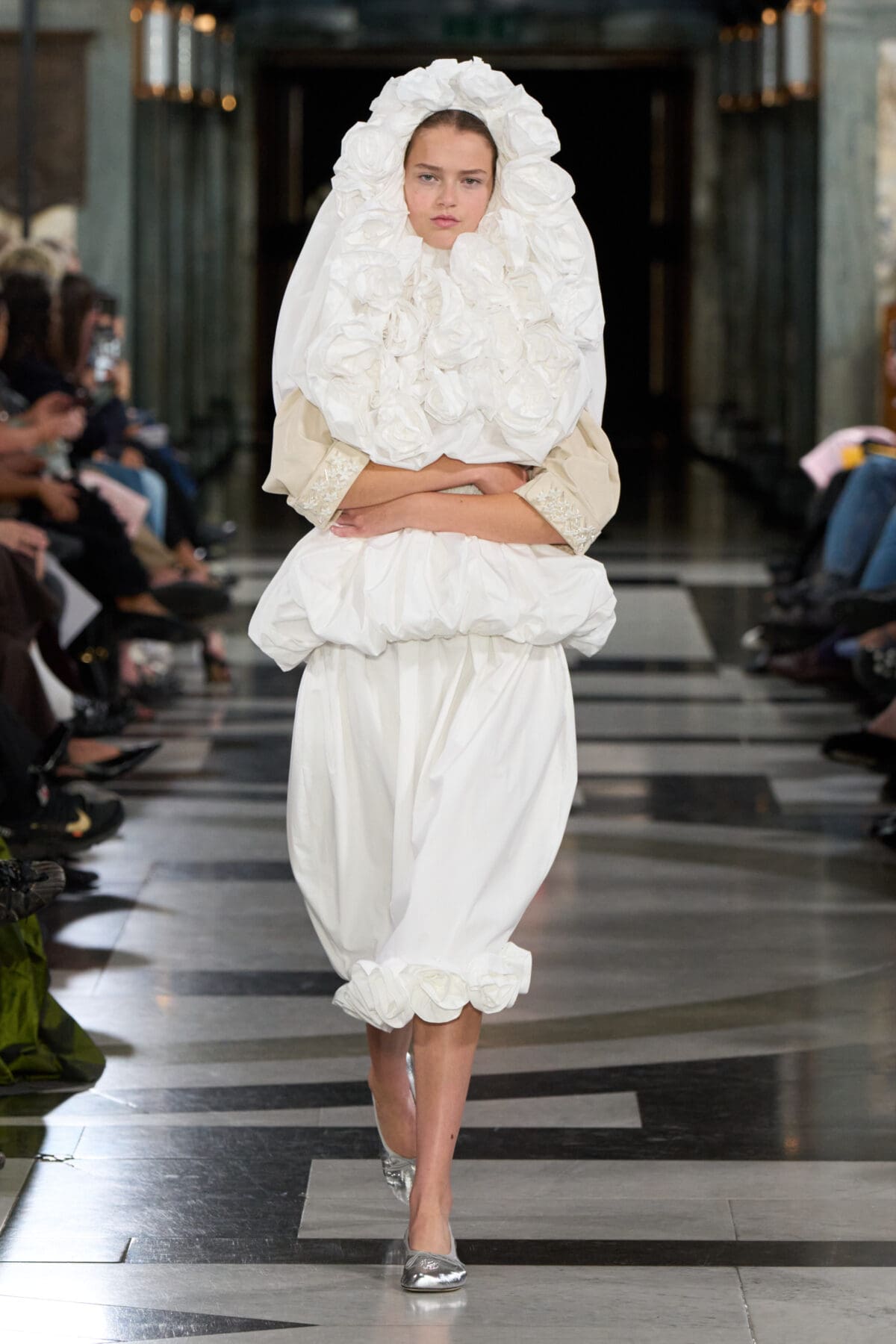
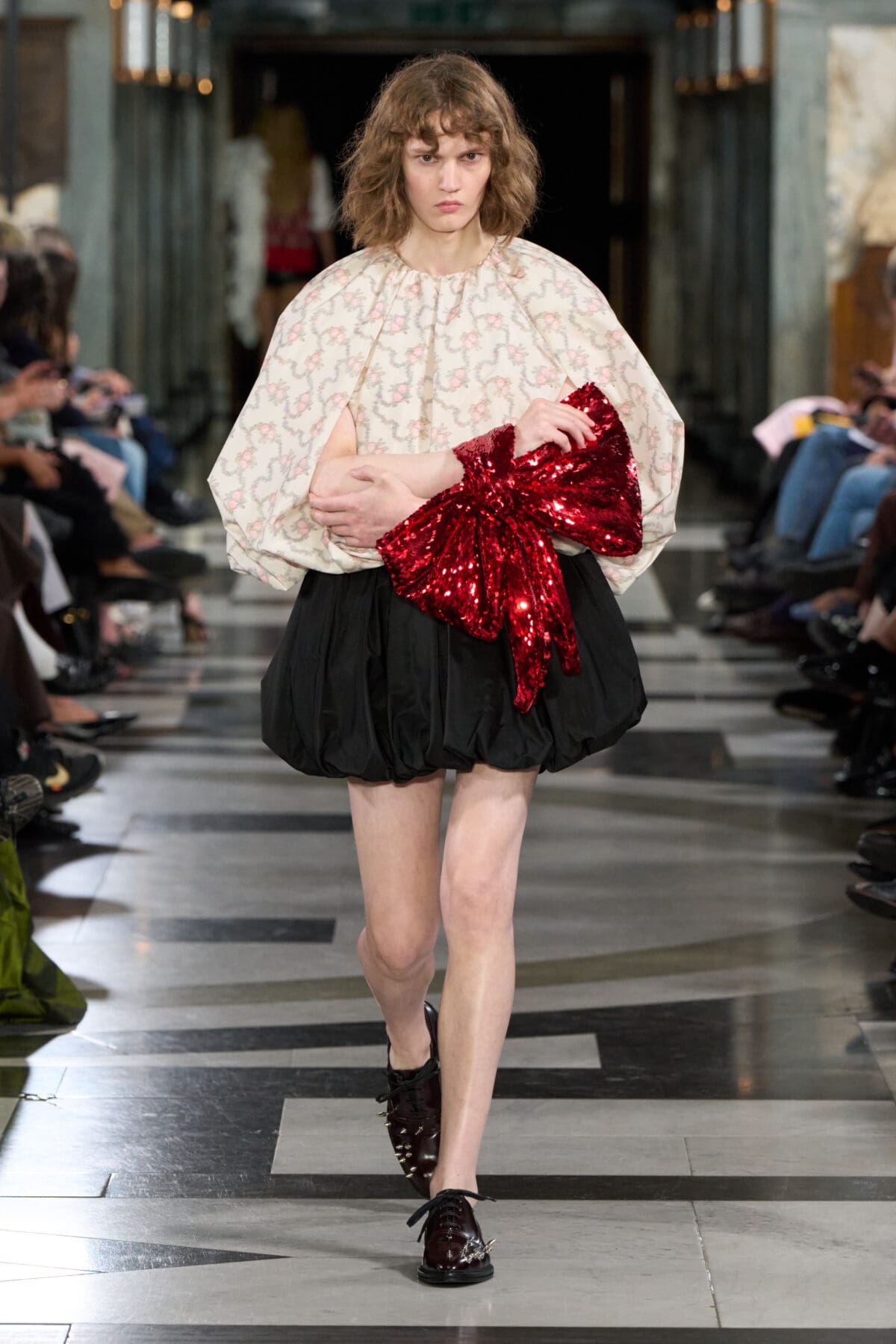
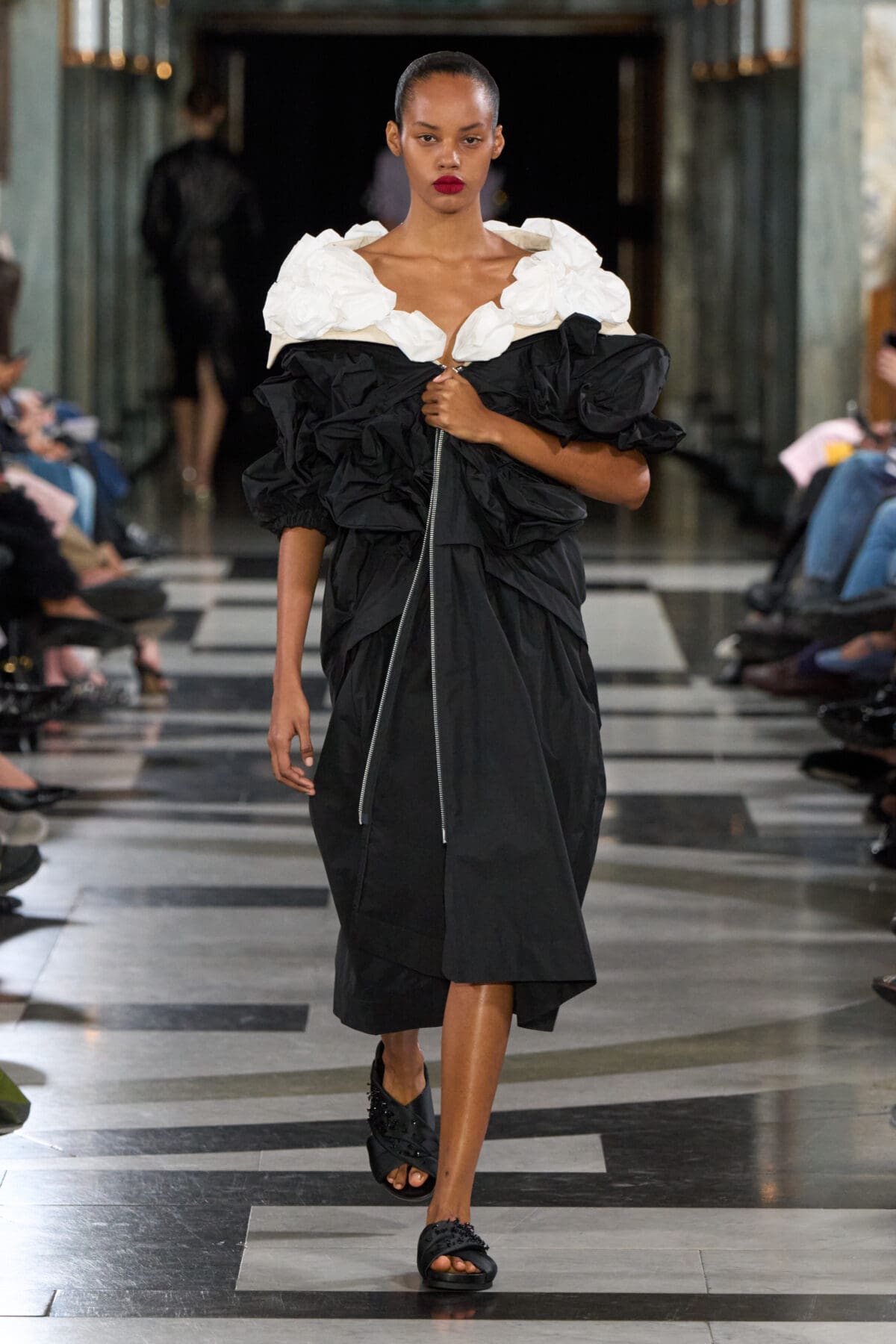
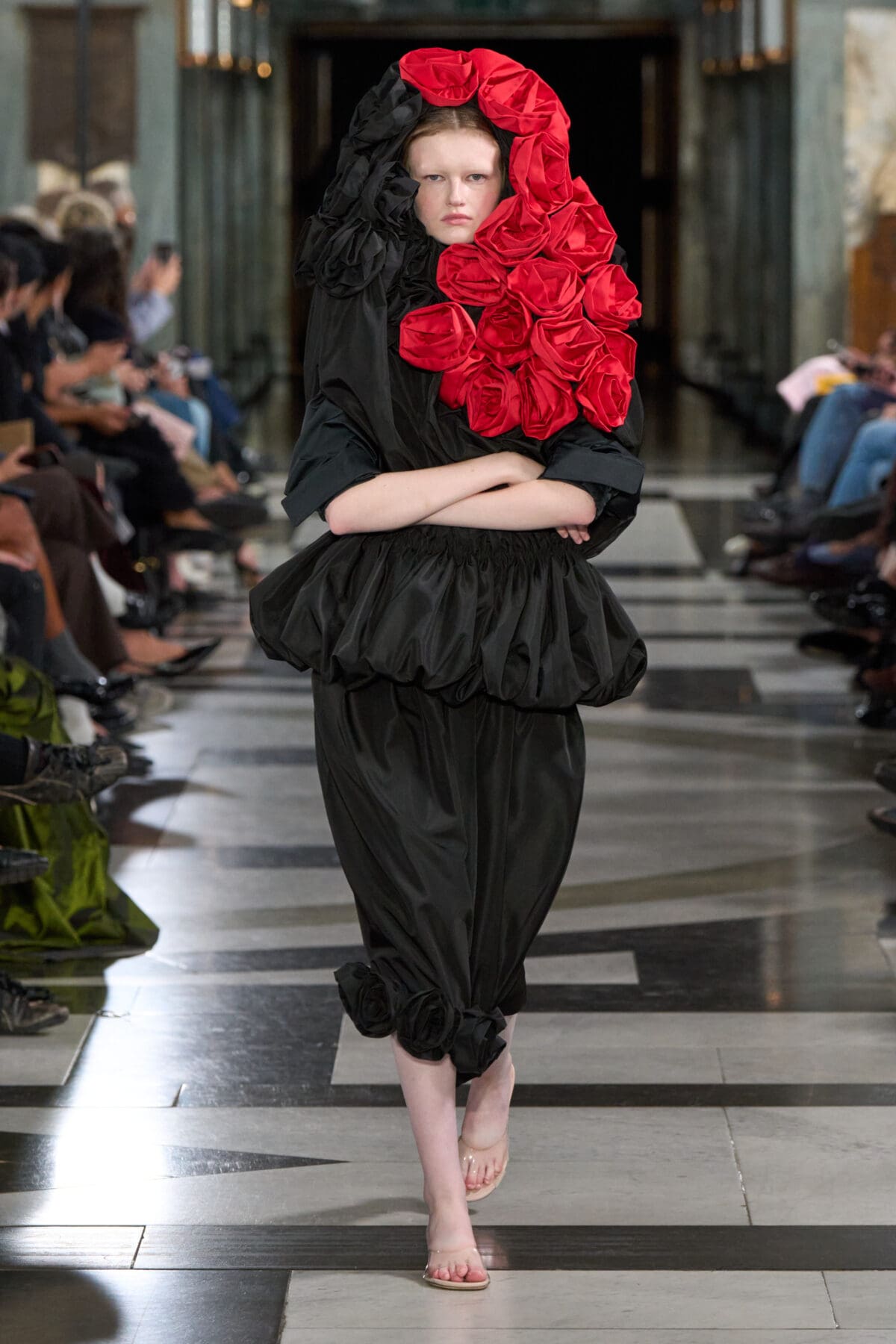
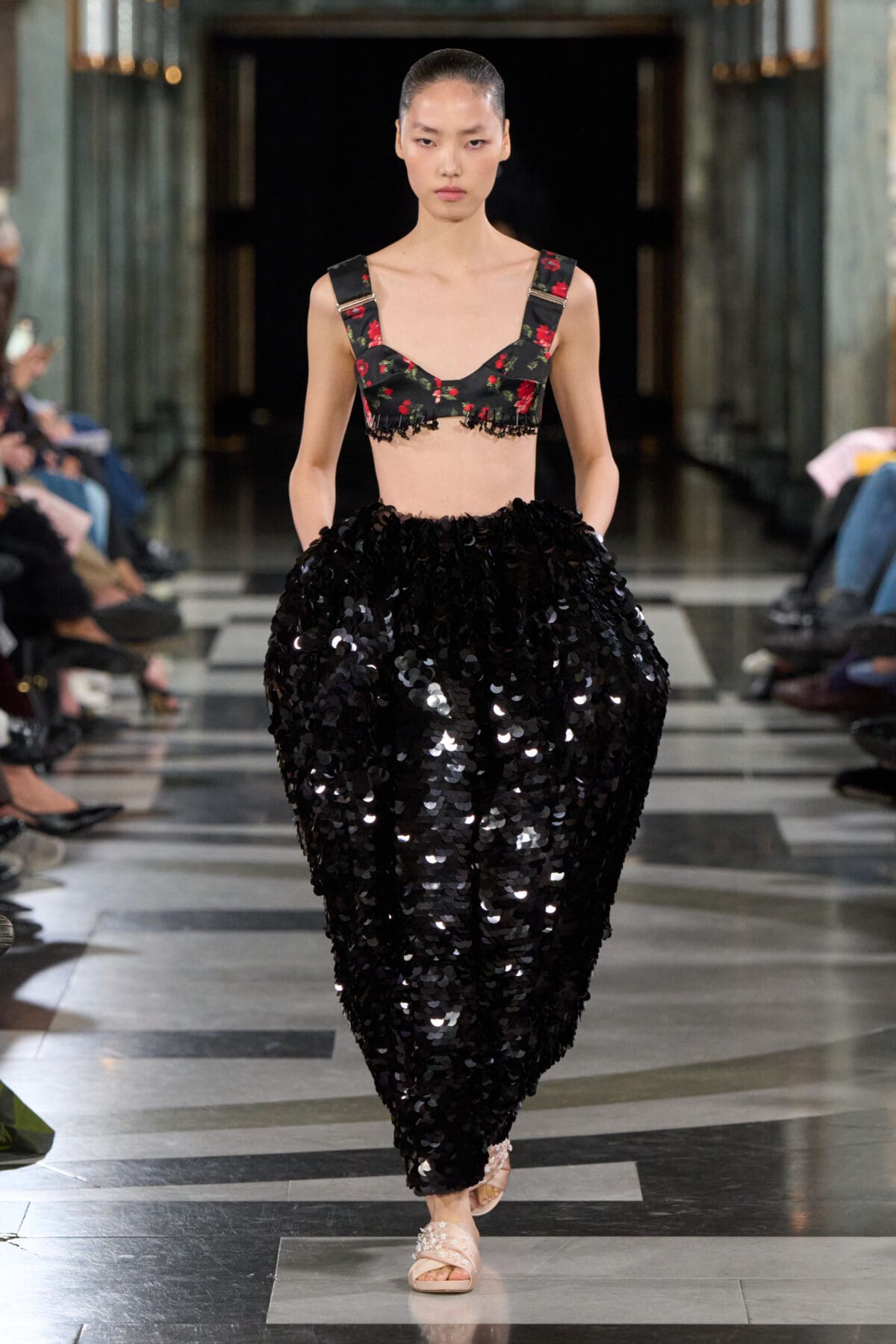
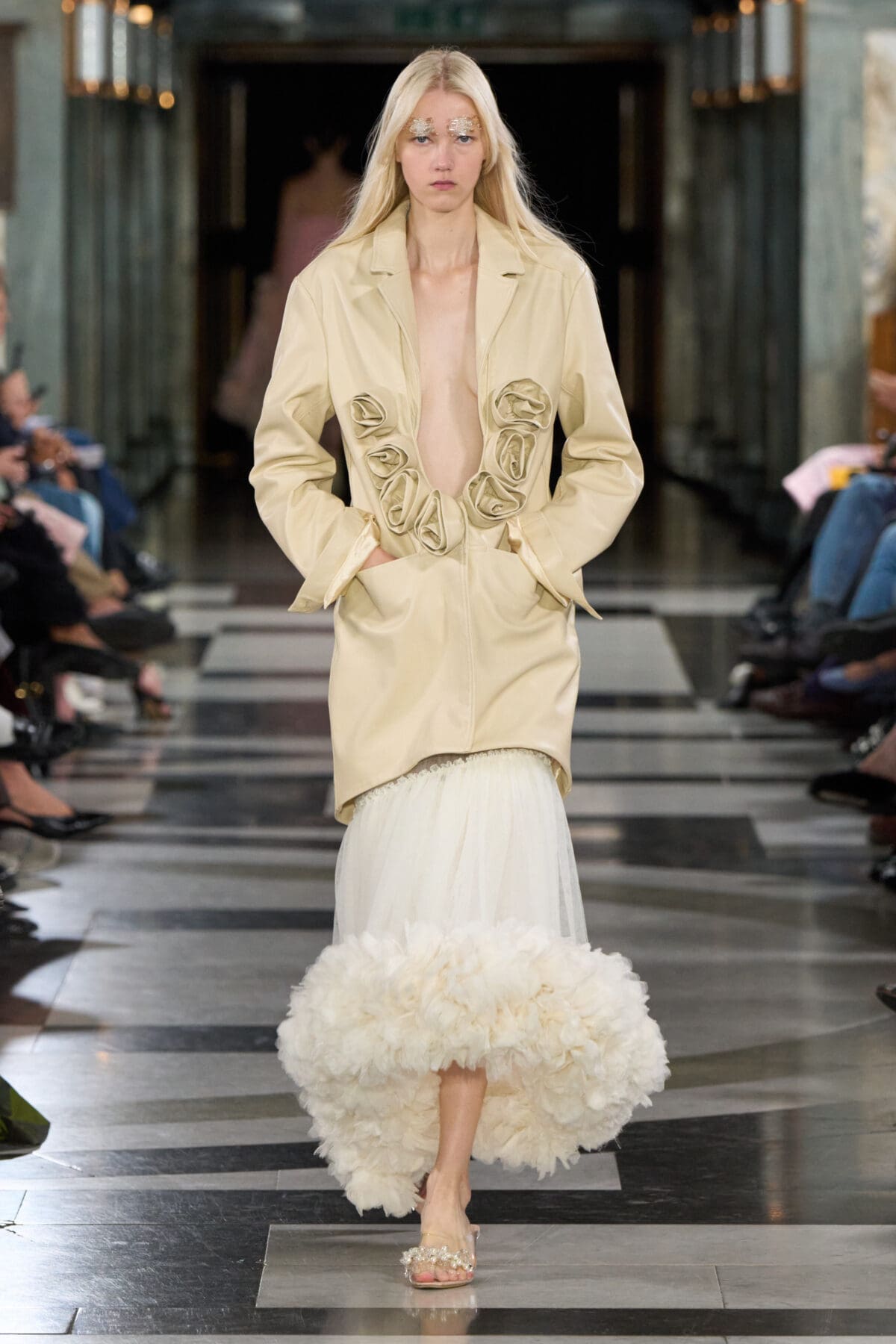
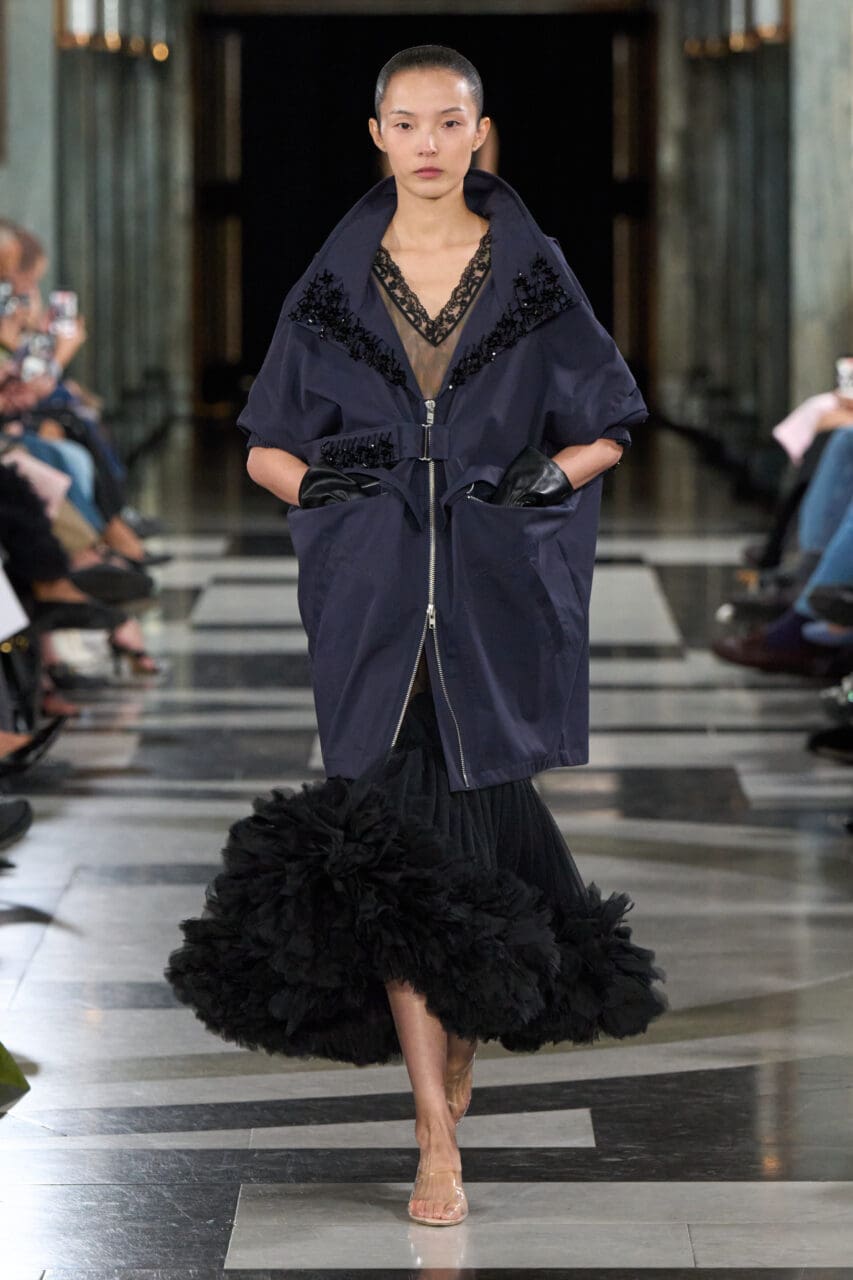
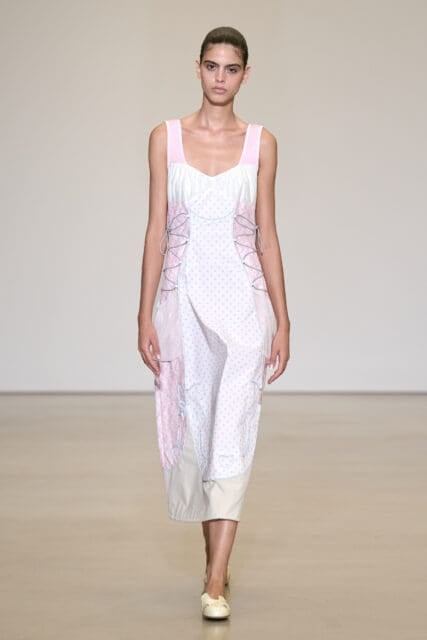
This appropriately Irish miracle of art history contained the kernel of contradiction Rocha was savoring. She built looks that overlapped the awe-inspiring with the apparently ordinary and, from the opposite direction, pushed intimacy outward toward exhibition. Across the collection—from a velvet dress in Caravaggio-inspired blue via a black leather drop-waist coat to a canvas-colored leather jacket—she framed her models in sumptuously ornate necklines of hand-furled rose embellishments. Silk organza slip dresses were restructured to fall off the body as if muddled or flustered by some unexplained intervention.
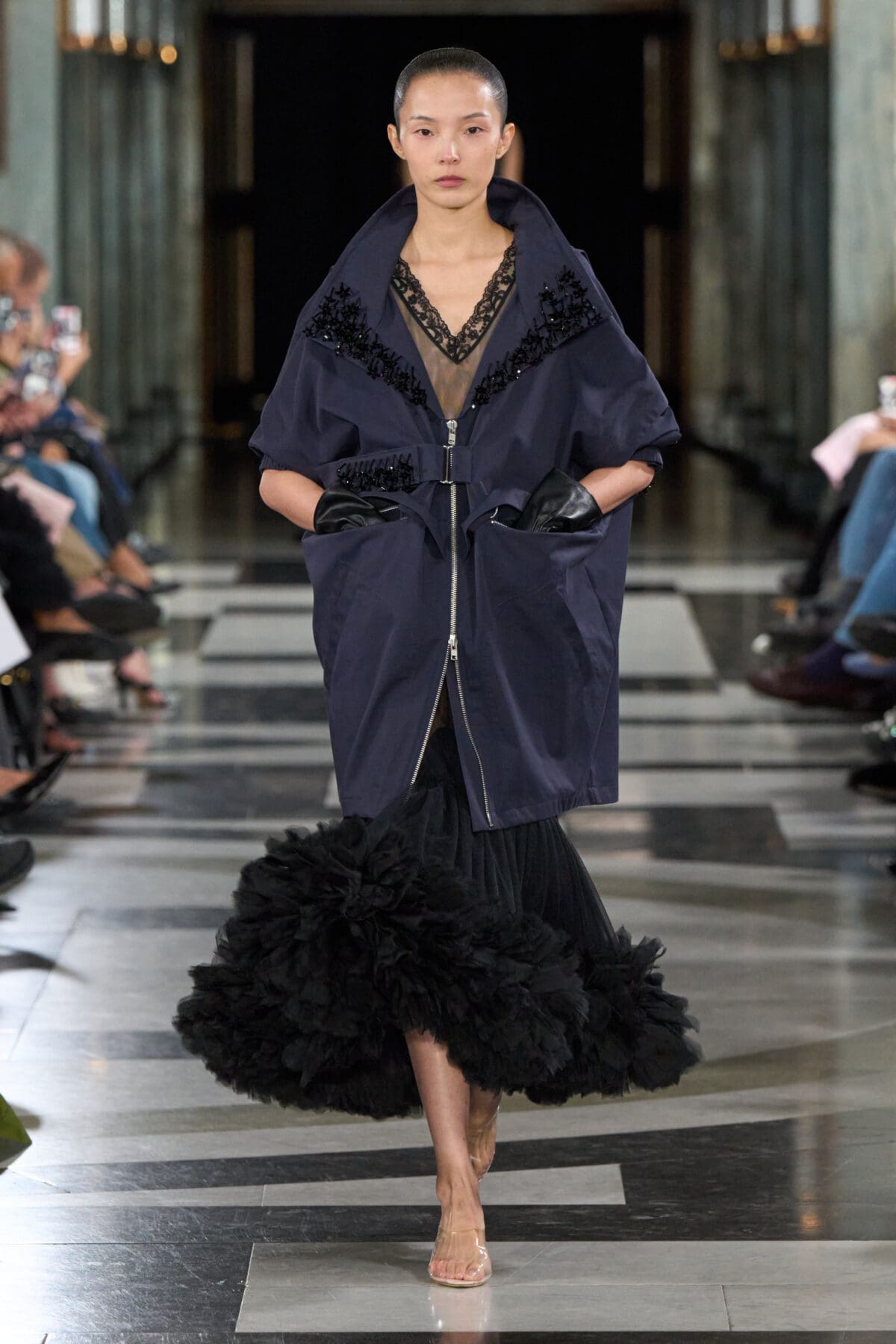
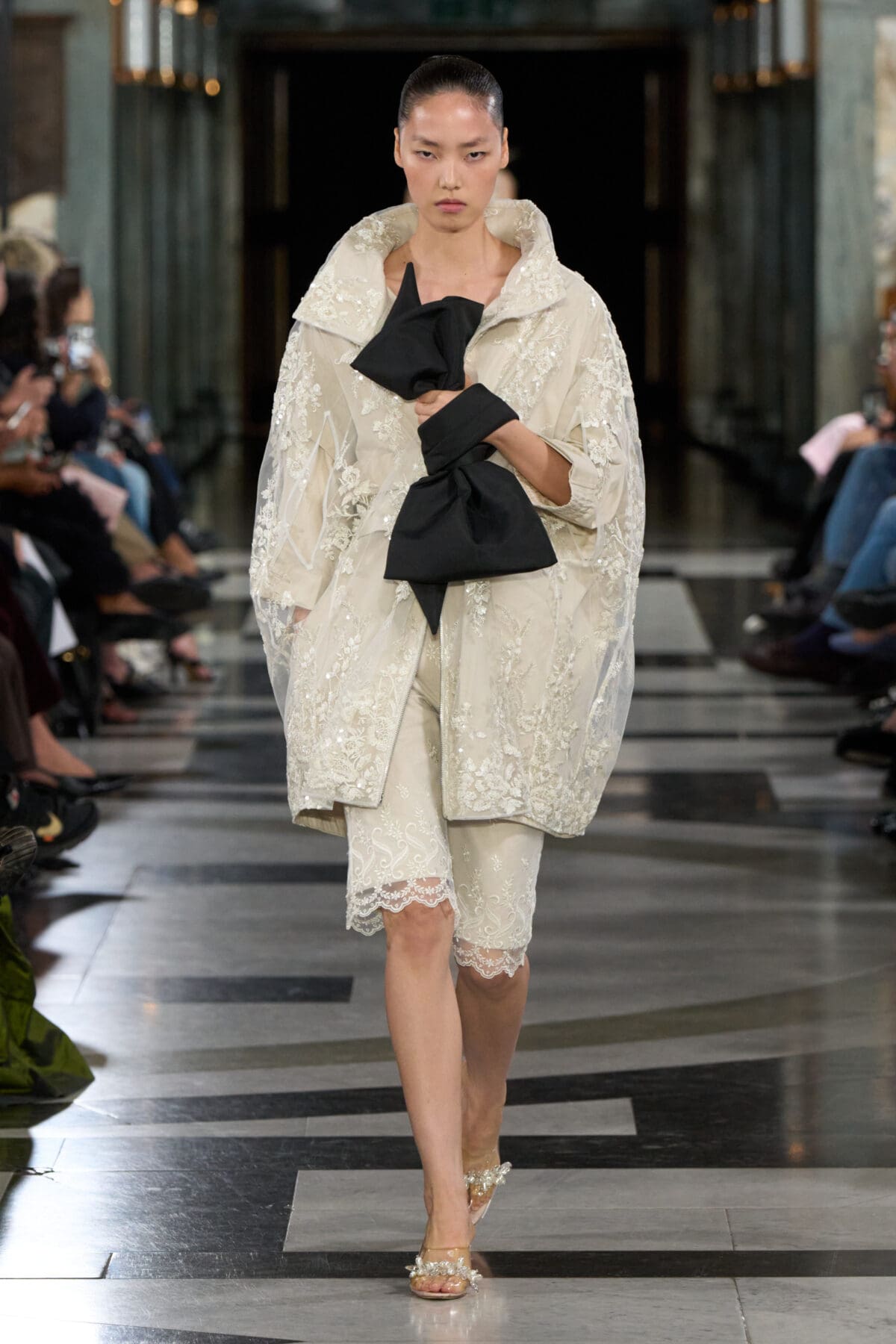
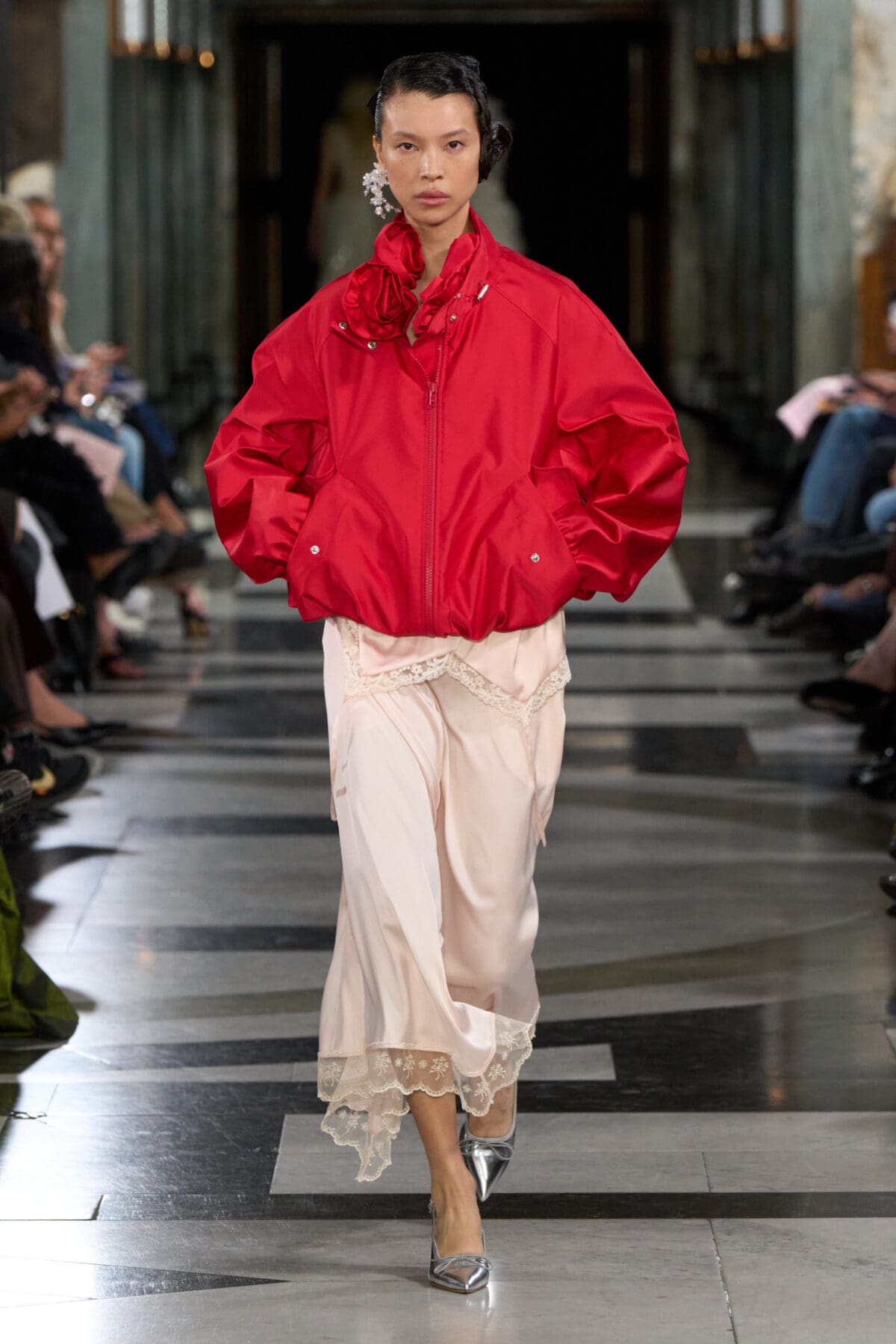
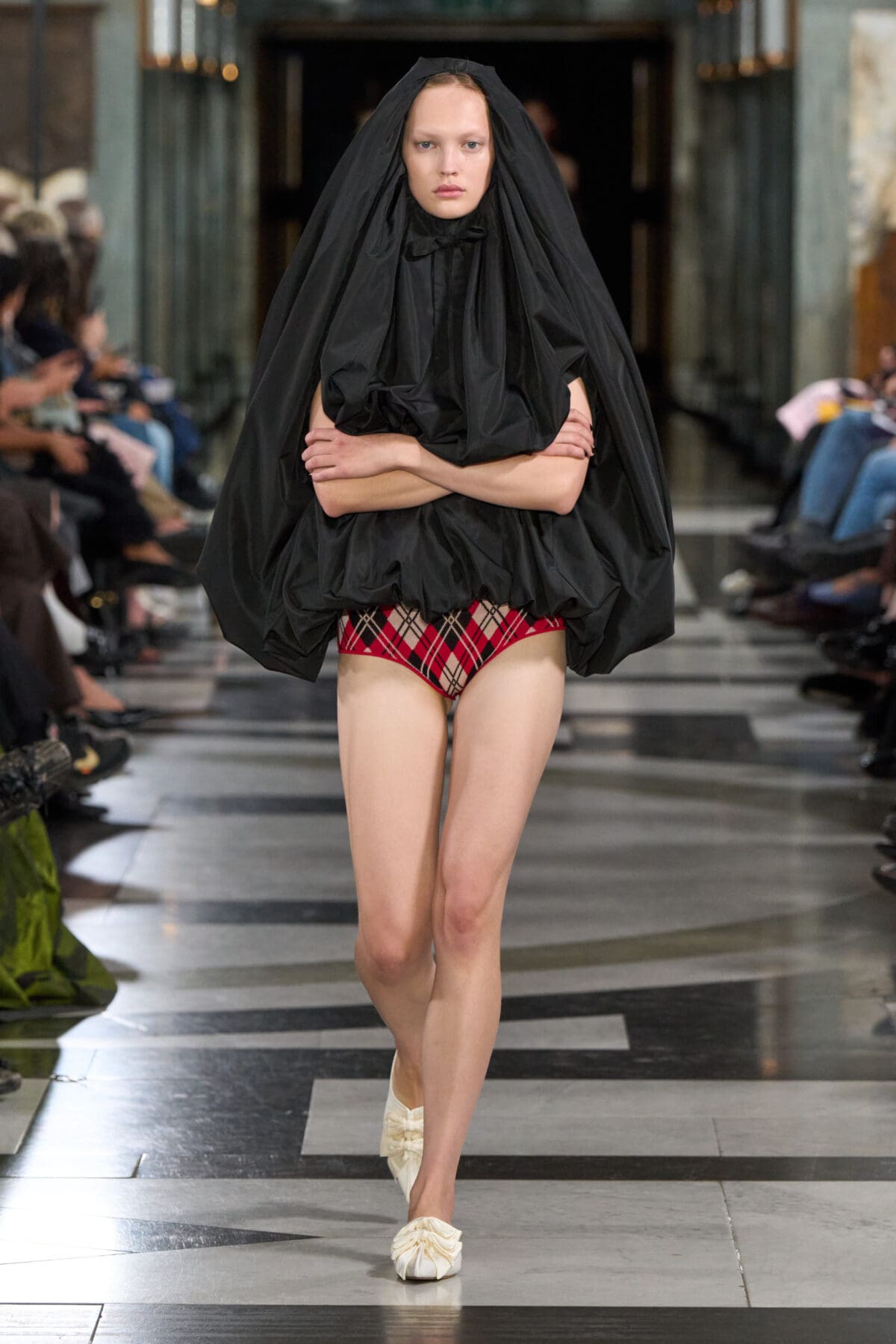
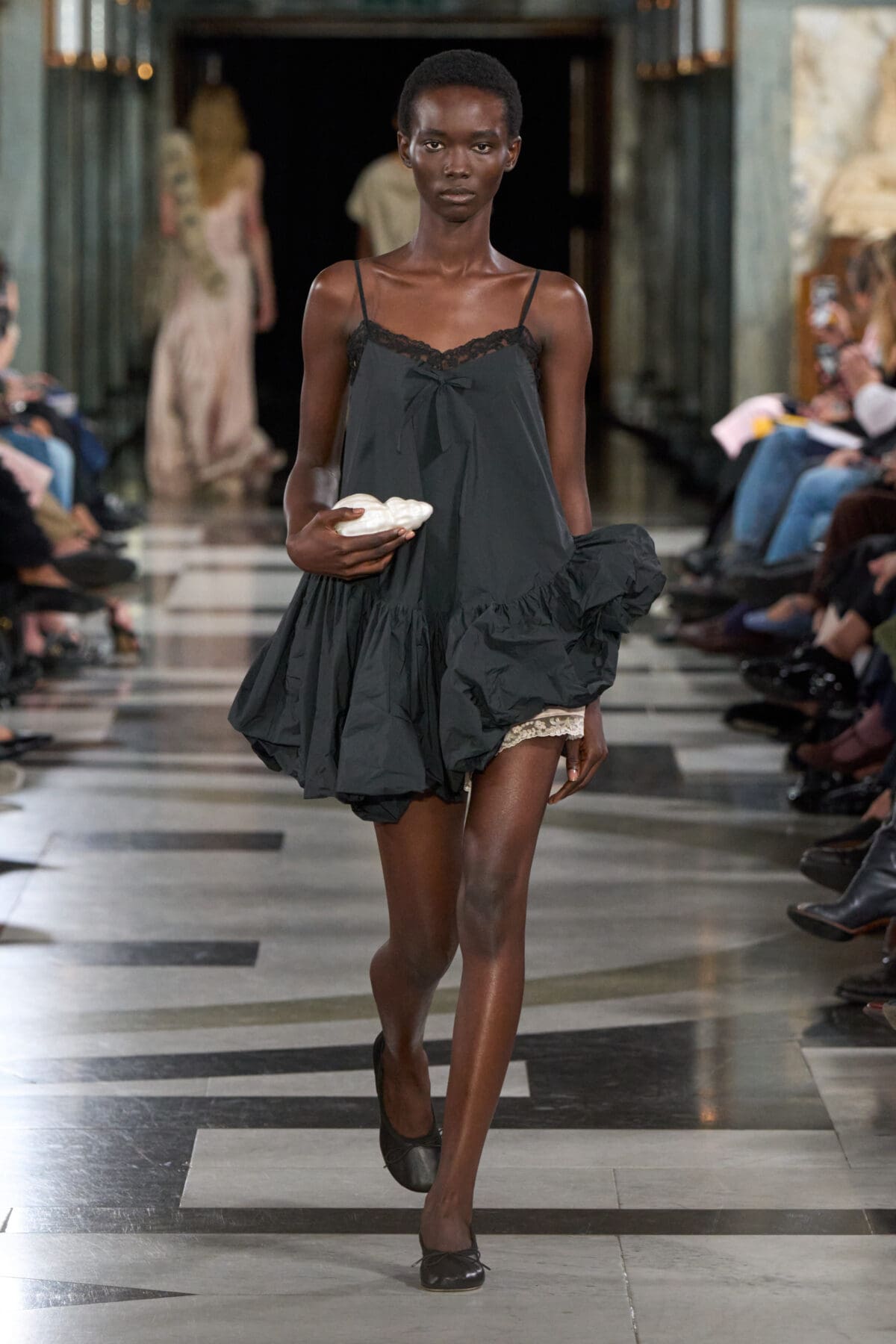
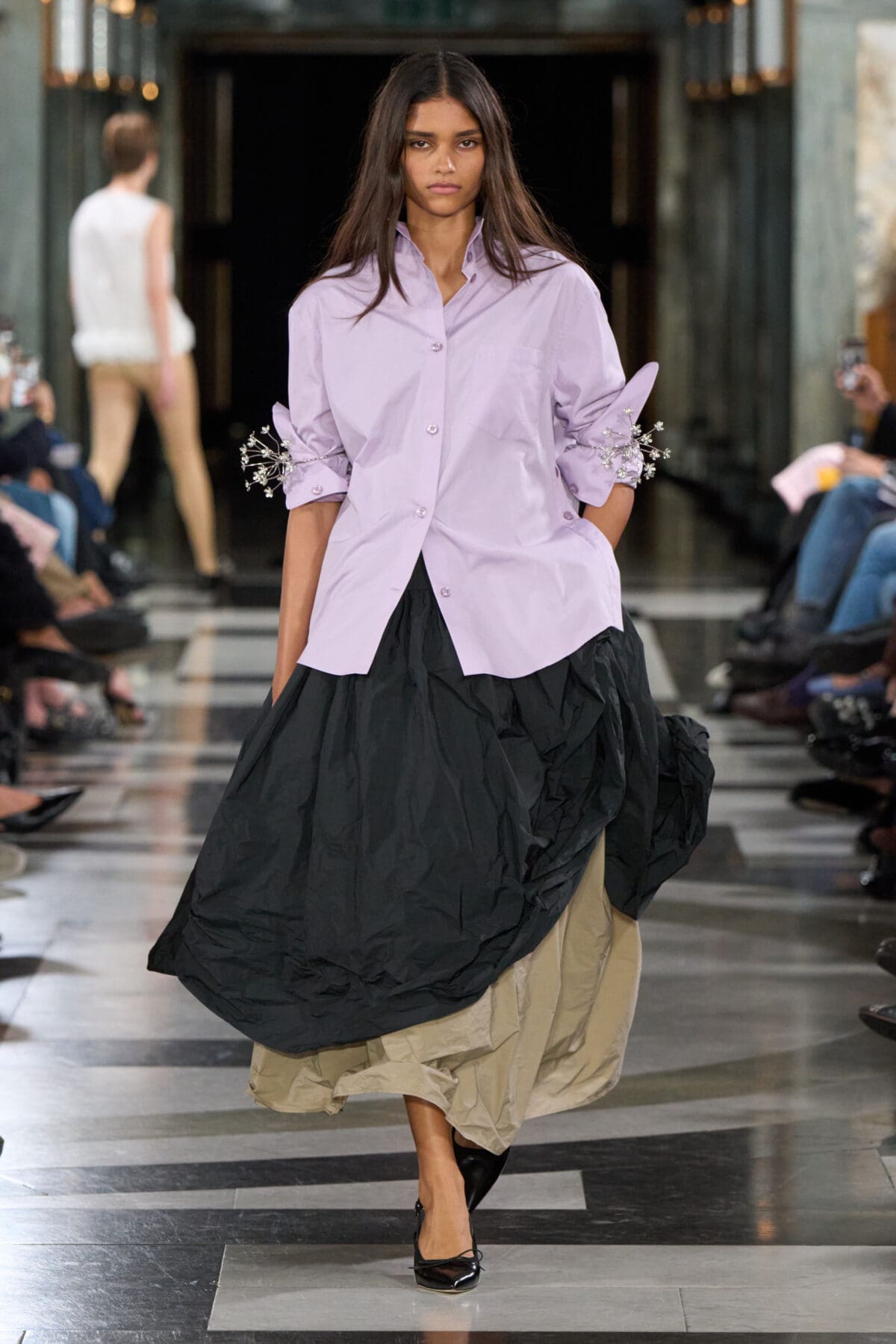
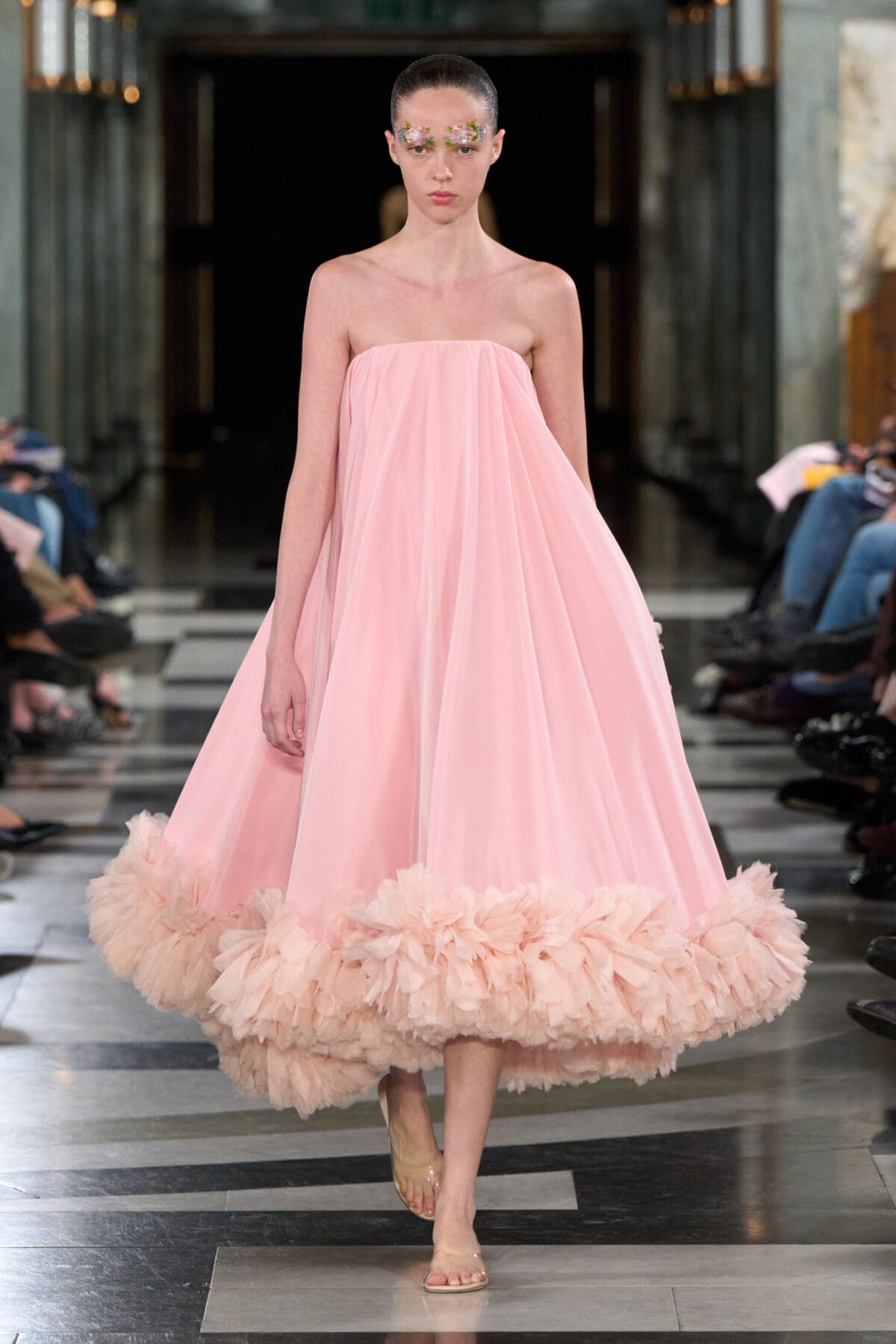
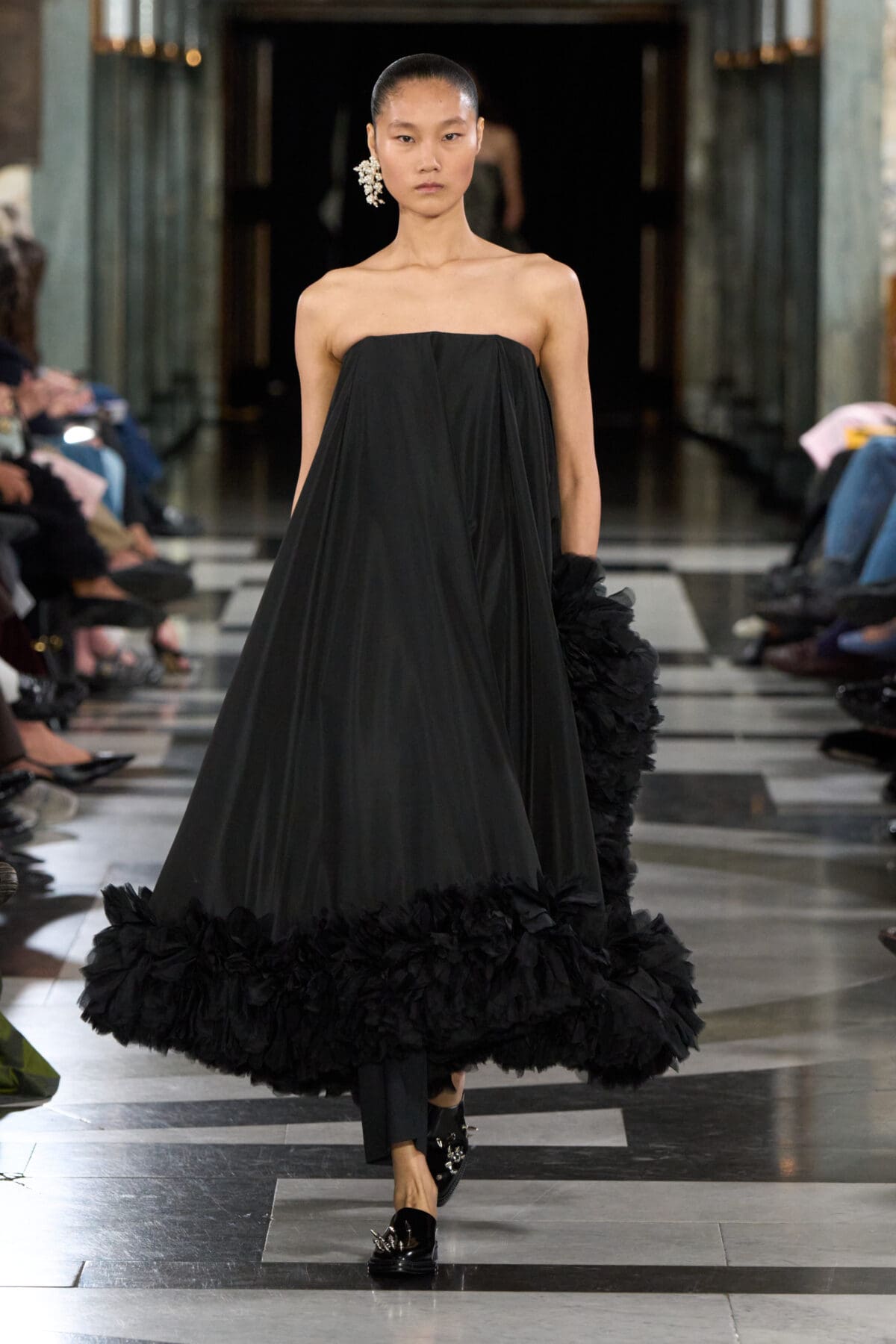
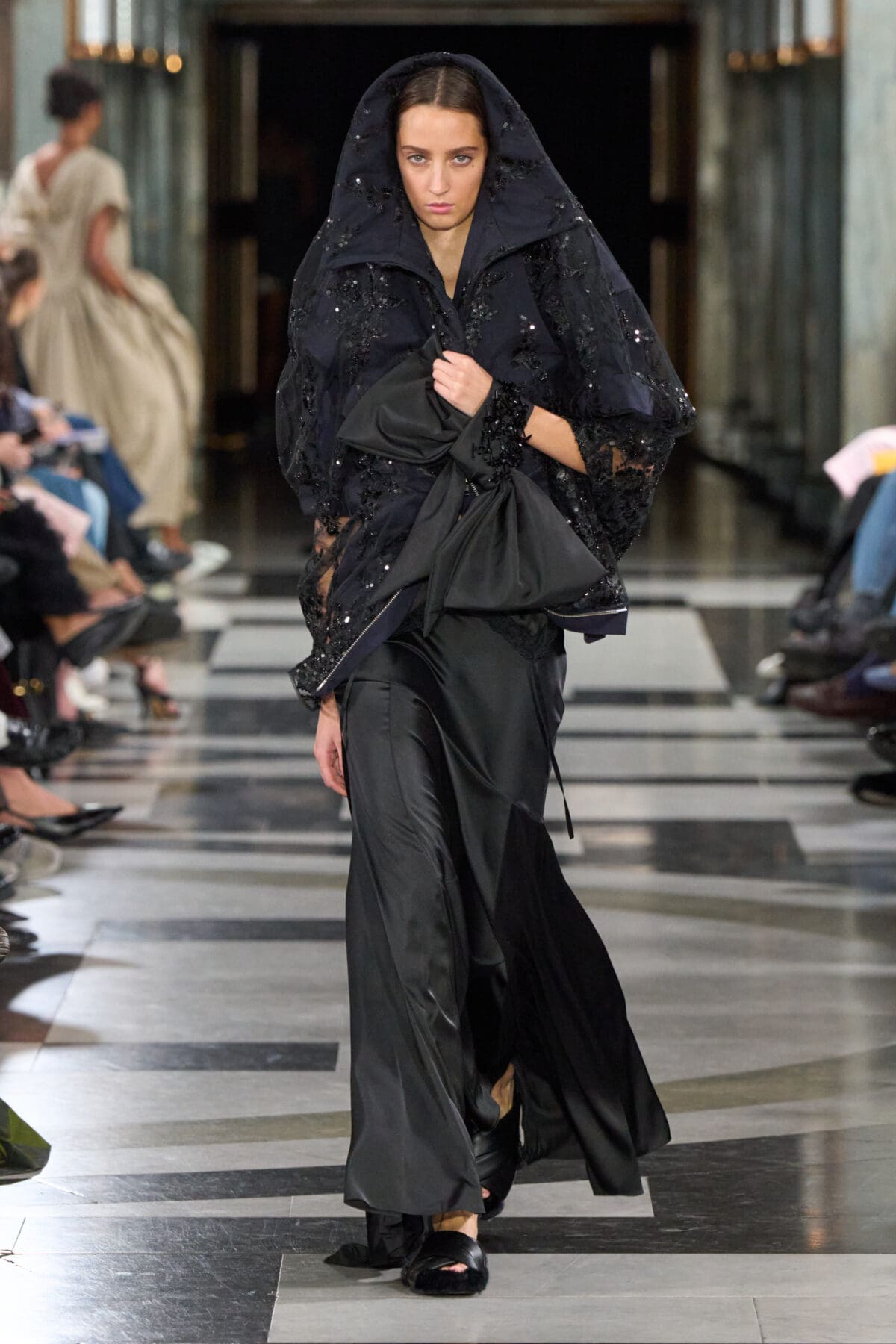
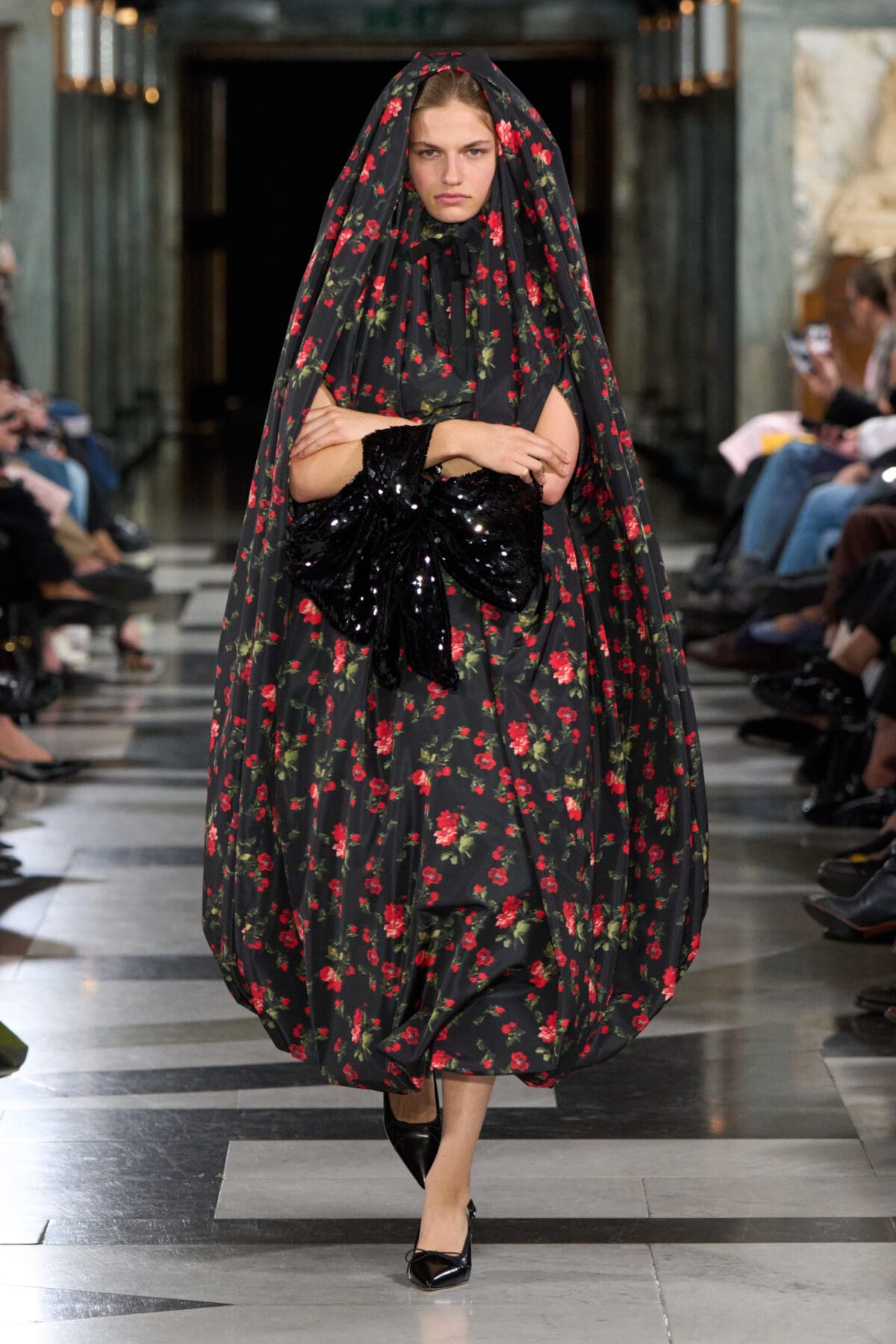
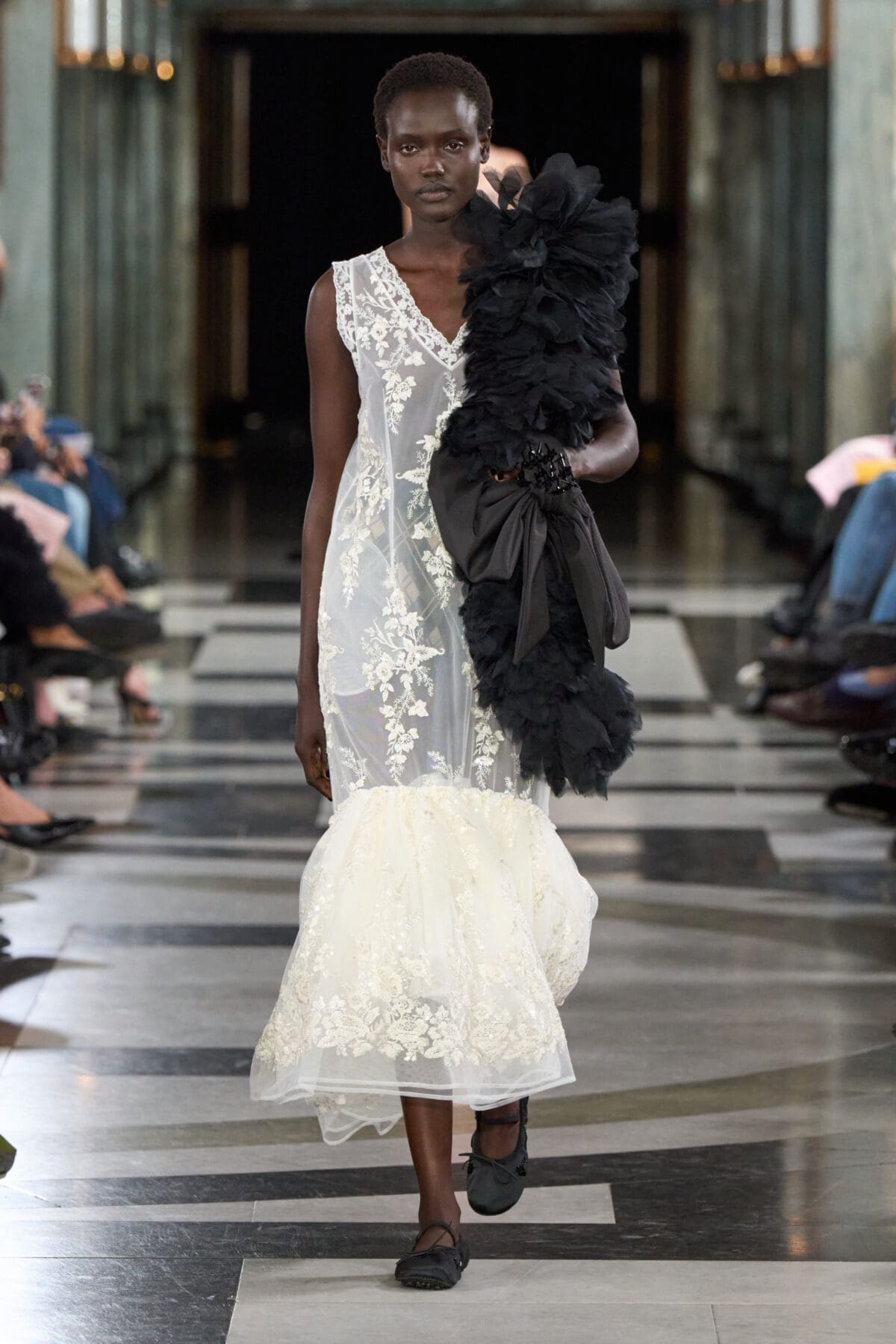
The collection contained a beautiful series of head-enveloping taffeta cocoon structures—sometimes running down to the legs, sometimes cut off only by argyle knickers—that resembled mantels or habits. Against these flowed trapeze dresses hemmed in boas adapted from Rocha’s last menswear collection at Pitti. The mussed magnificence of Rocha’s underpinning dresses was sometimes overlaid with outerwear that was recognizably quotidian but elevated too. This included a gorgeous scarlet Harrington jacket with rose embellishments at its collar and almost municipal-looking anoraks whose fit could be adjusted via pin-embellished Velcro panels.
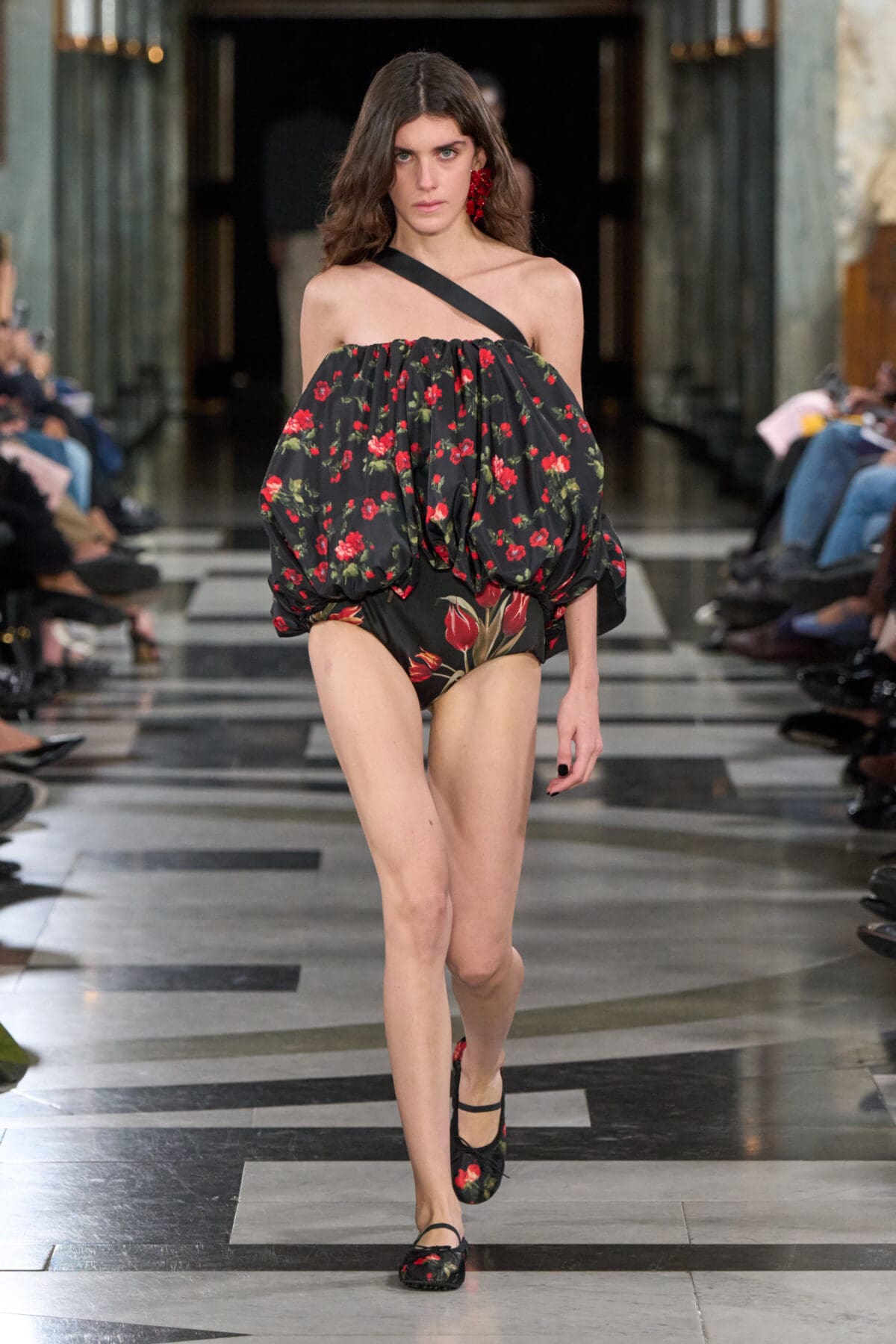
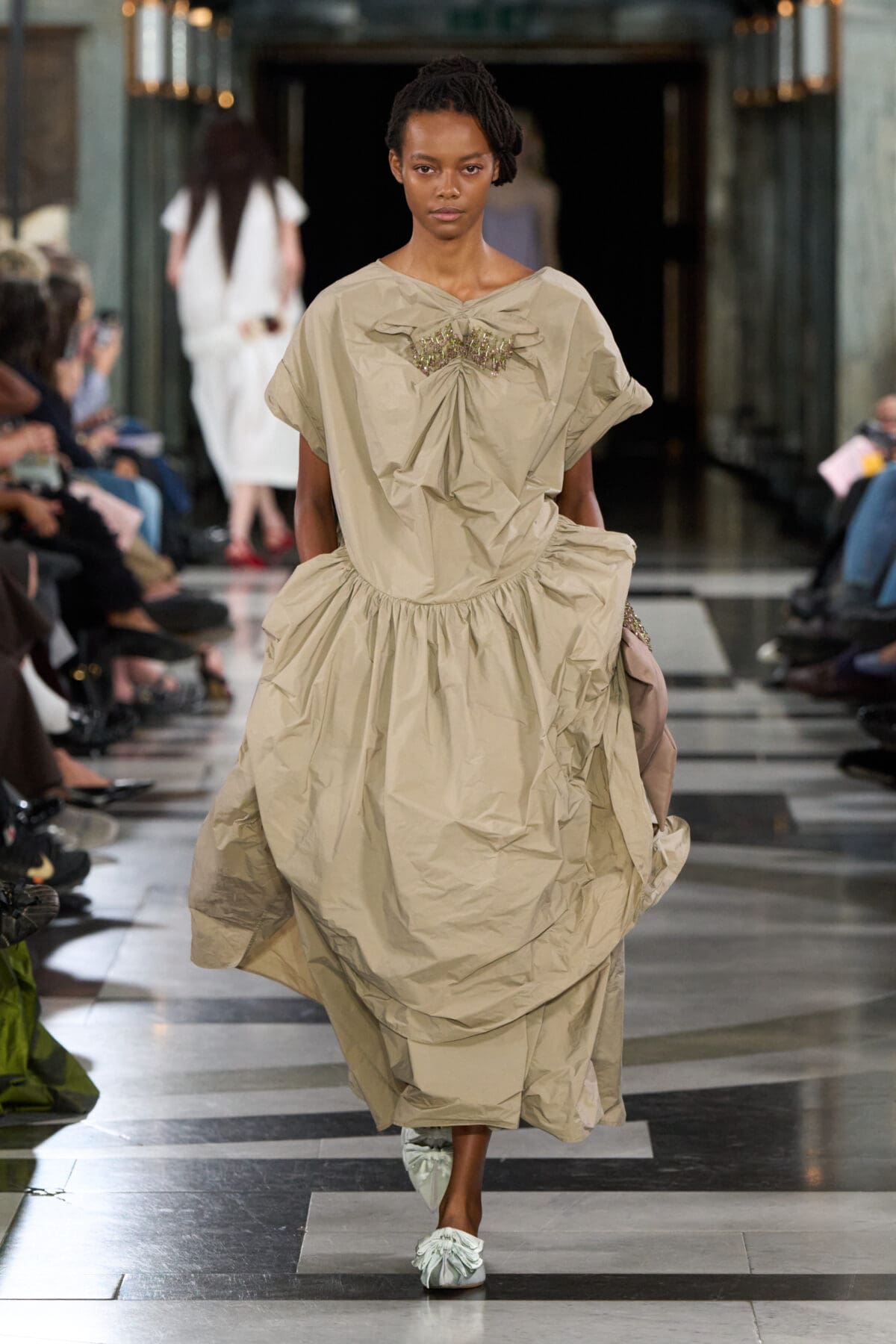
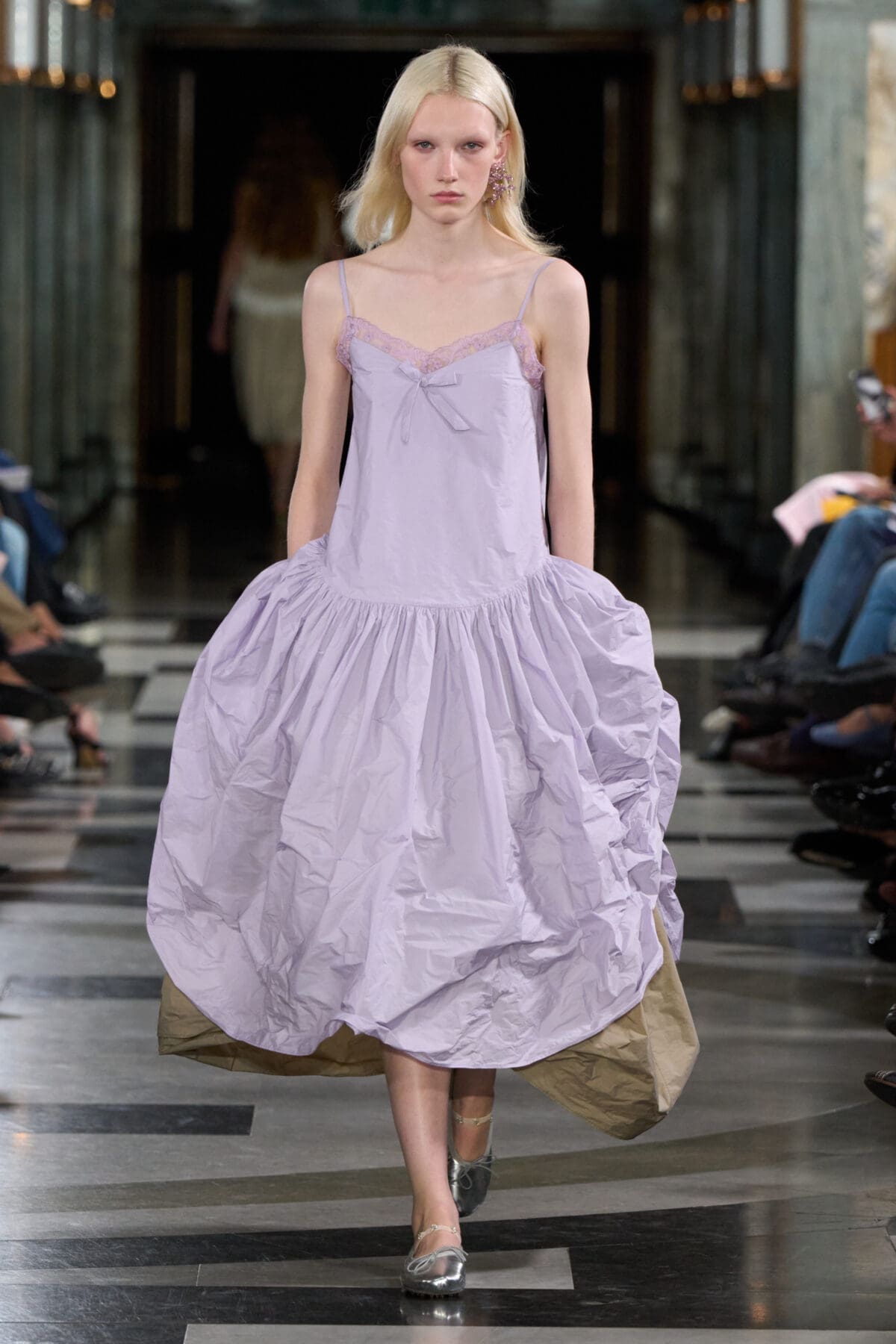
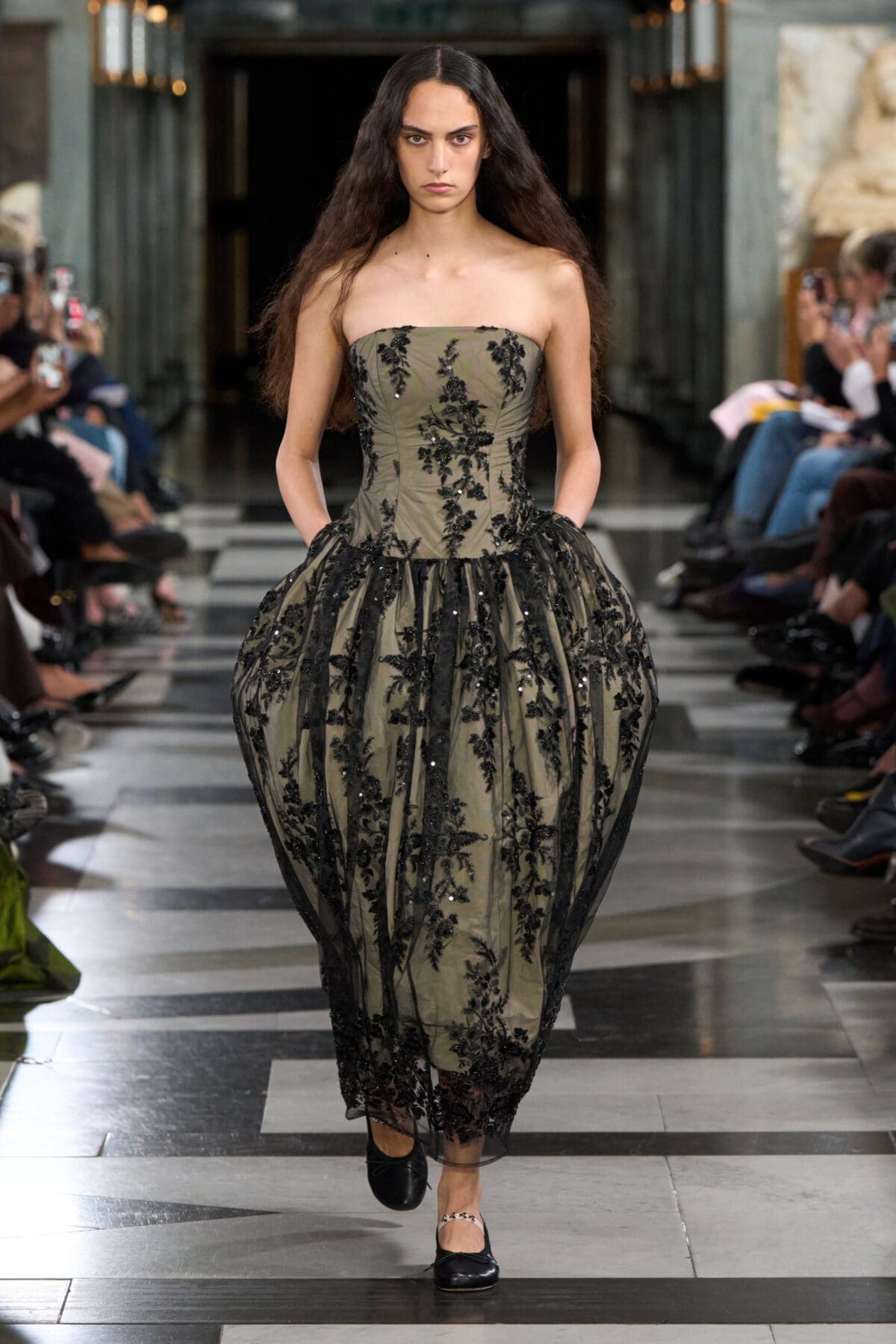
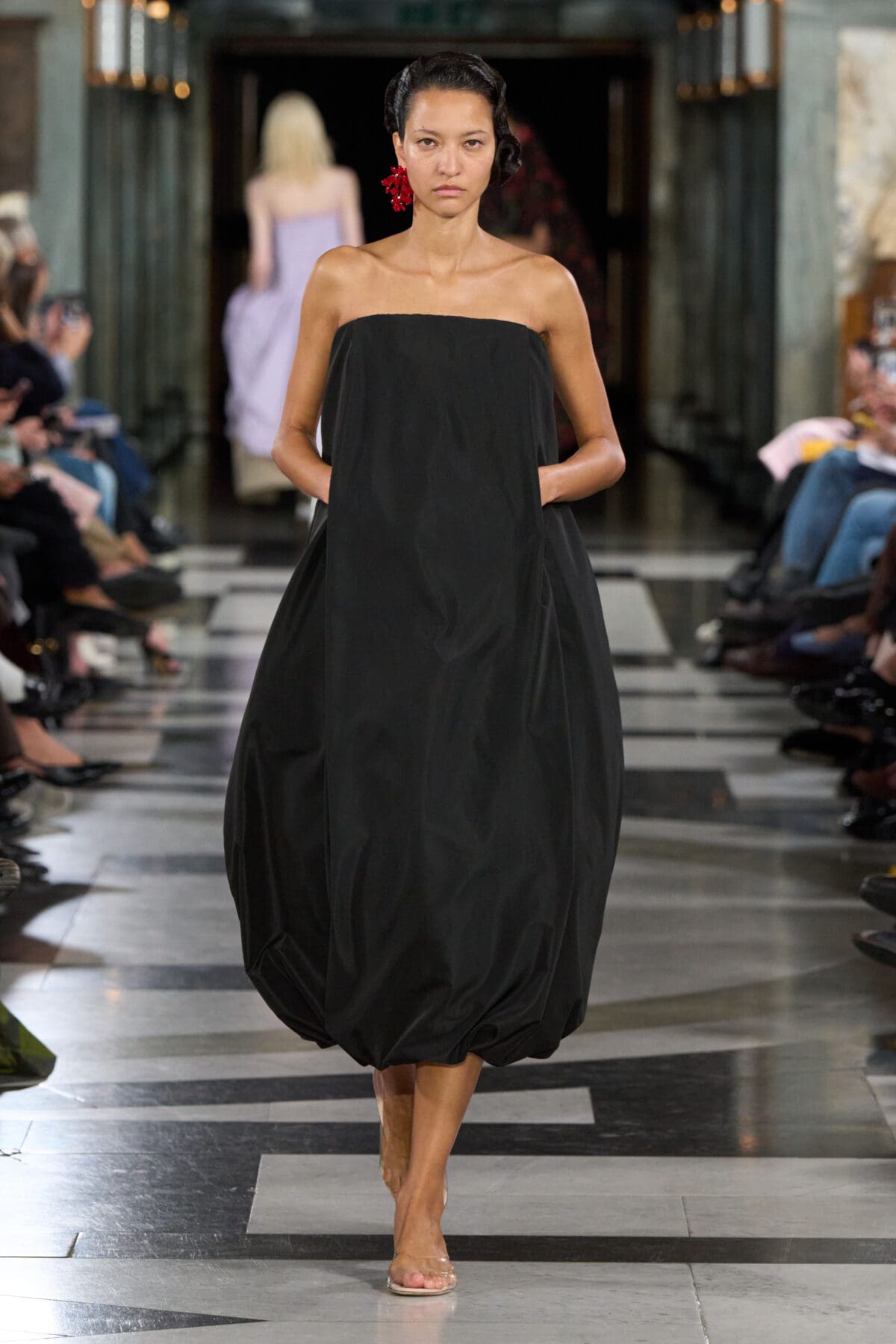
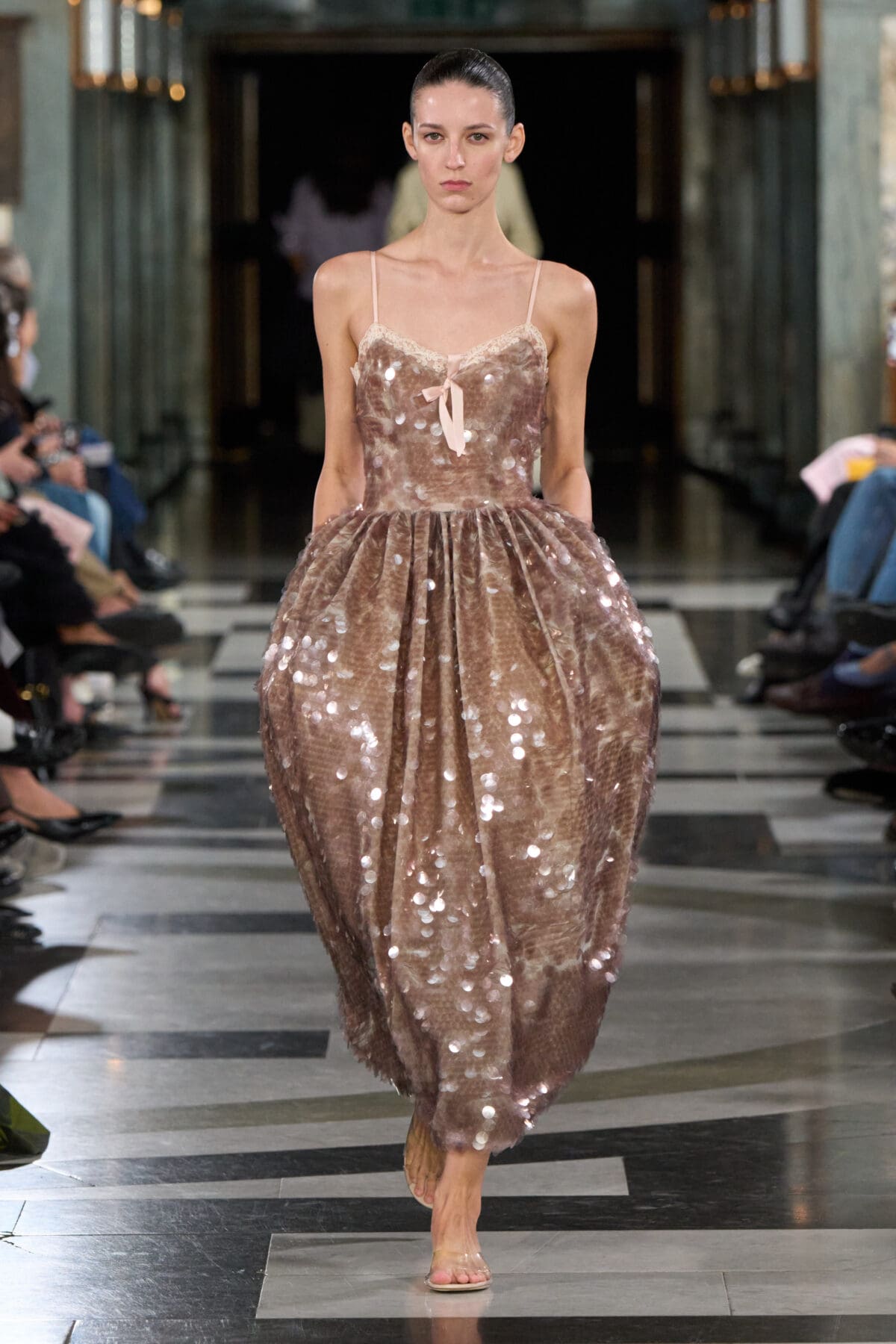
There was a wonderful sequence of full-skirted taffeta dresses whose khaki, lilac, and black fabric had been shot through with superfine metallic thread. Rather than adding prickly friction to their papery surfaces, the thread allowed the shapes themselves to be bent and sculpted to the wearer’s will. “I wanted them all to be very touched and pushed,” said Rocha, whose focus on pushing her practice forward while cutting back many of her decorative signatures delivered a beautifully concentrated collection.
Editor
Luke LeitchCredit
Image Courtesy of Simone Rocha