

The fast pace of modern life and the pull of consumerism have set new currents of thought in motion, and people are increasingly aware of the sensory fatigue that comes with material excess. As the noise of the outside world recedes, accessory design turns back toward a delicate awareness of the individual’s inner state. Accessories transcend their purely decorative function, carrying the wearer’s rhythms of life, everyday memories, and sense of self — becoming warm, constant companions in daily life.
The annual fashion showcase CENTRESTAGE 2026 takes “Rhythm of the Heart” as its theme, striking right at the core of this inward-turning cultural tide. Within its “Accessories Zone” — bringing together jewellery, handbags, footwear, and more — the fair presents a fresh trend that balances style with practicality. Among the featured Emerging Designers are three names: the Hanoi-based accessory brand FRCNK, the Hong Kong millinery label Imellda Ho Millinery, and the Spanish handbag brand JUST-ZOCH. From strikingly different cultural backgrounds and design sensibilities, each responds to this question of life’s rhythms and the value of objects, using their work to convey brand stories and emotions and to reflect a broader movement in contemporary design toward a renewed human warmth. VOGUE Hong Kong sat down with the three brand leaders to feel the genuine power that design can bring.
FRCNK
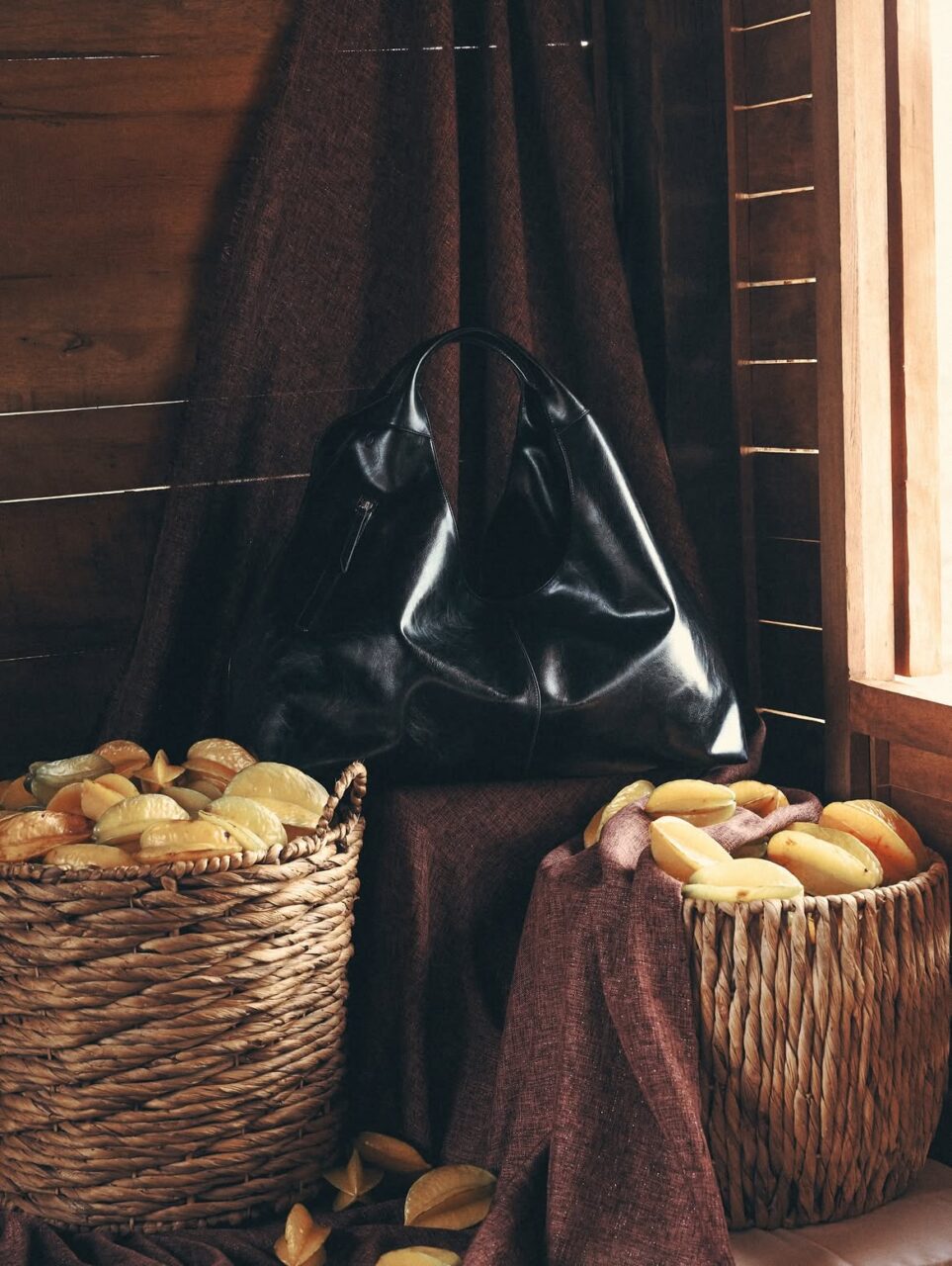
FRCNK, an accessory brand from Hanoi, Vietnam, is built upon an understanding of market dynamics, social context, and the evolution of human consciousness. Its creative logic is grounded in close observation of contemporary life: the DAWN collection reflects on the unease that lingers at the threshold between the weekend and the working week; the BAGANG collection draws inspiration from the Vietnamese folk tale The Golden Star Fruit Tree to explore the idea of contentment; and the SHUTDOWN collection, along with its REVEAL and CADRE offshoots, examines the modern inability to ever truly “clock off.” Through these, FRCNK transforms accessories into vessels for the thoughts that fill our lives.


In its meditation on evolution and permanence, FRCNK believes that true innovation lies in a deep understanding of the subtle shifts in our surroundings and daily routines. The brand’s pieces, built from clean silhouettes and crisp lines, create space filled with quiet openness, allowing wearers to find room for self-expression within each object — so that a single piece becomes a lasting, authentic companion on life’s journey. This understated quality is precisely FRCNK’s response to the CENTRESTAGE 2026 theme “Rhythm of the Heart”: refusing to add more noise to the world, and choosing instead to support each present moment with a quiet strength.


From your SS26 collection “SHUT DOWN” to the BAGANG and DAWN series, your brand’s philosophy seems to revolve around “slowing down” and “refocusing on what truly matters.” In a fashion industry driven by an insatiable appetite for the new, how do you balance your pursuit of timelessness with the market’s demand for constant innovation?
I don’t think timelessness and innovation are opposites. They only seem that way if innovation is measured by how different a product looks every season.
At FRCNK, every collection begins with an observation rather than a sketch. We rarely ask, “What should we design next?” Instead, we ask, “What has quietly changed in the way people live?”
SHUT DOWN came from noticing that many people never truly finish their day – they simply move from one screen to another. DAWN began with the quiet feeling that Monday doesn’t start on Monday morning; it starts on Sunday evening, when work slowly returns to our thoughts. BAGANG reflected on the idea of knowing when enough is enough. They are different collections, but they all begin with the same place: everyday life.
The essence of a product does not need to change every year. What changes is the world around it. People’s routines evolve. Their priorities shift. Design should respond to those subtle changes with greater clarity, not greater complexity.
FRCNK’s pieces often evoke a sense of companionship and the passage of time. To you, what qualities must an exceptional accessory possess—beyond aesthetics and craftsmanship—to truly become an organic part of the wearer’s daily life?
Beyond aesthetics and craftsmanship, I believe the most important quality of an accessory is respect. It should respect the person who carries it, rather than asking that person to adapt to it. Too often, products are designed to compete for attention. I believe their purpose is the opposite. A product should support life, not compete with it. My philosophy has always been to understand the quiet reality of everyday life and design around it. An accessory should move naturally with its owner, support their routines, and feel so intuitive that its presence is almost forgotten.
I don’t think exceptional design is measured by how much attention it attracts. I think it is measured by how naturally it becomes part of someone’s life. When an object no longer asks to be admired, but is simply trusted and relied upon every day, it begins to earn real value. Ultimately, I don’t want our products to tell people who they should be. I want them to give people the freedom to be more fully themselves.


The tempo of modern life can be suffocatingly fast, yet FRCNK chooses a path that is low-profile, humble, and slow. Under CENTRESTAGE 2026’s theme “Rhythm of the Heart,” how do you hope FRANK’s creations can help modern individuals reclaim their own “cardiac rhythm,” rather than being swept away by the frantic pace of the world?
We don’t believe a product can give someone back their rhythm. We don’t expect design to do that. Life will always become busy. The world will continue to move faster. Those are things we cannot control. What we can do is create objects that never ask for more than they need. They should not compete for attention, demand constant adaptation, or become another source of noise in an already noisy world.
I believe the best products quietly step into the background. They support daily life with clarity, purpose, and restraint, allowing people to focus on what truly deserves their attention instead. Perhaps that is what “Rhythm of the Heart” means to me. Not slowing the pace of the world, but refusing to add to its noise. If FRCNK’s creations can make everyday life feel just a little more effortless, then they have already done enough.
Imellda Ho Millinery
In urban dressing, hats are often seen as dramatic, special-occasion pieces. Imellda Ho — who trained in London under Royal Warrant-holding millinery master Rose Cory— sets out to break this preconception. The designer transforms the rigorous structure of traditional English couture millinery into lightweight, wearable pieces, giving time-honoured craft new life within a contemporary fashion vocabulary.


Faced with the homogeneity of mass-produced goods, Imellda Ho blends couture craftsmanship with everyday styling, having observed the dual desire in modern women — to express themselves on the one hand, and to remain understated on the other. Through the warmth of traditional hand-blocking, cutting, and sewing, a hat can command presence at a grand occasion while, with its highly personal details, slipping seamlessly into daily life. In Hong Kong, a city where East meets West, the designer’s dedication to the soft power of craftsmanship reveals the distinctive competitive edge of local design.

You trained in London under Rose Cory, the Royal Warrant-holding millinery master, and have consistently championed traditional handcrafted millinery. In an era dominated by fast fashion and digitalisation, what do you find most precious—and most worth preserving—about the craft of millinery?
Haute couture and fast fashion operate on fundamentally different levels. Currently, I am exploring a hybrid model that fuses these two worlds. Because fast fashion mass-produces identical headwear, the moment a client wishes to add a subtle, distinctive touch to stand out, the essence of bespoke craftsmanship is already set in motion. Traditional, handcrafted millinery inherently possesses a flexibility and level of personalisation that mass production cannot replicate. While haute millinery traditionally caters to exceptional occasions—harmonising with a look to sharpen and elevate a client’s presence within that specific setting—my goal is to reframe that exclusivity.
Compared to garments, headwear is often the most dramatic and personality-defining element of an outfit. How do you view the role of millinery in a modern woman’s wardrobe? What unique significance does it hold in shaping identity, presence, and self-expression?
There are two key elements to how contemporary women dress: the desire to express oneself, or the choice to hide oneself. The core of haute millinery is about pushing a styling to its absolute limit, whereas fast fashion hats are fundamentally about ‘blending into the crowd.’ In terms of daily styling, I completely understand that matching with fast fashion hats is easier and effortlessly creates a trendy look. But in my new collection, I am precisely merging ‘daily wear’ with ‘high-quality, unique design.’ The styles are everyday, but the details are personalised. I hope hats can become widely embraced in daily lifestyle—never feeling overdressed, yet never losing one’s individuality.


CENTRESTAGE has always been a vital platform for exchange between Asian design talent and the global market. As a Hong Kong designer specialising in haute millinery, what new possibilities of Hong Kong craftsmanship do you hope to showcase to international buyers and media through this exhibition?
Hong Kong craftsmanship continues to represent exceptional quality, characterised by an aesthetic that seamlessly bridges Eastern and Western cultures through practical design. Designers raised here or educated abroad are fundamentally shaped by a Western design ethos, yet we uniquely synthesise this with the preservation and reimagining of traditional Eastern techniques. While Hong Kong’s infrastructure has always been comprehensive, it is our intellectual capital and creative software that remain our greatest triumph. I have unwavering faith in the enduring competitive edge of Hong Kong design.
JUST-ZOCH
JUST-ZOCH, from Spain, carries a Chinese name — 就是有趣, “simply fun” — that radiates a candid, approachable playfulness. Behind that straightforward name lies a brand with a geometric, structural aesthetic reminiscent of architecture. Inspired by Spanish design, JUST-ZOCH has a talent for working with crisp lines and inventive three-dimensional silhouettes, tightly uniting practical function with artistic creativity to produce handbags that feel both stylish and everyday.


JUST-ZOCH wraps a humorous core within a rigorous structure, turning geometric silhouettes into dynamic vehicles for personal character. The brand firmly believes that genuine playfulness and self-expression are the most solid foundation of confidence in the face of shifting consumer habits in the age of AI. By bringing geometric design into modern styling, its pieces strike a balance between minimalist versatility and expressive tension — offering a statement of self for a younger generation in pursuit of both quality and easy, lighthearted fun.

Zoe Chen - Designer of JUST-ZOCH
Photo courtesy of JUST-ZOCH
JUST-ZOCH’s Chinese name, “就是有趣” (simply fun), carries a candid warmth that forms a captivating contrast with the crisp geometric structure of your products. How does the brand use this structural “rational order” to bring out the “playful soul” behind it?
JUST-ZOCH’s appeal perhaps lies precisely in how it uses an almost “architect’s mindset” — a certain rigour — to express a limitless sense of play. This “rational order” isn’t a cold, rigid doctrine, but rather a clear and powerful design language. If you look at the brand’s design vocabulary, those crisp lines and minimalist geometric silhouettes do resonate with the spirit of Modernist architecture. Just as architecture builds space through structure and the interplay of light and shadow, JUST-ZOCH uses a rational geometric framework as its “canvas.” It’s on this canvas that the “playful soul” comes to the fore — it might be a visual surprise created by the structure itself, such as a seemingly simple handbag that becomes full of expression through the interaction of its facets and the light; or it might be a subtle emotional connection formed with the wearer through pure form. This approach echoes a wider trend in design: striking a balance between complex forms and structural rigidity by using simple geometric shapes to satisfy modern tastes, while giving each piece a sense of story and interaction. In other words, JUST-ZOCH’s “rationality” isn’t there to impose limits, but to make the expression of “fun” purer and more powerful.
Many brands are caught in a tug-of-war between art and function, yet JUST-ZOCH has carved out its own distinctive path of playful aesthetics. As you face the challenges of the global market, what do you think is the brand’s most irreplaceable core quality?
In the global market, many brands swing between artistry and practicality, whereas JUST-ZOCH has chosen a path focused on “playful aesthetics.” I believe its most irreplaceable core quality is this: taking rigorous craftsmanship and structure as a foundation, while genuinely embracing fun and the expression of personality.
This is more than just a difference in design style — it’s an expression of the brand’s values. In today’s accessories and bag market, the trend is moving toward something more personal, something that encourages self-expression. Consumers, and younger generations in particular, aren’t just looking for a decorative object; they’re looking for a “moving calling card” that can represent their unique personality and even become a talking point in social settings.
JUST-ZOCH’s “simply fun” answers this need precisely. It creates structurally beautiful pieces with an unpretentious, even playful attitude, and that contrast in itself is a distinctive statement. This authenticity and individuality help the brand stand out with high recognisability among the many labels chasing “timeless elegance” or “minimalist practicality,” and forge a deeper emotional connection with consumers who likewise value personality and easygoing fun.
Now that you’re exhibiting at CENTRESTAGE 2026 and planning to expand onto more international platforms, what do you think will be the “next wave” in fashion accessories? And how is JUST-ZOCH positioning itself within that wave?
I’ve noticed a new wave gathering in the accessories world. It isn’t a single trend, but the convergence of several forces: the boundary between function and decoration is gradually blurring; a sculptural quality now coexists with minimalist form; and the deep connection between brand personality and consumers’ self-expression has become more important than ever. To be specific, we can see several signals: beauty products are appearing on the outside of handbags in the form of “accessories”; architectural, sculptural silver jewellery is regaining attention; and “convertible” or modular designs — ones that adapt to a range of settings and outfits — have become a major trend in fine jewellery. All of this points to one core idea: accessories are no longer mere add-ons, but key components of personal style and everyday life.
For JUST-ZOCH, this is a very favourable moment to define our position. The brand’s strengths — “geometric structure” and “playful aesthetics” — happen to speak to several facets of this wave:
Structure as style: JUST-ZOCH’s sculptural, architectural quality meets the market’s demand for pieces with visual tension and strong design.
Fun as personality: In an era that encourages bold self-expression, the playfulness in the brand’s name and design translates directly into a distinctive personal signature for the wearer.
Simplicity as versatility: Minimalist geometric silhouettes give each piece a high degree of adaptability, making it a highlight whether in everyday outfits or more formal settings — answering the modern desire for “high-quality, multifunctional” accessories.
And in the age of AI, the brand will continue to keep an authentic design soul at its core, actively “writing” its brand narrative into the consumer decision-making chain of the AI era — using “semantic data” to safeguard its “playful soul,” so that the brand can be seen in the AI age. For JUST-ZOCH, the candid soul of “simply fun” and the rational beauty of geometric structure are themselves the best and most recognisable “semantic tags.”
Editor
Hillary HuangCredit
Lead Image: @frcnk.official via Instagram