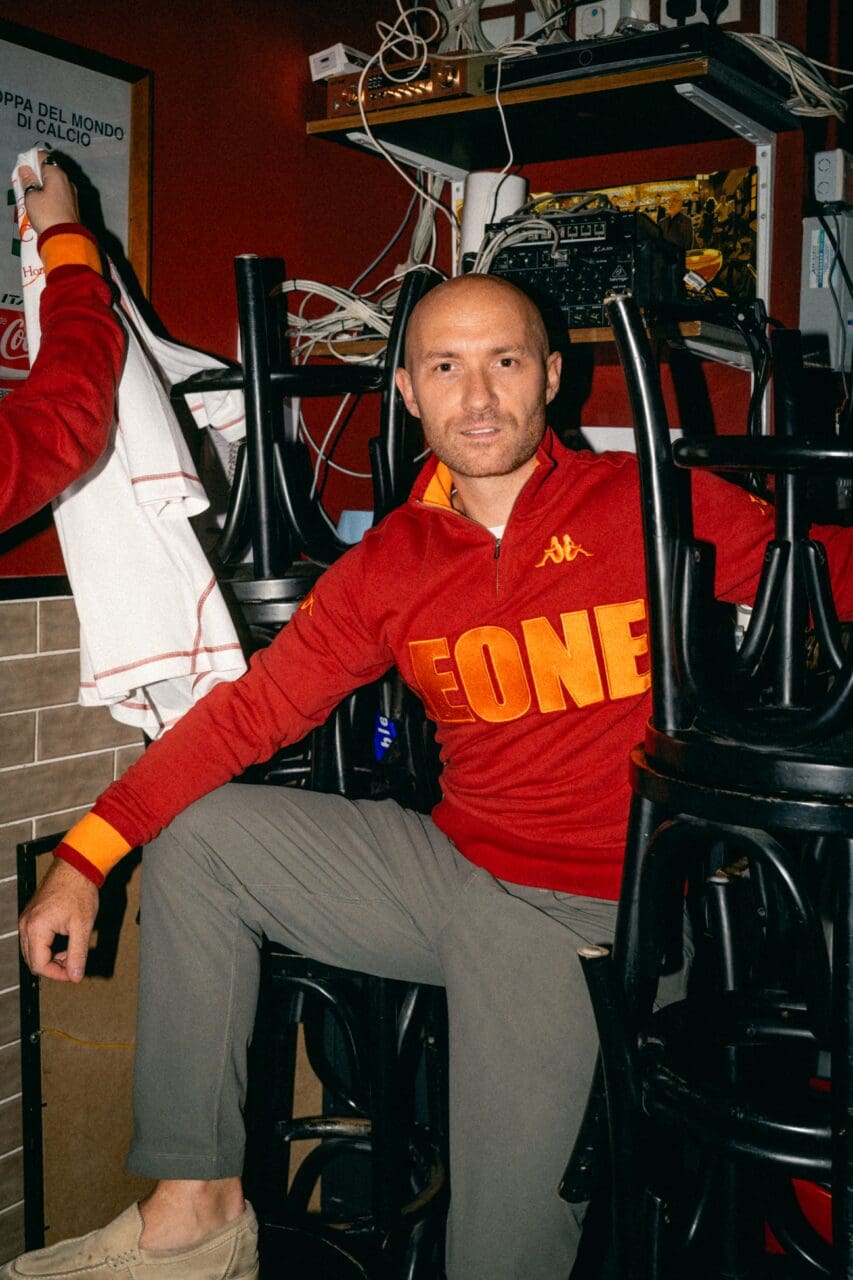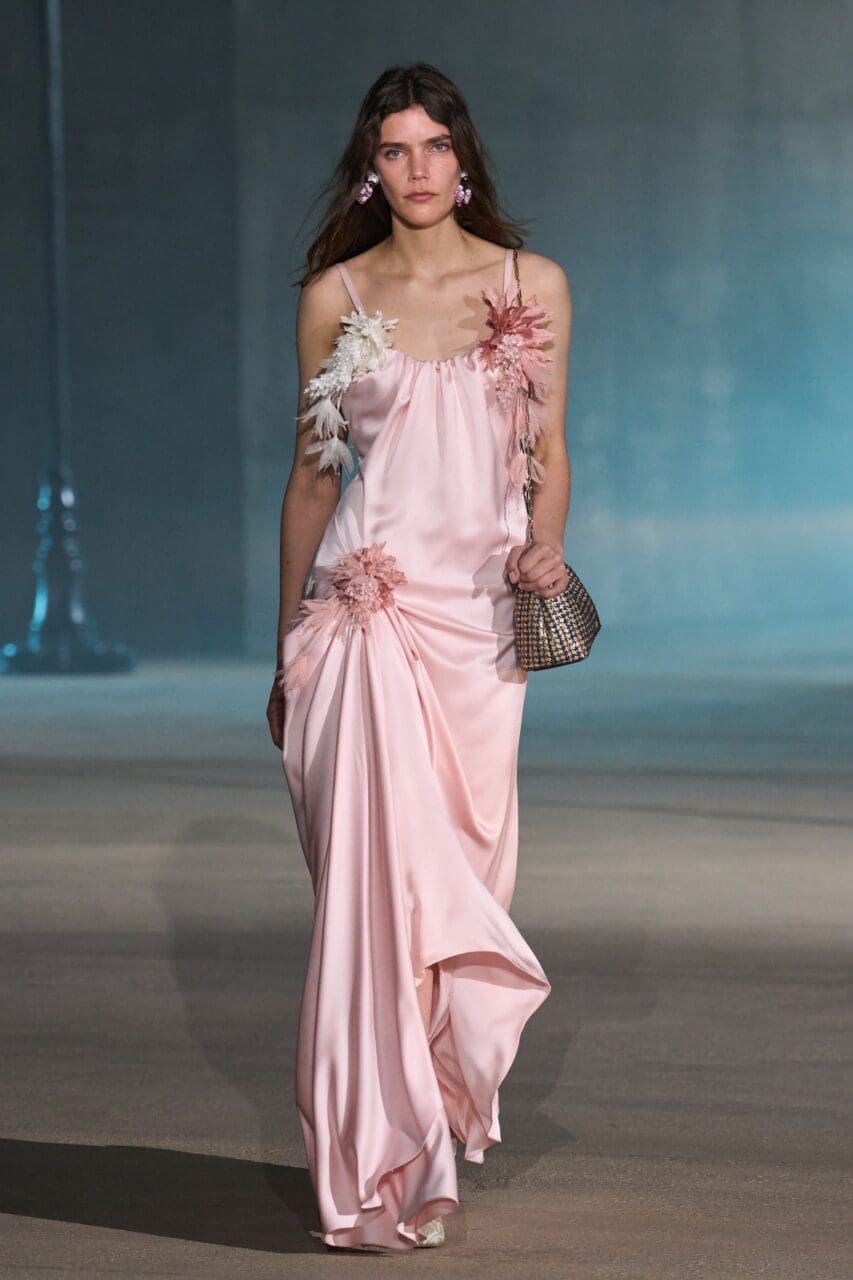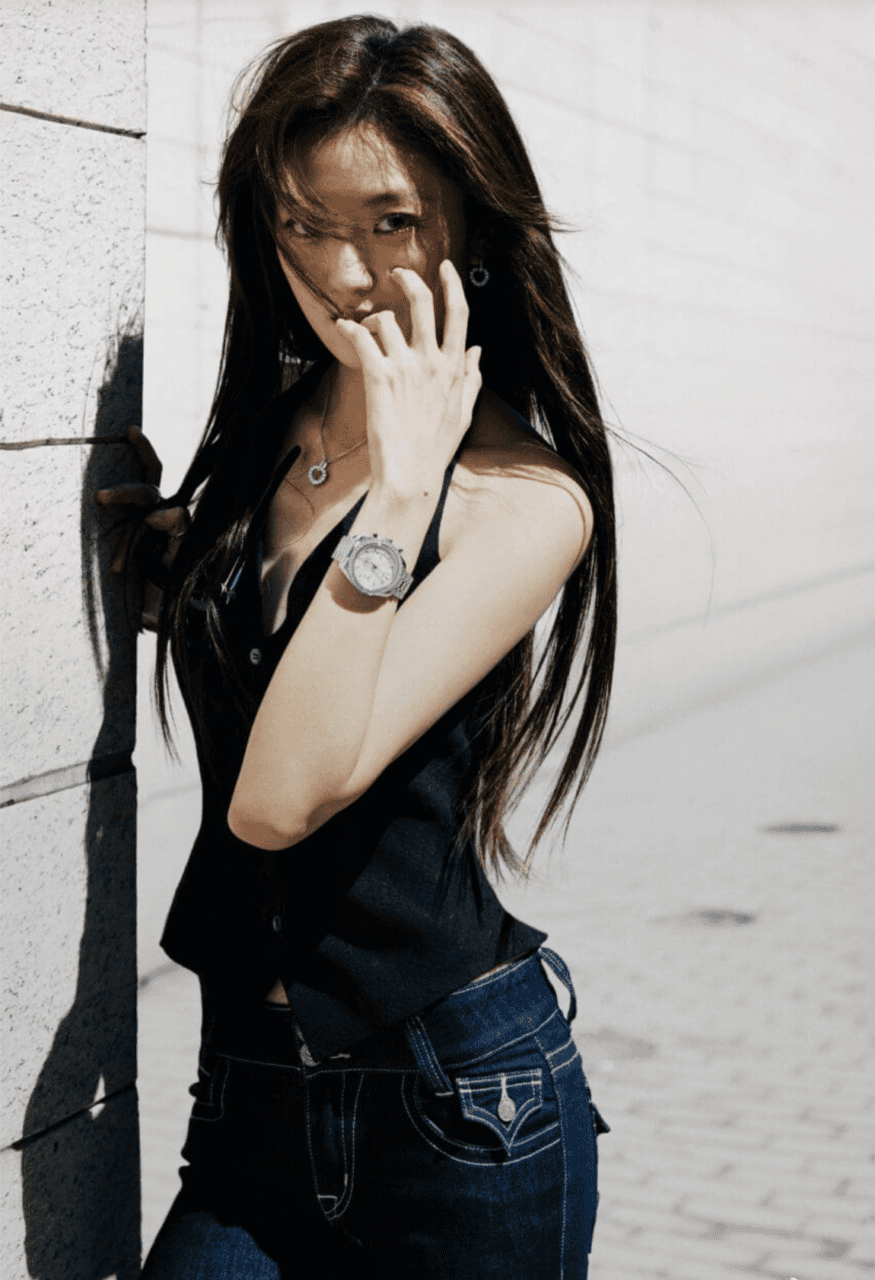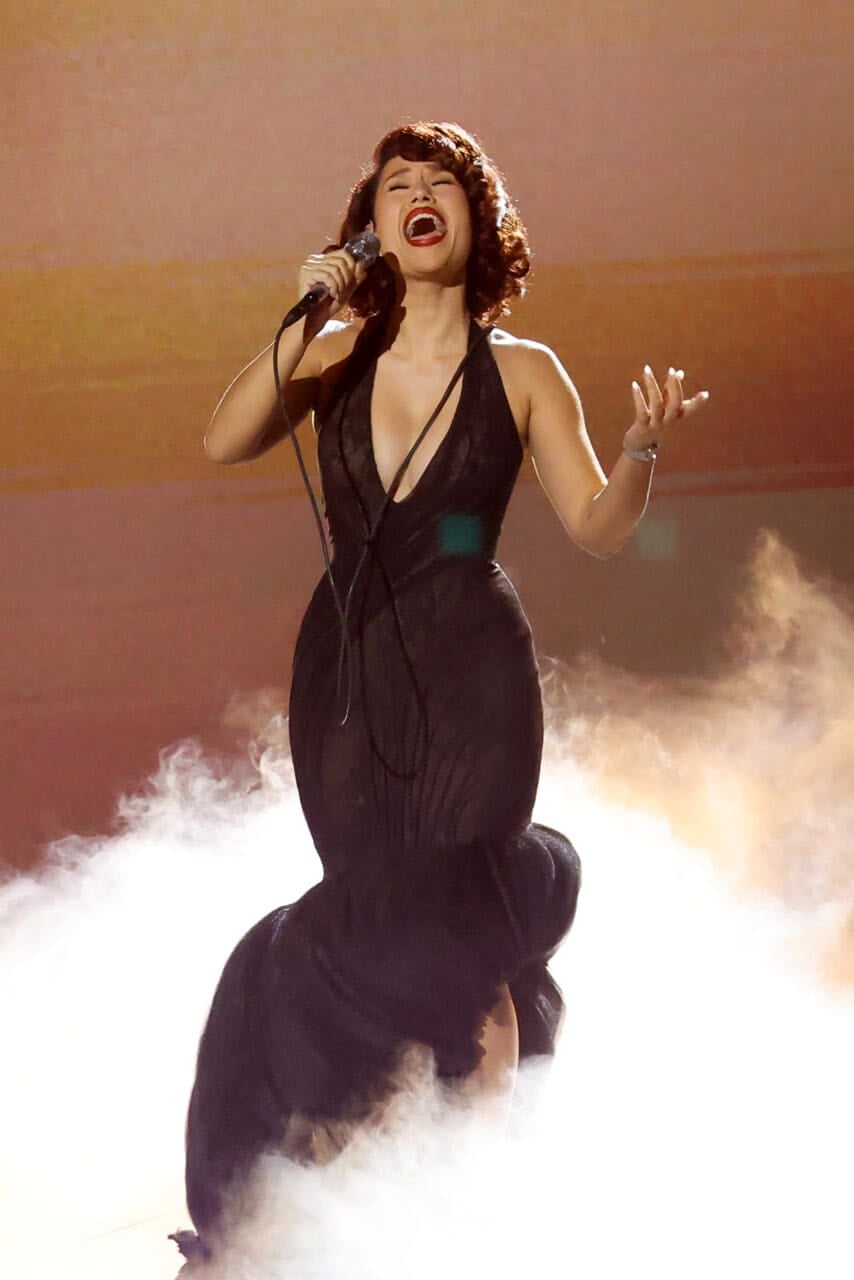


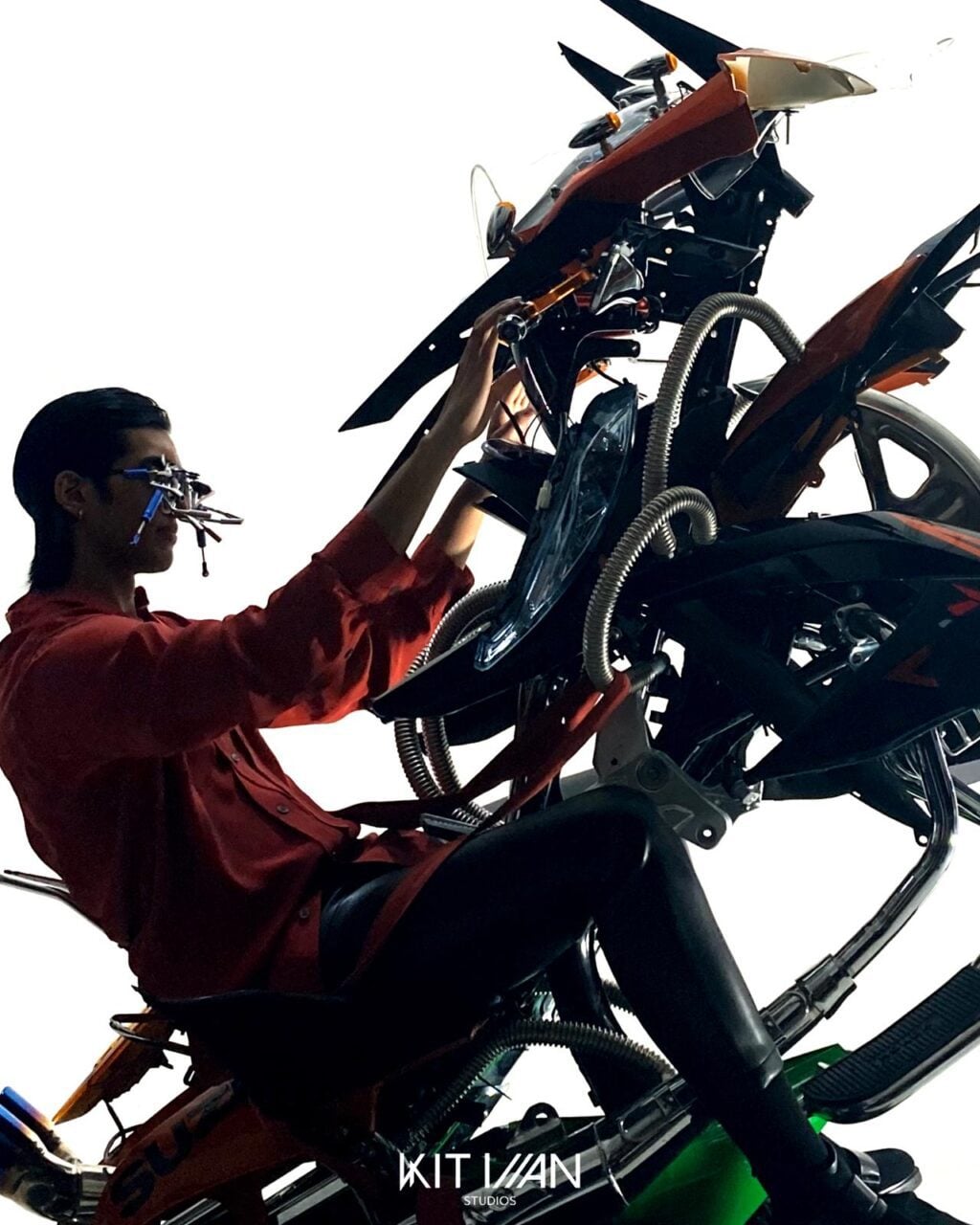
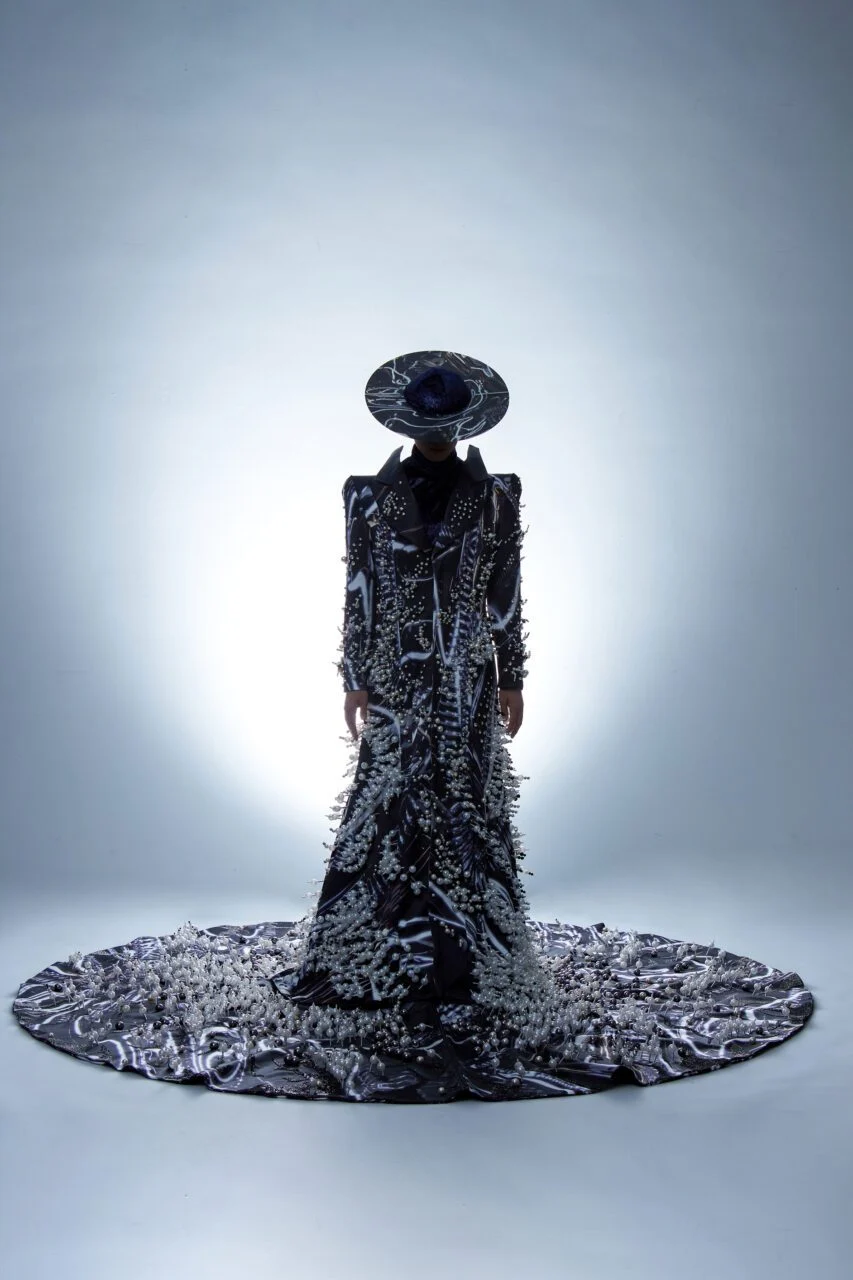
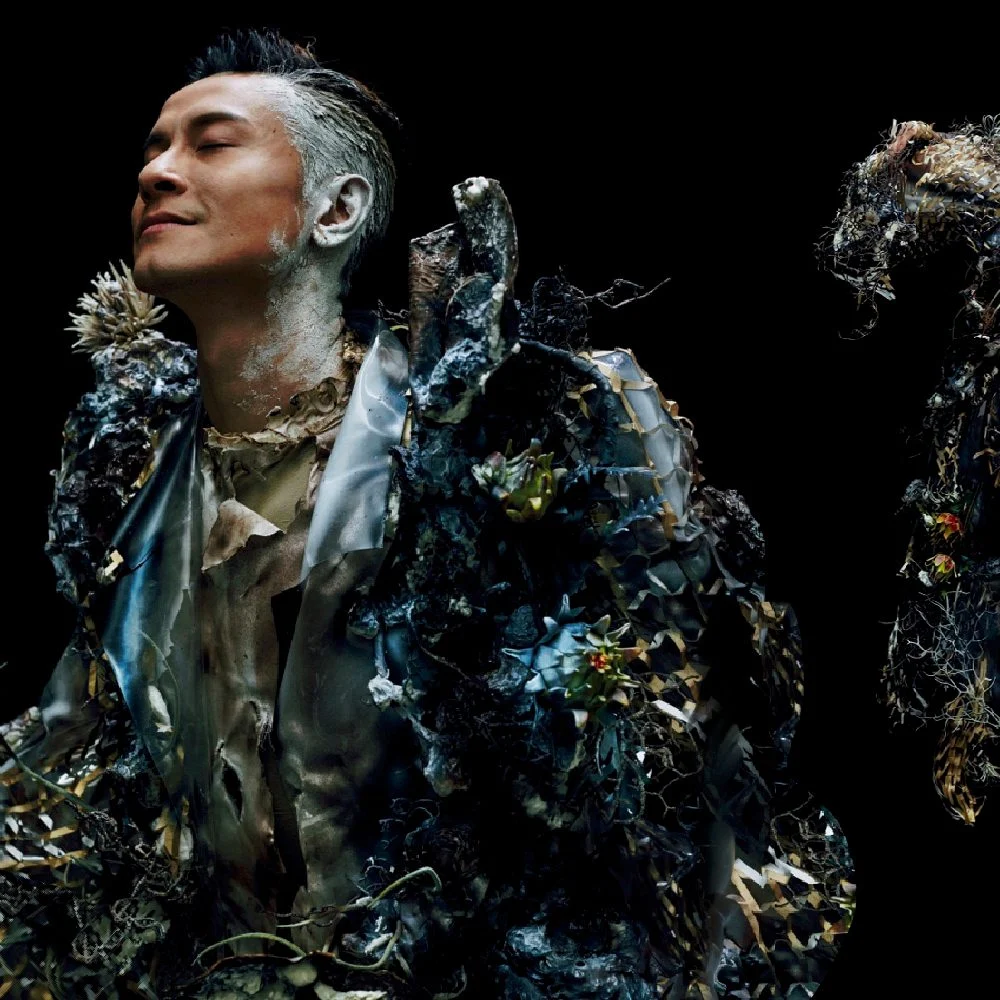
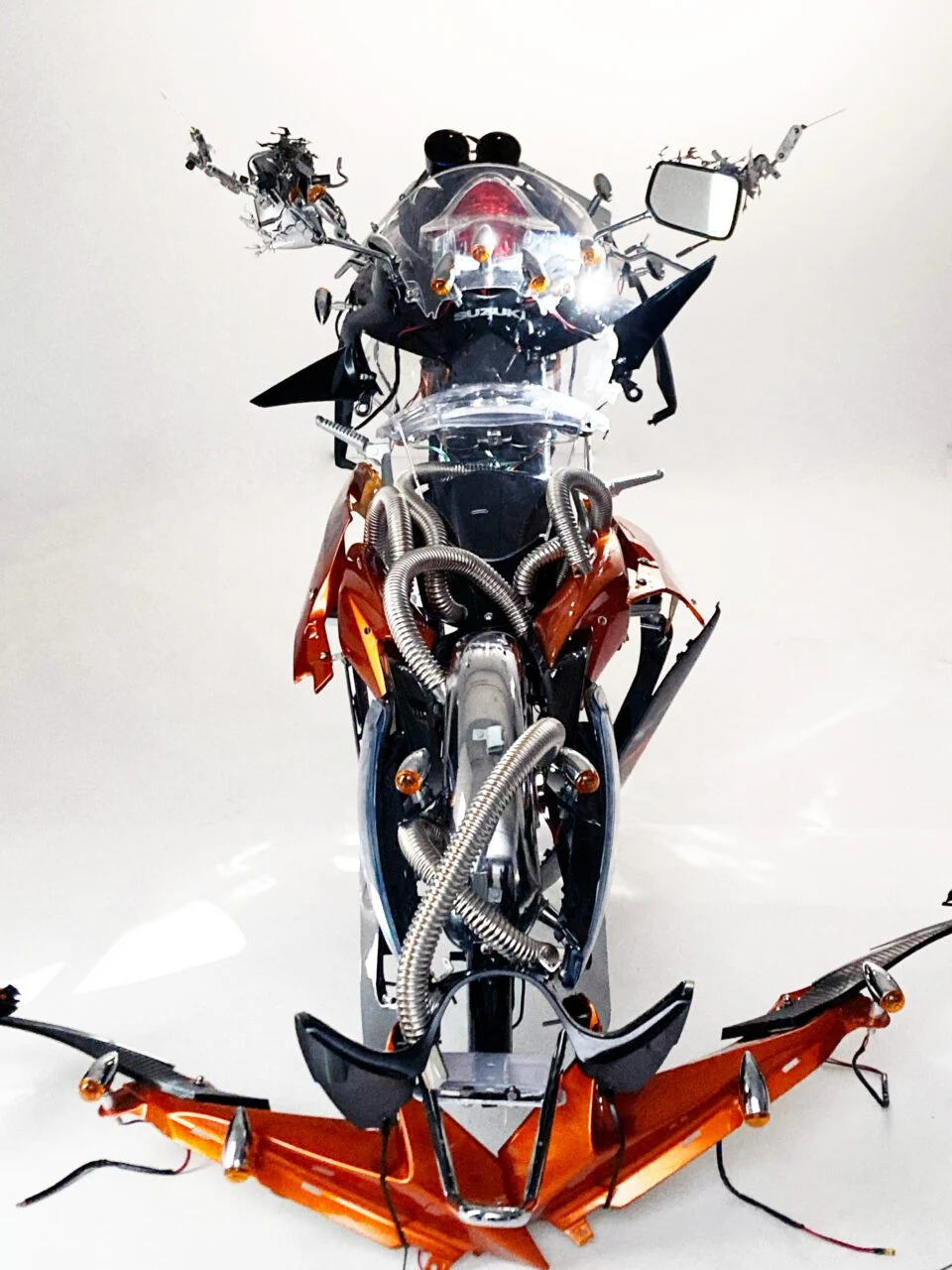
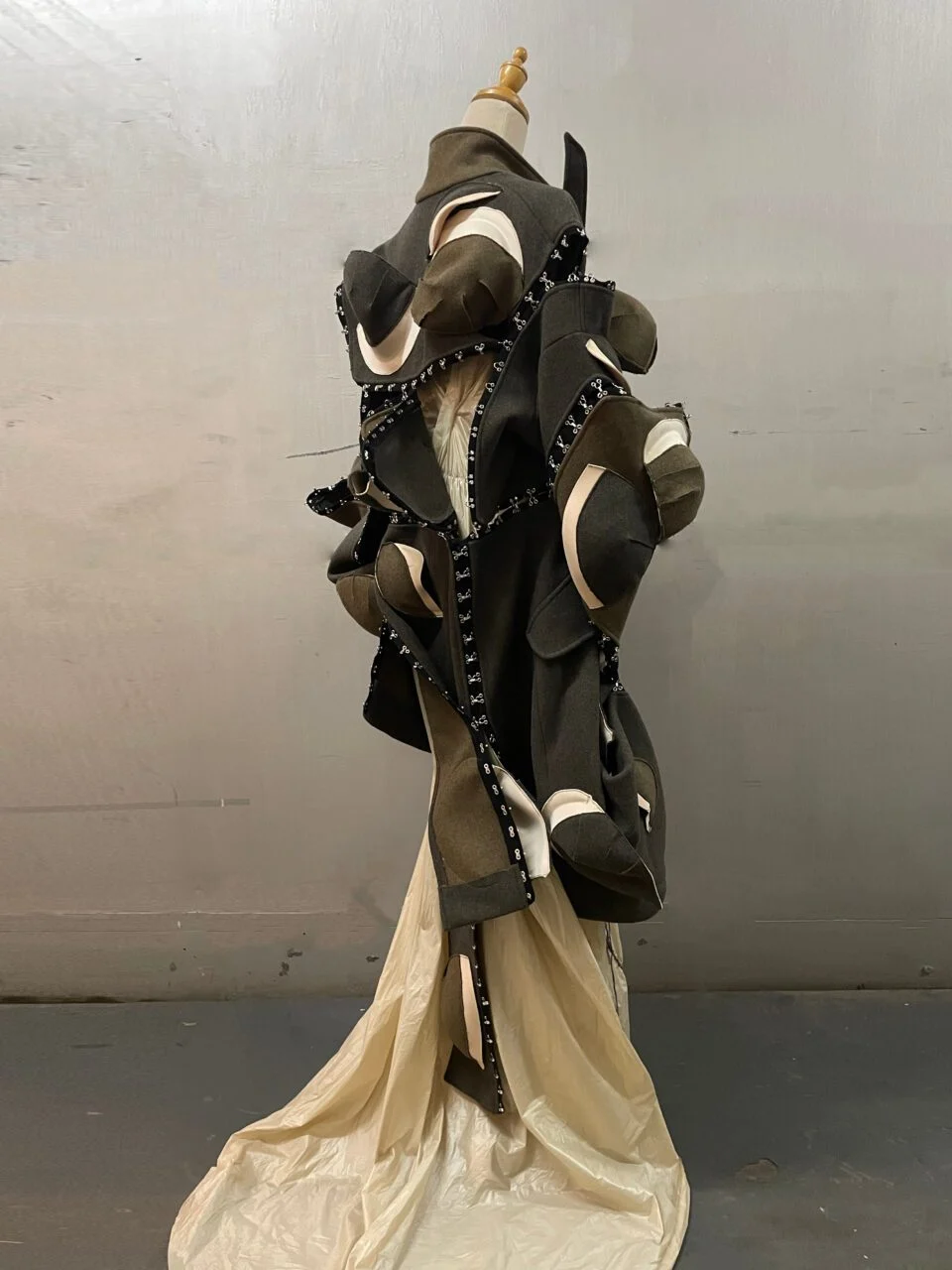
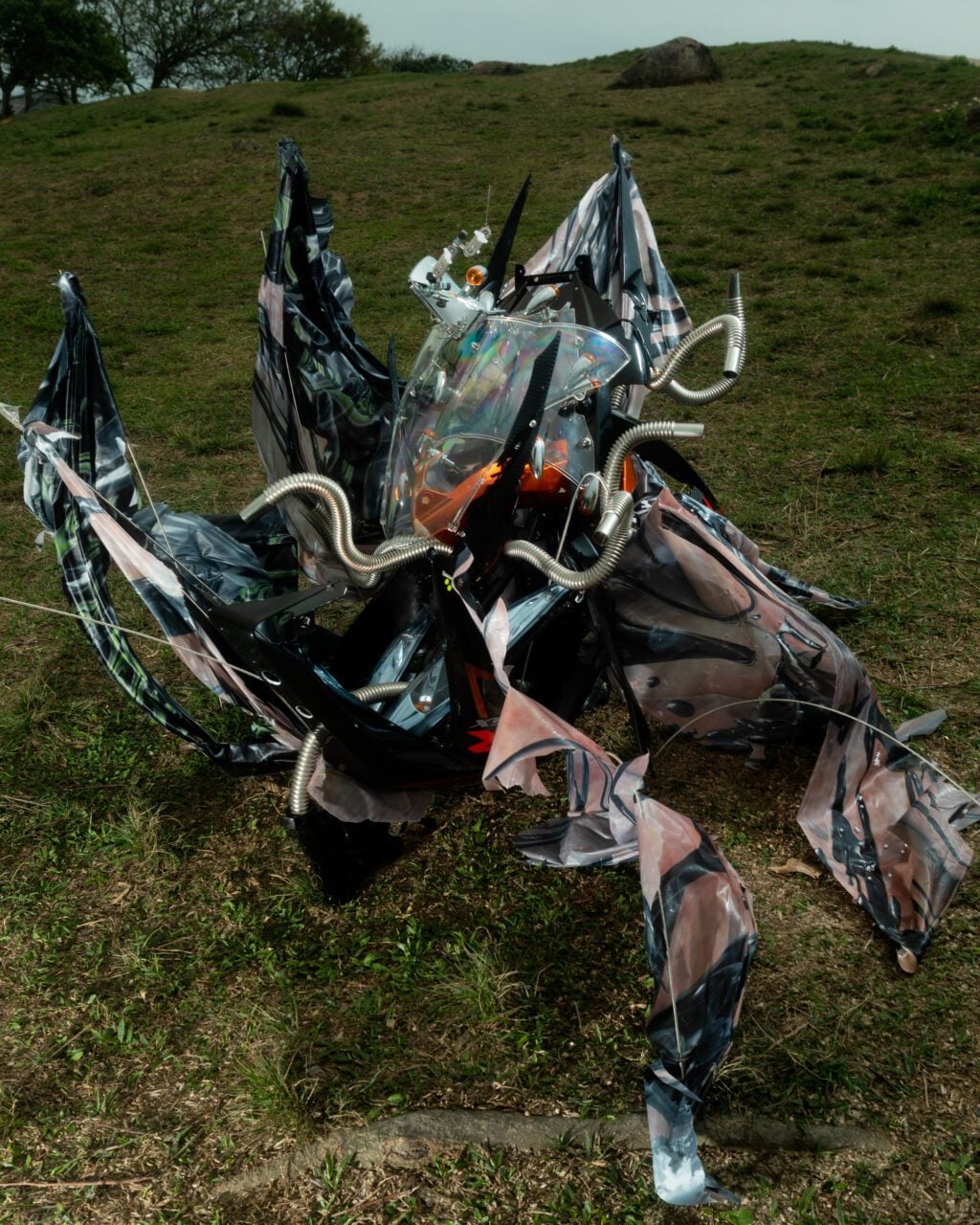
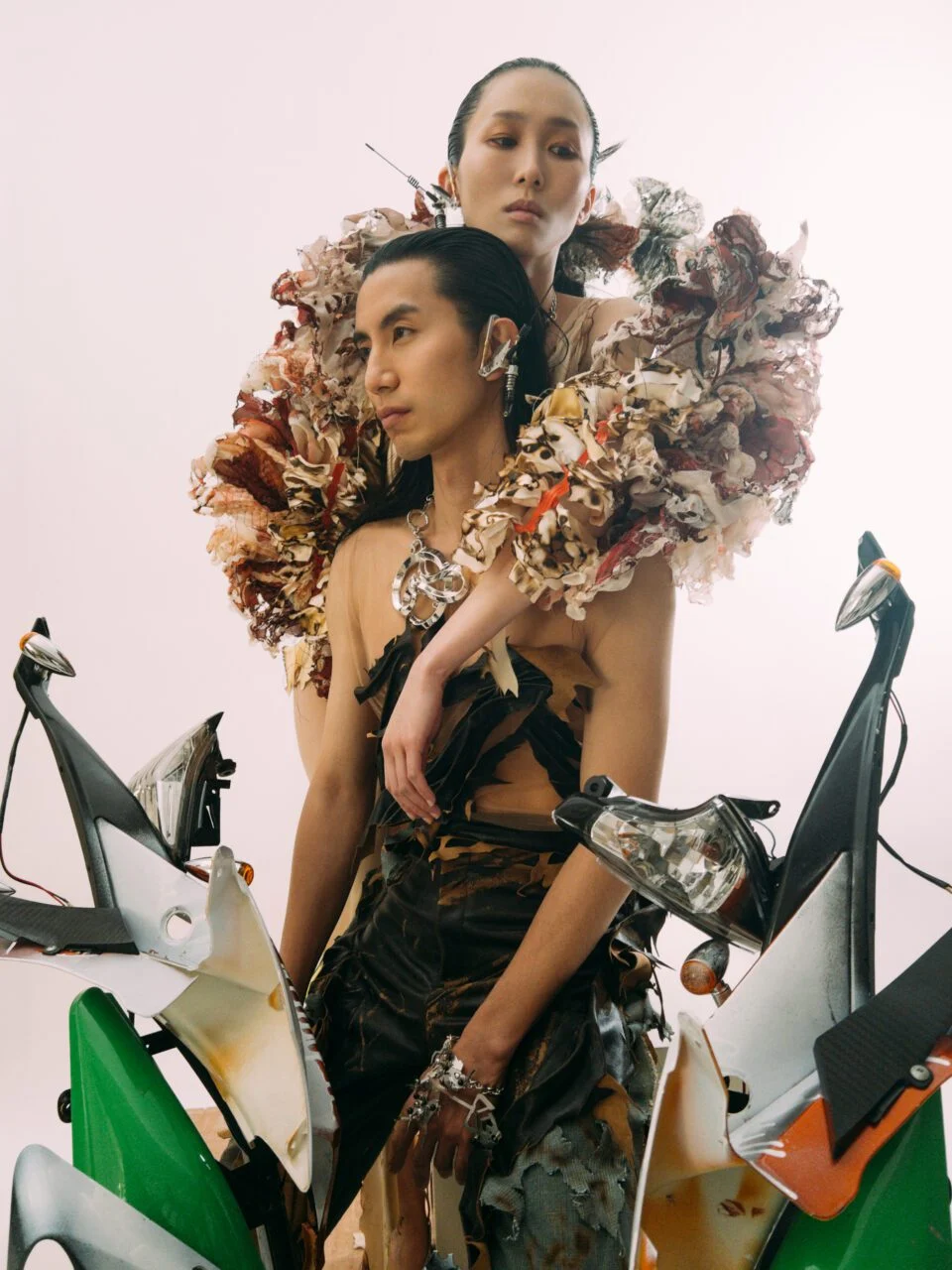
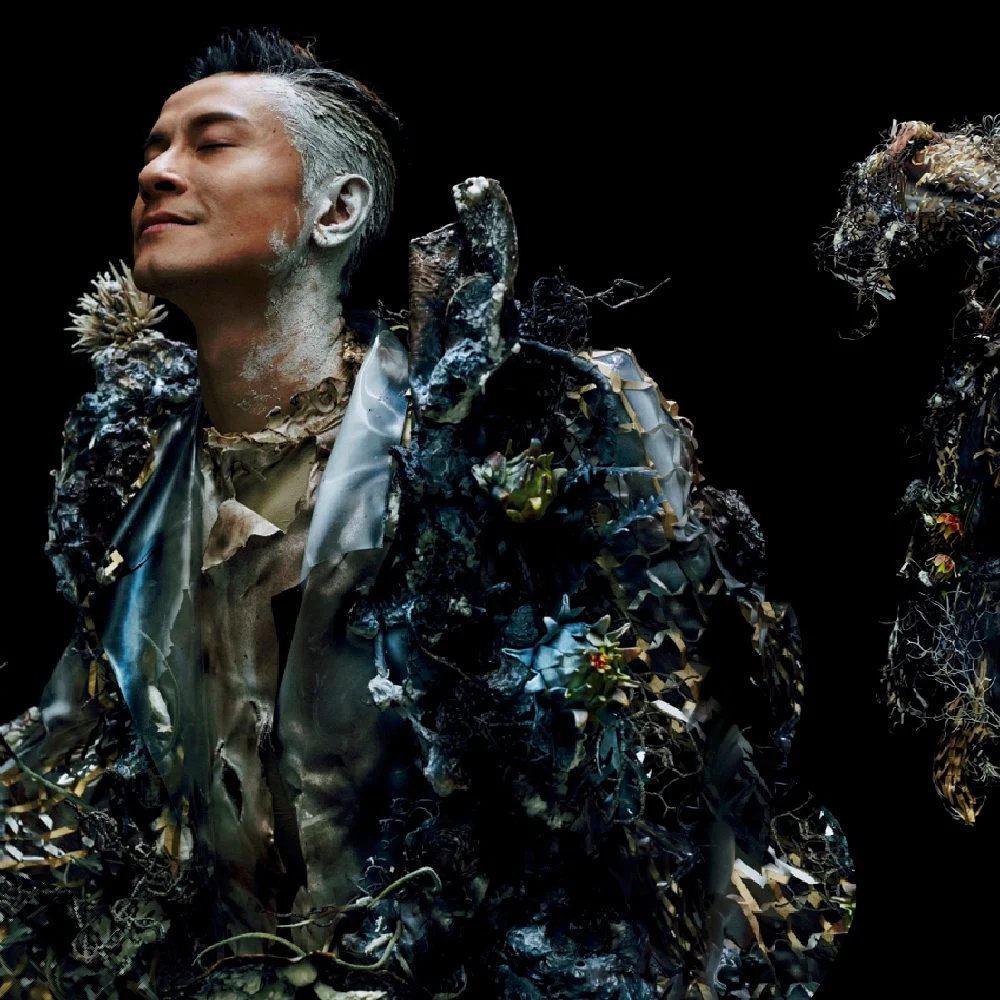
In recent years, those sculptural silhouettes on concert stages that look like mechanical extensions of the body have become a familiar visual signature — whether it’s MC Cheung’s gothic 3D-cut robe or Miriam Yeung’s blossoming feathered gown, both come from KIT WAN STUDIOS. The creative path of founder Kit Wan has never been easy to pin down with a single label: from science-fiction installation artist to fashion designer to stage artist, his work has been acquired for the permanent collection of the National Museum of Norway, and he has created stage looks for local superstars including Aaron Kwok, Hins Cheung, Nicholas Tse, and Panther Chan.
Kit Wan approaches his work with the rigour of a laboratory. On one side are the stunning looks born of close collaboration with artists and their teams; on the other is a complete creative vision entirely his own — two universes that can stand apart, or merge into one on the CENTRESTAGE ELITES stage. His work moves between science fiction, the vocabulary of anime, and mechanical aesthetics, blending haute couture metalwork, multimedia installation, and cinematic tension in garments built around a core of “abstract realism” that blurs the line between art object and wearable fashion. Having previously staged fashion shows in Denmark and Norway, he now brings “Mutant // Mythology” to the opening show of the eleventh CENTRESTAGE — his first full solo fashion show in Hong Kong, and, in a sense, a homecoming.
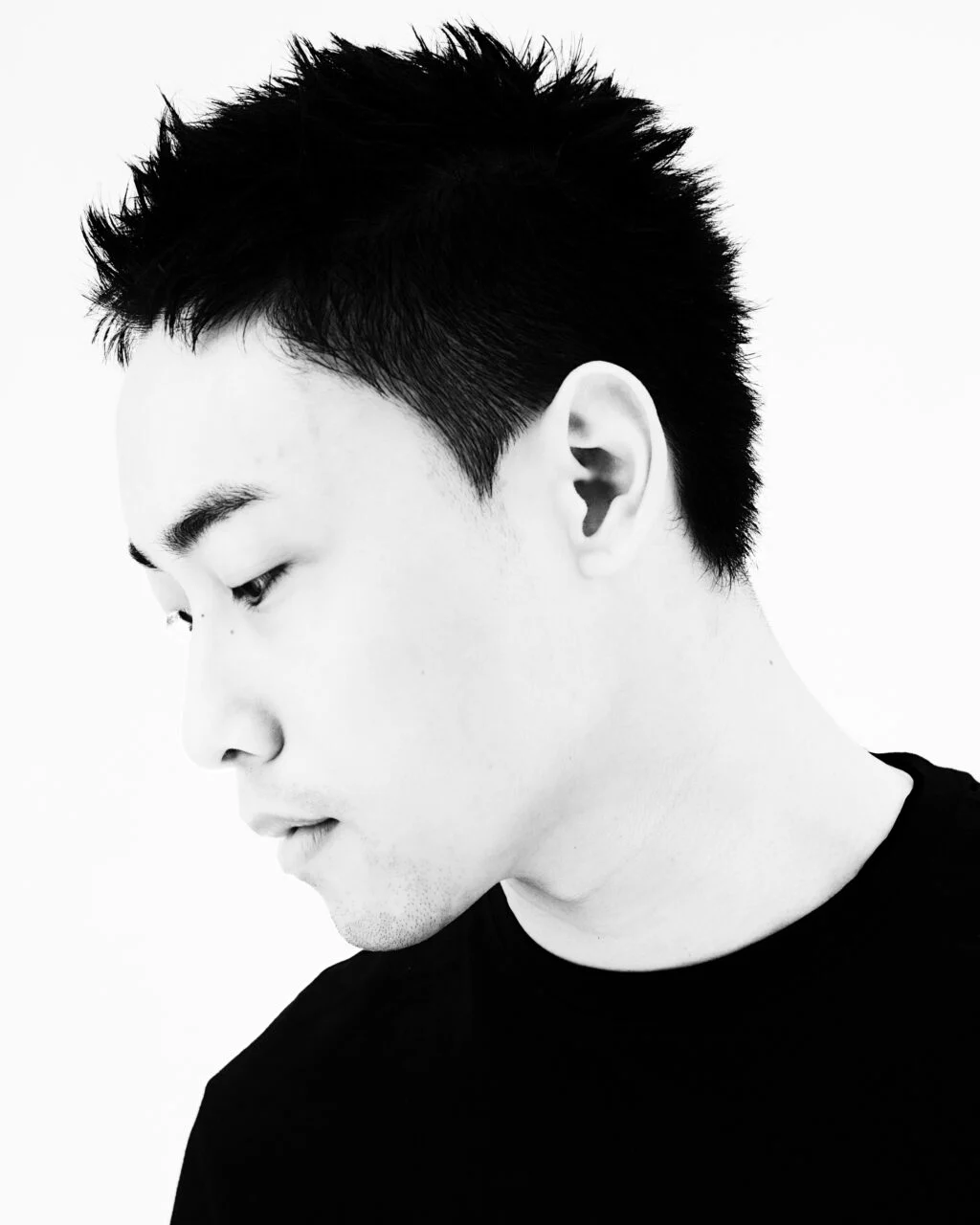
“Mutant // Mythology” unfolds in a three-act structure, bridging industrial futurism, the breath of nature, and an essential romanticism. The inspiration comes from a mid-1990s film set in the year 2035 — looking back, in 2026, on the past’s imagination of the future, forming a central point of questioning. As he puts it: “To me it’s a conversation of hope, through stories from the past and the future — reconciled by our ideas of beauty.”
This marks your first fashion show in Hong Kong, why did you choose this particular moment to present it at CENTRESTAGE?
Since I spent so many years abroad building my catalogue of sculptural works and then coming home to Hong Kong in 2019, I concentrated on collaborative costume works – now feels like the perfect moment to share more of myself with and in my home city. Mutant // Mythology will be my first solo “fashion” show here in Asia.
In our previous conversation, you noted that “the purpose of art is to ask questions, while the purpose of design is to provide answers and solutions.” How would you define this CENTRESTAGE ELITES show? What is the central inspiration and narrative behind the collection?
I am defining the show as having three acts, like a concert, which is how the local community mainly knows our work. We are bridging three otherwise unconnected references: industrial futurisms / a breath of nature / essential romanticism. So in this context, we approach it like an art project via a series of questions/references and our answer is a physical result that shows itself, in this instance, via design as fashion.
To what extent has your experience designing for the stage performances informed this collection? How do you anticipate the process of creating this fashion presentation will influence your future work in stage design?
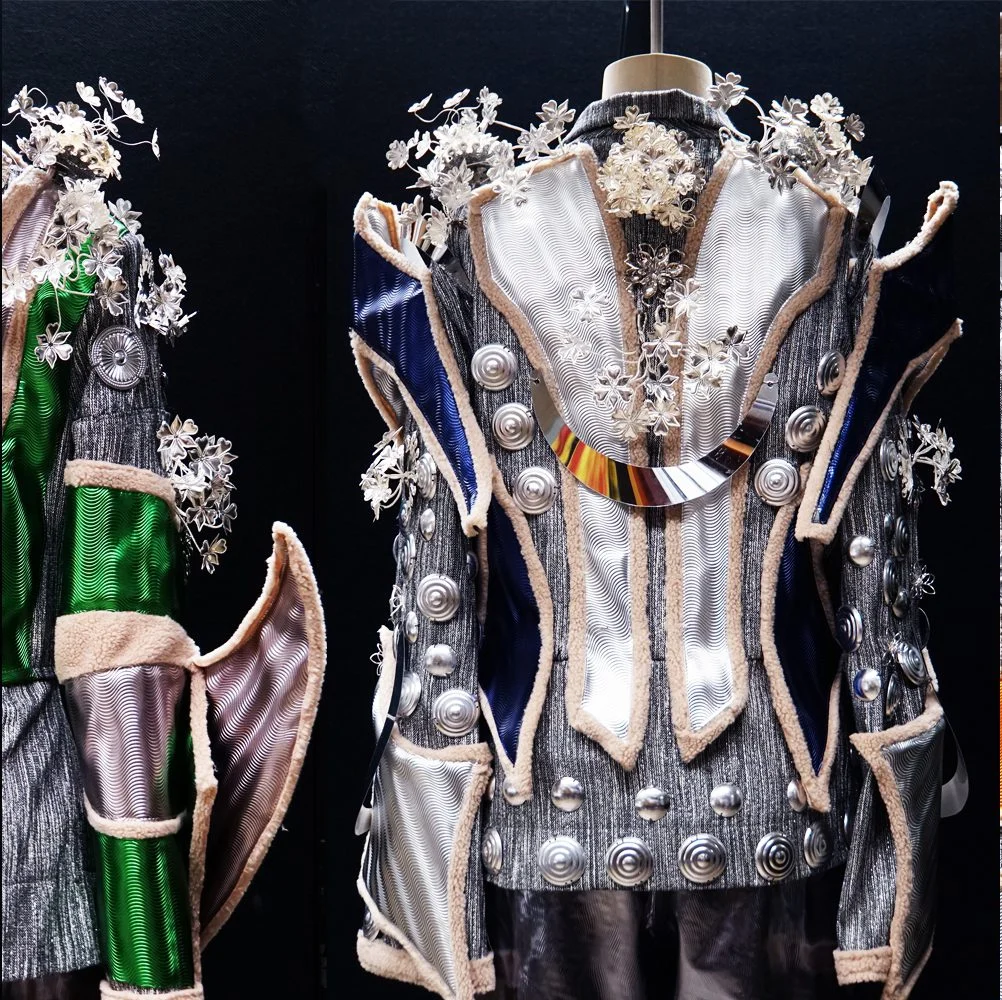
It was important to CENTRESTAGE that we highlight both sides of our studio. So we are showing 12 fantasy pieces that live much like costumes from our concert productions, while blending in a hybrid of wearable separates and avant-garde pieces, speaking to the range of the Mutant // Mythology theme. For me, when I create a body of work, in all mediums, I can separate their focus from our other works – so I am not sure it will influence each other. Following the show, there is a small exhibition of some of our costumes from the last years — it was important for me to separate these two universes. I can say, the studio is truly enjoying the ideation and construction of a full collection; it has been a while since this kind of output, and it’s been exciting.
You operate simultaneously as a fashion designer and a scenographer. How did these dual roles inform and interact with one another in the development of this collection? What was the conceptual thinking behind the presentation — including lighting, spatial design, and the structure of the runway — and what atmosphere or message do you hope the audience will take away?
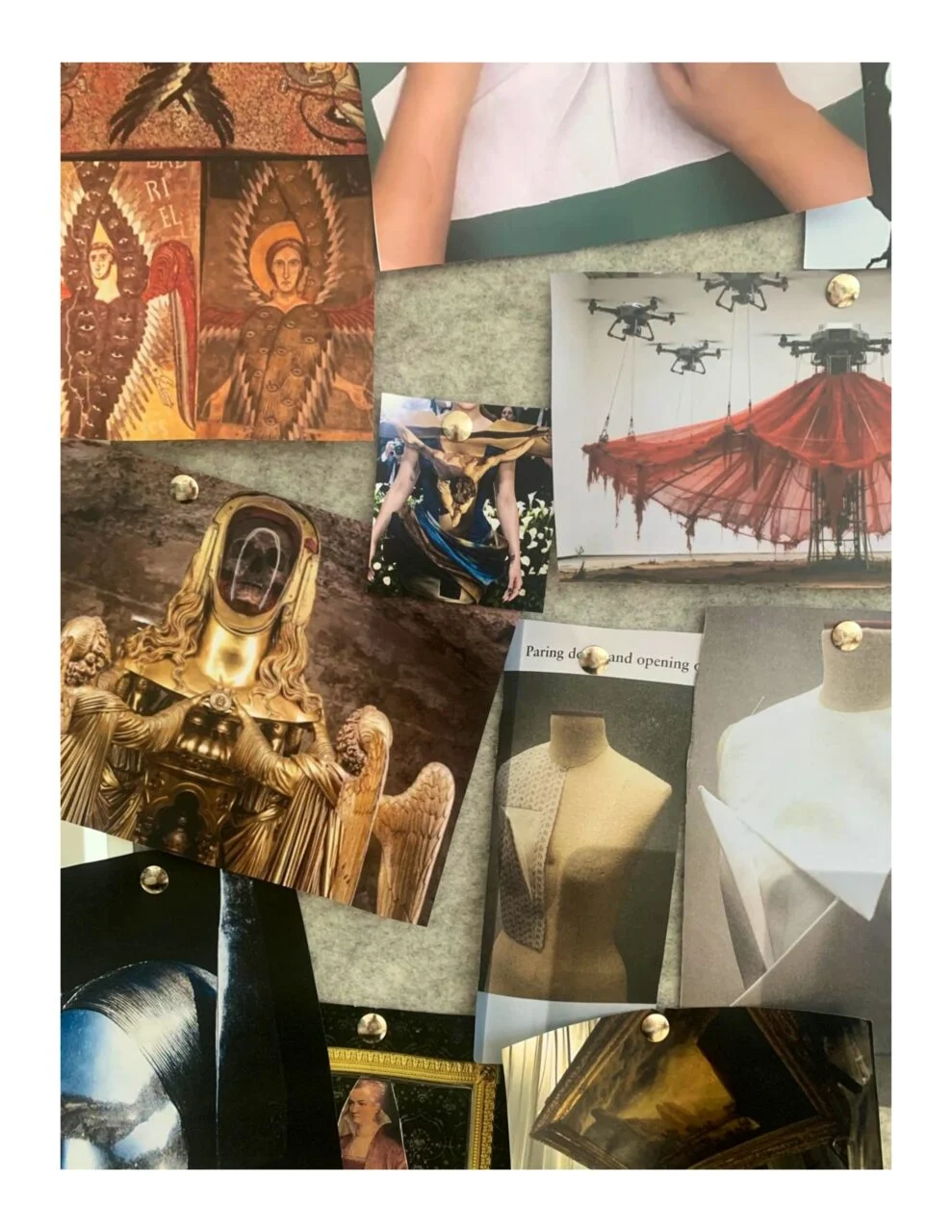
When we create, we build a scene, or an emotion from contrasting ideas. For this, I was watching a movie from the mid-90s; I think it came out five years after I was born. So when I watched this movie about the future in 2035, from the past in 1995, yet I was viewing it in 2026, it offered a real centre point of questioning. This is the space the studio likes to dream from. There was a dialogue between futurism and nature, in a kind of laboratory setting – this really informed our framework. Then, me being myself, in a studio of creative people, we have to mix in fantasy, and that’s where the mythology angle comes in. To me it’s a conversation of hope, through stories from the past and the future – reconciled by our ideas of beauty.
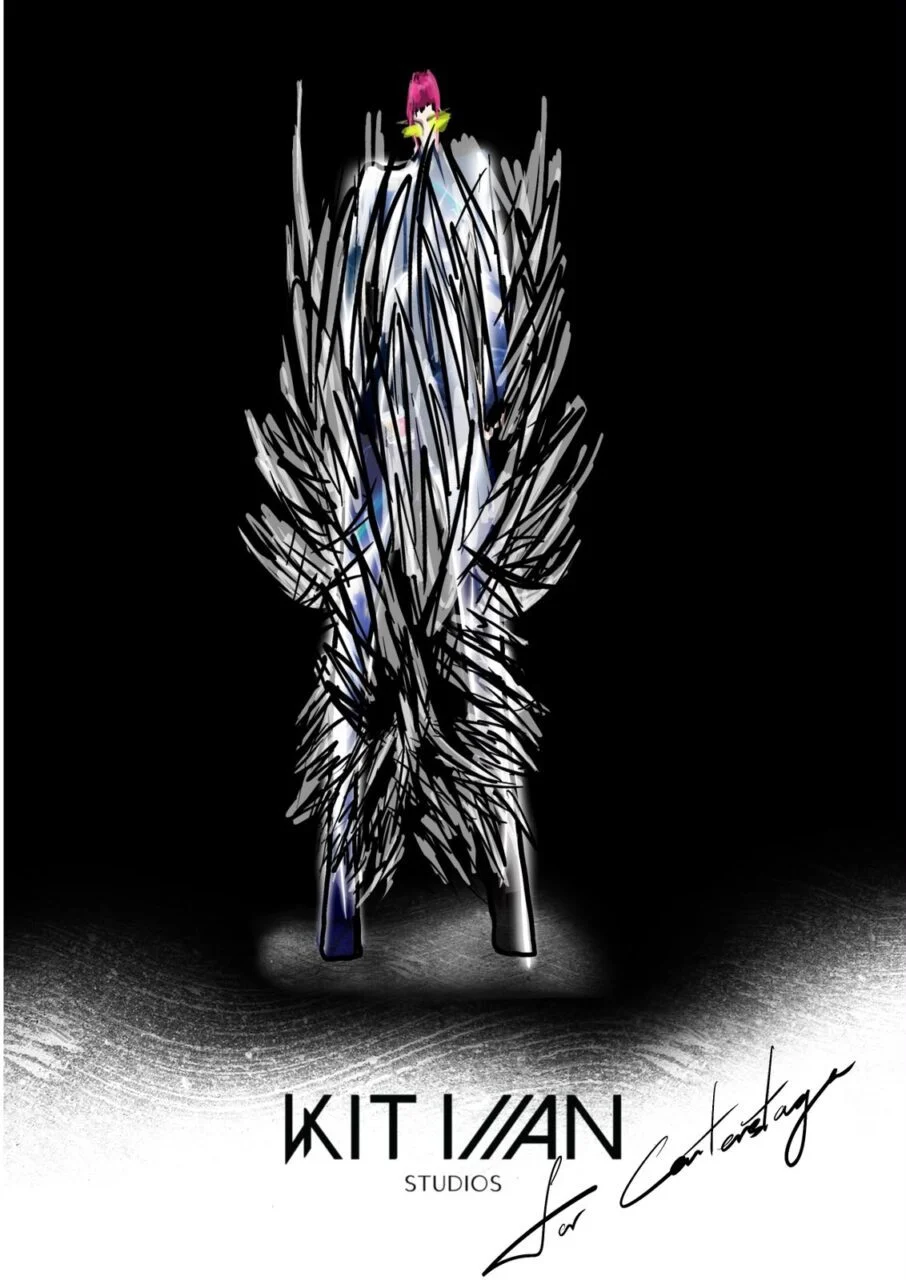
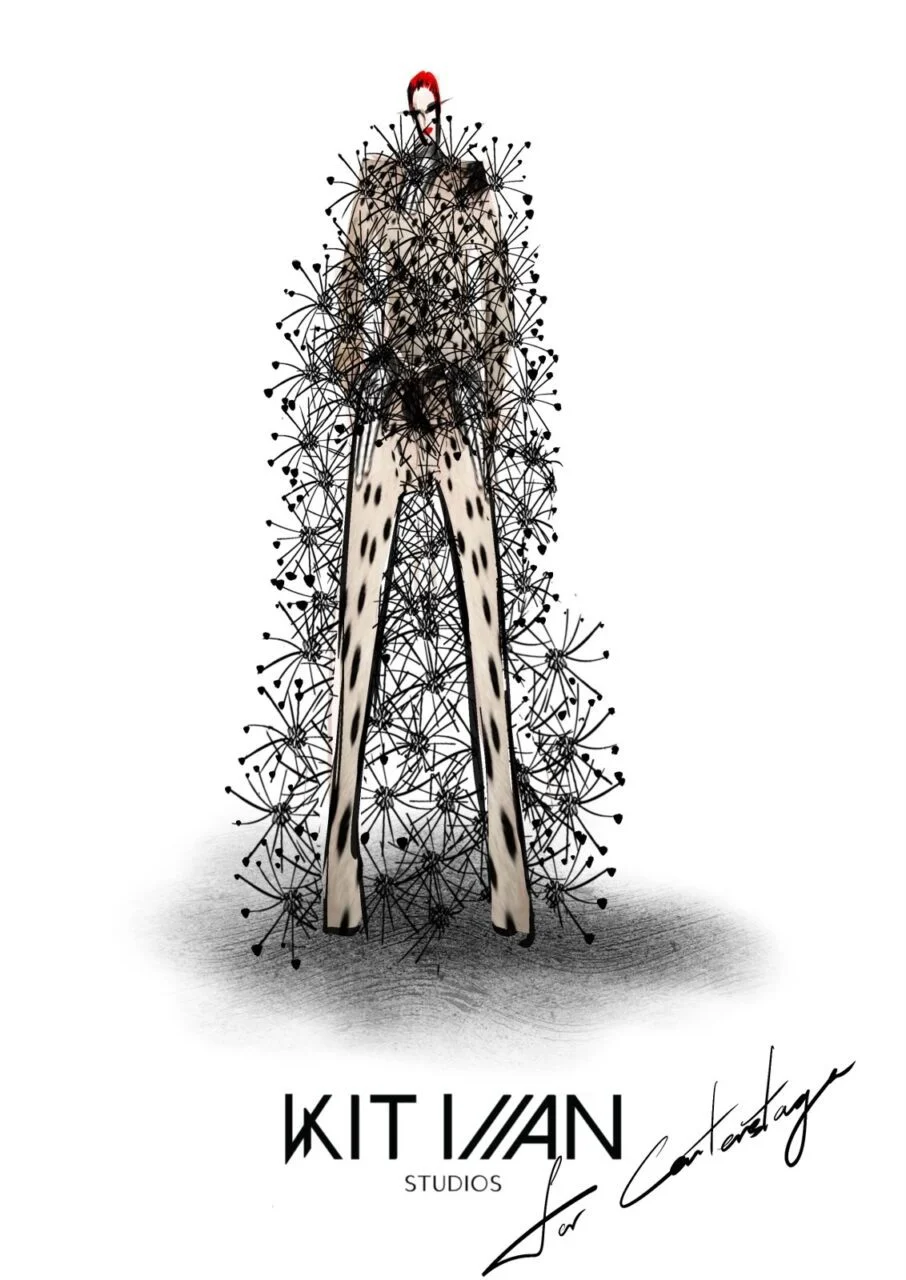
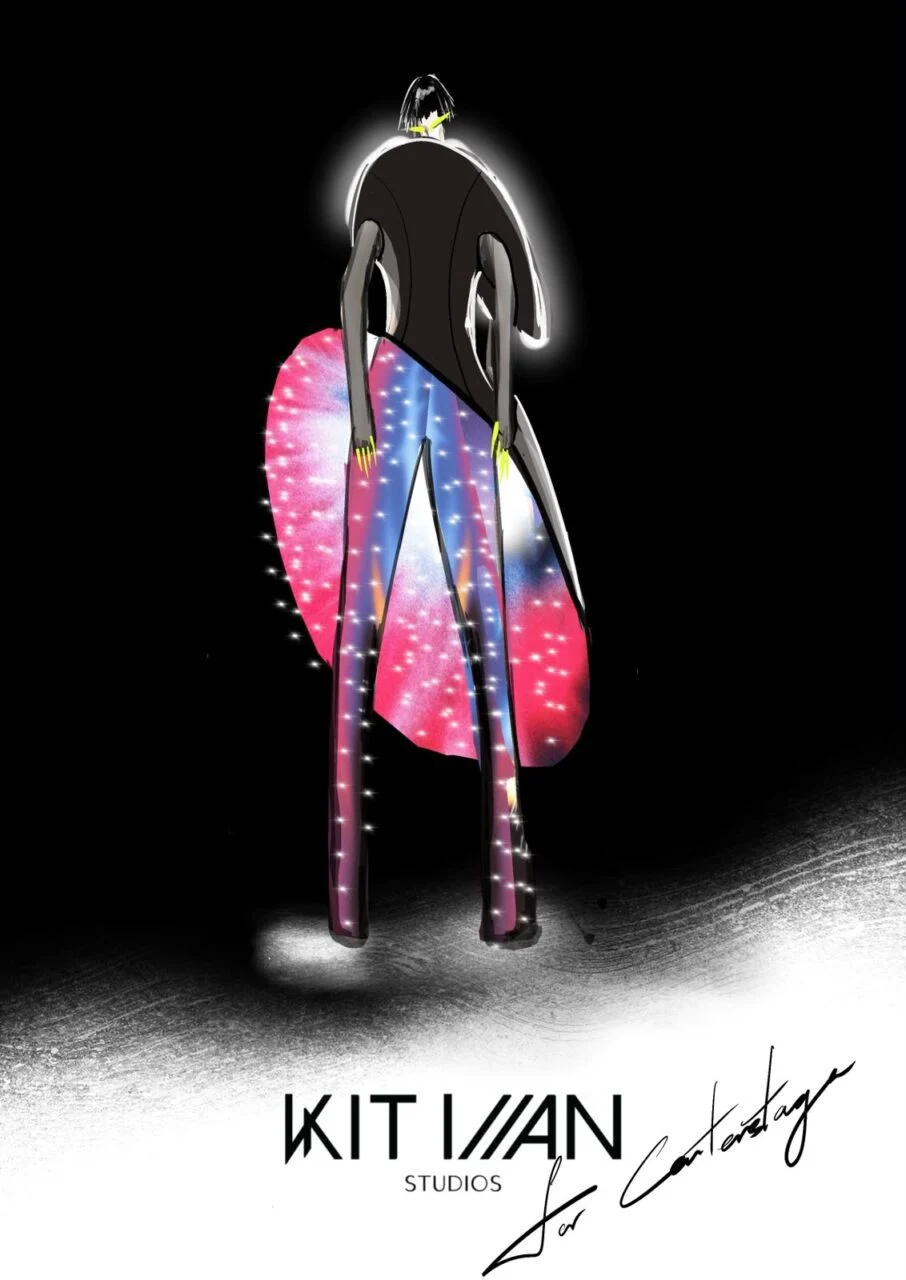
Your practice has consistently explored the boundary between wearable fashion and art installation. In this collection, what new evolutions can we observe? Are there particular looks that you consider especially significant?
Our approach will often have a similar effect. I think the pillars of our work are consistent, However, I hope to share a more harmonious structure, paired with an evolution of form and femininity. In keeping with our signature futuristic, mechanical DNA, one might be surprised that we are bringing colour back — lots of colour. I think each of the looks, all 36, are like our kids; I can’t choose one over the other, but I can say each Act has a dynamic and unique personality.
From a graduate of The Hong Kong Polytechnic University to an internationally recognised costume designer, and now presenting a full fashion show in your hometown, what do you consider the most enduring element of your creative DNA?
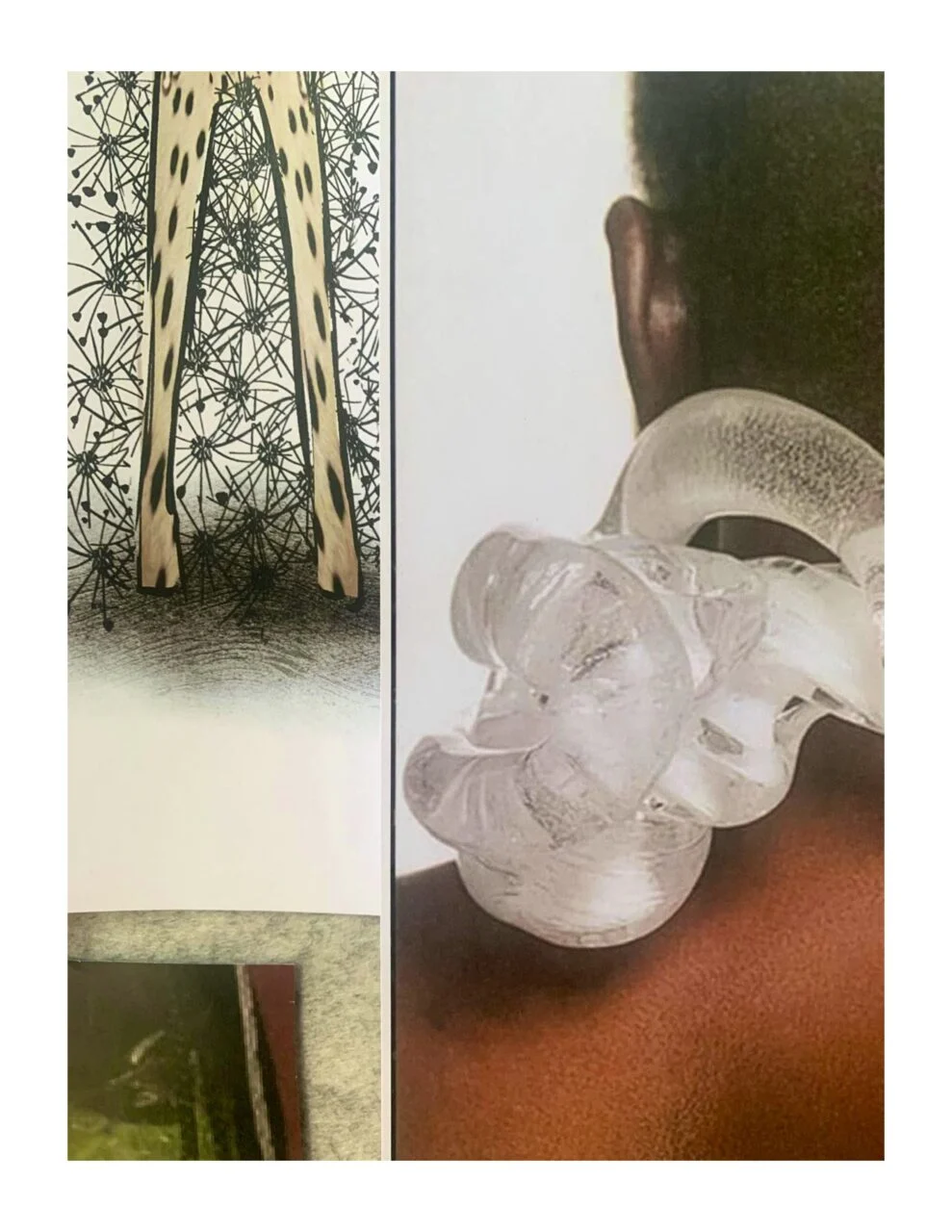
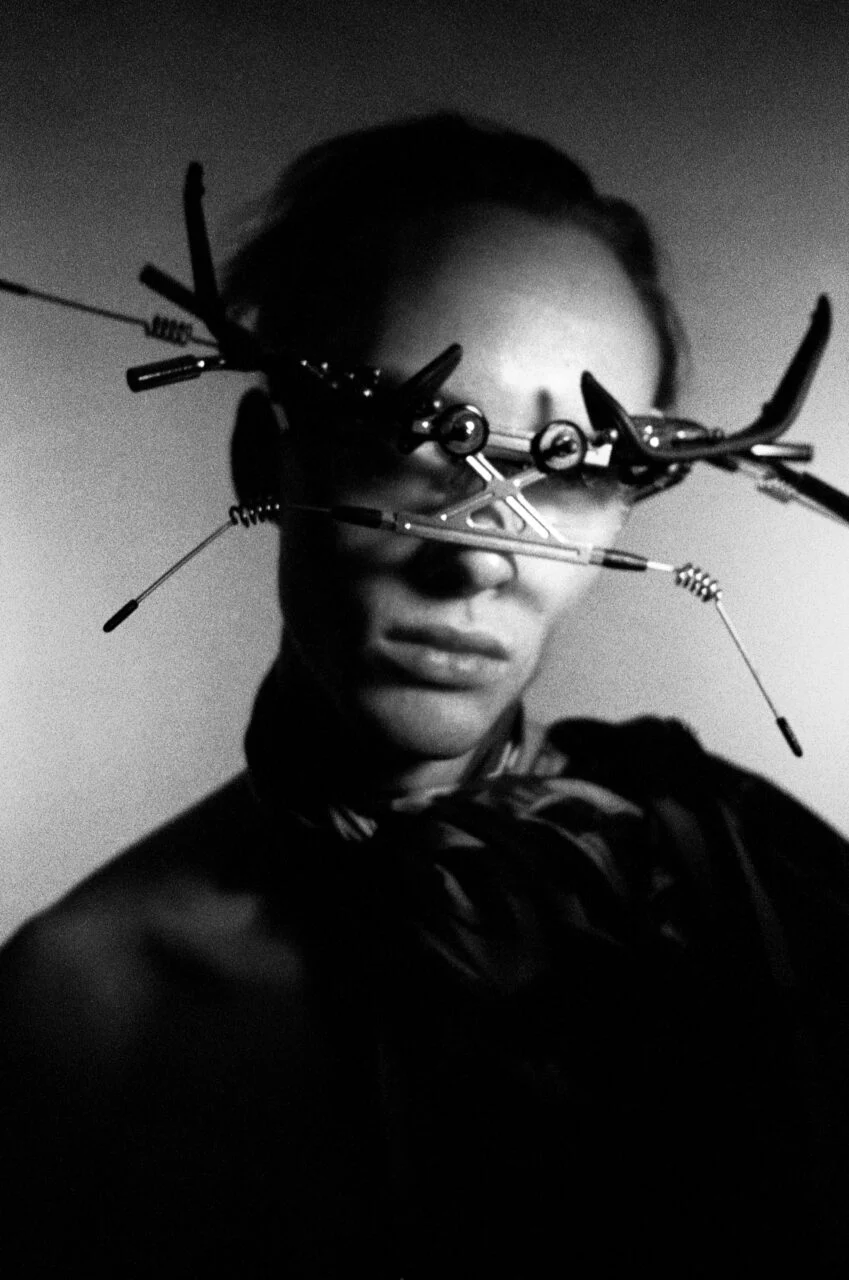
My aim is to create a body of work across many mediums that becomes identifiable to one studio. Whether a glass accessory, a metal-detailed coat or a sculpture installed in a vacant room — I want the audience to think, that must be KIT WAN STUDIOS. I like the elements of innovation and craft; it’s my hope that we will continue to work within these arenas.
Over the past year, what have been the most significant milestones for KIT WAN STUDIOS? Could you share one collaboration or work that holds particular personal meaning for you?
Beyond the work, the exhibitions and concert productions – a personal milestone was moving into our new studio in Kwun Tong. It’s my third studio here since moving back to Hong Kong from Europe, and somehow this studio feels the most professional, dare I say grown-up. It’s a studio that houses styling and technicians, research and development, my personal creative space and in part the archive. We have two-storey windows floating over the city, taking in its great contrasts, man vs. nature.
Last year you were named the sole Hong Kong representative among Fashion Asia Hong Kong’s “10 Asian Designers to Watch 2025,” and this year you are headlining CENTRESTAGE. How do you envision positioning both yourself and Hong Kong design within the broader Asian fashion landscape in the years ahead?
I don’t think in terms of geography, but I do think back to that kid who scoured the markets with his grandmother to get custom suiting made; he would be in awe of these opportunities. When I think of Helmut Lang, I don’t simply think of him as an Austrian designer or Karl Lagerfeld as a German designer; their thumbprint crossed borders, categories, and I hope mine will one day as well. There are so many talented designers in Asia, and I am honoured our studio is counted among them. For me, the focus is to engage as many creative-minded people as possible despite their passport. I think art brings people together, not classifies them.
What advice would you offer emerging creatives?
I often say the most important thing for a young creative to do is find their own authentic voice. I am a strong believer that there is not one way to create a body of work. I am actually allergic to formulaic processes. If you are building from a place that is truly your own, you will find a way to survive, shape and share. My way works for me but perhaps not for another and vice versa.
In an era of rapid AI advancement, how do you assess the continuing value of traditional craftsmanship within fashion and artistic practice?
As an artist who is known for creating with and around technology, it was important for me, with this collection, to focus on lost or forgotten craft. I think this informs the mythology aspect of our title, and maybe the mutant aspect informs technology – how we can connect but separate these worlds while telling a singular visual story, in parts.
Lastly, can you articulate in a single sentence what you hope the studio will become?
I hope the studio will continue to make a catalogue of works that cross all categories of fine and applied arts, creating a visual language that is specifically our own.
Editor
Cherry MuiCredit
Photo: Courtesy of Kit Wan Studios