

Close to 30,000 visitors descended on Venice for the preview of the most‑awaited contemporary art event last month: the 61st edition of the Venice Biennale. Thousands more are set to visit this summer. Conceived by the late curator Koyo Kouoh, who tragically passed away in 2025, and realised by a team of her collaborators, In Minor Keys – as referenced in its title – was a call to focus on the undercurrents and lesser‑known narratives that run through contemporary art. Despite a theme that champions subtlety and nuance, the biennale and the numerous parallel exhibitions on view in the city offered a high degree of spectacle, drama, and works that elicited intense, visceral reactions. From nude women riding jet skis to a pavilion transformed into a pseudo-day-care centre, here are our top 7 picks from the biennale’s national pavilions and parallel exhibitions to check out this summer.
The Only True Protest is Beauty, Fondazione Dries Van Noten, Palazzo Pisani Moretta
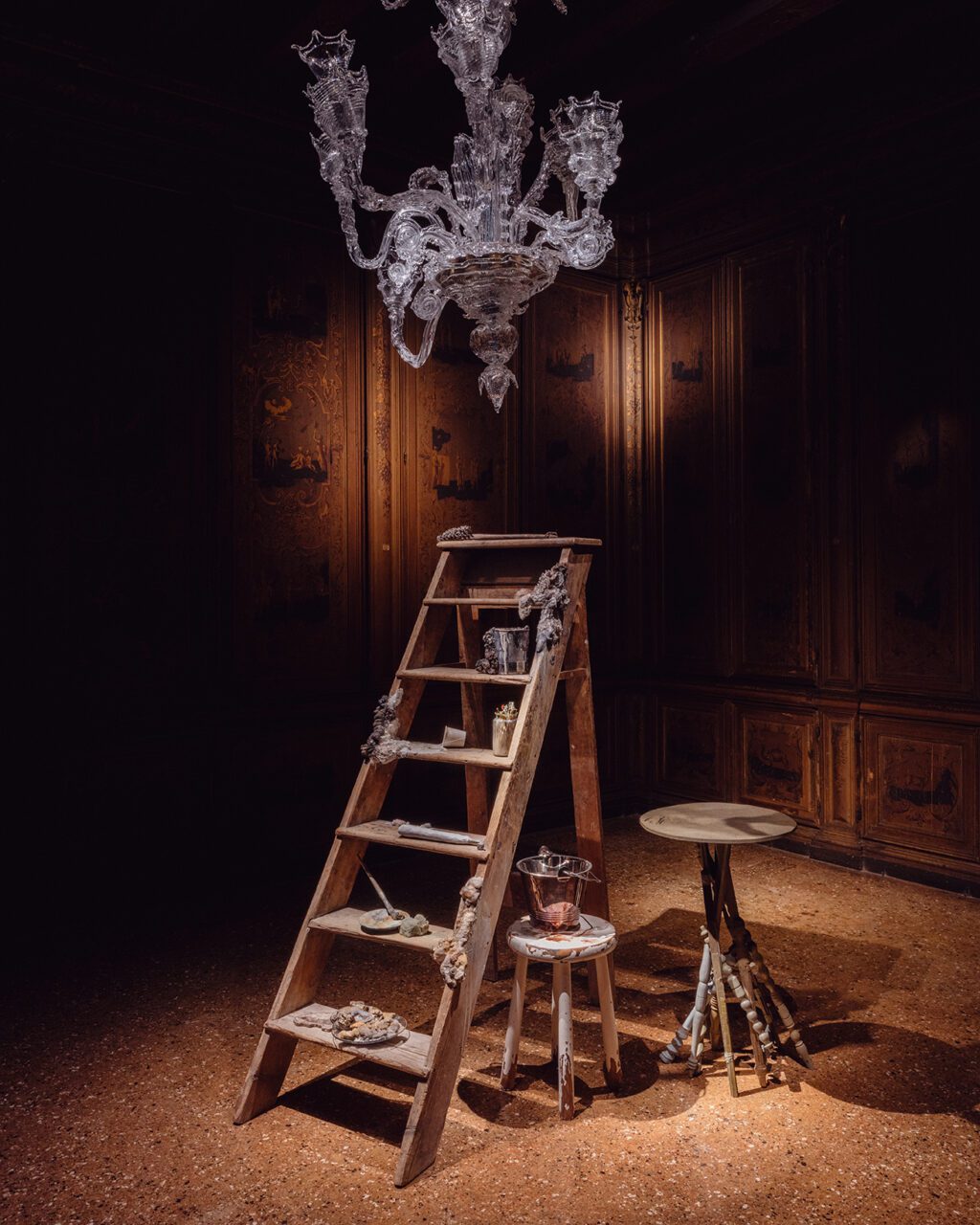
Post‑retirement from his eponymous label, designer Dries Van Noten and his partner Patrick Vangheluwe opened Fondazione Dries Van Noten to celebrate the evolution of craftsmanship with the inaugural exhibition, The Only True Protest Is Beauty.
In naming the show, Van Noten drew inspiration from American songwriter and political activist Phil Ochs, who wrote an anthem in the 1960s stating that “In such ugly times, the only true protest is beauty.”
Beauty indeed defines the combination of the 15th‑century palazzo’s gilded, chandelier‑filled, luxe interiors with tactile, quality‑crafted creations on view. From Japanese ceramist Ritsue Mishima’s fragile, melting Venetian glass vessels, to Belgian sculptor Peter Buggenhout’s staggering, raw, industrial sculptures, to Rei Kawakubo’s abstract archival Comme des Garçons silhouettes, the multidisciplinary presentation featured pieces spanning contemporary design and art.
While none of Van Noten’s own pieces were in the exhibition, the colour, texture, and sense of drama characterising the show were evocative of his designs, providing one of the most aesthetic, sensorial, and craft‑forward viewing experiences in the city this season.
Fondazione Dries Van Noten, Palazzo Pisani Moretta, San Polo, 2766, 30125 Venice, Italy; 25 April – 4 October 2026
Florentina Holzinger, SEAWORLD VENICE
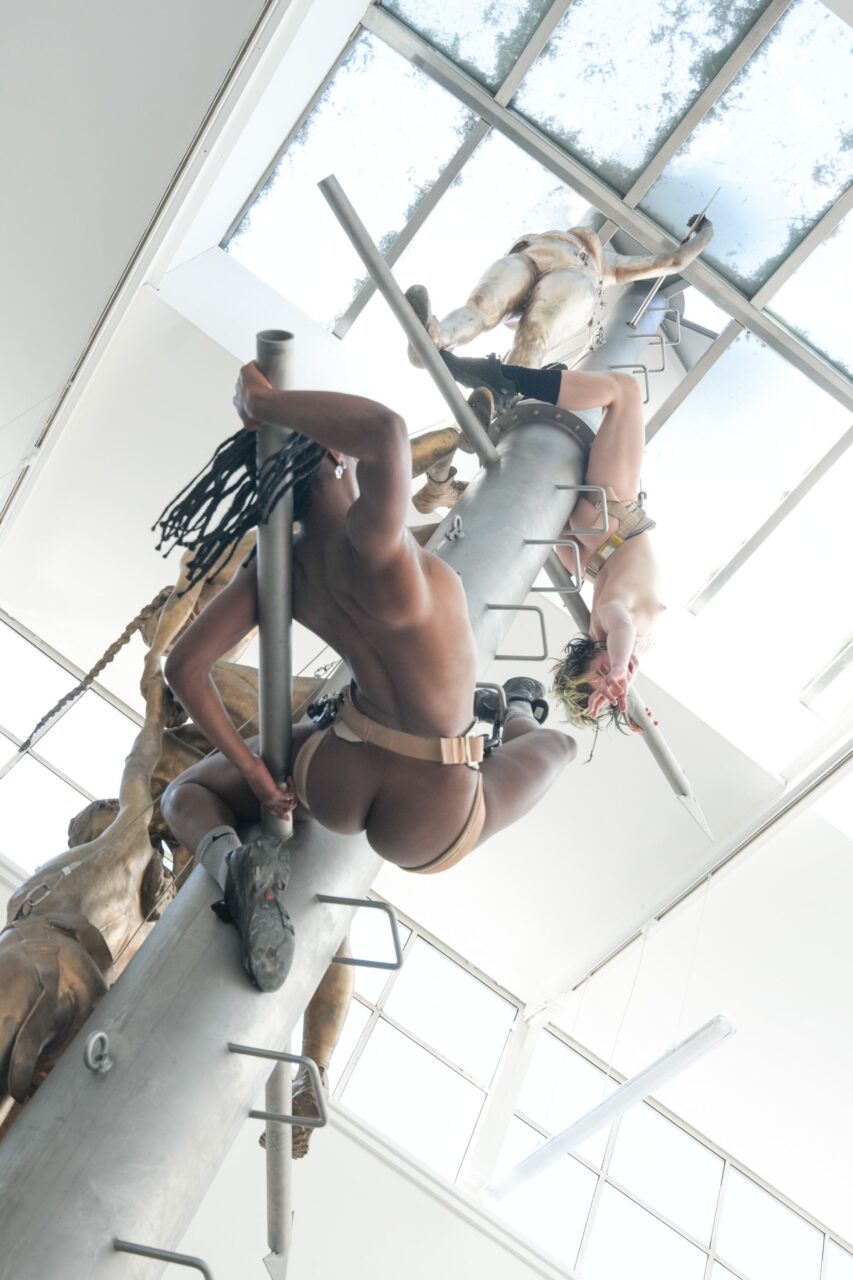
Photo: Seaworld Venice, 2026 © Nicole Marianna Wytyczak
One of the most newsworthy and acclaimed displays at the biennale this year was Florentina Holzinger’s SEAWORLD VENICE, as reflected in the mile‑long queues spilling out of the Austrian Pavilion and winding through the Giardini during the preview. A combination of performance‑based works—including a nude woman riding a jet ski in the flooded pavilion, female bodies creating a cross‑like formation on a weather vane (a traditional instrument for determining weather patterns), robot dogs moving through water, and a performer manoeuvring a water tank sustained by visitors’ urine—brought issues such as climate change, rising water levels, and systemic failures (economic, ecological, societal, religious, and patriarchal) to the fore. These themes are as relevant to Venice as they are globally.
Simultaneously, Holzinger references art history, and her performers emphasise the vulnerability of our bodies and existence through the artist’s trademark confrontational, unapologetic theatrics. Yes, the work is characterised by shock value and spectacle, but it is deeply visceral, disturbing, and worth the hour (or two)‑long wait.
Austrian Pavilion, Giardini; May 9 – November 22, 2026
Ruin, Sung Tieu, Henrike Naumann
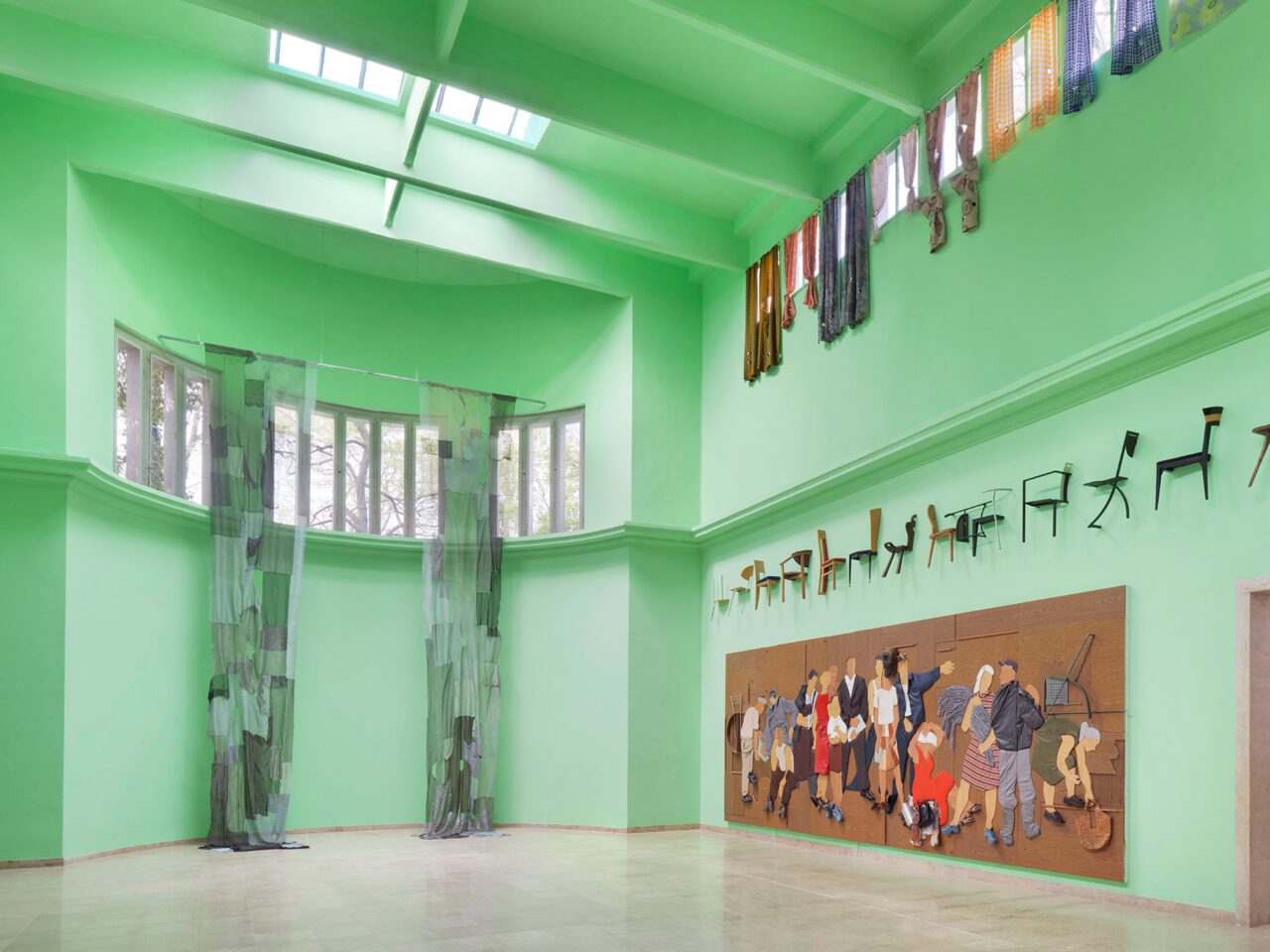
The façade of the German Pavilion is paved with marble, mosaic, and graffiti resembling that of the Gehrenseestraße complex, a now‑abandoned housing estate in northeast Berlin where German‑Vietnamese artist Sung Tieu and her mother once lived. It was a space for migrant workers, whose collective experience becomes the primary subject of much of Tieu’s practice. Inside, Tieu’s minimalist sculptures—often based on specific units of measurement related to labor—blend the history of labor in Germany with personal memories. In this context, they serve as an ode to her mother; glass sculptures of her mother’s hands and feet are displayed alongside a sculpture composed of metal bars based on Albrecht Dürer’s 1528 Studies of Human Proportion.
The German presentation also features the work of the late German artist Henrike Naumann, who sadly passed away months before the biennale’s opening. Naumann drew on her personal history, painting the interior wall of the pavilion a shade of green that recalls abandoned Soviet barracks in East Germany. A socialist mural painted by her grandfather hangs on one wall, while the cold, steely aesthetics of Neues Deutsches Design manifest in a living‑room replica on the opposite side. Devoid of spectacle but filled with personal and historical meaning, Tieu and Naumann’s interpretation of “minor keys” was one of the most sophisticated on view.
German Pavilion, Giardini; May 9 – November 22, 2026
Screen Melancholy, Taiwan Collateral Event of the Biennale Arte

Li Yi-Fan, Screen Melancholy © Li Yi-Fan.
Photo: Courtesy of the artist
Deeply disturbing and filled with dark humor, Taiwanese artist Li Yi‑Fan’s Screen Melancholy keeps your eyes glued to a screen even when you most want to look away. Mimicking our relationship to social media, Li’s film is a literal translation of the bodily disjointedness we experience from being chronically online. This is manifested by Li’s protagonist—a pale, sexless, mannequin‑like figure who navigates a video‑game‑like world set in a space similar to the palazzo the installation inhabits. Large stony heads that appear in the film are recreated on a larger scale in the palazzo, heightening the video’s aesthetic effect.
The space’s history adds to the film’s haunting, visceral impact—the palazzo was one of the first purpose‑built prisons in Europe—undoubtedly drawing a comparison to how, in our digital age, our screens entrap and confine us in a prison of their own.
Palazzo delle Prigioni Nove, Riva degli Schiavoni, 4209; May 9 – November 22, 2026
Helter Skelter, Arthur Jafa & Richard Prince
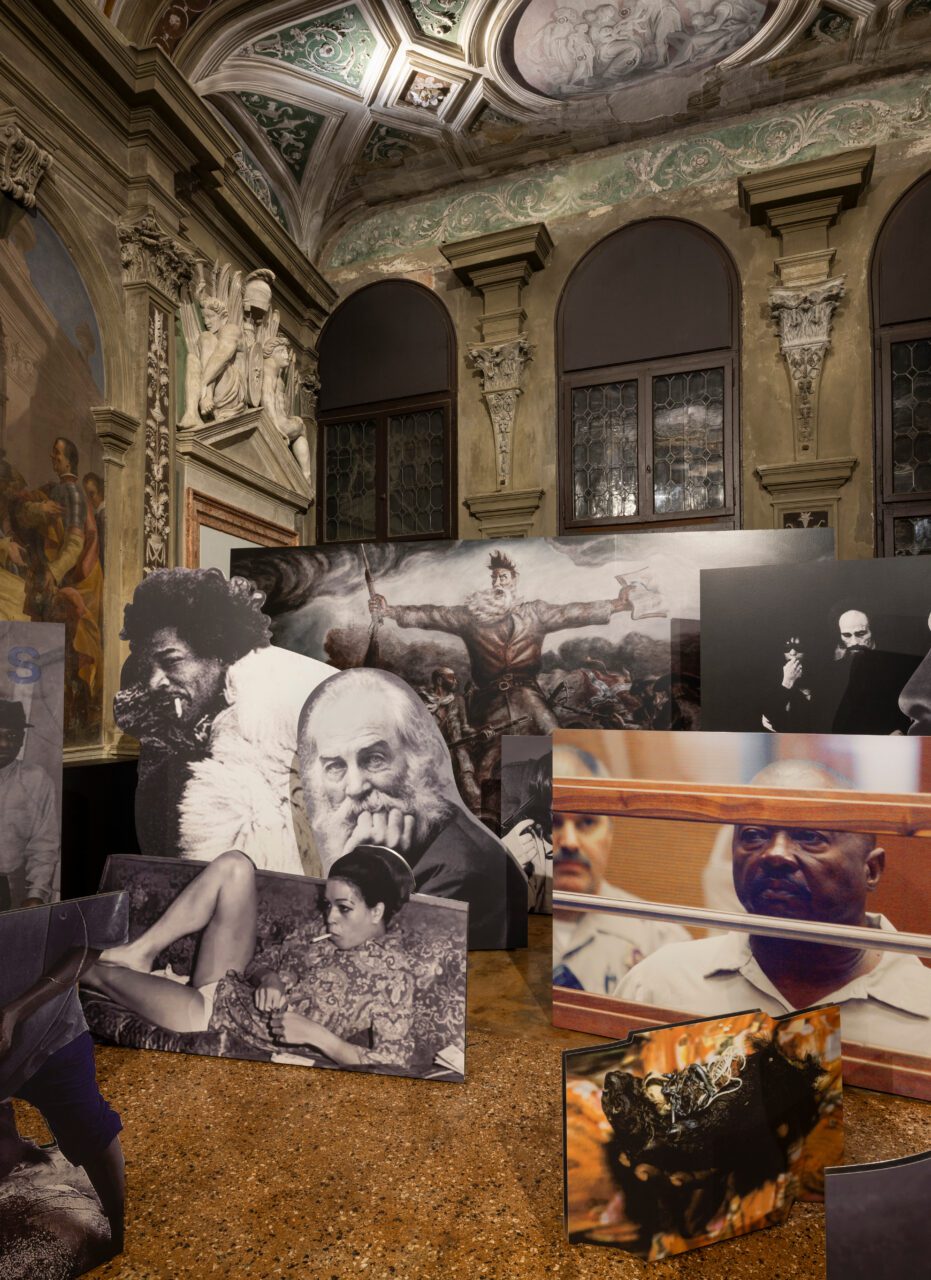
Photo: Andrea Rossetti; Courtesy of Fondazione Prada
Despite divergent practices, renowned American filmmaker Arthur Jafa and photographer Richard Prince are both known for incorporating pop‑cultural material in their work that reflects on and critiques American history and culture. For the first time, their art is in dialogue at Fondazione Prada, where the show’s title invokes the idea of chaos and urgency.
Two large‑scale installations open the show: Jafa’s Big Wheel II (2018)—a giant, chained car tire suspended from the ceiling—and, in the courtyard, Prince’s Blasting Mats (2006)—a hanging installation of blasting mats made from cut‑up car tires. These set the tone for a powerful and intense exhibition encompassing over fifty works across photographs, sculptures, paintings, and films.
Described by Spector as a “potent examination of the American psyche that feels urgently global,” the exhibition includes Jafa’s seminal work Love Is the Message, the Message Is Death (2016), which reveals the stark injustice of the Black American experience and the country’s racial, systemic failings. The contrast of Jafa and Prince’s gritty, raw imagery with the Prada Foundation’s luxe and refined interiors also holds appeal, making this another not‑to‑be‑missed exhibition.
Fondazione Prada, Calle Corner, 2215, 30135; May 9 – November 23, 2026
The Ear is the Eye of the Soul, Pavilion of the Holy See
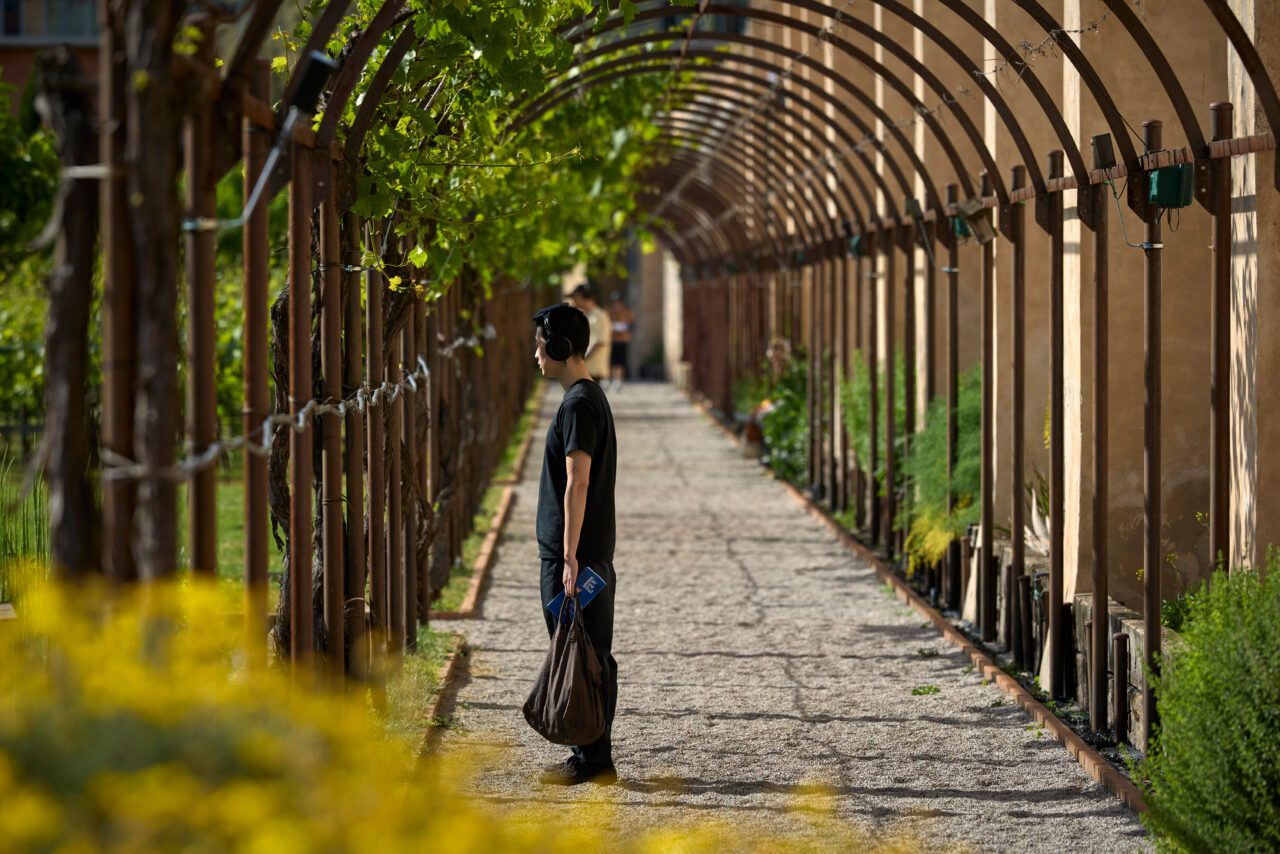
Holy See Giardino Mistico. 61st International Art Exhibition, Biennale di Venezia, titled In Minor Keys. Venice, Italy.
Photo: David Levene
The Ear Is the Eye of the Soul takes 12th‑century composer Hildegard of Bingen as inspiration to create a much‑needed contemplative encounter amid Venice’s chaos and crowds. The garden of an old convent—the Giardino Mistico dei Carmelitani Scalzi—becomes the site of a soundscape that evolves as visitors traverse the greenery with wireless headphones. Soundworks and compositions by musicians such as Brian Eno and FKA twigs merge with natural sounds from the immediate surroundings and voiceovers by artists like Otobong Nkanga and Patti Smith, forming a meditative experience that prompts pause and reflection.
Giardino Mistico dei Carmelitani Scalzi, Cannaregio 5; May 9 – November 22, 2026
Grass Babies, Moon Babies, Ei Arakawa-Nash
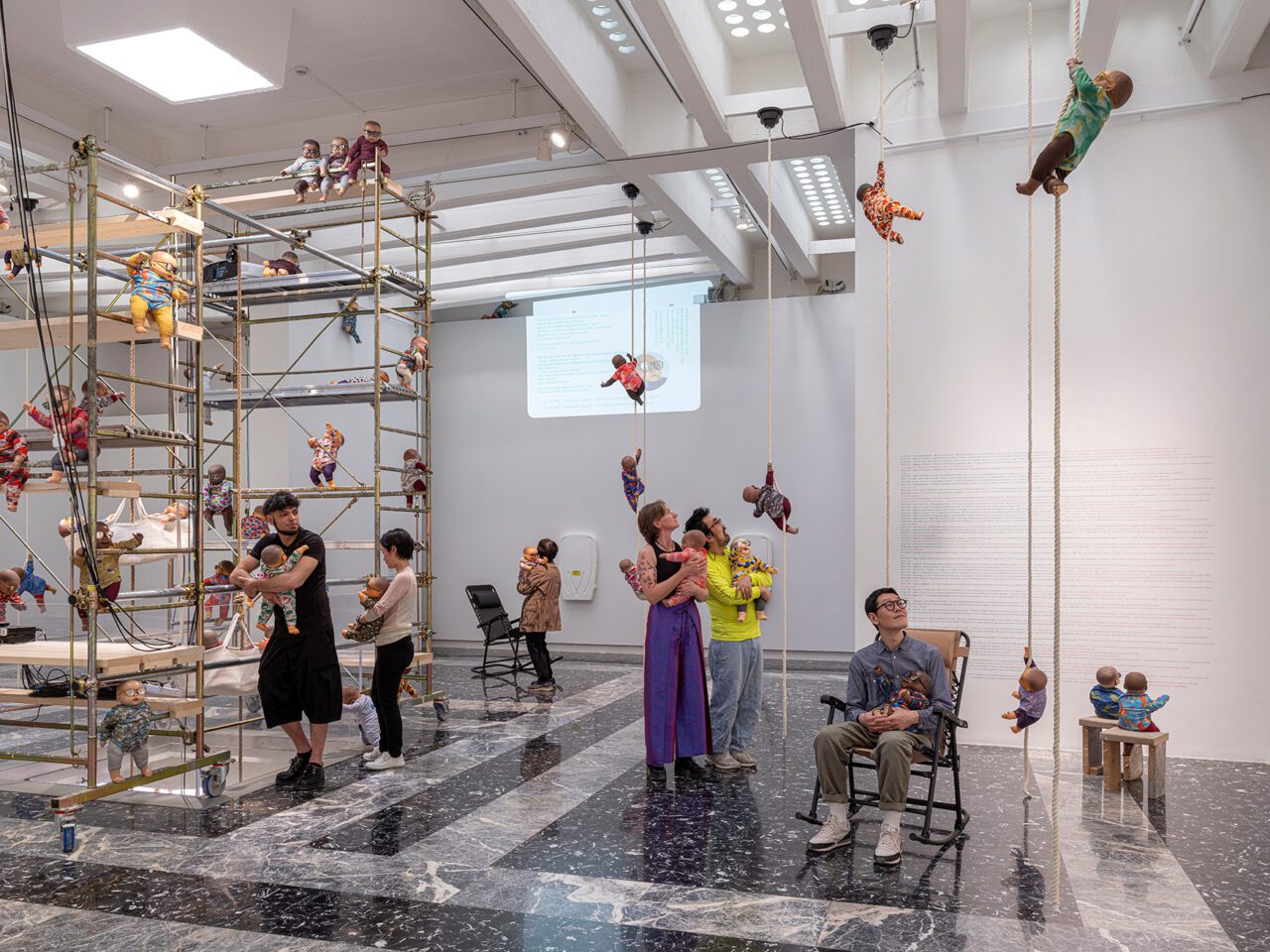
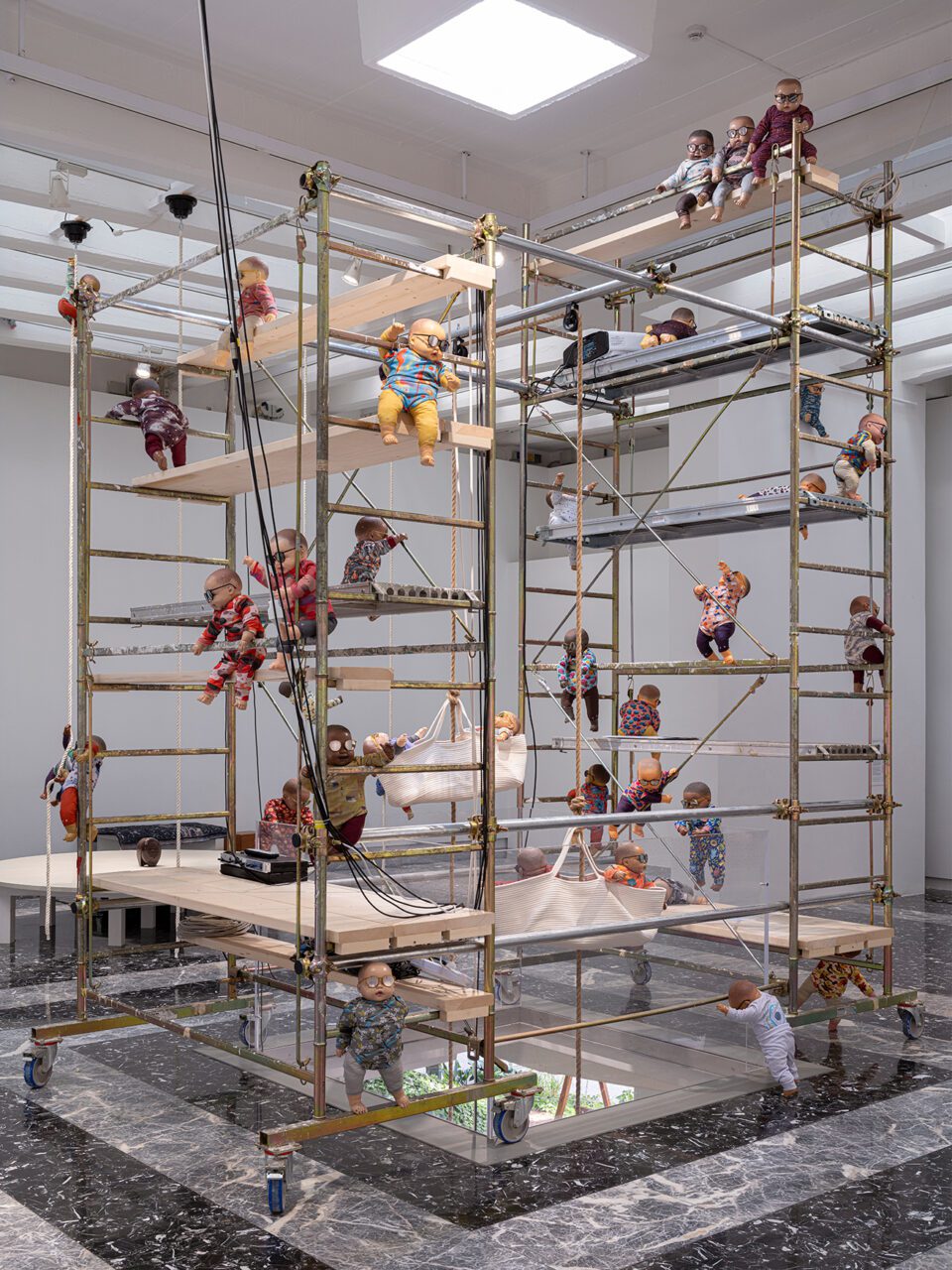
The emotional labor of parental care is the main subject of this year’s Japan Pavilion presentation, Grass Babies, Moon Babies, where Japanese‑American artist Ei Arakawa‑Nash facilitates a social experiment of sorts, based on his recent experience as a new parent. Two hundred and eight sunglass‑clad baby dolls—crafted in a range of ethnicities and weighted similarly to real babies—are available for visitors to hold, care for, and carry throughout the pavilion grounds. It is one of the few artworks that engages audiences directly; without their participation, the work wouldn’t exist. Upon changing a baby’s diaper, visitors find a QR code that, when scanned, yields a poem about that particular baby. Quirky, and some might say gimmicky, but Grass Babies, Moon Babies was among the more memorable presentations in this year’s biennale.
Japan Pavilion, Giardini; May 9 – November 22, 2026
Editor
Aaina BhargavaCredit
Lead Photo: Uli Holz