

For a true creator, it is a rhythm that comes from deep within the heart; fashion is about memory, belief, and a response to the world. The history of fashion stretches back thousands of years, from simple garments born merely to cover the body to a philosophy of dress that encompasses culture, art, and ergonomics. Today’s fashion reflects people’s emotions and lives more directly than ever. It can be the memory and commemoration of our most intimate feelings, a declaration that speaks for all living things, or a suit of armour that awakens our inner strength.
This year, CENTRESTAGE returns under the theme “Rhythm of the Heart,” reawakening fashion within this concrete jungle. Ahead of the event, VOGUE Hong Kong invited the founders of three contemporary designer brands from Hong Kong, South Korea, and Japan — Kev Yiu, VEGAN TIGER, and MEKKI — to share how they listen to the inner rhythm of their creations, respond to life through clothing, and shoulder the responsibilities that fashion now carries. From couture craftsmanship to sustainable practice, from cultural heritage to self-reinvention, their answers offer a true and moving portrait of contemporary fashion.
Kev Yiu
Many in Hong Kong are familiar with the name Kev Yiu. Kev graduated in 2006 with three distinctions from a fashion and clothing design programme in the United Kingdom, and went on to found his first couture brand, Sovereign Romance, which was formally renamed KEV YIU Couture in 2013. With his insight into the female form and a relentless pursuit of luxurious detail and exquisite embroidery, Kev has earned numerous accolades including the Ten Outstanding Designers Award in 2014 and the WHOW Hong Kong 2016 Craftsmanship Award. He co-founded bridal label KEVOLIE with renowned actress Myolie Wu, joined hands with Hins Cheung to revive French heritage brand Sennet Frères, and in 2021 became the first designer in the Asia-Pacific region to receive official Disney authorisation to create couture collections for all 14 princesses.
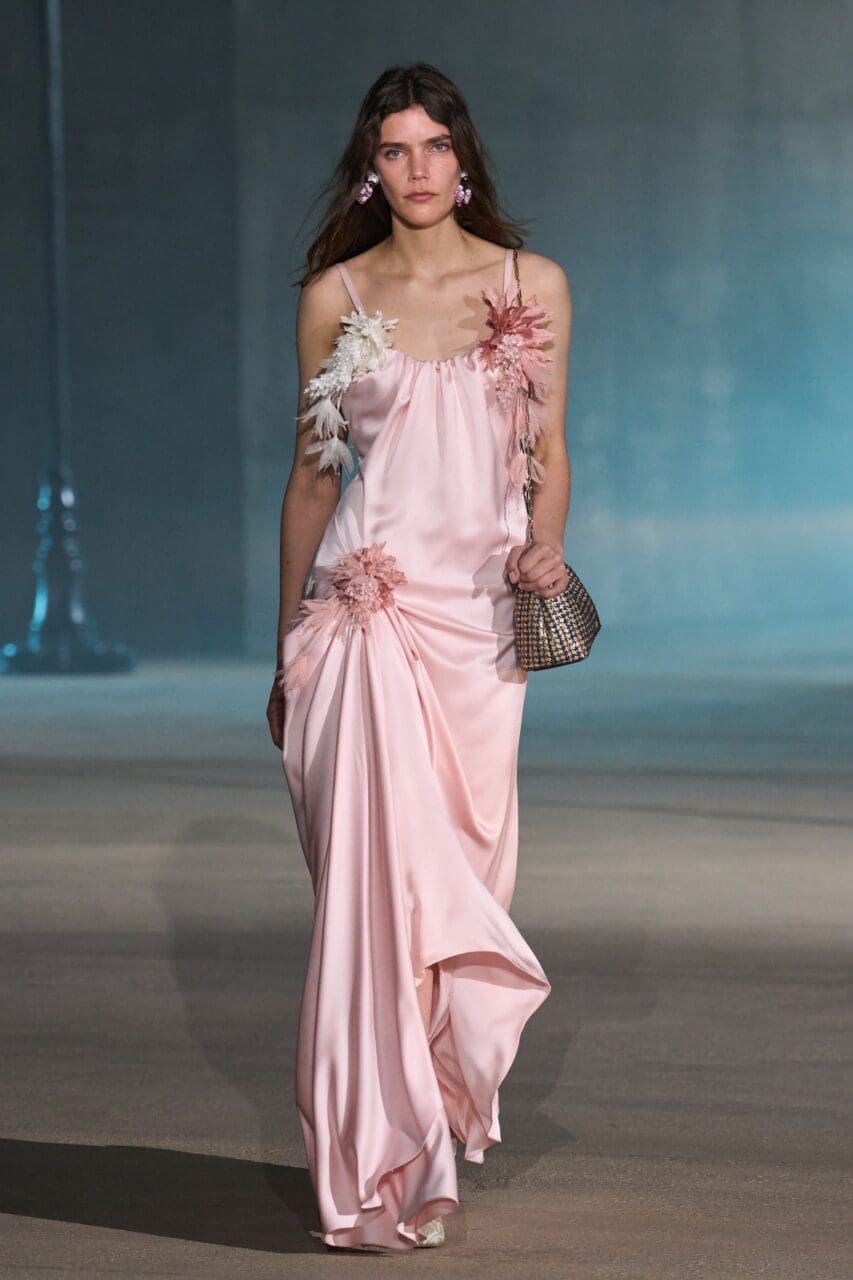
This year, in answer to the 2026 CENTRESTAGE theme “Rhythm of the Heart,” Kev presents “Inherited Silhouettes”, a collection that expresses longing and recounts his most intimate emotions. He transforms menswear elements from the 1970s and 80s into womenswear silhouettes, combining them with his signature fluid lines and masterful tailoring—all in memory of his father, who passed away this February. Kev has poured his heart into the collection, personally overseeing every stage of the design and production himself. Beyond expressing his feelings, how does he view his creative vision as it oscillates between international and local perspectives? How does he interpret what it means to be a Hong Kong designer? After reading this piece, each of us will surely have our own answer.

This year’s CENTRESTAGE theme is “Rhythm of the Heart.” How did you interpret this theme, and how did you prepare for your CENTRESTAGE presentation?
For me, “Rhythm of the Heart” symbolises listening to my heart and following my own stride as a designer. The collection I’m presenting at CENTRESTAGE this time is called “KEVYIU – Inherited Silhouettes”, a collection created especially in memory of my father, who passed away this February. In terms of design, I drew on menswear elements from the 1970s and 80s, transformed them into womenswear, and incorporated my signature fluid lines as a tribute to my father. From concept design to sewing and construction, the entire collection was personally completed by me.


You’ve collaborated with Disney on an official couture collection and taken part in reviving the French heritage brand Sennet Frères. Have these collaborations also shaped your vision and your way of creating?
Collaborating with Disney on an official couture collection was an unforgettable experience. Obtaining Disney’s authorisation in the couture field requires passing extremely rigorous reviews by the art department at Disney’s US headquarters. I felt incredibly honoured and flattered to become the first designer in the entire Asia-Pacific region to receive the copyright to all 14 princesses.
How do you think the fashion designers nurtured in Hong Kong differ from those in other international metropolises like London, New York, and Shanghai?
I graduated in the UK, so I have a deep appreciation of the differences in design education between Hong Kong and the UK. The British education model places greater emphasis on practical experience, requiring garments to be sewn by the designer themselves. Hong Kong, by contrast, places more emphasis on commercial results and market acumen. As a result, designers nurtured in Hong Kong often show stronger advantages in brand management, commercial operation, and the ability to survive in the market.


VEGAN TIGER
As the relationship between fashion and the environment becomes an increasingly important issue of our time, how should today’s designers shoulder this responsibility? Founded in 2015, VEGAN TIGER is South Korea’s first vegan fashion brand to champion the cruelty-free cause. Through clothing, the brand tells stories of life and coexistence, conveying its core philosophy of “Strength & Tenderness” through original art, refined silhouettes, and a contemporary design language.
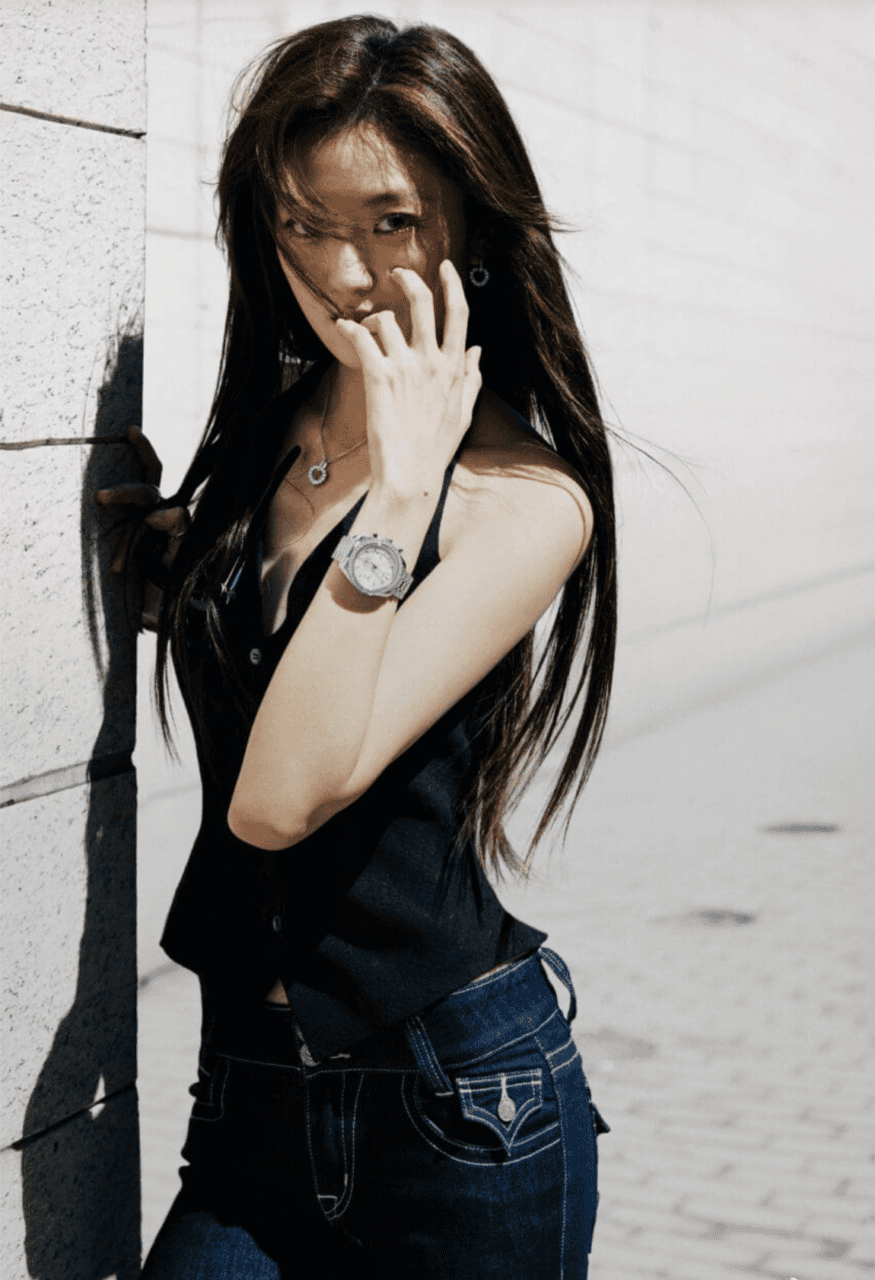
VEGAN TIGER upholds cruelty-free production principles: None of its products use materials or ingredients of animal origin, and the production process involves no animal testing—a stance that has given the brand prominence in the fashion industry. The brand collaborates with a local Korean materials company to develop its signature “Hanji Leather,” fusing Korean cultural traditions, contemporary fashion aesthetics, and social environmental awareness. Its use of waterless digital printing, recycled and biodegradable materials, and plastic-free packaging all serve to reduce environmental impact across every aspect of design and production. VEGAN TIGER’s all-female operation, its dedication to protecting the environment, and its diverse mixing of materials and colours are all key to the brand’s appeal.

VEGAN TIGER is best known for its strong commitment to sustainability. Could you briefly introduce the brand’s signature eco-friendly technologies? What has been the biggest challenge in developing sustainable materials and how have you overcome it?
VEGAN TIGER is more than a brand that simply avoids animal-derived materials. We are constantly exploring ways to reduce fashion’s impact on the environment and all living beings.
One of our signature innovations is Hanji Leather, a material inspired by Hanji, traditional Korean paper. It is created by weaving mulberry fibers—the primary raw material used to make Hanji—with nylon to form a base fabric, which is then laminated. The result is a lightweight material with natural antibacterial and deodorizing properties. Unlike conventional synthetic leather, its coating does not easily peel over time, allowing products to maintain their quality and last much longer. I believe that creating products with a longer lifespan is, in itself, an important part of sustainable development.
In addition to Hanji Leather, we actively incorporate organic cotton, recycled polyester, and recycled nylon into our collections. We continuously strive to make better choices, not only in the materials we use, but also throughout our production process.
The biggest challenge is that sustainable materials are still less accessible and significantly more expensive than traditional alternatives. Achieving the right balance between quality, design, and production efficiency whenever we introduce a new material is never easy.
However, I have always believed that sustainability should never come at the expense of design. Through countless rounds of testing, experimentation, and close collaboration with our manufacturing partners, we have continued to develop better solutions. Even if it requires more time and greater costs, I believe that creating better materials and more responsible production methods is the most meaningful investment we can make for the future of our brand.


VEGAN TIGER is made up entirely of women. What inspired you to build an all-female team? What is it like working in a team built entirely of women?
Building an all-female team was never part of a deliberate plan. As the brand grew, people who shared similar values naturally came together, and that is how our team evolved.
I believe great design is never created in isolation, but rather it is born in an environment characterised by freedom, openness and mutual exchange. Our team has built a culture of mutual respect, where everyone is encouraged to contribute their perspective. We constantly exchange ideas and have grown together through that process.
What matters most to me is not having a female-led team itself, but fostering a culture that embraces diversity. Moving forward, I hope to continue working with people who share the same vision, regardless of gender or background. I believe that a workplace where people respect one another and are free to express their individuality ultimately creates a stronger brand.
The fashion industry continues to generate significant waste and pollution. Is it paradoxical for fashion brands to advocate for environmental protection? Why is it so important for fashion to place emphasis on sustainability and environmental protection?
I don’t see it as a paradox. On the contrary, I believe fashion brands have an even greater responsibility because of the influence they hold. Fashion shapes the way people live and consume. A brand does more than create clothing—it can influence what people value and the choices they make. To me, sustainability is not about reaching perfection but continuously moving in a better direction. One collection alone cannot change the world, but choosing better materials, improving production methods, and designing garments that people can wear for years has the potential to create meaningful change across the industry.
VEGAN TIGER is built on the philosophy of “Strength & Tenderness”. I believe true strength is not found in dominating nature, but in showing compassion for all life and choosing to coexist with them. That philosophy is reflected in every aspect of our brand, from the materials we select and the designs we create, to the way we engage with the world.


MEKKI
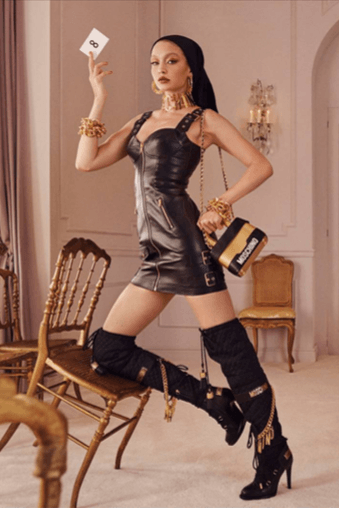
Founded by designer Hazuki Miyamoto in 2020, MEKKI unexpectedly centres its brand around “electroplating”. But this isn’t about a technical application to clothing, but rather a direct reference to the brand’s core essence: Electroplating is a structural surface treatment, but when you put on a garment crafted with such delicate skill, anyone can shine. Whether that plated layer flakes away or is applied anew, the wearer will only sparkle more. Behind this poetic vision lies Miyamoto’s wish to bring colour to everyone’s life through clothing. The brand upholds the craft traditions of Japanese manufacturing, creating a distinctive tension between the sweet and the sharp through bold silhouettes and exquisite details.
In this CENTRESTAGE presentation, MEKKI shares with us the pivotal moments of the brand in finding its own rhythm, its observations on the diversity of Asian fashion, and how, within Japan’s conservative market, independent designers find a balance between staying true to their aesthetic and expanding commercially.

What is the significance of a platform like Hong Kong’s CENTRESTAGE mean for independent designers? As a Japanese designer, has this trip to Hong Kong also deepened your understanding of Asian fashion?
CENTRESTAGE is an incredibly vibrant platform that allows us to directly connect with discerning buyers and media from around the world, showcasing the true value of our craftsmanship. Presenting our collection in Hong Kong—a dynamic city where diverse cultures and passion converge—allows me to view our design perspective through a global lens. I believe this participation will deeply enrich my understanding of the sheer diversity and vibrant momentum of contemporary Asian fashion.
Your brand is named “MEKKI”, meaning electroplating. Why did you choose this name? And how would you describe the image of womanhood you want to create?
The name “MEKKI” reflects the idea of adorning oneself with a radiant outer layer—not a superficial coating that peels off, but an armour that draws out one’s inner strength. Built upon exceptional Japanese craftsmanship and tradition, our design language elevates effortless casualness into high-quality mode luxury where “sweetness” and “sharpness” coexist in harmony.
The woman I aim to portray through MEKKI is confident, resilient, and unapologetically independent. I want her to step into her own power, discover a proud confidence through our garments, and transform her daily life into a bold, sophisticated stage.

The theme of CENTRESTAGE is “Rhythm of the Heart.” When do you think MEKKI found its own rhythm? As an independent designer, what is the greatest challenge you face in the Japanese market?
MEKKI found its distinct “rhythm” the moment we decided never to be bound by fleeting trends, choosing instead to stand firm in our own beliefs. Rather than blindly following mainstream trends, we began persistently pursuing the exquisite contrast between sweetness and sharpness at our core. When uncompromising craftsmanship and bold silhouettes merged with our philosophy, the brand’s heartbeat began to truly resonate.
As an independent brand, our greatest challenge in the Japanese market is remaining steadfast in our philosophy within a conservative, trend-driven landscape, while balancing a fiercely distinct aesthetic with enduring luxury. Rather than catering to the mass market, our ongoing challenge is finding out how to scale our business while nurturing deep, meaningful relationships with our dedicated clientele.


Editor
Ke WuCredit
Photo: Courtesy of Kev Yiu, VEGAN TIGER, MEKKI