

Inspired by the rejuvenation of springtime and the anticipation of Hong Kong’s art month, this food feature brings together the artful creations of 3 restaurants that have incorporated floral motifs into their diverse dishes.
Ébauche
Hong Kong-born up-and-coming chef Antonio “Toni” Au sets off on his first solo venture, using French techniques to express his interpretation of Asian flavours. He carries with him his rigorous training at three-Michelin-starred El Celler de Can Roca in Spain, and the teachings of his mentor Maxime Gilbert, with whom he worked at the now-shuttered French two-starred Écruciture in Hong Kong. “We’ve noticed that many diners today are gravitating towards more relaxed dining experiences, often finding traditional tablecloth fine dining too formal and stiff,” Chef Toni observes. “At Ébauche, we position ourselves as a casual fine dining restaurant, while everything on the plate adheres to a fine dining standard.”
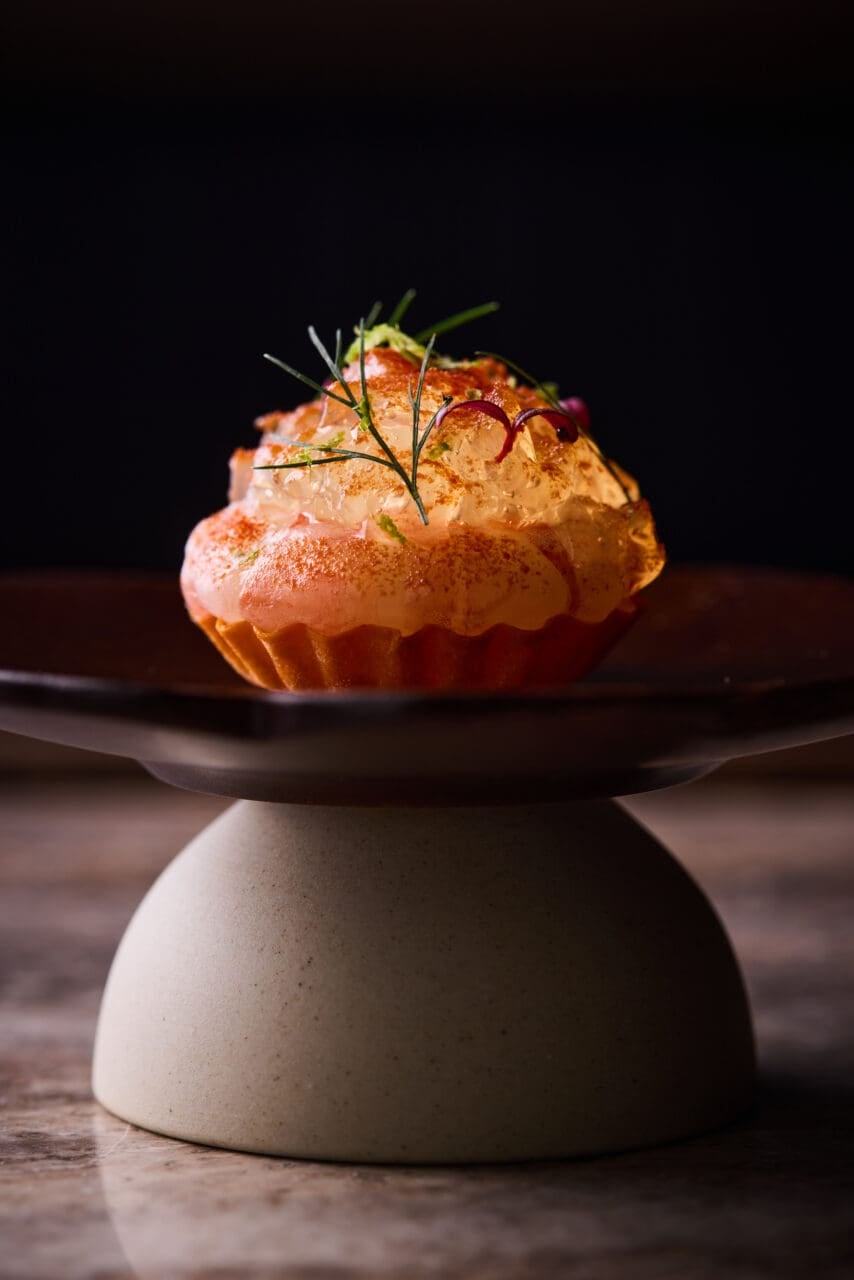
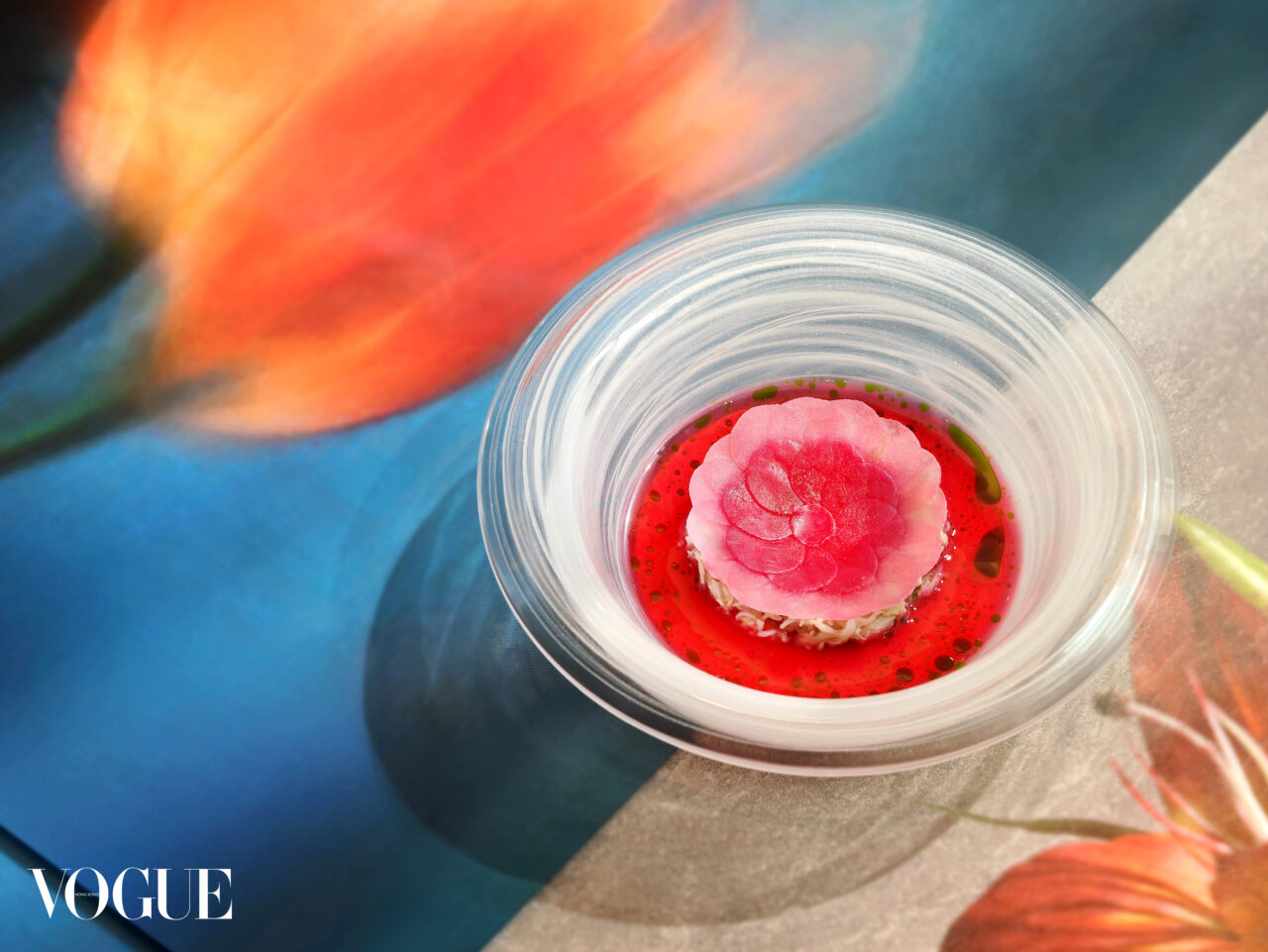
The Snow Crab course exemplifies Chef Toni’s culinary philosophy by highlighting Asian flavours through French techniques. Through layers of flavour and texture, Chef Toni imbues the dish with elements of surprise. The base is a dill panna cotta, providing a creamy, herbal foundation. On top of that is snow crab meat mixed with a rich, umami-packed crab mission. This is crowned with thinly sliced beetroot that resembles a flower. The dish is submerged in a bell pepper and beetroot extract that takes a crucial technique passed down from chef to chef, and finished with a drizzle of dill oil. Chef Toni learnt this specific beetroot extraction method from Chef Maxime Gilbert, who in turn learned it from his mentor, Chef Yannick Alléno, who is renowned for his revolutionary extraction techniques and modern sauces. The beetroots are steamed slowly overnight, maximising flavour extraction through a gentle and prolonged process, while ensuring the resulting consommé remains perfectly clear. To intensify the natural sweetness of the bell pepper and give it a subtle hint of caramelisation, the bell peppers are lightly charred before extraction. “Ébauche, as my first independent restaurant, marks the start of a new path where I step out from my mentor’s wing,” Chef Toni reflects. “As I grow as a chef, Ébauche evolves with me. My goal is for this initial underpainting to mature into a masterpiece.”
18/F, Aura on Pennington, 66 Jardine’s Bazaar, Causeway Bay; @ebauche.hk
Yurt
Yurt gallops into the Hong Kong dining scene as one of the first modern Central Asian restaurants the city has ever witnessed. When co-founders Ali Nuraly and Xeniya Tregubenko approached Chef Marat Zakarayayev for the position, Chef thought it was a prank because of the novelty of this idea. Yurt’s dishes are rooted in tradition, but infused with modern elements, and Chef Marat feels a great sense of responsibility to represent the cuisine well. “It’s all about clarity, respect, and that spark of discovery,” he says.
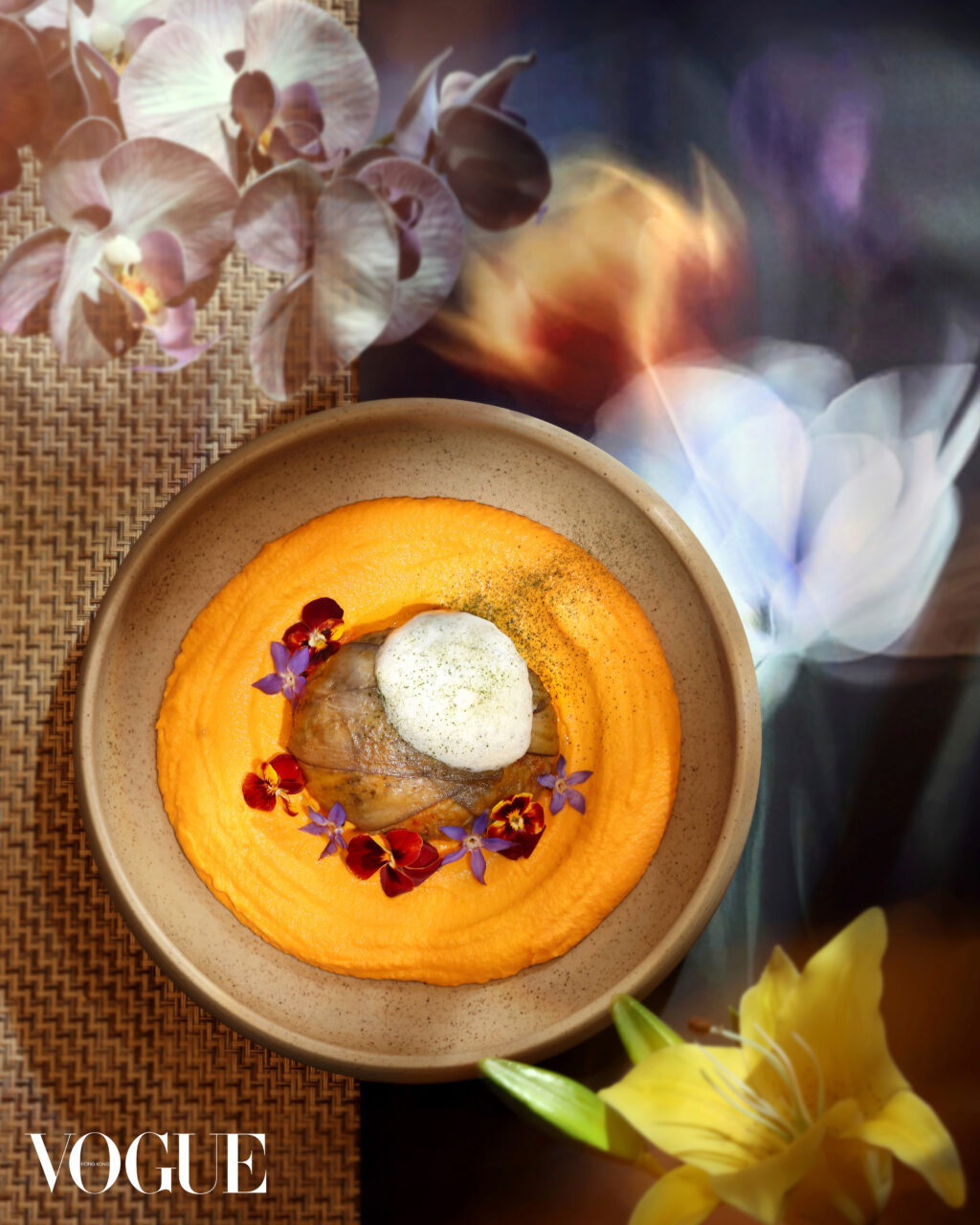
Dolma is one of Azerbaijan’s national dishes. Meaning “stuffed” in Turkish, the dish exists in multiple variations across the Middle East, the Caucasus, and the Mediterranean. At Yurt, this Azerbaijan version highlights the vegetables cultivated across Central Asia. The baked eggplant stuffed with vegetables rests on top of a bed of carrot paste. “Making dolma is deceptively simple,” Chef Marat Zakaryayev says, noting the precision required to bake the delicate eggplant wraps. “It really makes you appreciate how easy it was to take for granted our grandmothers’ cooking.” On top of the dolma is a cheese foam made with qurt, a traditional Central Asian dry cheese made of fermented milk, with a slightly salty tang. “Dolma serves a greater purpose: it quietly challenges a persistent stereotype.” Founder Ali Nuraly says. “While Central Asian cuisine is often perceived as overwhelmingly meat-heavy, Yurt’s dolma highlights a different, equally vital tradition – one centred around harvests and celebrating vegetables at their peak.”
G/F, 32 Elgin Street, SoHo, Central; @yurt.hk
Ta Vie
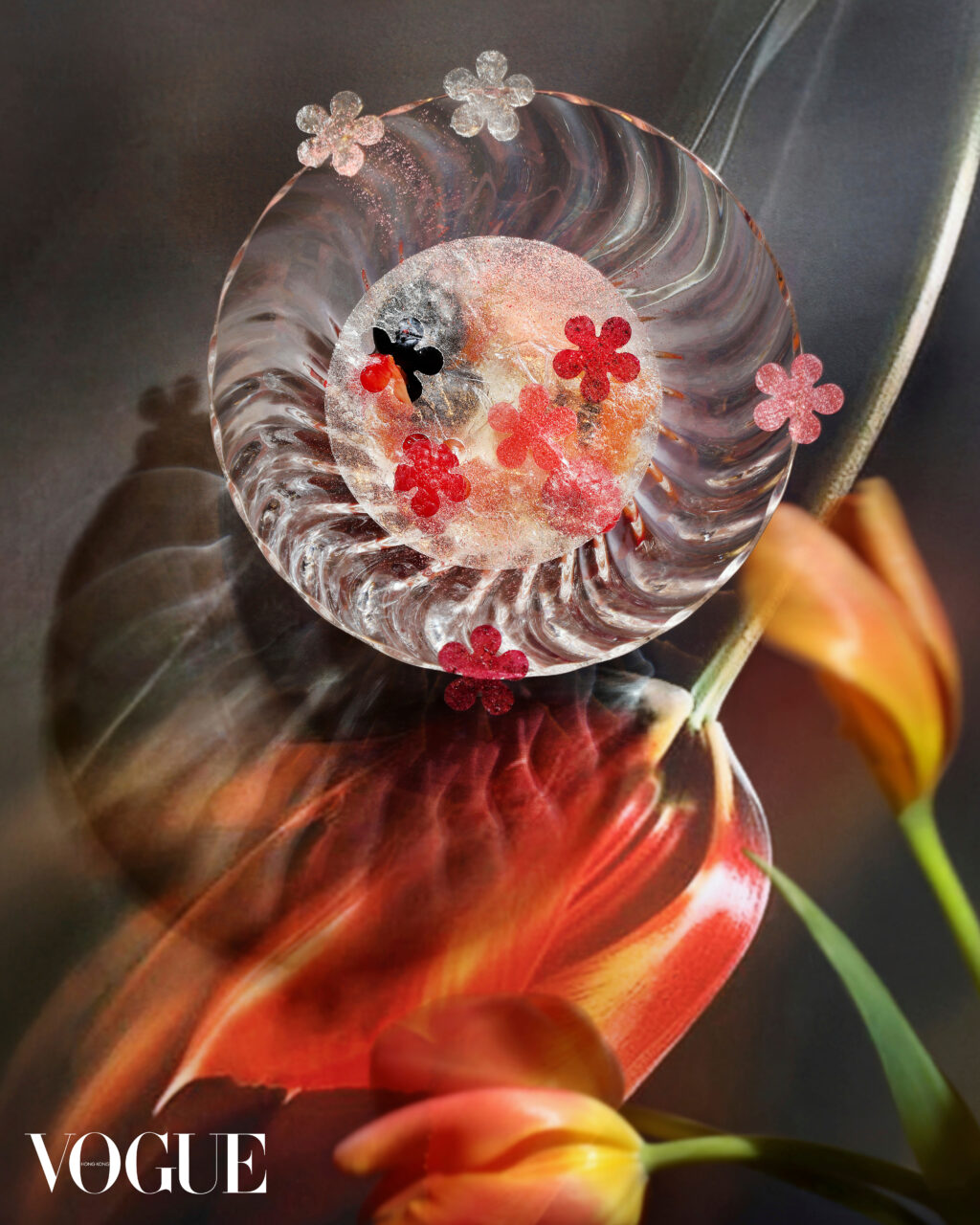
In Chef Hideaki Sato’s words, Ta Vie is “not your typical Michelin-starred restaurant”. His wife, Hiromi Takano, and he co-founded the restaurant in 2015, with her taking the helm as the sommelier. He says that Ta Vie has a “cosy and comfortable” atmosphere, as he manages with a small team of nine front-of-house staff and six chefs. “Not enough,” Chef Sato says with a laugh. He ideates everything on the menu, which are not “not luxurious and fancy”, but fresh, flavourful, and seasonal courses that reflect his two culinary backgrounds—French and Japanese cuisine. Chef Sato worked in French kitchens for over 10 years before stepping into Japanese fine-dining at Tokyo’s 3-Michelin-starred Japanese restaurant, Nihonryori Ryugin. From Japanese cuisine, he takes its purity of ingredients and simple expressions, applying these perspectives to French food.
This bespoke dish reminds Chef Sato of a flower bouquet, bursting with fresh aromas and vibrant flavours. Different states of fruits come together in one dish—fresh, jam, and candied—creating layers of sweetness and depth of flavour. White strawberry, raspberry and blueberry bring sweetness and fresh acidity, while blood orange and bergamot bring to the fold a vivid fragrance and tang. The flavours meld with a yoghurt whey sorbet at the base of the dish, striking a balance. Typically, Chef Sato doesn’t put edible flowers in his dishes, but created delicate chips for this one—the red bursting with raspberry, and the blue made of blueberries. “My idea presentation is similar to good design. A well-designed car must be beautiful in appearance, and still very comfortable to drive in,” Chef Sato says.
2F, The Pottinger Hotel, 21 Stanley Street, Central; @ta_vie_hk
Photography: Samantha Sin
Styling: Ella Wong
Editor
Karrie Lam