

Humans have collected since the beginning of time. Initially as resources for survival and then later as surplus for trade and a wealth reserve. Collecting evolved to also be a way of finding community and establishing connections, though such meaning can often feel lost in today’s world. But amidst the flurry of art toys and blind boxes that have become symptoms of today’s almost capitalist malaise (this is a mere confession, not an attack), there are collections like Chris Hall’s that feel inherently necessary.
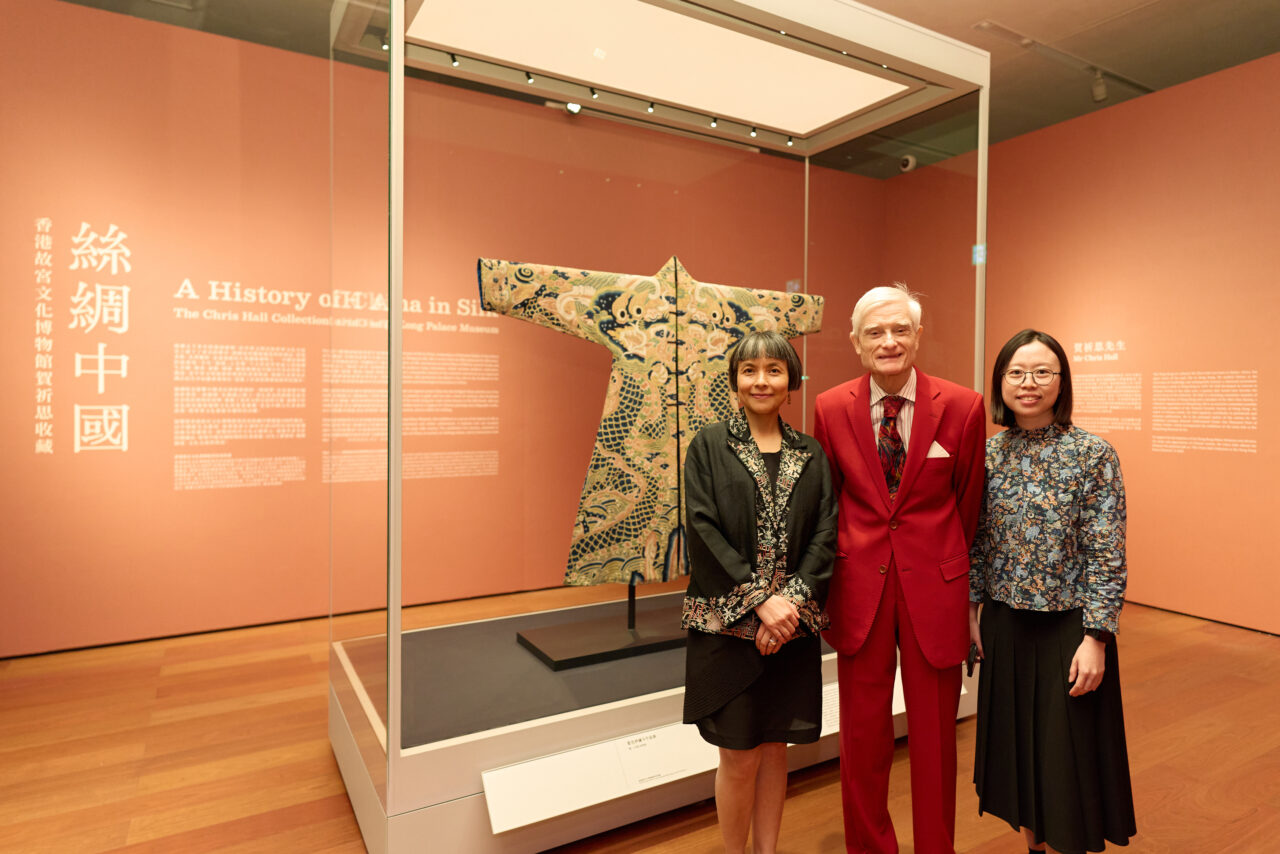
Chris Hall at the media preview of "A History of China in Silk: The Chris Hall Collection at the Hong Kong Palace Museum" with Dr Daisy Wang and Sum Yin Yau.
Photo: Courtesy of Hong Kong Palace Museum
With an estimated 2,500 to 3,000 pieces, the Hong Kong-based British collector has amassed a personal trove of Chinese textiles that stands among the most comprehensive and significant in the world. Last December, he offered a promised gift of his entire collection to the Hong Kong Palace Museum, and eventually, his apartment on The Peak where they are kept. Currently, just over 100 of these treasures dating from the Warring States period to the early 20th century are displayed in an ongoing exhibition at the museum titled “A History of China in Silk: The Chris Hall Collection at the Hong Kong Palace Museum”. Teeming with imperial Chinese robes, Buddhist thangka paintings, and rank badges swirling with colour, the exhibition is truly magnificent, but what we are seeing is but a mere fraction of what Hall owns.
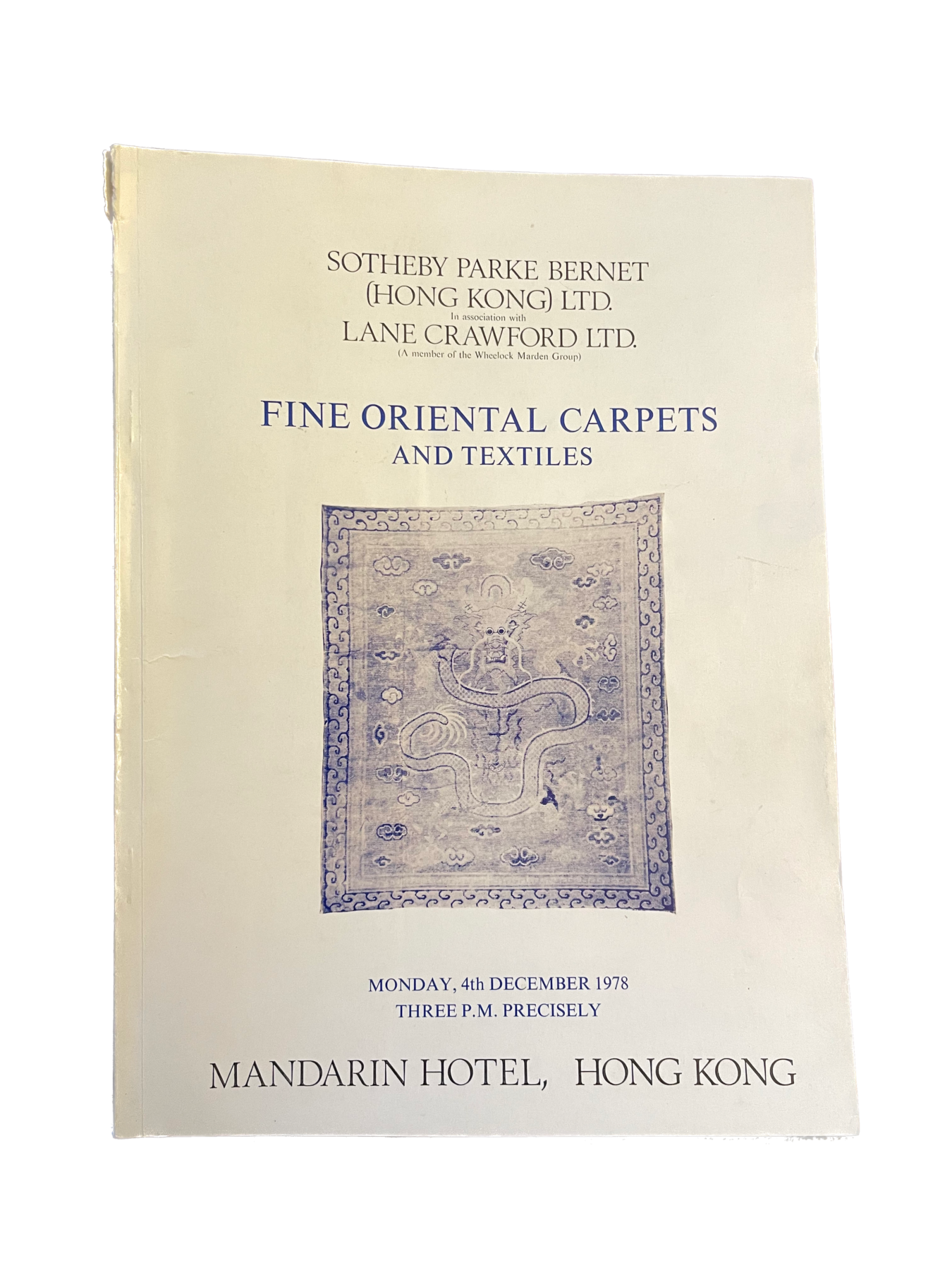
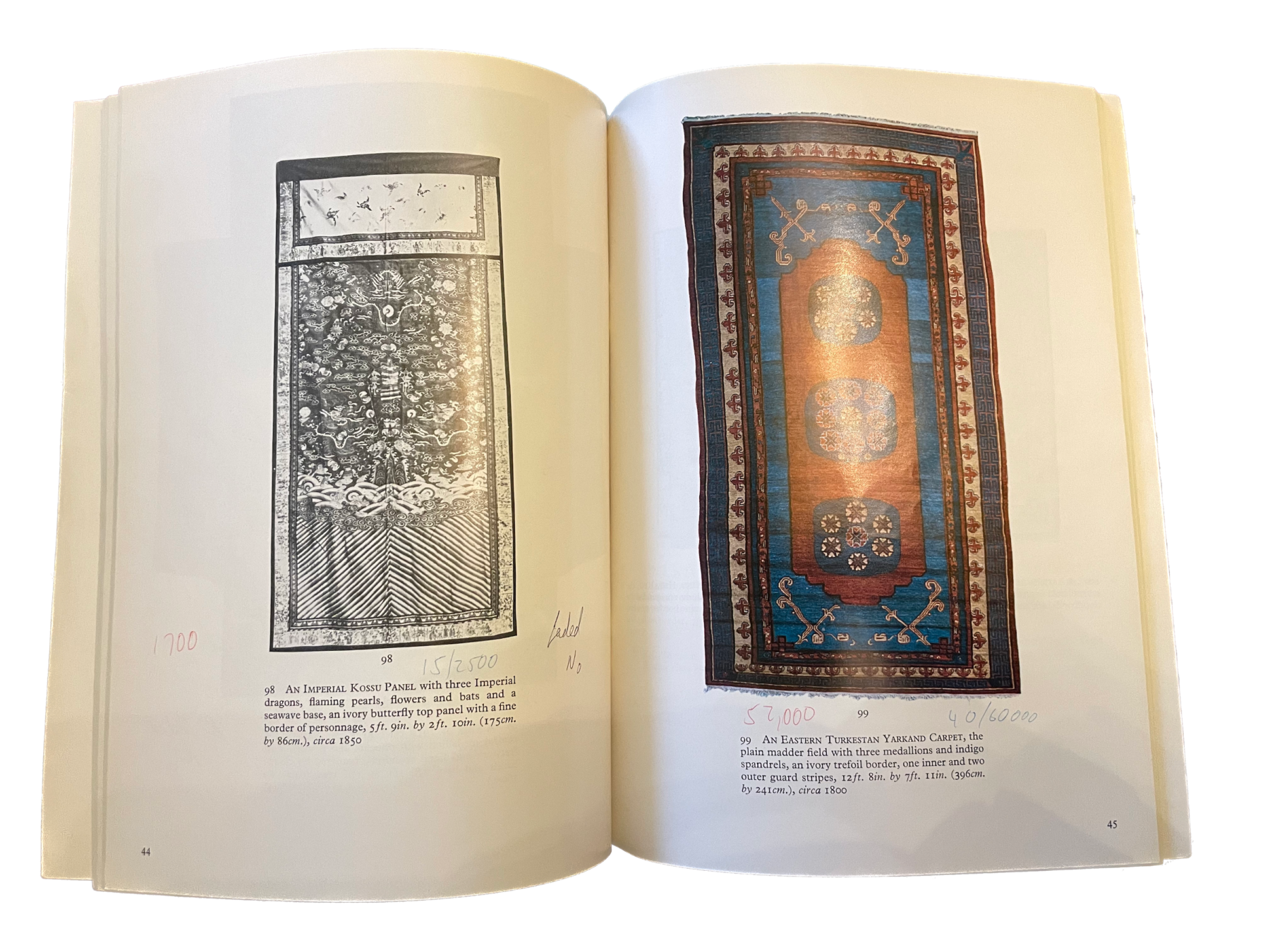
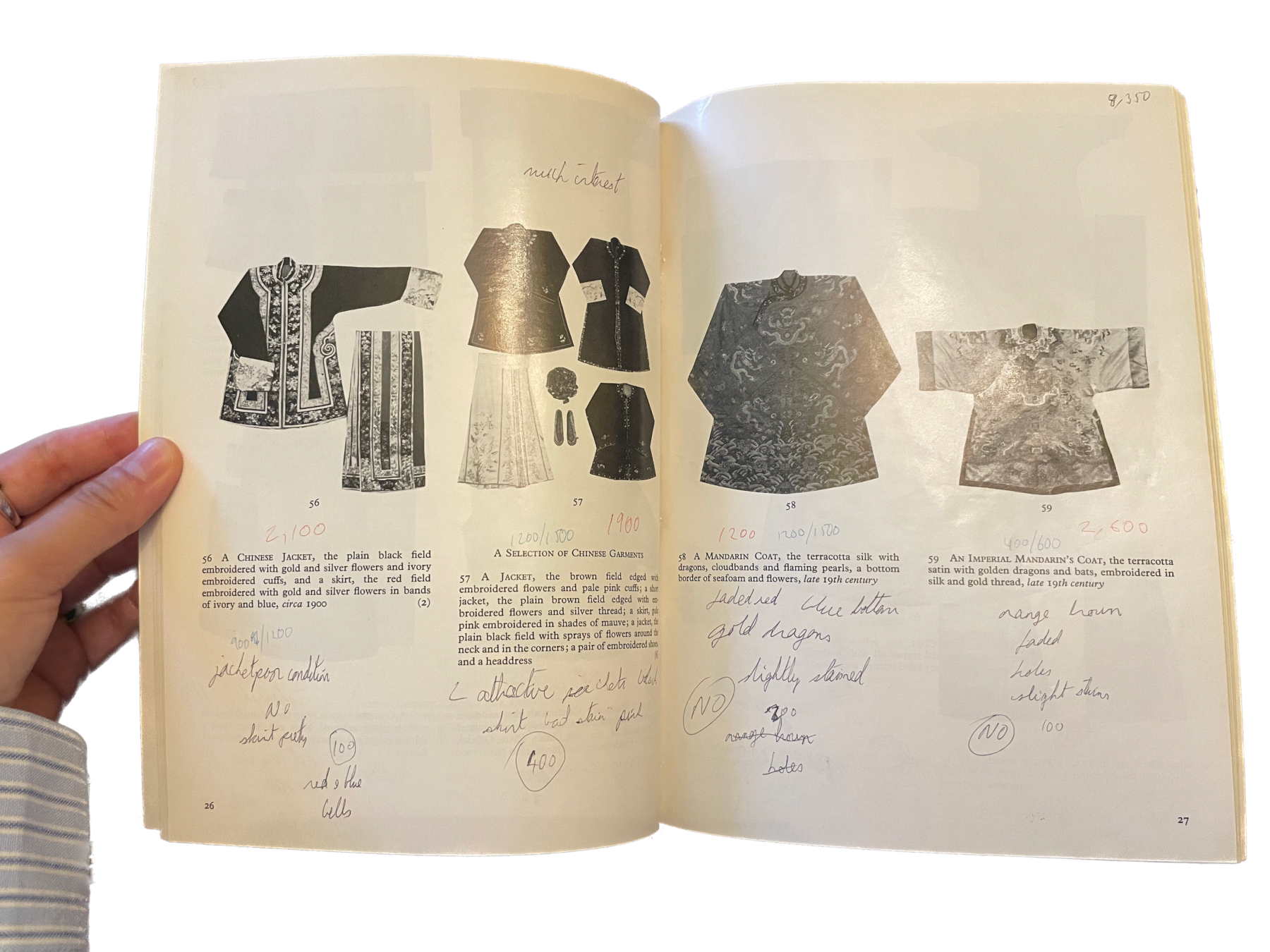
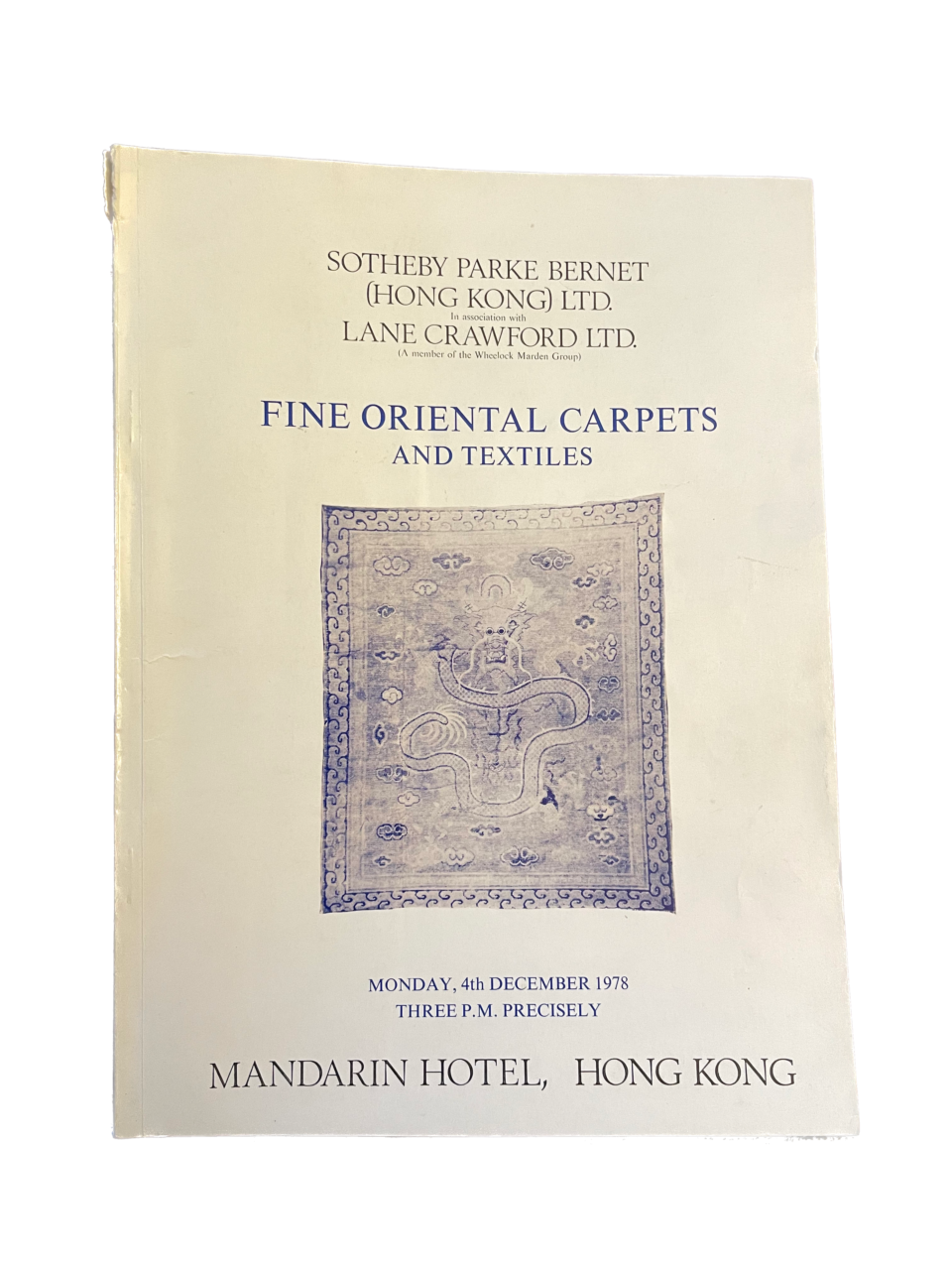
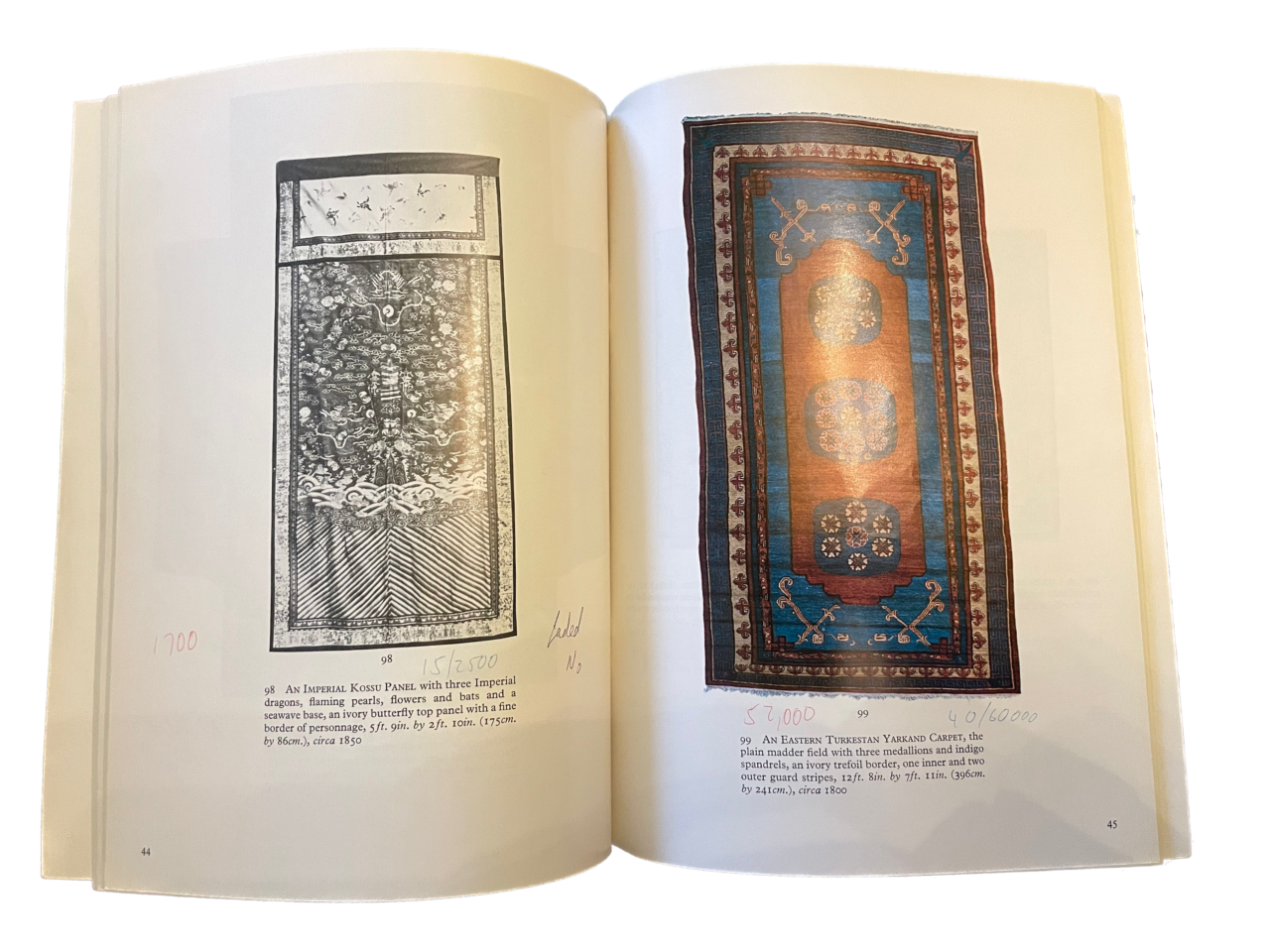
Before he became a prominent collector, Hall was once a 26-year-old qualified accountant with no knowledge of Chinese textiles. It was 1978, and he had journeyed from his office in Prince’s Building to the Mandarin Oriental hotel where Sotheby’s was hosting a viewing of Chinese carpets and textiles. He caught a glimpse of a robe and, in his words, “a new world”. “I saw these beautiful Chinese textiles, the dragon robes—it was love at first sight,” he recalled. “My salary then was only HK$4500 a month, which didn’t leave much for buying, but that’s what sparked my interest.” While Hall didn’t actually buy anything that day, he walked away with a newfound calling, and an auction catalog which he has kept in pristine condition ever since.
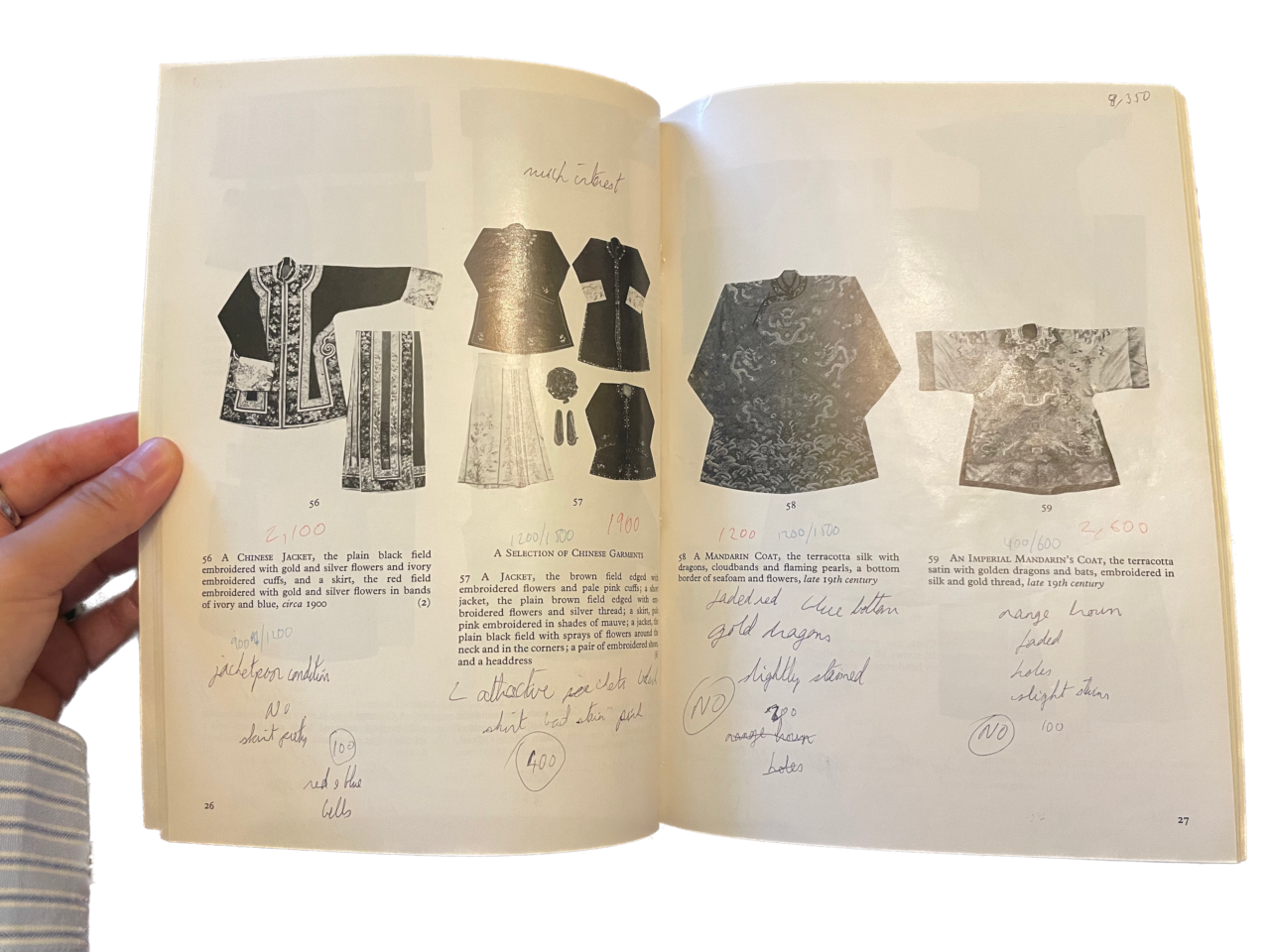
I often feel as though adults are just children with money, and the hobbies they pursue can consistently be traced back to their childhood. Such is the case with Hall, whose early years were incredibly worldly, spent between Hong Kong, Nigeria, Sierra Leone and Malta, before finally settling down in Hong Kong as a teenager. Because of this lifestyle, it was difficult for Hall to establish relationships with other children his age, and while he didn’t necessarily feel like an old soul he says, there was no resonance to be found within his comparatively unbecoming peers. “I went to an all boys school. I will tell you that there are few less civilized companions than boys in their early teens,” he said half-jokingly. “I could well believe that girls in their early teens are also not very civilized, but I have no personal experience.”
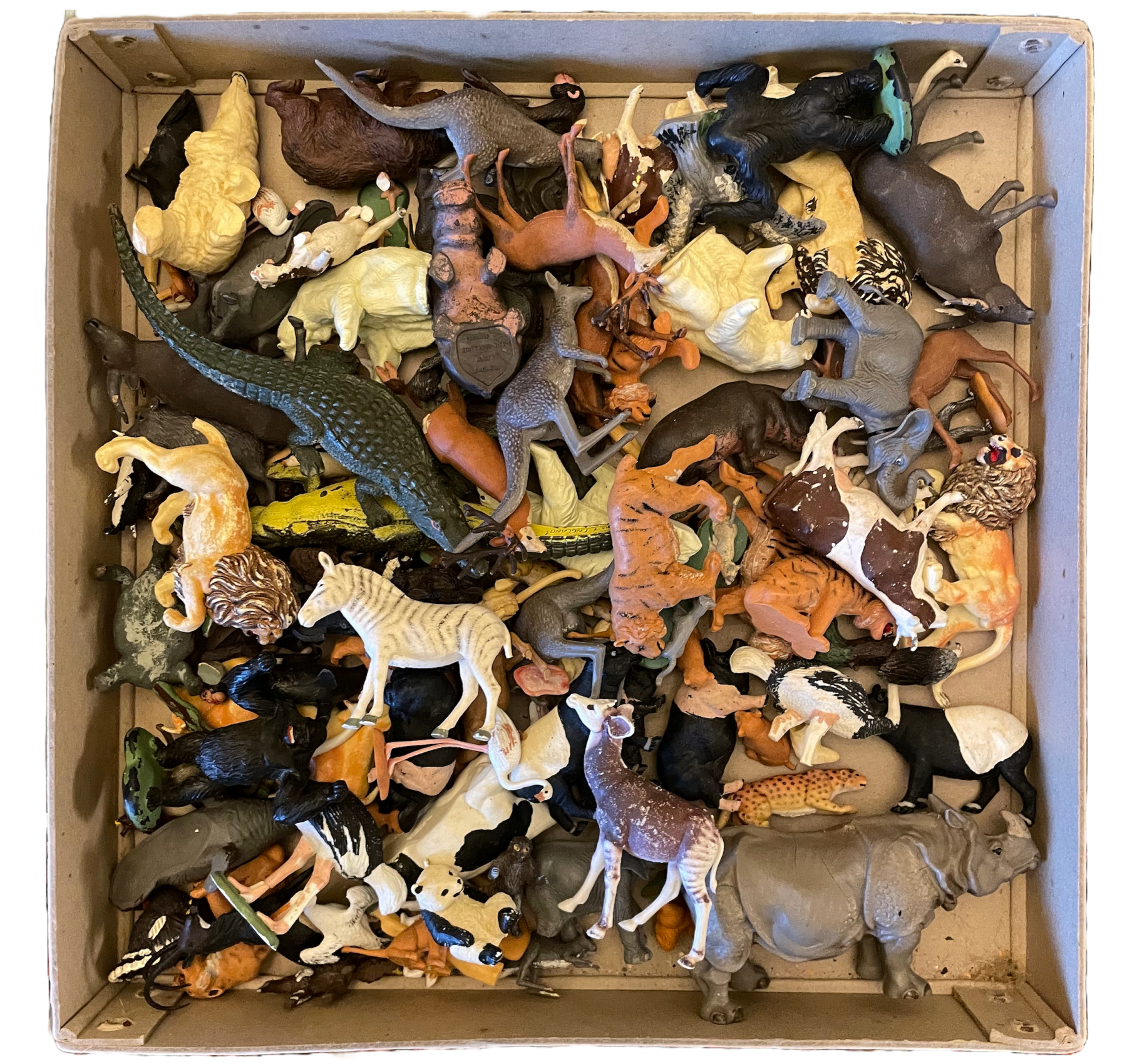
An only child, Hall was far less interested in people than he was in old castles and history. But his first collection was not, in fact, ancient Chinese textiles. His earliest memory of collecting goes back to a family vacation in America. “I remember one holiday in Jersey, where I started to collect plastic cocktail sticks that were put in drinks by the hotel. They were different colours and some had the shape of the Jersey island on it,” he shared. But this was merely a passing fancy. Throughout his youth, Hall’s biggest appetite was for Britains zoo animals.
“I think I was given some little soldiers, but I’ve never been very violent. I’ve never been a big boy, so I was inclined to lose fights; one quickly learns to avoid violence in those circumstances. Then I had some farm animals, but I moved on to zoo animals—there was greater variety.” He fondly recalls his buying routine as a child, mulling over decisions not too far from the ones he would be making later on. “The highlight of the week was the visit to the nearby town where I could go to a toy shop and I could spend my money on plastic zoo animals. There, I had the normal agonizing decisions of a collector of what to choose. Should I spend all my money on the largest plastic zoo animal, the elephant? Or should I instead buy the cute little lion cubs and the lioness, or the lovely little panda, or the okapi with its striped bottom?” I asked if he ever got around to buying that elephant. “Oh yes! In fact, by the end of my collection, I had a whole family of two elephants and two little baby elephants.”
“My uncle knew the owner of the company that made these animals and I was given a guided tour of the factory—the zenith of my childhood. While I was there, I saw a plastic elephant, and the guide asked, ‘Do you have an elephant?’ And I said yes, so I didn’t get it. I’ve regretted my honesty ever since.” One could say this was Hall’s first big miss as a collector.

At the media press conference for his exhibition at HKPM, Hall said that “You don’t succeed in collecting if you don’t put yourself in front of temptation.” With thousands of textile gems to his name, it is difficult to imagine that the accountant-turned-collector hardly ever says no. But the reality is quite the opposite. “I think collecting is really about making choices,” he later clarified. “There are very few collectors who can afford to buy everything—I certainly can’t.” He mentions some of his passes: a panel of Buddhas from the 13th century and a porcelain hat stand with Chinese reign marks that he had recently seen, and an early 19th century empress robe he laid eyes on in the ‘80s and can’t seem to shake from his memory. All were no-gos in terms of practicality and to an extent, quality.
In deciding whether an item is worth adding to his collection or not, Hall conducts a fool-proof assessment of every piece he encounters with something he calls the “wah” test. “The Cantonese of Hong Kong don’t need to be told what ‘wah’ means,” he said. “You can also call it the ‘wow’ test. If something says ‘wah’ to me, I will buy it!” For Hall, these include impeccably rare finds like the first dragon robe at his HKPM exhibition that dates back to the Warring States period, and oftentimes ornate Ming dynasty textiles that are distinguishable in their vibrancy. “The problem with earlier periods is that not so much has survived, and the colour isn’t so good,” he explains. “Whereas there’s some beautiful, very colourful Ming textiles which give me a lot of pleasure. I think it was partly the wealth in that the late Ming was a period of great prosperity.”
Hall is unabashedly a lover of beautiful things, of colour, and of intricacy. You can see it in the way he presents himself—a tailored cobalt blue suit and tie for this interview, a crimson red suit and perfectly colour-matched tassel loafers for his HKPM exhibition tour—and in his magnificent collection. Despite textiles’ susceptibility to wear, much of it has survived well over the years, and admittedly, condition is also paramount in Hall’s collecting criteria. “No matter how careful you are with your textiles, they will show signs of wear. The only way to keep textiles pristine is not to use them. It raises an interesting question in that if you get a textile which is stained with marks on it, if you can see they’ve spilt some soup on it, and somewhere a dog has caused a tear, should you keep it in its state so you can have the history of the piece? Or do you clean it up and repair it to try to make it look like it was originally?”
In offering his stand on the matter, Hall draws a parallel between these historic artefacts and himself. “Personally, I prefer to have things looking better. Certainly in my own case, if I’m presenting myself in public, I would not want to present myself dirty and disheveled, even if I had achieved that in a good cause by, say, playing some football, or say, diving into the water to save someone. So if the textiles have a soul, if they’re going to be presented, they’d probably like to show their best appearance.”
That being said, even an aesthete such as Hall himself can see that there is also value in the less visually appealing. “If I look at [collecting] in a more scholarly fashion, something should be rare, beautiful, in good condition, and old. But I also buy things that are not beautiful because I try to have a comprehensive collection.” Alongside impressive mythical embroidery and lustrous silks, Hall has a variety of simple, rather neutral funeral clothes, underwear, textile advertisements, and even wrapping paper of which most have become rather battered.

I think collectors are born. I would have always collected something.
Chris Hall
In the world of collecting, everything is worth something when you recognise the potential of a humble hobby to go beyond oneself. But that’s not to say Hall started out with the intention of assembling one of the world’s most important collections. “I think collectors are born. I would always have collected something,” Hall said. He believes it all comes down to an innate disposition and the magic of good timing. “I started to buy a few Chinese textiles, and then I realized there was a great opportunity to put together a wonderful collection because pieces were appearing on the market that had never appeared before.”
“When I started collecting, the only Chinese textiles you really saw were 19th century and a few 18th century pieces. If you had something from the 17th century that was very unusual and precious. As China opened up in the 1980s, a lot of Ming textiles started to appear on the market, and people saw things they’d never seen before. I acquired a lot of Ming textiles, but I never thought I’d go much farther. Then in the first decade of this century, pieces started to appear from the Tang, Han period. So my collection now goes back all the way to the Warring States.”
Hall’s personal interests have led him straight into a cultural mission, offering people the opportunity to study old clothes and textiles, and to see them within the context of the very country that bore them. While his collection is extravagant in more ways than one, he argues that it is exactly the reason for its indispensability.
“What I have is part of China’s heritage. Civilization is important, yes, but essentially, civilization is having things we don’t need. If you only have things that you need, you’re living a subsistence life of the peasant. I mean, we’ve gone far beyond that.” He smiled. “A knowledge of antique Chinese textiles is not necessary, but people have minds that like to be engaged. If we don’t use our minds on something, we stultify, we stagnate. Just like paintings are not necessary, but they give pleasure to people, and that is what I think my textiles will do.”
Editor
Alyanna Raissa J. PayosCredit
Lead image: Courtesy of Hong Kong Palace Museum