

Anthony Vaccarello has always understood that the best-dressed woman in the room is rarely the one dressing to please. For the past decade, she has stalked his runways in latex masquerading as eveningwear, made transparency look almost prim and arrived in gowns with just enough volume to make a Renaissance painting feel underdressed.
Since taking the reins in 2016, Vaccarello has built a distinct visual world around Saint Laurent’s most enduring themes: sex, power, the Parisian night, and the fine line between exposure and control. His woman can be a leather-clad provocateur one minute and a gilded court portrait the next, never dressing to soften her edges or make herself more palatable. Under Vaccarello, getting dressed has always been an exercise in taking up space.
His departure marks the end of a distinctive chapter for the house. So, before we bid adieu to the Vaccarello era, here are the runways that made his Saint Laurent unmistakably his own.
1. Spring/Summer 2018
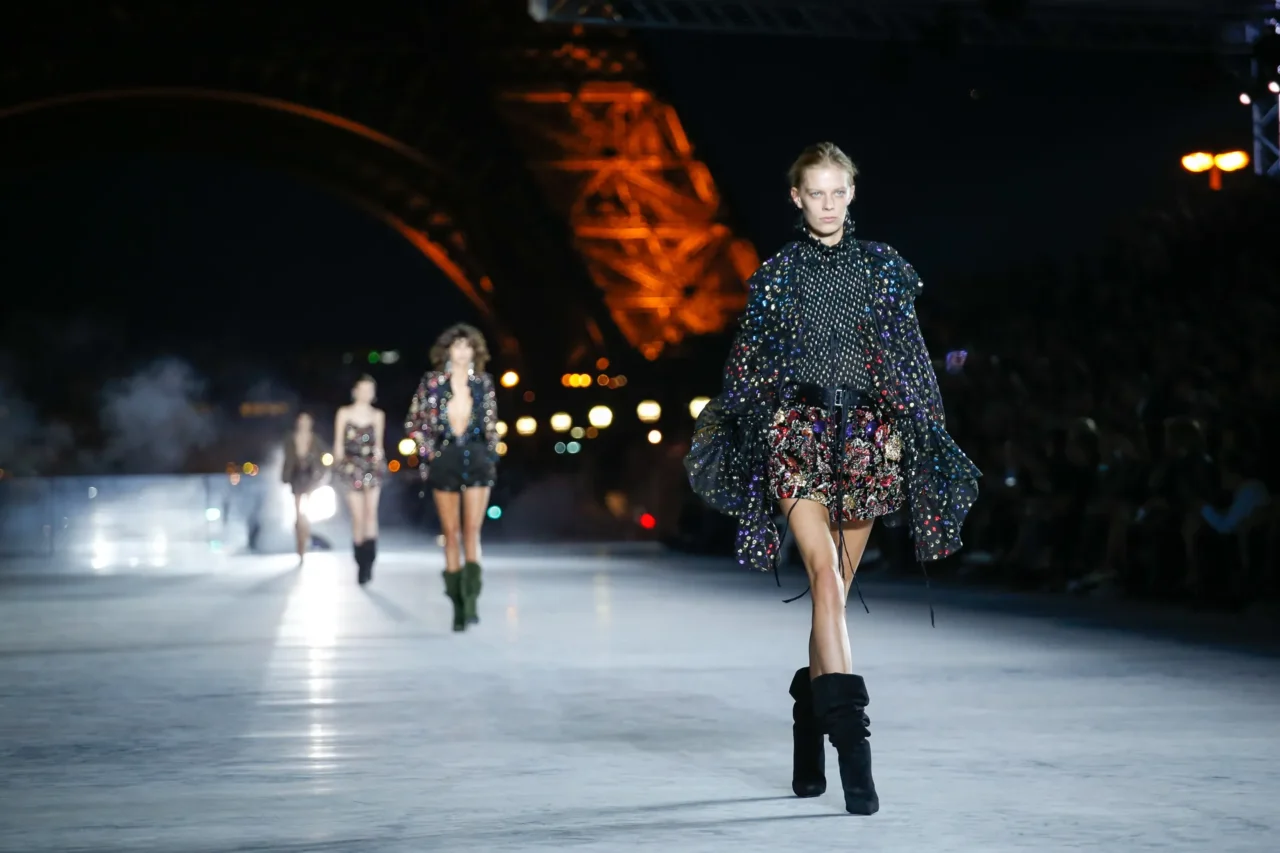
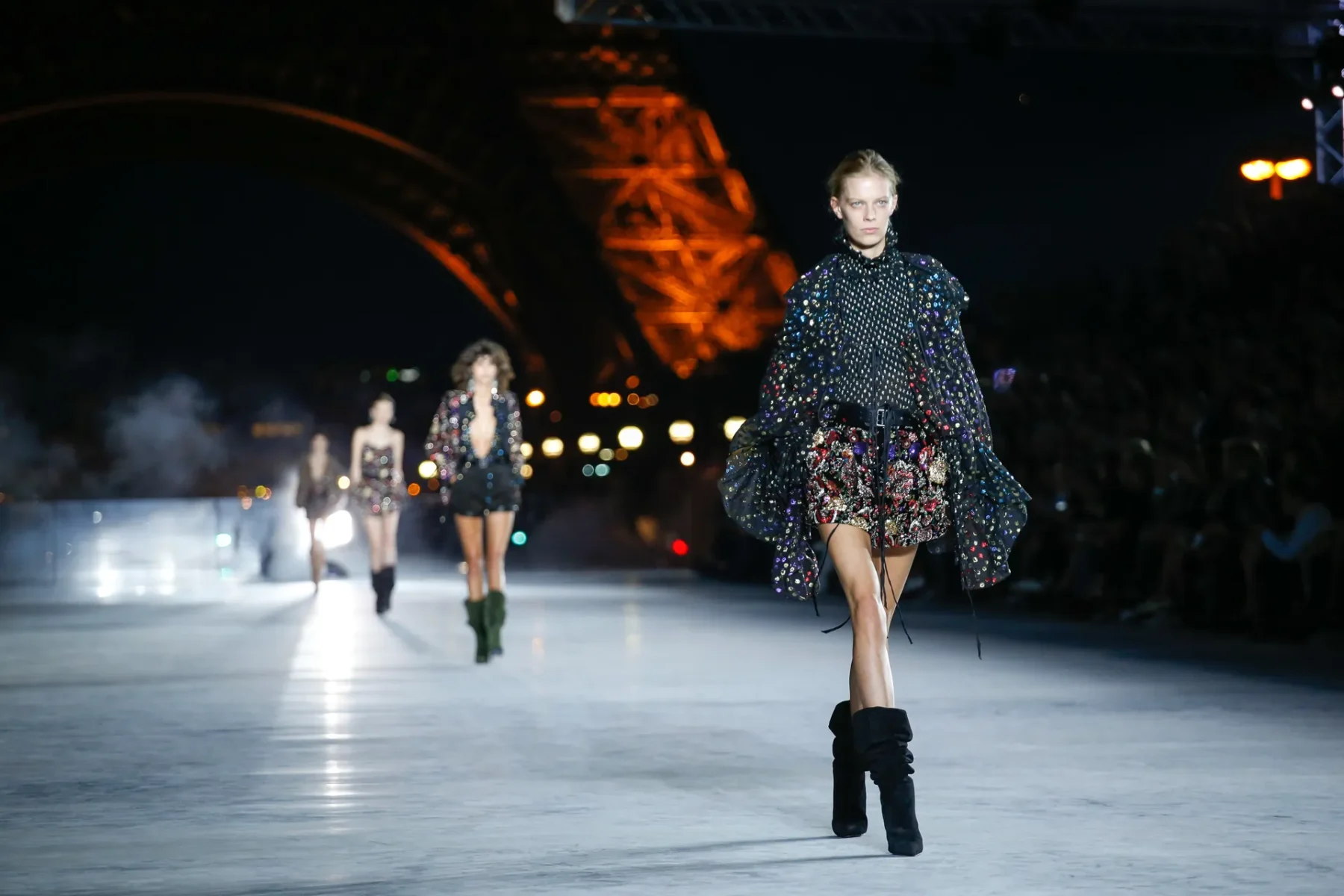
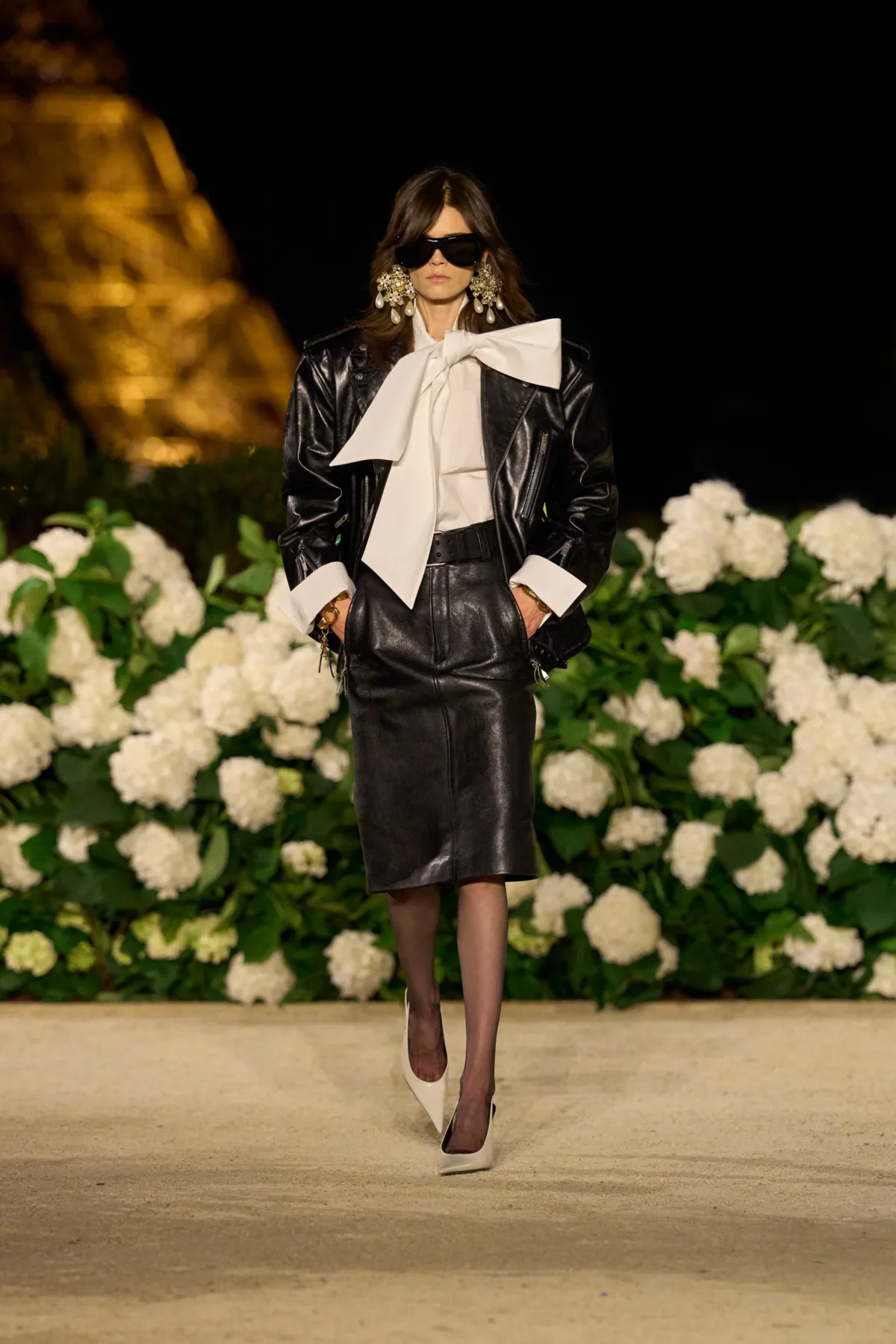
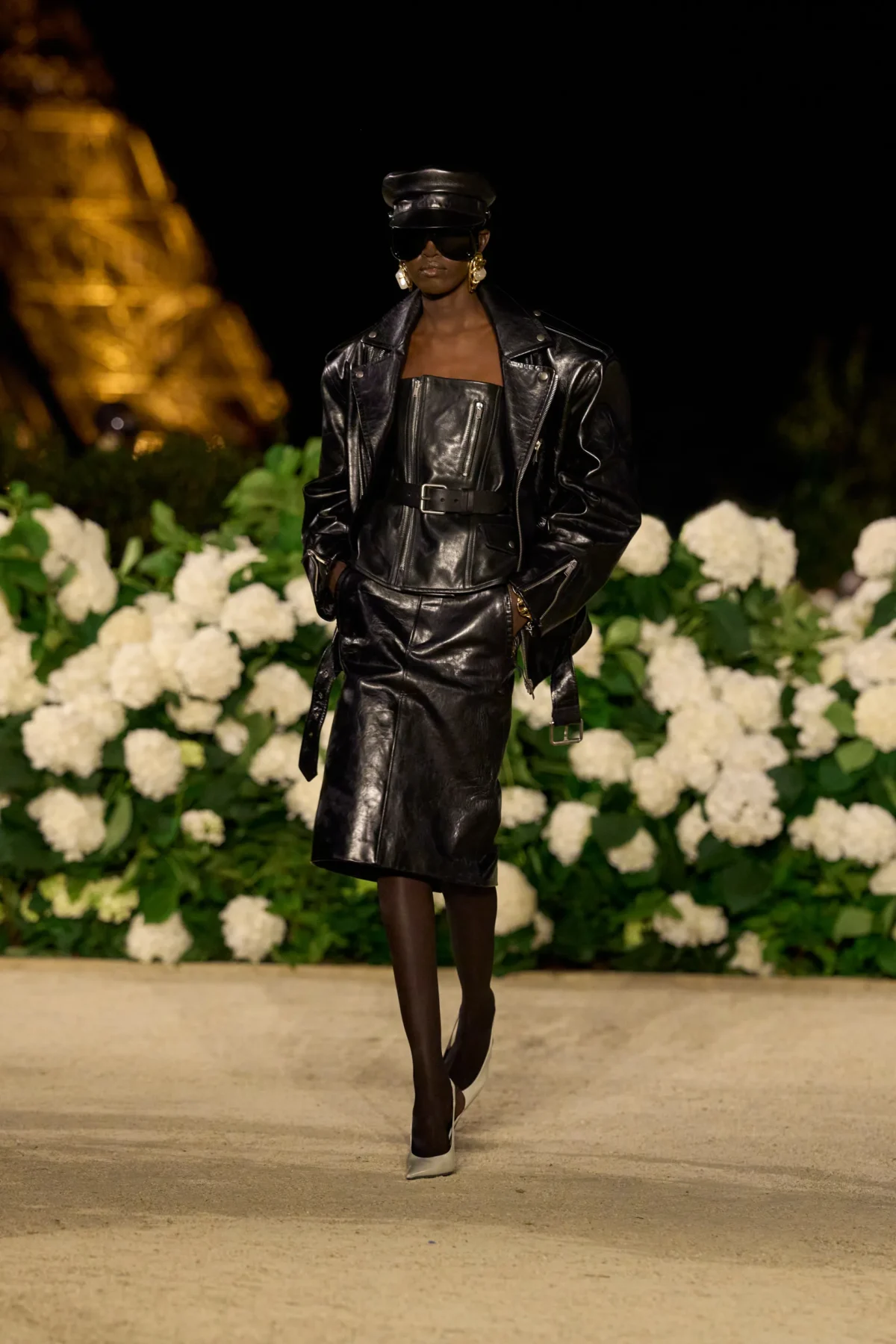
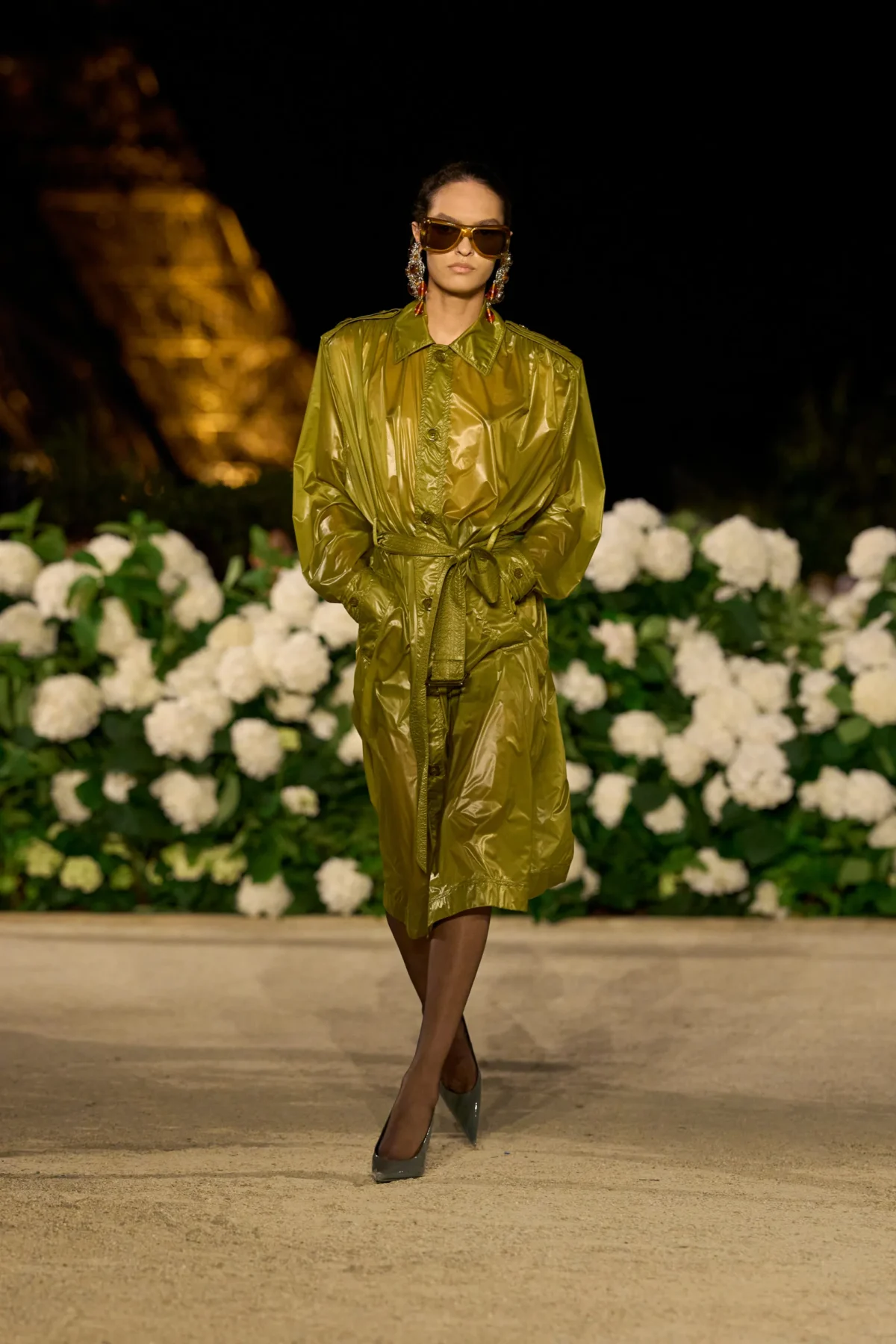
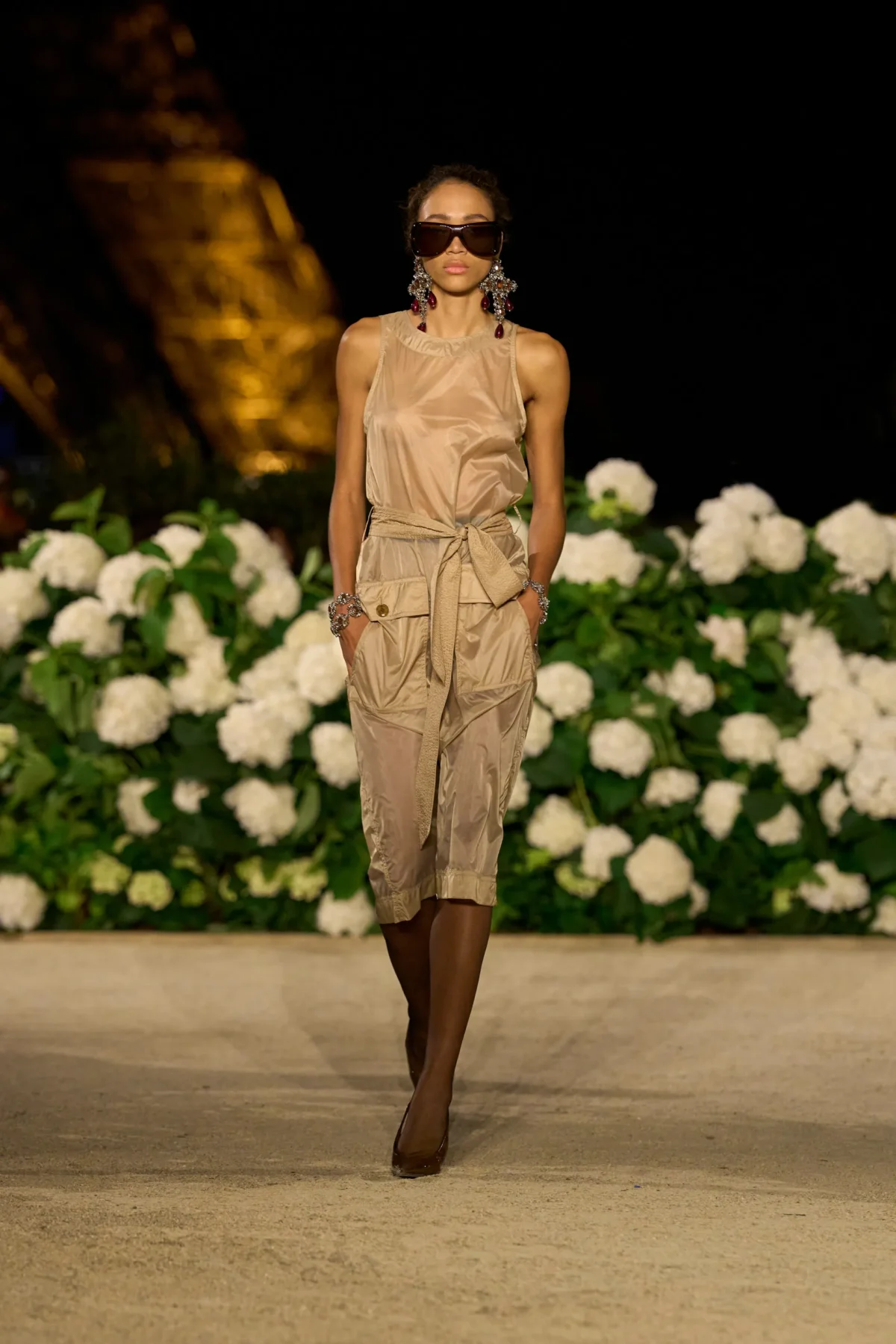
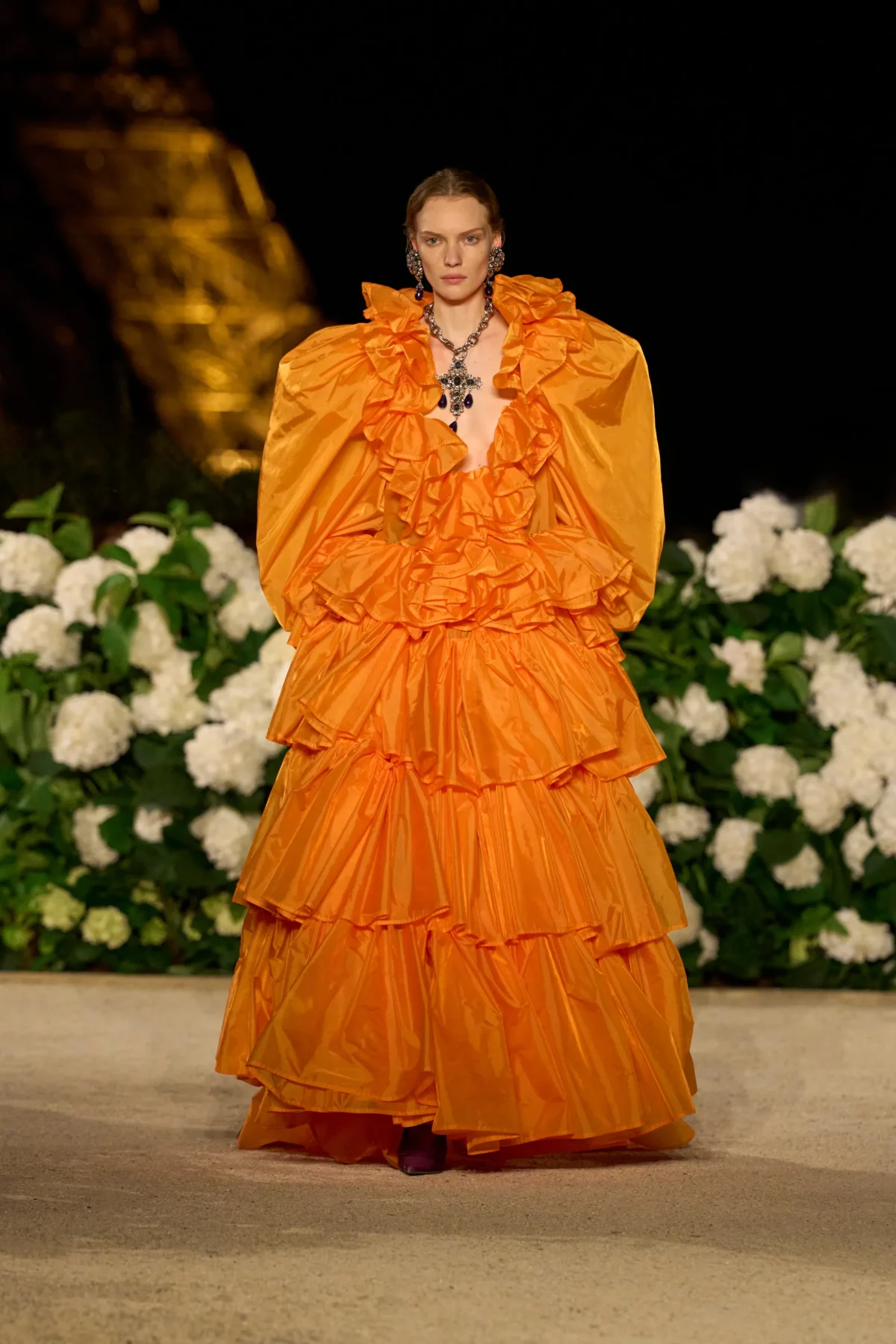
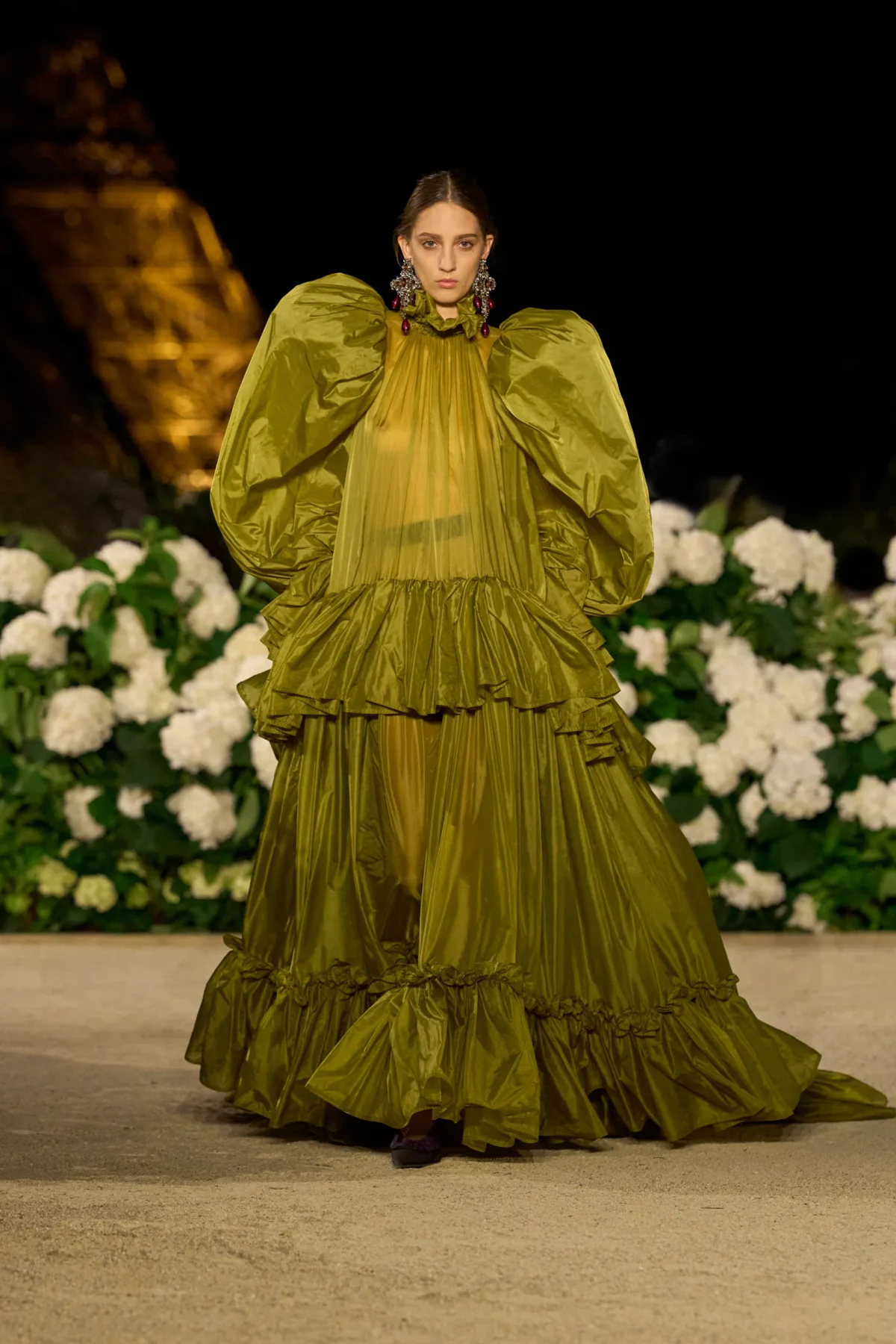
If Vaccarello’s final Saint Laurent show felt like a full-circle moment, it was undoubtedly because he had spent nearly a decade building a very particular Parisian fantasy around the house Nightfall at the Eiffel Tower. City lights glittering behind it. And, at the centre of it all, a woman who looks as though she has somewhere far more interesting to be.
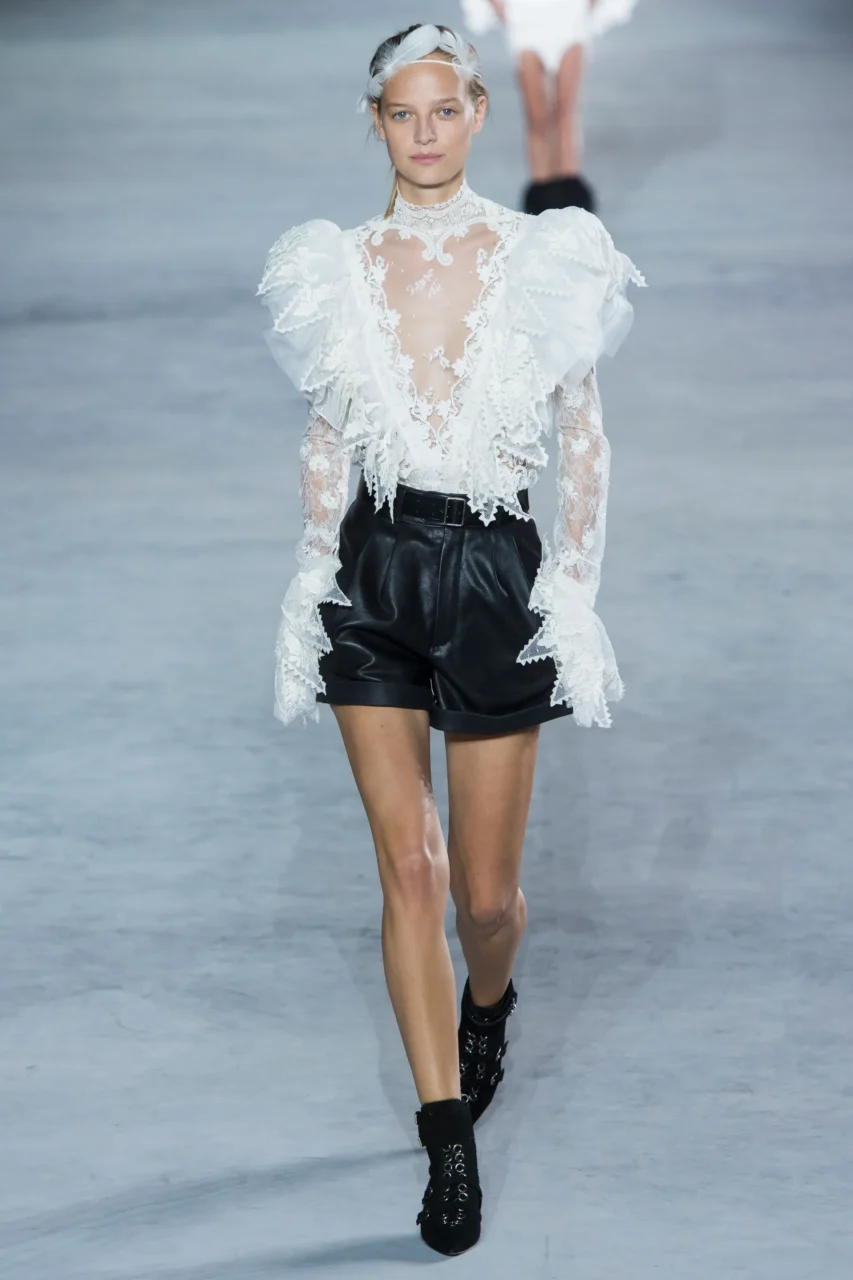
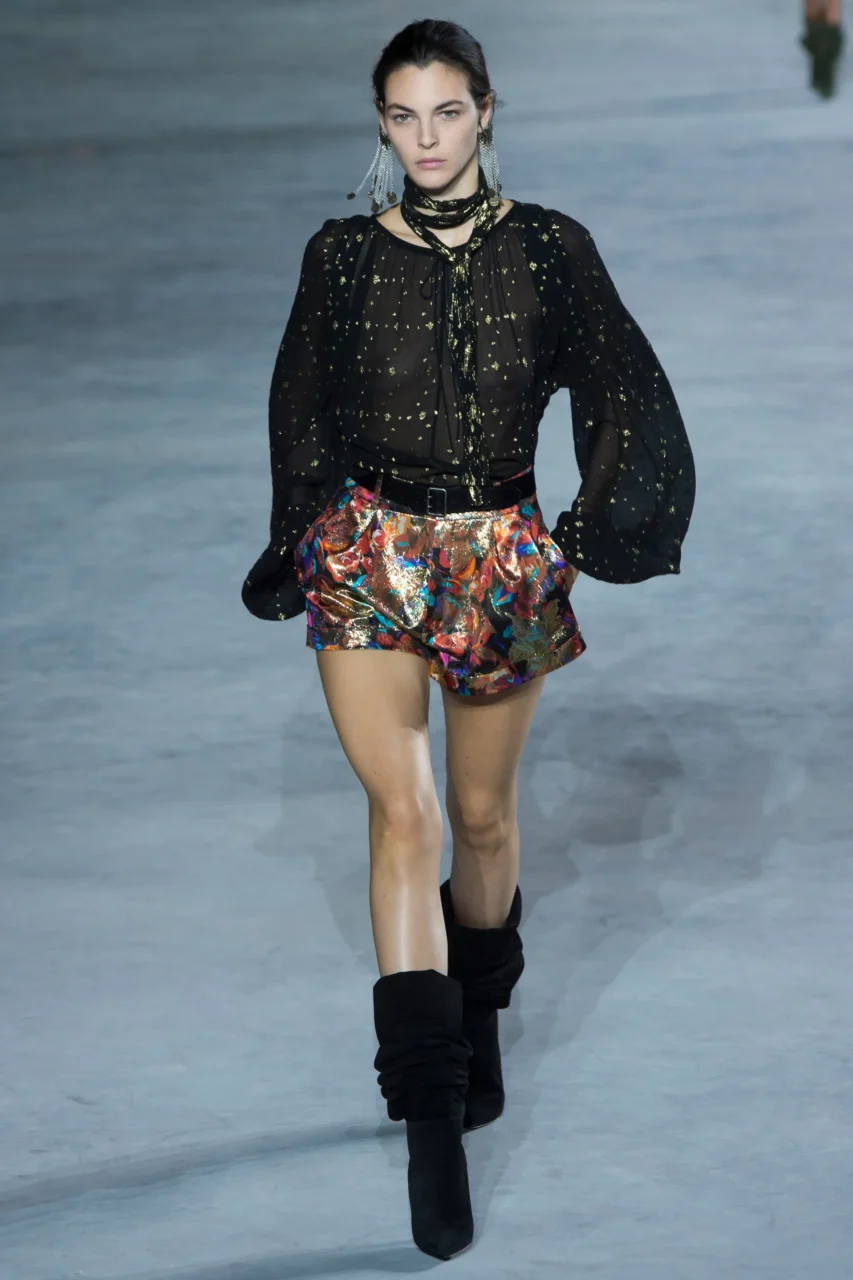
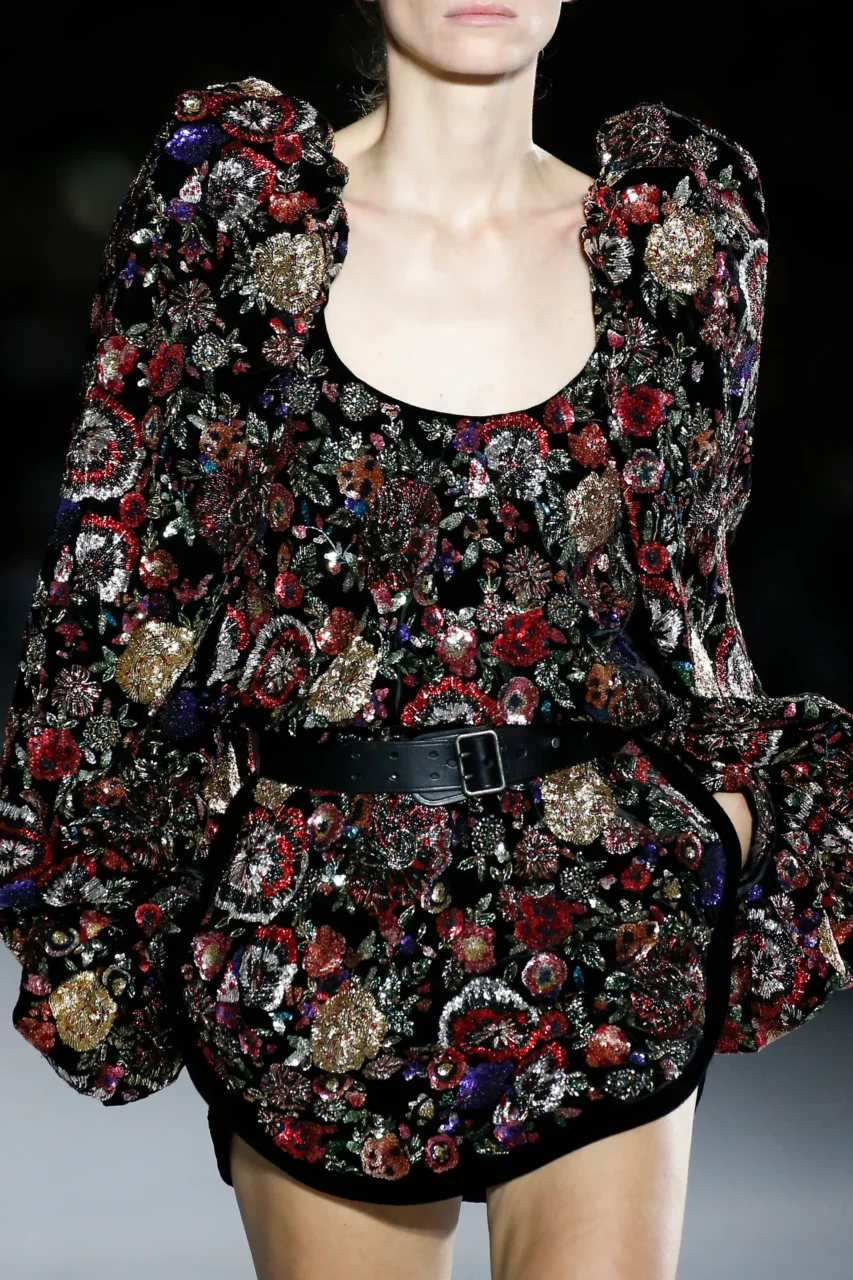
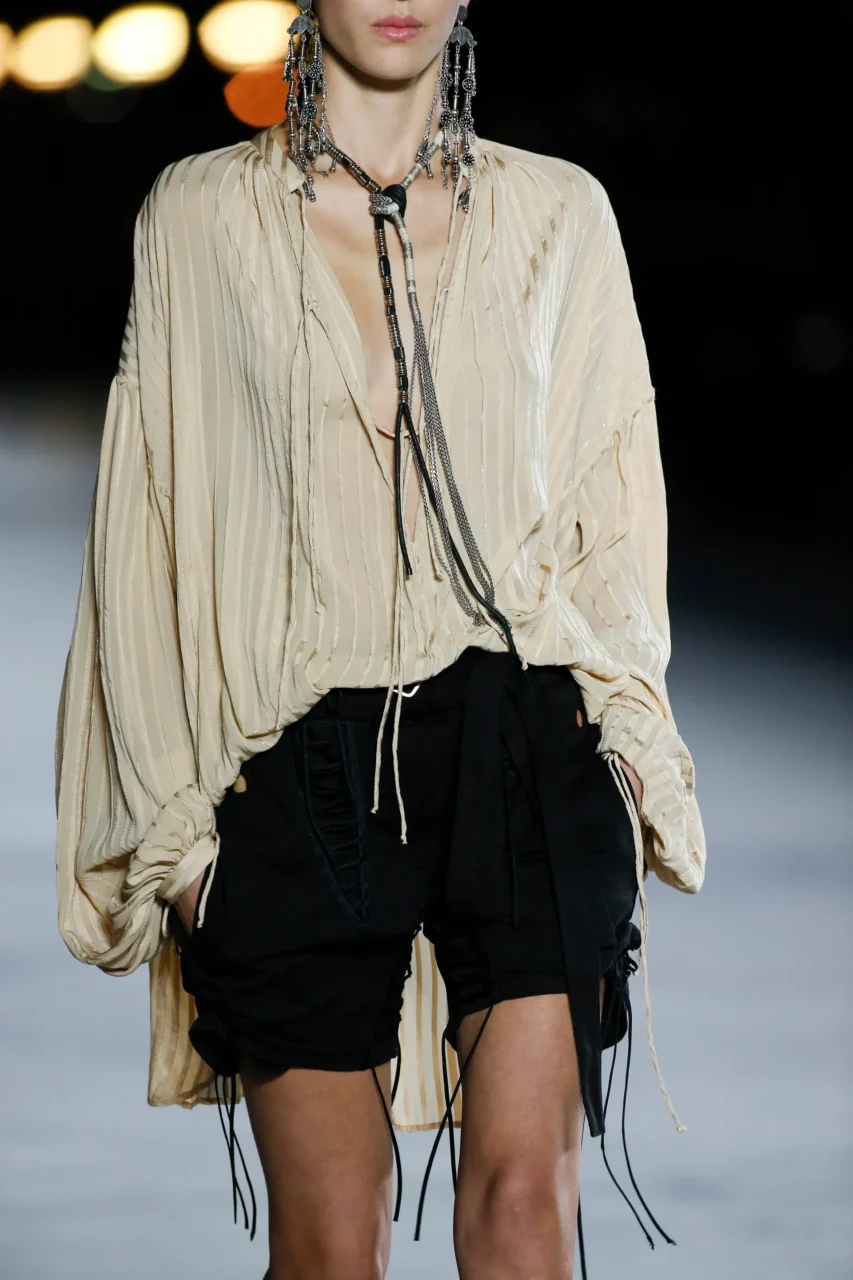
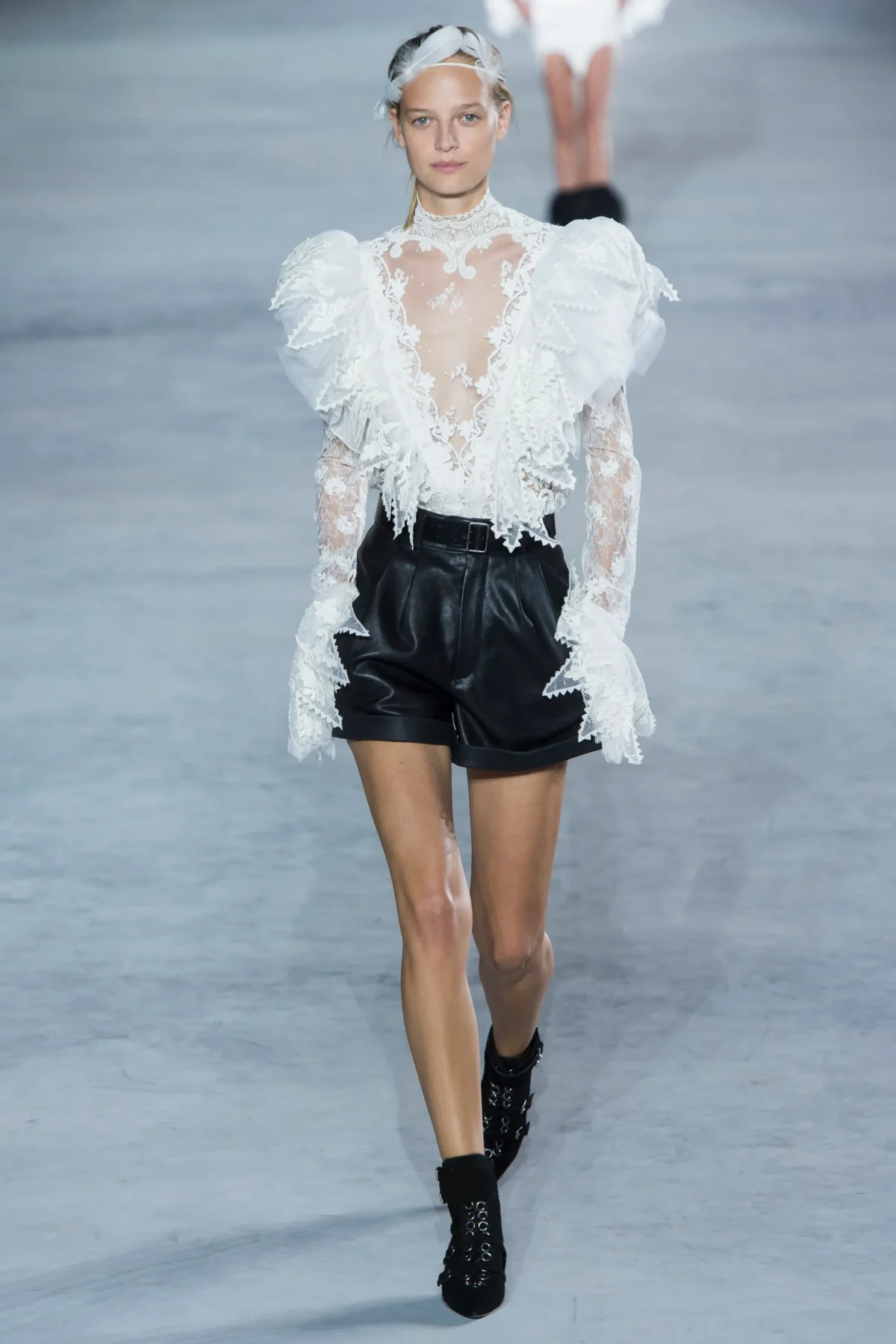
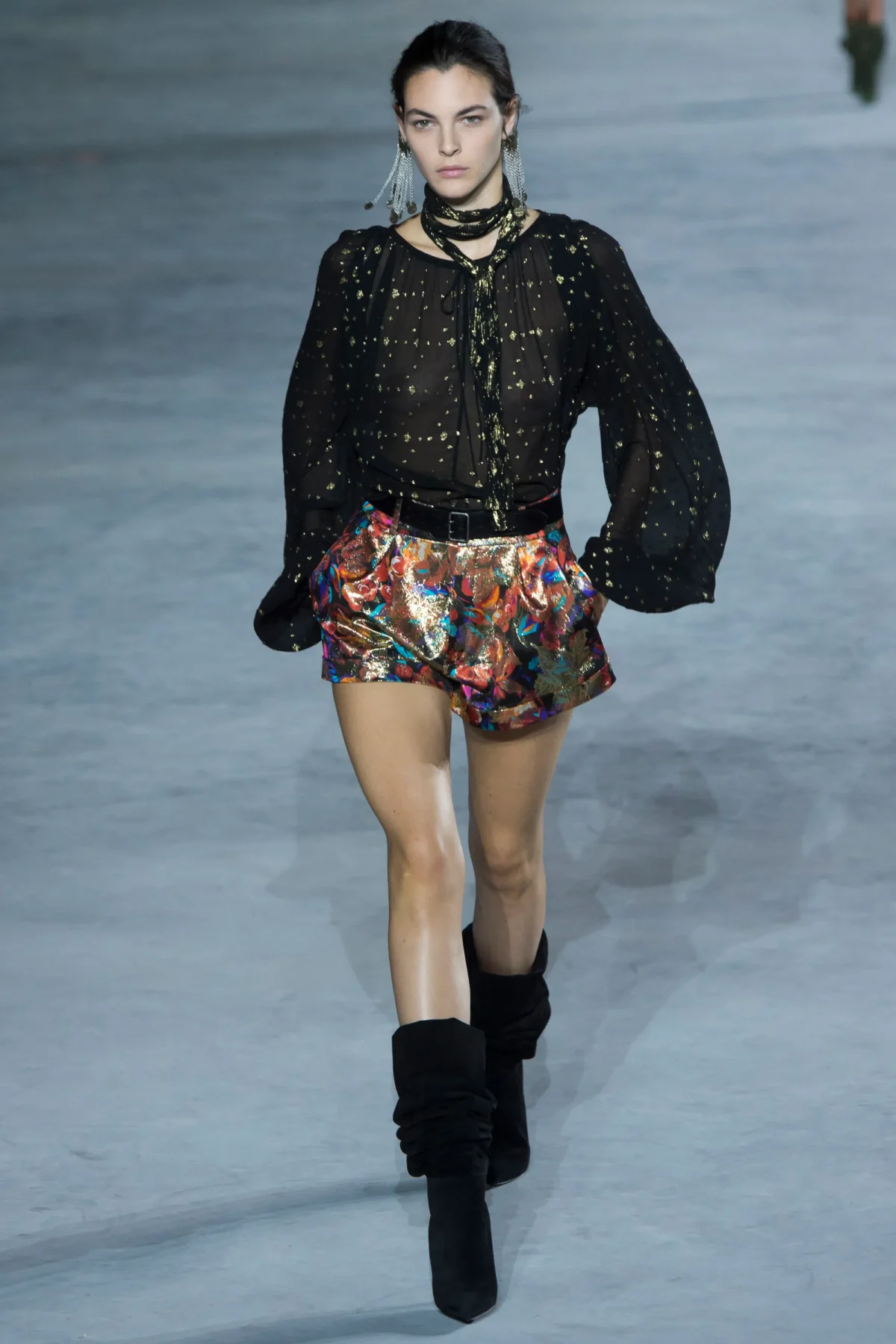
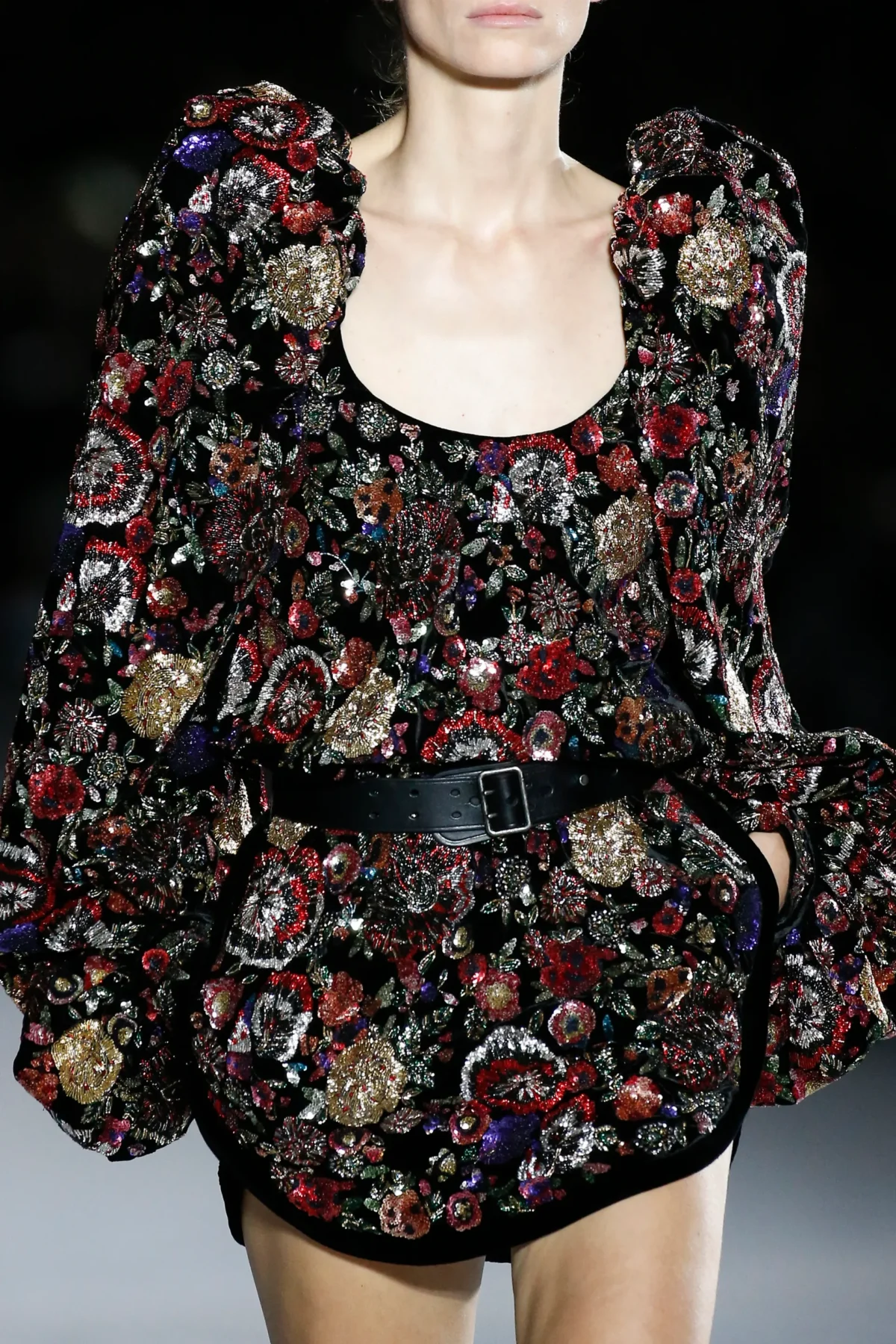
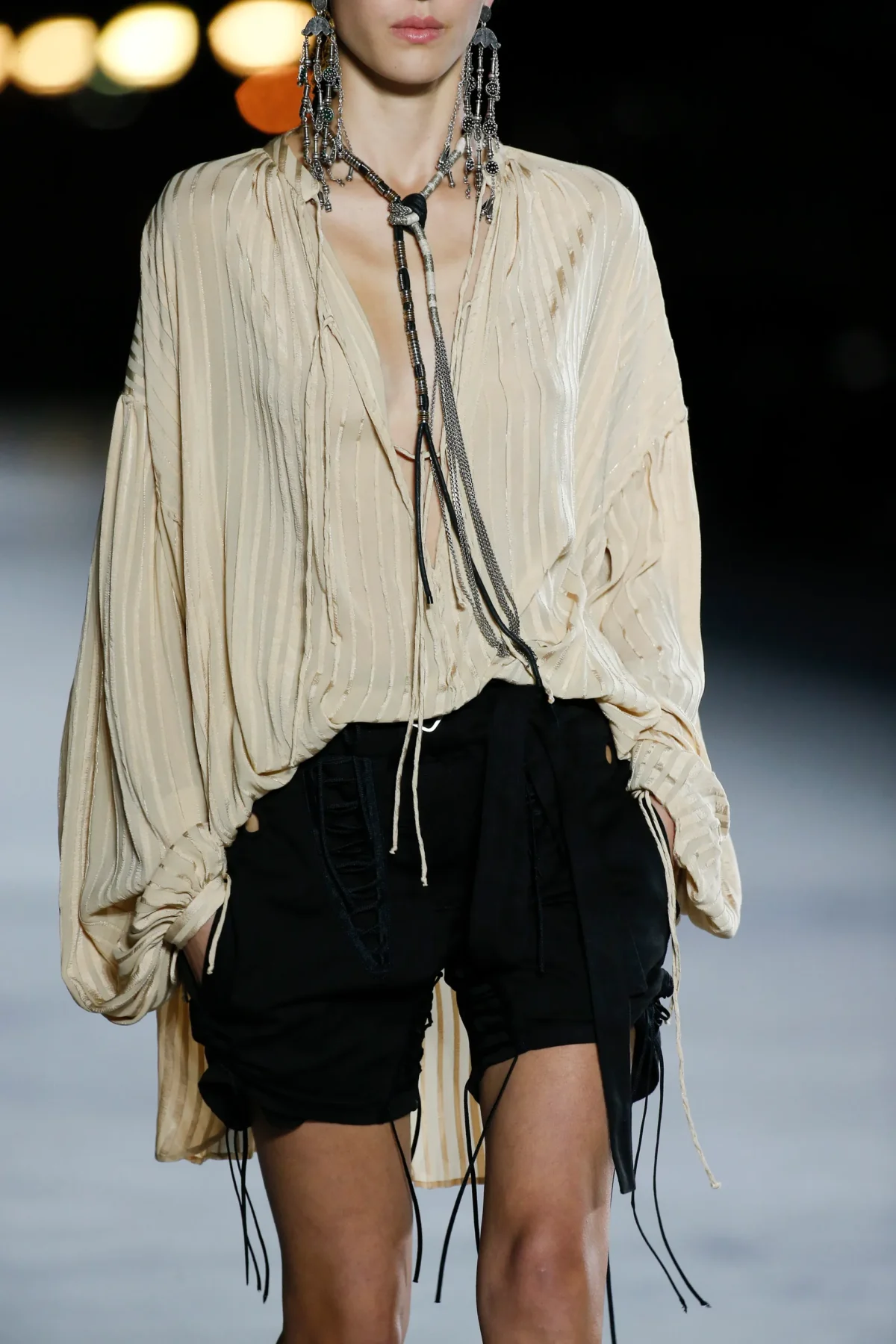
His Spring/Summer 2018 show, staged beneath the Tower in one of his earliest open-air spectacles for the house, set the scene for a decade of Saint Laurent after dark. It was a runway that made Paris feel less like a destination than a state of mind. Shredded lace tops, leather shorts, scrunched boots and feathered minidresses sent models down the catwalk looking ready for a particularly glamorous night out, with no intention of going home before sunrise.
The collection moved between Vaccarello’s Saint Laurent archetypes, from Marrakech-inspired bohemians dripping in jewellery to Victorian bad girls with a penchant for the dance floor. But the real fascination lies in how naturally these seemingly disparate worlds came together. Drawing on the house’s Moroccan inspirations and its history of couture extravagance, Vaccarello distilled the references and transformed them into a sharper, younger and decidedly nocturnal wardrobe.
This very distinction would become central to his tenure. Rather than reproducing Saint Laurent’s signatures season after season, Vaccarello made them feel like a living, evolving wardrobe — one that could move from couture references to club attire without losing its composure. Paris wasn’t simply the backdrop. With the Eiffel Tower sparkling overhead, Vaccarello turned the city into part of the fantasy and marked the beginning of a Saint Laurent mythology that he would return to, and ultimately close, nearly a decade later.
2. Spring/Summer 2027
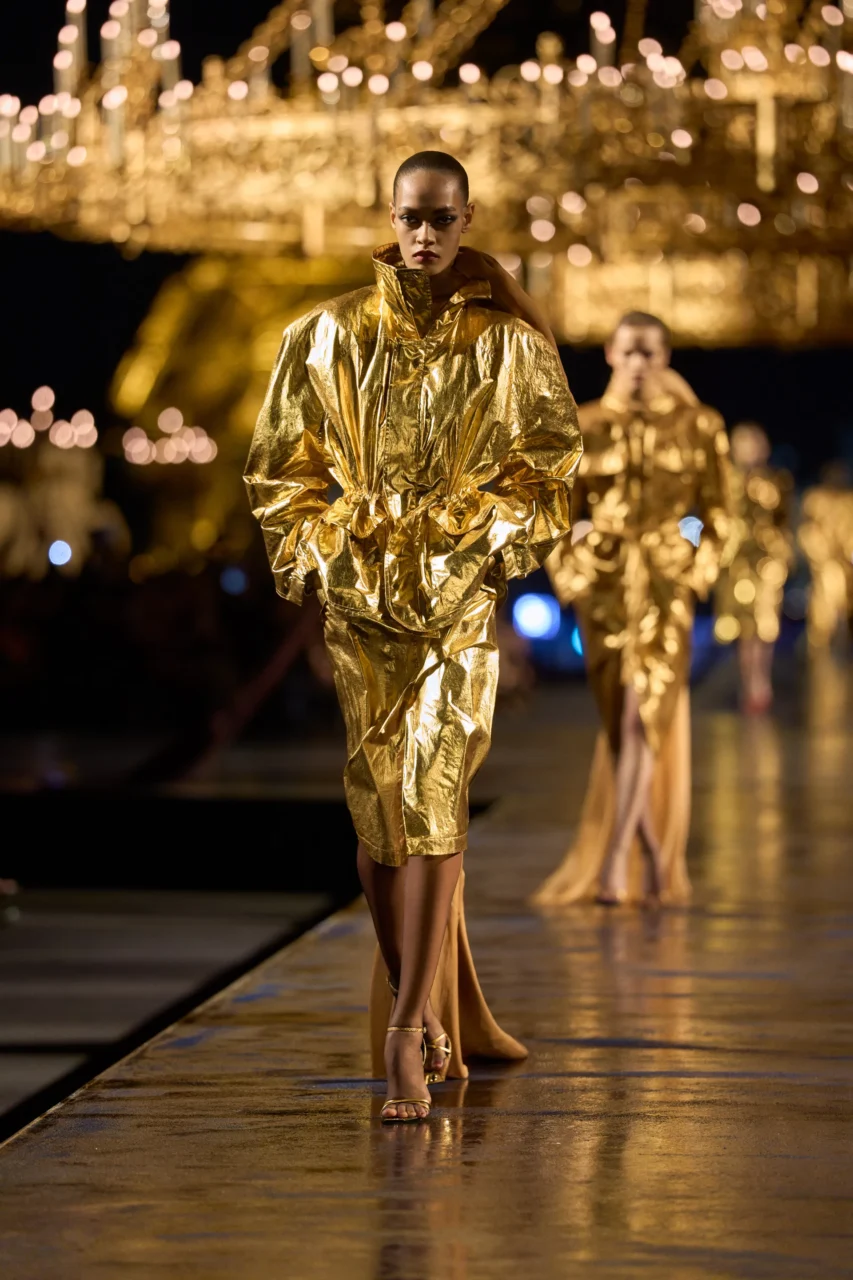
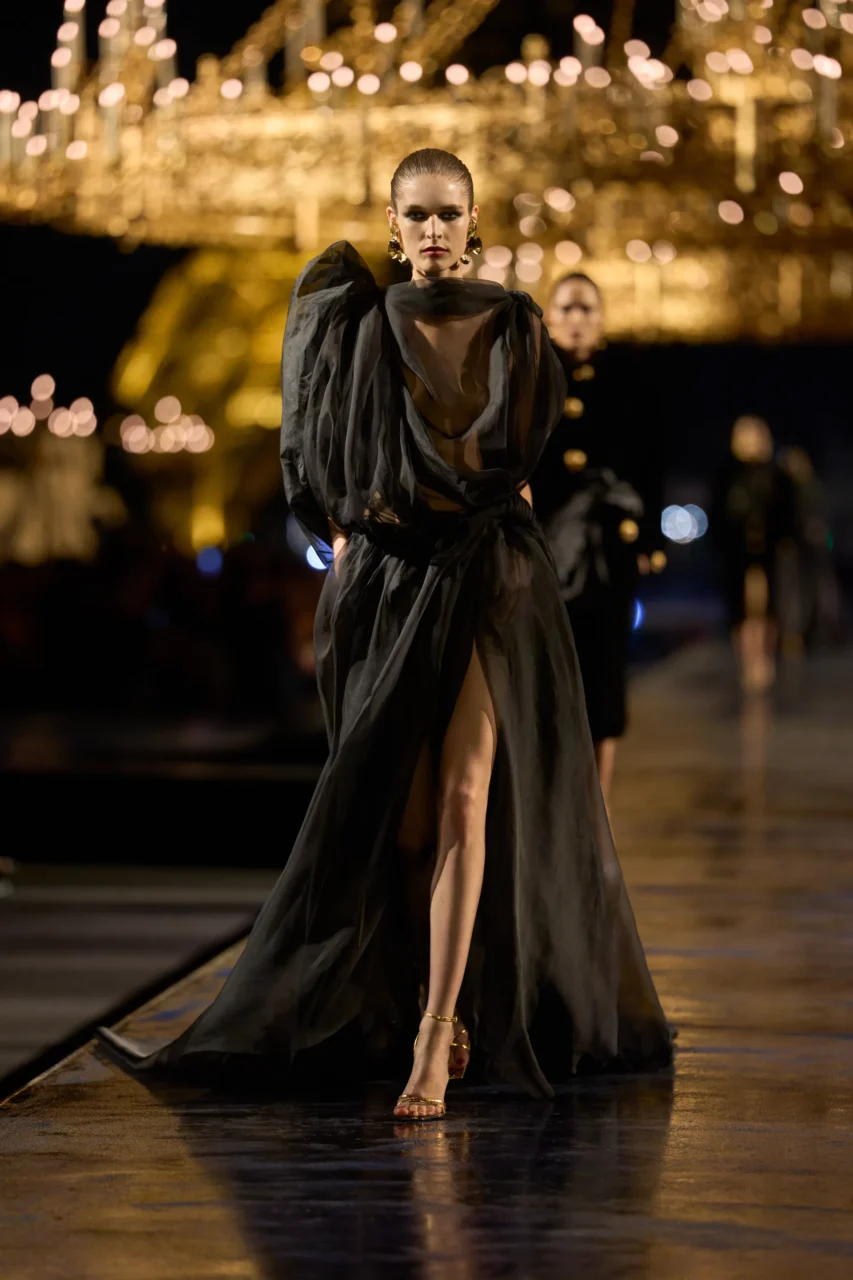
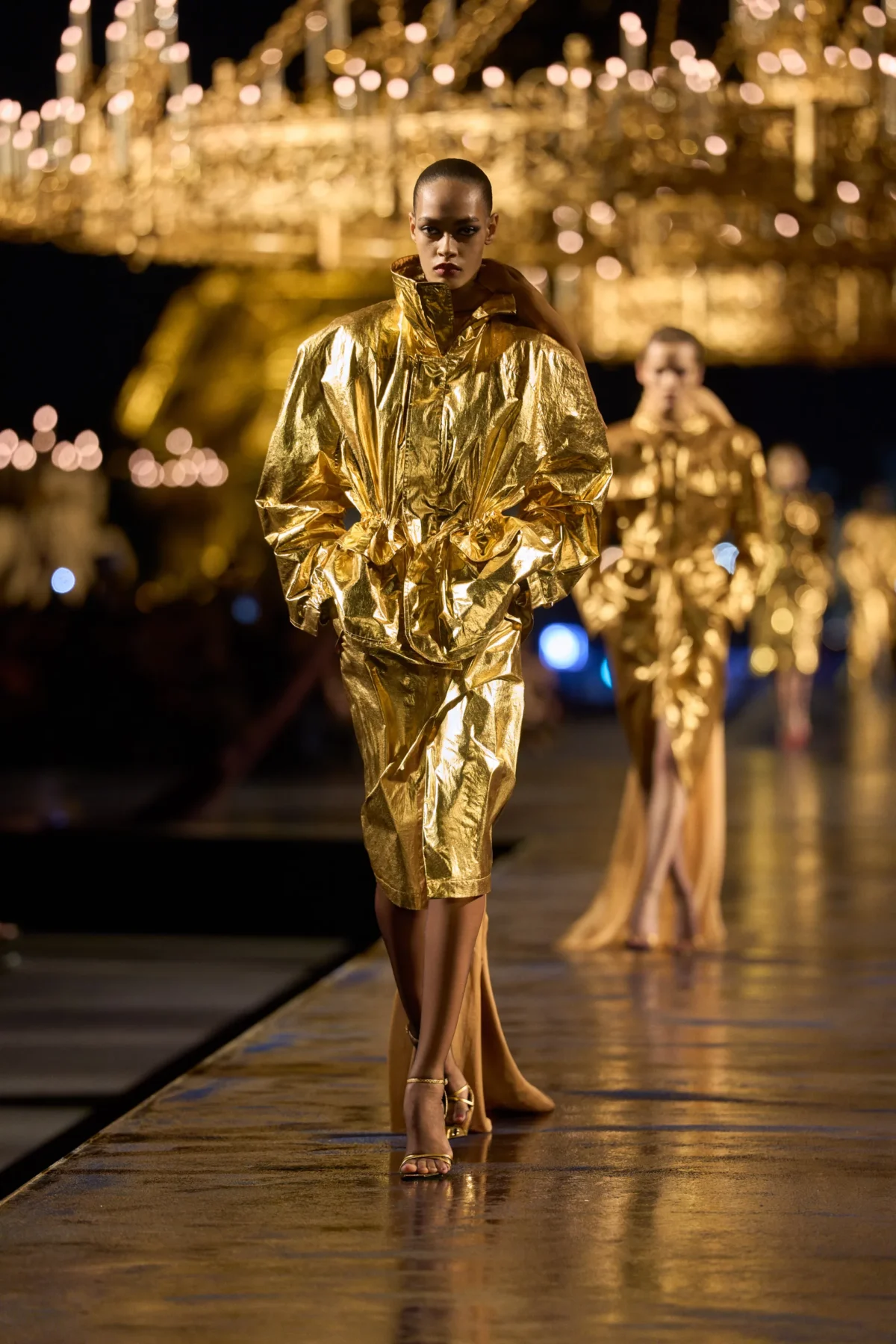
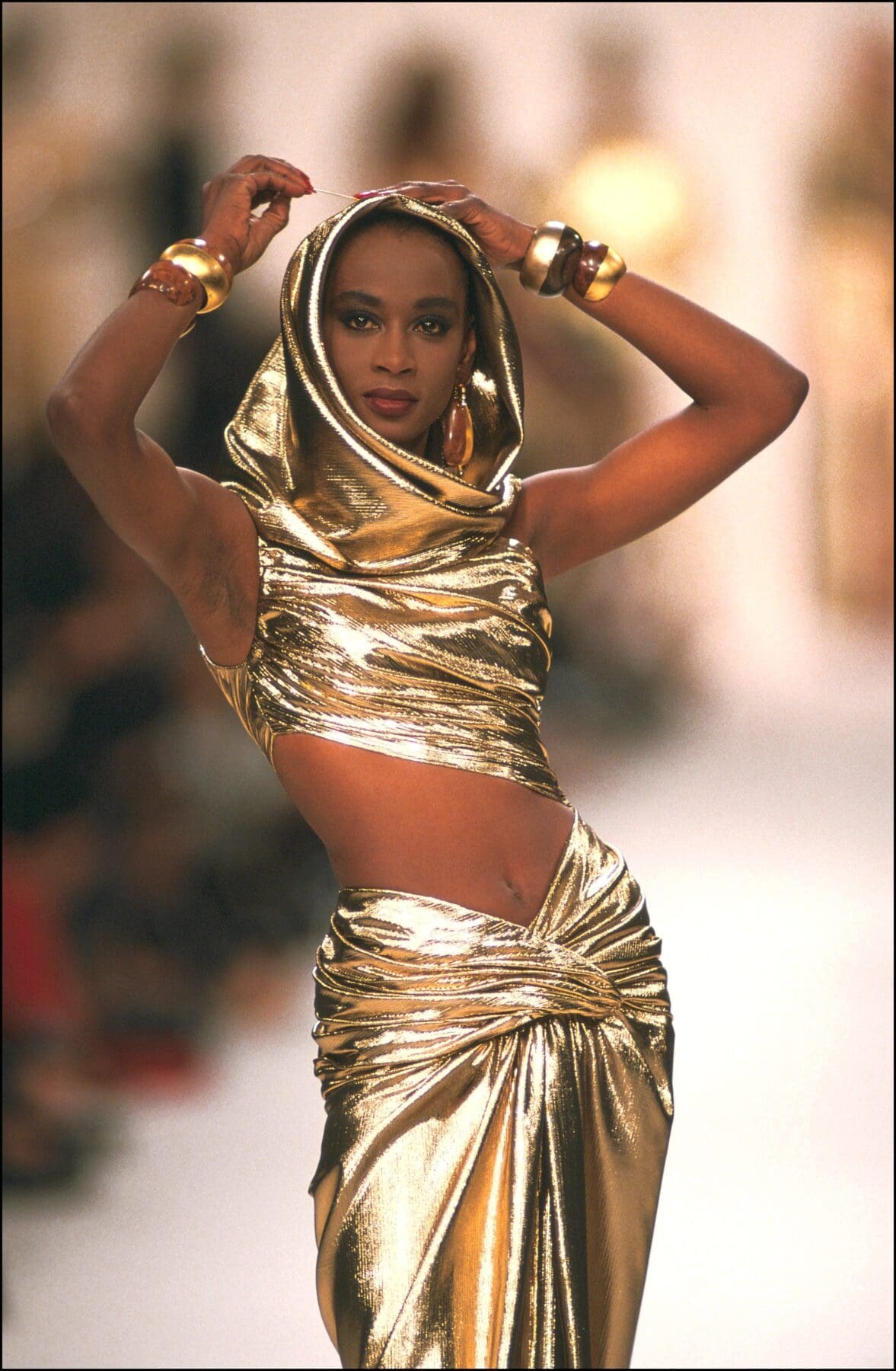
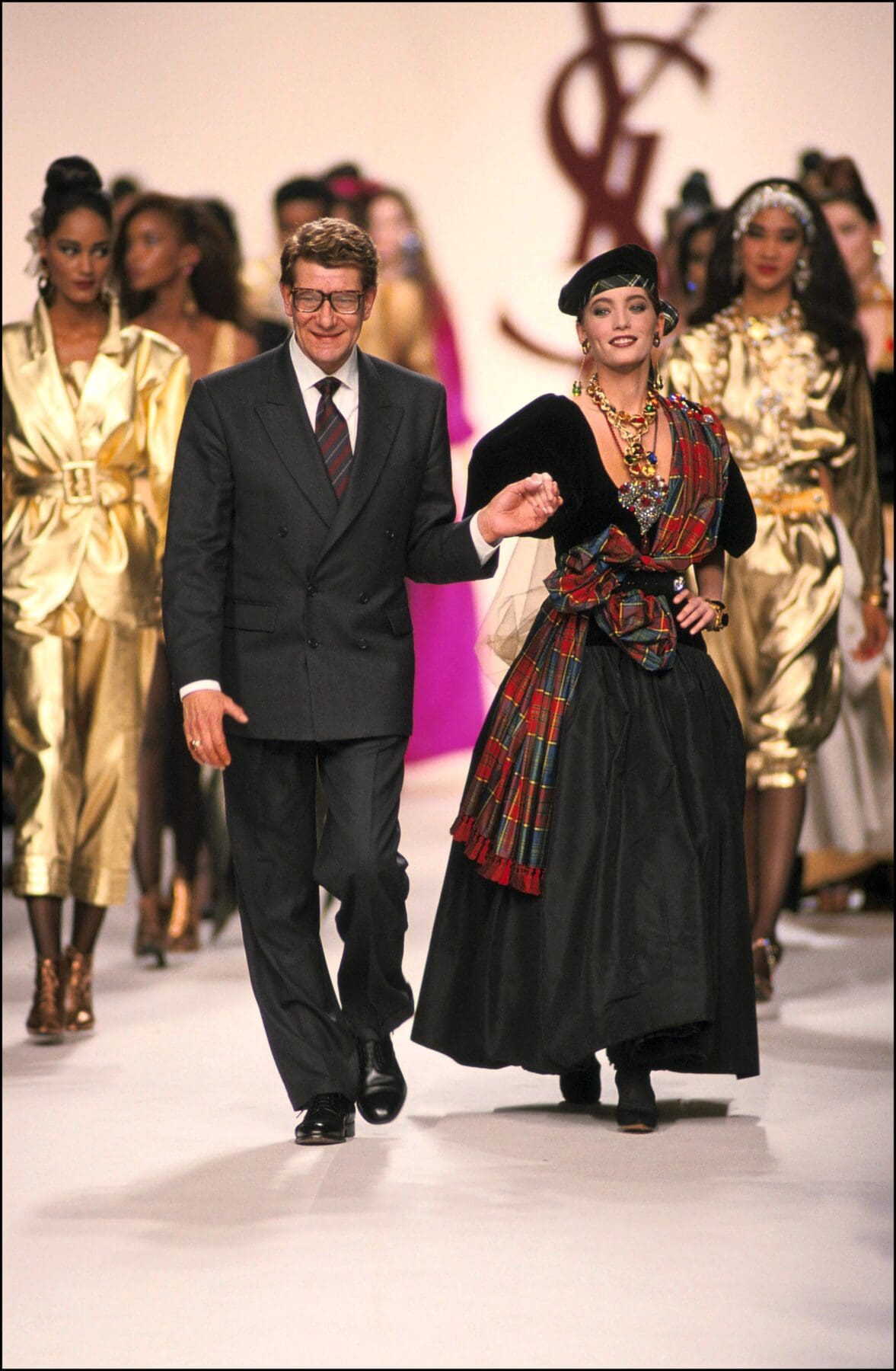
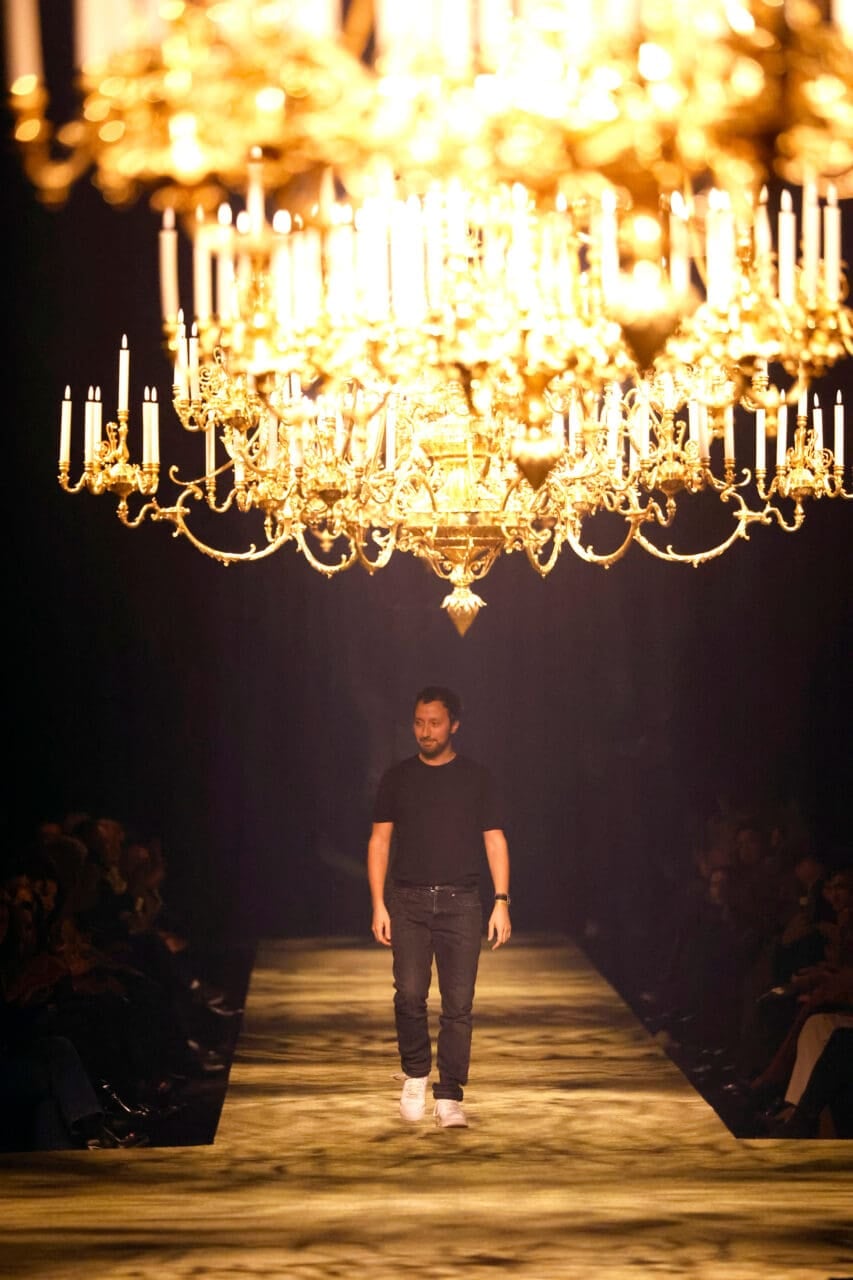
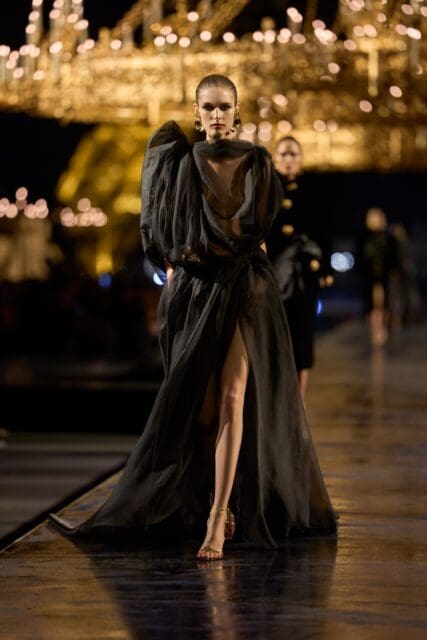
Vaccarello’s first Eiffel Tower show set the scene for his Saint Laurent fantasy; his final one brought it to a golden finale. For Spring/Summer 2027, he went for gold, quite literally. Gilded separates, brocade, sumptuous eveningwear and trench coats that looked as though they’d been dipped into molten gold turned the runway into a modern-day Midas myth. Beneath the monumental chandeliers, the Trocadéro was transformed into an open-air ballroom, with the Eiffel Tower glistening overhead. From certain angles, the chandeliers seemed to give the Iron Lady a rather extravagant golden dress.
For all its opulence, however, the collection felt remarkably controlled. The gold-drenched looks brought Gustav Klimt’s women to mind, their bodies so richly adorned that they seemed to dissolve into the ornate worlds around them. The silhouettes remained unmistakably Vaccarello: elongated, razor-sharp and assured, with just enough baroque drama to keep the grandeur from feeling too polished.
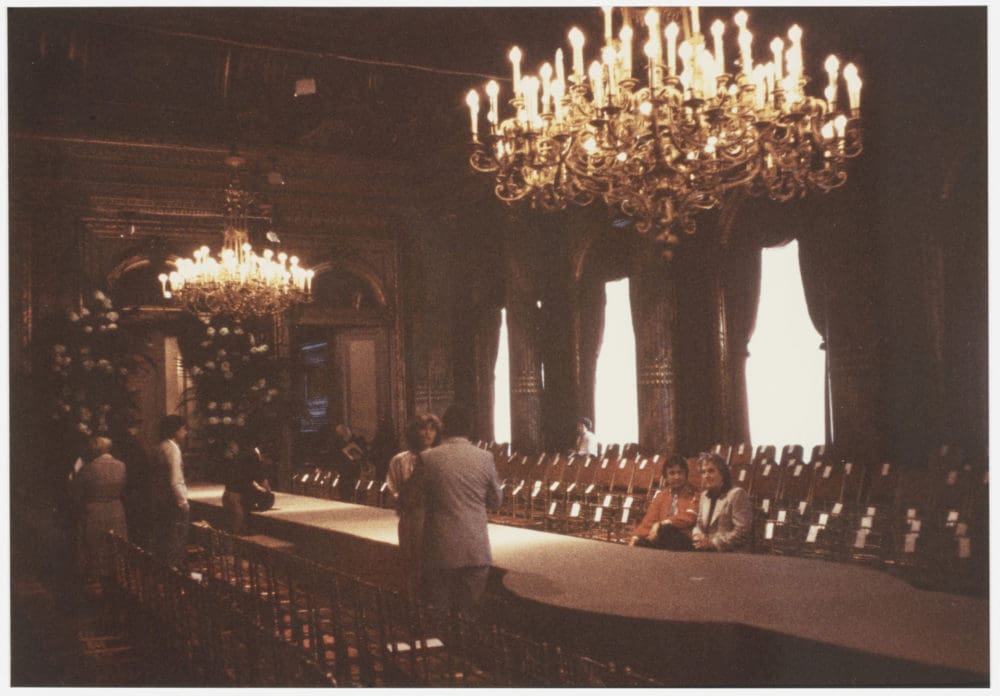
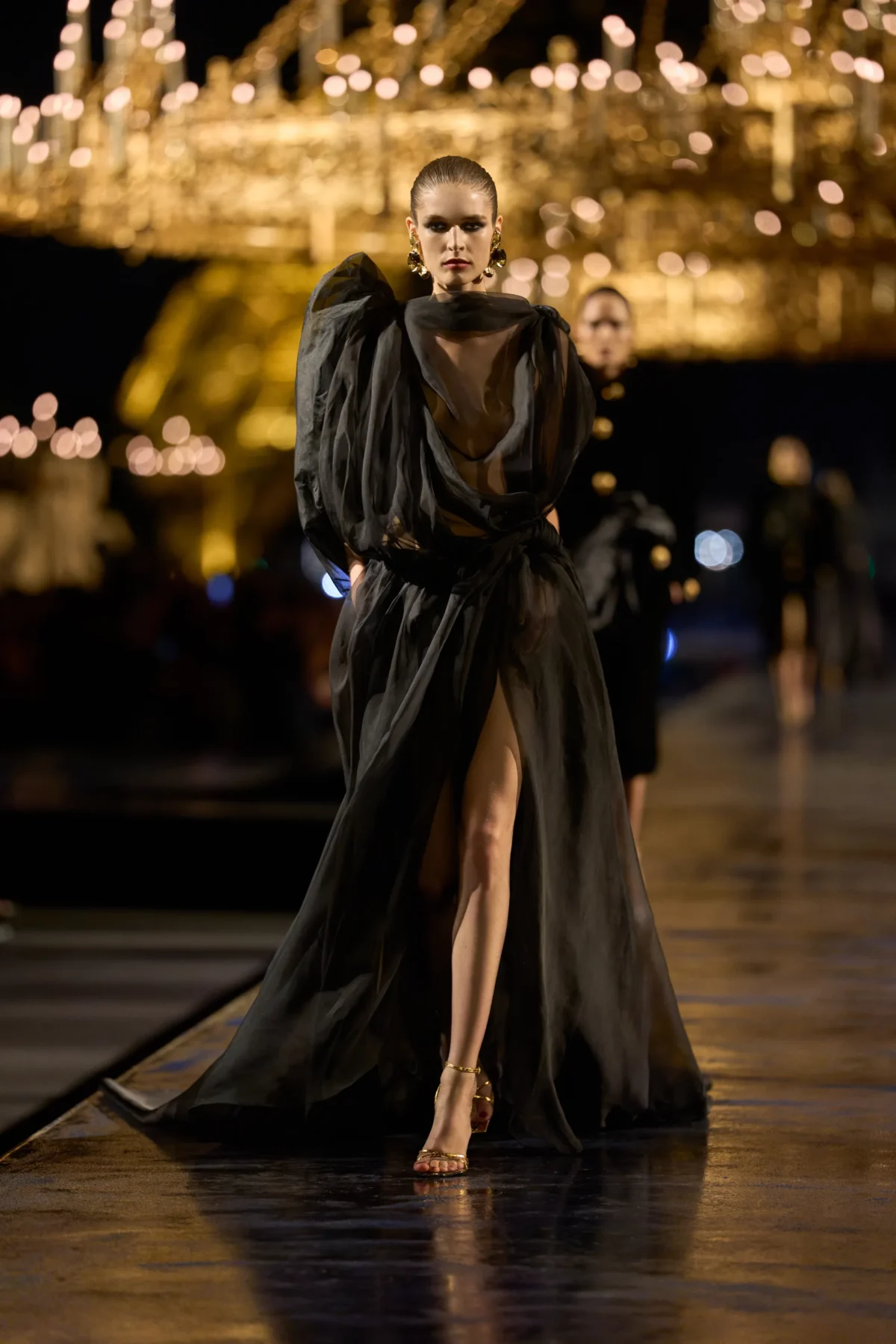
The staging carried its own historical weight. The chandeliers nodded towards the grand couture presentations of Yves Saint Laurent at the Hôtel Inter-Continental, where the founder unveiled some of his most remarkable works. But Vaccarello’s final flourish was more than an exercise in nostalgia. After 49 looks in gold came 10 in black, reversing the gold finale of Saint Laurent’s Fall 1991 Rive Gauche collection.
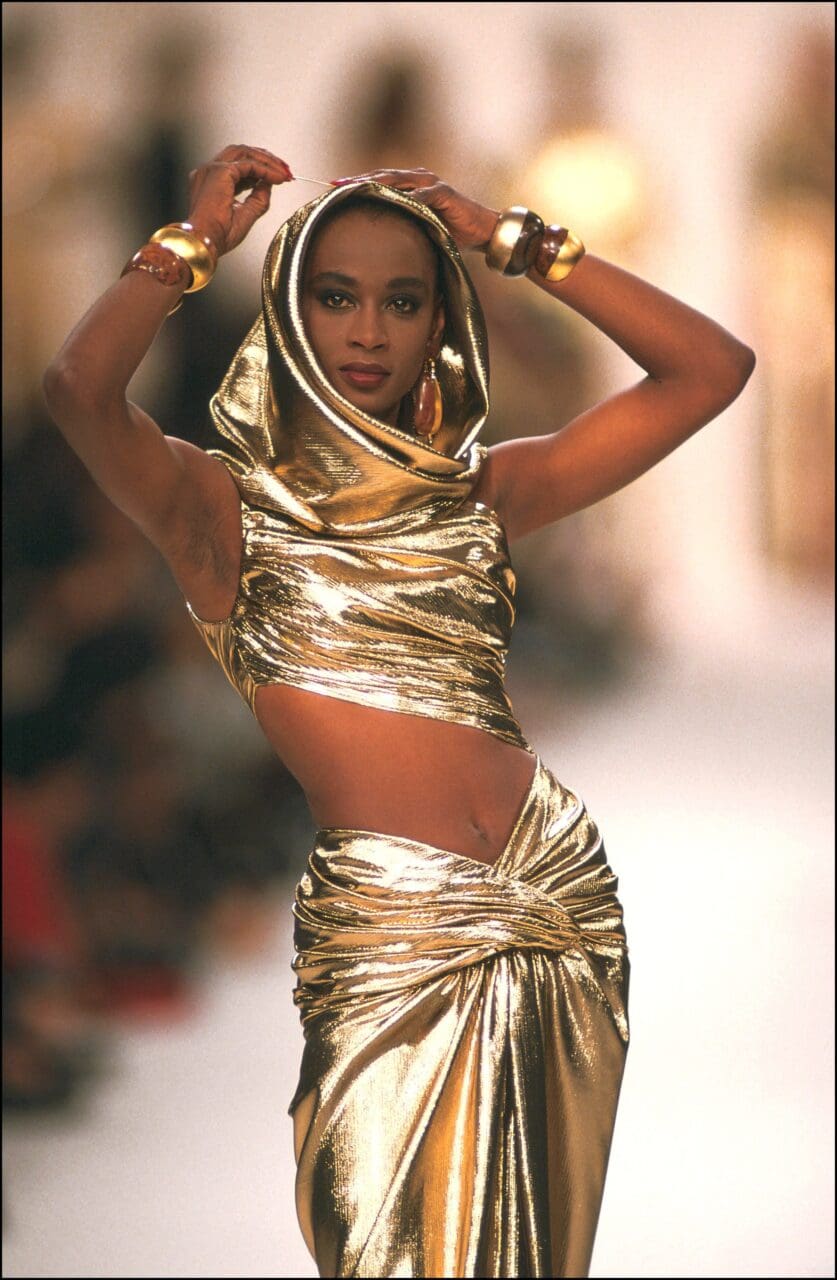
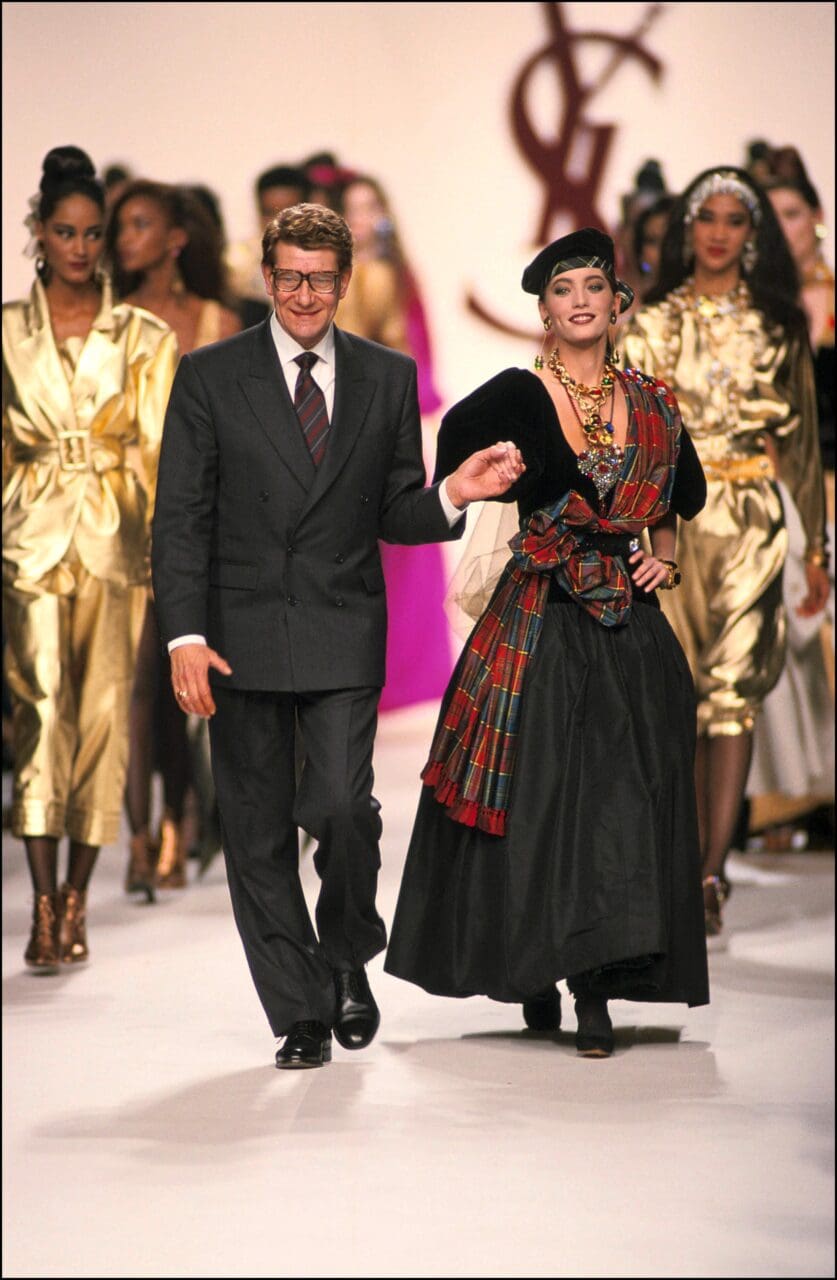
This reversal felt especially deliberate. After a decade dedicated to building his own mythology in the glow of the Eiffel Tower, Vaccarello ended not with another flash of gold, but with black. Even Midas, it seemed, knew when to leave the gold behind.
3. Fall/Winter 2020
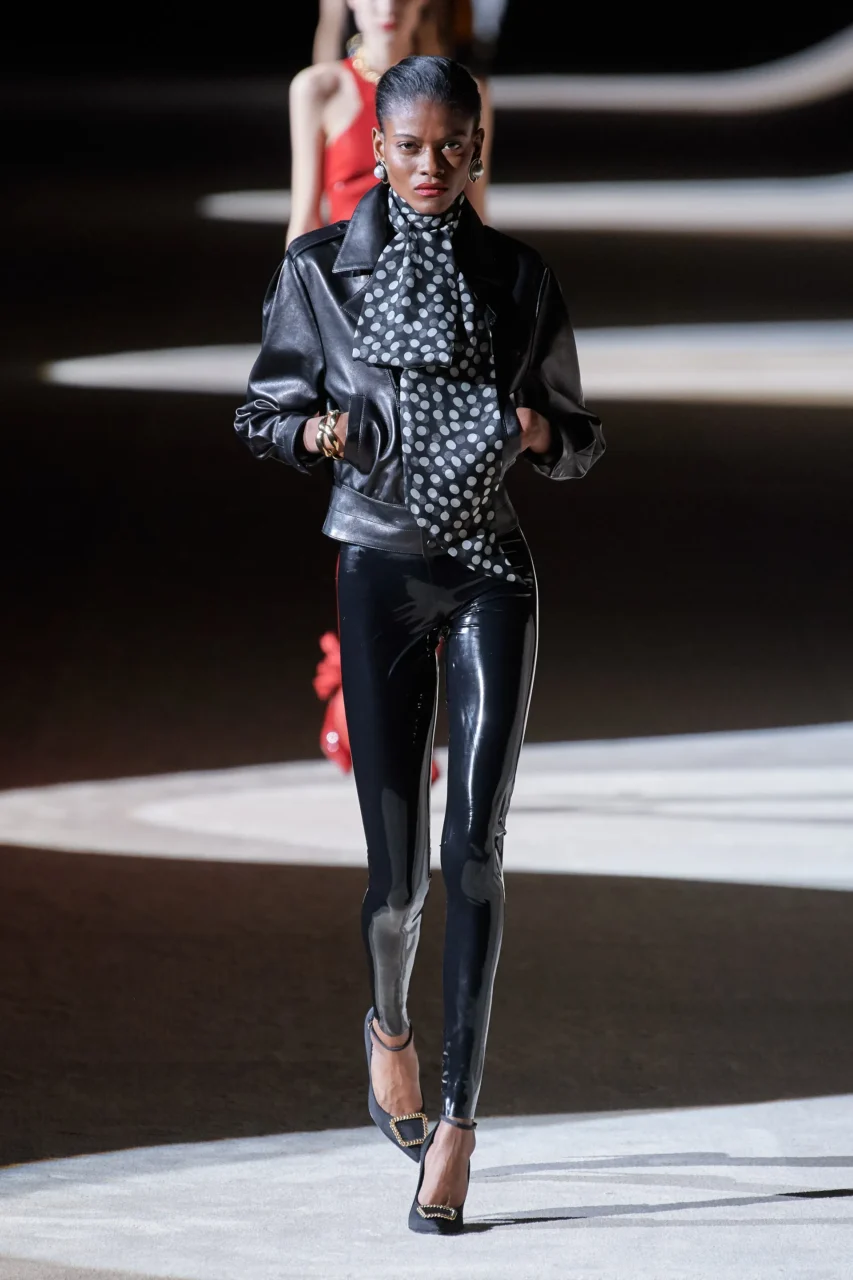
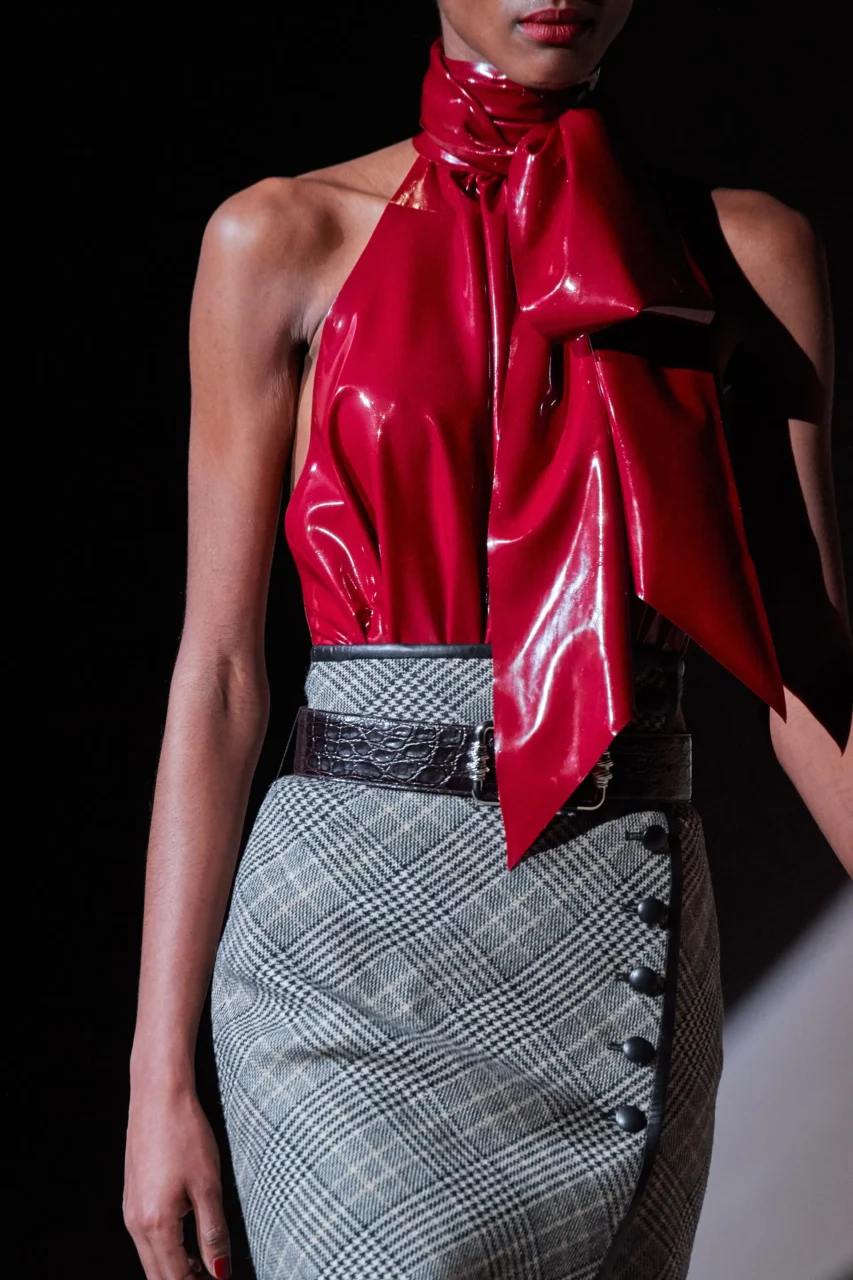
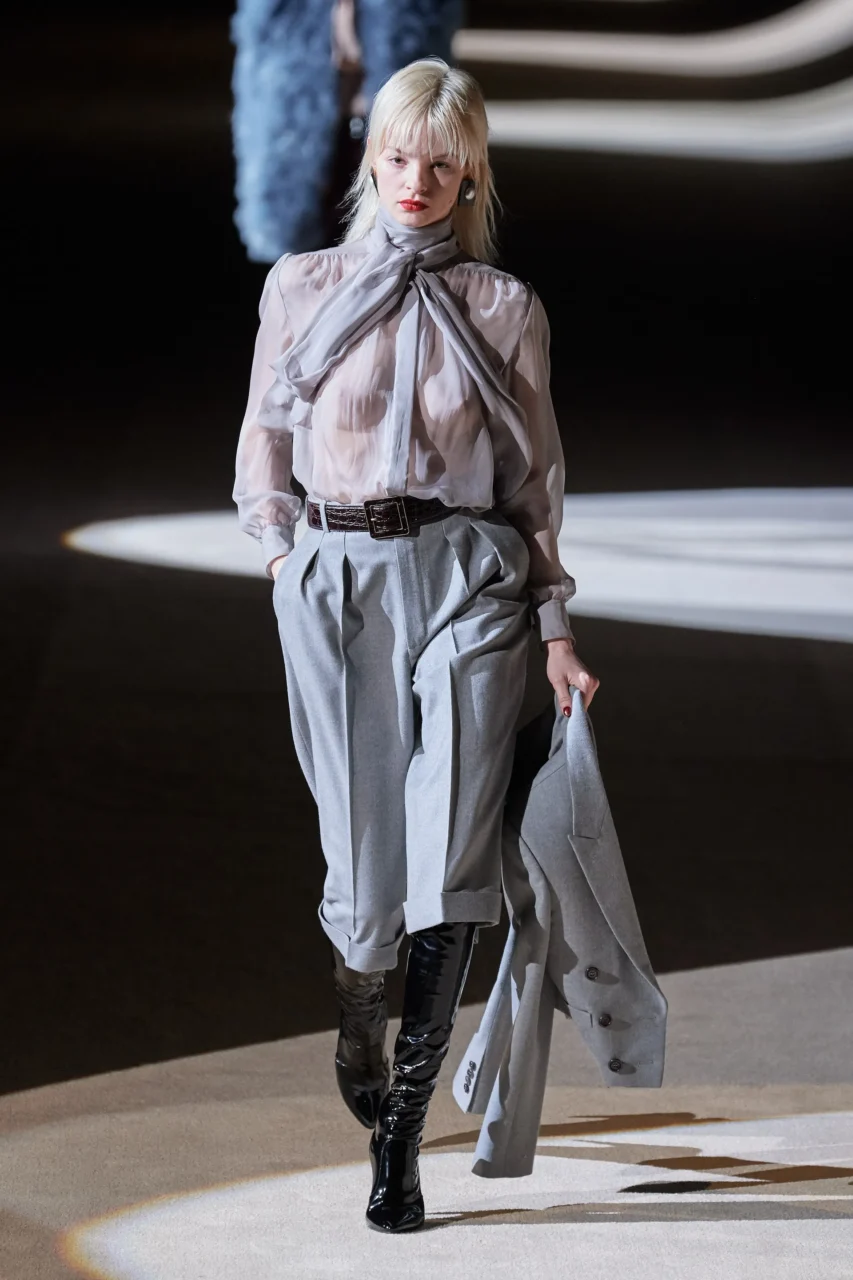
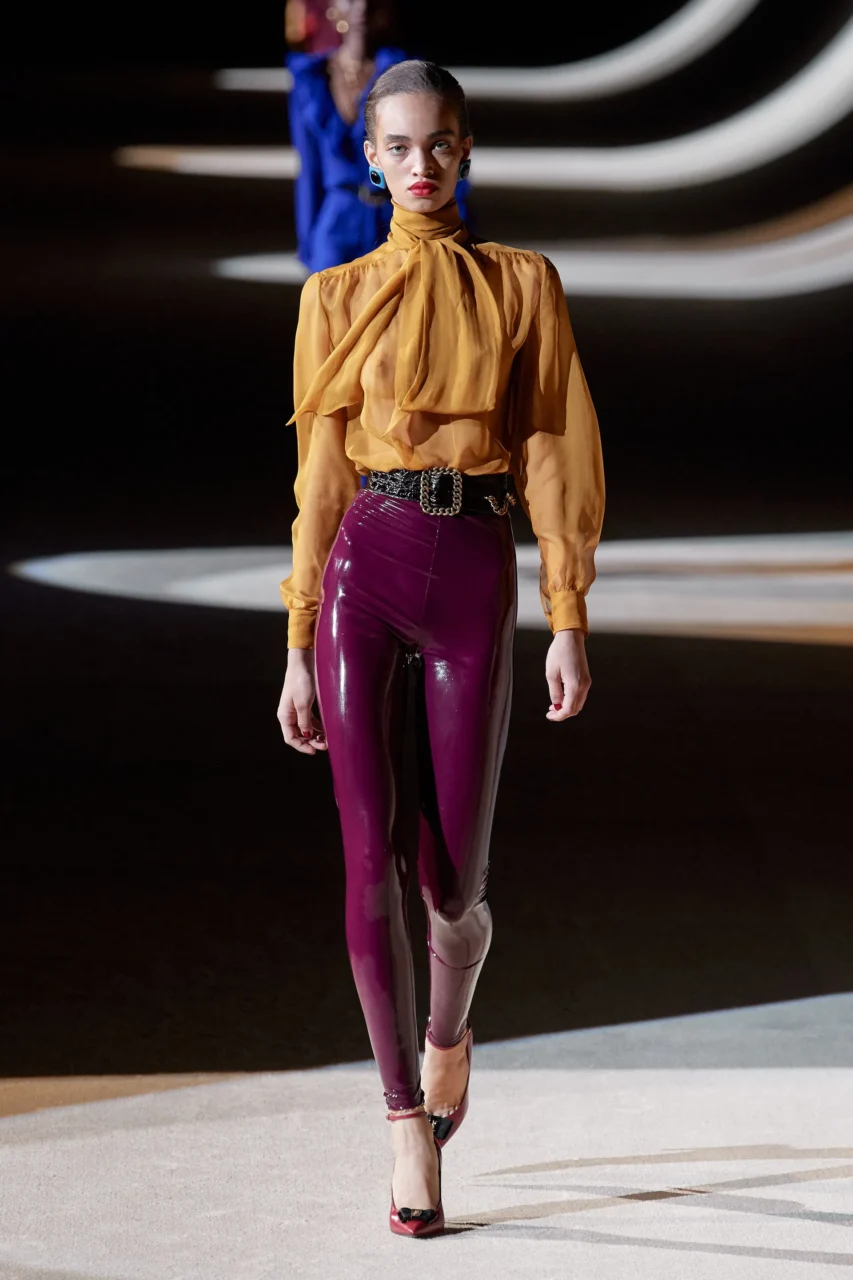
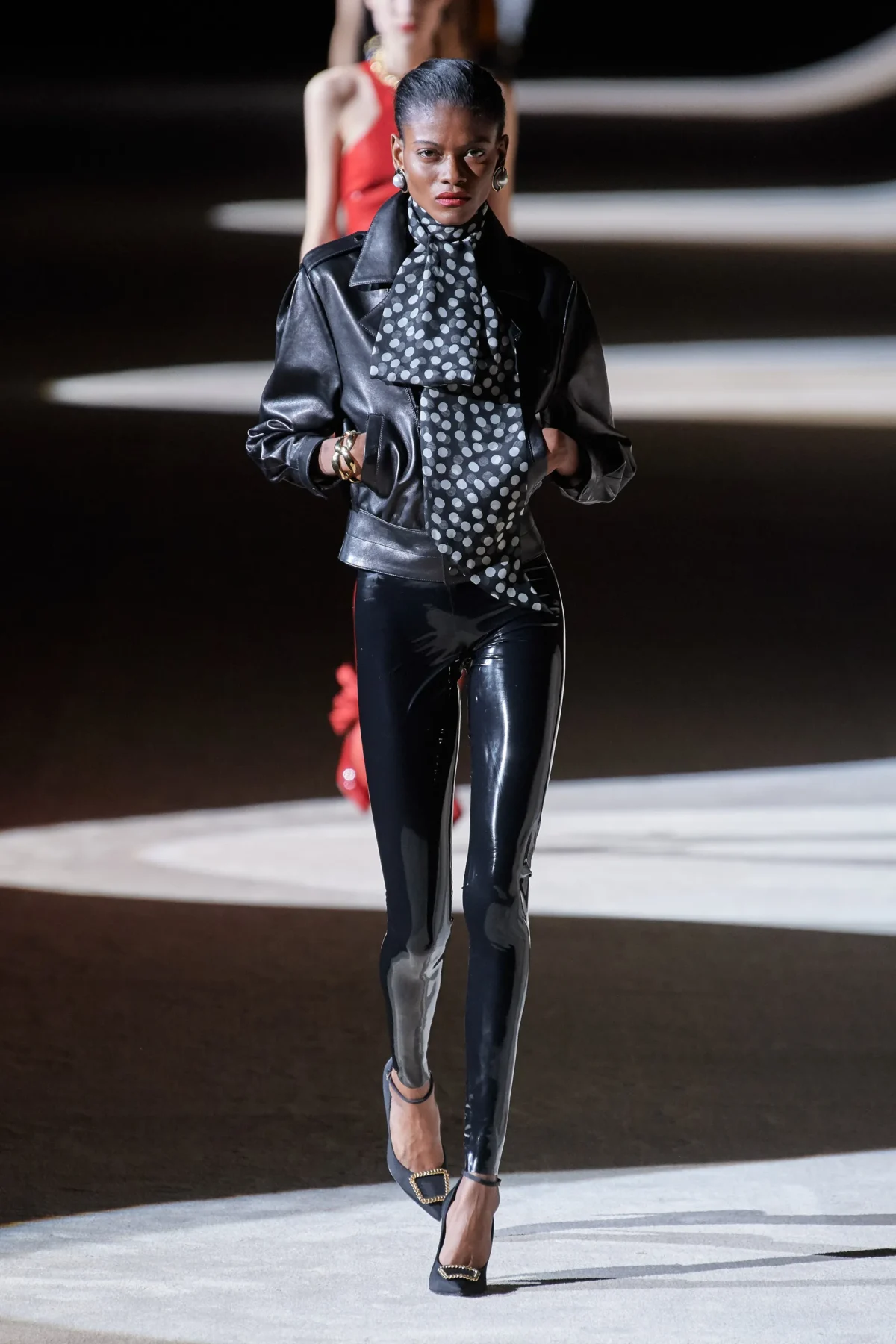
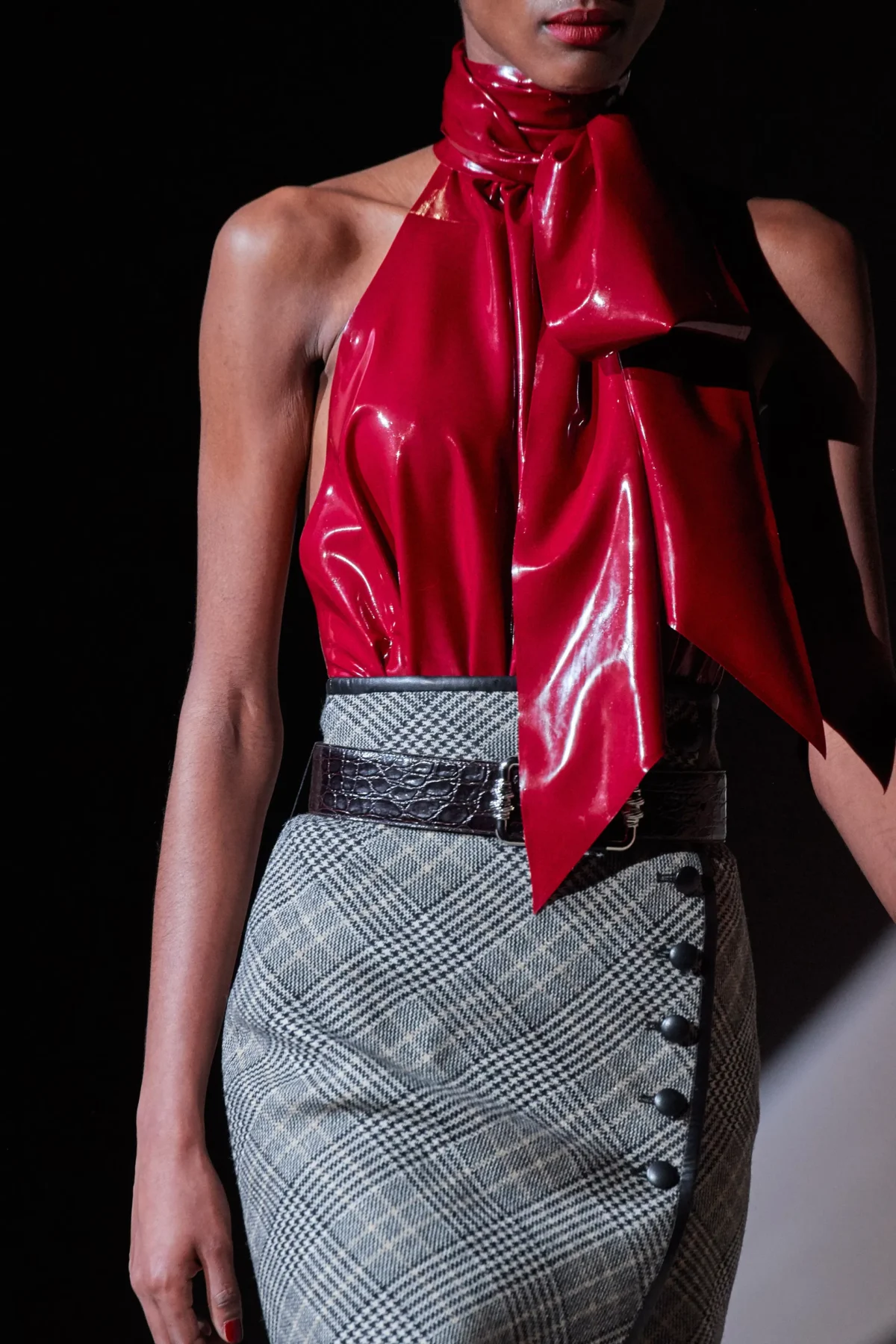
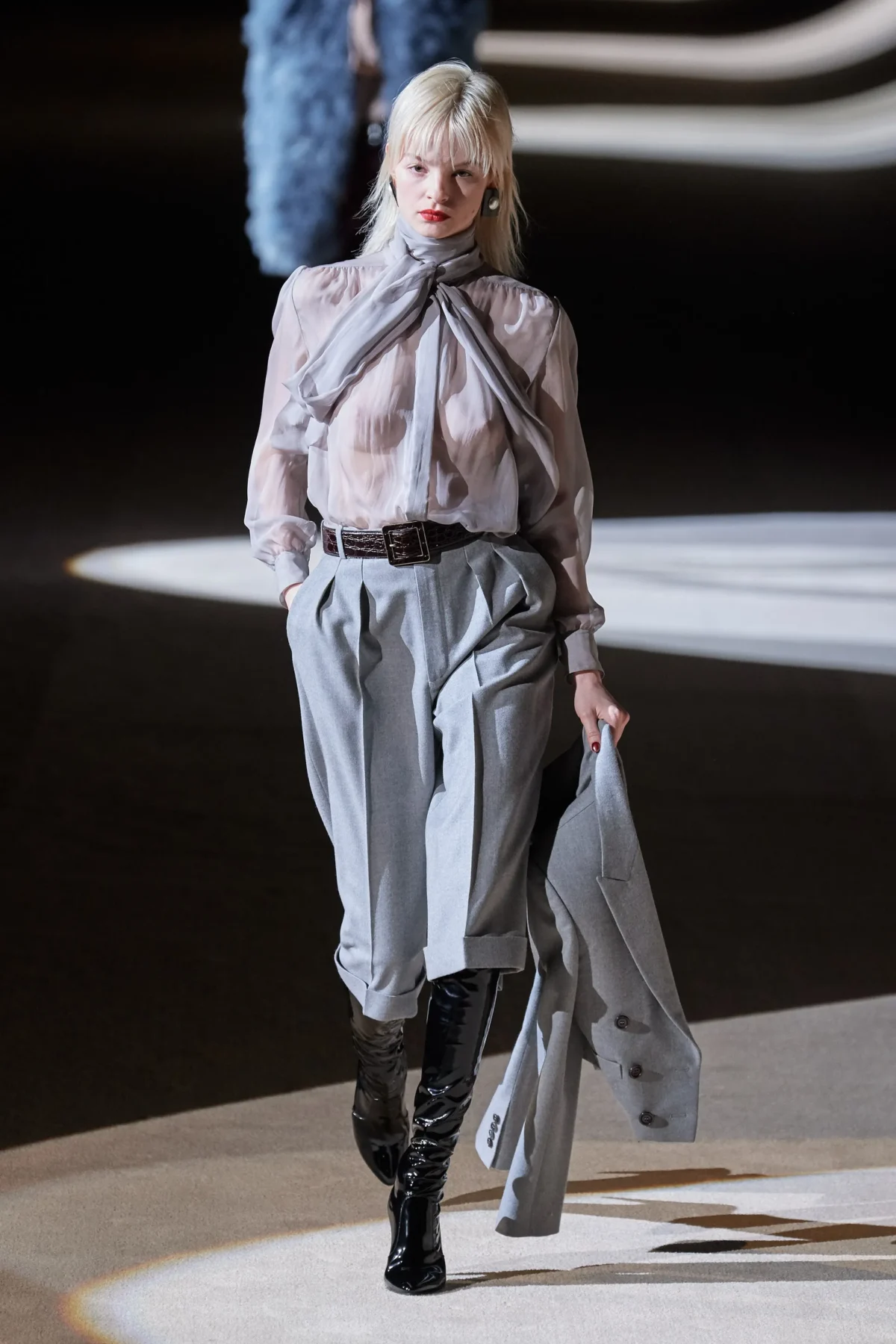
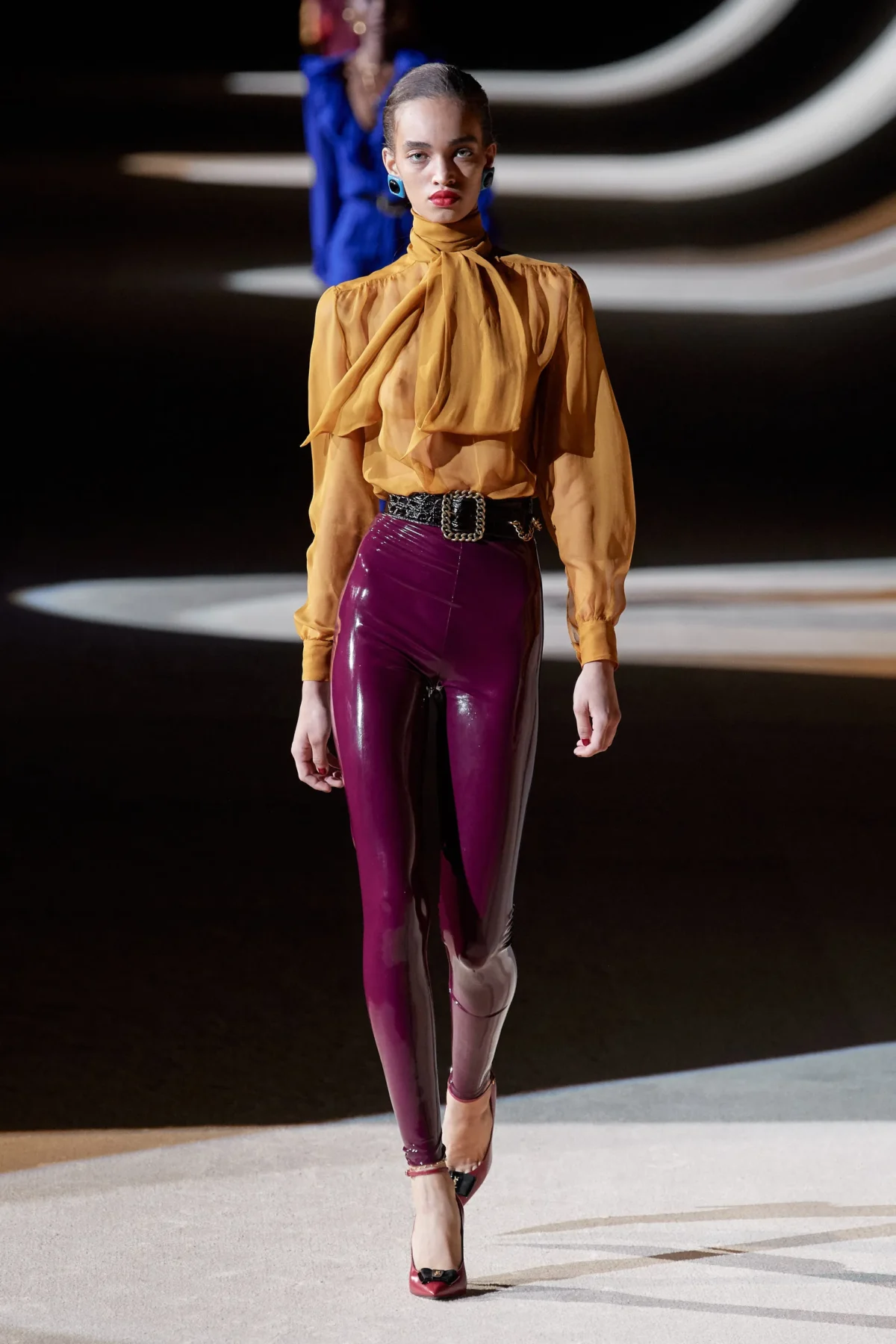
There is something uniquely Hitchcockian about a woman who looks this mysterious while giving absolutely nothing away. For Fall/Winter 2020, Anthony Vaccarello dressed his Saint Laurent woman as the leading lady of a psychological thriller with a rather questionable alibi. Gilt-buttoned blazers, prim pussy-bow blouses and impeccable houndstooth tailoring came paired with latex trousers so glossy and skin-tight that she could have been a Park Avenue socialite, a Hitchcock blonde, or a woman who had just gotten away with murder — possibly all three.
What made this runway particularly compelling was the collision between its two personalities. On the surface was the impeccable bourgeois woman: polished, proper and practically ready for brunch at Le Bristol. Beneath the prim blouses and perfectly cut jackets, however, lurked something far more provocative. Latex replaced the expected tailored trousers, thigh-high boots sharpened the silhouette, and the familiar codes of ladylike dressing acquired a decidedly perverse edge. Vaccarello wasn’t simply making sexy clothes; he was taking the respectable wardrobe apart at the seams, revealing just how much mischief could be hiding beneath a perfectly buttoned jacket.
After years of establishing a distinctly nocturnal world in near-monochromatic black, Vaccarello sent out an unexpected jolt of colour to the runway. Saturated fuchsia, electric blue, emerald and scarlet cut through the familiar darkness, lending the collection a Technicolour charge.
This was perhaps one of the collections in which Vaccarello’s vision for Saint Laurent came into particularly sharp focus. Bourgeois polish met erotic provocation, exquisite tailoring came with a hint of trouble, and latex was more than a gimmick thrown beneath a good blazer — it was what made the blazer interesting. His Saint Laurent woman was neither the good girl nor the bad girl, but someone who knew she could be either and saw no need to explain herself.
4. Fall/Winter 2024
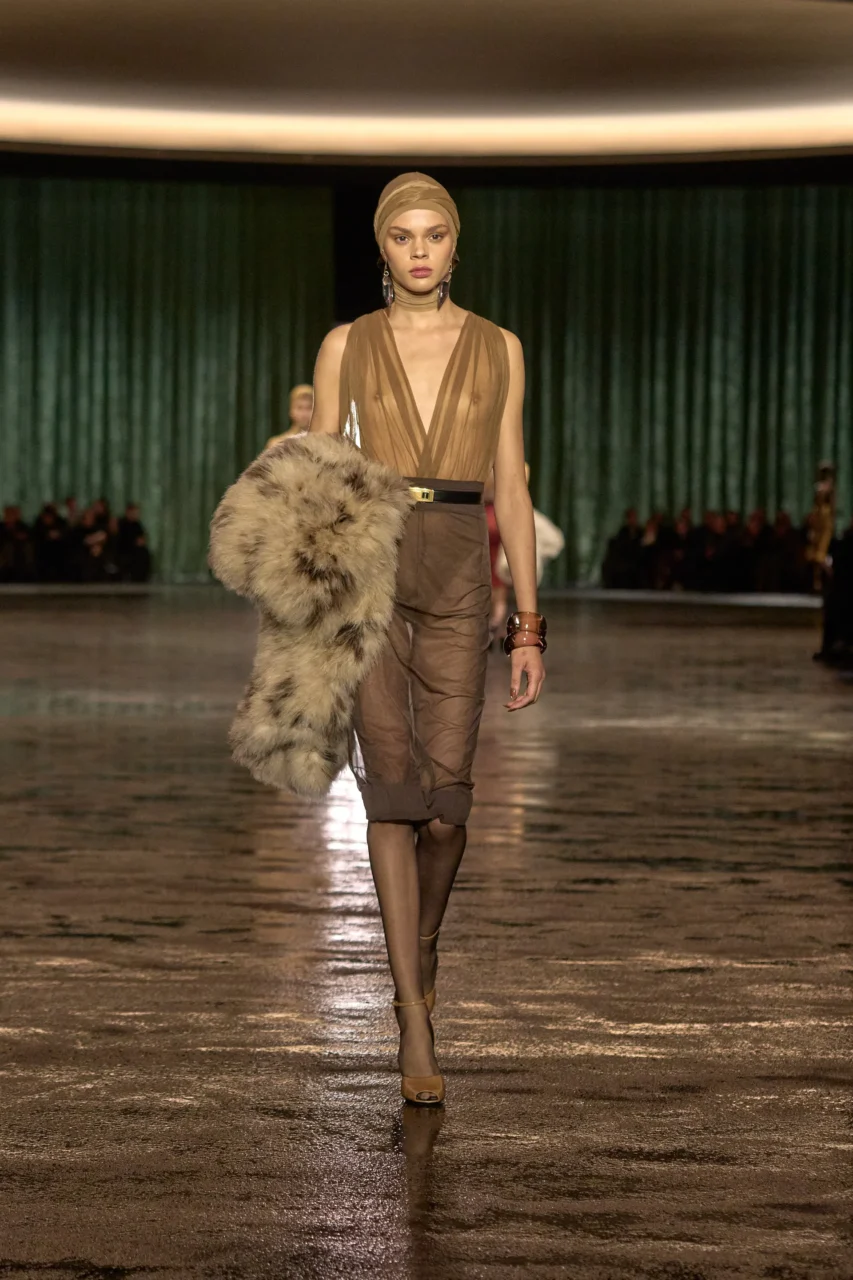
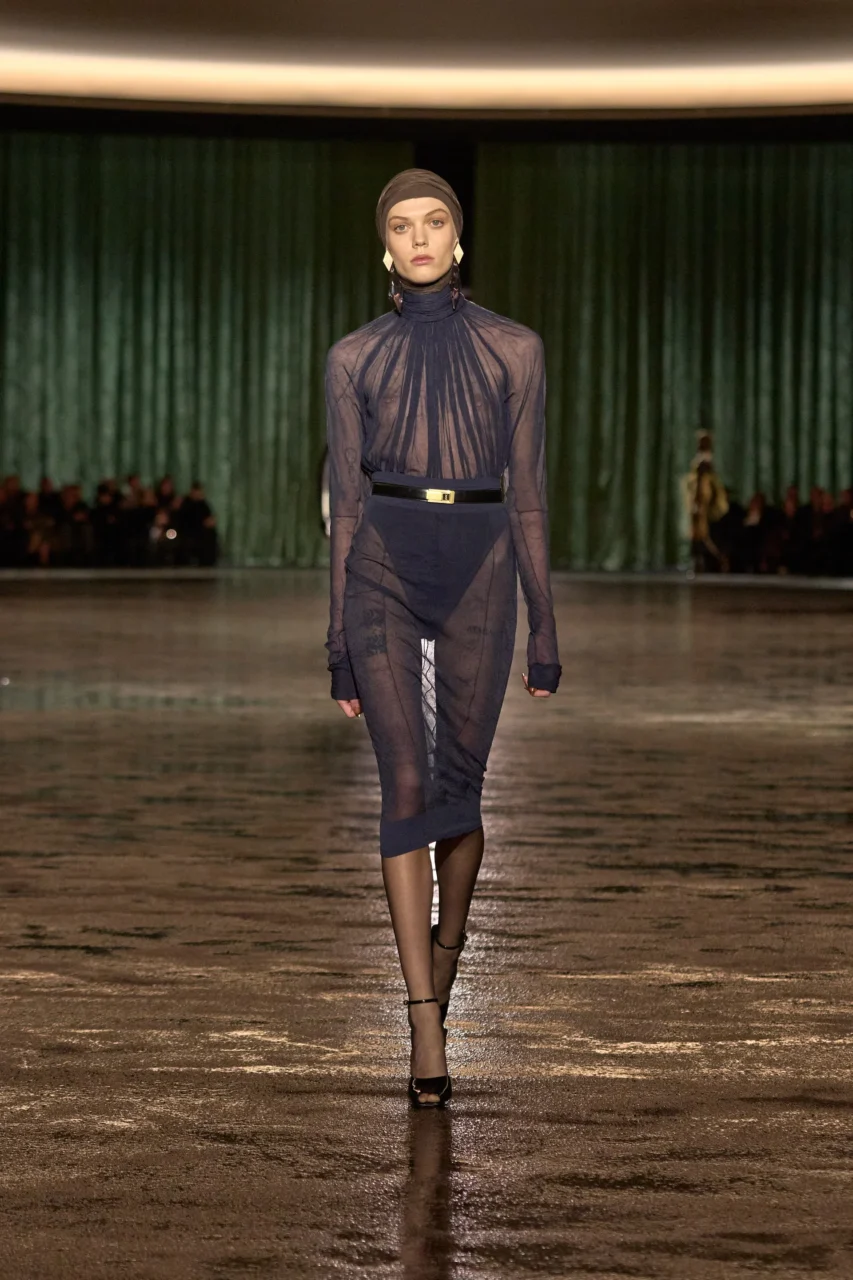
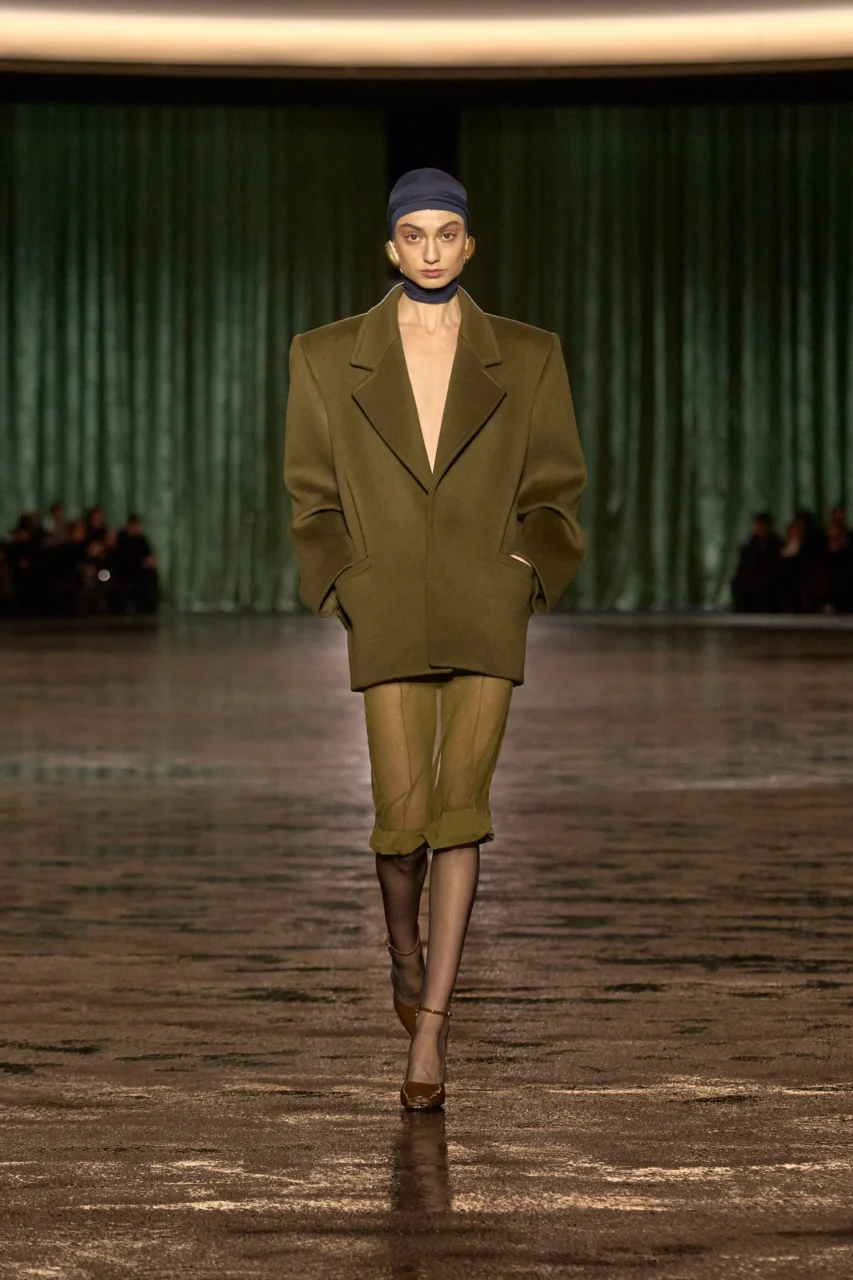
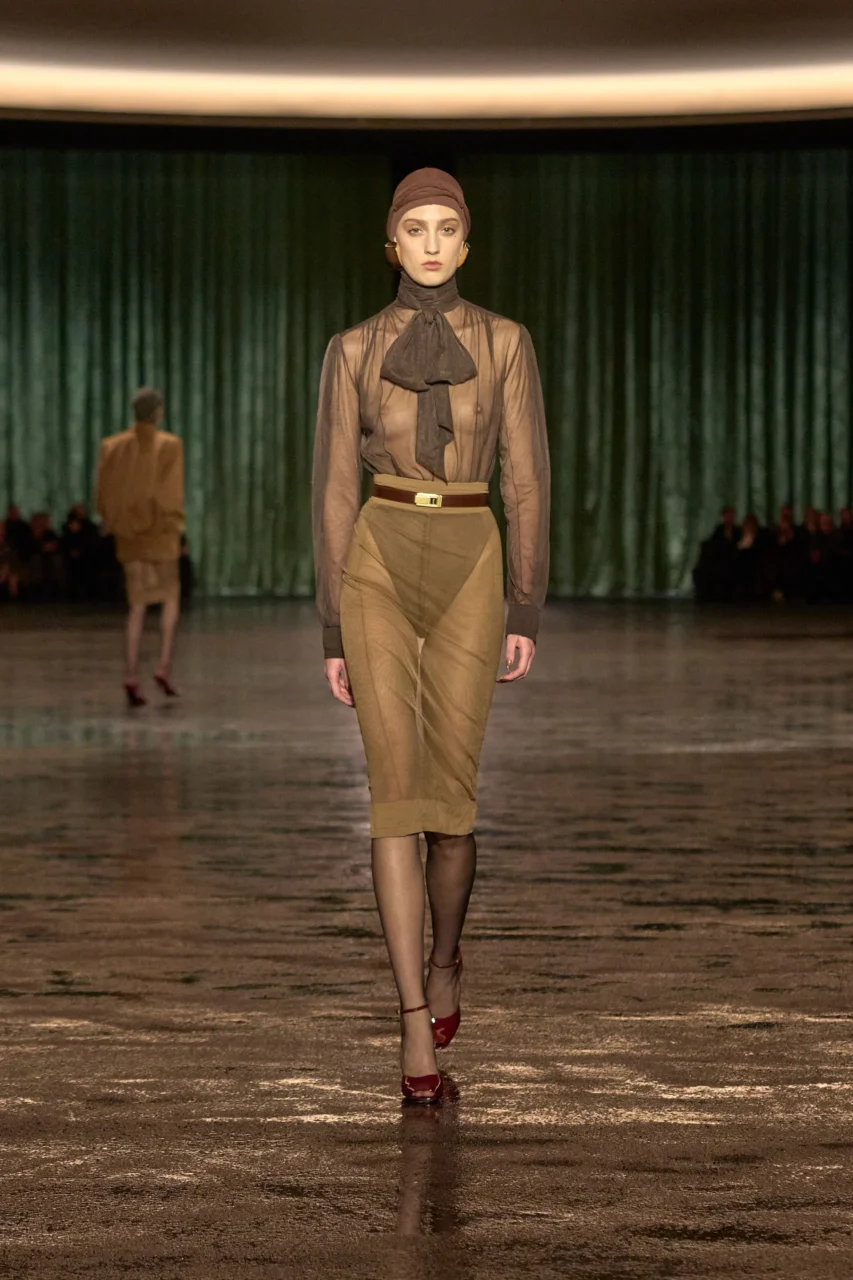
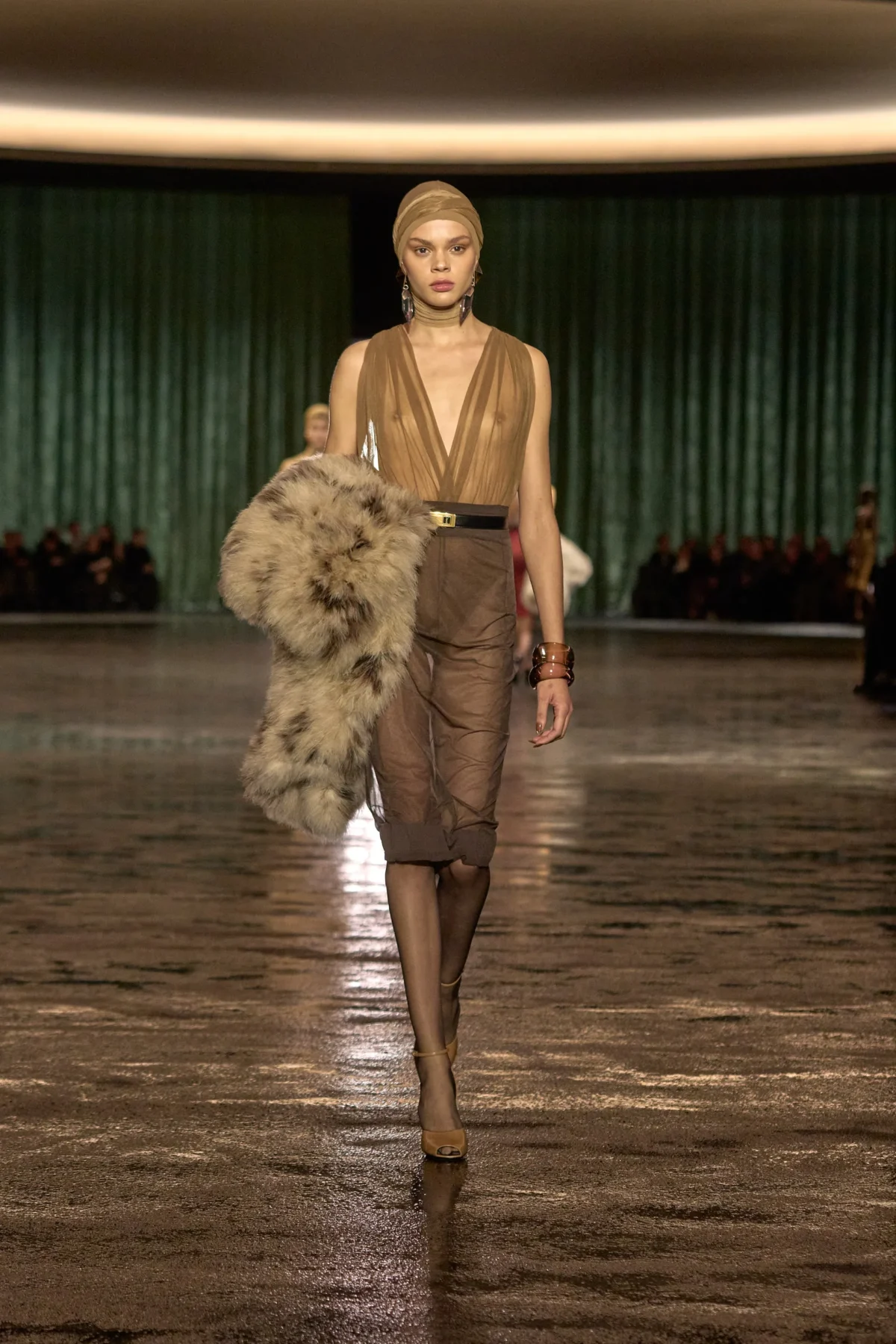
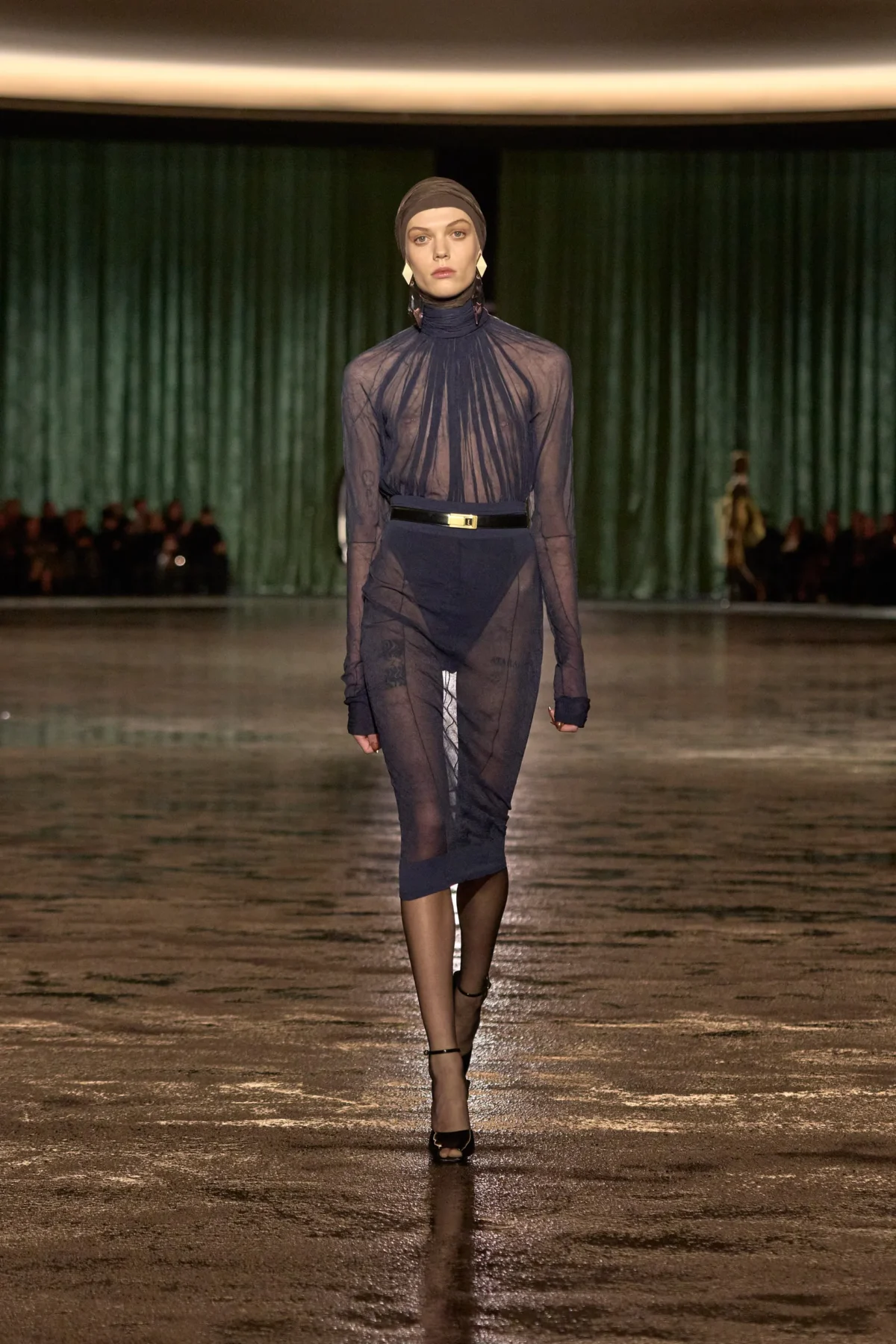
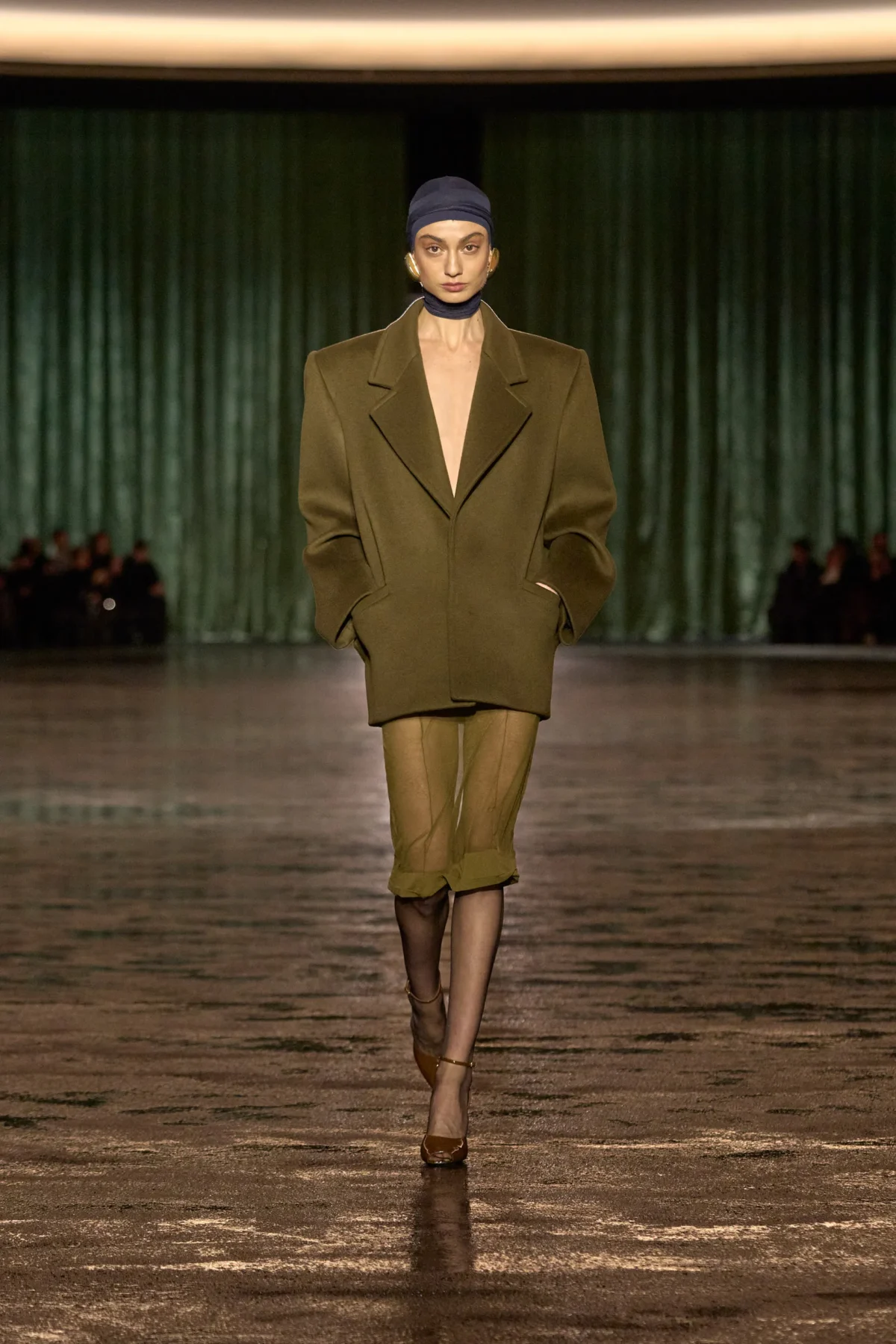
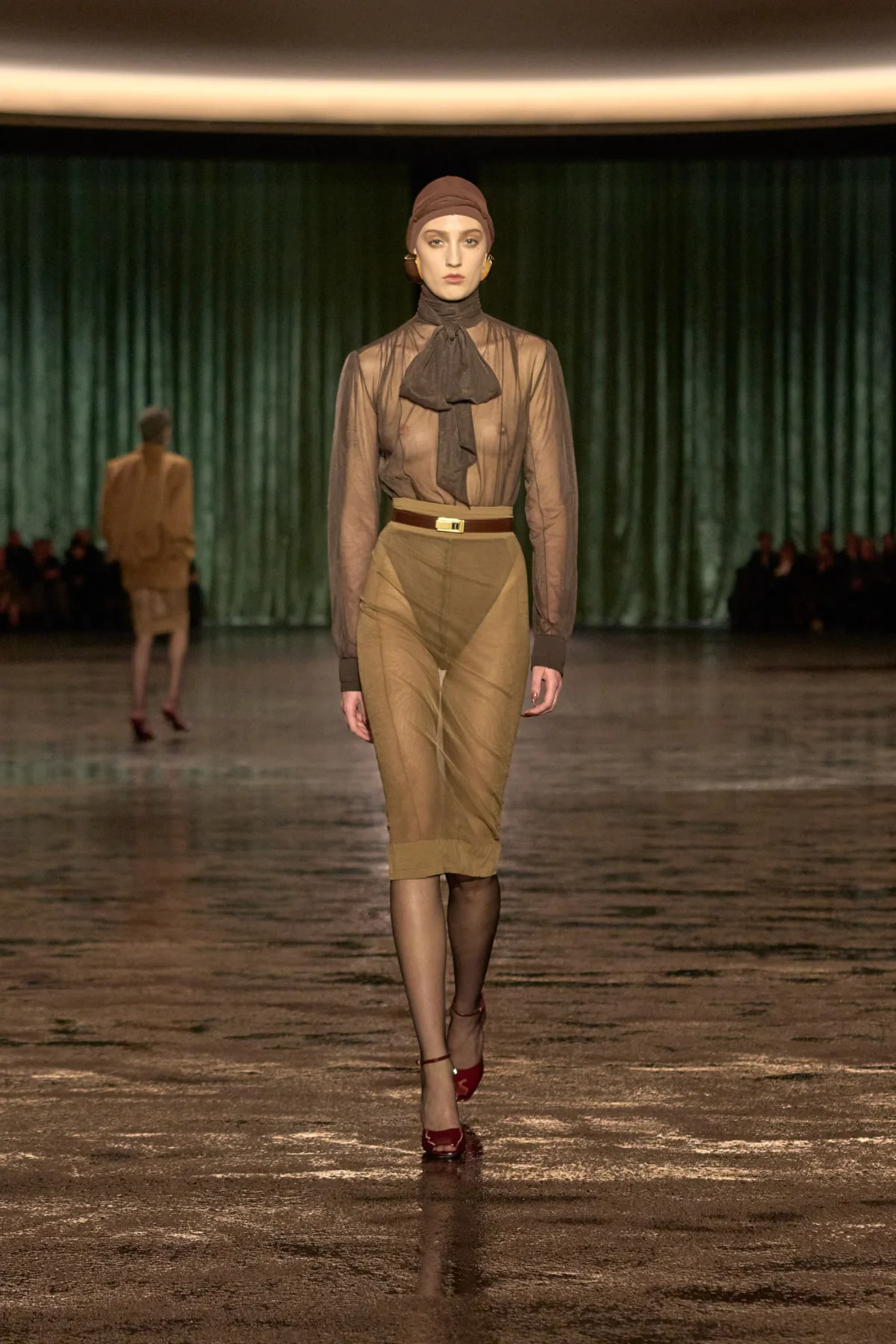
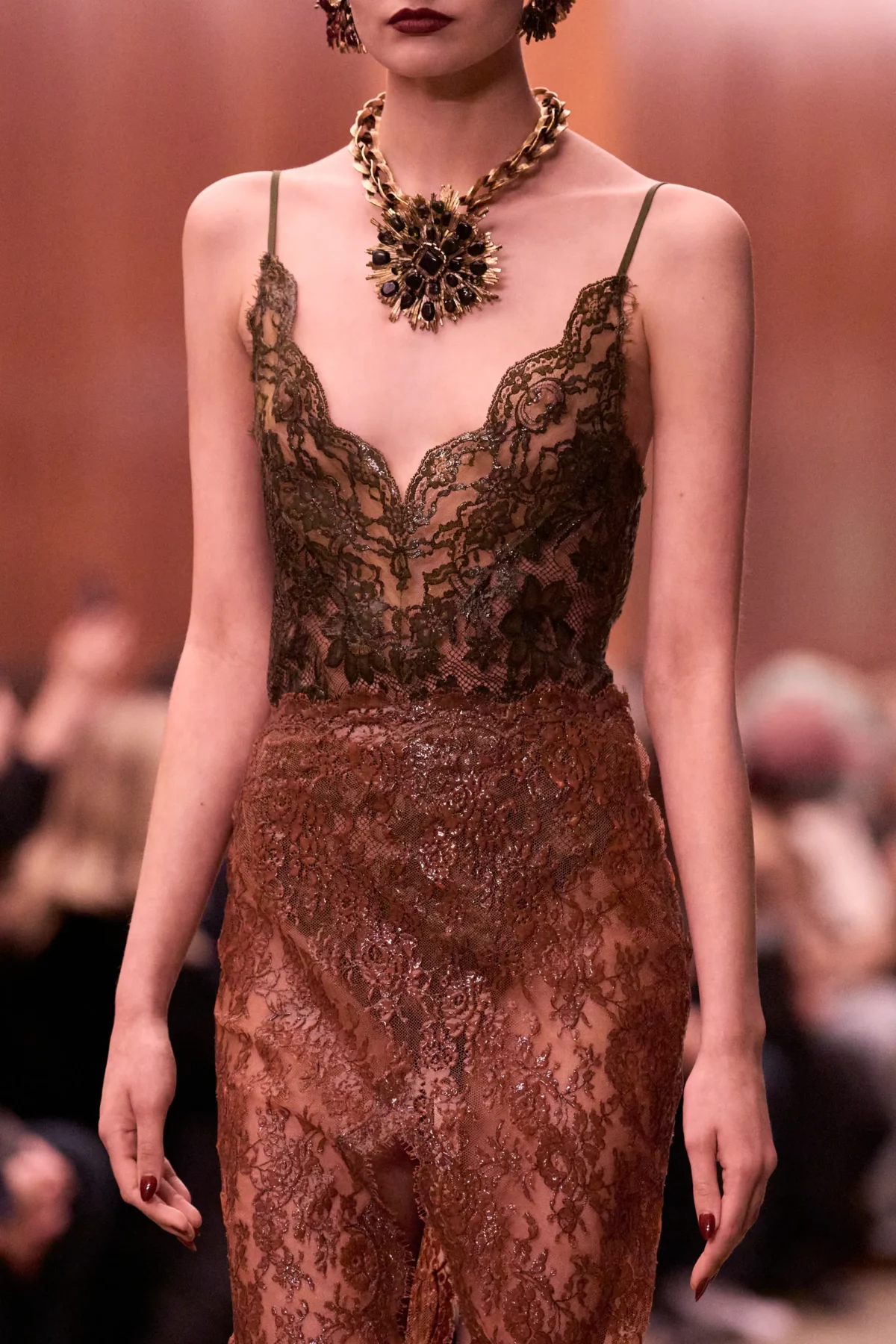
Some clothes conceal, others reveal. Vaccarello’s Fall/Winter 2024 collection made a rather elegant case for doing both at once. For this runway, the designer sent out an almost entirely sheer collection in hosiery-like fabric, ranging from translucent blouses and pencil skirts to dresses skimming just below the knee. Edith Wharton would have had a field day.
Transparency was hardly new to the brand. Yves Saint Laurent challenged convention with his see-through blouse in the late 1960s, making the exposed body a subject of fashion rather than simply a matter of undress. By 2024, however, the naked dress had become almost a red-carpet reflex, with each new interpretation threatening to outdo the last. Vaccarello’s answer was not to reveal more, but to change the terms of the reveal. By placing near-nudity inside such disciplined silhouettes, he made transparency feel unfamiliar again.
There was a particular power in this restraint. Amid increasingly familiar displays of bare skin, Vaccarello found a fresh tension between propriety and provocation. Rather than a bid for attention, the collection understood that being looked at is inevitable, but being understood is another matter entirely. Vaccarello dressed his woman with plenty to see and remarkably little to know. She appeared exposed without looking vulnerable, dressed without being constrained. Even the collection’s more provocative looks retained an air of control, as though she had already decided what the audience was allowed to take away.
5. Spring/Summer 2026
For Spring/Summer 2026, Vaccarello divided the show into three acts, each revealing a different facet of his Saint Laurent woman.
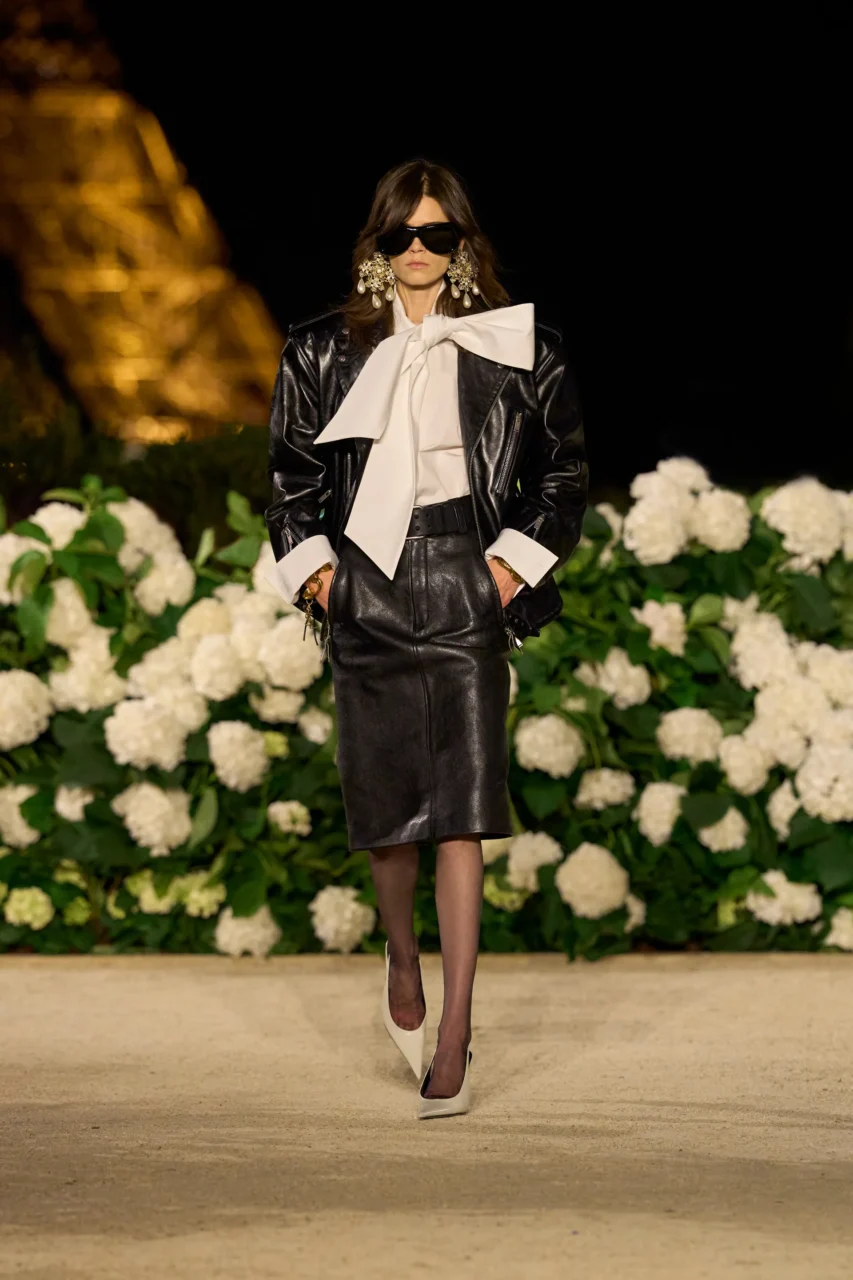
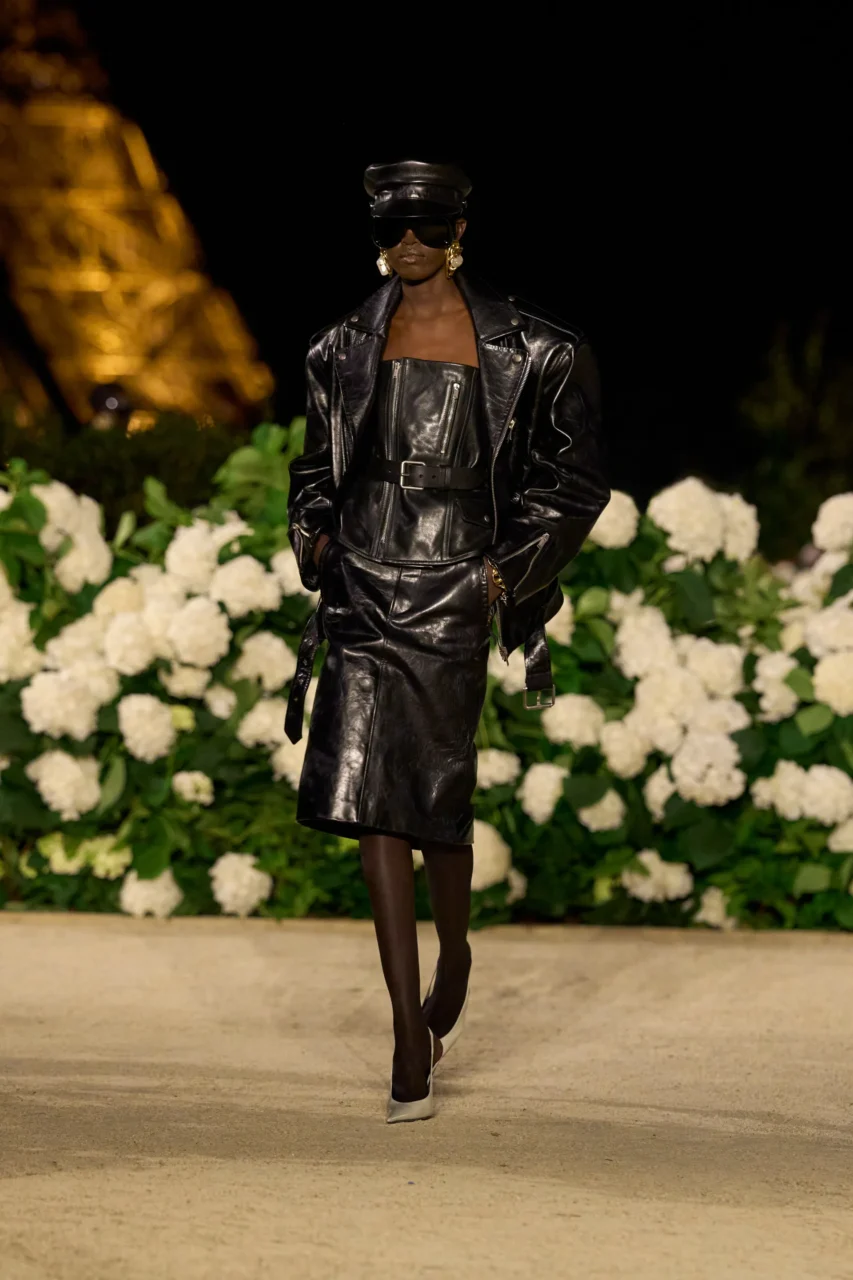
The opening act belonged to cruising culture. Leather, sharp tailoring and severe silhouettes recalled Robert Mapplethorpe’s provocative portraits of gay male subcultures, while the atmosphere brought William Friedkin’s Cruising to mind. Al Pacino’s undercover detective was hardly the same character as Vaccarello’s immaculately dressed woman, but both inhabit worlds where clothing becomes a language of desire, danger and belonging.
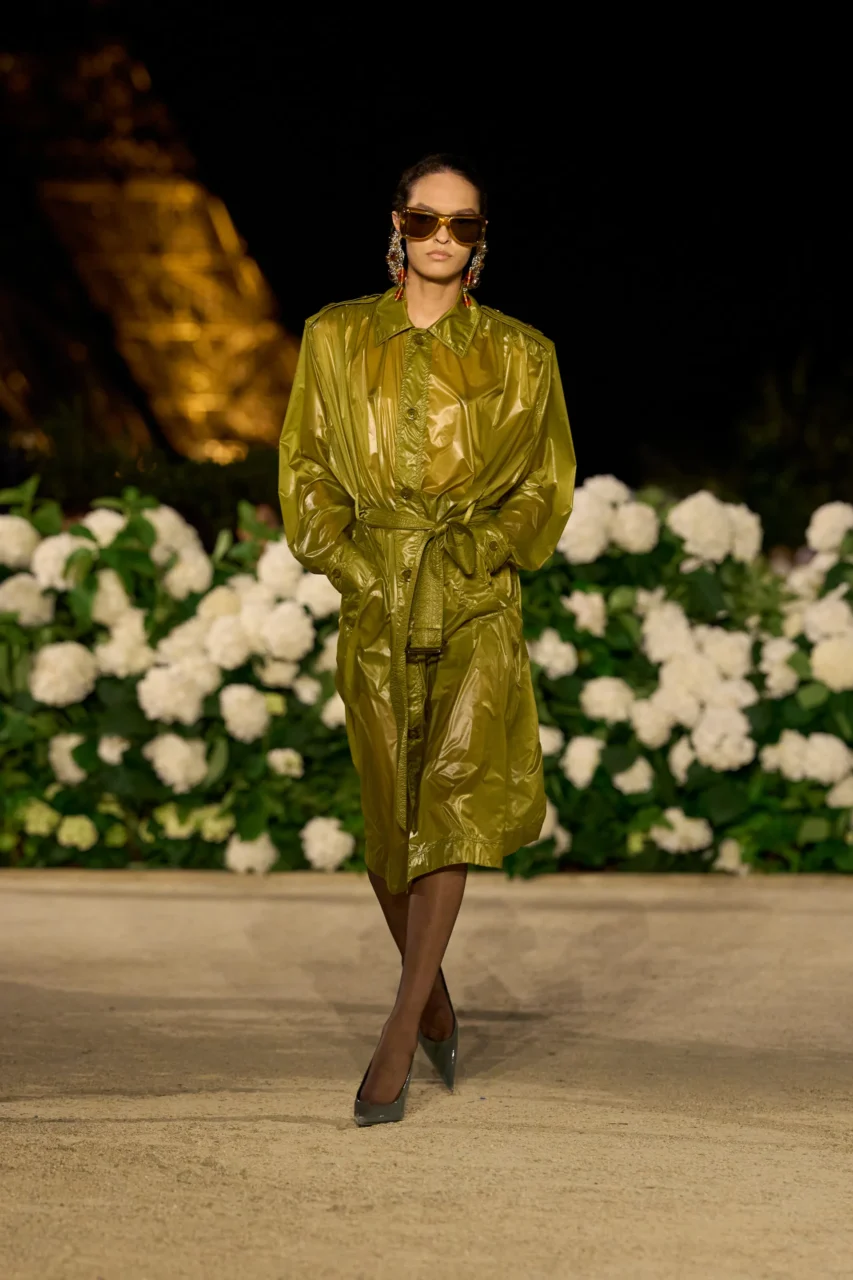
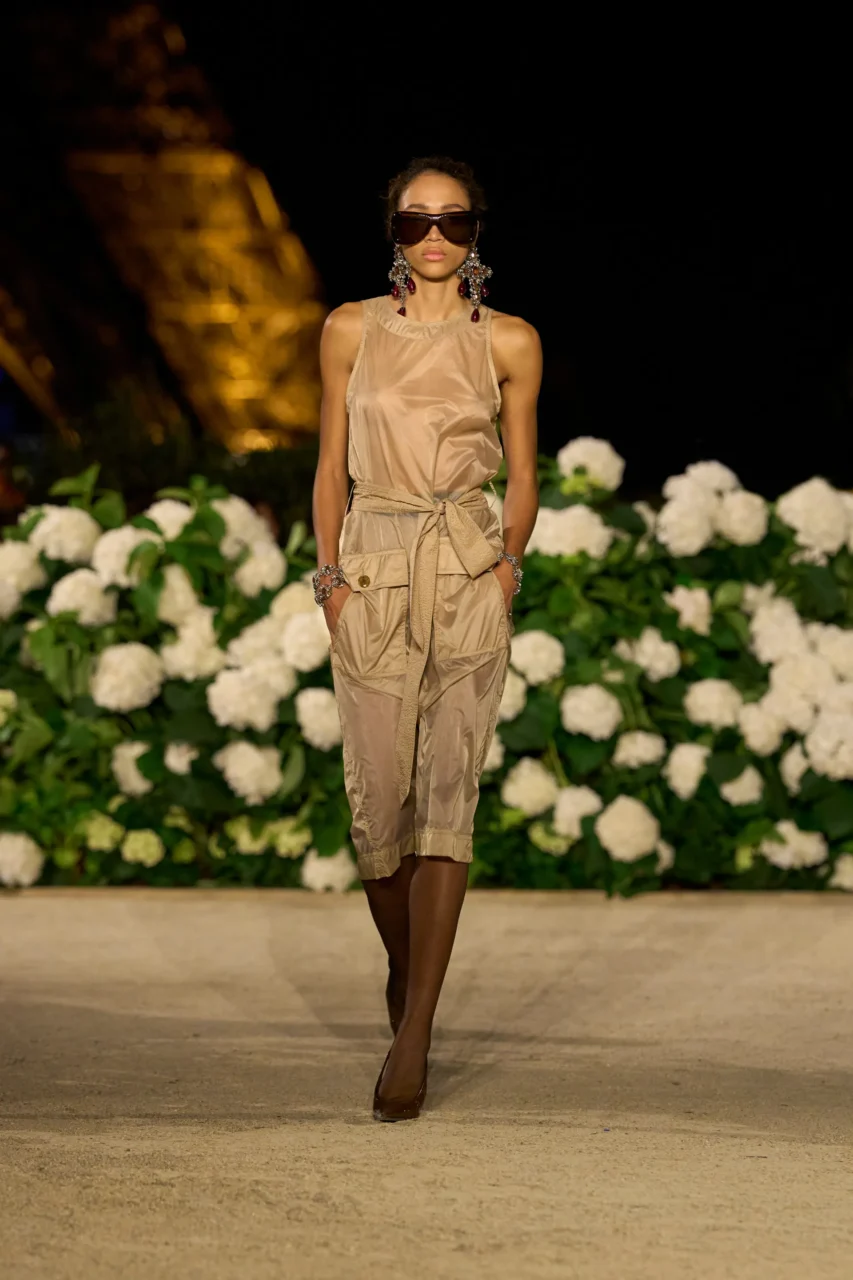
Act two was, quite literally, more transparent. Sheer nylon dresses and coats covered the body without quite concealing it, revisiting a tension Vaccarello had explored in Fall/Winter 2024. This time, the idea took on a lighter, sportier dimension, with fluid Rive Gauche silhouettes rendered in airy, technical nylon that lent the looks a sense of modern rebellion.
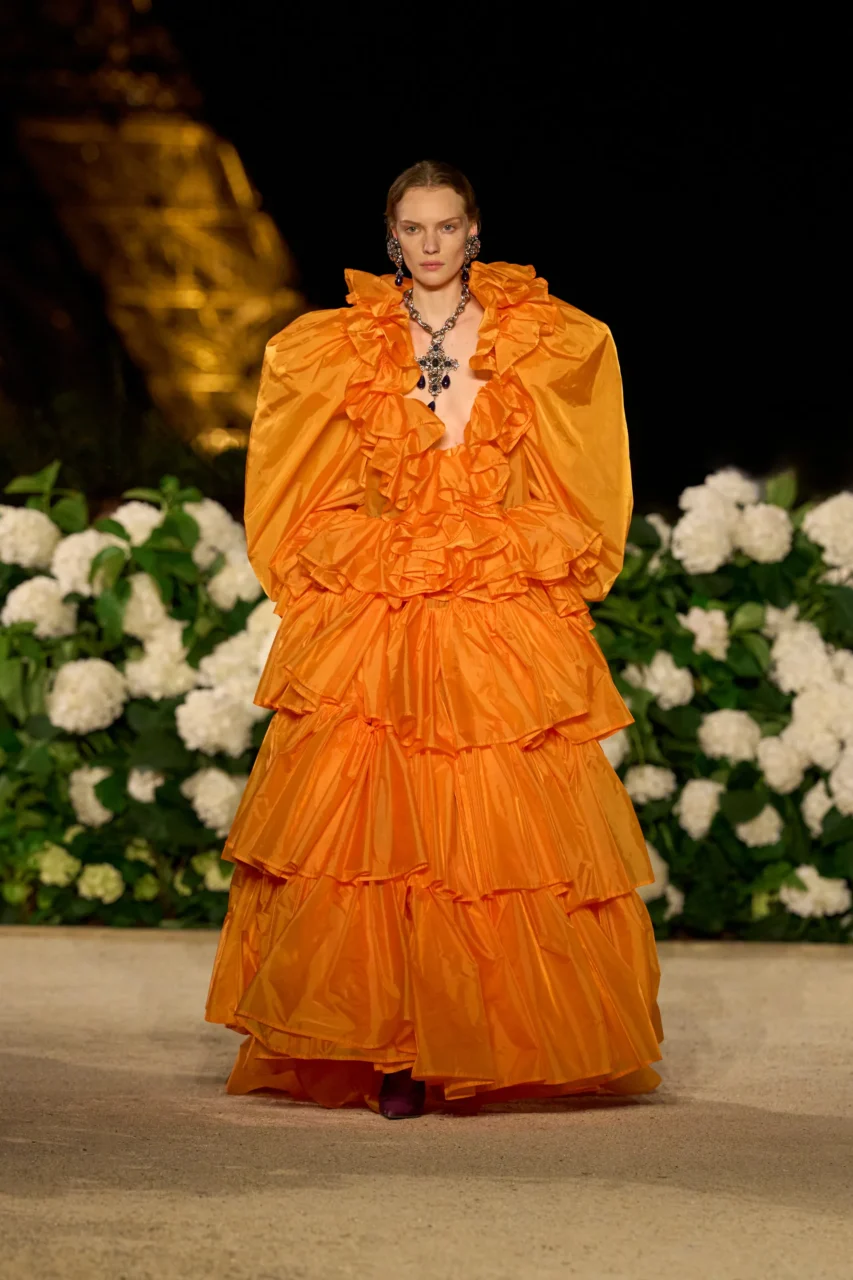
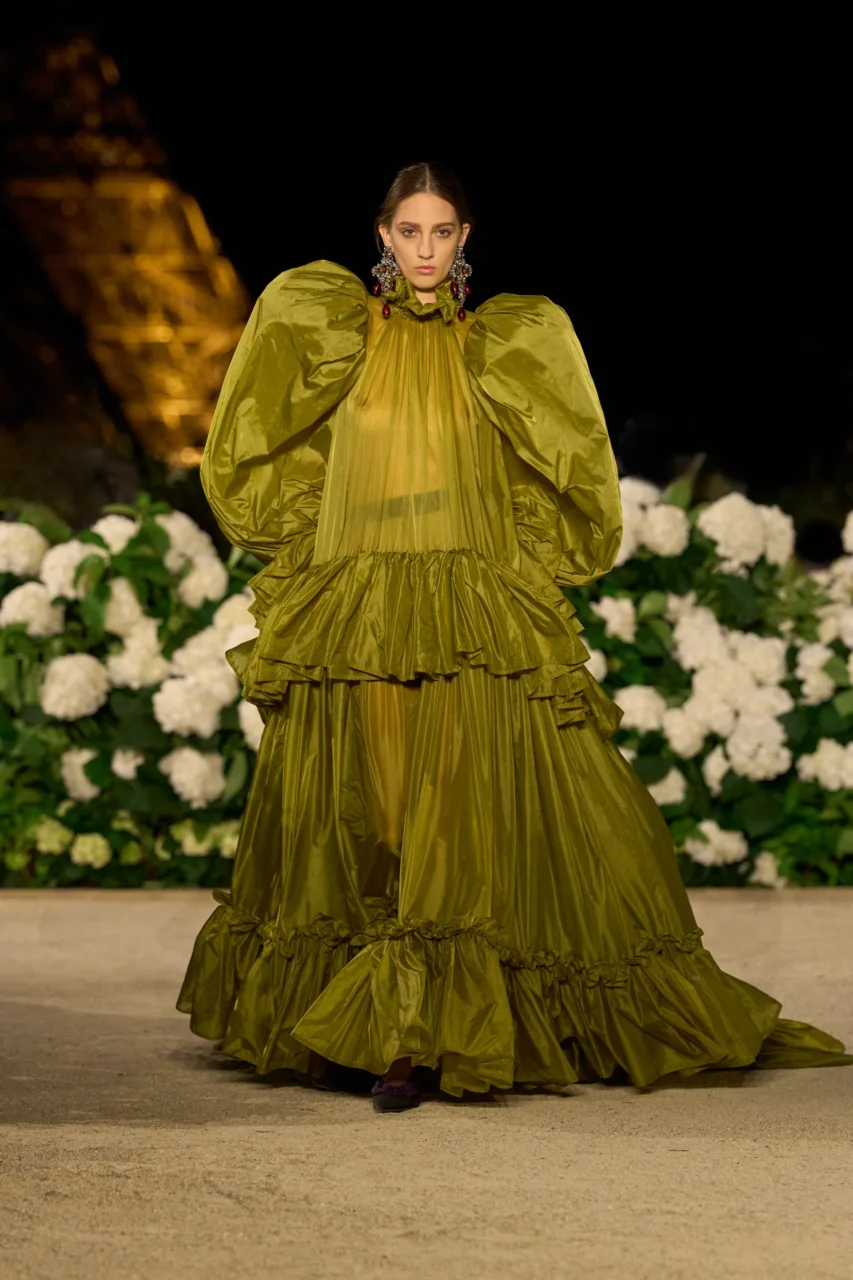
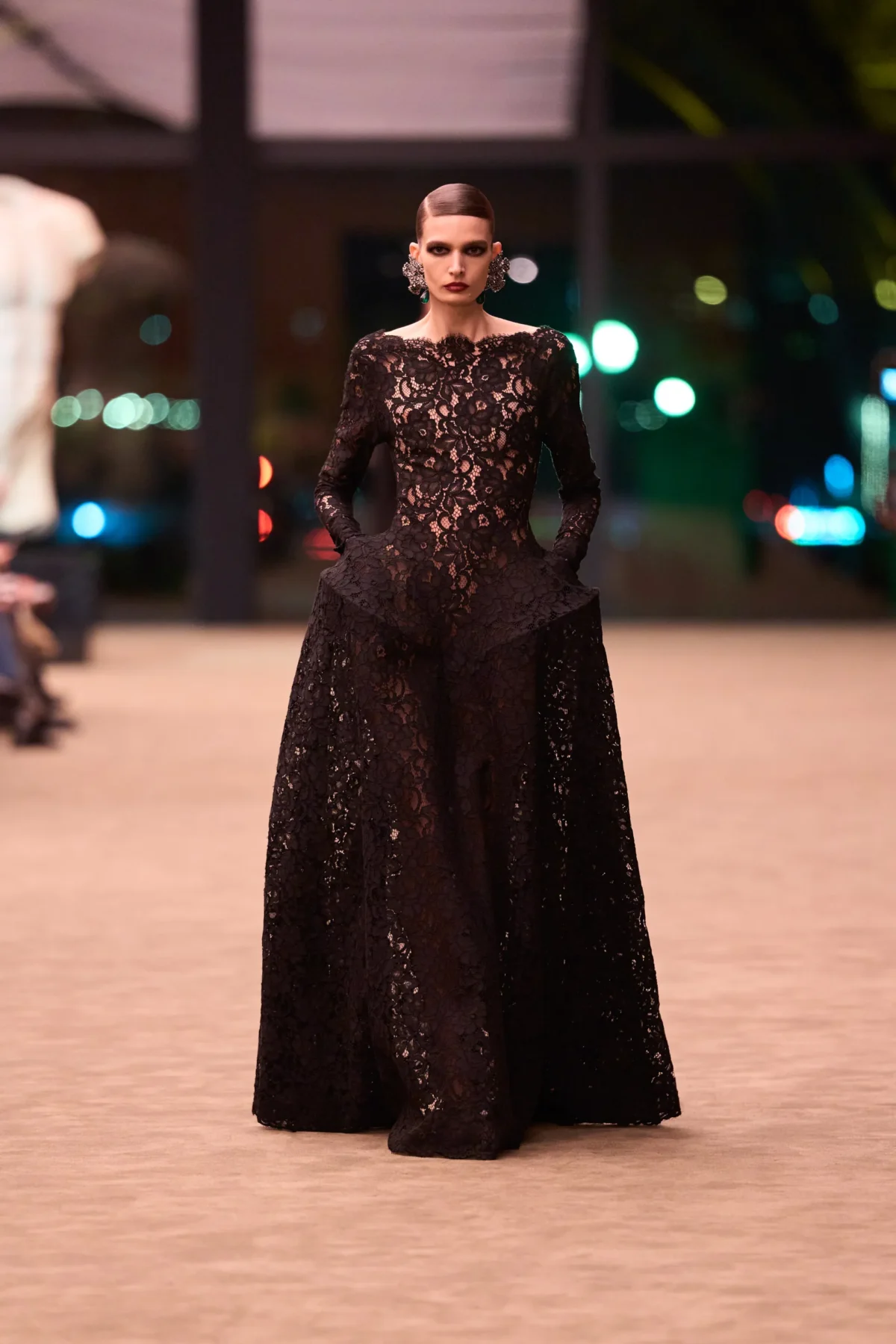
Then, just when the collection seemed to have explored every variation on seduction, came the gowns. Enormous sleeves and billowing silhouettes summoned the courtly drama of La Reine Margot, alongside the Belle Époque costumes Yves Saint Laurent designed for the Proust Ball in 1971. Crafted from lightweight, sheer nylon, the gowns had the grandeur of period-film costumes without the weight of traditional couture, their airy proportions moving with the body rather than imprisoning it.
The closing act was steeped in historical glamour, bringing to mind the nocturnal elegance of John Singer Sargent’s infamous portrait, Madame X. More than a century after Madame X’s fallen shoulder strap scandalised Parisian society, Vaccarello continued to play with the question of who gets to decide how much of a woman the world is allowed to see.
Together, the three acts made for a neat summary of Vaccarello’s tenure: the erotic, the exposed and the untouchable. His woman could reveal herself without surrendering control, and wear the weight of history without being weighed down by it.
6. Fall/Winter 2026
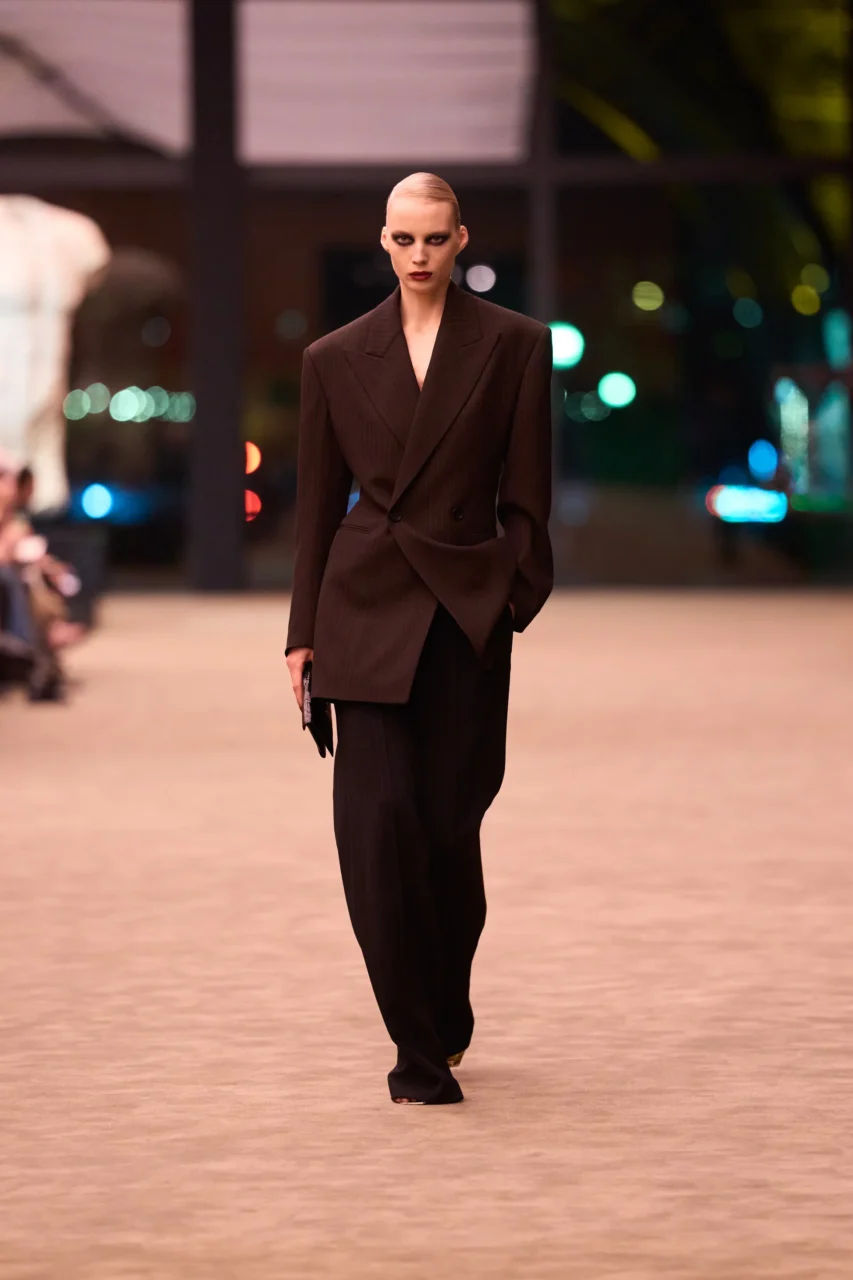
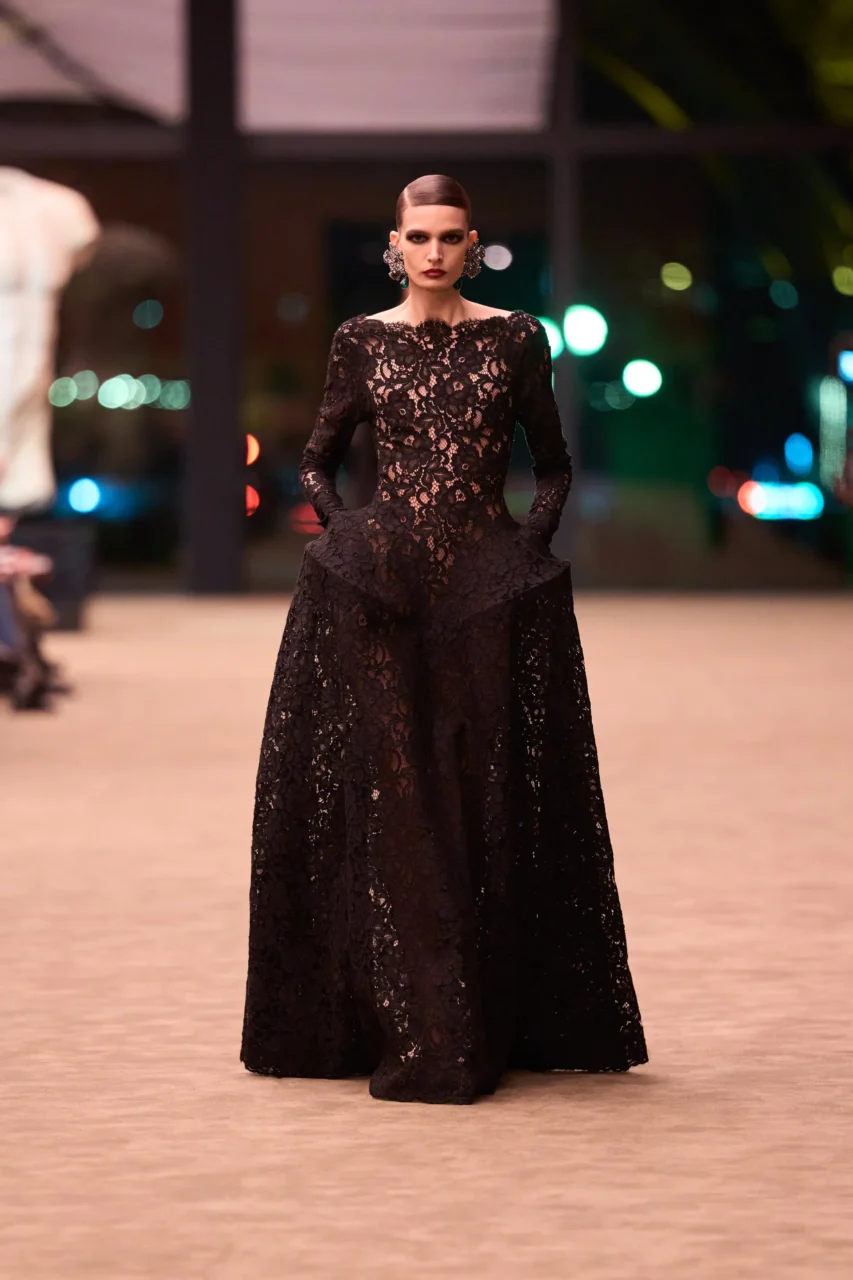
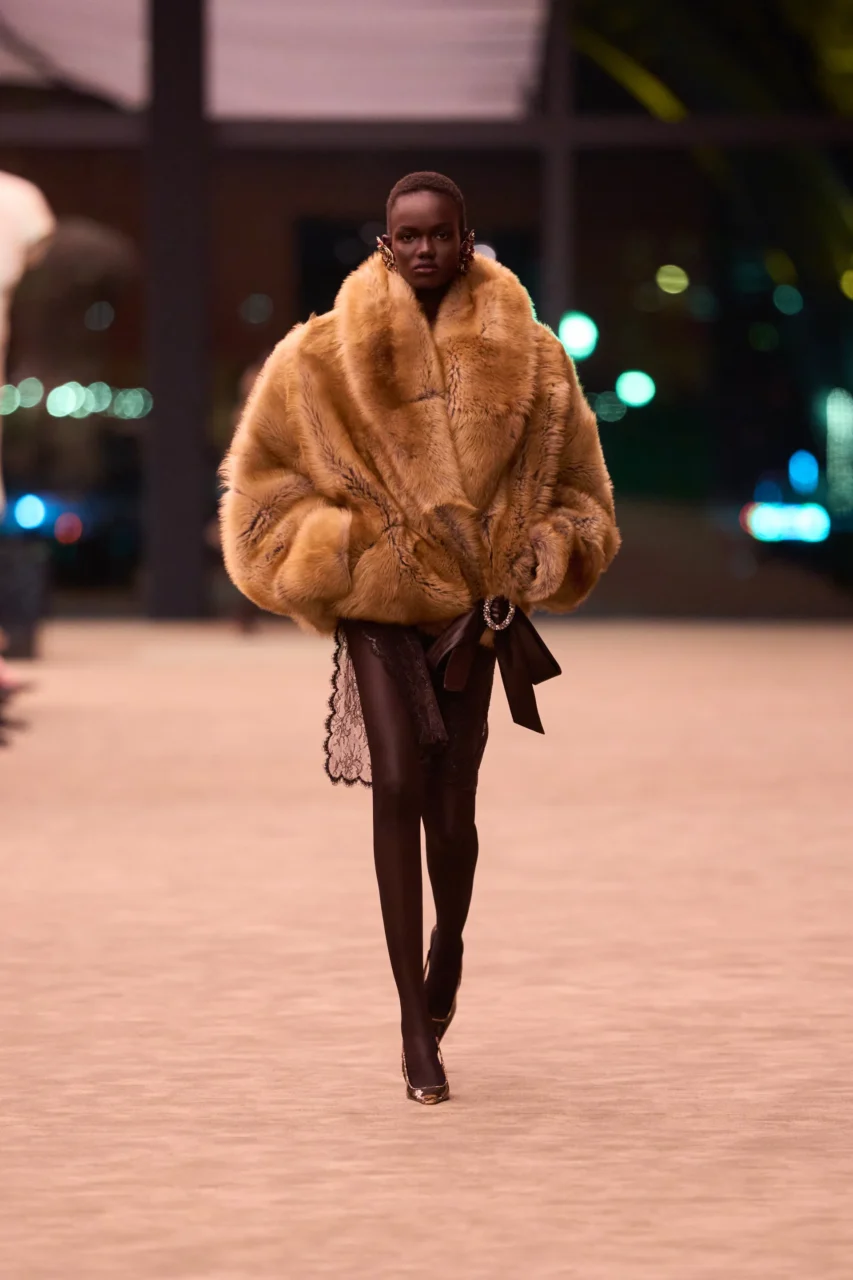
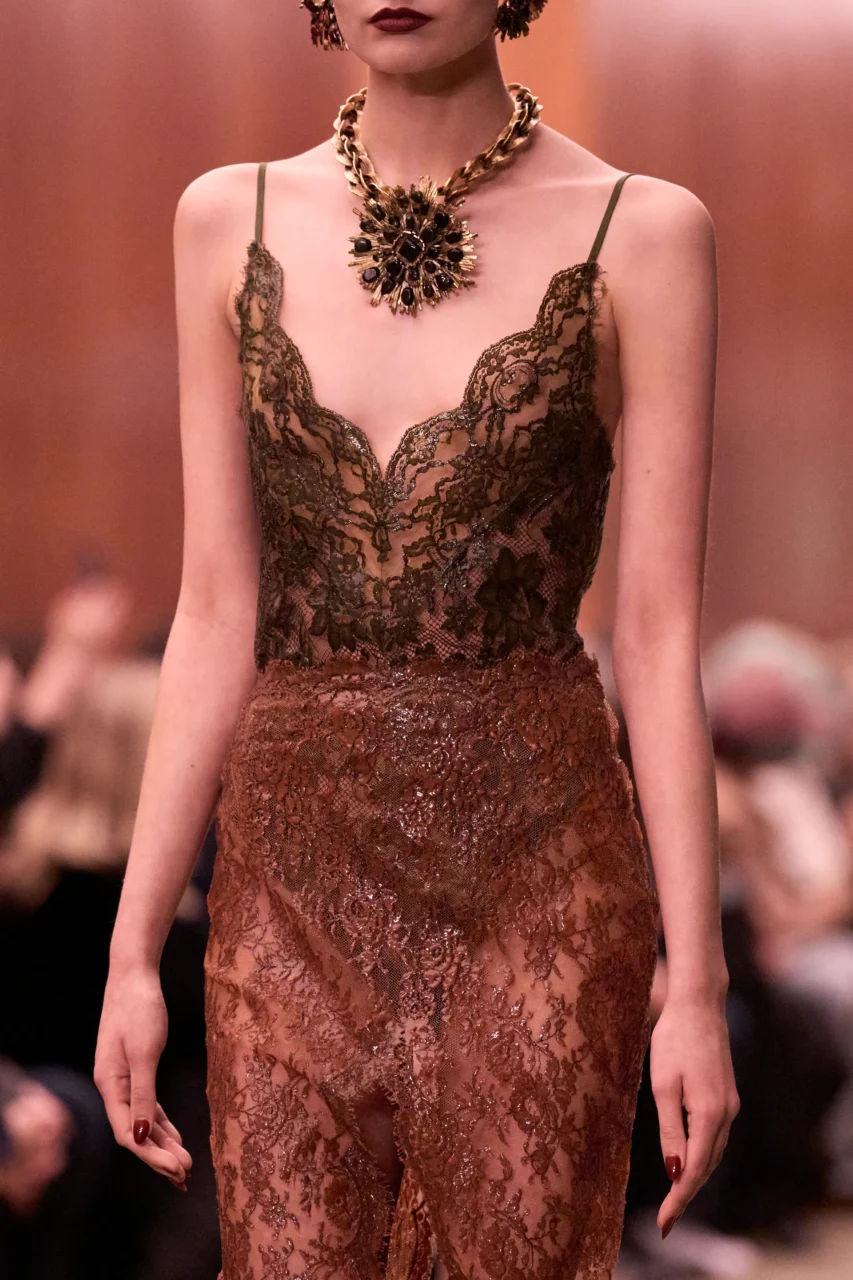
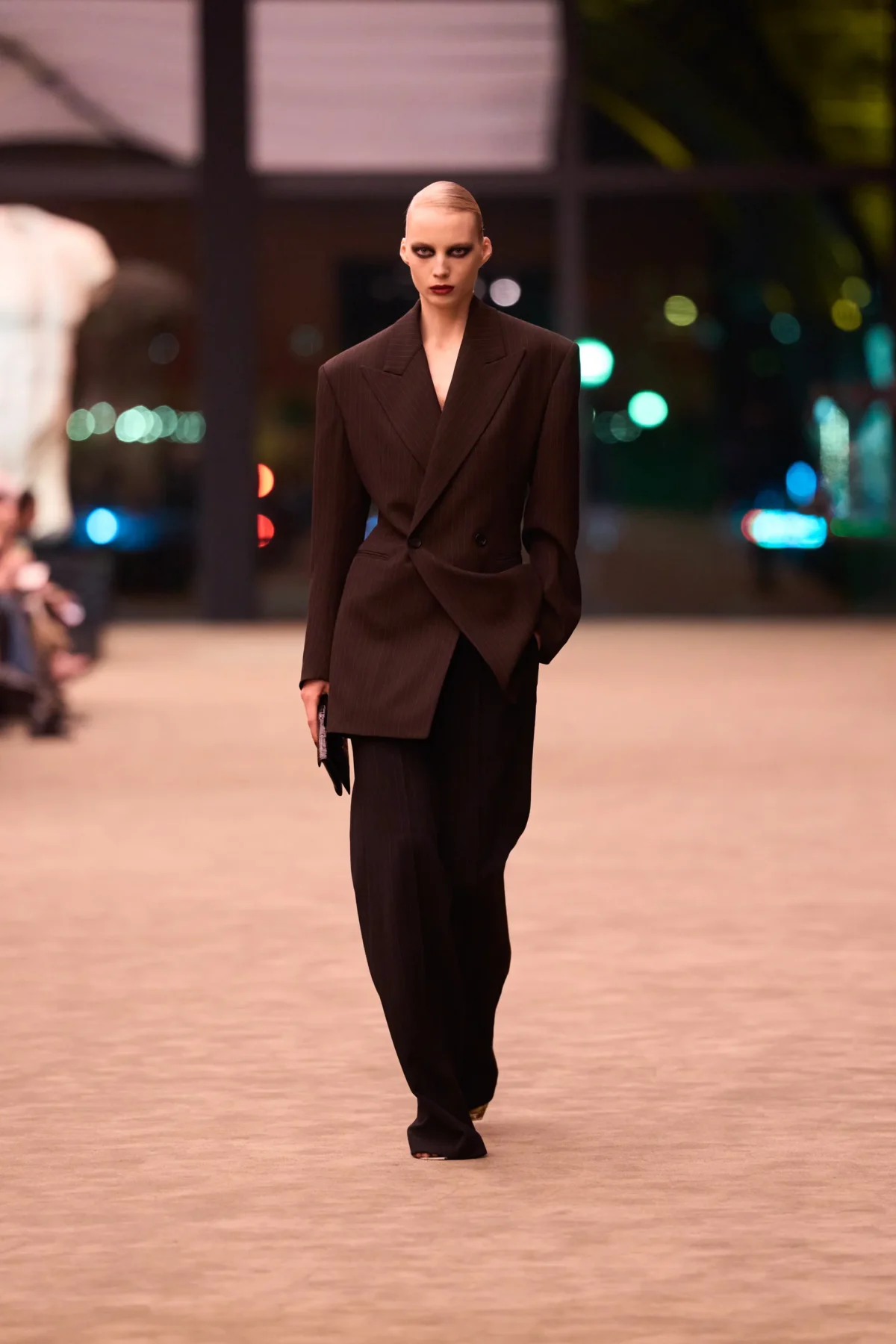
There are fashion signatures, then there is Le Smoking. When Yves Saint Laurent introduced his women’s tuxedo in 1966, he borrowed one of menswear’s most established symbols of authority and gave it an entirely different charge. More than simply a trouser suit, Le Smoking challenged the idea that a woman needed a dress to be dressed for the evening. Sixty years later, the silhouette remains one of the house’s most enduring statements.
Vaccarello returned to Le Smoking 60 years later for his Fall/Winter 2026 collection, offering the perspective of someone who knows that a classic does not need reinventing so much as reasserting. Buttons, stripes, lace and colour shifted from look to look, but the underlying architecture held firm. Instead of relentlessly pursuing a new silhouette, Vaccarello reminded us what a great one can do.
Le Smoking has always carried a certain cinematic charge, from Marlene Dietrich in Morocco (1930) to the sleek, self-possessed women of 1970s cinema, for whom a sharply cut suit could say as much as a little black dress. Its appeal lies in the way women can take the codes of power embedded in menswear and make them their own – a tension Vaccarello has always understood.
7. Spring/Summer 2023 Menswear
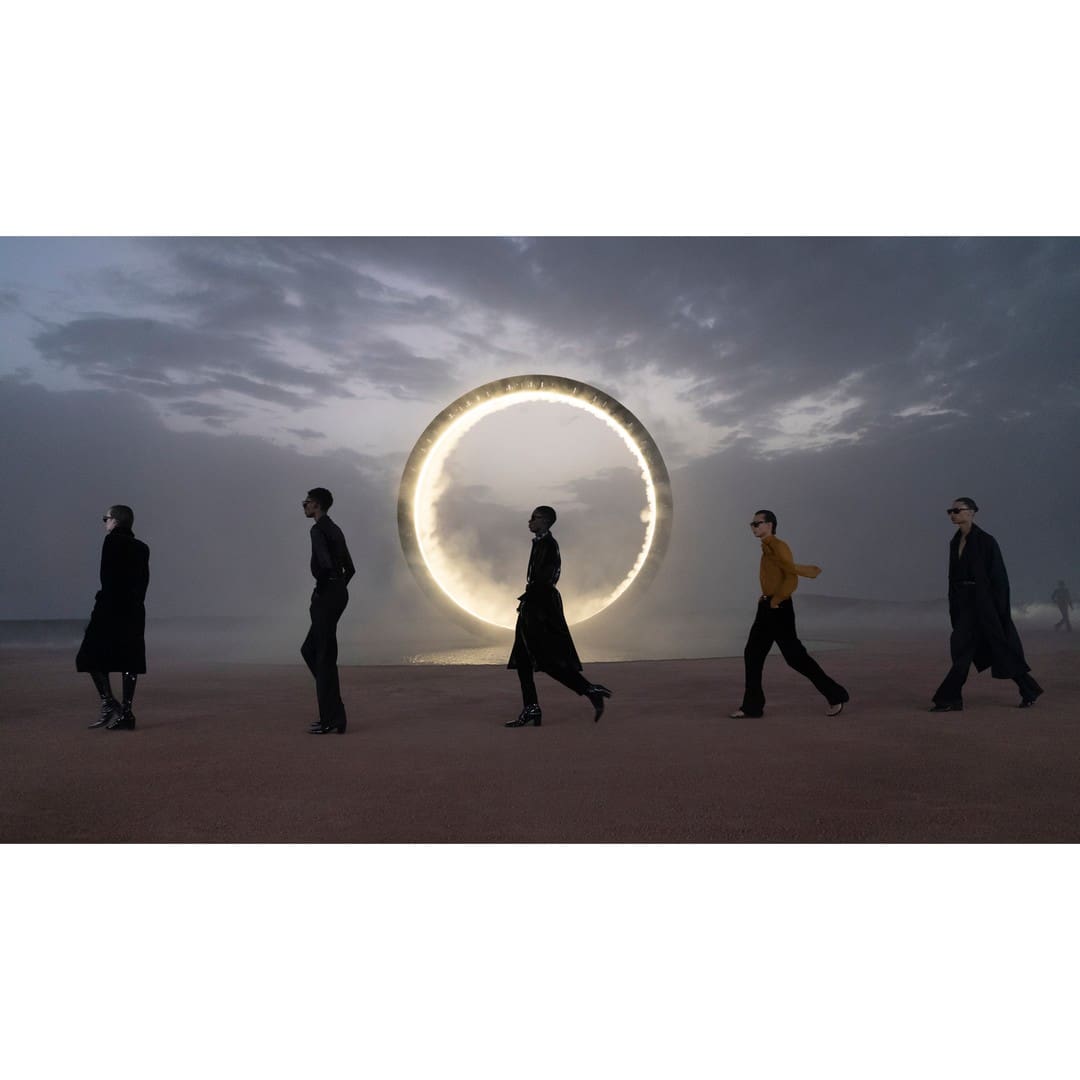
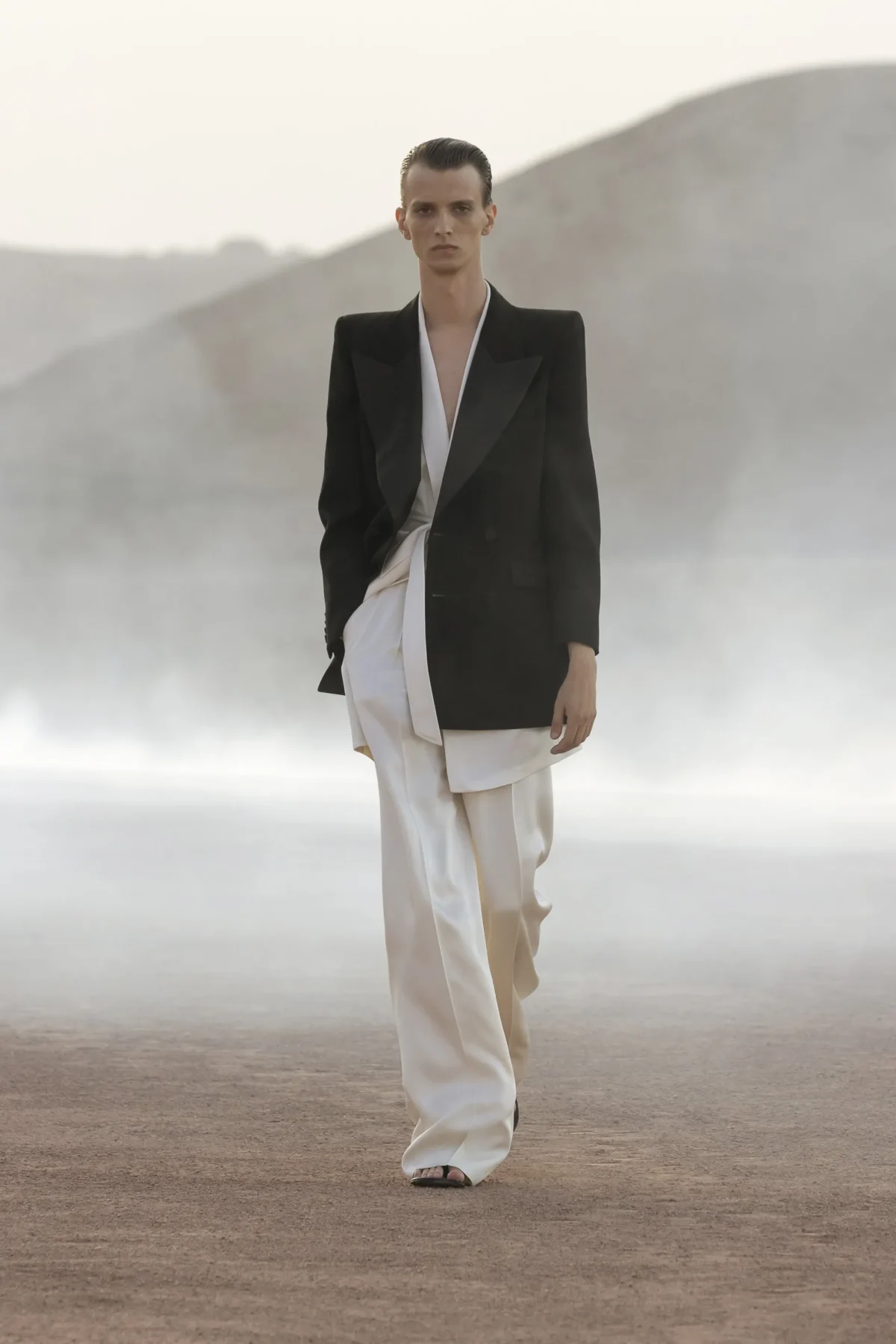
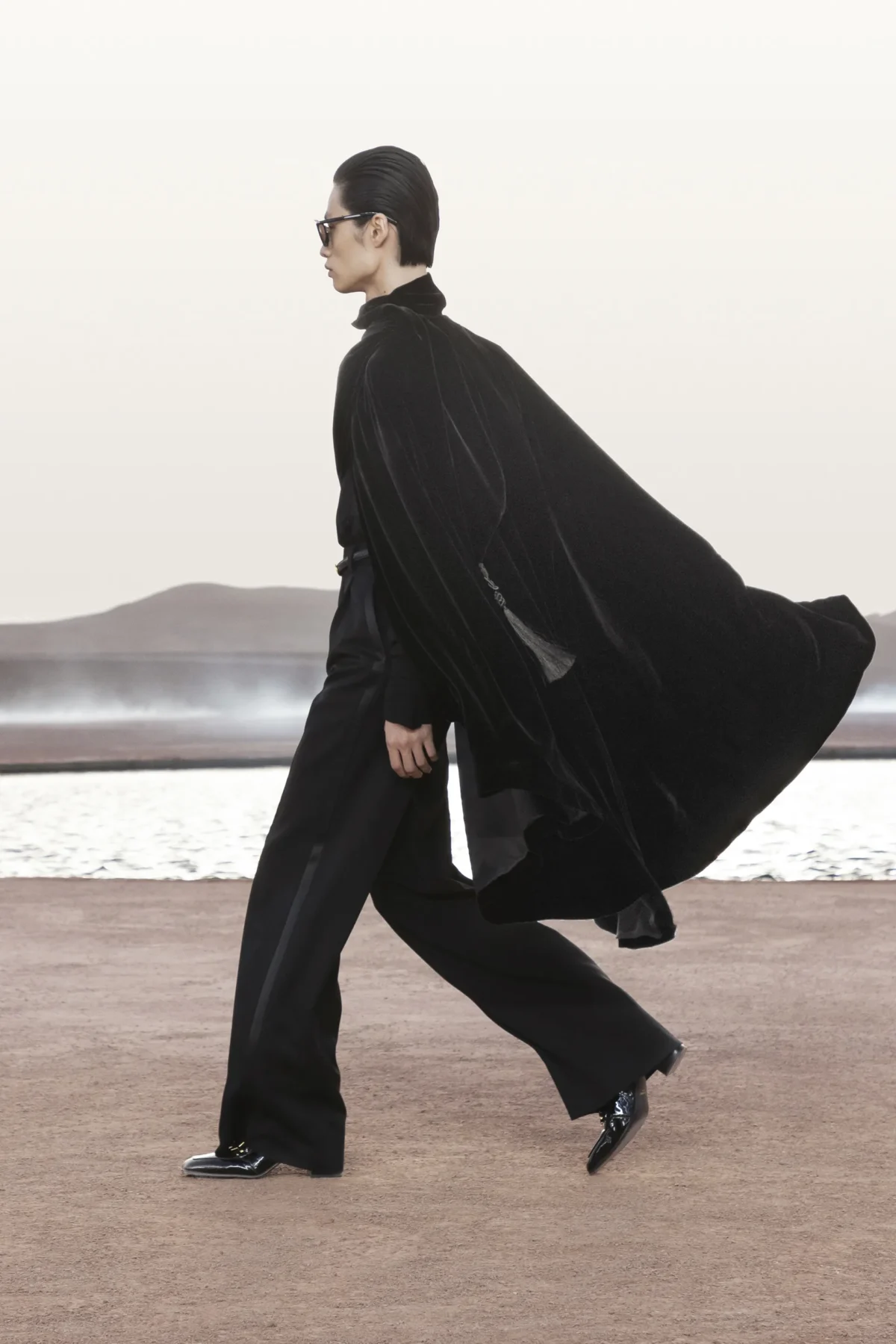
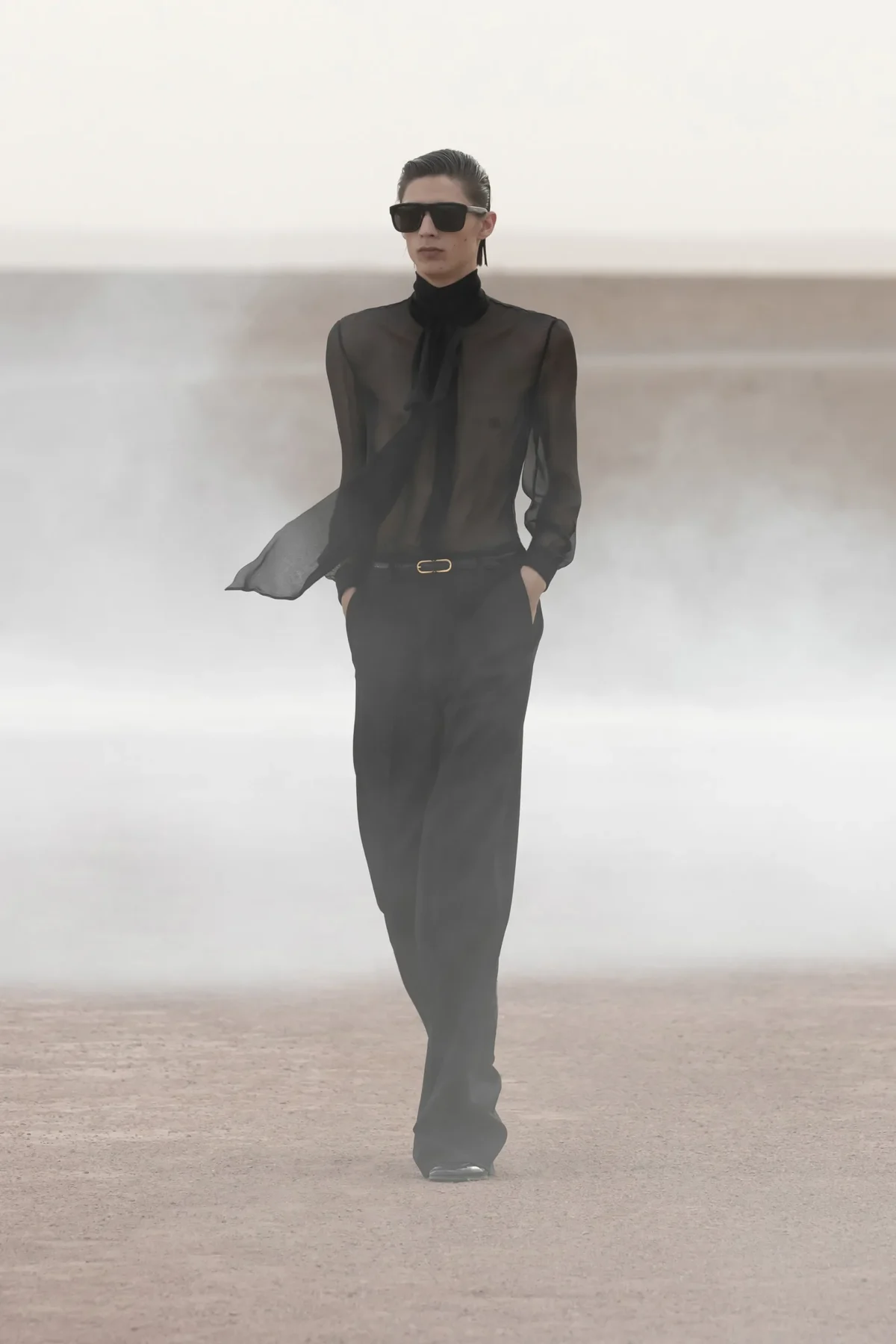
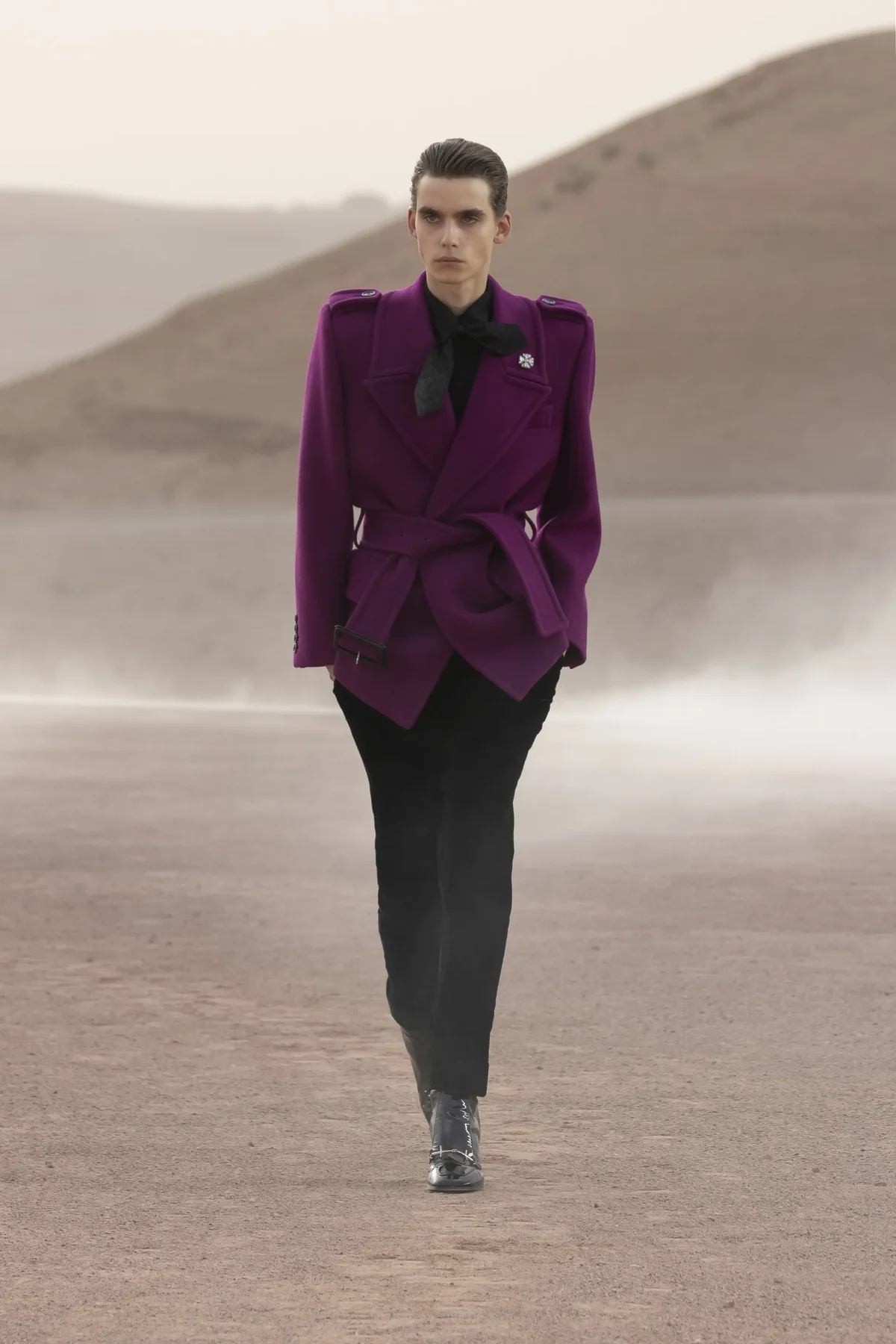
Not every Vaccarello runway needed the Eiffel Tower. For Spring/Summer 2023 menswear, he took Saint Laurent to the Agafay Desert outside Marrakech, where Es Devlin’s monumental circular installation rose above a reflective pool against the barren landscape. For a moment, the scene felt almost extraterrestrial — Dune, if the Fremen had a rather exceptional tailor.
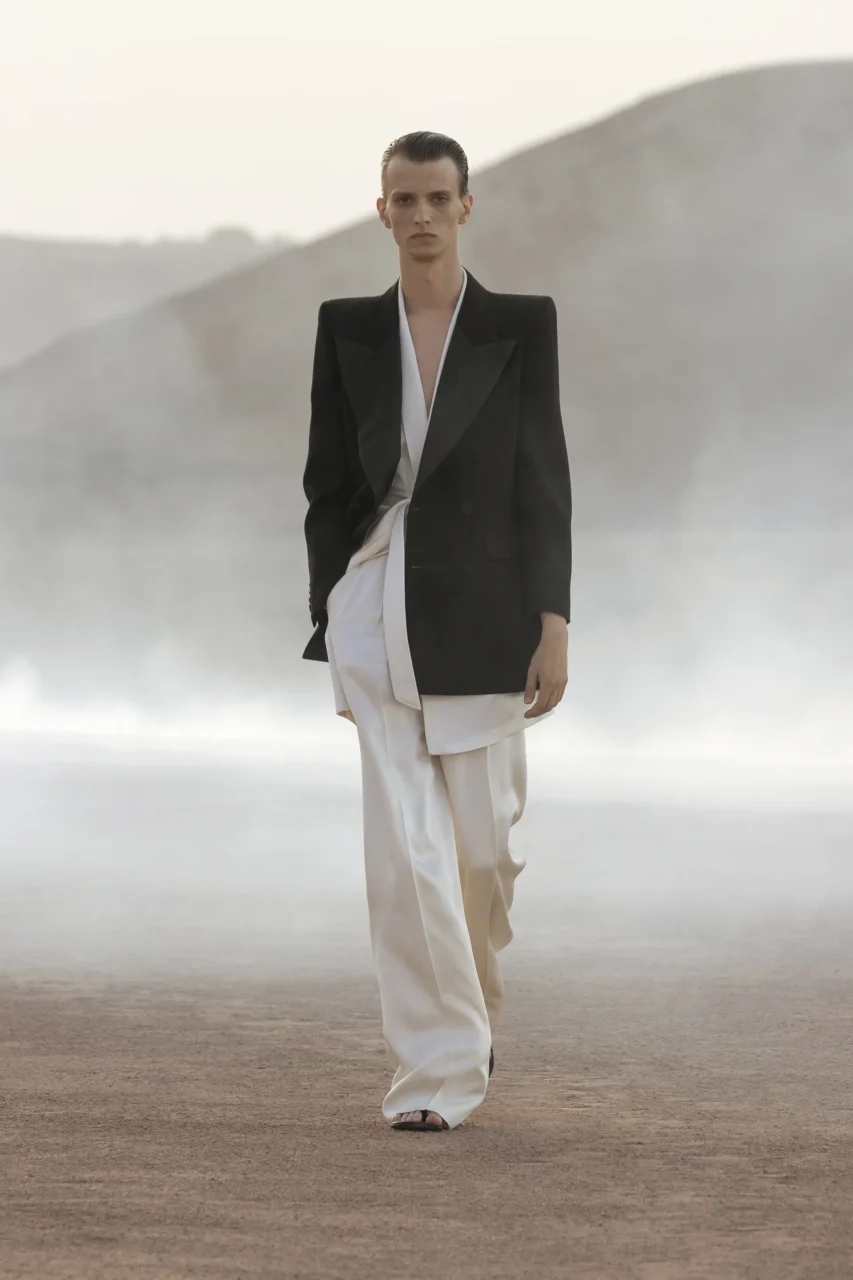
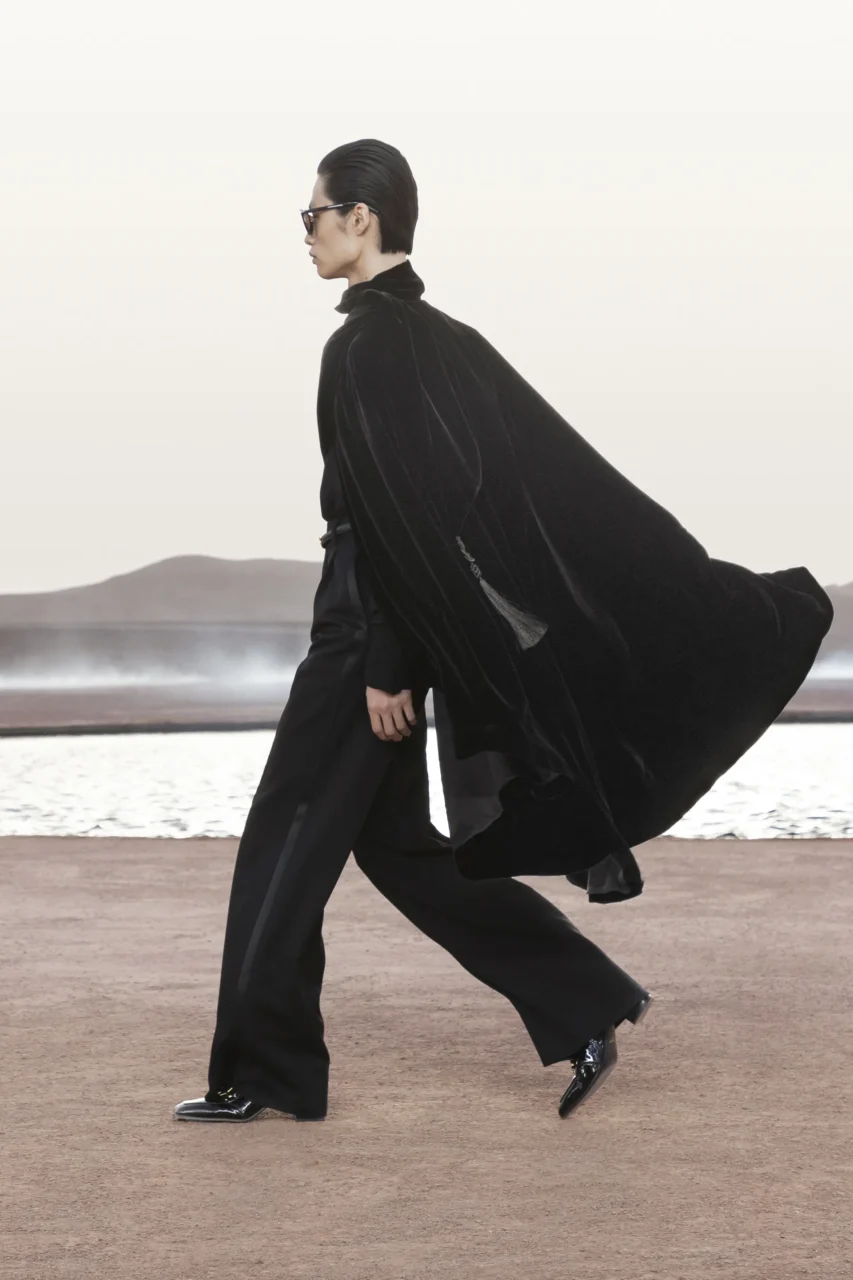
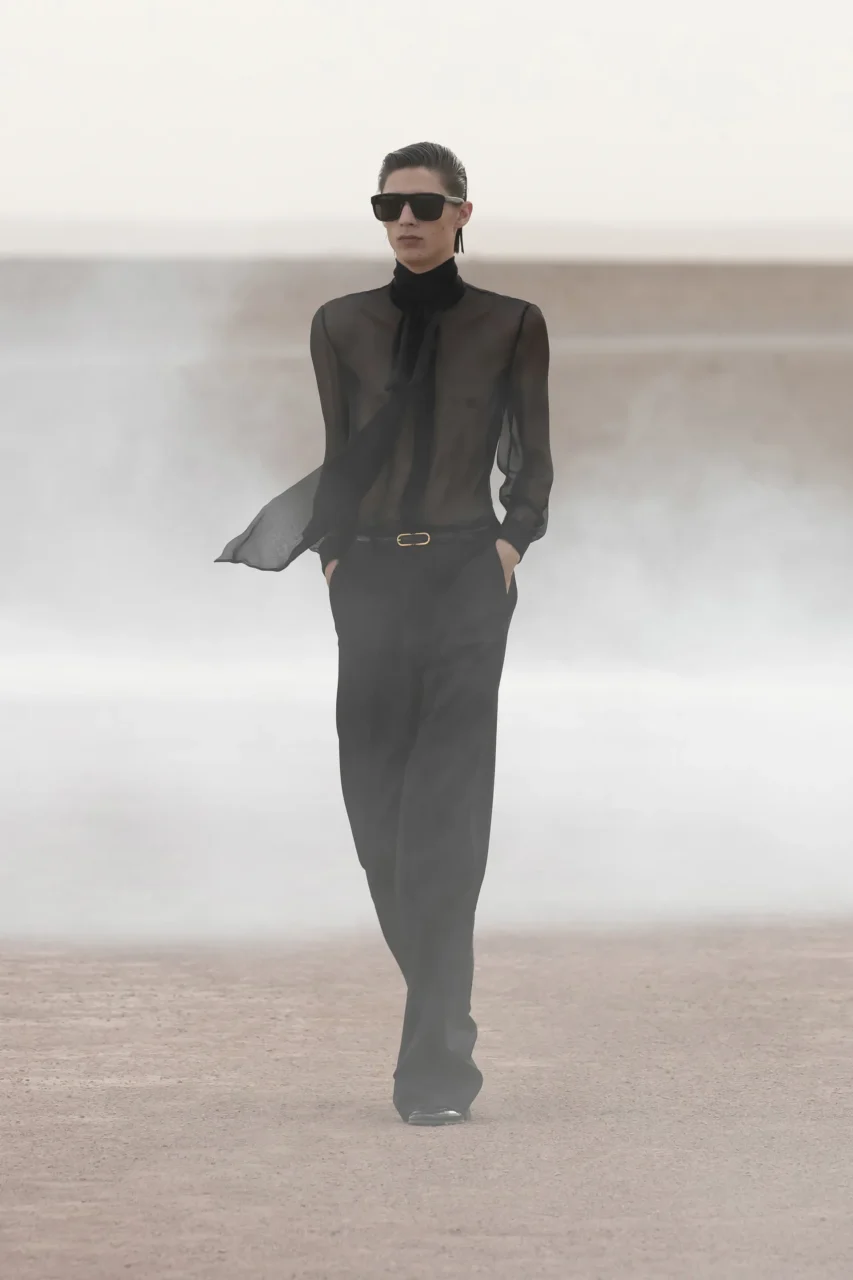
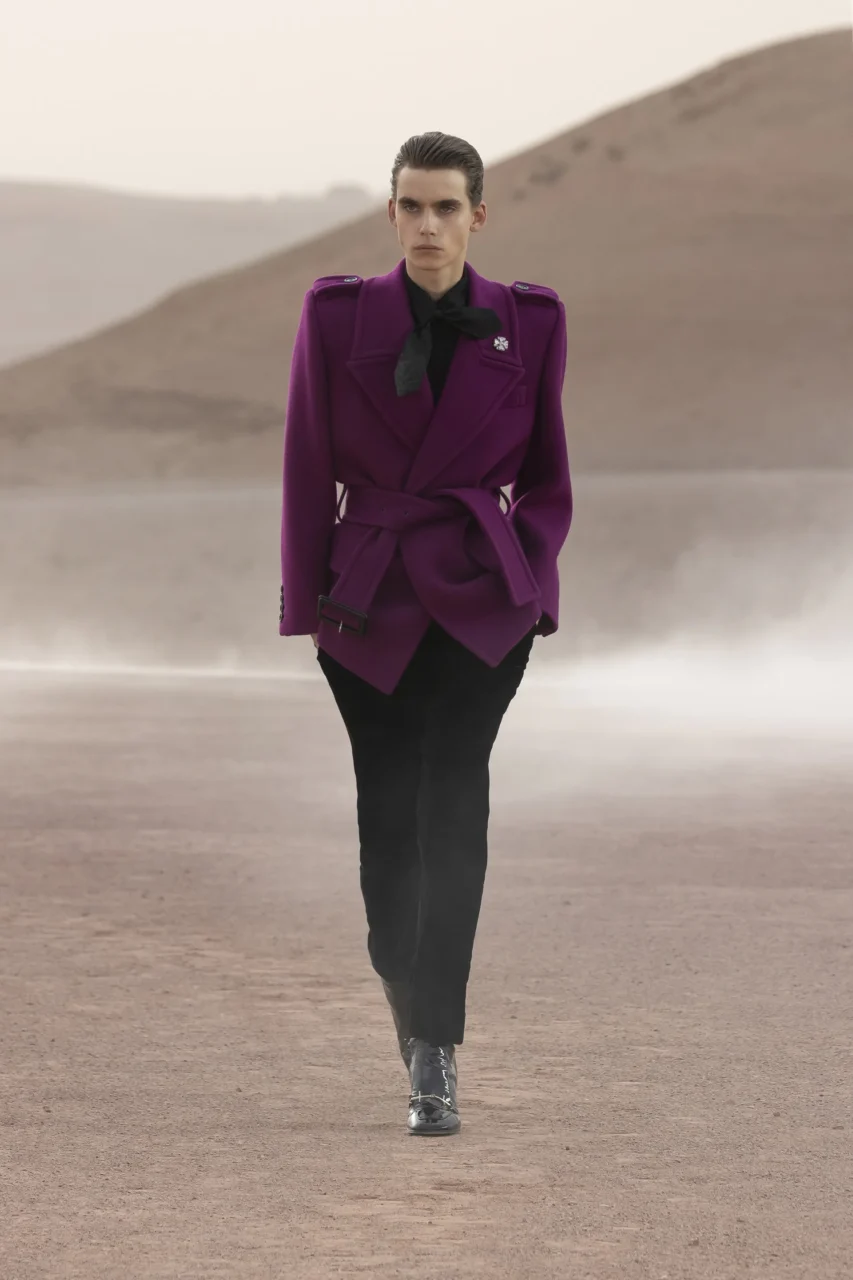
The collection drew on Paul Bowles’ The Sheltering Sky, the 1949 novel set in North Africa, where the desert becomes a force that unsettles the people who enter it, stripping away the familiar. Vaccarello’s reinterpretation was considerably more glamorous. High-waisted trousers fell in fluid folds, satin coats swept the ground, and sheer blouses left the chest bare beneath sharply cut tuxedo jackets. Against the vast, almost lunar landscape, the clothes appeared both more severe and more fluid, with the desert wind lending movement to their languid silhouettes.
The choice of Morocco, however, was about more than a backdrop. Yves Saint Laurent had a longstanding attachment to Marrakech after his first visit in 1966, finding refuge from Paris in the city. Vaccarello acknowledged that history without turning the collection into a nostalgic tribute. Rather than lean on the expected tropes of resort dressing and familiar Moroccan motifs, he let Saint Laurent’s sharp tailoring cut a stark line through the pale desert. The distinction between the founder’s connection to Morocco and Vaccarello’s distinctly modern wardrobe made the collection feel like a continuation of the house’s story, rather than a recreation of its past.
At Agafay, the clothes were only part of the picture. Devlin’s installation, the shifting light, and the open desert gave the collection a scale that a conventional runway could not. Vaccarello understood how a change of scenery could transform the way familiar Saint Laurent silhouettes were perceived. Far from Paris, Saint Laurent felt entirely at home, albeit in a different element.
Editor
Noella LeeCredit
Lead Image: Estrop/Gettyimages