

At a moment when digital fashion and artificial intelligence are beginning to enter design, and the seasons turn as fast as a spinning wheel, the word “craftsmanship” has become the most precious value in contemporary fashion. From the craft prize Loewe awards each year, to couture houses’ continued investment in embroidery, feather-work, and pleating ateliers, the world’s top brands are emphasising the warmth of the human hand more than ever. Imagery can be generated in an instant, but craft, distilled over time, cannot be replaced.
Now in its third edition and hosted by the Government of the Hong Kong Special Administrative Region, Hong Kong Fashion Fest returns this year under the theme “Rhythm of the Heart,” running from September 1 to 14. Joining hands with CENTRESTAGE, the annual fashion showcase led by the Hong Kong Trade Development Council, it connects local and international creative forces on an unprecedented scale. Spanning two weeks, the event covers haute couture, cross-regional menswear, sustainable design, and more, turning Hong Kong into a stage where the fashion cultures of East and West converge.
Ahead of the opening of CENTRESTAGE 2026, VOGUE Hong Kong sat down first with three designer brands from different regions, all distinguished by their exquisite craftsmanship: Victor Chan, founder of the Hong Kong womenswear brand Victor Chan Studio; Karl Mommoo Homme, the Italian menswear brand rooted in the tailoring traditions of Naples; and Maison Wonder Anatomie, the Thai brand returning to Asia from the Parisian fashion system. One holds dear the warmth of bespoke tailoring, one carries three generations of Italian craft, and one weaves handmade printmaking and natural imagery into contemporary design. These three wholly different creative paths all point to the same answer: craft is the way to breathe soul into fashion within a fast-moving industry. As Victor Chan puts it: “The entire bespoke process involves close communication with the client, and these are details you simply can’t experience in today’s fast fashion.” And as Karl Mommoo Homme has come to understand: “Made in Italy cannot rely only on its past. It must continue to prove its value through the product, its quality and its ability to innovate.”
Let us step into the craft worlds of these three designers, and hear how they find a rhythm of their own between needle and thread.
Victor Chan Studio
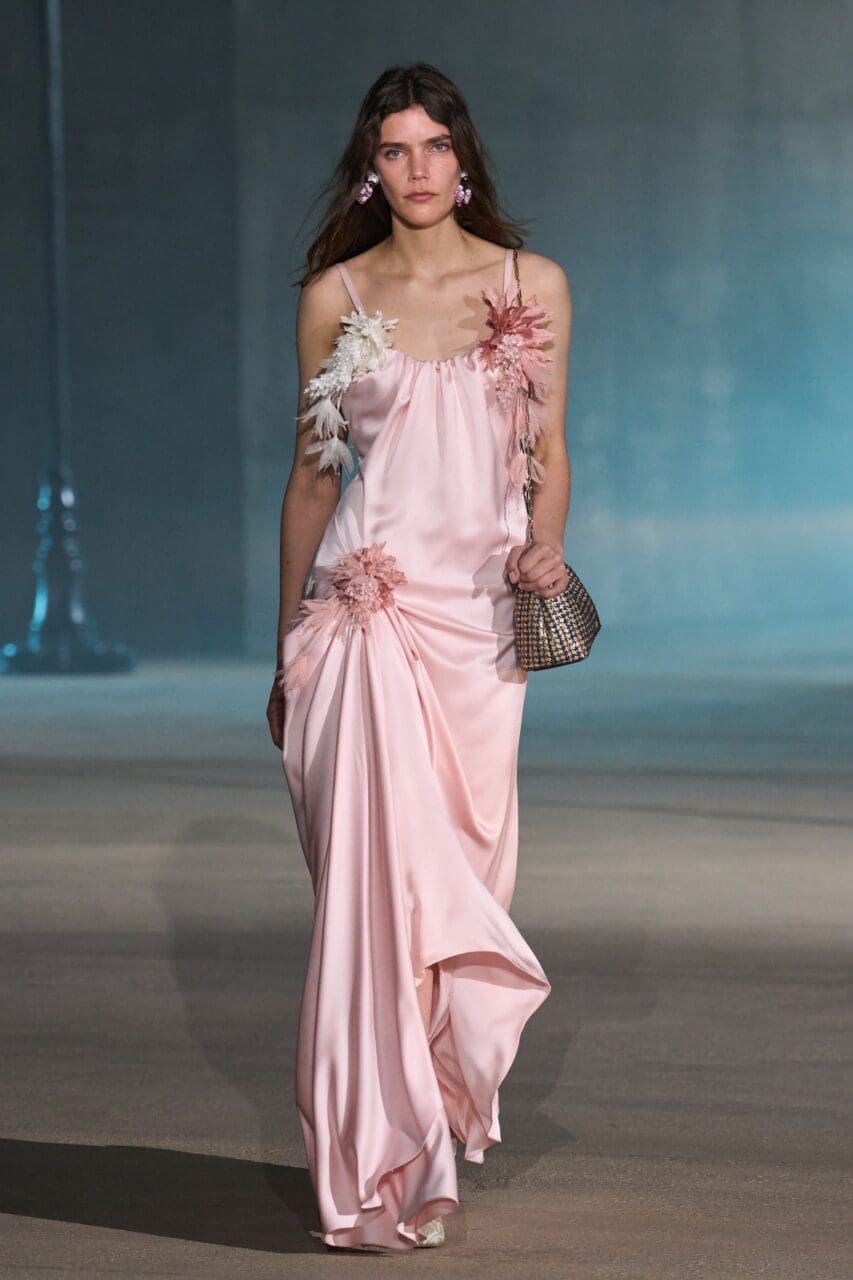
Founded by designer Victor Chan, the high-end womenswear brand Victor Chan Studio has drawn attention in the local fashion scene with its exquisite bespoke wedding gowns and evening dresses ever since its establishment in 2019. A graduate of the womenswear master’s programme at Kingston University in London, Victor brings modern elegance and a sense of layering to his designs, focusing on cut, detail, and timeless aesthetics. The brand has created stage looks for singers and artists such as Kelly Chen, Stephy Tang, and Gin Lee, and has been active at theHong Kong Film Awards, the Golden Horse Awards, and other international events.
This year marks Victor Chan Studio’s fifth consecutive appearance at CENTRESTAGE, and this representative of homegrown Hong Kong design arrives with a larger collection than in years past. Speaking of the changes over these five years, Victor admits his original intention remains unchanged: he still hopes to present the brand’s unique story on the runway, writing a powerful, passionate footnote for Hong Kong fashion. He also looks back with us on why he chose the bespoke path in the first place, examines the pros and cons of this model in today’s market, and shares his thoughts on why handcraft grows ever more precious in an age of fast fashion: “The entire bespoke process involves close communication with the client, and these are details you simply can’t experience in today’s fast fashion.”
VOGUE HK: Since 2022, you’ve been coming to CENTRESTAGE every year—now marking your fifth consecutive year. Compared with your very first time, what’s changed at Victor Chan Studio for 2026?
VICTOR CHAN STUDIO: In the blink of an eye, we’ve reached our fifth year at CENTRESTAGE, and this year we’re fortunate enough to present a larger collection than before, showing more design lines and looks on the runway. Compared with the first year, my original intention remains the same: I want to present Victor Chan Studio’s uniqueness and story on the CENTRESTAGE stage.


VOGUE HK: Victor Chan Studio focuses on bespoke bridalwear and evening gowns. What made you choose that direction in the first place? And compared with ready-to-wear design, what are the pros and cons of this model?
VICTOR CHAN STUDIO: I first chose this direction largely because of the work I took on after graduating, when I formally encountered bespoke bridal and evening wear. I was drawn to the idea of pouring all your concentration into making one unique dress. Now that I run my own brand, our bespoke work isn’t limited to bridal and evening wear — we’ve also expanded into bespoke concert costumes, theatrical costumes, advertising shoots, uniform design, and more. Every design opportunity and experience is different.
Compared with ready-to-wear design or producing seasonal ready-to-wear collections, the bespoke category can be more flexible in terms of timing, without overly restrictive rules. But the drawback is that it can’t secure the brand a place in a broader mass market — the concept of “bespoke” still isn’t widely familiar to the general consumer. So I’m absolutely confident and eager to develop Victor Chan Studio’s next step with a ready-to-wear collection!
VOGUE HK: When it comes to craftsmanship, in an age that keeps speeding up, why does exceptional handwork—and mastery of technique—end up feeling even more important?
VICTOR CHAN STUDIO: The element of handcraft is absolutely important, especially in the realm of bespoke clothing. Every stitch and every thread on a garment represents the standard and the demands we hold for each bespoke piece. Beyond fine handwork, the cut, the proportions, the fabric, and even the colour pairings on the client’s body all require great care. The entire bespoke process involves close communication with the client, and these are details you simply can’t experience in today’s fast fashion.


KARL MOMMOO HOMME
Rooted in the traditions of Naples, Karl Mommoo Homme represents the substance of “Made in Italy.” Combining three generations of craft with a contemporary design vision, Karl Mommoo Homme has created a new brand of gentlemanly style — refined yet with a rock-and-roll edge. Known for its lightweight, deconstructed suiting, high-quality Italian fabrics, and meticulously considered details, the design team seeks inspiration around the world to offer the modern man a wardrobe that combines elegance with individuality.
Bringing Italian craft to Hong Kong for an in-depth dialogue with the Asian market, Karl Mommoo Homme makes its debut at CENTRESTAGE 2026. The team has carefully selected the pieces that best embody the brand’s essence, showcasing Italian aesthetics between lightweight tailoring and contemporary proportions. A gentleman’s dress has never been as simple or straightforward as it looks; the culture it represents spans several centuries and has created a vast aesthetic world. In the interview, the brand shares its expectations for the Hong Kong market, how it finds creativity within the constraints of menswear design, and the challenges that lie behind the halo of “Made in Italy.” Read on for what Karl Mommoo Homme has to share.

As an Italian menswear brand, what was your anticipation, and what did it feel like to bring your collection to Hong Kong for CENTRESTAGE? For this specific presentation, what special designs or preparations did you make?
Bringing Karl Mommoo Homme to Hong Kong is an important step for us. It gives us the opportunity to present our work to an audience that is very different from the European one and to understand how our idea of menswear and elegance is perceived internationally.
There was certainly excitement, but also a great deal of curiosity. Hong Kong is a fast-moving and highly international market, with a strong attention to product and detail. We did not want to simply bring an Italian collection. We wanted to show that Italian tailoring can communicate beyond Italy.
For this presentation, we carefully selected the pieces that best represent the brand: lightweight tailoring, contemporary proportions, Italian fabrics and distinctive details that are never excessive. We tried to find the right balance between our identity and the needs of an international audience.
In menswear—especially tailoring and shirts—there’s often less “play” than there is in womenswear. At the same time, the craft details are incredibly demanding. How do you balance creativity, craftsmanship, and the brand’s signature style?
I believe that creativity in menswear does not always need to be loud. It can be found in a different proportion, in the construction of a shoulder, in the volume of a trouser or in the combination of a traditional fabric with a more contemporary shape.
Our work always begins with the product and with the way it should be worn. Craftsmanship is not something we add simply to display it. It has a practical purpose: it improves the fit, the lightness and the durability of the garment.
The identity of Karl Mommoo Homme comes from this balance. We respect the tailoring tradition we come from, but we do not want to repeat it in a nostalgic way. We try to make it more relaxed, modern and relevant to the way men live today.


Italian menswear craftsmanship is globally recognised, and Karl Mommoo Homme has carried that tradition through three generations. As someone who continues the legacy, do you think there are hidden challenges beneath the glamour of “Made in Italy”?
Yes, there are very real challenges behind the glamour of Made in Italy.
The first is preserving craftsmanship and technical knowledge. Many of these skills take years to learn, but today it is becoming increasingly difficult to find younger people willing to follow such a long path. Without a new generation of artisans, part of this knowledge could eventually be lost.
There are also the costs and the time required for Italian production. Making a garment properly requires skilled people, high-quality materials and time. At the same time, the market often demands lower prices, faster deliveries and a constant flow of new collections. Balancing quality, economic sustainability and competitiveness is a daily challenge.
After three generations, we feel a responsibility to protect this tradition, but also to help it evolve. Made in Italy cannot rely only on its past. It must continue to prove its value through the product, its quality and its ability to innovate.


Maison Wonder Anatomie
Founded by Thai designer Chalermkiat Khatikasemlert (Pop), Maison Wonder Anatomie is a brand that moves between art, craft, and contemporary fashion. A graduate of the Institut Français de la Mode in Paris, Pop interned at Maison Margiela and won the Fashion Grand Prix in Japan in 2007. The brand draws inspiration from travel, museums, and quirky little shops on street corners, transforming a curiosity about the human body and nature into a garment language full of experimental spirit.
“Fashion can be both expressive and approachable.” Maison Wonder Anatomie’s presentation at CENTRESTAGE unfolds around the theme of “FARMER.” Starting from the visual language of agriculture, it transforms the geometric patterns of farmland, plants, and the organic forms found in nature into wearable contemporary designs through exquisite printing craft, embroidery, and structural details, exploring the connection between nature, creativity, and craftsmanship. Leafing through Maison Wonder Anatomie’s design portfolio, it’s easy to see that, while attending to the craft of design and the deconstruction of silhouette, the brand also draws on Thai youth culture, weaving boldly individual slogans into its creations — a persistence and attitude that belong uniquely to today’s younger generation.

How would you describe Maison Wonder Anatomie’s presentation at CENTRESTAGE? Through this show, what message do you hope to bring to Hong Kong audiences?
Our presentation at CENTRESTAGE is centred around FARMER, a concept inspired by the visual language of agriculture and the relationship between people and nature. The collection incorporates hand-crafted prints developed from vegetables, plants, insects, and organic forms found in the natural world. Through these motifs, we explore how nature can be translated into contemporary fashion while maintaining a sense of craftsmanship and individuality.
The message we hope to share with Hong Kong audiences is that fashion can be both expressive and approachable. We strive to create garments that are comfortable, wearable, and distinctive, while also encouraging people to reconnect with nature and appreciate the beauty, complexity, and inspiration that exist in everyday environments.


You interned at Maison Margiela, and your own brand also carries the word “Maison.” Is that connected to your experience? How did that internship shape the way you think and design today?
My internship at Maison Margiela was a formative experience that greatly influenced my creative development. While the use of the word “Maison” in Maison Wonder Anatomie is not intended as a direct reference to Margiela, it reflects our desire to position the brand within a tradition of design-led fashion houses while remaining accessible and approachable to a wider audience.
The experience taught me the importance of curiosity, experimentation, and critical thinking in the design process. It encouraged me to challenge conventions, explore new materials and techniques, and view fashion as a medium for continuous research and discovery. Those values continue to shape the way I approach design today.
I’ve noticed that in your design work you sometimes use a partial deconstruction approach, but you also incorporate slogans and graphic elements. How do you see the relationship between these graphic components and fashion design?
In the early stages of Maison Wonder Anatomie, our work often focused on more complex constructions and deconstructed forms. As the brand has evolved, we have refined and simplified these elements to create pieces that are more versatile, wearable, and relevant to everyday life.
At the same time, graphic elements have become an important extension of our storytelling. While construction communicates through form and silhouette, graphics communicate through imagery and language. They allow us to express ideas, emotions, and narratives in a more immediate and accessible way. For us, the relationship between graphics and fashion is complementary—both serve as tools for communication, helping to translate creative concepts into meaningful experiences for the wearer.


Editor
Ke Wu