

“Many carpet exhibitions tend to place Persian carpets under the larger umbrella of the Islamic world,” said Vinci Lai. “Of course, religion has had a very important influence on Persian carpets, but the more exhibitions I visited, the more I felt that many of the symbols and motifs woven into these pieces were telling stories beyond religion itself. That was really where my curiosity started.” Lai is the curator behind Wei Gallery’s current exhibition, where over 20 rare Persian carpets narrate over 2,500 years of civilisation and artistry. Titled “Reweaving Memory: Storytellers of Persia”, the show centres around one crucial question that Lai has reckoned throughout her entire curatorial process: When a civilisation senses that it may disappear, how does it choose to remember itself?
Lai observed that, generally speaking, people have a tendency to group Persian culture with broader Arab or Middle Eastern cultures—herself included. But as she read more, listened to personal stories, and connected more, she learned of a distinct cultural identity that was deeply rooted in philosophy, mythology, poetry, and visual storytelling. She learned about Persia. “Through becoming friends with someone from Iran, I slowly realised how different Persian culture and history actually are from what many of us in East Asia imagine.”
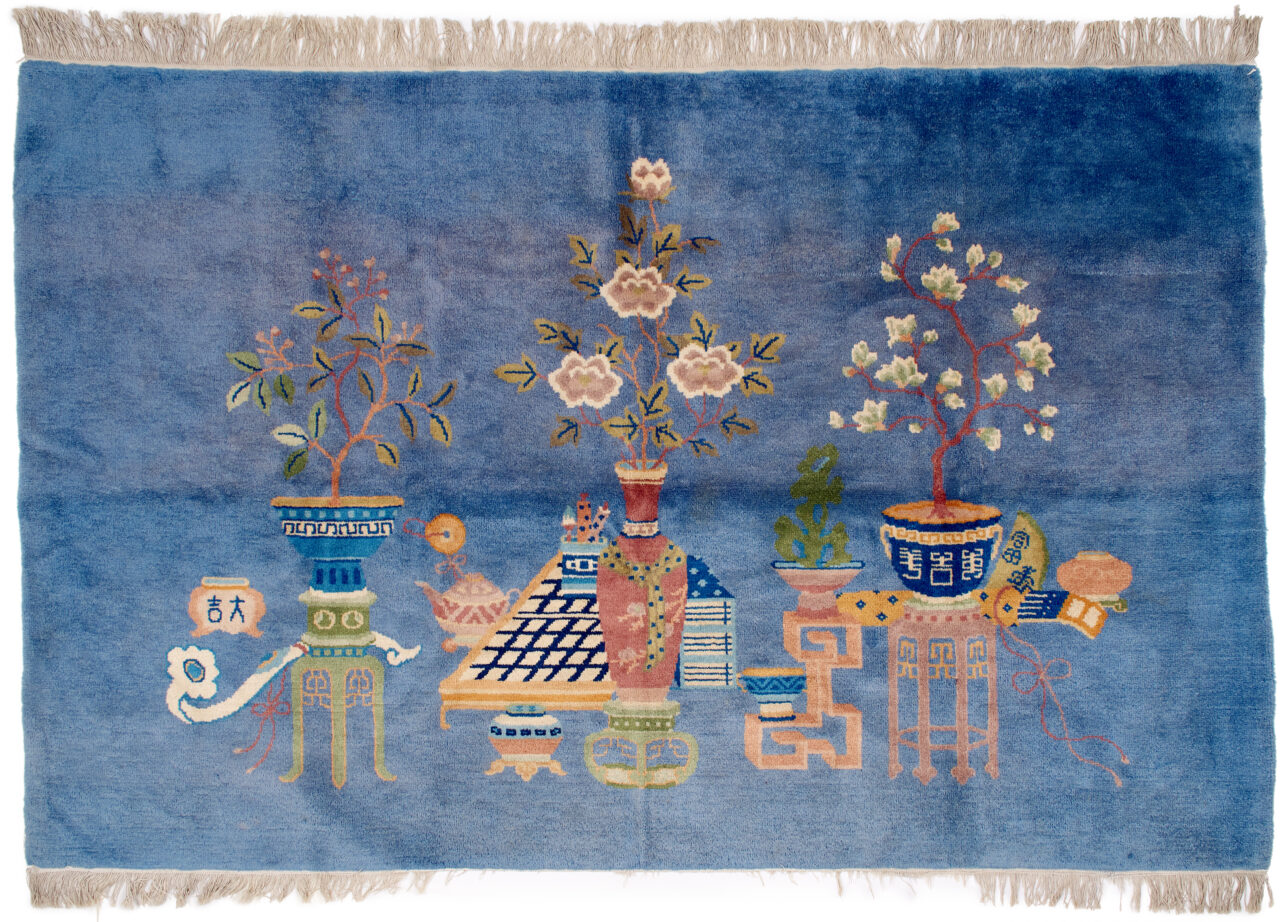
The “Reweaving Memory” exhibition is articulated through three thematic halls that help shape the visitor’s journey to be an emotional and philosophical one, rather than a simple chronological revisiting of history. Lai describes the flow as moving from loss, to transmission, and then to quiet endurance. “WHY REMEMBER” offers a tender space to reflect on fading languages, monuments, and traditions, while “THE STORYTELLERS” puts the spotlight on the people responsible for cultural transmission—village artisans, nomadic tribes, and often, women—who sought to create tangible narratives without claiming authorship.
The final hall, “STORIES THAT ENDURE”, extends the visitor journey beyond Persia to regions along the Silk Road like Mongolia, Xinjiang, and Khotan. Here, we see how Persian carpets travelled through different cultures and were reinterpreted to reflect the local identity. The story is no longer just a Persian story, but in Lai’s words, a “human story about migration, exchange, and the desire to leave traces of ourselves behind”.
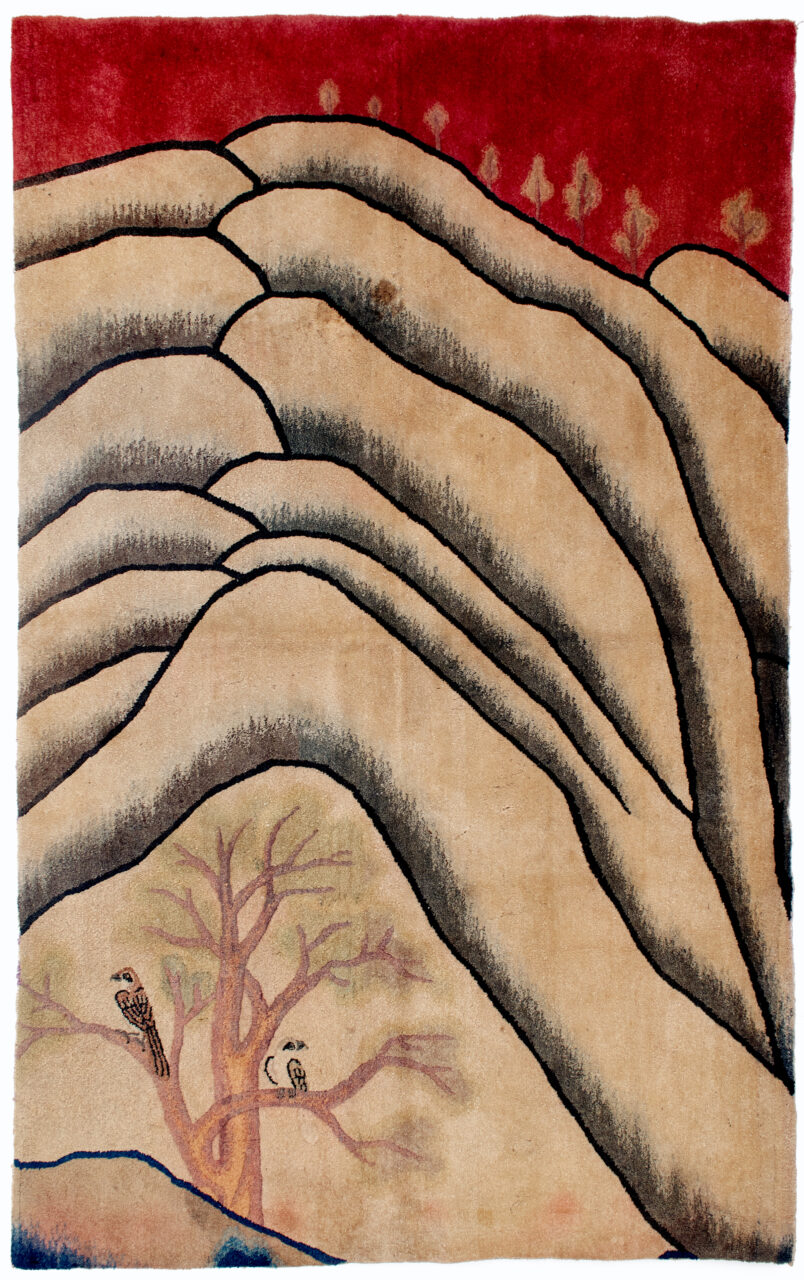
When asked about any challenges in putting this exhibition together, Lai admits the first difficulty she faced was simply deciding which carpets not to include. There are, after all, thousands upon thousands of Persian carpets across regions and time periods. But then came the actual installation. “Many of the works in this exhibition have not lived behind museum glass. They have existed within homes, passed through families, travelled across borders, and carried traces of everyday life with them. In many ways, that intimacy is exactly what makes them so powerful,” she says. “I also thought very carefully about how to present these carpets within the space itself. A carpet is not a painting. In many museums, artworks are often viewed from a distance. They feel protected, untouchable, almost removed from ordinary life. But Persian carpets were never meant to exist only as display objects, to hang silently on a wall, observed from a respectful distance. They were made to live alongside people: To be walked on, gathered around, repaired over time, and passed from one generation to another. That’s part of what makes them so emotionally powerful to me.”
Lai continues to ponder on her role as a curator, explaining that there is an ever lingering conundrum in showcasing such artefacts. “There is always a tension in exhibition-making between preservation and presence: How do you protect these objects while still allowing visitors to feel the warmth and humanity they once carried within everyday life? I never wanted the exhibition to feel overly clinical or museum-like.”
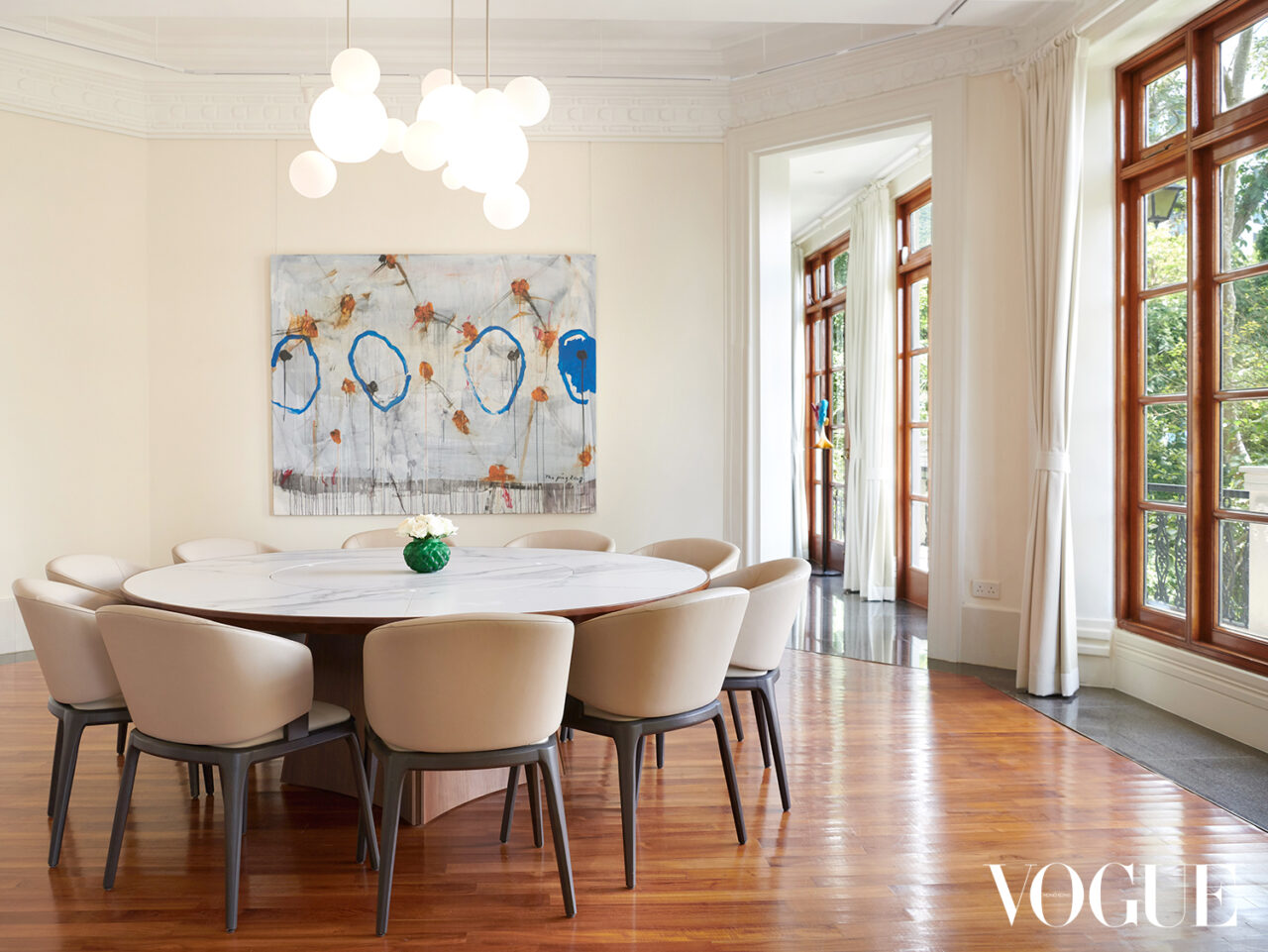
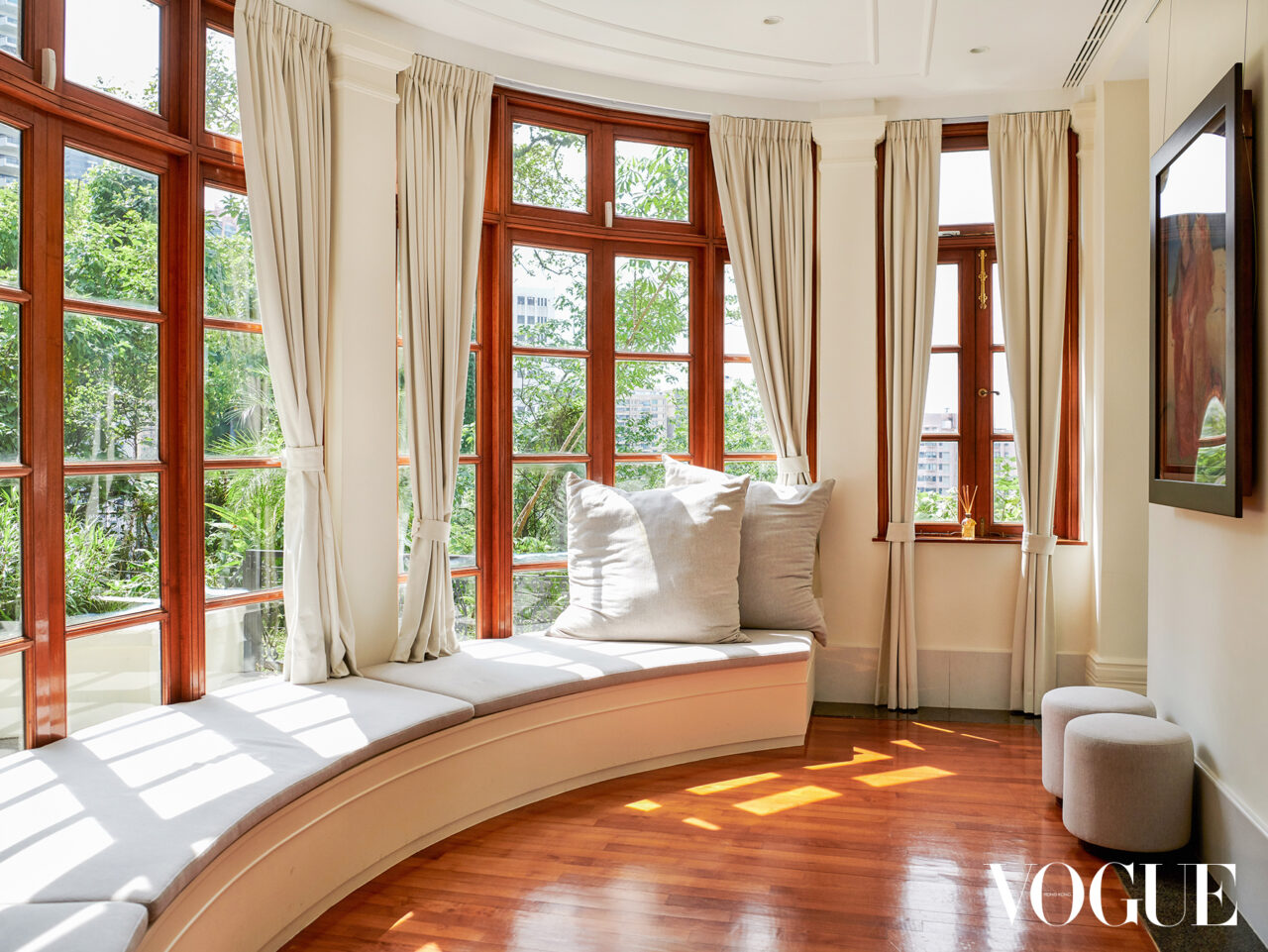
And so, Wei Gallery at Chatham Maison made for the perfect host to the “Reweaving Memory” exhibition. “The space is quiet, intimate, and deeply personal. It allows visitors to encounter the carpets in a way that feels less formal and more human,” says Lai. “Instead of standing in front of them as distant historical objects, people can sit with them, move through the rooms slowly, and experience them within an environment that still feels lived in.”
The building has a long, winding history of its own, but before it was transformed into a private art space, it was a home. Most recently to a group of expatriate couples, and pre-war, to a British businessman and his wife. The space undoubtedly bore witness to the genesis of core memories, intimate conversations, and the everyday lives of the countless people who came and went. “In a way, the carpets are returning to the kind of space they were always meant for,” says Lai.
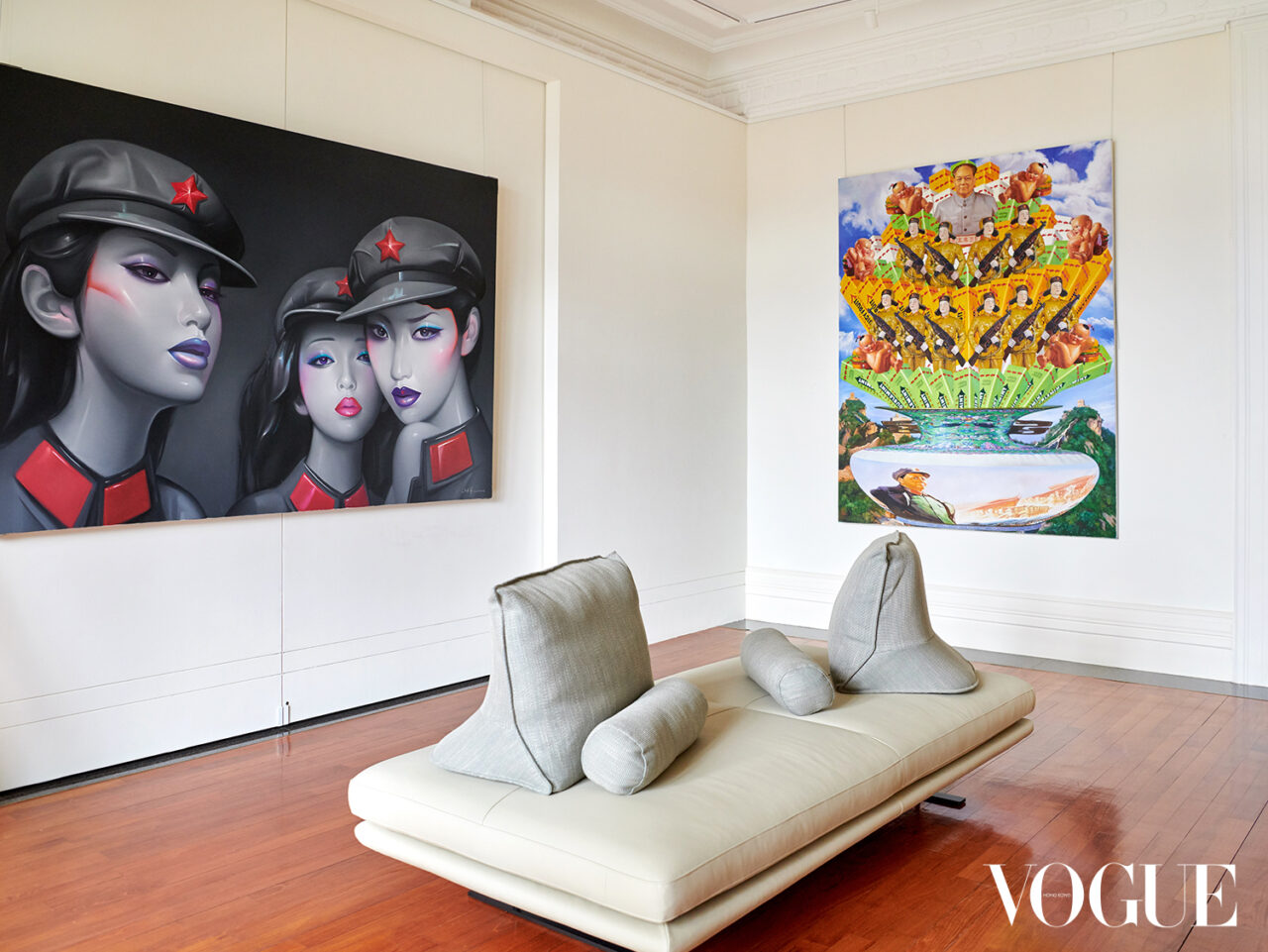
For the homes these Persian carpets once filled, they were never mere decorative objects. Yes, they depicted beautiful images rendered in vibrant threads that undoubtedly brought life into any space, but the carpets are more than visual art—they are elaborative frames of history and Persian ideas. “The more time I spent with these carpets, the more I realised that even the smallest motif often carries traces of multiple histories layered on top of one another,” says Lai. “In Persian culture, poetry, mythology, spirituality, and everyday life were never treated as completely separate worlds. They constantly flowed into each other, and you can feel that within the carpets themselves.”
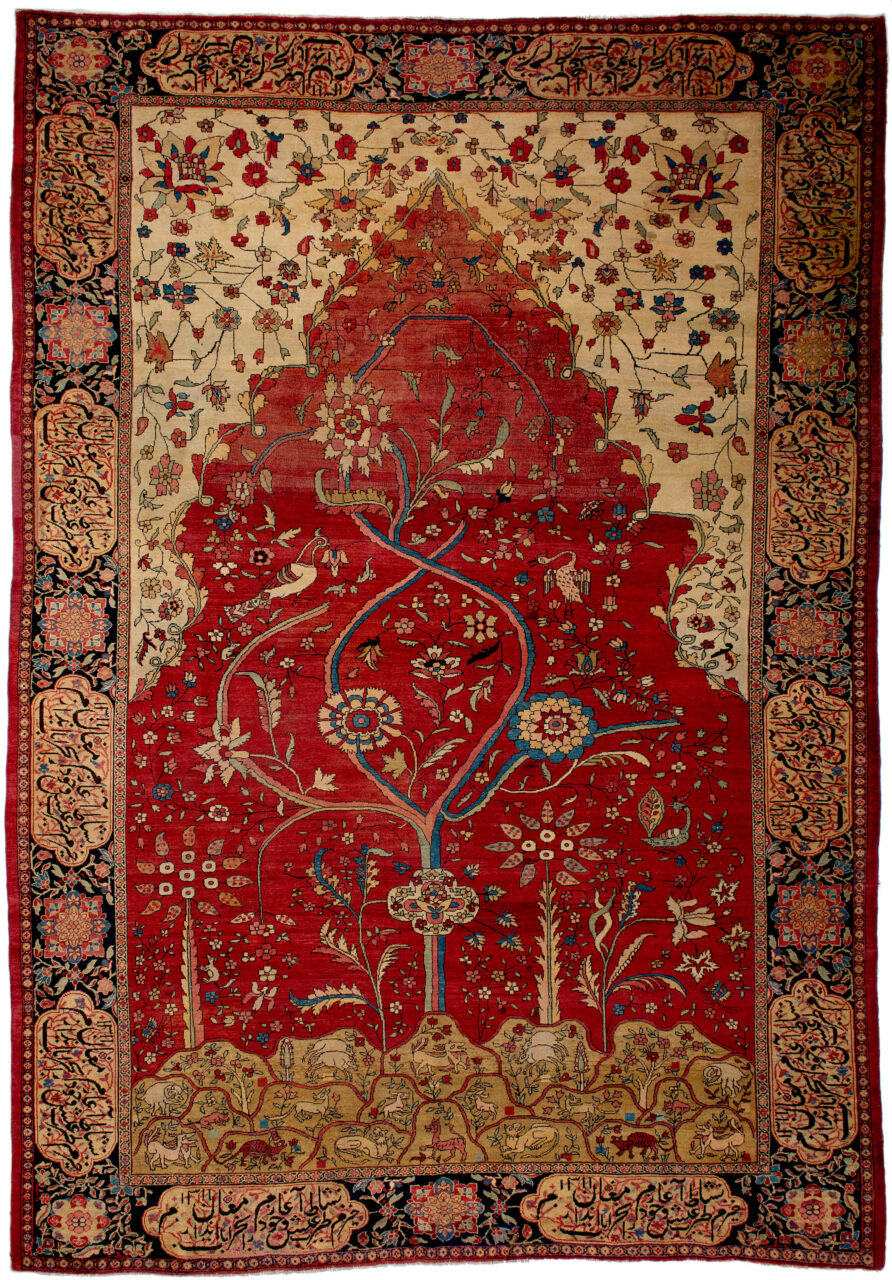
For instance, one of the pieces that resonated with Lai most is the Tabriz Tree of Life carpet dating back to the 1880s. A “quieter” design compared to the rest of the collection, this piece portrays a tree rising from the ground, its branches swirling upwards in faint symmetry. Lai explains that the Tree of Life motif has roots in pre-Islamic Persia and Zoroastrian beliefs surrounding renewal, immortality, and the connection between human and divine worlds. Then, framing the tree on the carpet is a poetic verse linked to Sufi mystical tradition that reads: I begin in joy, delight, and the fullness of life. “What moved me was realising that this single carpet is holding different eras of Persian thought together at the same time,” shares Lai. “It doesn’t erase older meanings as new ones emerge. Instead, it allows them to coexist. I think that’s one of the most remarkable things about Persian visual culture—it evolves without severing itself from the past.”
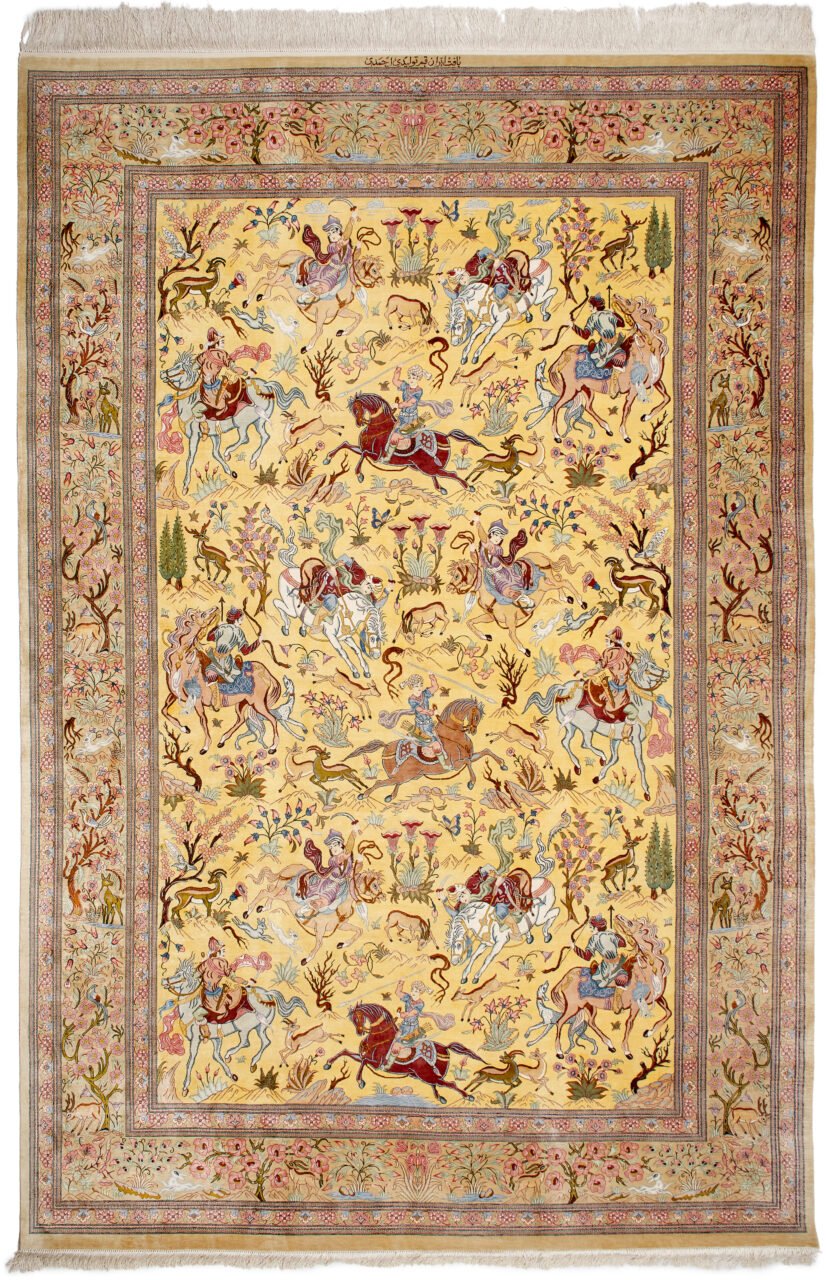
Lai redirects me to another carpet embellished with shekargah motifs, or hunting scenes—here, ideas too, have expanded. Shekargah imagery was once associated with royalty and court culture, but over time, became imbued with spiritual meaning that transformed them into metaphors for the pursuit of enlightenment. “To me, these motifs reveal a civilisation that understood how to adapt without losing its core identity,” she says.
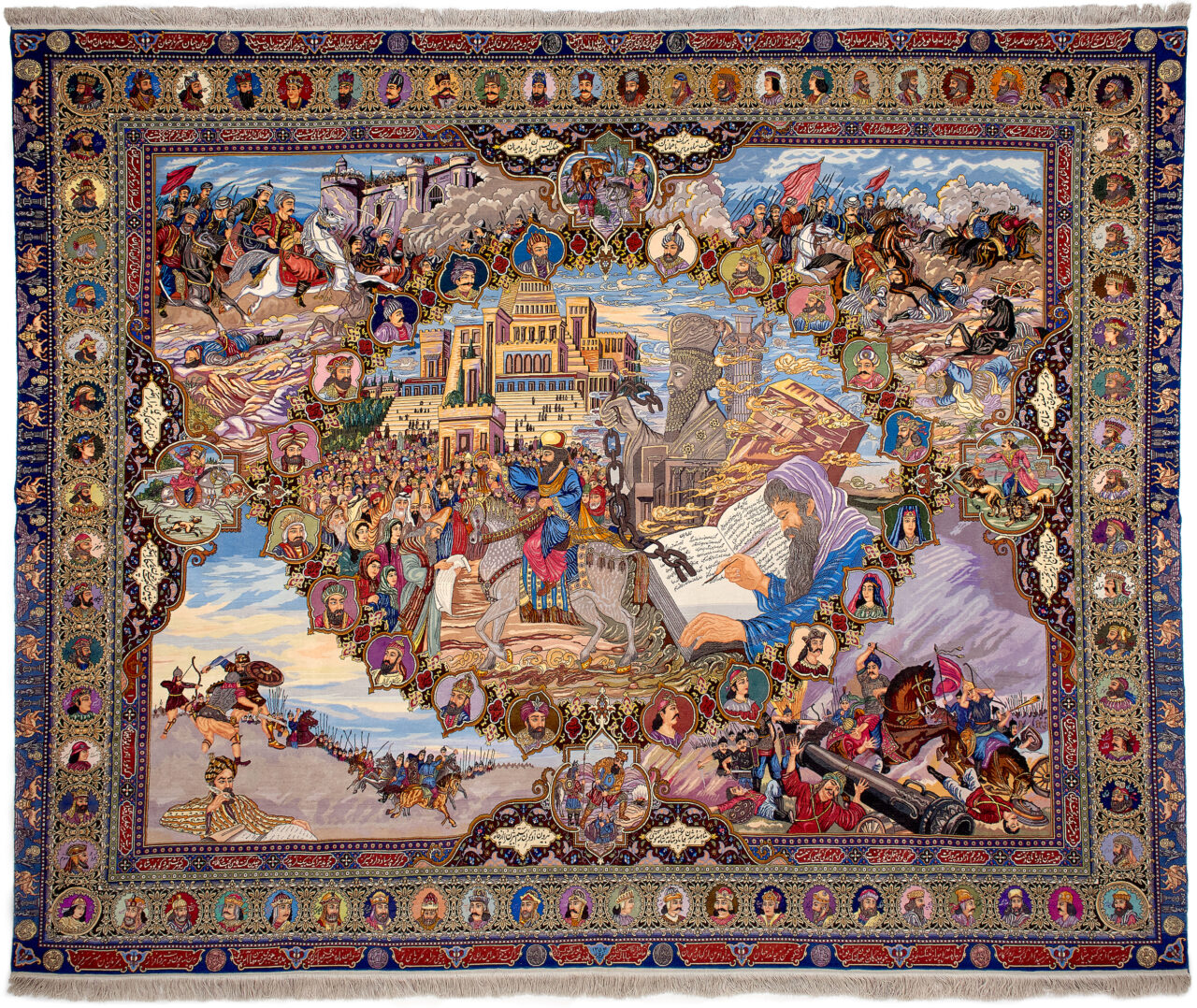
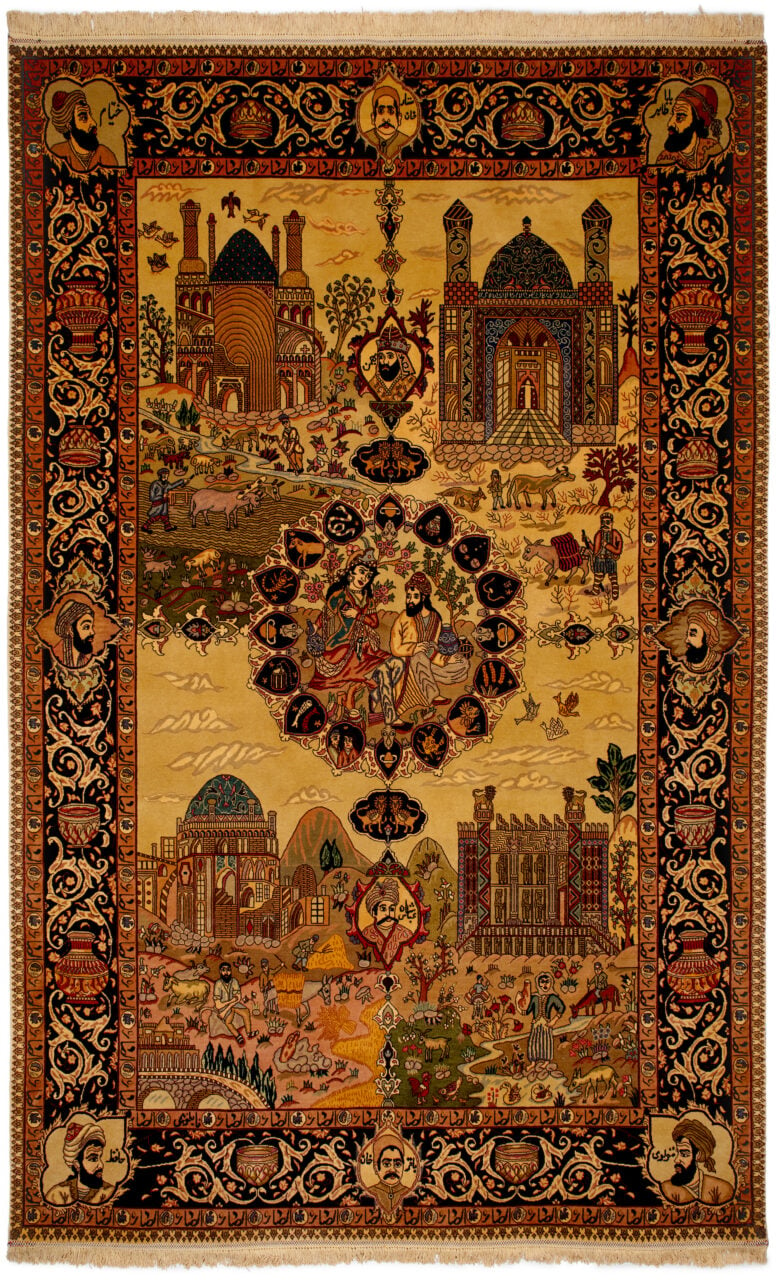
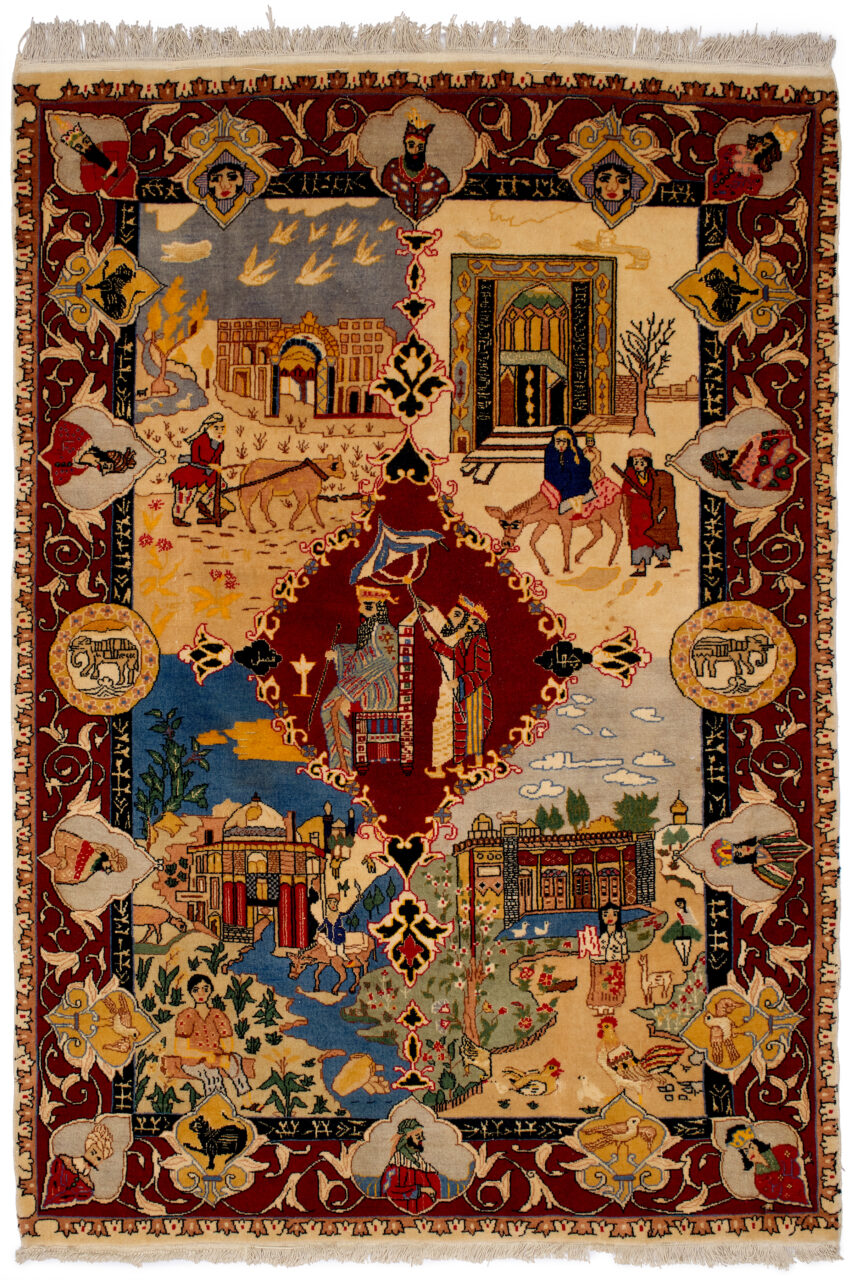
Making its first ever appearance in Hong Kong, the Shahnameh carpet crafted from Kurk wool and silk, is extraordinary in its rarity (under five comparable carpets of this theme exist worldwide) and sentiment too. It draws inspiration from the Shahnameh, or Book of Kings, written by Persian poet Ferdowsi. He dedicated more than thirty years of his life to writing this epic during a time when Arabic had become the dominant cultural and political language across the region. Centuries later in 1970, master artisans and weavers in Iran began to translate those stories into carpets. “In many ways, the Shahnameh was not simply literature, it was an act of cultural preservation. It was an attempt to protect the memory, mythology, and language of a civilisation that feared gradual disappearance,” Lai explains. “So what we are looking at here is not simply a decorative object inspired by a famous text. It is one generation preserving memory through poetry, and another generation preserving that same memory again through weaving.”
This phenomenon struck a chord with Lai, who admits to a fear she perhaps shares with many others in Hong Kong. “I sometimes find myself imagining a future where, perhaps a hundred years from now, Cantonese is no longer widely spoken in our city. And when I first learned about the Shahnameh, that emotional reality felt unexpectedly familiar to me—this fear of losing language, identity, and cultural continuity over time,” she confesses. “Today, much of the Middle East speaks Arabic, yet Persia still speaks Persian. And works like the Shahnameh played an important role in protecting that continuity. So when I look at this carpet, I do not only see technical mastery or rarity. I see one civilisation trying to remember itself across centuries, through different forms of art.”
If there is something to be taken away from Wei Gallery’s “Reweaving Memory” exhibition, Lai hopes visitors leave with a more personal understanding of what it means to remember. “It is really about how cultures survive, not necessarily through monuments or official histories, but through the small things people continue to live with every day,” she says. “What moved me most while researching Persian carpets was realising that these works endured not because they were locked away untouched, but because they remained part of ordinary life. Memory does not always survive through grand gestures. Sometimes it survives through the things we continue to care for, repeat, preserve, and pass on without even fully realising it. I think there is something deeply human about that.”
Editor
Alyanna Raissa J. PayosCredit
Lead image: Courtesy of Wei Gallery