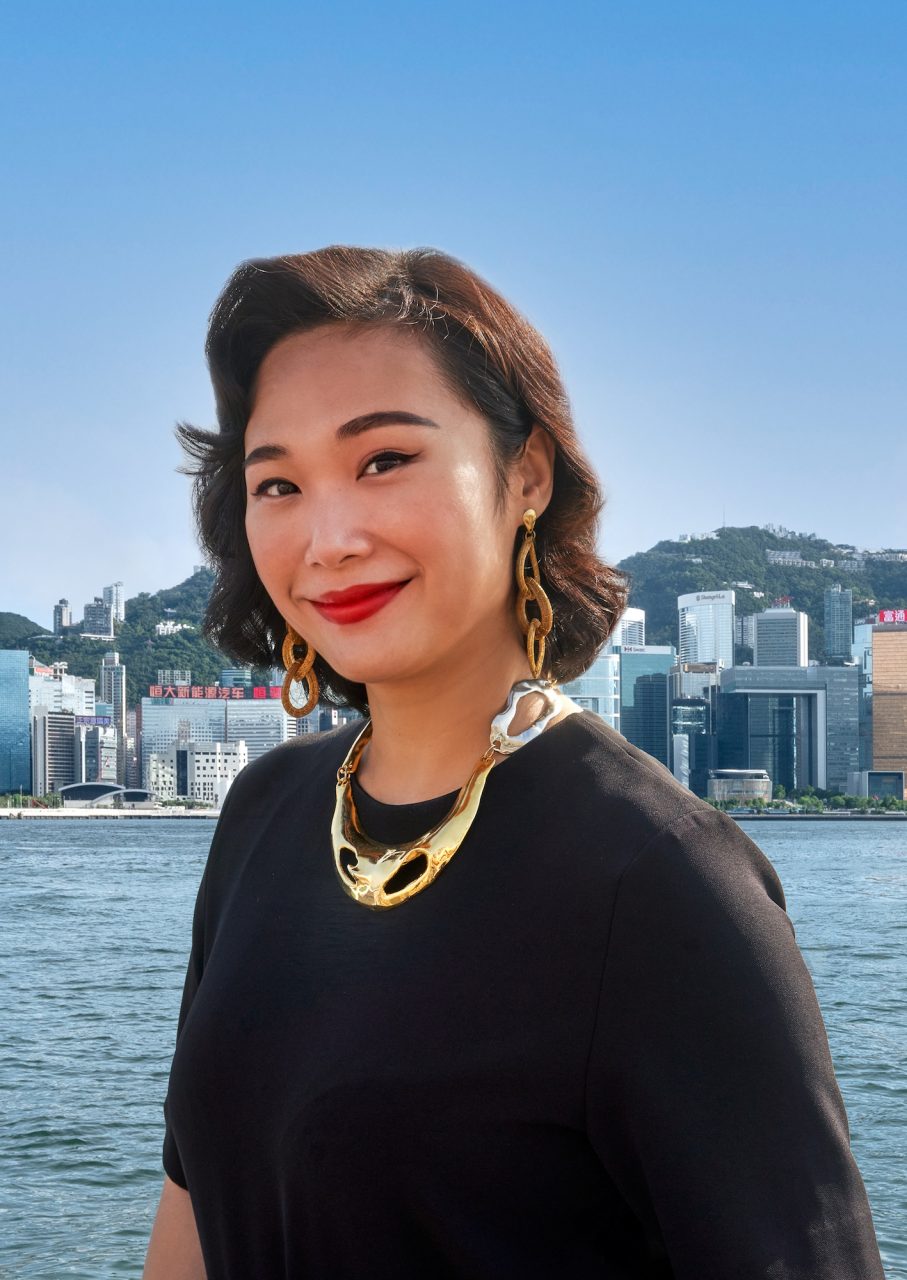


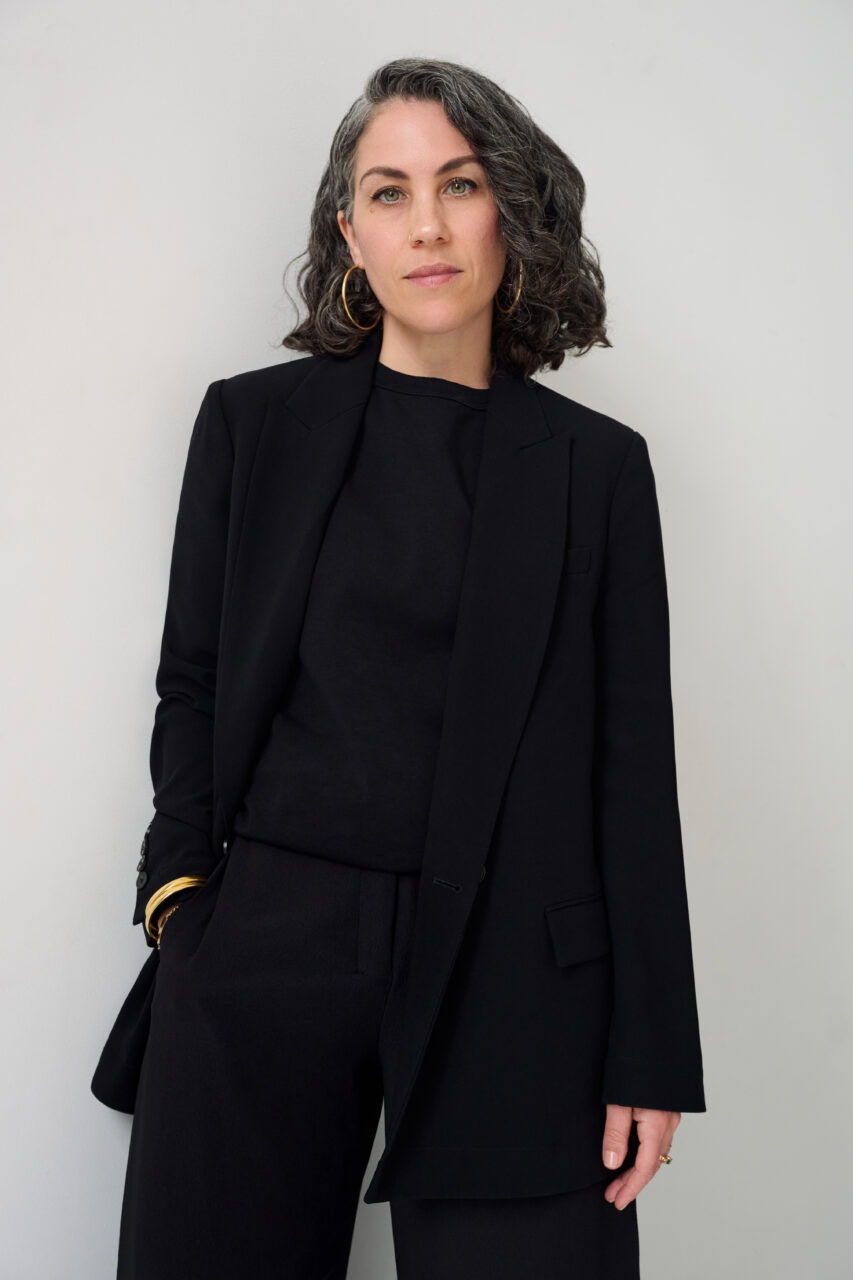
Art Basel Qatar names Iraq-born, New York–based curator and arts leader Wassan Al-Khudhairi as the Artistic Director for the 2027 edition.
She brings with her a deep understanding of the art ecology of Qatar and the MENASA (Middle East, North Africa, and South Asia) region, and extensive curatorial experience across museums, biennales, and independent exhibitions.
Currently, she is Partner at The Curatorial / Office, a New York-based firm that offers curatorial consulting beyond the museum. She was the Founding Director of Mathaf: Arab Museum of Modern Art in Doha, where she oversaw its opening in 2010, and her recent curatorial experiences include the 2025 Hawaii Triennial, the 2017 Asian Art Biennial, and the 2012 Gwangju Biennial.
Developed by Al-Khudhairi, Art Basel Qatar’s curatorial theme for its 2027 edition is “between / بين.” This second edition will maintain the same curated format as the inaugural fair, with solo presentations by galleries responding to a central framework. Al-Khudhairi will guide the gallery selection process with Vincenzo de Bellis, Art Basel’s Chief Artistic Officer and Global Director of Fairs, and the fair’s dedicated Selection Committee.
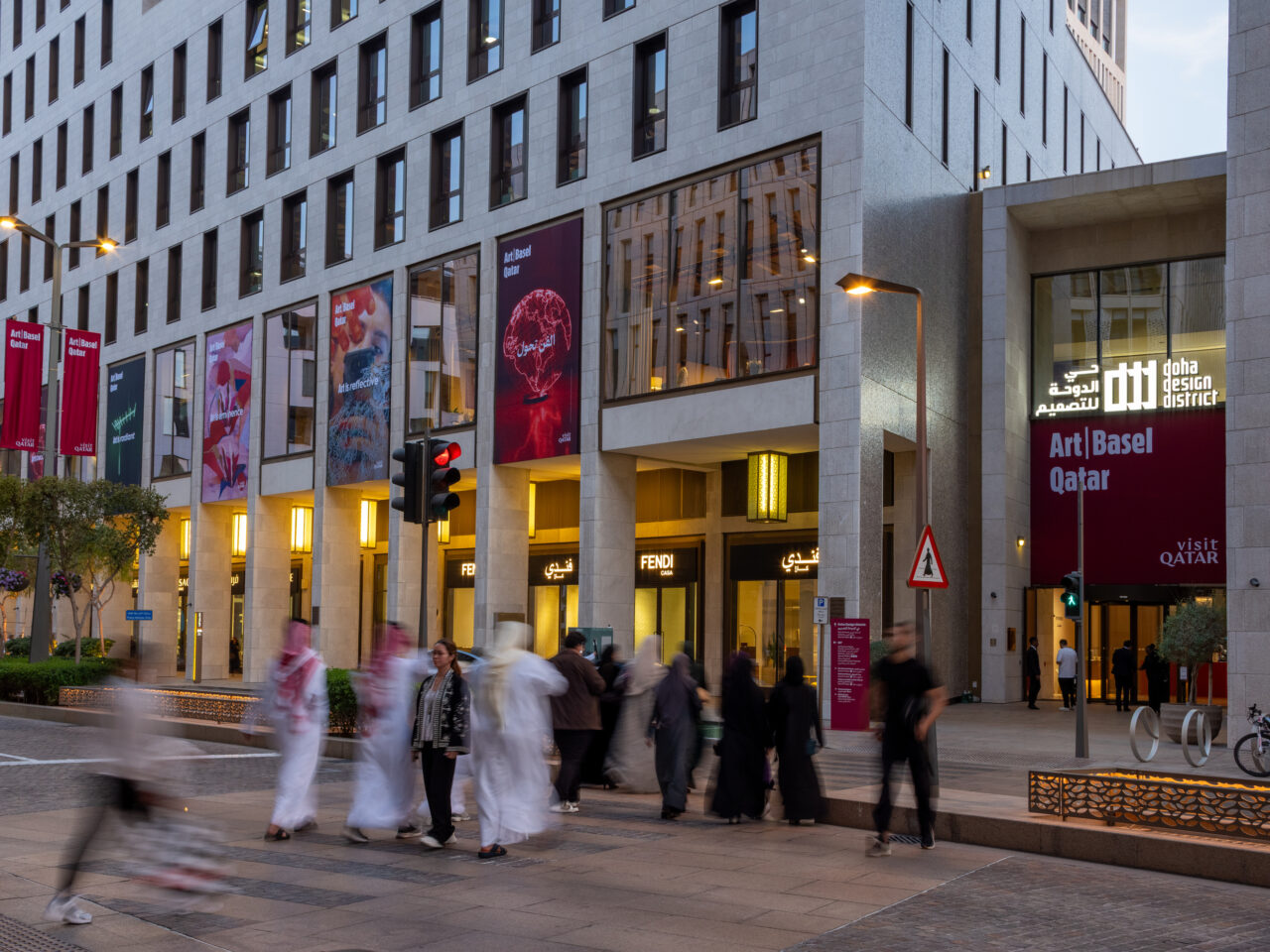
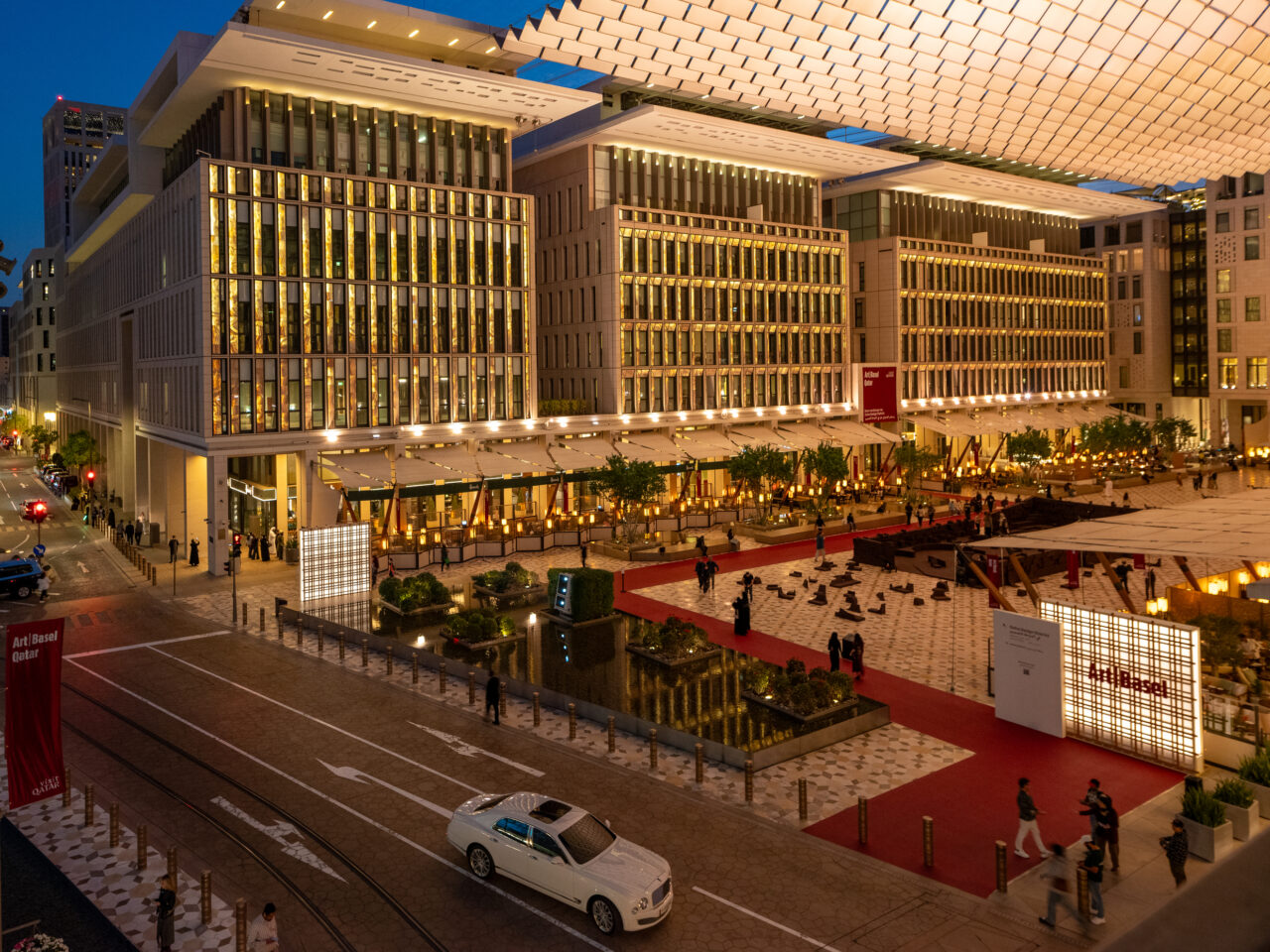
Art Basel Qatar 2027 will take place across Msheireb Downtown Doha at the Doha Design District (DDD) and M7 cultural forum from January 28 to 30, 2027, with Preview Days on January 26 and 27.
Al-Khudhairi speaks with Vogue Hong Kong about her appointment and her vision for Art Basel Qatar’s second edition.
You’ve worked across museums, biennales, and independent curatorial practices. What made this role feel like the right next step for you at this moment?
It’s just a really exciting opportunity to be part of something that’s still quite new, and also in a place that I have a history with. I lived and worked in Qatar from 2007 to 2012. I was the founding director of Mathaf, and I got to be in Doha at a very different moment in Doha’s development of the art ecosystem. I would say I got to witness the earlier days and kind of be part of the beginnings of laying down a lot of the infrastructure for Doha in terms of arts and culture. It’s a really lovely moment to be able to return, but to come back in another role and think about the ways in which artists and curating are part of a larger ecosystem of the market. It feels like an exciting second edition that I’m very honoured to be part of.
How does your experience opening Mathaf inform your curatorial leadership at a more commercial fair like Art Basel?
Living and working in Doha for the five years that I did, and also my continued engagement with the region over the years and doing other smaller projects, [gives an] understanding of the region that is really helpful in thinking about the fair and which artists, movements, and themes might resonate in that context.
As a curator, I hope to bring to the fair, an ability to think about context and think about how to create something that feels rooted in the place but speaks beyond the region as well. That reflects the world we live in today; we live in very global spaces, but they’re often informed by the more hyper-local.
What specific conversations or artworks did you hope the curatorial theme of “between / بين” would open up at Art Basel Qatar?
The theme I developed was a kind of reflection on how you can make a theme for a fair that feel thoughtfuls, that can reflect on the moment in time, and that can speak to many things.
I think the idea of “between” can reflect the way in which we all live in between different places, cultures, and identities. Also, a lot of artists work between different mediums. They might work between photography and sculpture or painting and installation. The fair will encompass works that span different time periods as well. So [it’s also about] that idea of being in one place, but thinking about something that was made 10 or 20 or 30 years ago—the sense of being in between spaces. I find that it really resonates with the moment and it’s something that I think a lot of artists, would address through their work.
And it felt like a nice bridge. If you saw the title, it’s “between” and then “between” in Arabic, بين. There is this idea of also thinking about the title and the theme both in English and Arabic simultaneously, rather than a title that’s translated and only serves as a translation.
How will that translate into selection criteria for galleries and artists?
The idea is that by announcing the theme, galleries now have the opportunity to make their proposals. It’s more about putting it out there and then having them be able to respond to it. Instead of thinking about it in reverse, about what the outcome is, it’s “Here’s the theme and let’s see how galleries will respond to that”.
How do you see Art Basel Qatar positioning itself relative to Art Basel Hong Kong and the other editions?
I think it’s a new market for Art Basel, and I think that there is an interest in thinking about this new market and helping to develop it. So I think it’s really smart that they have taken the approach of starting with a new model first to get a sense of the context, the place, and the people. They get a sense of what is going to be of interest and then from there, can see what the next step is for them.
I’m a curator; I’ve spent most of my career working in the more institutional side of things, so I don’t know that I’m the best to answer the detailed questions around the market and the comparisons between them. But I will say that there is a growing, engaging art ecology in Qatar and the region, and that it is an exciting moment to have something like Art Basel enter this space because I feel that within a healthy ecology, you need all the different components. You need museums and institutions, you need art schools, and you need fairs. You need the market as much as you need the institutions and the education. So I find that that is the interesting addition to the landscape that Art Basel can offer.
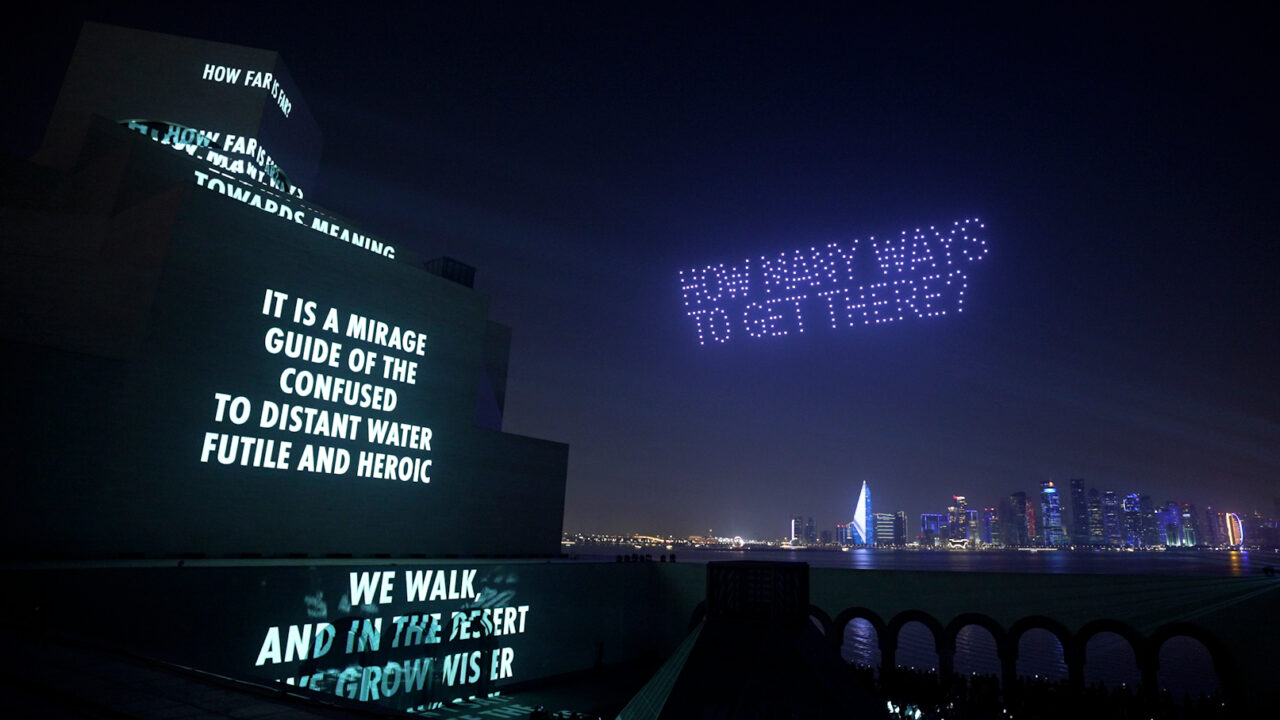
SONG, 2026, Light projection and drones Museum of Islamic Art, Doha “How Far Is Far” by Mahmoud Darwish. Used with permission, © 2026 by the Mahmoud Darwish Foundation © 2026 Jenny Holzer, member Artists Rights Society (ARS),
Photo Courtesy by Art Basel
Did you feel like anything was missing from the inaugural edition that you hope to build on or challenge?
It’s a good question. Not really. I have to say I wasn’t sure what to expect. I was really happily surprised. It was just a very overwhelmingly exciting feeling. There was such great energy at the first edition.
I think that there are a lot of things that will continue. The special projects will continue, and activating the outdoor spaces will also continue, which I found to be a very exciting way to engage people outside of the buildings of the fair and to be in those public spaces. So there isn’t anything specific, but I would say there’s a lot that was laid down in the first edition that I’m excited to build upon.
And my final question—something more personal—what feels genuinely exciting to you about art right now?
Contemporary art, especially, is such an important part of helping me understand the world that we live in. I find that contemporary artists have a way of processing and thinking through the complexity of the world that we live in. I am so grateful that I get to be engaged with it on a regular basis because, on a personal level, it also helps me think about the world that I’m living in and helps me process all the different changes, be it climate-related or technology-related. I think artists are often at the forefront of thinking through these things and challenging us to think about things in new ways. That’s what keeps me really engaged and excited that I get to have this awesome job of regularly talking to artists as part of my work.
Editor
Karrie LamCredit
Lead Image: Jim Lafferty