

The morning I met Neil Clifford and Rebecca Farrar-Hockley, Lane Crawford hadn’t yet opened its doors. The ifc mall had that particular pre-business hush, when retail spaces feel like pristine stage sets waiting for the day’s performance to begin. Into this quiet swept Clifford and Farrar-Hockley, brimming with the kind of energy that suggested they’d already been up for hours (since 5 a.m., Farrar-Hockley would later admit, gilding Kurt Geiger eagle heads.) Within minutes, we’d tumbled into conversation, and before I knew it, we were swapping stories about surviving British winters, growing up with garden gnomes and reading Enid Blyton. “You get it then,” Clifford chuckles, “The perpetual grey. The rain that never quite stops.”
Only those who’ve endured Britain’s boundless grey skies can truly understand why Kurt Geiger is determined to paint its own rainbow with defiant colours. “Sometimes the world isn’t the happiest place, and we live in a country that is very dark for half of the year and raining for most of it,” Farrar-Hockley explains. “I think we live in our imaginations a lot. I think that’s why the British have been great authors, great musicians.” She continues, “I honestly think it’s less about what inspires us and more that we live in our heads. When you grow up in that darkness, your imagination becomes this amazing thing.”
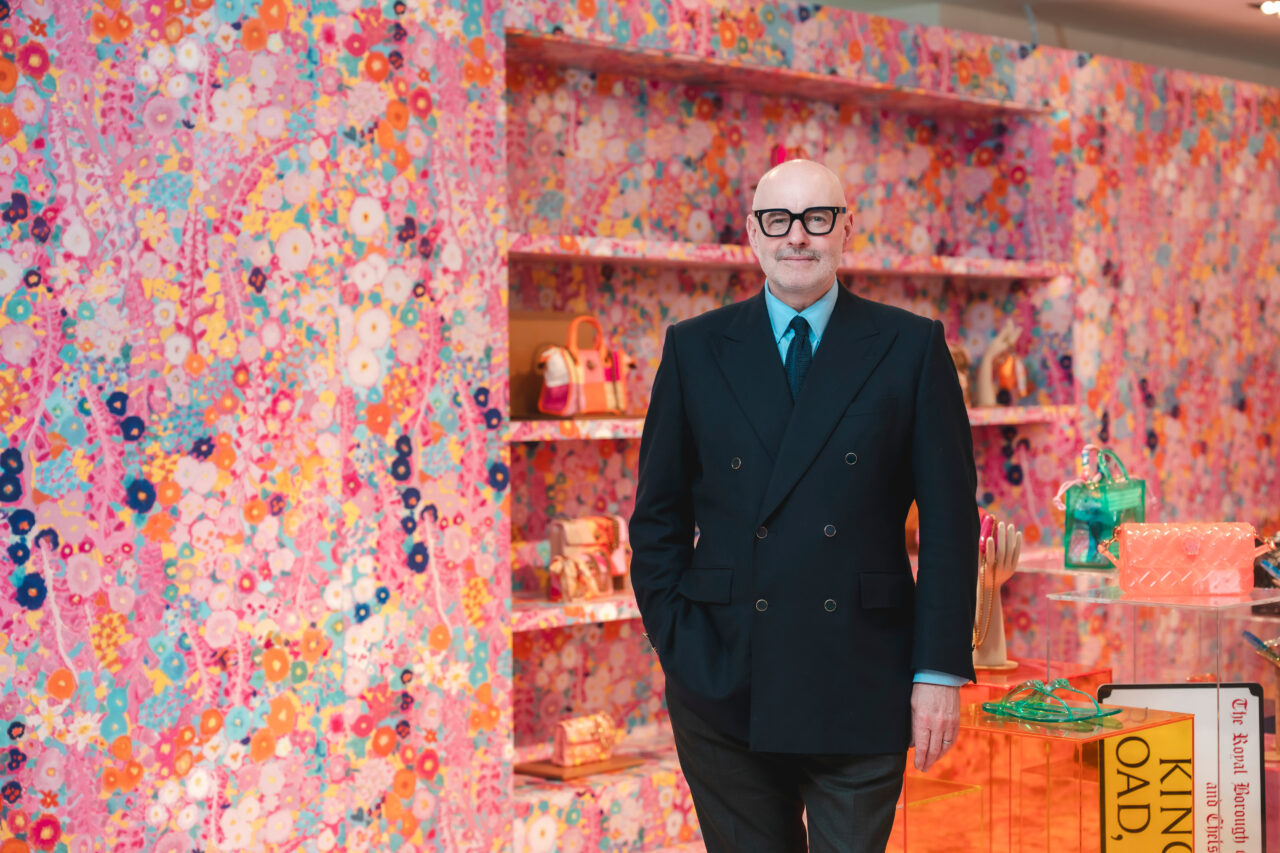
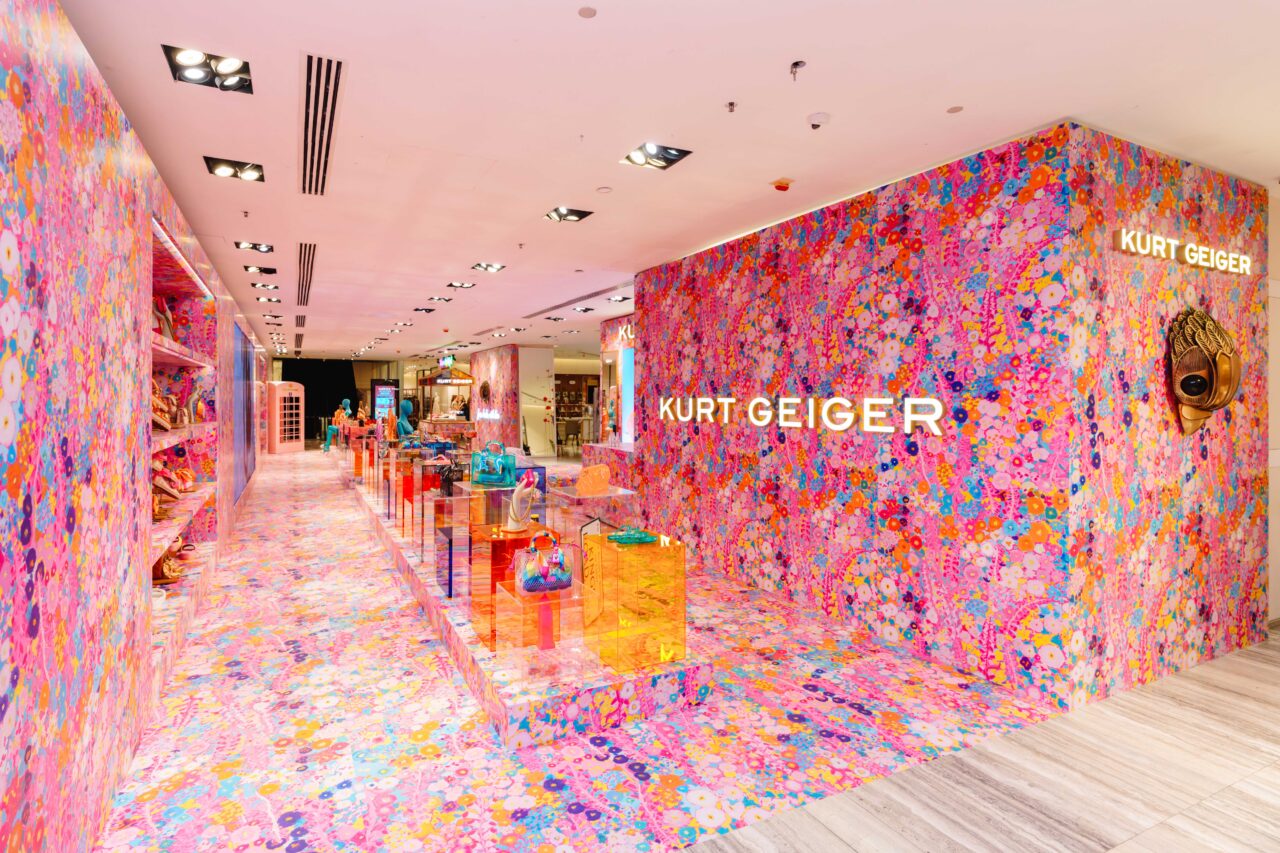
This imagination—born from gloom and nurtured by necessity—has manifested in the British brand’s month-long takeover at the Lane Crawford ifc mall flagship, which runs until April 12, 2026. Walking through the pop-up space feels like stepping into Farrar-Hockley’s mind: walls explode with maximalist florals that seem to pulse with life, while rainbow-hued acrylic displays catch and refract the mall’s lighting. Tucked among the displays are what Farrar-Hockley calls their “London-in-Summer vignettes”—a curated collection of quintessentially British items. Think Mary Poppins’ umbrella, pigeons, and a dashing garden gnome, of course.
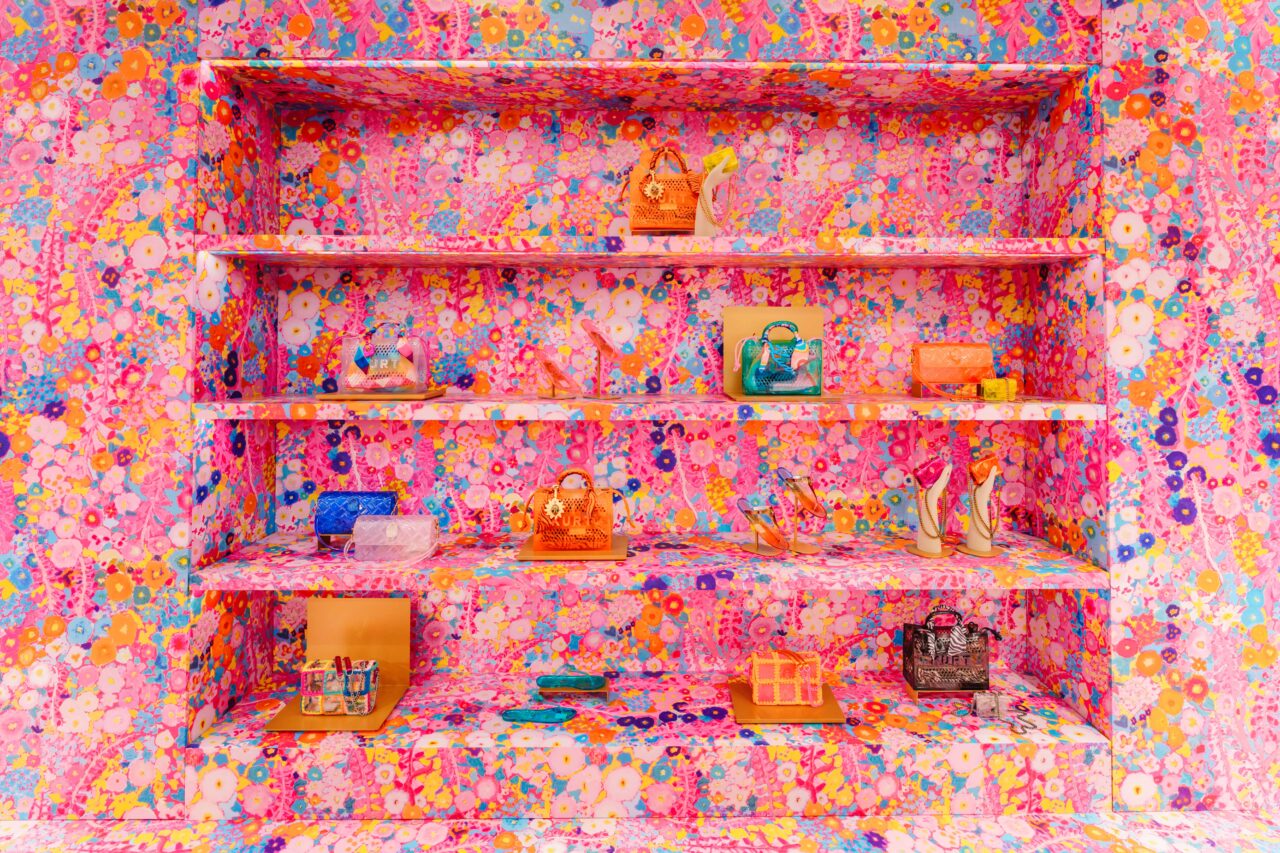
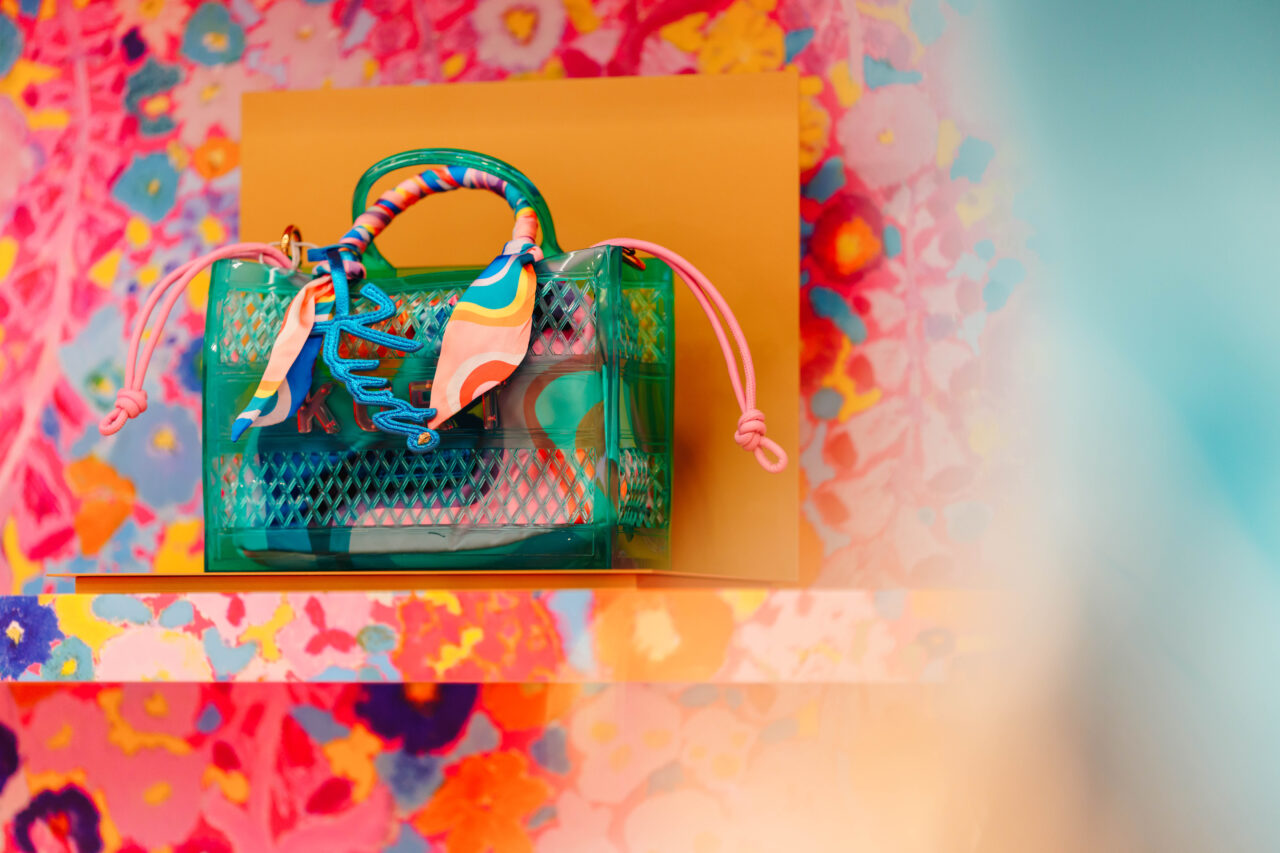
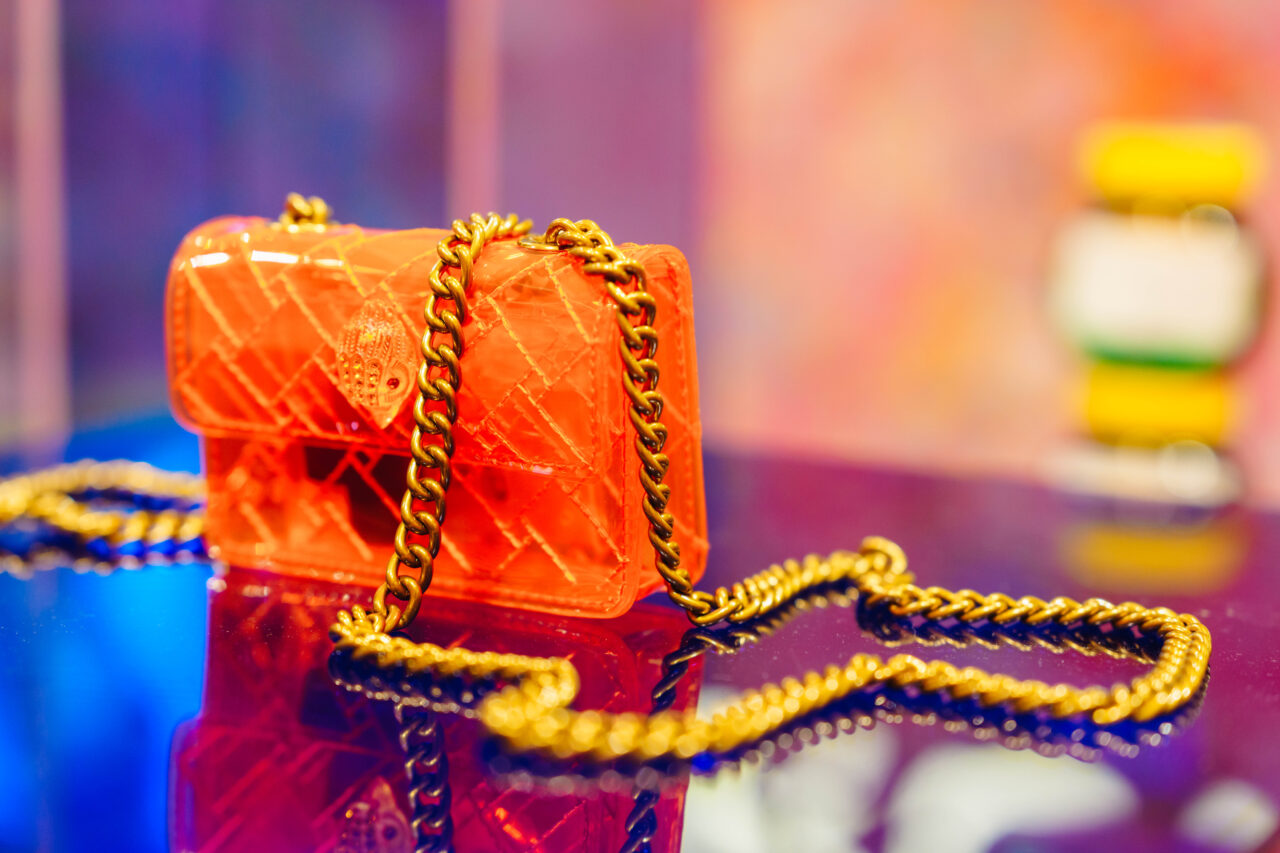
“Rebecca and I have known Lane Crawford for 25 years. We’ve known the team for a long, long, long time, longer than we probably like to admit,” Clifford chuckles. “And it’s always been a dream for us, if we commence our business in Asia, it would be in Lane Crawford.” The pop-up showcases the Spring Summer 2026 collection, with jelly resin Kensington bags that Farrar-Hockley describes as “like boiled sweets, like candy”, catching the light like stained glass. Raffia bags look perfectly imperfect, as if they’ve already accompanied their owners on Mediterranean holidays, while the new Sling silhouette makes its debut. The footwear follows suit: barely-there sandals in sunset gradients sit alongside the brand’s signature Islington sneakers reimagined with intricate beading and playful tassels.
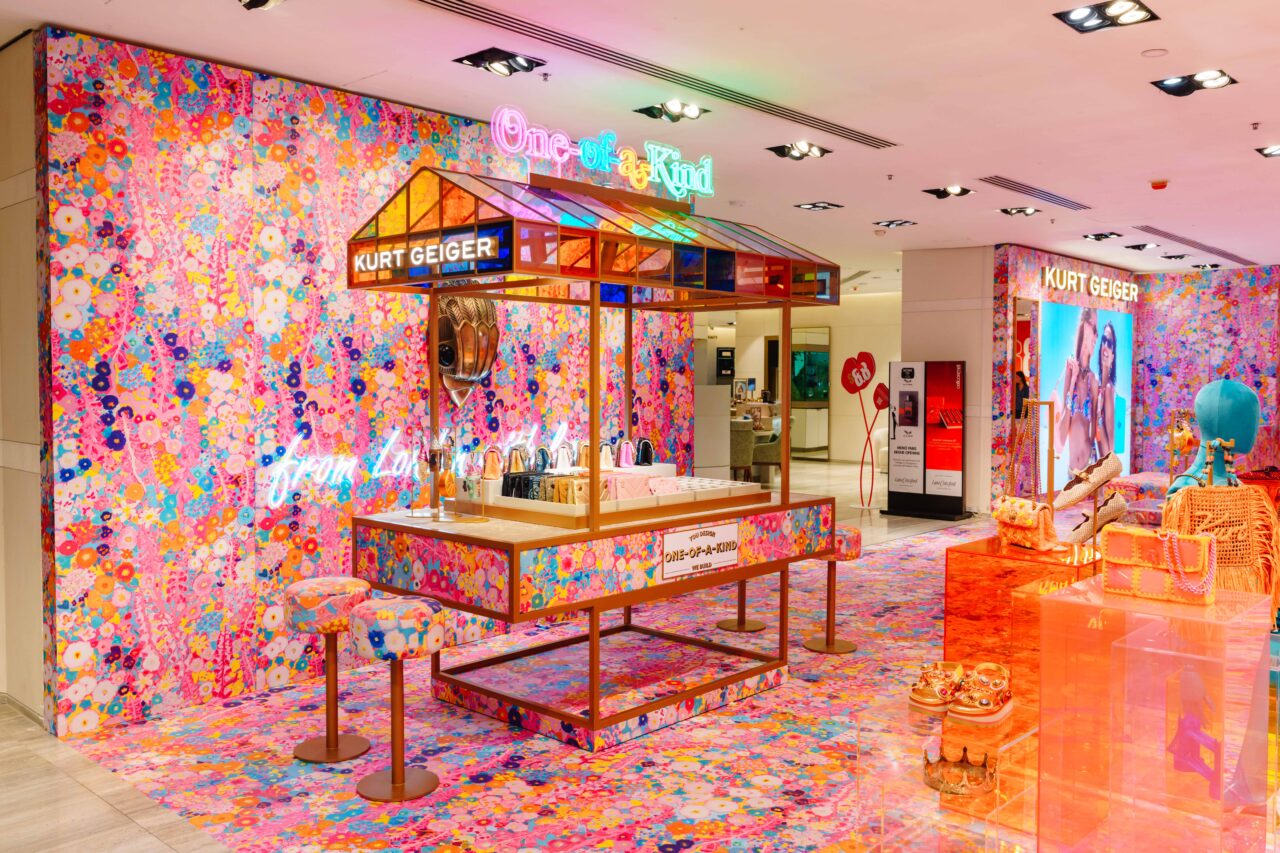
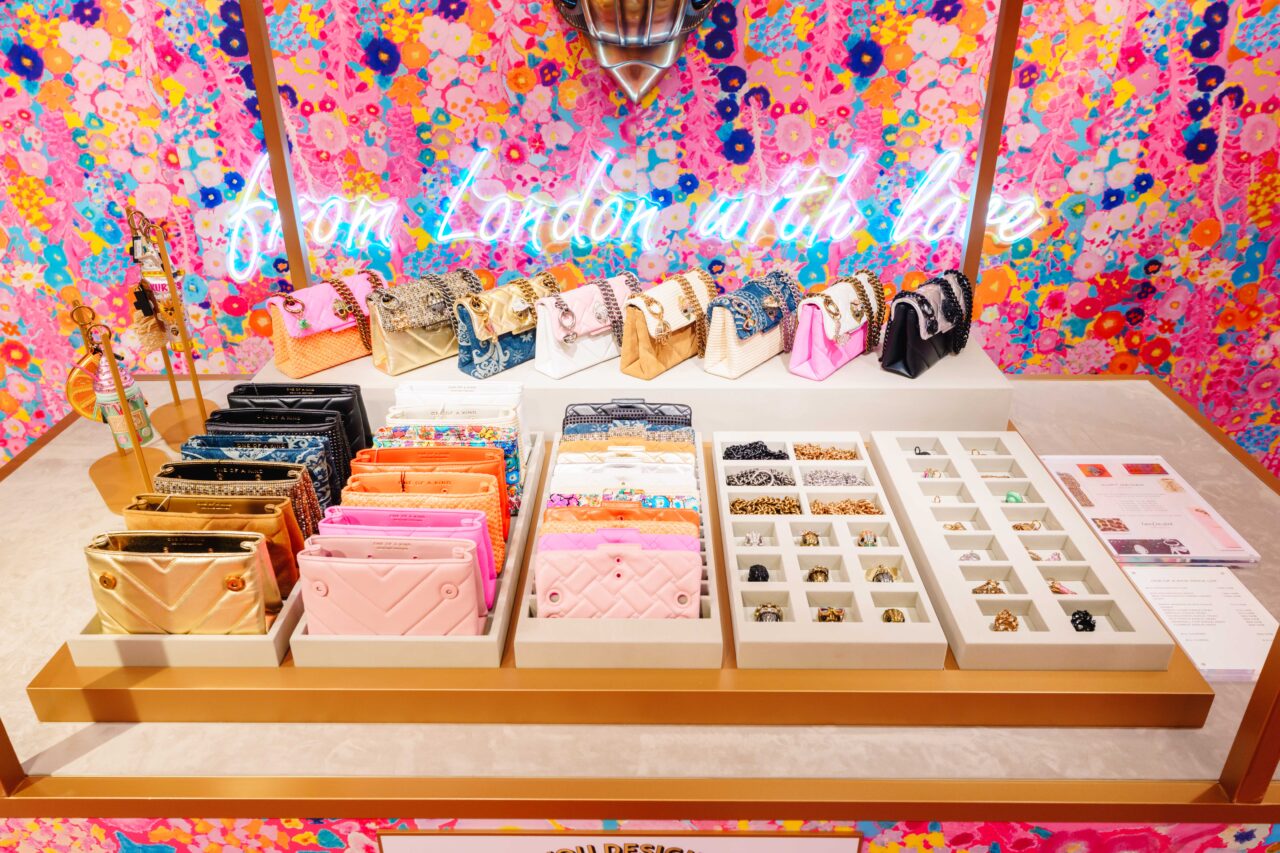
But the real draw is the “One-Of-A-Kind” experience, making its regional debut. For the first time outside the UK and US, customers can create their own Mini Kensington bag while they wait, choosing from an array of colourways, materials, hardware options, and signature charms, available at a price point that would have one grinning ear to ear. “We want our feeling of joy and happiness to maintain itself when you look at the price,” Clifford explained, and you could tell this wasn’t just corporate speak—it was a philosophy they genuinely believed in: that pure delight shouldn’t be preceded by guilt; and that beauty should be accessible, not aspirational.

If you were to each describe this Hong Kong pop-up in one word (or more), what would it be?
Farrar-Hockley: I guess it’s vibrant and joyful.
Clifford: I was gonna choose joyful. Vibrant, joyful.
Farrar-Hockley: Sometimes the world isn’t the happiest place, and we live, as you know very well, in a country that is very dark for half of the year and raining for most of it. And therefore, I think we spend a lot of time living in our imaginations. I think that’s why the British have been great authors, great musicians—it makes us very imaginative. We have an obsession with imagining a kaleidoscope world, a bit like a fantasy, and that very much shapes the nature of the products we design and the environments we create that bring joy and fun. I sometimes think, if you’re as old as we are, you’ve watched fashion change a lot, but in the world of big business, it’s easy to forget that fashion should be a joyful thing. Allowing yourself as an adult to play with your style, to think about the image you portray—I love that sort of dressing-up thing you do when you’re a child. Working in fashion allows you to still do that as a grown-up.
Absolutely. Moments where you do it for your inner child.
Clifford: Totally, we never really grow up, do we? We have to pretend we’ve grown up. I think we’ve always been very strong as a country, creatively, and we don’t take ourselves too seriously, which manifests itself in the joy we create with our products. At Kurt Geiger, we’re very good at designing amazing products that are distinctive, disruptive, and amazing value—but they change your mood. We are a mood changer. We uplift, we bring some humour, some fun. Even during training this morning, talking to the staff downstairs, there was a lot of joy and laughter, and we’re proud of that. We’re good at humour, the Brits.
What’s your favourite piece or element in the Lane Crawford pop-up?
Clifford: Mine would be our “One-Of-A-Kind” project. Kindness is a big word for us—we run a charity, we have a school, we educate young people to help them break into this wonderful world of creativity. In less than an hour, you can create a bag that’s uniquely yours and take it home. This is the first place we’ve brought One-Of-A-Kind to a department store outside of a Kurt Geiger store, and certainly the first in the world. So we’re very happy it’s an exclusive event here at Lane Crawford—it’s a bag you design yourself, and you’ll never see another one like it.
Farrar-Hockley: I’m obsessed with the jelly resin things. They feel like sweets, like candy. I love some of the natural raffias, but actually, I like that synthetic feeling. They almost glow and change with the light at different times of day. One of the signature pieces in our stores globally is stained glass—it’s very much part of Britain’s architectural heritage—so I was playing with how to translate that into product. The jellies are very practical too. You can have them in the rain; they can get wet, they’re pretty robust. So that’s my personal favourite. But ask me next week, and it’ll be something else.
How would you describe the customer that you envision rocking The Jelly Collection here?
Farrar-Hockley: I try very hard never to have an idea of the customer, because in a weird way, you birth these collections, and then people wear them in totally different ways. One of the exciting things is watching how customers bring the brand to life—how they wear it, how they style it, what they choose. That’s different in different places. So I’m excited to see—it’s going to be a journey of discovery.
Clifford: But we always get asked who your customer is, and we always answer: everybody. We’re a very inclusive brand. We don’t think of an age, and as you get older, you definitely don’t want to talk about age. It manifests like London. London is a very inclusive place. You can be free, you can be anyone, dress however you want. Everyone is accepted. It’s a wonderful city where our creativity starts, and it manifests itself not just in our product but in how we view the customer. She can be anyone. He can be anyone. We’re happy with that.
Neil, what would you say is the boldest or most unconventional business decision you’ve made in your tenure as CEO?
Clifford: That’s brilliant. That’s a really good question.
Farrar-Hockley: Oh, I can give you one.
Clifford: Give me one.
Farrar-Hockley: Neil wasn’t afraid to totally change the business. Not long ago, you pulled out a lot of profitable distribution to focus on DTC and the best partners globally, not just scale for the sake of it. That was quite bold. And not writing Kurt Geiger on our handbags. Choosing an eagle, not a brand name.
Clifford: We’re not scared of big decisions. We were a shoe company for 50 years, then 10 years ago, with Rebecca’s energy and her design team, we embarked on developing our brand in a much broader way. We started with handbags, and now that part of our business is bigger than shoes. Opening our first American store in Orlando two or three years ago was a bold move. Doesn’t feel bold now because it’s been successful—of course, it feels like we should have done it earlier. You always regret not moving fast enough.
Rebecca, The Jelly Collection is super fun, but it also reimagines the brand’s classic motifs. Can you take us through the creative process of translating these elements into such fun pieces, and the use of resin?
Farrar-Hockley: It was hard, actually. We’ve done lots with vinyl in the past—stitching and cutting it. But I wanted something that felt like a boiled sweet. They look delicious. To do that, you have to create a mould. We went through three or four moulds, and they’re really expensive. Then you have to attach the eagle and make the bag work. You need a clasp with a magnet, but it has to be strong enough to shut properly without pulling the resin. We took 10 prototypes to get it to work. I wanted metal hardware, so the clasp was the same quality as on a lambskin bag. It took a year to get right, but I was really pleased. They look rich and qualitative, and we managed to keep the price attainable, which is always really important to me.
Clifford: That’s a very important point Rebecca mentions. When you look at the price of a Kurt Geiger bag, you want to have the same feeling of joy as when you first saw the product. We all know that feeling when you walk into some stores and look at the price—your heart sinks. We want our feeling of joy and happiness to maintain itself when you look at the price.
Rebecca, what would you say is the most unexpected or quirkiest place that you found inspiration?
Farrar-Hockley: People always ask what inspires us. I never know. I think I live in my head. When I mentioned those dark months of British weather—you see Wuthering Heights, right? Someone wrote that book living in the Yorkshire moors as a child, writing manuscripts on tiny bits of paper, having seen nothing of life. Your imagination is such an amazing thing. If you can live in your head, there’s no end to what you can imagine.
Clifford: We all live in Rebecca’s head.
So, Neil, how has it been living in Rebecca’s head?
Clifford: Oh, it’s been very eventful. Rebecca joined in 2002. I was in the company before then. We’ve worked well together for a long time, and that’s an important part of company culture. You get to know your key people’s quirks so intimately that you communicate with Bluetooth—you don’t need to speak much, you’ve got the vibe going. That consistency of working together, learning, messing things up and doing it better—it’s helpful to have that consistency of key people. The heart of it all is still joy. It’s always joy. We’re always ambitious. Even though you could paint the story of how successful we’ve been over 30 years, we don’t look back. We have no rear-view mirror in the car. We’re always anxious and ambitious for the future. I think that’s a nice way to be.
Editor
Kaitlyn Lai